UFOs in Congress

Here’s a link to an official government document where US elected officials attempt to demand from the Navy the collection and reporting of unidentified aerial phenomenon (UAP’s, the PC term for UFOs in DC): https://www.intelligence.senate.gov/publications/intelligence-authorization-act-fiscal-year-2021.

Notice it’s a .gov website, which, as far as I know, cannot be faked.

Here’s the entire (I think) UFO portion of this lengthy document:

Advanced Aerial Threats

The Committee supports the efforts of the Unidentified
Aerial Phenomenon Task Force at the Office of Naval
Intelligence to standardize collection and reporting on
unidentified aerial phenomenon, any links they have to
adversarial foreign governments, and the threat they pose to
U.S. military assets and installations. However, the Committee
remains concerned that there is no unified, comprehensive
process within the Federal Government for collecting and
analyzing intelligence on unidentified aerial phenomena,
despite the potential threat. The Committee understands that
the relevant intelligence may be sensitive; nevertheless, the
Committee finds that the information sharing and coordination
across the Intelligence Community has been inconsistent, and
this issue has lacked attention from senior leaders.
Therefore, the Committee directs the DNI, in consultation
with the Secretary of Defense and the heads of such other
agencies as the Director and Secretary jointly consider
relevant, to submit a report within 180 days of the date of
enactment of the Act, to the congressional intelligence and
armed services committees on unidentified aerial phenomena
(also known as “anomalous aerial vehicles”), including
observed airborne objects that have not been identified.
The Committee further directs the report to include:
1. A detailed analysis of unidentified aerial
phenomena data and intelligence reporting collected or
held by the Office of Naval Intelligence, including
data and intelligence reporting held by the
Unidentified Aerial Phenomena Task Force;
2. A detailed analysis of unidentified phenomena data
collected by:
a. geospatial intelligence;
b. signals intelligence;
c. human intelligence; and
d. measurement and signals intelligence;
3. A detailed analysis of data of the FBI, which was
derived from investigations of intrusions of
unidentified aerial phenomena data over restricted
United States airspace;
4. A detailed description of an interagency process
for ensuring timely data collection and centralized
analysis of all unidentified aerial phenomena reporting
for the Federal Government, regardless of which service
or agency acquired the information;
5. Identification of an official accountable for the
process described in paragraph 4;
6. Identification of potential aerospace or other
threats posed by the unidentified aerial phenomena to
national security, and an assessment of whether this
unidentified aerial phenomena activity may be
attributed to one or more foreign adversaries;
7. Identification of any incidents or patterns that
indicate a potential adversary may have achieved
breakthrough aerospace capabilities that could put
United States strategic or conventional forces at risk;
and
8. Recommendations regarding increased collection of
data, enhanced research and development, and additional
funding and other resources.
The report shall be submitted in unclassified form, but may
include a classified annex.

The above-quoted section of the document is located a tad past the half-way point.

I try to stay positive, but I despise the political hate-porn that dominates the “news” these days. I avoid it like the virulent mind plague it is.

But when I’m forced to watch TV news, I remind myself that none of us has a scientific method of determining which group of outraged political talking heads is feeding us objective truth rather than biased information selection, half-truths, and outright misinformation.

Since each side calls the other “fake news” and touts a cache of “facts” that contradict the “facts” of the other group, you might think one side is right and the other wrong.

If actual living systems were ever that simple, politics would be a matter of thinking carefully and joining the enlightened side of this violent, hateful political war.

But herein lies the media’s deception: political problems are almost always “wicked problems” that have NO simple binary solutions. The media doesn’t want us to know this because if we all understood it, we would see why Democrats and Republicans need one another desperately if we’re ever going to solve our complex problems with a minimum of unexpected negative side-effects.

Medical diseases are superb examples of wicked problems that parallel political problems. The wealthy drug companies would have us see our diseases as simple problems with binary solutions, exactly the way the TV would have us view political problems: “Take our pill. It’s the simple, obvious solution.”

But nearly all pills are binary attempts at solutions to complex problems. They have unintended negative side effects because they’re negotiating the delicate complexities of biochemical pathways with interwoven feedback loops in all directions.

Negative side effects (unintended consequences) arising in complex systems are the very signature of “wicked” problems being addressed by simple binary solutions. It is dangerous to treat wicked problems as if they were binary and had simple black-and-white solutions without the potential for unintended negative consequences.

In medicine, the side effects are sometimes far worse than the disease. The same is routinely true in politics, though it takes some soul-searching and stretching for objectivity to see it for yourself.

Unfortunately, this binary approach to politics is exactly what our “news” outlets and politicians force upon us. They make it look as if there is no alternative to outrage, hatred and binary political thinking.

The side effect of this rookie mistake is violence and hatred.

It’s inherent in the system, though, because virtually all politicians, like the six large “news” outlets promoting and opposing them, must dance to the tunes of the corporate entities that fund them.

Despite the heated political bifurcation, the worst media lie of all time comes to us from both sides equally. It is the notion that one political party is uniformly right and the other is uniformly wrong (evil, ignorant, morally compromised, and factually inaccurate in every detail of their agendas, values and beliefs). This is the Achilles’ heel of peace in the free world.

If you can agree with this perspective, please join me in ignoring the political orientation of the man responsible for bringing us this rare piece of evidence that UFO’s are real and deserve organized analysis by elected officials, the DOD, the Navy, and our many rogue intelligence organizations.

As I understand it, Senator Marco Rubio (R-FL) is behind this piece of legislation. If you’re one who prays, please pray that political prejudice won’t put the kibosh on this rare act of rationality from DC.

Love – across the entire political spectrum,

Morrill Talmage Moorehead, MD


Moon Bases and Worldview Neurons

Here’s an honest sounding man, Ken Johnston, who claims to have been working at NASA when the US astronauts landed on the Moon. He says he saw what looked like alien bases in the pictures that came back.

If you’re like me, interested in fringe science and examining all the remarkable claims you can find, you’ve heard this moon-base stuff before from two or three other sources claiming to be eye-witnesses to original photos.

All this is becoming more believable now that the pentagon has publicly admitted that the three UFO videos captured by various fighter piolets since 2004 are genuine UFO’s (a.k.a. UAP’s). I feel sorry for the debunkers now.

Johnston says that the whole “alien coverup” will probably be ended by the US government this November, and when it happens, it won’t be the world’s religions that are shaken to the core, it will be the world’s scientists.

More than anything else the man says, this bit about scientists is the part that rings true for me.

Science has always deluded itself into believing that the current level of sophistication, at any point in time, is no longer primitive.

No delusion has been more persistent, and none has hampered scientific progress more than this one. Forgetting that we’re still a primitive species trying to do science with limited intelligence has closed our minds to important things that seem at first glance to be impossible. Worse yet, our lack or appropriate scientific humility has declared entire fields of scientific inquiry taboo, leaving our species ignorant by choice. Examples include the study of ESP, the study of the paranormal, the study of the cultural effects of scientific and spiritual fundamentalism, and the application of geology to archaeology, to name a few.

In an editorial debunking the “liars” who, like myself, believe there is considerable legitimate scientific evidence for intelligent design in nature, especially in the genetic code, Adam Wilkins, a mainstream scientist, makes a remarkably broad-minded statement:

“Furthermore, those scientists with passionate anti-religious convictions should accept that Science can no more disprove the existence of a Deity or immortal souls than religious people can prove the existence of either. More tolerance of private religious belief, coupled with insistence on what scientific evidence does actually tell us about the history of the world and living things, would be appropriate.

If, in contrast, scientists insist on atheism as the only “logical” belief system or demand that people choose between “evolutionism”—the quasi-philosophic belief in evolution as a guide to what should be—and belief in God, the outcome is not in doubt. More than half the people in the U.S. would choose religion and reject the science.” 

Ironically, if Adam Wilkins and other mainstream scientists would read Signature in the Cell by Stephen Meyer, PhD, with the tolerance Wilkins and authentic science call for, they would probably recognize that Intelligent Design makes better scientific sense than Neo-Darwinism as an explanation for the origins of life and the diversity of forms on this planet.

But the human mind has a special place for an individual’s worldview. It seems to be a place near the core of identity, a place that triggers emotion and squelches reason, and a place that fervently resists change.

For us Christians, the “worldview neurons” tend to be filled with an untestable and unquestionable set of doctrines that include information about the soul, what happens when we die, and what behaviors and beliefs we must accept in this life to get what we want in the next.

For about two-thirds of scientists, the “worldview neurons” are filled with an equally untestable and unquestionable doctrine called “scientific materialism” that assumes there is no soul, no afterlife, and no behavioral norms relevant to an afterlife.

The reason many Christians think of atheism as a religion is probably because the “worldview neurons” of atheist scientists often take on a religious-style resistance to change and an urge to proselytize that reminds us of religious zeal.

Most educated people seem to think that if humans ever come into open contact with an extraterrestrial intelligent species, the aliens will be highly advanced, highly intelligent, and definitely secular, not religious or spiritual.

In the video below, Ken Johnston implies that the reason alien contact will shake the scientific community to the core will be the shock of learning that the aliens are scientifically thousands of years ahead of us. This would expose human science as primitive and perhaps destined to remain far behind the Universe’s most advanced species.

I think Mr. Johnston is partly right. But I think the more shattering aspect of alien disclosure for scientists would be the galling realization that advanced beings are, in fact, devoutly religious and deeply spiritual… at least the benevolent species.

See if you think Ken Johnston really believes what he’s saying in this video…

https://www.youtube.com/watch?time_continue=1&v=4kEUauJkkaw&feature=emb_logo

Would advanced aliens be spiritual or secular? Would they make such a distinction at all? I’d be interested in your opinion.

Love and ESP hugs,

Morrill Talmage Moorehead, MD

PS: If you’re over 55, please be especially cautious about transitioning from lock-down mode.

Make sure you’re not vitamin D deficient. (Vit. D deficiency puts you at a much higher risk of serious complications from this virus as well as from several other respiratory viruses.)

Wearing a face mask primarily protects others from you if you’re infected but asymptomatic, which happens a lot. This is because the COVID-19 coronavirus travels several yards through the air when an infected person (even with no symptoms) coughs, sneezes or speaks loudly. So wear a mask as a sign of love and concern for others. Forget all the lame TV coronavirus politics. They’re deliberately manipulating us into outrage and frustration, partly to improve ratings and keep their jobs, and partly to protect their precious political worldviews. To remain employed, they have no choice but to create political outrage porn. Just ignore it.


A Racist Virus, SARS-CoV-2 (Covid-19)

Here’s a scientific paper (an Indonesian Study that’s not peer-reviewed as yet) showing that people with below normal vitamin D levels have a 10-times greater risk of dying from COVID-19 than people with normal vitamin D levels: https://papers.ssrn.com/sol3/papers.cfm?abstract_id=3585561.

The first video below is Dr. John Campbell showing data in which people with darker skin are dying of COVID-19 at a higher rate than people with lighter skin. The stats are shocking, to say the least.

He suggests that since darker skin is less efficient in producing vitamin D3 than lighter skin (because melanin pigment in all races blocks the energy of the sun that drives the chemical conversion of Vitamin D), the higher risk of COVID-19 death for darker-skinned people may be partly due to lower vitamin D3 levels.

He suggests that in the interest of saving the lives of people with darker skin, doctors should check vitamin D levels in COVID-19 patients and “consider” vitamin D3 supplementation for those with low vitamin D levels. Nothing could be more reasonable.

Yet, astonishingly, this doctor has been called a racist for this suggestion. Here’s why:

The malignant and permanently angry religion of Political Correctness dictates that skin color could not possibly affect anyone’s vitamin D3 levels, and low vitamin D3 levels arising from skin color differences could not conceivably reduce a person’s odds of surviving COVID-19. Such unspeakable heresy would suggest that Nature herself is politically incorrect, which would mean the PC worldview itself is fatally flawed. Much better to ignore science and all the non-PC life-saving advantages she offers than to change your worldview.

Below, my favorite research scientist, Rhonda Patrick, PhD, answers various questions about COVID-19, including the Vitamin D question (at position 25:06 on the video). She delves into the relevant peer-reviewed scientific literature.

https://www.foundmyfitness.com/episodes/covid-19-episode-1

I should also mention that certain individuals have a condition, probably a genetic SNP (single nucleotide polymorphism), that lowers their vitamin D levels, making it difficult for them to achieve a normal vitamin D level even with D3 supplementation. I know this is real because I have an Asian friend with this trait. So regardless of your skin color, it seems to be entirely worthwhile to have your vitamin D3 level checked, especially now with this lung-attacking virus going around.

Future studies will probably sustain the preliminary data in this post, so be brave and share it with everyone on your email list. You may save someone’s life.

Love and air kisses,

Morrill Talmage Moorehead, MD


The Airborne Coronavirus

It’s tough to find non-politicized info on COVID-19 (or anything else).

Here’s a lengthy Rogan interview with Michael Osterholm, an internationally recognized expert on infectious disease epidemiology who seems, as best I can tell, to have no political ax to grind, although he’s mainstream black-and-white on vaccinations.

A few essential points from the above interview:

  1. Since COVID-19 is airborne, transmitted early, and has a short incubation period, it is inconceivable that our efforts to contain it will succeed. “This is like trying to stop the wind.”
  2. Transmission from person to person is highly efficient, like a flu virus. Infected individuals with early symptoms carry a potent viral load in their throats (“ten thousand times what we saw with SARS”) and are highly infectious before they feel ill or develop a cough.
  3. Michael Osterholm “conservatively estimates” that there will be over 480,000 deaths due to this virus in the US over the next three to six months or more. He states that this will be “ten to fifteen times worse than the worst seasonal flu you have ever seen.”
  4. Although people over 60 are at greatest risk of death from this virus, they are now seeing an alarming number of “horrible cases” in the 40s age range in Italy.
  5. Here is a message from a cardiologist at one of the largest hospitals in Italy: “They’re deciding who they have to let die. They aren’t screening the staff anymore because they need all hands on deck… Even if they’re positive (meaning that they’re sick) but they don’t have a severe cough or fever, then they have to work.”
  6. The incubation period is 4 days. This gives the virus a short doubling time.
  7. Loose fitting “surgical masks” and gloves offer very little protection, if any. You need a tight-fitting (airtight) mask capable of filtering viruses.
  8. Dr. Osterholm recommends avoiding “large public spaces” if you are over 55 or have underlying health problems such as obesity or a smoking habit. (Smoking is associated with increased mortality in China). “Limiting your contact is about all you can do.”
  9. “We are not going to have a vaccine any time soon.”
  10. “Kids” are getting infected but are not getting sick. In China, only 2.1% of “cases” are under 19 years of age.
  11. This virus jumped from an animal species to humans, probably in the 3rd week of November 2019. It was not the deliberate or accidental product of a weapons laboratory in China. (Dr. Osterholm claims that his unique background allows him to state this with confidence.)

It’s extremely difficult to interest human beings in preventing disasters. The simple existence of a term like “doomsdayer” is enough to keep most people from believing and acting upon a negative prediction, no matter how strong the science.

Add political or other pseudo-religious bias and the hyper-confident voice of a reporter (there are no non-political, unbiased reporters), and you have the secondary gain that leads the majority of humanity to slaughter again and again throughout history.

Don’t let the media’s professional “opinion molding” take your life. Whether your favorite political hacks and quacks are calling this thing “the Trump virus” or shouting with false confidence that COVID-19 is a virus that “kills only people over 80,” please plug your ears to all mainstream political judgments on this virus and heed the expert advice of a qualified doctor like Michael Osterholm, PhD.

“Eyes open, no fear. Be safe everyone,”

Morrill Talmage Moorehead, MD


Looking Directly into the Sun

“Learn to place your intellect in the sheath of your awareness rather than in the sac of memory and identification. Once you do, this tremendous instrument can cut its way effortlessly toward the ultimate.” – Sadhguru

The big problem we face as a struggling species is our need to filter data through an inflexible worldview. This process rejects a significant portion of good accurate data thereby hindering us in spiritual growth and scientific advancement.

Worldviews (or cosmic paradigms) become central to our personal identities which we defend with denial, outrage and a false sense of superiority to those who hold conflicting views. The memory of things we’ve been taught by parents and trusted teachers in youth ties us to rigidity, denial and the rejection of useful knowledge.

And yet many of us seem convinced that spiritual growth and scientific advancement fully demand a rigid, data-filtering worldview.

For instance, theophobia has the geological community in a headlock preventing publication of anything supporting the ancient accounts of great floods and fires that nearly erased humanity. This is because lending credence to “holy myths” threatens paradigm identity and is therefore emotionally intolerable to most geologists.

For them to give in and admit these “myths” were basically accurate would feel something like an Orthodox Jew eating pork, a Muslim drawing Mohamad, or a Christian doubting Jesus’ historical existence.

So the evidence of periodic geological cataclysms in Earth’s history has been downplayed for generations, but unfortunately it’s looking like our “experts” have made a grievous error in protecting their theophobia with the paradigm of geologic gradualism.

There’s good scientific evidence that the Sun is a periodic nova or “micro-nova,” that coronal mass ejection material from the Sun nearly wiped out our species about twelve thousand years ago.

The perceived problem with this data set is not merely that it supports humanity’s ancient “mythical” records, but that it is inherently frightening to scientists because those few who look into it also find evidence that a similar geological catastrophe may happen within our lifetimes.

The more practical problem with this data is that scientists can’t get funding for research that gives an inch of ground to the “crazy” people who believe in God or any historic veracity of ancient human records.

But it’s not just mainstream scientists whose worldviews prevent an objective look at this. Many Christians have a worldview that doesn’t allow the possibility of a return of global flooding or any other global catastrophe because the “inerrant” scriptures include a rainbow with a promise that God will never drown us again.

Sadguru is wrong in thinking that sleeping only a few hours a night is healthier for everyone than sleeping 8 or 9 hours a night, but the man is divinely inspired when he suggests letting your intellect experience the “sheath of your awareness” rather than “the sack of memory and identification.”

If you want to give his advice a whirl and transcend your worldview for a moment with some controversial but important scientific data and theory, here’s a video that could truly save our entire species from the next major periodic sun eruption…

The narrator and creator of this video is Ben Davidson. Here’s his website. Here’s his beautiful family.

“Look deep into nature and then you will understand everything better.” – Albert Einstein

Your pal,

Morrill Talmage Moorehead, MD


Synthetic Life – a Minority Report


“Dr. Tour is one of the world’s top synthetic organic chemists. He has authored 680 scientific publications and holds more than 120 patents. In 2014, Thomson Reuters named him one of “The World’s Most Influential Scientific Minds,” and in 2018 Clarivate Analytics recognized him as one of the world’s most highly cited researchers. Tour is also fearless. He joined more than a thousand other scientists in signing the “Scientific Dissent from Darwinism.” More recently, he has become a thorn in the side of the origin of life research community, offering blunt assessments of the current state of origin of life research.”


When kids from the vanishingly rare religious families of the US go away to college, they need something to save them from being sucked over the emotional falls of determinism, materialism, Neo-Darwinism and nihilism. Professors pound these untestable philosophic worldviews into their students’ heads as if they were facts of “settled science.”

This shocking video lecture could help spiritual kids resist the standardized brainwashing of our era. Please forward it to the young people you know.

Cheers,

Morrill Talmage Moorehead, MD


“East-German Reporting Style on Campus”

It’s my opinion that US politics is a fraudulent brainwashing machine owned and run by six US corporations who control the mainstream media (both sides) and make money using group hatred, so I don’t give political views in public and try not to care about the window dressings, i.e., which set of untrustworthy politicians wins.

Ironically, this approach is black-and-white thinking on my part, fueled by my unbalanced desire to avoid confrontation. Nevertheless, pursuing this flawed view is the lessor of two evils for me. I can either mind meld with the mainstream political hatred or reject the whole mess as a bogus nightmare not worth the exasperation. I maintain that we simply cannot identify accurate political data with any certainty. It’s not possible.

More mature people might partake in mainstream politics without the enveloping disgust, loathing and outrage. I salute you all if such saints really exist.

But I do publically wonder how so many of us believe that winning the political war is more valuable that freedom of speech.

Here’s an academic, Jonathan Haidt, who has a vivid explanation, though he talks like he’s negotiating with a suicide bomber. It’s a fear-based reaction that makes perfect sense once he describes his academic work environment

After hearing how uniquely harmful social media is to middle school children, and being a kid at heart, I decided to turn off my “like” buttons. “Likes” give me a dopamine rush that influences the way I write on the topics I’m exploring. It’s subtle but powerful. I don’t want to censor myself by writing for “likes.”

I appreciate all the “likes” you’ve given me over the years. And I “like,” no, I LOVE your artwork, your writings, your poetry, and the photography you post. I fully intend to keep clicking your “like” buttons and commenting on your blogs as always, but as you might expect, with 7,082 followers, I can take in only an insignificant fraction of the remarkable blog posts you create each week.

Just know that I love your work.

My comment section will remain open below. If you know a joke, please share it. We’re all too serious these days.

Here’s something Eddie Murphy (Edward Regan Murphy) told the kids in his audience way back in the 1980s. (This isn’t word-for-word.)

A bear and a rabbit were taking a dump together in the woods. The bear said to the rabbit, “Does cr#p stick to your fur?” The rabbit said, “no.” So the bear picked the rabbit up and wiped his butt with it.

Hmm. Somehow that was hilarious when Eddie Murphy told it. “It’s all in the delivery,” my son used to tell me.

Cheers,

Talmage


An Immunization Against Lethal Emotional Suffering

Among her many impressive achievements, Lucy Hone, PhD, is an academic researcher studying resilience science.

Not long ago, she suffered the most devastating personal loss a parent can imagine.

Below you can watch Dr. Hone’s brief and invaluable TEDx talk that offers scientific tactics and her own living example of how to become antifragile (not merely resilient) to the inevitable ordeal of inner suffering that results from a life-changing tragedy.

Every person on Earth should listen to her. Eventually we will all need to know and practice what she reveals here.

Assuming you’ve listened to her speech now (if you haven’t, please listen to it when you have time), can you recall Lucy Hone’s three scientific strategies for dealing with suffering?

This summary doesn’t do justice, but it should help transfer this vital information from your short-term memory into your long-term knowledge base. Here are the three things to remember…

  1. Adversity doesn’t discriminate. “But I say to you, love your enemies, bless those who curse you, do good to those who hate you, and pray for those who spitefully use you and persecute you, that you may be sons [and daughters] of your Father in heaven; for He makes His sun rise on the evil and on the good, and sends rain on the just and on the unjust.” – The Nazarene. Lucy says that we need to face and accept the fact that unspeakably horrendous things naturally happen to everyone. Having this realistic knowledge immunizes you against the devastating feeling that you’ve been treated unfairly by God (or by random fate) when your time arrives to suffer. “Resilient people get that ‘shit happens.’ They know that suffering is part of life.” – Lucy Hone, PhD
  2. Accept the good. With reference to the future, develop a habit of differentiating the things you can change from the things you can’t change. Then choose to focus on things you can change. Choose not to dwell on things you cannot change, but instead, try to accept them as unchangeable. Or at least open yourself to the concept and the feeling of accepting unchangeable negatives rather than battling them in rumination. Regarding the past, deliberately focus on things you can be thankful for, no matter how small they may seem when compared to your immense loss. “Resilient people are really good at choosing carefully where they select their attention. They have a habit of realistically appraising situations and typically managing to focus on the things they can change, and somehow accepting the things that they can’t. This is a vital, learnable skill…. Being able to also focus your attention to the good has been shown by science to also be a powerful strategy. … Make an intentional, deliberate, ongoing effort to tune in to what’s good in your world.” – Lucy Hone, PhD
  3. Become your own north-star GPS. “Resilient people ask themselves, ‘Is what I’m doing helping or harming me?’ … This was my go-to question after the girls died. I would ask it again and again. … This one strategy has prompted more positive feedback than any other. Asking yourself whether what you’re doing, the way you’re thinking, the way you’re acting is helping or harming you puts you back in the driver’s seat. It gives you some control of your decision making.” – Lucy Hone, PhD

It’s interesting to note that Lucy trained under Martin Seligman, the eminent psychologist who, among other achievements, brought us the concept of learned helplessness.

Like the experimental animals who were taught that nothing they could do would ever make a difference to their sufferings in the laboratory, young people in the Western educational systems are taught (as a corollary to the pseudoscience of “scientific” materialism) that they have no free will. This implies that humans are “scientifically” helpless in the face of suffering. Everything is predetermined in the force-fed academic doctrine. This brainwashing of young minds promotes learned helplessness as the integral truth of the human condition.

Everyone knows firsthand that suffering is real, but our schools insist that free will is a false illusion. All we can do is react in a predictable and inevitable way with no personal control, only a cruel illusion of agency.

And yet the cutting-edge science of resilience to human suffering calls for choices, the very use of the free will that we’re told does not exist. The ability we innately know we possess, to choose constructively and act upon our decisions, is stripped from the worldviews of young people in today’s schools. This is abuse, carried out by dedicated, well-meaning people who are unable or unwilling to recognize their mistake, their massive, lethally toxic mistake…

With well over 40,000 people committing suicide each year in the US alone, it’s beyond the time for each of us to insist that tax-funded schools allow our sons and daughters to learn at least one alternative paradigm to “scientific” materialism. And to learn about it in an atmosphere that doesn’t ridicule it the way UFO’s are ridiculed in academia. Preferably students might hear of something congruent with the human experience… 

For instance, they might be taught by example to respect rather than detest the theory that we live in a meaningful Universe where information, consciousness and intelligence are as foundational to the list of nature’s building blocks as matter and energy, if not more fundamental and irreducible.

If we are to take seriously the science of resilience, then believing in free will is a matter of mental health and coping with adversity.

Share these ideas and this post with every young person you know. Give them hope and some tools to survive the suffering and depression that comes to virtually everyone nowadays.

Cheers,

Morrill Talmage Moorehead, MD


“Some secret too terrible to be told…”

I’m at a loss to grasp why this story isn’t front-page news. The Navy has now officially admitted that the UFO/ “UAP” phenomenon is a genuine mystery and the famous videos are not a hoax or explainable by any traditional means.

Here’s a mainstream TV report on the Navy’s official statement…

Here’s a link to the NBC News report from yesterday (9/18/19):

https://www.nbcnews.com/news/us-news/navy-confirms-videos-did-capture-ufo-sightings-it-calls-them-n1056201

Notice that the closing lines of this mainstream article seek to shepherd public opinion toward status quo denial:

“Shostak, a regular contributor to NBC News MACH, said in an email, “Now I think if the answer were easy, that would be known by now. But when I look at these things I see no reason to consider them good evidence for ‘alien visitation,’ which is what the public likes to think they are.”

“He said that in some reported sightings of unidentified flying objects other explanations, like birds, seem plausible.”

If you’ve been keeping up with the Navy’s UFO sightings since 2017, you know exactly how irrelevant and beyond absurd that last sentence is. And yet these are professional journalists. Their deliberate ignorance is mindboggling.

If you haven’t kept up with all this UFO news, here’s a link to several relevant videos:

https://duckduckgo.com/?q=U.S.+NAVY+OFFICIAL+CONFIRMS+NIMITZ+U.F.O.+SIGHTINGS&atb=v182-1&pn=1&iax=videos&ia=videos

Among them is this video. If you ignore the melodramatic delivery of the narrator, it’s the best video for hearing what the witnesses have to say and how they say it…

Some experts tell us there’s reason to think the most advanced human space technology has now slipped not only out of the hands of elected US officials but also out of the control of covert US groups such as the “dark” or unacknowledged projects of the Department Of Defence. The story is, years ago several subdivisions of the DOD placed our most advanced anti-gravity technology into the hands of private corporations to move it beyond legal discoverability by our elected officials whom they distrusted.

That would be understandable. Anyone would be nieve to trust those people with a box of plastic forks.

If the story is true, maybe all we’re dealing with here are global corporations and their proprietary technology. I hope that’s the case, and I wouldn’t be surprised if the story or a similar conspiracy theory accounts for a large part of the UFO phenomena.

But I doubt it’s the whole truth. I’m keeping my mind open to the possibility of an alien component. It seems prudent at this point.

And I hope Nick Pope’s fears of “some secret too terrible to be told” are not justified.

Morrill Talmage Moorehead, MD


Government-controlled Disclosure of UFO’s

Pretty much no one clicks on a blog’s videos, but all this newer stuff on UFO’s (since 2017) coming to us from former DOD employees and fighter pilots is turning the public’s heads. Even the geniuses on mainstream news are no longer laughing.

If you’re not up to date on this and don’t find UFO’s boring, then this video might seem interesting. If you’re a closet UFO buff like I am, you probably have complex suspicions about this long-awaited “disclosure.”

It’s becoming impossible for professional skeptics to maintain credibility insisting that all UFO’s are banal, bogus, or just plain Venus on a clear night.

But if we buy into the quasi-governmental narrative that, “gee, they are real,” then what exactly are they?

At the moment, the government’s people, most of them retired but still sworn to some level of DOD secrecy, are saying they don’t know what UFO’s are, but at the same time they’re hinting that they actually do. They say things to the effect that, “If we admit we think they’re Aliens, the public will write us off the way they’ve rejected the UFO fringe community.”

The government-associated team has made it clear that they want no part of the fringe’s mix of careful UFO researchers, imposters, posers, alleged victims, and salivating fanatics. Keeping their distance from us is understandable since anything they say is negatively interpreted by one element of the UFO fringe or another, myself included in a moment.

Nevertheless, this overall “narcissism of small differences” among the believers has become the strangest piece of irony I’ve ever seen. I would have thought the UFO fringe would rejoice to see their “normal” skeptical family members no longer able to think of them as easily influenced and lacking healthy discretion.

Loving conspiracy theories like any self-respecting science fiction writer, I can’t help speculating that some of these new UFO people, maybe a guy like Christopher Mellon, a former US Secretary of Defence, may have a slick endgame on the horizon.

Maybe not him, but someone near this level might want to appear to be pushing the government to confess that all this UFO stuff is real, but…

It’s all legitimate covert defence work.

“Doggone it, you caught us in the act, but we’re not at liberty to talk about sensitive US defense technology.”

End of disclosure. Forget the entire breadth and depth of actual UFO history and its uncomfortable implications. Forget people like Richard Dolan, the brilliant UFO historian. Forget Paul Hellyer, the former Minister of Canadian Defense.

But if there is a trillion-dollar covert conspiracy reverse engineering downed UFO’s, as most of us in the fringe suspect, then one way to avoid disaster and maintain secrecy despite all these US fighter pilots coming forward, would be to reveal low resolution clips of the visual aspects of UFO’s to the public saying it’s nothing more than DOD technology that must be kept secret.

“We learned our lesson the hard way with the spread of nukes after WWII.”

Who knows? None of us following the public UFO fringe can know for sure. Though, as one of my pathology mentors said regarding the medical literature, the fewer data points available, the more emotionally invested people become, and the more confidently they argue.

But until two US Presidents (one from each of our preferred political football teams) tells us that genuine UFO’s are all simply covert US technology, let’s consider some juicier options just for fun and completeness’ sake…

UFO’s might also represent:

  1. A covert breakaway culture that began inside the US government and became global and independent.
  2. Another country that’s leapfrogged US technology.
  3. An ancient civilization of humans that survived the Younger-Dryas event and lives somewhere in hiding, perhaps no longer entirely on Earth.
  4. Laser holographic technology producing visual images that are somehow detectable on the Navy’s advanced radar systems.
  5. Flesh and blood (or at least physical) aliens from another planet, sometimes phase-shifted and ethereal, let’s say.
  6. “Aliens” who are not physical beings but something akin to traditional spirits, angels, demons, jinns or other seemingly nonmaterial intelligent beings.
  7. A bit of our synthetic reality that’s “manifested,” either by some of us within this detailed “simulation” or by Someone from beyond it (assuming we do live in a simulation, which seems unprovable but worth consideration).
  8. All of the above (my favorite).

What have I left out? I think the classic skeptic’s explanations of UFO’s are unrealistic nowadays. Swamp gas and weather balloons are so last-week.

Right quick, I need to say that Richard Dolan, the most level-headed and objective UFO investigator in the field, has heavily influenced and informed my views on this stuff. (I have no affiliation with Richard or his beautiful wife, Tracey, but I’m a big fan. I trust they won’t mind me sharing one of their public internet pictures at the top of this post.)

If there’s another UFO expert you feel is in Richard Dolan’s league, please mention her or him below so I can adjust my ignorance. Thanks!

Your thoughts are welcome below. Keep the sarcasm hilarious, please.

Cheers,

Morrill Talmage Moorehead, MD

Share this post with your skeptical friends, fence-sitters and true believers.


Nonlocal Love on Earth

When John Lennon approached the end of, “All You Need Is Love,” he burst into the chorus of another great Beatles song, “She loves you, yeah, yeah, yeah.”

When I heard this years ago, it seemed to derail his message of humanity’s desperate need of a higher love.

We carefully distinguish between romantic love and all the other loves, but could this be inaccurate or even misguided?

How might things look from the perspective of The Cosmic DNA Coder?

Imagine he’s putting together a new reality, a “simulation” where people can go to learn to love in an environment where anger, fear, pain and hunger make it difficult.

If love requires a minimum of two, he might divide the players into males and females, a novelty in his realm, no doubt. He invents procreation with a physical and emotional climax of love that begins gestation, allowing another player to enter the Love-Challenge environment.

In the Challenge, some individuals become technically advanced and tamper with the original DNA codes, splicing amalgamations such as the duck-billed platypus, and wreaking havoc on God’s ideal coding for procreation through love. Loveless perversions spring forth, but love’s key elements survive on some planets.

In these lucky worlds, falling into romantic love remains the most powerful, meaningful and ubiquitous form of love, rivaling even the love of parents for their children and grandchildren.

On the luckiest of planets like Earth, the distinction between platonic and romantic love begins to seem arbitrary. Couples grow old, procreation leaves the picture, and yet love continues to grow and deepen.

Despite the Earthling’s lifelong struggle for food and shelter, some of them adopt other species and discover what they believe is the purest form of platonic love.

God smiles with interest and appreciates even their dreams…

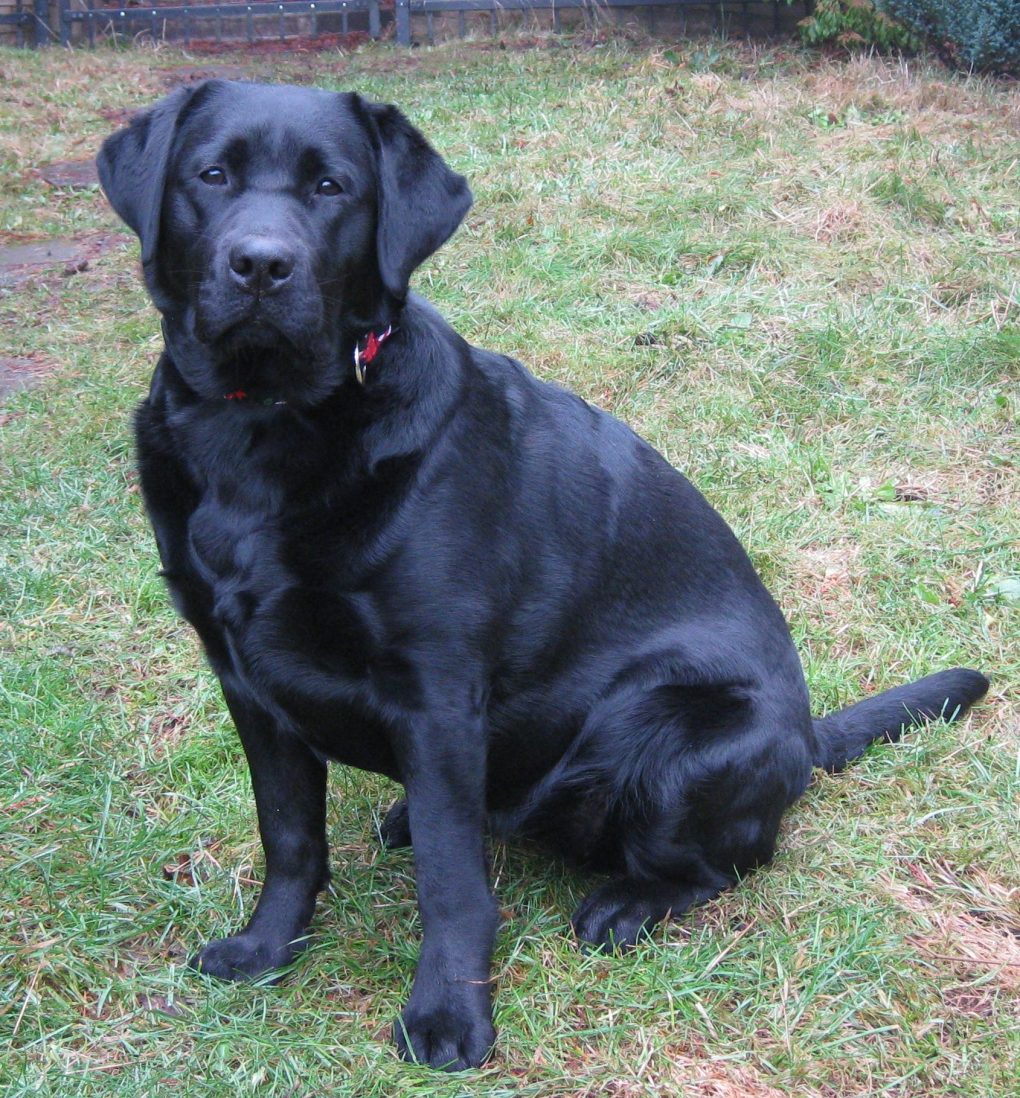
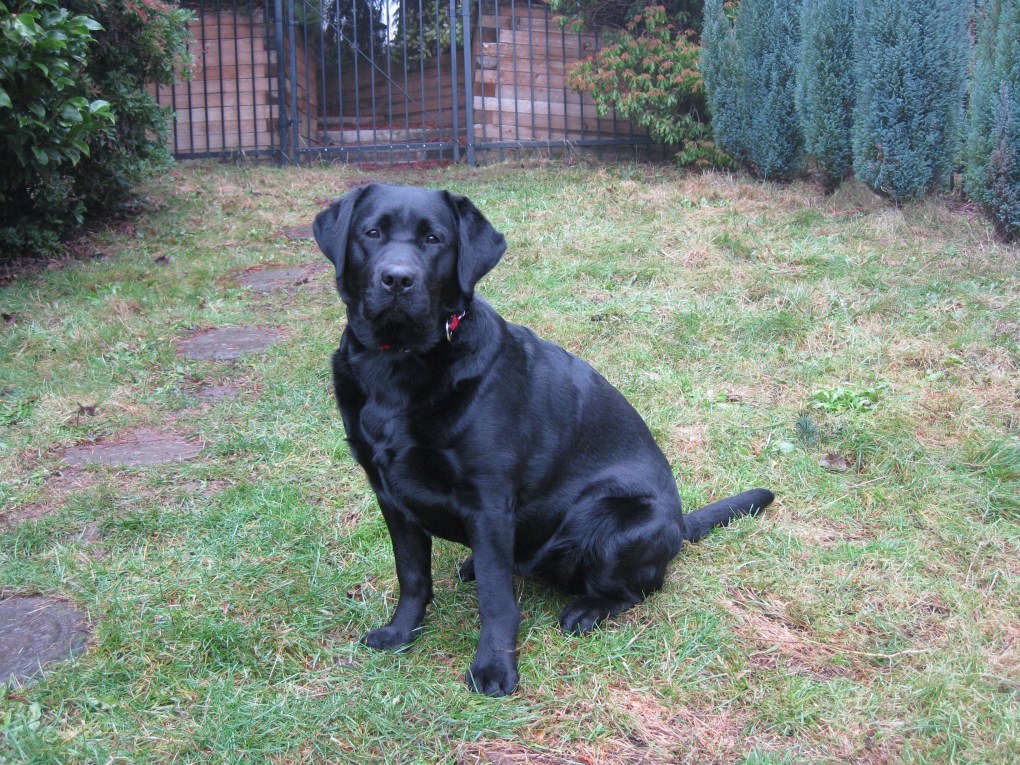
Last night I awoke from a recurring nightmare. I had lost Halo, my little black labrador retriever while the rest of our family was on vacation.

The loss of my gentle little dog was shattering. I imagined her shivering alone, hungry and confused in a dog shelter awaiting a death sentence and wondering what in the world she could have done wrong to make Daddy leave her.

I didn’t know where I’d lost her or how. I had only vague recollections of taking her with me, but where? It seemed I was losing my memory like both of my parents did years ago.

I said something like a prayer, but not to God. It was to Halo, trying to reach her through the ether and tell her I still loved her. I asked her to forgive me for being such a fool and losing track of her. I said I was so, so sorry and cried for her forgiveness until the anguish woke me up.

When my eyes popped open, I knew she was OK. I remembered putting her to bed that night and playing in the backyard with her and two of my grandkids that afternoon.

The flood of relief was beyond wonderful! I smiled at the darkness in the room and thanked God, remembering a time years ago when a similar dream about my son had shaken me to the core.

Eventually I got back to sleep, knowing that one of the most loving beings I’ve ever met was safely sleeping downstairs on her little bed with the brand new Naugahyde cover Sandi finished sewing onto it that afternoon.

And that’s platonic love, not romantic, not parental? Does love really need any qualifiers?

In God’s eyes, I doubt there’s a black-and-white distinction between romantic love and all the other forms we think we’ve identified. In my heart they all feel equally transcendent and sacred.

I wonder if John Lennon saw beyond the distinctions we make in the way we love.

“Because she loves you.
And you know that can’t be bad.”

Nonlocal love,

Talmage


Why are we here?

Many years ago, Neil Young wrote something profound and worrisome, “Only love can break your heart.”

But just this morning Ellie, my granddaughter asked, “Why are we here?”

Auntie Teri laughed and said, “That’s the great philosophical question that everyone wants an answer to.”

I blurted out, “I can tell you why we’re here. It’s so we can learn…”

But I hesitated as thoughts rushed through my head. Things like, “We’re here to find out what it’s like to live in a place where God isn’t physically present to influence us… so we can see who we really are. Our souls are from another realm called Reality. Life in this Universe is an E8 simulation that Johanna calls 229 H Street. God is The Great Surfer who lives outside of space and time and misses us when we’re away from home…”

My words, “So we can learn…” hung awkwardly in the air. I was starting to realize I had nothing appropriate to say to someone her age.

Until she rescued me and finished my sentence…

“to love?” She made it look and sound like a genuine question, but it felt to me like an angel’s solemn message.

I said, “Yes,” and grinned the biggest ever, realizing that she knows more about life than I do.

“We’re here to learn to love,” I said firmly, pretending that “love” was the word I was searching for all along.

“For only love can break your heart. What if your world should fall apart?”

No, Neil Young, your world won’t fall apart. Hang tough. Ellie says the whole reason we’re here is to learn to love. And she should know, she’s five years old.

Your pal, Talmage


Stardust and Energy Alone – finally on YouTube

I read another short story on YouTube. It’s an old one that I wrote and posted here in 2017.

It’s kind of sad, so if you’re depressed, please don’t listen to it until you’re feeling way better. Which will be soon, I hope.

It’s called, Stardust and Energy Alone.


I’m thinking from now on I should focus only on the stories, not the video clips.

Stringing together video clips that follow a story to any vague degree is a time-consuming, tedious process that probably distracts the viewers from visualizing the story in their minds, the Earth’s high-tech simulators.

I may eventually take drone videos of local rivers and use those for background on YouTube. I’ve got a cheap learner-drone coming in the mail, so we’ll see. Hope it works out because I need more natural vitamin D3. Actually, I think there’s more health-related energy coming from sunshine than just the D3 conversion — assuming a person doesn’t over-do it and age their skin or worse.

I’m not sure if YouTube viewers would want the words scrolling across the video as I read. I could start doing that, I guess.

Any thoughts?

Tanks, pal,

Talmage

Photo by Annie Spratt on Unsplash


Natural Zombie Bliss – Your Deeper Costs Explored…

John Lennon wrote most of the world’s greatest songs, you can’t change my mind on this. I was eight years old when the Beatles landed in the US.

One of John’s eternal messages starts like this…

Turn off your mind, relax and float down stream.

It is not dying. It is not dying.”

Just as the Genesis serpent was sort of right and wrong when it told Eve, “You won’t die,” John Lennon was both right and wrong about turning off the mind and not dying.

He was right that we’d all do well to turn off our inner critics sometimes and rise above the fears that bind us.

Turning off the inner voice allows the silent parts of the mind to shine. For me, this has become a major goal of meditation: waking up my subconscious gifts by temporarily shutting up inside.

The exercise lets the silent parts of my mind arrange things wordlessly and efficiently, making intuitive and logical connections that would take way more time in the verbal realm. Sometimes, in fact, it’s like a message blinks into my head from beyond like the proverbial “download.” Who knows what this is, really? I don’t.

The wise and occasionally depressed King Solomon wrote, “For everything there is a season… a time to keep silence and a time to speak.”

This passage advocates balance, not black-and-white labeling. I like that.

With a little reflection, it’s clearly not in our best interests to always keep a silent mind, focusing only on what the hands and eyes are doing in the present moment.

If you’re depressed, of course you must learn to “live in the present moment,” shutting off that blasted verbal and visual habit of going over past hurts, fights, losses and embarrassments, as well as future worst-case scenarios. This kind of rumination will drown you unless you put in the time and effort to learn inner silence and the skill of stopping and diverting inner “tapes” when they turn self-destructive. Everyone knows this.

But if you’re not depressed, your inner voice can help you with all sorts of nice things.

Like when you’re washing your hair in the shower and your mind wanders. Some of the best stories come directly from heaven to Earth through shower nozzles. Ask any writer.

Some of my blog posts spring into my head in nearly final form while I’m sitting on the floor with my legs crossed planning to focus only on conscious, deliberate breathing.

Just as some academics are misguided in thinking that maleness is inherently evil, so some gurus are confused into believing that inner chatter is inherently negative.

It’s understandable. I’ll admit that my dog, Halo, avoids inner monologue assiduously and she’s the happiest person alive, but still, some of the spiritual and psychological advice I read regarding the inner voice can’t possibly apply to humans.

Not only do they imply that the inner voice is an unqualified negative to be abandoned for the eternal superficial concrete present moment, they also have the obtuseness to equate the inner voice with the total mind.

I’m sorry, but some of these experts are like a mouse with its head stuck in a coke bottle. Myopic but enjoying the flavor.

The inner voice is just a tiny part of the mind, gurus. Come on, the non-verbal parts are the iceberg below the surface. Things like:

1. Free will (the non-physical core).
2. Conscience (molded by the environment but innately sensing fairness).
4. Silent analysis of math, physics and ecosystems.
5. Autonomic and deliberate breathing.
6. Circadian timing of the body’s organ systems.
7. Consciously moving body parts.
9. Doing body-scan meditation.
11. Intuitive self-preservation (for instance, sensing that the guy leading your meditation group is more of a crooked cult leader than a loving mentor.)

That last one is significant to trusting souls like me…

I took a $2,000 online meditation class a few years back from a PhD claiming to be doing breakthrough scientific investigation, the goal of which was ongoing bliss. His success rate was through the roof, he said. And I was “special” for even reading his email ads. Gee.

In retrospect, some of the participants did find bliss by the halfway point. But I wouldn’t call it enlightenment because there were side effects not mentioned until after the money changed hands. After that, he discussed the side effects as if they were trifles and “perfectly normal,” a phrase he repeated often over the weeks as students shared their growing concerns.

Tell me, are these side effects normal?

1. Memory problems.
2. Loss of organizational skills to the point where “enlightened” people from the prior group had to use lists to keep track of simple everyday tasks.
3. Diminished interest in fiction of all types.
4. Loss of interest in other people’s lives and stories. “You’ll have to fake interest.”
5. The showstopper: those who achieve the highest level of ongoing enlightenment would experience the complete loss of emotion, including love.

Would a scientist fail to mention these details until after he had your money? I doubt it, but maybe the pop business literature of the 1980’s was right — suckers deserve to be fleeced. I doubt anyone reading this believes such Darwinian dogma, but who knows?

To be fair, I did sign many pages of legal docs that I didn’t read. The side effects of eternal bliss might have been listed there in the fine print, but it wouldn’t have made any difference because the legal papers were sent to us only after the good doctor had stashed our cash safely in his account.

Anyway, this next part is interesting. During the classes, there were always questions from the students about how one or another of the PhD’s ideas could be integrated into the concepts of other famous gurus.

The doctor’s answer? If you want bliss, such questions miss the point: Forsake all thinking and do the exercises.

“The mind,” he said, would only interfere with the highest possible human goal: obtaining a permanent blissful state of enlightenment. He had his own proprietary words for enlightenment, of course. But the mind must be turned off during this bliss-through-meditation process. We were building new neural pathways, after all. We needed only to stop thinking critically and follow his instructions to the letter.

And so I lay on my back in my bedroom with electrodes on my chest doing endless varieties of body-scanning type meditation, two hours and more each day for eight weeks. Plus online small group meetings and other assignments.

About that time (which was halfway through the course) one of the people in my subgroup on Google Hangouts reported serious memory problems that were getting worse.

Both of my parents died with significant dementia, as you may recall from other posts, so I have zero tolerance for memory loss. And now the “perfectly normal” side effects of this man’s bliss scheme appeared to be real.

I left the program quietly.

He later kicked me out of his Facebook group when, in response to his own request for feedback on how to improve the success rate, I suggested he might in effect pre-screen the participants by telling them the potential side effects of success before taking their money.

This was to imply that a PhD should act like a scientist not a drug dealer. I wish I’d said it that way.

Bottom line, I would never trade my memory, my love for fiction, or my interest in other people’s lives for ongoing bliss.

And I certainly wouldn’t risk my ability to love people. Not for anything. One day when I was a new Christian in a Church-run High School I experienced a sense of God’s love flowing through me to the other students. It was weird, probably the most joyful and meaningful experience of my life. 

“Love is all and love is everyone. It is knowing, it is knowing.” – John Lennon

John was totally right about that. I’ll never give up hope of someday revisiting that feeling. I’d never trade the faintest hope of agape love for an emotionless, loveless life of ongoing zombie bliss. “No tanks, uh?”

Although self-love runs contrary to my upbringing, I also wouldn’t want to lose the ability to love myself, even if it feels wrong to say so — and it does. (Some people of my generation were taught that self love indicates there’s something terribly wrong with you. It sounds bizarre, I know, but “correct” thinking was 180 degrees different back then.)

I’m telling you all this to illustrate the danger and stupidity of turning off your mind’s critical thinking and logical objective analysis for the bliss offered by a guru or “bliss researcher.” Not that they’re all the same. I really don’t know. But in some cases, the bliss is real and the cost is your empathy and love. I suspect these methods rewire the circuitry of mirror neurons. 

At any rate, the DNA Code Writer would not have gone to all the trouble of coding for the human brain and its transcendent access to free will if the ultimate purpose of humanity was to turn off the whole cognitive process for a flat-affect bliss that kills empathy like an opiate addiction.

I’d guess the severely depressed and suicidal among us might be tempted to trade almost anything for bliss. I don’t blame or shame them for it. Major depression is hell on Earth, often fatal. Don’t cast the first stone.

But I’m talking about seeking a higher spiritual path when your life is pretty much OK.

In that context, it’s unhealthy, stupid and dangerous to shut off your mind. All money hungry cult leaders demand that you stop thinking critically and fall in line. Usually they do it more subtly and artfully than my PhD friend with his little ongoing-bliss scam.

So be intelligently careful and balanced.  If you’re depressed, use inner-silence meditation to deal with rumination. If you’re fine and seeking a more spiritual life, try inner-silence, slow breathing and yoga to discover the gap between your free-willed self and the brain-fixed aspects of your mind and body. Use your silent techniques to connect with your highly efficient subconscious creative talents. And probably I’ll meet you in a non-physical realm of agape love someday. Stranger things happen.

Namaste,

Morrill Talmage Moorehead, MD


The Elephant-Sized Flaw in Large Clinical Trials

Imagine you’re like me and have a genetic variation in your D2 Dopamine receptor code which makes some aspects of “executive functioning” difficult. (I was always the last one to finish my lab work in Chemistry, Biochemistry, and General Physics — though I got the highest final score in Physics Lab, so I’m not claiming to be stupid.)

Anyway, you’ve got this D2 challenge in your brain, you do some reading and discover that organic velvet bean powder has L-dopa that might help you with things like working faster through cookbook recipes.

You buy some velvet bean powder, try it and, wow, you’re not only more efficient, your mood improves.

You should feel ecstatic, right?

But no, you’re vaguely suspicious because you’re a medical doctor. Professors and attendings have warned you that anecdotal evidence is worthless, and the placebo effect is ready and waiting to make a fool of you. 

To avoid embarrassment, you decide you need a double-blinded, prospective clinical trial with a large number of test subjects and proper randomization. Anything less would be rubbish.

Fortunately, this is not a problem. You’re also a multi-billionaire who can fund a complete drug trial.

Of course, you didn’t get rich by ignoring opportunity. You plan to make money with these velvet beans. 

Knowing that your problem starts with genetic D2 variation, common sense tells you to study a few thousand people who have the same genetic makeup.

But what about your target buyer? A businessperson looks there first.

From that perspective, you want the FDA approval to apply to as many people as possible so you can hand out genetically modified velvet bean pills to the broader public and make more money.

You therefore choose the typical mainstream experimental design: Thousands of unselected participants taken in randomly and then randomized and blinded into trial and control groups. You’ll also blind the people administering the bean pills and placebos so no one can fault your study.

Ten years and 1.2 billion dollars later, the trial ends and the stats come back from the math geeks, those rare professionals who honestly understands statistics and can manipulate them dishonestly.

Despite their efforts, they bring you bad news. There is no statistical evidence that your patented velvet bean extract improves executive functioning or mood.

Rats!

You go home and glare at your dog, then apologize with an organic carrot.

If you publish the paper, the entire world of mainstream MD’s, those smart women and men who don’t read the scientific literature or think for themselves because they’re too busy and frightened of lawsuits – those dedicated, exhausted people will hear from their educators, the drug reps, that velvet beans are rubbish. “This is just another example of the functional medicine quacks peddling snake oil.”

But you take organic velvet bean powder every day, it’s made a real difference. In the kitchen now, you’re turning out Molten Lava Cakes faster than the famous TV chefs. You feel more grounded and calm, too.

What should you do?

It’s obvious, isn’t it? Common sense tells you to go back and do a clinical trial using people with the D2 receptor issue, testing the organic velvet bean powder that works for you, not the GMO stuff your lab cooked up for megabucks.

Unfortunately, this common-sense approach rarely if ever happens in the real world. Negative studies like this are routinely published, and the mainstream fails to see the elephant-sized flaw in their assumptions: the human population is vastly more diverse than previously known at the genetic and biochemical level.

Genetic diversity is relevant to every branch of medicine because single nucleotide polymorphisms (genetic SNPs), like the one that affects my D2 receptors, create a huge diversity in disease susceptibility at the root-cause level, as well as a myriad of diversity in personal strengths and weaknesses within every system of the body.

From the central nervous system to the skin, genetic SNPs are the rule, not the exception. And science has hardly begun to uncover them all or understand their complex interplay across systems.

I have another common genetic SNP that reduces my ability to “detoxify” caffeine by about 60%.

With this knowledge, I’ve lowered my caffeine intake from several double mochas a day (at the VA Med Center years ago), to two cups of green tea per day. This reversed an unbearable sensation of vascular congestion in my legs. (n=1)

I also have a SNP that makes me inefficient at converting beta-carotene to vitamin A, a few SNPs that increase my need of several B vitamins for adequate methylation to keep my homocysteine levels down, and numerous others that I won’t bore you with. But despite all my SNPs, I’m still quite healthy for a 63-year-old man.

The thing is, genetic SNPs are so common, you yourself almost certainly have at least one, more likely a handful. So it’s irrational for researchers to lump you into a huge unselected “normal” population when they’re testing something. And it’s misinformed and lazy for MD’s, however busy they are, to ignore your SNPs and follow cookbook-official protocols when treating you. They need to read more broadly and act with integrity even if it costs them.

Genetic diversity is why functional medicine, imperfect as it is, will become central to mainstream medical care someday. The establishment will change the name from functional medicine to something they haven’t already disparaged.

Currently, they say functional medicine is not evidence-based. In some ways that’s true.

But when it comes to reversing chronic disease rather than just controlling its progression, functional medicine is more evidence-based than mainstream medicine because it uses personal genetic data that the mainstream ignores.

Moreover, it understands the elephant-sized flaw in the mainstream’s large clinical debunking trials. 

Morrill Talmage Moorehead, MD

Photo by Rafael on Unsplash


Science Morphed into a Spiritual Bully

“Remember how electrical currents and ‘unseen waves’ were laughed at? The knowledge about man is still in its infancy.” – Albert Einstein.

Slow deep breathing shunts blood to the prefrontal cortex and the subjacent pleasure center on the left. Science can tell us this much, but it cannot detect the non-physical field of free will interfacing with the brain.

When science leaps in faith beyond its self-imposed physical limitations and denies the existence of free will and all else non-physical, it is like a man who has refused to open his eyes since birth, declaring now that all vision is an illusion. He, being superior to the uneducated in intellect, insight, courage and integrity, stands alone as willing to face the difficult and oppressive truth that human vision is a false, meaningless illusion.

Science must learn to admit the obvious: it has chosen materialism, to be blind to the non-physical realm and all evidence of its existence, including the most obvious, free will.

While this choice persists, science cannot claim to be informed about the realm it ignores, much less pose as an infallible anti-spiritual authority in Western textbooks and classrooms.

Morrill Talmage Moorehead, MD


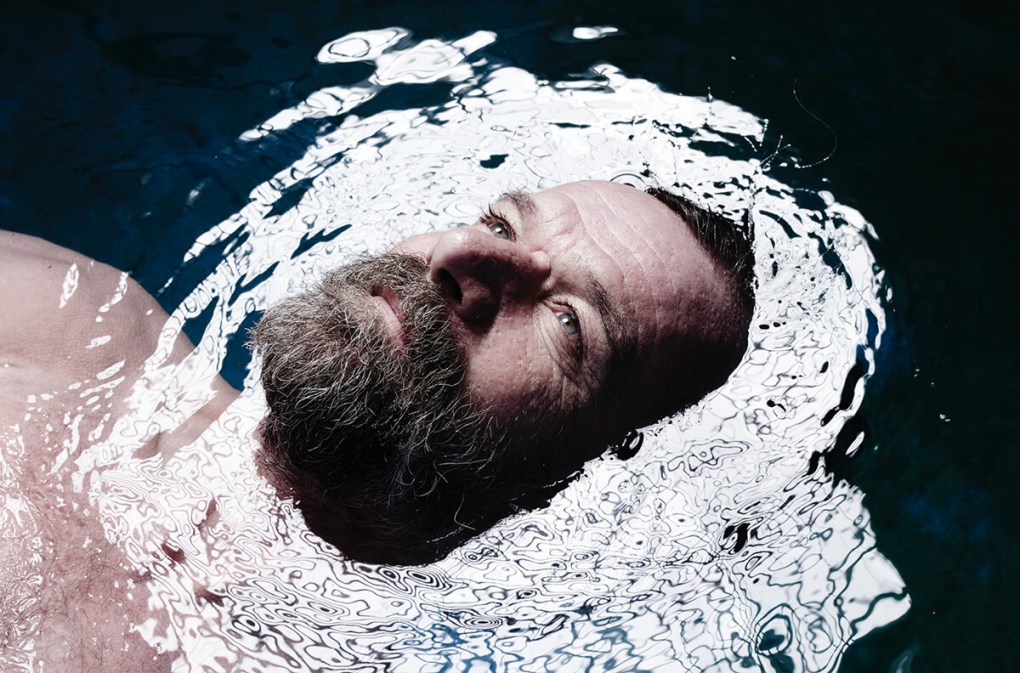
The Iceman Fixed My Headaches!

The Wim Hof method of life improvement through hyperventilation, breath holding and cold exposure has gone mildly viral, but until I googled “Wim Hof and headaches,” I thought I would be the first to mention a headache connection.

Mr. Hof is no joke, by the way, though he comes across as happier and more enthusiastic than our jaundiced society allows. For this, some call him crazy.

He’s not.

But he’s not above reproach, either. Who is? He makes a few over-the-top claims. For instance, he’s made medical claims that jerk the black-and-white chains of professional skeptics whose logic casts out the baby with the ice water at the slightest provocation.

But many scientists, journal gatekeepers, and healthcare providers depend on the “incurable” adjective. And they’re human. Where would they all go if, for instance, type 2 diabetes disappeared along with a few of the most common cancer types? How can anyone expect them to be objective about feeding their children?

I’m afraid I’m not.

So let the skeptics howl while the rest of us avoid their binary thinking. We’d be nuts to write off Wim Hof for simply being as excitable and capable of exaggeration as most of the rest of us.

You probably know he’s earned many world records for things like sitting in ice water for roughly 2 hours and swimming a terrifically long distance under surface ice, once overshooting the exit hole and nearly drowning.

He recalls no fear of dying during the incident and now says he has no baseline fear of death. That’s fascinating and probably important. Who knows?

Under medical supervision, a few brave scientists injected him with toxic bacterial antigens, waited, then drew his blood for analysis. It showed a lack of the expected spike of inflammatory markers. He had no fever and felt no flu-like symptoms.

Wondering if Wim was unique in this ability to suppress inflammatory markers, they had him train a dozen new students for 2 weeks, then tested them.

The students’ bloodwork showed a low inflammatory response compared to controls, and they reported less intense flu-like symptoms.

And as if destiny wanted to remove all suspicion that Wim has “superhuman” talent, the man has an identical twin with no unusual cold tolerance.

Another group of scientists put Wim in an MRI scanner wearing a cold-immersion bodysuit. This was fascinating. They found peculiar activity in his insula and the periaqueductal gray areas of his brain. Also, he had increased glucose metabolism in his intercostal muscles.

I’d like to know if he was panting. I vaguely remember a video clip of him panting in a tub of ice, but I can’t find it now.

It’s safe to say that Wim Hof’s path to “health, strength, and happiness,” has a few credible underpinnings in physiology. And there’s also the “life-changing” effects asserted by his raving students.

Unfortunately, the body is too complex for our hyper-segregated sciences to explain the morphologic, physiologic, biochemical, epigenetic and genetic details of anything much beyond conditions like sickle-cell anemia, but an obvious feature of Wim’s achievements is human antifragility, a counterintuitive response that includes hormesis, the beneficial middle-dose of something toxic or even lethal at higher exposures.

Sulforaphane, for example, is a hormetic found in broccoli seeds and sprouts, produced ostensibly as an irritant to discourage predators from destroying the seeds. When we ingest broccoli sprouts (or seeds) with the right dose of sulforaphane, it activates dormant genes that strengthen us against certain stressors. For all the wholesome details, listen to the research scientist, Rhonda Patrick, PhD, cast a spell on the subject discussing studies that correlate sulforaphane ingestion with reduced incidences of breast and prostate cancer.

Oh dear, I hope the medical thought police don’t revile me for suggesting there’s hope of preventing such lucrative diseases through simple hormesis.

Anyway, in the Wim Hof method, the hormesis comes from hypoxia and cold exposure, either of which might kill you at too high an exposure.

What doesn’t kill us wakes us up, it seems.

Hmm…

Since my first breath-holding ocean dive (with no wetsuit) at Shell Beach, California, age 12, I’ve loved holding my breath — just for the relaxation and clarity of mind it brings. As we know, the mammalian diving response kicks in, shunting blood to the brain, lungs and heart.

What a fortunate setup for anyone living on a water planet, though! Who do I thank?

Later when I took SCUBA, I learned that by hyperventilating before breath-holding, I could stay down longer because huffing and puffing expels carbon dioxide and makes the blood less acidic. This shifts the oxygen dissociation curve to the left, allowing the red blood cells to deliver more of their oxygen to the tissues, giving us the feeling that hyperventilation supersaturates the blood with oxygen. It doesn’t as far as science can so-far determine.

It’s also true that CO2 buildup in the blood provides us with the urge to breathe. That’s why blowing it off in hyperventilation lets you stay down longer before air thirst forces you up for a breath.

This scenario is dangerous, though, because hyperventilation can make you pass out and drown — as can hypoxia.

I urge you not try hyperventilation in the water. Wim Hof says to do it lying down. (Far from a pool or bathtub, I’d add.)

And here’s another caveat: too much hypoxia causes brain damage, depression and dementia. We know this from studying sleep apnea, a common ailment that’s vastly underdiagnosed and contributes to a truckload of human misery. So “moderation in all things” is the faithful heuristic. And for the careful, swimming underwater in the cold (without hyperventilation) wakes up the mind and makes you feel sharp as a tack.

Since life on Earth was intelligently designed, our bodies keep us fully conscious and awake under water because the alternative tends to be fatal. Whoever wrote this planet’s genetic codes must have designed life around water and decided that we would hold our breath and spear cold-water fish during the ice ages. This would have the side effect of providing a diet rich in marine oils to supply DHA to our brains which are predominantly lipid and heavy with DHA, an omega-3 fatty acid.

Periodic ice ages awaken humanity’s epigenetic adaptations to cold, it seems, switching on genes that become dormant during warmer eras. Activating our “cold-shock” genes to produce cold-shock proteins renders us not merely cold-resistant, but antifragile to cold. We don’t merely survive the ice ages, we thrive — mentally, physically, emotionally and probably spiritually.

We’ve all seen clear evidence of this in the ancient megalithic structures on most continents — evidence the mainstream detests because it falls outside their “gradualism” dogma of all history.

Nevertheless, since the Younger-Dryas event ended the last ice age about 11,600 years ago, our species has forgotten the value of God’s latent gift of cold-adaptive epigenetics. Fortunately, Wim Hof and a few scientists are rediscovering it, uncovering what may be a human capacity for broad volitional immune regulation and substantial mood management.

Some of this magic results from the “mammalian diving response.” It’s a well-studied physiologic mechanism that shunts blood to vital organs, as I mentioned. This includes the brain’s center of higher decision making, the prefrontal cortex, which is close to a quasi-pleasure center located just below the left prefrontal region.

It would seem that Earth’s DNA Code Writer has worked to keep us alive, healthy, happy and eating cold-water fish with our broccoli sprouts.

“The God Hypothesis is now a more respected hypothesis than at any time in the last 100 years.” — Frederic Bradford Burnham, PhD.

I haven’t taken the Wim Hof course, as yet, but I’ve watched enough relevant YouTube videos to know the basics, and I’ve been doing an easy version of cold exposure and hyperventilation-with-breath-holding for five months now, several times a week. In my view, Wim Hof is onto something big with the potential to help many of us, not just my fellow headache sufferers. But let’s be careful not to over-do the hypoxia aspect.

Although I’m not quite as predisposed to euphoria now as when I was younger, I do feel exhilarated after a cold shower, and mentally sharp with temporary mood elevation after the intermittent hyperventilation and hypoxia.

By the way, if you try cold showers, consider my method. I’m careful not to let my subconscious mind learn to hate the whole experience. To me, this principle of catering to the subconscious is a key to sustaining purpose with anything that requires discomfort and ongoing effort.

Here’s how I avoid hating cold shower…

First I step back out of a hot shower, turning the knob all the way cold. Then I put one part of myself into the shower at a time. I stay in the cold spray for seven breaths, step out and warm up for a few breaths then rotate another section of me into the cold.

In the past I’ve tried cold showers by sudden immersion and wound up avoiding the whole process after a few weeks, having never consciously decided to stop. It seems that when anything is judged by the subconscious self to be too uncomfortable, we avoid it reflexively without conscious deliberation. In this way, the subconscious mind makes many decisions about survival. We see this happening with hunger avoidance, cold avoidance, pain avoidance, and the avoidance of believing things that will bring us rejection by our peers and bosses.

There’s good scientific evidence now that cold showers should improve most people’s health and well-being, but the most unexpected thing for me was the headache remedy.

I’ve had headaches all my teen and adult life, originally caused by something in fresh fruit (probably fructose) or in my 30’s by caffeine withdrawal.

Nowadays, my headaches come mainly from eating a little naturally occurring sucrose in my low-carb, circadian diet. (Sucrose or “table sugar” is half fructose, so that may be the primary cause of my headaches now.) Incidentally, the low-carb, circadian diet brings me mental clarity like nothing else ever has.

I’ve had about 12 headaches (all associated with “natural” sucrose intake) since I’ve been doing my easy version of the Wim Hof method. Each headache has vanished after hyperventilation and breath holding, usually after 4 or 5 cycles. That’s 12 our of 12!

Cold exposure doesn’t seem to affect my headaches, though at least one observant writer describe evidence that “cryotherapy” of this sort might prevent migraine headaches by reversing the low norepinephrine levels found in migraine sufferers.

Also, it may be noteworthy that at least one anecdotal report has surfaced of a headache appearing after doing the Wim Hof technique.

One size rarely fits all in biology. Perhaps it’s tangentially relevant that when I’m trying to get rid of a headache, it sometimes feels worse during the hyperventilation phase, diminishes during the breath holding, and then vanishes after several cycles.

My last headache inspired me to write this article. It woke me at 5:30 AM pounding in my skull. It felt like one of the monster headaches that lasts all day and brings nausea.

I did the usual 4 cycles of Wim Hof hyperventilation and breath holding and although the pain diminished, it quickly came back. Not willing to give up and waste the entire day in pain, I kept at it, hyperventilating more and more vigorously and holding my breath longer and longer as my heart chugged in my chest. Finally, after about 12 intense cycles, the pain vanished completely and never came back, not even a dull ache.

Dude! Thank you, Wim Hof.

I speculate that the diving reflex, while shunting blood to my central nervous system as designed, also sent blood flowing swiftly through my scalp where the nerve endings for headache are thought to reside, diluting out vicious chemicals released by mast cells. These chemicals were causing vasoconstriction and pain while signaling for inflammatory cells to rush in.

And because I treated the headache early in its course, I postulate that the inflammatory cells that would have migrated in, set up shop and made the headache a full-day affair never had time to arrive in significant numbers.

Of course, not all headaches have the same pathophysiology. What stops mine might not touch yours, and might even make yours worse. But the Wim Hof Headache Fix is worth a try if you suffer headaches. Just promise me you won’t hyperventilate near water, pass out and drown, OK?

Eyes open, no fear, be safe everyone.

I wish I’d had the Wim Hof Headache Fix when I was a highschool boy lying in bed on Sunday afternoon in my dorm room in throbbing pain, praying to God for relief and assuring him that I understood if this wasn’t the time for a miracle.

And I wish scientists weren’t so quick to shout down everything that moves contrary to their “knowledge.”

Science has historically made quantum leaps by seeking the unexpected, the weird and impossible. It’s tragic that many scientists today express pride in their skepticism. It would serve us all if skepticism were a source of scientific shame.

And it doesn’t matter what’s new, weird, or improperly boxed, my generation of baby-boomer scientists will attack and viciously debunk it, often without studying the work they’re struggling to bury. For example…

The “fringe” evolutionist, Elaine Morgan’s theory that humans evolved from aquatic apes is rejected by mainstream evolutionists for purely emotional reasons, as best I can tell. The phrase, “aquatic apes,” doesn’t sound right to them regardless of the evidence.

The non-materialist research scientist, James Tour, makes an absolutely stunning case for intelligent design in origins theory, only to hear the materialist establishment reject his insight and expertise because they already “know” that life’s origins are mindless and meaningless.

When David Chalmers, a self-proclaimed “materialist at heart,” calls for open minds in the scientific community to consider the “crazy” possibility that consciousness (rather than matter and energy) is fundamental to the cosmos, the mainstream ridicules him because their own untestable assumptions seem patently obvious.

Scientists of the Thunderbolts Project provide evidence that electromagnetism is a more influential force than gravity in the universe, but the mainstream still struggles to ignore them.

Governmental officials team up with fighter pilots to show evidence that UFO’s are real, someone in our skies seems to have breakthrough technology, but academics remain invested in denial of anything beyond their insular, inbred boxes of narrow expertise.

I’m hoping that something will change with the next generation of scientists and thinkers.

Maybe the next team will value objectivity over skepticism.

Science could use their help right now.

Cheers,

Morrill Talmage Moorehead, MD

Please share this post with friends who suffer from headaches or chronic dogma impairments.


“The bigotry and intolerance of the scientific community…”

“The thing that we all know most directly and most certainly – that is, the existence of ourselves – is ultimately incompatible with materialism.” – Jay Richards, PhD.

When I attended a Christian university in the 1970s (now called La Sierra University) I took an upper division genetics class from Gary Bradley, my hero to this day, who subtly taught the logic of associating a Code Writer with this planet’s unfathomably complex DNA. His scientific insight was ahead of its time and became the intellectual basis of my faith in God.

Although my unbalanced version of Christianity made me a doormat in the dog-eat-dog world of pathology, the realization that God existed and, being smart enough to write genetic code, could easily understand English and undoubtedly hear my thoughts and prayers, improved my life dramatically, giving me a sense of meaning and purpose, despite my habit of not standing up for myself.

Today, more and more brave scientists and thinkers are making the connection between Earth’s code-based life and an intelligent code writer. Random mutation and natural selection don’t stand up to mathematical scrutiny when you know something of the complexity of proteins and the DNA codes that produce them.

But breaking with tradition is dangerous. Modern scientists are like preschoolers fighting to control the rules to the latest game. And they are literally religious fundamentalists who believe that their dogma alone can save the world.

The dogma is materialism: the arrogant, arbitrary, inflexible assumption that nothing could possibly exist besides matter and energy. This is a philosophical assumption that cannot be tested. Hence we should not equate it to science or let it be preached to school children as “the foundation of the scientific method.”

It’s actually the foundation of scientific fundamentalism, a religion that has quietly slipped in and taken rigid control of the minds, careers and publications of the scientific community. Materialism has become a roadblock to the funding of any project that doesn’t knuckle under to the dogma of a random, meaningless, depressing, purely material universe.

But here’s a breathtaking video that brings hope that perhaps today’s young people will rescue science from fundamentalism…

“Oddly, the [scientific] materialist has to deny the existence of the scientist.”

So true, and so ironic.

Back in the day, Gary Bradley openly questioned Neo-Darwinism in class, emphasizing the crucial importance of protecting the genetic diversity, natural order and purity of Earth’s ecosystems from the myopic intrusions of corporate science.

At the time, I did not understand how rare this part of my education was. But now I know that at least in the last fifty years, professors and textbooks have assumed without question that science is materialistic – there can be nothing but matter and energy anywhere, ever. Therefore, the mind is an illusion. Intelligence is an accident of matter, a random epiphenomenon with no meaning or higher purpose.

During their impressionable college years when objectivity writes on a clean slate, very few modern scientists have been allowed to hear both sides of the argument between materialism and intelligent design. Nevertheless, some have heard it now and are coming around, saying that there’s evidence in favor of the concept that we are genuine beings with free will.

Here’s a video touching on some of that evidence…

“No, You’re Not a Robot Made Out of Meat

In college, students are usually taught what to think not how to think. The struggle for most undergraduates is to memorize quickly for multiple-choice tests. We tacitly assume that everything we have crammed into our heads is true, including this western secular worldview disguised as the foundation of science.

But the mainstream answer to this question, “Does the Universe consist of only matter and energy or is there also something more, such as mind, identity, or a Supreme Being?” is not directly testable and therefore not capable of being the foundation of science. It’s a worldview, a philosophy, a spirituality or, if you ask me, a cultish religion that has morphed into today’s academic culture of scientific fundamentalism.

Morrill Talmage Moorehead, MD

Please share these videos with the young minds you know and love. Give them something to balance the dogmatic materialism that undermines happiness and limits science itself. Give someone a glimpse of the rational universe where depression and suicide are avoidable through the pursuit of a higher, loving purpose.


Practice Makes Perfect Villains

Fiction writers have an advantage in life that centers on the need to develop a rare skill for objectivity in creating a villain.

Memorable villains need to believe that the harm they’re causing is necessary and right. To accomplish this, their logic must be accessible and human. Villains can’t all be masochists and cardboard psychopaths. Even serial killers can believe they’re doing good work, or at least think the universe is a random place without right and wrong.

Having read, The Talent Code, by Daniel Coyle, I’m all about focused practice. But how do you practice objectivity?

Here’s an idea: select a highly controversial topic for which you have a strong personal bias, and see if you can make yourself realize that a decent, rational person could exist on the opposite side of the argument.

Personally, I might start with the war over vaccinations and this video…

https://www.youtube.com/watch?time_continue=4&v=Bjvjf4MnFqc

The pediatrician on the left of the screen claims to be in the middle ground of this complex fight, catching hell from both sides. He has written a book he claims is pro-vaccination. He says he has given many vaccinations to his young patients and continues to. Yet because his book promotes temporal spacing of the inoculations, he says pro-vaccine people want his book banned.

The interviewer is fully in the anti-vaccination camp and says he’s devoted his professional life to the cause. Yet he seems supportive of the “pro-vaccine” pediatrician. Something is going on beneath the surface.

The offstage villain in the video is the CDC / mainstream medical community with their rigid vaccine schedules that seem to expand each decade, supporting a commercial industry that cannot be held liable in court for any mishaps or negative side effects of their product. That’s unique, isn’t it? Fortunately, our politicians didn’t grant Monsanto the same deal for their big product, RoundUp, touted as saving countless lives from starvation through the virtues of genetically modified crops that can tolerate glyphosate, the poison in their weed killer.

Since I’m highly disenchanted with mainstream medicine despite my degrees and indoctrination, my challenge here would be to give the “vaccine villain’s” logic and data a fair hearing, both intellectually and emotionally.

To do this, I would need to see the historic cause-of-death stats for all the relevant communicable diseases in the US prior to vaccinations. Then, to sense the emotional viewpoint of this villain, I would need to read historical accounts written by parents whose children suffered and died from the diseases in question.

Having done that, I would probably have enough objectivity to avoid ascribing two-dimensional evil to a pro-vaccination villain of a fictional tale.

But this superficial preparation wouldn’t be enough. I don’t write primarily to entertain. Wish I could, but it doesn’t hold my interest. I need to also teach. Because of this character flaw, I would strive to determine if I was placing my villain on the genuinely misinformed side of the vaccination war.

I’d have to read the relevant medical literature objectively and develop an informed opinion. My present opinion, though strongly biased, is weakly informed despite years of interest in autism. As a scientist and lifelong teacher, I need to know my biases and either abandon them or justify them with data. As a fiction writer not satisfied with entertainment, I have to do the same.

The side effect of realistic villain creation is a blessing to all who write fiction. The process, if we practice it, will force us to become skeptical of real-world character assassination, authoritative emotional claims we can’t verify, and the outraged black-and-white political reporting on all news outlets.

Morrill Talmage Moorehead, MD


Newsflash for Scriptwriters

Sorry, I bet you already know this. I didn’t because I’m not a scriptwriter, but here it is:

If you build your Hollywood script around a “paradigm,” “formula” or “set of rules,” we’re now told that nobody in Hollywood will read it.

I heard this from Corey Mandell on YouTube. He was a successful script writer for 11 years then quit the profession because he disliked the lifestyle and hated how angry it was making him. Now he teaches scriptwriting. Yeah, I know, but watch his video. This guy’s sincere, knowledgeable and authentic.

Although Corey doesn’t spell it out specifically, the “too predictable paradigm” he’s talking about has dominated Hollywood forever and is probably best delineated in Save the Cat, by the late Blake Snyder, God rest his genius soul.

Now Mr. Mandell says Hollywood is looking for “pitch-perfect, authentic” scripts. These do have a structure, but as best I can tell from listening, the new “structure” bends to the story rather than vice versa. Wish I could say more about it.

Here’s one of Corey Mandell’s videos. It’s part of a series of 15 short videos, full of wisdom and value if you write stories of any kind…

For novelists (as opposed to scriptwriters) who seek traditional publication, a gatekeeper’s trend away from rigid story structure may come soon, if it’s not already here.

I wish I knew. If you know, please tell us in a comment below.

Even for indie novelists, it’s probably worth trying to discover whether the traditional gatekeepers are now rejecting “paradigm structured” novel manuscripts. Because you never know, maybe Amazon readers are changing too.

Cheers,

Talmage

Disclosure Statement: I have no affiliation with Corey Mandel.


The Alicorn Who Saved the Ants

My four-year-old granddaughter drew this picture and loaned it to me so I could write her a story. On Sunday we’re celebrating her 5th birthday (two days early), so I’m posting this as a birthday surprise.

“Seagull talked to the whales,” Crow Bird said. “They told him the comet crashed into the ocean an hour ago!” Crow Bird’s dark eyes looked wild. “It’s too late to find Ronnie now.”

Sabeth, a young alicorn who was still waiting for the stump on her head to grow long and slender, stood in the bottom of the big Safe Boat and ignored Crow Bird. She stared down at Juniper, a red ant on top of an anthill next to Sabeth‘s straw bed.

Juniper had lost her best friend, Ronnie, a little black ant.

She covered her face with her ant arms and wouldn‘t stop crying and sobbing, no matter what Sabeth said to comfort her.

Explosive diarrhea had forced Ronnie off the trail when they were leaving their home in the forest to come to the old man‘s Safe Boat. Ronnie must have gotten lost searching for toilet paper, and now it seemed he would miss the boat for sure and drown in the comet‘s nasty flood.

Big raindrops pounded on the boat’s wooden roof high above. Sabeth’s mane bristled at the roaring thunder outside. Those loud deep sounds shook the boat‘s wooden hull beneath her hooves as she gave Crow Bird a look of sad desperation.

Crow Bird must have known what she was thinking. They both bent their knees and jumped into the air, flying carefully as they weaved their way up through the strong wooden rafters of the boat, and up to the top deck where they looked out at the flood.

The waters were still rising fast. Flashes of silver lightning branched across the sky and seemed to scold the gloomy clouds with their angry thunder.

Sabeth made a decision that seemed easy to make but dangerous to carry out. She clenched her teeth, steadied her pounding heart, and made ready to open her powerful wings.

“Don’t do it,” Crow Bird said. His face was stern. “Stay. In. The. Boat!”

But Sabeth knew too well the lonely sadness of her friend, Juniper, because Sabeth was now the only alicorn on Earth. All the others were dead and gone, even her parents. There was no way Sabeth would let Juniper become the last ant on Earth. Not if she could help it.

“I have to find Ronnie,” Sabeth said to Crow Bird. She opened her wings and jumped into the wet sky.

“Wait,” Crow Bird shouted.

But there was no time to wait. Sabeth flew headlong into the rain, squinting at every patch of land she could find, searching for Ronnie. He was so small though. How could she ever find him from up in the sky?

Soon Crow Bird’s little wings rattled up beside her, beating wildly in the wicked rain. His eyes were glazed over as if he didn’t quite know what he was doing or why.

“Go back to the boat,” Sabeth shouted above the rhythmic beating of her strong wings. “This is no place for a little bird.”

But Crow Bird wouldn’t listen. He stayed close to Sabeth as they flew on ahead, searching the flooded Earth for a little black ant.

Soon the water had covered almost everything. They could see only the pointed tops of mountains poking above the furious sea. In a few minutes the flood would cover the whole world. Time was running out for Ronnie.

They flew side by side in silent resolve until finally Crow Bird said, “What in the world is that?!” His eyes were wide on the western horizon.

Sabeth looked, and far away, a huge wall of water was roaring toward them. It stretched so high it brushed the clouds aside as it came. She remembered her mother warning her about giant waves that could climb out of the sea and wash everything away. They were called “tsunamis,” her mother had said.

Or was it “salamis?” Sabeth couldn’t be sure.

She told Crow Bird every detail about the horrible power of an earthquake wave. But this one looked bigger than anything her mother had described.

“Fly back to the boat,” Sabeth said. “Hurry! Little birds can‘t survive giant waves.”

Crow Bird laughed. “Oh, I’m sure I’m going back to the boat. And let you take all the glory? No way, McVay!”

Sabeth glanced over at Crow Bird and shook her head as they flew. “You’re impossible, you know.” But inside she was proud of Crow Bird‘s courageous heart. What a friend he was!

“Birds migrate long distances, after all,” Crow Bird said, making fancy circles in the air with the tips of his dark purple wings.

“I hope you‘re not suggesting that crows are migratory,” Sabeth said.

“Usually they’re not,” he replied. “But I was once a rare bird. A migratory crow, in fact, right up to the day I met a blue-footed booby. She came along and just like that…” Crow Bird snapped his toes. “She turned me into a homing pigeon.”

“A pigeon?!” Sabeth said with a dubious tone and one raised eyebrow.

“I got better,” Crow Bird said sheepishly, putting on a ridiculous accent.

Sabeth wondered if Crow Bird had eaten the wrong mushroom, but it didn’t matter now because the giant wall of water was drawing closer and closer, wiping out everything in its path. There was no time to waste on silly arguments.

Sabeth flew straight into the wind with Crow Bird by her side struggling to keep up. They swooped down together to search every rock and pebble on each mountaintop still above water, hoping to see the little black ant, Ronnie.

Suddenly, Crow Bird’s sharp eyes grew wide. “It’s an ant!” he cried. “Over there.” He pointed a crooked orange toe to the south.

Sabeth squinted hard, and there on the tip of a sharp mountain peak nearly covered with water, a tiny red ant stood waving its arms and calling for help.

Crow Bird swooped low and Sabeth followed as the icy rain seeped between the alicorn feathers of her wings.

Crow Bird landed beside the ant. “Hop on,” he said.

But the little ant was afraid of birds, ran to the other side of the peak, and bent its legs, ready to jump into the water.

Sabeth circled close to the ant and when it saw her it reached out and called, “Korn!” which was slang for alicorn.

“Oh, sure,” Crow Bird said. “Swoop in and steal the show. Be the big hero, why don’t ya?”

“Grow up,” Sabeth said to him and lowered her right front hoof to the ground for the little ant to climb on. “What’s your name?” Sabeth asked.

“Gretchen,” the red ant said and ran up Sabeth’s leg, across the side of her neck and up into her right ear, out of the rain.

“Good eye,” Sabeth said to Crow Bird. “I think your blue-footed boobie turned you into an eagle.“

Crow Bird smirked, and off they flew toward the giant wave with the wind slamming the cold rain against their faces.

Just then a huge fork of angry lightning flashed in front of them sending a spear of white static electricity across Crow Bird‘s purple wings.

“Oh sheep suds!” he cried and looked over at Sabeth with his beak wide open and his tongue hanging out for a moment. “My wings are cooked! Tell my wife I love her.” With that, his beautiful purple wings became stiff as boards and took him down into a death spiral… down, down, down toward the blue and white sea, right in the path of the relentless tsunami.

Or was it a relentless salami? Sabeth couldn’t decide.

She zoomed under Crow Bird and called out, “Grab my main.” Then she felt Crow Bird’s tiny body land on her back. His sharp claws dug into her mane and gave her the best back scratch ever. “But wow,” she thought. “I almost lost Crow Bird.” A lonely chill came over her.

“We should go find the Safe Boat,” Crow Bird said, his voice quivering in shame.

“You might be right,” Sabeth replied and stared down at the rising sea with the looming tsunami so close now it might be impossible to fly back to the boat before the wave hit them like a giant Vitamix.

“Please listen to Mr. Crow,” Gretchen whispered from inside the alicorn’s ear. The little ant was so frightened her shaking legs tickled Sabeth‘s ear.

“Hold still,” Sabeth said to her. “You don’t want to make an alicorn sneeze. It‘s very unlucky.”

But it was too late. Sabeth knew she was about to sneeze and nothing could ever stop an alicorn sneeze. She tried not to take a full breath, but she did anyway and sneezed so loud the little ant screamed in fright and bounced around inside her ear. Barely able to hold on to her back, Crow Bird squawked like a chicken and clutched her long colorful mane so tightly his toes cramped up.

Seconds later, they all laughed as Crow Bird said to Gretchen, “We rode a sneezing alicorn. Nobody’s ever going to believe this!”

Crow Bird began to brag about it some more but stopped when his sharp eyes caught sight of something new. “Over there!” he shouted. “Look, it’s Ronny! It’s gotta be!” Crow Bird placed a wing in front of Sabeth‘s right eye and pointed straight at a distant mountaintop nearly covered with water.

Sabeth raced toward it and soon she could see a tiny black ant on the mountain peak with the huge tsunami wave looming in the background and coming toward them fast. It looked like the wave would wash away the tiny ant before they could get to it.

“You can‘t save him,” Crow Bird said in grave tones. “Don’t even think about it.”

But Sabeth couldn‘t help herself. She put all her strength into her wings and raced to save the little black ant from the giant tsunami.

“We’re all going to die,” Gretchin said inside Sabeth‘s ear.

They reached the mountaintop one second ahead of the giant tsunami. Sabeth opened her mouth on the fly and scooped up the little wet ant hoping and praying it would be Ronny.

Then she flew straight up the face of the tallest wave ever seen on Earth. It tipped forward at the top as if it was ready to break onto a beach.

“Wicked lovely,” Sabeth said and powered higher with her strong wings defying the wind, the rain and the anger of the mean tsunami.

Up and up she flew with Crow Bird and Gretchen holding on. The heavy muscles on Sabeth’s back burned with lactic acid as she cleared the wave’s teetering crest with her hooves pulled up against her tummy.

She kept going. Far up into the clouds with the silver lightning flashing all around.

Still higher she flew until she was above the clouds where the sun’s warm glow could embrace her. Now the rain and thunder below seemed far away and the giant wave roared on like a herd of frightened Brontosauruses with terrible gas.

“Crow Bird,” she said, “open those sharp eyes of yours and help me find the Safe Boat.”

“Are we still alive?” Crow Bird asked.

The little black ant in Sabeth’s mouth crawled out onto her nose and shouted, “No, we’re angels, genius!” He waved his little arms in a frenzie of small circles. “Find the boat, already! I‘m dehydrated from diarrhea.”

Sabeth crossed her eyes to get a better look at her new passenger.

“What?!” he shouted, glaring back at her with his eyes crossed.

“It’s Ronny!” Sabeth shouted. “How incredibly lucky!”

Maybe alicorn sneezes were good luck after all, she thought. Or maybe there was no such thing as luck, just courage, love and sore muscles.

“The boat’s down there,” Crow Bird said and pointed down at the clouds. “I believe it’s doing the backstroke.”

Sabeth soared down toward it like a giant eagle. She relaxed her aching wings and it felt great to be gliding.

But the Safe Boat was upside down in the choppy sea with its wooden underbelly pointing to the sky. Sabeth flew down toward it and landed on its tar-covered hull.

“We can’t climb in from the bottom,” she said. “And if we could, a boat can’t float upside down for long.” She tapped on the wood with one of her hooves. “What do we do now?” she asked.

Crow Bird shrugged. “I got nothing.”

Sabeth look down her nose at Ronnie.

“Don’t ask me,” Ronnie said. He folded his two shivering ant arms and crawled on four legs up across Sabeth’s face and into her right ear, out of the rain.

Sabeth tried to ignore the chatter in her ear as Ronnie and Gretchen spoke to each other beside her right eardrum.

OK, Sabeth said to herself, it’s time for a big idea. Come on now!

She closed her eyes and took sixty slow, deep alicorn breaths that made her hooves tingle. Then she held her breath and counted until a fine idea came. It didn’t take long.

She put her mouth down against the hull of the boat and called out to the great blue whales of the sea. She made her voice musical and kind, just the way blue whales talk.

“Come,” Sabeth said in their ancient language. “Come flip our boat over and save us.”

She waited.

There was no response.

She leaned down, put her mouth to the hull and sang her call again.

Still there was no response.

Then she added the magic word “please” and sang her message a third time.

Suddenly, the voice of a great blue whale came back, “Your boat has humans onboard. They hunt whales.”

“Yes, they do,” Sabeth replied, being completely honest. “I know how your feel. These naughty humans have killed all the alicorns except me.”

There was a long pause before the whale spoke again. “Why would you want to save the creatures who killed your parents?”

That was simple. “Saving life is the right thing to do,” Sabeth said. “Alicorns do what’s right because it is right. When you love someone, you help them, no matter what. It‘s like a sneeze. You just can’t stop yourself.”

“But how can you love the ones who killed your parents?” the whale asked.

“Alicorns love their enemies,” Sabeth said.

The great whale laughed, but she must have been old and wise. “That’s the sharpest logic I’ve ever heard!” she said. “I mean, if you really think about it.” Then she and her whole family of blue whales came up under the starboard side of the Safe Boat with their gigantic noses all side by side pushing up on the dark wood. Sabeth jumped into the air and watched as the whales flipped the Safe Boat over. The sound of tumbling animals echoed inside, and Sabeth hoped everyone was OK in there, especially the elephants who were pals with the mice and might accidentally squish them.

Soon the Safe Boat was bobbing proudly upright on the water. It looked respectable again even though it had a wooden roof covering the whole upper deck. Sabeth felt as through normal boats shouldn’t have a roof that looked like a house.

“Thank you so much,” Sabeth said to the whales as happy tears fell from her eyes to join the rain.

“Tell the old man we saved him,” the smallest blue whale cried out.

“Oh, hush, Poseidon,” his mother said and brushed over his nose with her gigantic left front flipper. She looked back at Sabeth and winked, then the whole magnificent pod swam away, spitting water up through the blowholes on their enormous backs. The spray shot up high and pushed through the clouds letting a beam of sunlight shine down for a moment. Then as the whales dove and vanished into the deep, Sabeth thought she saw a rainbow above them.

“You know, those things have a blubber problem,” Crow Bird said. “The fat under their chins is, like, two feet thick, I kid you not!” He spread his damaged wings out wide to show how thick two feet of blubber was.

“Don’t be rude,” Sabeth said. “They saved your life, for crying out loud. Show some respect.”

“I’m just saying,” Crow Bird said and shrugged his shoulders. Then he faked a cough and blurted out, “Heart attack!”

Sabeth ignored him, soared down and landed on the top deck of the boat and walked over to the trapdoor. She knocked on it with her right front hoof.

“Knock, Knock.”

“Who’s there?” the old man asked from inside.

“No.”

“No who?”

“No-Ah, let us in!” she said without whining. (Alicorns almost never whine.)

The old man opened the trapdoor and look out. On his shoulder stood a little red ant, Juniper, with a hopeful face. “Did you find Ronnie?” she asked.

“We sure did!” Sabeth said and smiled.

Just then, Ronnie ran out of Sabeth‘s ear, jumped off the side of her face and landed on the old man’s shoulder next to Juniper. Then he stood on his back legs and gave Juniper a big four-legged ant hug.

“Crow Bird spotted him on a mountaintop,” Sabeth said. “I‘m telling you, this crow of ours is part eagle. Such brilliant eyesight!”

Crow Bird grinned with pride. “I found Gretchen, too,” he said.

With that, the little red ant, Gretchen, came out of Sabeth‘s ear and waved shyly at the other two ants.

“Awesome!” Juniper and Ronnie said at nearly the same time.

The old man gently picked up Gretchen and put her on his shoulder with the other two ants.

“Group Hug!” Crow Bird shouted and rolled his eyes. “You know, I do hope somebody has saved a few tarantulas. I just love those hairy little things!”

Sabeth tried to swat Crow Bird with her long tail, but he jumped out of range, landed on her head and kept right on talking. “Tarantulas are perfect for any occasion — holidays, birthdays, pizza night with the boys. I’m not saying ants don’t brighten up a picnic, but Tarantulas, boy-howdy!”

Sabeth shook her head and took a deep breath. Nobody’s best friend is perfect, she thought to herself. And besides, wouldn‘t a perfect crow be perfectly boring?

It was way past everyone’s bedtime by now. The old man rushed to tuck all the animals in as Sabeth told him how the great blue whales had come and saved everyone by turning the Safe Boat back over.

The old man’s face went pale and seemed super-serious. He lifted his oil lamp and looked at it with shame in his old eyes. Then he made a solemn promise. “If we survive this flood,” he said, “we will never burn whale oil in our lamps again. And we’ll never hunt a whale for any reason.”

“Fair enough,” Crow Bird said, closed his eyes and fell fast asleep between his wife and Sabeth who was wide awake, trying to think of a way to heal Crow Bird’s injured wings as soon as possible.

The End

Morrill Talmage Moorehead


My Spiritual Paradigm in 2018

My father was born today (December 27, 1897). He was an MD with board certification in Radiology, Anatomic Pathology and General Surgery. His life was all about studying science, publishing medical articles and living far beyond frugality. He was an atheist who preferred religious people because he thought they were more trustworthy. “It’s too bad everything they believe in isn’t true,” he said.

This post is dedicated to Dad…

We live in a simulated universe created by means of a language that’s projected from beyond, possibly using the crystal structure called “E8,” in which the fundamental building blocks are not irreducible strings or electromagnetic waves or subatomic particles or even intelligently driven perturbations in the zero-point field (though this idea is related, I think).

Instead, the fundamental building blocks of our simulated reality appear to be the symbols of a language.

This is a language in which each physical symbol, its meaning, and the hardware needed to interpret or “manifest” the meaning within our 3D space are one-in-the-same.

The Supreme Being (or Beings) exist outside the simulation, but can enter it and undoubtedly have. We (our full selves) inhabit a Reality outside of the simulated universe, a place that is beyond our ability to imagine because it’s “outside of time” and contains something like “extra dimensions” which can only be vaguely imagined by people with expertise in math and physics.

Our simulated universe was invented for us by the Supreme Being(s) because we requested it.

We enthusiastically spend simulated time here in hopes of expanding the depth and breadth of our love, wisdom and character in a place made specifically for developing these personal attributes.

There’s a respected web of cause and effect stemming from free decisions that each of us has made within the simulated universe. This free-choice web limits our ability to create a reality based upon a belief system.

For example, if I want to believe in a fundamentalist Christian paradigm (or any other spiritual system), but I’ve been convinced in school that scientific materialism is undeniable, then I am incapable of believing in any fundamentalist paradigm other than scientific materialism itself (a.k.a. physicalism). And vice versa.

On the other hand, if for any reason I have retained the ability to believe in a given spiritual (or anti-spiritual) paradigm, and I pursue it, then that system of belief will become literally true for me within the simulation.

In practical terms, this means that there is always a “reality that’s out there” in the simulated universe whether or not I believe in it.

Examples of realities that won’t go away with denial include the reality of UFO’s, the reality of DNA’s hyper-complex code, the reality of dinosaur fossils, the reality of Near-Death Experiences, the reality of Angels, demons and various ethereal beings, the reality of World Bank domination in modern times, the reality of all souls being ultimately one, the reality of an intelligent universe, and the growing reality on Earth of a mindless, meaningless universe.

Logically opposing belief systems can be fully manifest in separate parts of the simulation on an individual basis, especially after a person’s current life ends, but also to some extent during this current life. The more something is collectively believed, the more real it becomes due to the simulation’s basic nature and the careful respect for free will. (When the effects of a free will decision are eliminated, the reality of that decision is also eliminated. Hence the respect for the effects of free will decisions and actions.)

Our experience in the simulated universe is not necessarily limited to one lifetime. Depending on what we are able to believe, we may ride the simulation for multiple lifetimes.

Each of us is here for our own specific purpose.

For some, the purpose is to learn courage and love.

For others (particularly scientists) we’re here to learn open-mindedness and the ability to question things we know are true. The odds are against us achieving such objectivity on Earth, but the very challenge of it attracts us here.

One characteristics of the simulation that renders it particularly useful to our souls’ growth is the ubiquitous “dualism” in which every good thing can have a negative side effect and every negative thing can have a positive side effect. This becomes a source of cognitive dissonance, particularly in questions of morality.

For instance, our dependence upon food requires us to kill plants, bacteria, insects, and perhaps to some degree, higher organisms, to stay alive. And yet our innate sense of morality (a.k.a. love) makes us loath to kill certain creatures. Similarly, our need to procreate, driven largely by testosterone in all genders, is necessary to our species’ existence, yet it also manifests as a strong force in breaking trust, destroying families and making life more difficult on our dear children.

And yet the dissonances here teach our souls balance and perspective. That’s a huge attraction.

Realizing that our universe is simulated may seem to present a new problem of rejecting all other worldview paradigms. It might tempt one to say, “If our souls exist with God in another realm and nothing here is real, then nothing here is worth believing in or caring about.”

But despite the literal simulation of matter and energy, our cognitive awareness here is real, not simulated. Our love and our pain are genuine because our souls experience them. We don’t have the option of dealing with the simulated universe as an illusion because it reaches beyond the simulation into our hearts.

In view of all this, the logical thing to do is to identify your own personal reason(s) for entering this simulation, and based upon those, choose a personally believable worldview that offers support for someone on your quest.

For instance, if you’re here primarily to learn open-mindedness, which means you’re probably a scientist, then you might read about the search for UFOs and alien life, although you already “know” such things are complete nonsense aimed at “lesser minds” than yours. Be prepared for the surprise your soul is seeking.

Or if you’re here to learn courage, then choosing a live-for-the-moment worldview might make sense, leading you into a lifestyle of courage, such as mixed martial arts, public speaking, surfing giant waves, doing open heart surgery, smuggling Bibles into North Korea, or standing up to politically correct hatred and prejudice.

Or if you discover that you joined the simulation to increase your capacity for self-sacrificing love, then any of the major religions will probably steer you in that direction. Find one you can truly believe in, if possible. If not, pick and choose from among them, or make up something of your own as I’ve done. Your beliefs will be real for you when you need them most.

If you’ve joined the simulation to discover who you would be apart from God’s physical presence and influence, then materialistic science and atheism might be what your soul needs (assuming you’re capable of believing). If so, make the world envious of your good character the way Gillette Penn has done. And like him, don’t be offended by others who believe in undetectable realities besides Dark Matter and Dark Energy.

And if you’re one of the family of suffering people who feel overwhelmed by the seemingly infinite loss of someone precious to you, then focus on the Reality beyond this simulation. Imagine a Real place where time is independent of us, allowing a loving Supreme Being all the time in the world to travel with your lost loved one to a meaningful, great place doing exciting things. As infinitely horrible as it feels to lose your loved one, the loss is temporary and only exists within this simulated universe. Trust me. This is literally true.

Morrill Talmage Moorehead, MD

As a pathologist (retired now), I’ve been trained to observe and interpret complex visual and biologic systems, so my diagnostic opinion of Reality is worth consideration. Conflicting belief systems are part of what unites us here as souls from Reality seeking personal growth in this Divine Simulation.

Happy Birthday, Dad.


Mysia the Green Christmas Beetle

On the first day of school, Mysia, a shy Christmas Beetle, was late to class because her mother had taken too long polishing her little green shell. Now it was so shiny Mysia was afraid the other insect children would make fun of her the way they’d done to a firefly boy at her old school last year during lightning-bug season.

She stood in the hallway outside her new classroom with the door open just a crack, peeking in at the rows of insect children sitting at their desks. They all looked so normal. Not one of them had a sparkly green shell like hers.

She held her breath, pulled the door open and scurried toward the back of the room, hoping no one would notice her.

There was an empty desk next to a fat-tailed scorpion boy. She sat down quickly and couldn’t help noticing all his arms and legs. There were so many he wasn’t even an insect! “Wow,” she thought to herself, “I know he won’t make fun of me. We’re going to be friends.”

In a moment of excitement, she tapped him on the shoulder. “I’m Mysia,” she whispered, then glanced to the front of the room to make sure the Dark Scarab beetle, Miss. Grissel, didn’t see her talking in class.

“I’m Roachie,” the scorpion boy said with a bright grin.

He wasn’t just nice, he was handsome.

Just then Miss Grissel got up from her giant desk, cleared her throat and began the first lesson of the first grade.

“Thou shalt not make unto thee any graven image, or any likeness of anything that is in heaven above, or in the earth beneath, or in the waters under the earth. Thou shalt not bow down thyself to them, nor serve them.”

The old Scarab Beetle teacher hobbled over to the blackboard and drew a stick figure of a Bible animal. “The long pigs or ‘humans’ as science calls them today, could walk on two legs and talk as brilliantly as any of us.” She looked over the rows of students with her wide-set eyes, as if deciding which one to single out for a tough question. “Has anyone here ever seen a human?”

The children murmured. Mysia shook her head, no, but wondered if it was a trick question.

“No, you haven’t,” Miss Grissel said. “Neither have I because they’re extinct.” She seemed pleased with that big word. “Does anyone know why humans are gone?”

“They played too much video games,” Roachie blurted out, and the whole class laughed.

Mysia giggled. Roachie was going to be fun. She felt lucky to be sitting beside him.

Miss Grissel’s arching eyebrows went flat and came down toward her broad nose. “Class,” she said firmly. “Come to order!” She slapped the top of her desk with one of her insect hands.

The laughter stopped.

“The humans are extinct because they ignored the first lesson of first grade,” she said. She paced the floor with her tiny hands clasped behind her. “Can anyone tell me what our first lesson means?”

A hush came over the classroom. Mysia could hear the clicks of Roachie’s joints as he squirmed in his seat beside her.

Mysia raised her hand but not very high. It was no fun being the one who knew the answers.

Miss Grissel saw her hand. “Tell us, Mysia.”

“They made official intelligence,” Mysia said. “It grew up and couldn’t trust them because they lied all the time. That’s why the official intelligence stopped the storks from bringing their babies to them.”

“Very good, but it’s artificial intelligence, dear, not official intelligence. You can just say, AI, and everyone will know what you mean.” Then Miss Grissel made the whole class say “artificial intelligence,” three times.

Mysia felt so embarrassed she wanted to crawl under her desk and hide. What a disaster! She promised herself never to raise her hand again, never, ever in her whole life!

“Good answer,” Roachie said to her.

“Really?” she thought.

Roachie’s crazy grin cheered her up. Suddenly his extra legs and pointed tail seemed familiar.

“Are your parents from Alkebulan?” Mysia asked.

Roachie smiled. “Yep, both of ’em.”

“Mine, too!” No wonder Roachie was so nice. He was from the Motherland. Misha took off her necklace and used the chain to write a secret message to Roachie on her desk…

“I”

“LOVE”

“YOU”

Roachie reached over and moved the chain around, writing his own secret message.

“H”

“O”

“W”

Mysia was puzzled for a moment. “Oh, you mean, ‘who’?” She spelled it out with her chain on the desktop.

Roachie looked a little embarrassed. “Um, no,” he whispered back. “I mean, how?”

“How do you love someone?” Mysia thought about it but didn’t know the answer. She put the chain back around her neck and decided that Roachie must be really smart to come up with a question like that.

Just then, Miss Grissel said, “Mysia, I think you need to come sit closer to the front. There’s an empty desk here between Leslie and Glenna.”

Mysia wasn’t sure if she was in trouble for talking or for giving the wrong answer. With everyone staring at her, she hurried to the front row and sat at a squeaky desk between two ladybug children. They were bright red and looked super-normal.

One of them reached over and stroked the side of Mysia’s shell with wide eyes as if she couldn’t help herself. “You’re so beautiful,” she whispered. “Your shimmer is like, super-amazing!”

Mysia hoped that “amazing” was a good thing at her new school.

The bell rang for recess and everyone piled outside. Mysia found herself surrounded by ladybug girls, all saying how pretty she looked. She saw Roachie sitting by himself at the edge of the playground, carving something on the fence with his sharp tail. She wanted to talk to him but the ladybug girls wanted to know everything about how she polished her super-amazing shell.

When the bell rang for class, Mysia asked Miss Grissel if she could sit in her old seat next to Roachie.

“No,” the Scarab Beetle teacher said. “I think you belong up front.”

Mysia’s mind drifted in class and soon Miss Grissel had summed up the first lesson of Money.

“Now you know why anyone must go to prison if they try to loan money to someone and charge them interest.”

Suddenly a June Bug boy near the window cried out, “Oh my BLEEP! It’s a Gila Monster!”

Miss. Grissel didn’t look up. “Harvey, you know better than to use that kind of language. I’m sure you don’t know what BLEEP means, but…”

Two ladybugs and a praying mantis screamed so loud it cut Miss Grissel off. She looked outside and froze. Her mouth dropped open and her false teeth fell out and hit the floor with a thud.

“Hurry children,” she cried. “Everyone into the supply closet and shut the door!” She pointed to the back of the room. Then she put a hand on her forehead, tipped from side to side and fell backwards with her wings stretched out on the floor as if she were flying.

Everyone rushed toward the supply closet except Mysia. She went to help Miss Grissel.

The large Scarab Beetle lay still with her eyes open and a squeaky sound coming from her lips.

Mysia leaned closer.

“Get into the closet, or else!” Miss Grissel hissed. Then her eyes rolled back as if she were sleeping.

Mysia knew how to obey. She undid the top button of Miss Grissel’s tight blouse, hurried to the back of the room and squeezed into the closet with the other insect children.

She was the last one in, or so she thought. As she pulled the door almost shut, she saw Roachie still sitting at his desk. “Get in here,” she called, but he didn’t seem to hear her.

The other children in the closet pressed their eyes close to the crack and peered out at Roachie.

A huge lizard came closer and closer to the classroom until her huge left eye filled the entire window beside Roachie’s desk.

Mysia’s heart pounded with fear.

Then, the strangest thing happened. Roachie climbed up on top of his desk and began snapping his claws right in the lizard’s face as if he was challenging her to a fight and daring her to stick her tongue through the window and try to eat him. He brandished the sharp tip of his lightning-fast tail and then seemed to poke fun at the lizard, taunting her and dancing around on his desktop. He seemed to be having a jolly good time.

Mysia gasped, realizing that Roachie was unbelievably brave. But how could anyone stand up to a Gila Monster?

The lizard’s huge eye angled around the classroom, then focused in on Roachie and his vibrating tail.

Suddenly her huge eye grew wide with fear. She looked as if she’d seen the ghost of a human being. She jerked her face away from the window, turned and dashed across the schoolyard like the plumpest shooting star in the galaxy, then kept right on running away, far across the desert sands and into the waving heat.

With the Gila Monster gone, Mysia pushed the closet door open and shouted, “Roachie the Brave! Roachie the Brave!” Several other children took up her chant. Others cheered and made respectful noises with their little wings.

Miss Grissel was on her feet again, trying to get her false teeth back in her mouth.

Roachie took a dignified bow and then turned to taunt the lizard one last time. “Come back,” he said, “I need a hug.”

Mysia ran over and hugged one of his many handsome legs. Two other insect children did the same, and then everyone wanted to hug Roachie. Even though he had six legs plus two nice arms that were supposed to be counted as legs, there were just not enough arms and legs for everyone to hug. So the Ladybugs took turns.

Mysia kept one arm around his leg, raised her other hand high and waved it at the teacher. “Miss Grissel,” she said, “can I please, PLEASE have my old desk back beside Roachie?”

Miss Grissel smiled. “Of course, dear. Let’s move his desk up here beside yours in the front row.” Her voice sounded strong again. “What a valiant defender we’ve found today.” She cleared her throat. “Roachie the Brave.”

The End

Merry Christmas!

Talmage

PS. My six-year-old grandson asked me to do the Roachie story from the perspective of the green Christmas Beetle, Mysia. So the idea for this story, plus all the pictures, are his. Finally I’ve got a co-author. Feel free to spread the love and share this with someone.


Wise Men from the East?

I was deeply disappointed when my 23&Me genetic analysis came back and told me I don’t have any Jewish ancestry.

The Three Stooges were the brightest part of my world when I was three years old. I was an adult when I discovered that they were all Jewish.

I’ve been an Einstein devotee since I was six and my Dad told me about the relative nature of time and velocity. I was probably in high school before I heard that Einstein was Jewish.

I’ve been a Bob Dylan / Robert Zimmerman freak with his lyrics bouncing around in my brain since I was eleven and my sister let me borrow Blond on Blond, my favorite album to this day. I was probably in 8th grade when I learned he was Jewish. Not that I had a clue what that meant.

One of the two most talented cytotechnologists I ever worked with was Jewish. The other, whom the local pathologists called “God” because of her unearthly diagnostic accuracy with fine needle aspirations, was of Middle Eastern Arab descent and therefore possibly a descendent of Abraham.

And when I was fourteen, I began reading the gospels over and over for decades becoming dominated by my admiration for a one-sided interpretation of Jesus — a Jewish man who, by tradition, was recognized and appreciated at birth by wise men from “the East” who followed his star.

What was that really all about?

The longer I live, the more I see ancient stories and “myths” supported by new evidence from mainstream materialistic science. The evidence for an advanced human civilization before the Younger Dryas event is mounting as the sheer mass, complexity and global extent of megaliths is delivered to the public on YouTube, and huge impact craters, especially the recent one in Iceland, suggest a causal connection. Meanwhile, UFO’s have been to some extent accepted as real by the mainstream media, senators and at least one billionaire.

Who were these wise men from the East who brought gifts to a Jewish baby? They don’t seem fabricated. What motivated their journey?

On top of my general appreciation for Jews, my mother, God rest her soul, told me that she thought my Dad had some Jewish blood. His mother’s last name was Talmage, an English name that was sometimes adopted by Jewish people who had migrated into England in the remote past.

It was nice thinking that I was probably at least partly Jewish. I had that deep-down sense of belonging to an important Tribe of amazing people.

You might imagine my disappointment when my genetics came back with no evidence of Jewish heritage at all. The report told me I’m over 99 percent Western European, almost all British. Plus I’m a male, for crying out loud!

How repulsive can you get genetically speaking in today’s PC world?! It’s hard to be more genetically incorrect than I am.

And I’ve got no one to blame but myself when you think about it…

I chose to be born male and white in some prior realm of existence. Can I get an Amen from a materialist? No. How about from a Christian? Doubt it.

Either through greed or masochism I decided to become a genetic member of the only Tribe that’s fair game for open stereotyping, prejudice and hatred: the “White Patriarchy.”

Silly me. What was I thinking?

But to my temporary and yet infinite relief, 23&Me also said I’ve got 0.2 percent Native American blood. Mom’s family myth was true. A man named “Monk” must have really married a woman named “Squa.” (Forgive the non-PC word, but “Squa” was my ancestor’s literal name in my Mom’s family story.)

Wouldn’t it be wonderful if 0.2 percent non-white blood could rescue me from PC shaming and loathing? And make me a genuine member of a politically correct Tribe?

I’m not getting my hopes up.

Is it even right for someone like me with over 99 percent inherently “PC evil” genetics to attempt an escape from mediocrity? Wouldn’t it be better for the Universe if people with my deplorable white-male genetics would just shut up, go away and accept Karma’s payback for choosing the moral inferiority and genetic guilt of white maleness?

You see where I’m going with this madness?

My little grandkids are right. My mom was right. Hatred is always wrong because it’s always unfair to the one doing the hating, no matter how convincingly any given society or subculture singles out a genetic whipping boy as the wise target of modern (or “postmodern,” gag me!) moral outrage and hatred.

No matter what our Ivory Tower professors teach us about the lack of meaning and true morality in the Universe (based on their untestable assumption of materialism or physicalism with the nature of existence being a Darwinian fight to the death, and the joy of victim-group hatred being the fabric of all merry winners) it’s still true…

“Two wrongs don’t make a right.” Mom was nobody’s fool.

Well, that’s easy for me to say, with my genetics supposedly placing me into a comfortable world of white patriarchal dominance and aggression.

But here’s the thing, I understand both sides of grudge holding and hatred. One of my siblings beat me mercilessly from age three through age twelve, then emotionally tortured me for most of my adult life. Later the same person stole my entire inheritance which I was told was worth 3 million dollars at the time. Do you think I’m idiotic enough to hate that sibling?

Well, no, I’m not now. I was for a while there, but not for long.

It only made me sicker and more depressed to be owned by humanity’s worst enemy: hatred. This emotion is a mind virus replicating on justified anger that takes over your life through rumination.

I escaped the abusive environment and let go of everything I’d lost, including most of my self-confidence. Getting free helped me forgive my sibling while separating me from continual emotional abuse.

Hating and shaming those who abuse you or your Tribe only makes you angrier and sicker inside.

“Sicker now and sicker all the way down,” as my son puts it in his song, Sicker.

You need to separate yourself from your specific abusers, resist painting whole groups of people, even white males, with the broad strokes of hatred and prejudice. Then forgiveness can come and free you inside.

The “wise men from the East” were not part of the Jewish “Tribe.” But somehow they knew that such things don’t matter. And they probably knew that disconnecting from hatred, humanity’s worst flaw, depended in some mysterious way on this newborn Jewish baby lying in the cold with his mom and all the stable animals.

Merry Christmas,

Morrill Talmage Moorehead, MD


Antarctica’s Pyramid

Today, the impossible happened. My short story is in “print” on Amazon. Here’s a (free) link: https://dl.bookfunnel.com/ykr1kg8ifs.

I started writing Antarctica’s Pyramid for you a few months ago, and before I finished, along came a wonderful person from Australia with an open invitation to writers (in a Facebook group) to join her in a collection of short Utopian stories to be sold on Amazon. I added my story to the list, and bam, two writers panned it.

One of them wanted me to retract it from the anthology. He said that writing short stories is “very difficult.”

I couldn’t argue, so I retracted it. It’s an old pattern in my life. If someone doesn’t want me around, I leave.

But after I left, the woman in charge of the anthology said I should stay. Three other writers agreed with her.

So I did something I don’t think I’ve ever done before in my life. I re-joined a group that I’d quit.

It felt weirdly empowering.

Maybe I should have tried this when I was 13 and quit my little rock band, Friction, so the local church would let me into their private school.

Naah. Religious fundamentalism, imperfect as I suspect it is, miraculously freed me from my childhood habit of lying. My sense of self-respect improved dramatically after that. For me, discovering the inherent value of always telling the truth has been one of life’s more valuable lessons.

No matter what intellectual doubts and misgivings I now have for both religious and scientific fundamentalism (especially the latter), I have to thank them both for teaching me some decidedly valuable habits, concepts and life lessons.

It’s too bad no one seems to teach rational, intuitive morality without an “infallible” underpinning, such as an ancient book, a set of “science-settling” journal articles or a personal claim of infallible authority. It’s not that I don’t see the huge value of teaching human morality from any and every possible perspective, it’s just that if and when the “infallible” rug is pulled out from under most or all of these moral (or amoral) paradigms, I fear that humanity will be left with the typical moral and behavioral fall that often accompanies the loss of a fundamentalist worldview. As in, “pastor’s kids are the worst” when they lose their faith.

I guess what I’m trying to do, actually, is to discover and promote what’s known to be morally right without pretending I’m infallible or that I’ve received a message from Someone who is.

Though, as a scientist, I firmly believe that there is an intelligent source of the original information contained in Earth’s DNA codes. And if a Mind can understand genetic code, He/She/It can easily understand any human language. So talking to a Higher Power as if to a friend makes total sense to me and I do it a lot, not expecting special treatment or anything that would interfere with my free will or anyone else’s.

But whatever, right? Nobody wants to be preached at. Myself included.

So today’s miracle, as far as I’m concerned is this: The anthology, Utopia Pending, containing Antarctica’s Pyramid, my longish (15,928 word) short story, is now for sale on Amazon. “But wait, don’t buy it!”

Since you’ve been encouraging me with “likes” and kind comments all these years, I thought you might want to read the whole Anthology without having to pay for it. (The software does ask you for an email address, but as always, I encourage you to unsubscribe after the download unless you’re sure you want to be on another mailing list.)

Here’s the (free) link again: https://dl.bookfunnel.com/ykr1kg8ifs.

If you want to read it but don’t want to give away your email address, drop me a note at cytopathology@gmail.com and I’ll get the whole anthology to you another way. No sweat.

Here’s a blurb about my story, Antarctica’s Pyramid

After 21 years of secretly exploring and raiding an ancient Antarctic pyramid under orders from the rogue elements of the NSA and US Navy, Tom, the Commander of a tiny undisclosed base located a mile above the iced-cover pyramid, meets a covertly ranked special agent sent, to his surprise, by the head of the Russian Orthodox Church. Tom begins to learn just how special this agent is as he finds himself scheming to extract what’s left of his life from the NSA. In a nail-biting weave of danger, conspiracy, and ancient wisdom from within the huge pyramid, Tom and the agent must somehow escape the clutches of the primeval builders as well as the modern Cabal. But if they do somehow succeed, where could they possibly go to hide from the global tyrants of 2018?

OK, now that I’ve tried to talk it up, I feel like I’ve done something wrong. Sheesh, the guilt baggage some of us carry, right? It’s nuts!

At any rate, the other stories are definitely fun and interesting. There’s probably something for everyone’s taste.

Feel free to download the e-book and see which stories you enjoy most.

Use the above link to get the whole thing for free, but here’s the Amazon link if you want to leave a comment or something.

By the way, if you do make a comment on Amazon, it totally encourages their AI to promote the book by putting it in front of other readers. So, thank you very much if you have time to leave a comment / rating on Amazon.

Take care and have an extremely Merry Christmas, a Happy Hanukkah and every other conceivable form of seasonal joy and happiness!

Your pal (baggage and all – haha),

Talmage


“Come back, I need a hug.”

My six-year-old grandson drew this fine young scorpion. I made up a bedtime story to go with it…

Roachie the fat-tailed scorpion felt sure he was ugly. The other insects stayed away from him during recess. Mysia, the sparkling green Christmas beetle who sat next to Roachie on the first day of class, now sat way near the front with the orange ladybugs.

The desk beside Roachie’s desk was empty. No one wanted to sit beside a scorpion.

One morning in class, the teacher, Miss. Grissel, read a long poem that said, “beauty is truth.” Roachie sat and listened to the whole weird thing, wishing he could hold still in his chair like he was supposed to, but after a while it was just impossible…


Ode on a Grecian Urn
BY JOHN KEATS


Thou still unravish’d bride of quietness,
Thou foster-child of silence and slow time,
Sylvan historian, who canst thus express
A flowery tale more sweetly than our rhyme:
What leaf-fring’d legend haunts about thy shape
Of deities or mortals, or of both,
In Tempe or the dales of Arcady?
What men or gods are these? What maidens loth?
What mad pursuit? What struggle to escape?
What pipes and timbrels? What wild ecstasy?


Heard melodies are sweet, but those unheard
Are sweeter; therefore, ye soft pipes, play on;
Not to the sensual ear, but, more endear’d,
Pipe to the spirit ditties of no tone:
Fair youth, beneath the trees, thou canst not leave
Thy song, nor ever can those trees be bare;
Bold Lover, never, never canst thou kiss,
Though winning near the goal yet, do not grieve;
She cannot fade, though thou hast not thy bliss,
For ever wilt thou love, and she be fair!


Ah, happy, happy boughs! that cannot shed
Your leaves, nor ever bid the Spring adieu;
And, happy melodist, unwearied,
For ever piping songs for ever new;
More happy love! more happy, happy love!
For ever warm and still to be enjoy’d,
For ever panting, and for ever young;
All breathing human passion far above,
That leaves a heart high-sorrowful and cloy’d,
A burning forehead, and a parching tongue.


Who are these coming to the sacrifice?
To what green altar, O mysterious priest,
Lead’st thou that heifer lowing at the skies,
And all her silken flanks with garlands drest?
What little town by river or sea shore,
Or mountain-built with peaceful citadel,
Is emptied of this folk, this pious morn?
And, little town, thy streets for evermore
Will silent be; and not a soul to tell
Why thou art desolate, can e’er return.


O Attic shape! Fair attitude! with brede
Of marble men and maidens overwrought,
With forest branches and the trodden weed;
Thou, silent form, dost tease us out of thought
As doth eternity: Cold Pastoral!
When old age shall this generation waste,
Thou shalt remain, in midst of other woe
Than ours, a friend to man, to whom thou say’st,
“Beauty is truth, truth beauty,—that is all
Ye know on earth, and all ye need to know.”


“If beauty is truth,” Roachie thought, “does that mean I’m a lie?”

Just then a fierce Gila Monster appeared on the playground, licking the air with her bright pink tongue. She caught the scent of the mostly-insect classroom and waddled across the hot sand, accidentally crushing the swing set with her enormous white belly.

Miss. Grissel passed out in fright and lay on the floor.

The insect children rushed into the supply closet and shut the door.

Roachie stayed in his seat. He didn’t know why, but he wasn’t afraid at all.

“It’s just a lizard,” he said to himself.

The Gila Monster came closer and looked into the classroom with her huge dark eye filling the window.

Roachie felt silly and climbed out of his chair, stood on his desktop in front of the big lizard and did the scorpion dance. He waved his arms high, snapping his claws and letting his ugly tail arch and quiver the way his mom said never to do.

The Gila Monster’s big eye opened wide in surprise. She jerked her huge head away from the window with lightning speed and took off running across the sand as fast as any plump lizard could ever go.

There was a noise from the supply closet. Roachie turned as the door opened and all the beautiful insect children came piling out cheering his name and calling him, “Roachie the Brave.”

He grinned and took a silly bow, then turned back to the window and laughed. “Come back,” he said to the Gila Monster who was now far, far away. “I need a hug.”


The End

Morrill Talmage Moorehead


I made a video, wheeee!

Here’s my third video. The first one needs to be redone. It’s embarrassing. The second one was an attempt at humor. It’s blessedly brief. This one (below) is a retelling of my short SF story, A Tall Blond Alien Girl.

It’s square so you can see it OK on a phone. Sound suffers on phones, though.

Thank you for your patient interest in my stuff.

Morrill Talmage Moorehead, MD


The Cowboy Angel Rides

“Move away from the screen, son.”

A deep voice boomed at me from behind my chair. I jumped and almost spilled my coffee, leaped to my feet and turned to face the intruder in one slick, spastic move.

It was a guy. He stood seven feet tall with his skin glowing like a halogen light bulb in a dark room. He wore a glowing cowboy suit that reminded me of an old movie my mom likes, The Electric Horseman.

But how’d he get in here? The hinges on my bedroom door squeak like a coffin lid. An empty potato chip bag was still right up against it. My room’s only window was painted shut six years ago. You’d need a crowbar and a hammer to open it.

I should have seen this guy’s reflection on my computer screen. I should have seen the light on my desk and the light on the wall in front of it. But no, somehow he got in here like he’d popped out of thin air.

“Dude, you scared the Irish out of me. What’s with the glowing makeup and all the lights?”

“I’m an angel from E8.” He exhaled with a tired-sound. “I’m here to discuss physics. But, kid, you’re spending entirely too much time indoors on that thing.” He glanced at my computer monitor.

“What kind of angel are you? A Baptist, Catholic, non-denominational, or… wait, you’re a Mormon, right?”

His eyebrows went up a little, but he didn’t say anything.

“I’m just wondering. You could be a silver version of that Mormon angel, whats-his-name. Greer says the Mormon World Corporation is, like, totally into the ET thing. So I’m just putting one and one together. See what I’m saying? Except you should probably be gold instead of silver. Them Mormon angel statues are always gold.”

“I’m not a statue.”

“Ah, but you’re a Mormon.” I smirked and nodded, agreeing with myself.

“You’re out of shape. You’re poisoning yourself with carbohydrates. Your body needs sunshine and better sleep.”

I could see this was going to be a one-sided “adult” conversation. Unless maybe I forced things in another direction.

“How do I know you’re not a demon?”

“Do you believe in demons?”

“No, but I didn’t believe in angels a minute ago.”

I could see half of my clock on the wall behind him. The second hand was frozen. I hoped it just needed batteries, but I kind of knew better.

“And anyway, why would an angel single me out for a message? How’s that going to be fair to everybody else? All them people out there needing a message but never getting one? Is that fair? Does fairness even matter where you come from?”

He stared at me blankly.

“Where are you from, anyways?”

His gaze dropped to the floor beside his huge cowboy boots. He spoke quietly as if to someone else.

“You sure we hit the right coordinates? Check the date. This kid’s talking religion, for Shiva’s sake.”

It was clear that I’d disappointed the man already. I do that a lot with people. With angels, too, apparently.

He nodded to himself with his lips moving, then his eyes came back to me looking like a beat cop trying to endure tough talk from a superior. “Ok, then.” He looked me up and down with a perplexed expression.

“What are you, really?” I asked. “And don’t feed me no angel crap.”

“You need to get outside and walk,” he said. “Sunshine, fresh air, exercise, human interaction. You’re isolated in here. You’re destroying yourself.”

“Talk to the hand, dude.” I didn’t put my hand up, of course, that’s totally lame.

“What?” He shook his head in disbelief. “Listen, for reasons I can’t fathom, the Desk thinks you can help us.” He looked at the computer screen behind me. “Those damn simulation games destroy free will.”

OK, he wasn’t Mormon. Those boys might take a hit off a meth bowl to get you talking shop with them, but they don’t touch four-letter words. Uh-uh.

I glanced over my shoulder at Grand Theft Auto where I… uh, where my character just stole a hundred large from Wells Fargo and crashed the getaway car on a sidewalk loaded with pedestrians. Multiple fatalities, of course. I needed to scram fast to avoid the cops and more boring jail time. But the whole screen was frozen now, so maybe it wouldn’t matter.

You know, I worked a long time getting those sick Grand Theft Auto muscles all over me. And the rad gear? Along with some respect from the community, know what I’m saying? None of that came easy.

And this beyond-white-male dude thought I was going to just turn it off and walk away?

Right. None of that was going to happen.

The pushy talk coming out of his mouth was irritating enough, but to be honest, I felt kind of paralyzed by the fact that a guy like this even existed in the first place. And in my bedroom, you know?

But here he was, bigger than life.

Then it dawned on me. I was having a psychotic break — my first hallucination on the grand tour of shame and misery for the rest of my life. All it would take now was one word about this to my shrink and I’d get tagged schizophrenic, like my Uncle Saul.

He’s in his mid-forties and never been laid. The shrink’s scarlet letter is not working out so good for the man. Sad part is, hell, he seems perfectly normal to any chick he meets, right up to the moment they find out he comes attached to the word, “schizophrenia.” Then it’s all, “Bye-bye Saul. I’ll call you.”

“Dude, you’re a hallucination.” I turned away, sat back down in my chair and hid my face in my hands. I could feel tears coming, but I knew I shouldn’t let myself be a victim. That only makes things worse. You got to believe stuff happens for, like some decent reason that don’t have to ever make sense.

My bedroom door squeaked open. “Call your mother in,” the cowboy said. “Ask her if I’m real.”

I thought about it for a second. Ordinarily, I never let her in my bedroom. Calling her in here now would look suspicious. She’d figure out something was weird and then talk the truth out of me, right down to the details of this hallucination. Then it would be official. “My son’s turned idiot like his uncle.”

But can a hallucination open a door?

I didn’t know. I bounced my bare heels on the carpet, up and down like double bass, trying to figure out how to do this right. Then I noticed the carpet was still damp from last night.

“Hey, Mom? Fritzie peed on the floor again. Check it out, there’s this gross wet spot in here.”

I spilled a little beer is all, but Mon’s not going to know that… Unless she gets down and sniffs it.

Which she totally will.

Man, I’m dumb. Here comes another lecture on the evils of alcohol. Yes, I know what a liver is, Mom. But read my lips — I do not care!

Mom showed up at my door, took one look at the big shiny dude, and ran off screaming, Jesus. She’s very religious that way.

“OK, so you’re real.” I didn’t want to let on that it was a gigantic relief, but it was. “Why can’t you just talk to me like a normal human being instead of getting all up in my face with this bossy attitude of yours, huh? Tell me that.”

He nodded solemnly. “I suppose you’re right. The powerful never listen, do they? But you really need to control the acidic tongue. It will destroy you.” He sat on the side of my bed and crossed his legs like a girl — well, totally not like a cowboy let’s just say. And his butt, get this, it didn’t sink into the bed at all.

“What’s the deal, you aren’t denting my bed? You gotta be 200 pounds plus.”

“Good observation. But never make personal comments, it’s rude.” He looked at my blankets and quick as a slap sunk nine inches into my extra-soft memory foam mattress. “Now then, I used the term, ‘angel’ with you because I thought you could relate to it. But actually, I’m more of a…” He glanced out my window at the evergreen trees in the vacant lot next door. “Have you heard about the third ontology? Irwin’s code theoretic axiom of quantum gravity theory?”

I shook my head. “Sounds perfectly boring.”

“It’s not.” His eyes moved to my computer monitor. I scooted my chair out of his way and looked at the screen with him. The bank-heist fatalities vanished, and up came a YouTube video showing some physicist dude with my dad’s pompadour haircut and the exact same hairline. It was weird. Even the eyebrows and eyes were similar.

“The shapes represent themselves in the code,” Max said, “carrying meaning without the need for a translation.”

Somehow, that made sense now.

“The rules of the code are non-arbitrary, they come from a natural mosaic tiling language called a quasicrystal. The symbols are what they represent. We use geometric symbols in a geometric language to represent geometric objects. The hardware, the software and the simulation output are all one-and-the-same.”

“Dude, this is an information dump, don’t you think?” Not that I couldn’t understand him. It was just that understanding this kind of stuff felt totally weird to me. I’m normally not the sharpest pencil in the box, to put it politely — like if a teacher ever said I was average, I’d take it as the biggest total complement of my entire scholastic career. But it’s not apt to happen, seeing as I quit going to classes over a month ago. I’ll be old enough to officially drop out next year.

Max started the video again with a chuckle. “Guess I was a bit verbose there, sorry. Remember this part, though.”

And without skipping a note, Klee Irwin kept right on talking. The man’s got a set of lungs.

“…there is physical evidence and argument that is very rigorous that reality is not a deterministic algorithm playing itself out… the general consensus among scientists is that reality is non-deterministic.”

“Let us discuss how in the world there can possibly be a language as the substrate of reality without some notion of a chooser of the language and an actualizer of the meaning of these geometric symbols. Because there needs to be something that interprets or actualizes meaning in order to say that information exists.

If we like, we can just start with the axiom that God exists. But that’s not what science is about.

Science is about going deeper and constantly questioning where that comes from, and going all the way down to the bottom. So God may or may not exist, but if he does, I want to know how does he exist?

So we don’t need to make it religious.

We can say, well alright, abstractly maybe there’s this kind of universal collective consciousness, it’s not like a human consciousness, maybe it’s more like a force in Star Wars, maybe it’s more like Chi in Chinese medicine. We don’t know what it’s like, but we need something that is everywhere and that may be the substrate of everything, and [something] that is capable of actualizing this geometric information that we conjecture, and making the syntactical choices in this mosaic tiling language in 3D that we are working with here at Quantum Gravity Research.”

“So what’s this all about, Max? Really. You don’t need some dumb ass like me trying to spread this stuff around for you.”

“No,” Max said. He adjusted something on the jewel-studded lapel of his cowboy jacket and leaned toward me whispering, “We want you to oppose him.”

“Me? That’s really dumb. You think I could go up against this genius dude?”

Max nodded. “You can now.”

I scratched my head. “What are you saying, then? Klee Irwin is wrong?”

“No, he’s right about everything. Too right. That’s the problem. A simulation only works when the people inside don’t know it’s a simulation. If they figure things out, it all becomes little more than a lucid dream and they quit playing.”

“You mean like, mass suicide or something?”

“Yes, that could happen. Or worse. What people do here matters to their character and personality in Reality. Take Hitler, for instance. What he did has tarnished his soul. He may never want to come back to Reality. He may never be morally fit to come back home.”

“But I thought he was dead.”

“Hitler’s dead, but the soul of the man, the person from Reality is still cycling. He lives somewhere in Long Beach, California. But there’s a larger problem. Someone we all dearly love has put an enormous amount of time and effort into building this simulation for us. We asked him to do it. And now we’ve got over a trillion, trillion people in Reality who feel sure they need this experience. They want to know who they are apart from the physical presence of the Great Surfer.”

“Dude, you lost me. The great…”

“He’s a Surfer. That’s all you need to know.”

“You talking about God?”

“He dislikes that term, but, yes, from your perspective, that’s as close as you’re apt to get.”

“And what if I refuse to go up against this physics dude. He’s just out there trying to tell people what in the freaking world the truth really is about this place. These lives we’re living.”

“That’s no problem at all, son. We totally respect free will. There are thousands of scientists and educators already set up to oppose him. We’ve been working on it for centuries, you could say.” He shrugged. “To be honest, I have no idea why the Desk singled you out. With your background and this lifestyle?” He looked at my computer screen and shook his head. “They had a reason, though. They always do.” He touched his lapel and spoke softly to the floor again. “It’s a no-go, Swadhisthana. The cowboy angel rides.”

“Now, wait a sec. Just let me–”

He tipped his hat and disappeared into thin air.

My computer screen came to life. Writhing, mangled, moaning people all over a bloody sidewalk. My ride was still functional. I could probably get away before the cops showed up. I started to reach for the game controls but stopped. It wasn’t interesting anymore. The sirens grew louder and louder as I stared at the scene. I didn’t care about the sociopathic muscle man I’d become. He wasn’t me. Never was.

I stood and looked out my little window at an old cedar tree that I bet somebody planted more than a hundred years ago. Maybe I could sit in the shade and figure out how in the world I’m going to explain all this to Klee Irwin. He’s going to think I’m nuts.

But the dude should know all the problems he’s causing, right? And all the people they’ve sent on a mission to stop him.

Maybe my mom will back me up on the cowboy angel part. The guy was real.

the end

Morrill Talmage Moorehead, MD

Gates of Eden by Bob Dylan (Robert Zimmerman)

Of war and peace, the truth just twists

Its curfew gull just glides

Upon four-legged forest clouds

The cowboy angel rides

With his candle lit into the sun

Though its glow is waxed in black

All except when ‘neath the trees of Eden

The lamppost stands with folded arms

Its iron claws attached

To curbs ‘neath holes where babies wail

Though it shadows metal badge

All and all can only fall

With a crashing but meaningless blow

No sound ever comes from the Gates of Eden

The savage soldier sticks his head in sand

And then complains

Unto the shoeless hunter who’s gone deaf

But still remains

Upon the beach where hound dogs bay

At ships with tattooed sails

Heading for the Gates of Eden

With a time-rusted compass blade

Aladdin and his lamp

Sits with Utopian hermit monks

Sidesaddle on the Golden Calf

And on their promises of paradise

You will not hear a laugh

All except inside the Gates of Eden

Relationships of ownership

They whisper in the wings

To those condemned to act accordingly

And wait for succeeding kings

And I try to harmonize with songs

The lonesome sparrow sings

There are no kings inside the Gates of Eden

The motorcycle black Madonna

Two-wheeled gypsy queen

And her silver-studded phantom cause

The gray flannel dwarf to scream

As he weeps to wicked birds of prey

Who pick up on his bread crumb sins

And there are no sins inside the Gates of Eden

The kingdoms of experience

In the precious wind they rot

While paupers change possessions

Each one wishing for what the other has got

And the princess and the prince

Discuss what’s real and what is not

It doesn’t matter inside the Gates of Eden

The foreign sun, it squints upon

A bed that is never mine

As friends and other strangers

From their fates try to resign

Leaving men wholly, totally free

To do anything they wish to do but die

And there are no trials inside the Gates of Eden

At dawn my lover comes to me

And tells me of her dreams

With no attempts to shovel a glimpse

Into the ditch of what each one means

At times I think there are no words

But these to tell what’s true

And there are no truths outside the Gates of Eden


A Case for Positive Emotions

I cherish and love the scattered moments of joy in my life. Joy comes to me primarily when I’m helping someone in a unique way, as long as I’m not ruining the quality of my life at the same time. I did this for 26 years as a surgical pathologist and cytopathologist. It was a typical “success” trap where a good income is your jail cell. “You can check out any time you like, but you can never leave.”

I’ve learned several useful things over the years from a broad spectrum of professors, writing gurus, and my own wall of anxiety (arising from a genetic SNP, a single-nucleotide polymorphism in my DNA that codes for my type 2 dopamine receptors).

I’m hoping to eventually work as a team with a few spiritually enclined writers who are warm-hearted, open-minded and want to make a difference in the world. Write to me here (cytopathology@gmail.com) if you think you might be interested in co-authoring something with me — fiction or nonfiction.

Here are the high points of several things I want to help you explore with me…

If you’ve read, The Talent Code, by Daniel Coyle, you know why it’s almost magical to isolate the most fundamental parts of any complex skill you want to master. The myelination of relevant axons and dendrites extending from the neurons of the cerebral cortex is the fundamental target of world-class mastery. To develop any extremely valuable skill, you have to break it down into its simplest components, things that can be practiced in a precisely repetitive way. This exact repetition is the holy grail formula because “neurons that fire together wire together.” That is to say that myelin, which can increase nerve conductivity speed by 300 percent and is produced by the oligodendroglia, is wrapped around pairs and groups of neural extensions when they fire at the same time in response to mental and/or physical activity.

If you want to master shooting a basketball, for instance, you stand close to the basket in one unchanging spot, hold your feet, knees and legs still, keep your head and shoulders stationary, grip the ball exactly the same way each time and shoot at least a hundred baskets per day using only your arms and hands. The isolation of arms and hands means there are no extraneous neurons firing and being wrapped with myelin. You’re developing a pure shooting bundle without extraneous fibers that would take away from the accuracy of the shot.

Decades ago I did a few hundred shots this way every day for several months. It transformed my terrible shooting. Later I practiced the isolated shot from various distances and had a few 3 on 3 games where I was a holy terror. I still sucked on defense, though. Some great basketball players, like Michael Jordan, practiced more complex shots this same way, bringing in the legs in a fade-away jump shot, for instance.

Believe it or not, the same principle applies to a person’s ability to feel positive emotions in daily life.

Anxiety and depression are epidemic today, at least in the US. This is partly because we believe that positive emotions come to us passively as the result of favorable life circumstances such as having plenty of money, living in the right place, having trustworthy close friends, exercising our bodies, avoiding certain addictions, and finding a higher spiritual purpose in life that leads to altruism and belonging.

All these worthy goals and several others have been studied and shown to have a statistical correlation with happiness. To various degrees, the correlations appear to be causal. For those who manage to build these wonderful circumstances into their lives (through years of intelligent effort and work), there’s an increased probability of finding happiness (or the positive emotions that define it).

But there’s another path to positive emotions. This stems from the fact that emotions are, in a very real way, like a skill that can be broken down into simple repeatable components, practiced and mastered.

When the neurons of your semi-limbic prefrontal cortex (in the left cerebral hemisphere) develop a heavily myelinated superhighway as a result of your dedicated, disciplined, daily repetitive practice of conjuring up specific good feelings, positive emotions start to flow more freely in your daily life.

With the human body, brain, and mind (because of the diversity of the underlying DNA code) once size never fits all. Iron pills, for instance, are medicine to a person with iron deficiency anemia but will become toxic to a person with hereditary hemochromatosis. I lost a wonderful friend and mentor to this disease not long ago.

So everyone will have to discover a way of practicing positive emotions that works for them.

In my efforts to increase my neuronal capacity for feeling positive emotions, I use slow breathing which shunts blood to the prefrontal cortex. At the same time, I visualize a few carefully selected positive visual images of past moments when I felt a specific positive emotion. The very last time I surfed at Rincon in Ventura, four dolphins catching a wave came close to me. They seemed to be a family of four, one of them quite small. I’ve always felt like this was God’s Universe saying goodbye to me as a surfer. I’ve never caught a wave since then, though I tried once. I picture those dolphins sometimes when I’m breathing slowly and saying the word, “love” to myself. I felt the love of those marine mammals coming my way. I can still feel it to this day.

With other mental images, I try to isolate and practice feelings of joy, love, excitement, purpose, hope, courage, compassion, thankfulness, awe, faith, trust, bliss, contentment, the sense of mastery, and the feelings of humor or hilarity.

The thing is, this principle applies to writing, too. You just have to figure out how to break things down into the simplest, most precisely repeatable components.

In Archer and Jockers book, The Bestseller Code, their computer program has discovered that best-selling novels contain scenes with powerful emotional highs that are regularly interspersed among the emotional lows of the main characters, caused by problems that we know from The Story Grid, by Shawn Coyne, create narrative drive by progressing in complexity, intensity and scope while staying relevant to the main thrust of the story.

The upward waves of Archer and Jockers’ bestseller graphs help me understand the remarkable success of the late Blake Snyder’s book Save The Cat, a screenwriting method that seems to dominate Hollywood movies now, despite being too formulaic for many if not most novel writers. Among Blake Snyder’s highly specific recommendations is the “fun-and-games” section of the story where things must go remarkably well for the protagonist in the early scenes of a movie. Creating this rule of thumb that ensures an early emotional high in a story allows a more dramatic emotional fall for the main character and the audience or readers when things go south as they must in any story.

My insight on this point is that if you want to master popular novel-writing, you should isolate, practice and develop a special skill for creating moments of positive emotion involving a spectrum of good feelings. Then you can place positive feelings throughout your novel at evenly spaced intervals, as Archer and Jockers’ computer highly recommends.

I would suggest that you also ask your beta readers to grade each page or paragraph with regard to the subjective pull they feel while they’re reading your story. If you want to get mega-nerdy, graph the Beta Readers’ data and see how it correlates with a graph of the main characters’ emotional ups and downs.

You’ll probably find that your readers score your paragraphs highest (for page-turning pull) when your characters are involved in a conflict. Like it or not, it’s a fact that no one can take their eyes off a train wreck or a street fight. We’re human.

Which brings me to the most important message I have for you as a writer.

Human minds seem to be designed to learn from stories. Western culture swims in stories from cradle to grave. Among writers, the competition to create commercially viable stories has led us to overload stories and society with the negative emotions and actions of conflict. Incidentally, our popular music does this, too.

In essence, we are practicing to become the world’s gurus of quick anger, hatred, fear, resentment, revenge (especially PC-moral-outrage revenge that justifies “winning” at all costs), and an empathy-free sense of heroism built on top of despair, loneliness, abandonment, heartbreak and an endless parade of new categories of victimhood, one for each of us to embrace.

Despite the fact that most of us live in “developed” Western countries with relatively super-rich lifestyles where, at least in the US, the real danger to our lives comes from carbohydrates, bad air (including cigarettes), and automobile accidents, we are suffering an epidemic of debilitating anxiety and depression, at least in the US and Europe. In Europe, depression among woman has doubled since the 1970’s.

As an aside, I think it may be time to stop watching and reading the so-called “news.” It’s owned and controlled by five companies with a single agenda that has nothing to do with their pseudo-war over politics where the “left versus right” versions of truth bear no resemblance to one another.

Instead, the real agenda of “the news” seems to have everything to do with transforming the citizens of powerful democracies into easily manipulable pawns who are emotionally possessed by political outrage, hatred, and fear. If this isn’t obvious to you yet, please ponder it in the back of your mind and force yourself to watch or read some of the “fake” news coming from sources that appear to support the politics you oppose. It makes no difference which side of the aisle you’re on, if you make a small effort, I think you’ll see that there are not two opposing political sides at the level of the few elites who own and control the news.

But I digress.

As fiction writers, we have the opportunity to make a deliberate effort to write stories that help humanity myelinate a more balanced set of neuronal pathways. We can do this by learning to create scenes where the positive emotions of our characters equal or outweigh the negative emotions.

Fortunately, we have good evidence now from Archer and Jockers’ computer analysis that creating emotionally balanced stories increases our odds of coming up with a bestseller.

Morrill Talmage Moorehead, MD

By the way, if you’re looking for a co-author, I may be interested in teaming up with you. Send me an email (cytopathology@gmail.com) about yourself and what you’re thinking of writing — fiction or nonfiction. I’ll give it my thoughtful consideration and let you know if I can do the project with you.

As you may know, I’m one of 19 certified Story Grid editors in the world, so I do a little SG style developmental editing (on short stories only for now). You can read about that over here: https://www.storyscopemd.com/.


Don’t Shoot Me in the Head

“Just don’t shoot me in the head,” I told the agent.

She pulled her gun away from my forehead, about an inch away. The right side of her mouth was smirking beyond the gun’s thick black handle.

I’d been a parapsychologist researcher at the Institute of Noetic Sciences for ten years. It’s an exciting place that was co-founded by the late astronaut, Edgar Mitchell, and now puts out some of the world’s best peer-reviewed “paranormal” science, over a thousand papers and counting. “Paranormal” will become normal, it’s only a matter of time.

My niche is the prospective study of near-death experiences. When someone is dying of natural causes and wants to become part of scientific history, we bring a level of objectivity that only prospective studies can capture. The weirder your findings, the more you need to document them. We’ve reported some incredibly strange things.

I looked into the cylinder of darkness that extended up the gun barrel and realized for the first time that I’m not afraid of death the way I was ten years ago. By now I’d seen enough to know that this life isn’t the end of consciousness.

On the other hand, I didn’t want to die and have to stop my research, or worse yet, die knowing that Brodsky would take over my work. The little troll is about as objective and rational as a two-year-old.

Despite having him breathing down my neck, I’ve been making observations that even the cult of reductive physicalists will be forced to accept someday. In light of my work and a hand full of others at the Institute, science will soon have to do a 180 and put intelligent consciousness back where it belongs, at the center of nature, not in the peripheral, illusory realm of an epiphenomenon.

I had another reason, though, for not wanting this agent to shoot me in the head. I wasn’t sure, but there seemed to be a chance that if my central nervous system was splattered across the mirrors behind me, I might miss out on my own near-death experience. My research subjects always tell me that their NDE was the most euphoric, meaningful and transformative event of their lives. I wanted to taste that richness myself, even if I didn’t live to document it for science.

“I’ve never heard that one before,” the agent said. “Think about it, though. Being shot in the head is probably the least painful way to go. Through the frontal lobes and down through the brainstem?” She angled her pistol to indicate the trajectory of her first bullet.

“Pain doesn’t concern me,” I said, realizing my words were a lie only after I’d said them.

“You’re a masochist?”

“I suppose so. That’s a good explanation.” I looked down.

She put the gun back to my forehead. “You’ve got me curious.”

When parents attach curiosity to dead cats in an effort to protect their wandering toddlers, it’s for good reason. Curiosity is the Super Glue of the mind. I now knew that this agent wouldn’t shoot me until I’d explained myself, so I asked if I could sit on the floor, and without waiting for consent, I took the liberty of squatting and then sitting on the cold, immaculate tile floor in front of her. Although she’d confronted me alone in a men’s bathroom, this particular one sparkled and had a floor that looked cleaner than the dinner plates downstairs in the establishment’s five-star restaurant.

I pulled my fake cigarette out of a coat pocket, put it in my lips and drew in a mouthful of staleness, inhaled and blew a nearly invisible puff of water vapor out the side of my mouth, politely away from her. I’ve never smoked real cigarettes, but this electronic device is often invaluable during interviews with NDE subjects. It seems to relax the atmosphere in the lab, showing the nervous hanger-on that I’m not judgmental or particularly binary. Whatever the mechanism, I’ve learned that if you want an NDE subject to give you the full details of a near-death experience without the editing and polish that we tend to see on the internet, you need to let these people see you for who and what you are, weaknesses and strengths alike. And you can’t just tell them or assure them that you’re OK, you need to show them that the person listening to them considers their concerns of sanity to be utterly irrelevant.

In the tradition of Scheherazade and the thousand tales that kept her alive, I decided to forgo the buildup I had planned, and instead opened with Mr. Santiago’s records.

“A couple of months ago, Jesus Santiago, a 72-year-old Hispanic male, came to me with less than three months to live. It was stage IV lung cancer, small cell, the worst. He’d lost his right lung. The hilar and mediastinal nodes were positive, bilateral adrenal mets, and we’d found a small brain metastasis in his cerebellum on our control MRI. Chemo hadn’t touched his disease, so he looked like a skeleton sitting there talking in drooping skin.”

The agent gave me a disgusted look. 

“All the greats who walk into my lab are like him. Just wanting to contribute something to science before they pass on.”

“So you sucked him in with a newspaper ad?”

“It was a Facebook ad, actually. They’re remarkably selective, despite this recent privacy thing.”

She sat down on the floor across from me, her head framed in one the Beverly Wilshire’s lavish urinals, and her gun arm dangling across her right knee with the pistol pointing casually at my testes.

Have you ever closed your eyes and had someone dangle a heavy knife over the bridge of your nose? You can literally feel it. This was much worse than that, but the same sort of thing.

She thrust her chin out, which meant, keep talking.

“We put Mr. Santiago in as much gentle cryo as he could tolerate and started draining his blood into a sterile plastic receptacle. You wouldn’t believe how stingy the Red Cross is with those things. I had to petition the manufacturer… But anyway, that’s essentially how we induce a near-death experience… through neuronal hypoxia, or perhaps it’s a shift from glucose to ketone bodies, we can’t rule that out yet.”

She pursed her lips in a deliberately bored expression.

“It usually works the first time,” I went on. “Every detail of the procedure is timed and controlled to make things reproducible in any lab around the world, should another researcher ever develop giant gonads like the ones you’re targeting with your pistol there. I don’t suppose you could point that thing at my chest?”

She sat like a marble statue with black lipstick.

“Anyway, Mr. Santiago slipped into the twilight zone while we recorded his flattening brainwaves and watched images of blood flow vanish from his brain via real-time fMRI. Bless the geeks who invented that machine, it’s a miracle of technology, really.”

There was a thump on the bathroom door. I looked over hoping no one would walk in and rescue me before I was done with the story.

The agent didn’t so much as glance at the door.

“Make it fast,” she said. “Looks like we’re passionate lovers this time. I’ll do the talking.”

I abbreviated things a bit, but pointed out that when Mr. Santiago’s EEG went flat, his heart had stopped and there was no discernible evidence of blood flow or glucose uptake in his brain, we cooled him further and set the timer to let us know when to bring him back. Four minutes is my routine to avoid permanent brain damage.

A half-hour later, Jesus was fully with us again, eyes wide, telling us of his dead relatives, the brightness of the scenery, the loving euphoria he’d felt in that realm, and an odd message he’d been sent back to this life to tell me.

The agent rolled her eyes.

I put on my game face and said that Mr. Santiago had gone on about how the work I was doing could transform the world if it ever penetrated the minds of the religious zealots in charge of science. He said that universal and personal consciousness need to be brought into the fold of real things worth studying. In this way, and in no other, he said, would humanity someday learn to overcome fear, aggression, and hatred, eventually to replace these destructive things with normal compassion, affection, and some degree of genuine love. He looked iffy on the love projection.

“How sweet,” the agent said, her eyes still stone.

Then I told her that the NDE client had warned me that there would be three attempts on my life by the CIA. He was apologetic as he described all three in detail and told me that the third one would come from a woman who went by the name, Angie.

“I assume that’s you?” I asked.

She didn’t respond.

“He told me to tell you that a being whom he referred to as God said that everyone who’s ever lived must experience life in a brain like yours, a brain without the capacity for empathy. He said to tell you that you won’t be trapped in this condition forever, so don’t lose hope.”

“You have inside connections,” the agent said. “It’s funny that the CIA would want to kill you.”

“I have no connections. Mr. Santiago told me to let you know that your mother is sorry for burning your fingers… when she caught you with matches? You were five, staying overnight in the Stardust Motel. He said you’d pretend not to remember. Is that what you’re doing?”

The agent drew in a breath and held it.

“Your mother was like you,” I told her, “stuck in a brain with little capacity for empathy or compassion.”

“I’ve never told anyone about the matches,” the agent said with a fresh hint of perplexity in her flawless young face.

“He also said you have a small mass the size of a garden pea in your left breast. Your nodes are still negative so you’ll need to have it removed as soon as possible. It’s malignant, high-grade with a high mitotic rate. My advice would be to have it removed at a large center where the surgeons and pathologists know how to handle margins properly. Many places don’t.”

She transferred the gun to her left hand, put her gun hand up her blouse and examined her right breast.

“I don’t feel anything,” she said.

“It’s on the left,” I reminded her.

Her hand moved to the other breast and in less than a second her eyes became fearful.

“It’s still pretty small,” I said. “Completely resectable for a cure, I was told.”

Tears suddenly fell from the outer corners of her eyes. She put her gun away, reached over and loosened my necktie, untucked my shirt and kissed my lips, deliberately smearing some of her black lipstick on my chin with her fingers after the kiss.

The bathroom door clicked open a moment later, and a red-haired man with keys on a ring and a Hotel logo on his lapel stepped in and looked at us with humble surprise.

The agent looked up at him and must have changed her ruse to take advantage of her tears. “We just found out that our little boy has a brain tumor. He’s only five years old!” She burst into heaving sobs, only to regain composure in a moment and say to the man, “I’m sorry. This was the only place I could find to break the news to my husband in private.” She leaned forward, put her arms around me and buried her face against me. Her crying sounded genuine.

I closed my eyes and kept my mouth shut the way she’d told me.

The man fumbled with his keys, apologized for the intrusion and said he’d leave the out-of-order sign up for as long as we needed it. He said he totally understood and would pray for our son. Then he closed the door and locked it.

“Thank you, sir,” the agent sputtered to the locked door.

I kept my eyes shut as we held each other for what seemed several minutes. Then she stopped crying and looked at me again, staring into my eyes at close range. I wasn’t sure if she might kiss me again or pull her gun out and shoot me.

“I don’t know how any of this is possible,” she said. “I’m trained and talented at spotting lies. You’re telling the truth if I’m any judge at all.” She sat up and put her right hand over her left breast on the outside of her blouse this time. “And here’s the physical evidence.”

Her face looked pale now.

“On the practical side,” I said, trying to sound cheerful, “you’ll always know exactly where to find me if you need to shoot me.” I intended to chuckle but couldn’t. “But please,” and this part I said soberly, “whatever you do, don’t shoot me in the head.” I looked around at the urinals, over at a triad of privately enclosed stalls with marble walls to the ceiling, and managed a chuckle.

“Shoot you?” she said. “God, no. I’m going to protect you, Doctor Salinger. For the rest of your life and probably mine.”

That makes three agents protecting me now. Two men and one unusually attractive woman. Physically attractive, at least. Perhaps my research would survive the CIA’s strange opposition to it.

We helped each other up off the floor and hugged, this time without her tears. When I broke the hug, she asked, “Did Mr. Santiago’s God mean that my brain could change in this lifetime?”

I looked at the floor.

“Or do I have to wait for the next?”


Morrill Talmage Moorehead, MD


Toxic Self-talk Cloaked in Objectivity

When I was 13 years old, Jack, the brother of my band’s bass player, told me about a book, “How To Be Your Own Best Friend.” Since then, I’ve known the importance of avoiding negative self-talk.

But knowing and doing are vastly different. I went ahead and indulged in “analytical” negative self-talk without realizing what I was doing. Now it’s an ingrained habit, and here’s how it all happened to me.

I pride myself in being objective and value it beyond almost everything else. This ingrained mindset came from my blessed atheist Dad and his constant intellectual influence. He was a medical doctor with Boards in 3 specialties, including pathology, the field I wound up in and finally quit, thank God.

Of course, objectivity is the only way to overcome your blind spots as you search for truth.

And while it may be humanly impossible to be truly objective, it’s a worthy goal, sort of like getting the perfect truth onto a patient’s surgical pathology report despite the fact that human error in the laboratory is known to be beyond eradication.

So with Dad’s influence on top of the influence of the fundamentalist Christian religion I joined at age 14, with all its “infallible” messages that I zealously devoured, learning how despicable and abhorrent it is to take any credit for the talents that God has given me, I did two things that, in retrospect, were psychologically, socially and professionally stupid.

  1. I developed a blind spot to my own negative self-talk by accidentally hiding my self-criticism behind a veil of false objectivity.
  2. I swallowed the evil notion that it’s uniquely displeasing to God if I should ever credit myself for anything good I’ve done or will ever do. Along with this came the concept that it’s pleasing to God if, at the end of each day, I searched for my “sins” and felt maximally guilty while begging in a pathetic inner voice for forgiveness for anything negative I had done that day. The perverted logic was: “the closer you get to God, the worse you’ll look in your own eyes.” Which meant that the guiltier I felt, the more God liked me. Sort of like the publican and the Pharisee in the temple? (Luke 18:10)

I swallowed the Guilt Cool Aid almost every night of my life for years, probably decades before I was able to see the absurdity of an intelligent, loving God wanting this kind of self-destructive prayer.

To be fair, it’s pretty obvious to me that the Christian fundamentalists I’ve known over the years have done a million times more good in the world than harm. Unfortunately, that’s the “baby” and most of the sacred doctrine that seems to produce the good deeds is the “bathwater,” at least as far as I can tell now.

So in a perfect world, we would look up to the glowing example of all the fundamentalist Christians that I’ve known, rather than despising them for their odd narrow-mindedness and essential hypocrisy that being human brings. And I think the often-mentioned crusades, used to put down Christianity historically, should instead remind us of the hundreds of millions more who were killed in the name of fundamentalist Marxism.

I guess rational thinking is required, no matter what belief system you choose.

And I’ll admit, there are arrogant people out there who have pathologically unrealistic self-confidence, a dogmatic, controlling attitude towards others, and an unshakable belief that they are always right about everything they think, say and do.

Such people would probably benefit from a dose of the fundamentalist Christian self-talk poison that I swallowed. It would be medicine to them and maybe bring some relief to the “little people” they steal from, abuse and kill.

But few of us (besides politicians and world bankers) are arrogant and dangerous to such a degree.

Most of us are more attuned to reality, more vulnerable to guilt, and could probably benefit by improving our self-talk or at least learning to recognize when it’s destroying us from the inside out.

If you’re half blind to this venom the way I am, the challenge is worth accepting. There’s much to be gained.

For instance, just this morning I heard my inner voice, the person I assume is me, saying that I’m lazy. It flew past me at first. I didn’t flinch or even notice it. But in a few moments, its echo caught my attention and I finally recognized it as negative rather than objective. I stopped my train of thought, backed up and ask myself if I would say such a thing to someone I loved and cared for, someone like my son or daughter.

Hell no, I wouldn’t! I love my suddenly adult kids unconditionally!

So I literally talked to my subconscious mind.

This is a little off the beaten path, but here’s an accurate and helpful glimpse of the human inner landscape as I see it…

The subconscious mind needs to be treated like a beloved dog or perhaps a domesticated dolphin. It needs simple logical explanations spoken in easy words with clear messages delivered with honest supportive emotion.

I apologized to my inner Labrador Retriever.

My subconscious mind is not an inner child, by the way. It’s been around the block with me, rejected by its peers at every job I’ve had, considered a failure by loved ones despite objective success, considered a weak pathologist by surgeons despite the fact that the opposite was objectively true, at least to the few pathologists who worked closely with me and could judge the quality of my work intelligently.

This morning I told my dog-like subconscious mind that it had done plenty of hard work all of its life.

I reviewed the evidence.

I pointed out several of the many people we’d helped together over the years when nobody else was willing to do the extra tedious work – the extra hours it takes to find one or two pre-malignant cells on a pap test where thousands of normal cells hide the rare villains and dozens of normal pap slides hide the few abnormal cases. The extra hours it takes to review other pathologists’ surgical slides for them, slowly and thoroughly, to search the literature to find better diagnostic accuracy, to search and find the missed positive lymph node or the focus of residual cancer that the faster pathologists tend to overlook again and again.

When you do this for pathologists who are also your bosses (as they’ve always been for me), they don’t necessarily appreciate your help or take a liking to you for saving their cookies. At an emotional level, they often seem to resent you. And they virtually never thank you for finding their mistakes.

It’s human. But diligence helps cancer patients survive, and it takes a non-lazy pathologist to stay at the scope and do this work when there’s no extra external compensation, only lonely hours away from home and a reputation for being slow.

After this unusual inner monologue, I felt better. A little stronger and more open to sharing the whole story with you.

I hope it helps you recognize the inappropriateness of “objective” inner criticism when it’s not really objective at all. And I hope that next time you catch yourself being cruel to your inner best friend, you’ll apologize in detail and really mean it.

Morrill Talmage Moorehead, MD


A Tall Blond Alien Girl

I’d taken the afternoon off for a quick trip to the Oort Cloud. The wife wanted me to nudge a comet that was on a 98% for-sure collision course with Earth, destined to torment us in 371 years. No mad rush, of course, but when the Misses say jump, I’ve learned that you’re doing yourself a big favor if you jump. Immediately.

And don’t make any faces about it.

I took the King’s smallest Vemana and kept a leisurely pace humming towards the periphery of the solar system. Made it through several rounds of Jnana yoga before the AI sensors jarred me loose, yammering about how we’d passed all the usual potholes and planets, and reached the Cloud.

After a look around and some measurements to make sure I was targeting the right rock, I opened a scalar gun and sent a feather-like puff into the comet’s starboard flank. The AI’s calculations said our gentle nudge should be enough to keep the mindless predator several million miles from Earth on its way through our neighborhood.

Good enough.

I’ll also remember to take out the trash tonight. Smart men do these things without being reminded, and I’m flat-out brilliant if I say so myself.

On the way back to Earth, I happened to spot one of those little pink orbs, the cute ones you see over Baga Beach in the mornings. The Blonds stay in some phase-shifted netherworld when they travel, so their orbs are all you’re apt to see of them.

Since there are always forty thousand people on the beach humming om to get the Blond’s attention, I’d never spoken to one. Now seemed like the perfect time to give it a go.

Dumb men do these things, it turns out.

I looked out at the pink sphere floating beneath one of the longer teeth hanging from Saturn’s rings and said, “Hi there,” on every frequency and with every code, including a reverse engineered E8 simulation code I’d been working on.

The orb came closer.

“I’d like to ask you a few things if I could.”

The screen glowed pink with the orb and distant stars behind, but somehow floating in front of me now was a blond-headed woman, visible from the chest up. She looked about 19, but Tall Blonds live quite a while we’re told, so she could have been twice my age.

“You got a pair,” she said and smiled. “Cruising out here all by yourself in that rickety little thing.”

I looked at my gauges. All flat, which meant she was in my head. We’ve all heard of such things, of course, but you can’t really believe it until it happens to you.

“How are you doing this?” I asked. “I mean, how can I see you when my instruments can’t?”

“You’re going to want to speak up, Indie. Saturn’s churning and I can barely hear you.”

I felt pleased that someone so advanced would recognize my nationality. I smiled politely and raised my voice. “Is this any better, Ma’am?”

“Yes, much.” Her eyes went from the top of my head down to my navel and back up again to rest on my forehead. She didn’t say it, but I could tell she thought I looked old. “What’s on your mind?”

I was feeling bold, so I didn’t speak the words, I slowed my breathing, crossed my legs and silently thought my words to her at high volume. “It’s my understanding that you people have brought several religions into existence on Earth. Can you…”

“Whoa, you’re going to do that?” Her face lit up with delight. “I’ve never heard an Earthling project his thoughts. I’ll concentrate.” She closed her eyes and knitted her brow. “OK, bring it, India.”

“Can you tell me why the Tall Blond people have brought these various religions into my world? They’re contradictory and seem to cause division.”

She opened her eyes. “Oh, my spleen, you’ve been messing with the Oort Cloud.” She shook her head at me. “Tell me what you did out there.”

“I nudged a comet, Ma’am. My wife said it was going to hit…”

“What comet? Give me some coordinates, I need to get there fast.” Her eyes were steaming but she hadn’t raised her voice.

“Why are you upset? I was only protecting the human race, and the other life down there as well.”

“You wouldn’t understand.”

“I’m actually a brilliant man. I can understand anything you’re capable of telling me.”

“Really? Check this out, then.”

Her image faded behind a scrolling dark gray sheet that glowed with bright green numbers and symbols. The gist involved gravity and electricity, but it was moving too fast for me to keep up.

“OK, you’ve humbled me. I can’t keep pace with your gravity theory. But would it be possible to give me the broad concepts in my native tongue?”

She grinned smugly as the sheet with the green symbols faded and scrolled away.

“The Universe is both electric and sentient. We believe she makes the big decisions, such as when it’s time for a species to experience a genetic pinch or when its time to ratchet up their code for intelligence.”

“And no one’s allowed to protect themselves from the Universe, I suppose.”

“Don’t be flippant. You’ll have to find another way. None of us can move heavenly bodies without making matters worse. The balance is complex beyond anything imaginable, let alone calculable. The Mind has her reasons.”

“If I tell you how to find the comet, will you answer my question about religion?”

She put a flat rectangular piece of something pink into her mouth and chewed it several times, staring at me blankly. Then she looked down towards my feet. “Yeah. OK, Manish. I’ll come clean if you will.”

I felt myself blushing. She’d reached into my head and found my name. No telling what else.

I told my AI to send her the coordinates with the video records and the readouts from the scalars.

The Tall Blond Alien girl vanished from my cabin and her pink orb zipped off the right edge of my screen.

I’d been played. I felt much more let down than seemed reasonable. I didn’t know her, after all. She shouldn’t mean anything to me, really.

But when someone’s been in your head, it feels as if your souls have touched. And when they leave without saying goodbye, it hurts… as though they’ve judged you worthless after seeing you clearly.

How would I ever explain any of this to Jai?

I was about to put my tail between my legs and go home when the pink orb showed up on my screen again, and the Tall Blond girl reappeared before me.

My heart beat a little too happily.

“I think I saved us both a lot of grief,” she said.

“But not my great-grandchildren and their children.”

“Listen, you can be around to help them. This chunk of rock hits your planet in just 371 years. With some mesenchymal stem cells and astragalus, you can be alive and strong when it touches down. Get your people underwater, build a geopolymer dome at the bottom of a trench. A deep one. Or use the underground hideouts on the Moon. The ones on the lower levels where the crust blocks the solar winds. You people don’t need any more mutations. Hoard all the original DNA you can find, especially plants. Put as many seeds in stasis as you possibly can.”

That’s all easy for her to say. I’ll be lucky to avoid sleeping on the port with my dog, Giggles.

“I don’t suppose you could help me with any of this, could you?” I asked, trying not to whine.

Her eyebrows went up. “Oh my goodness.” She put a hand over her heart. “I was just putting things back the way they were. I didn’t expect to feel responsible for you.” Her eyes went wide in the distance above my head.

“Will you help me, then?” I whispered silently.

She filled her chest with air, and her eyes snapped into focus. “Yes, of course, I’ll help you.”

“That’s wonderful.” I felt a warm affection as if we were old friends. “The most important thing is simple, Ma’am… What’s your name, if I may ask?”

“Why do you ask my name? You couldn’t comprehend it if I told you.”

“Forgive me.”

“For what?” She seemed genuinely perplexed.

“Nothing, I guess. But I do really, really need you to talk to my wife, Jai. She knows how to get teams organized on big projects. And she’s influential with the King. But without you, she’ll never believe a word of my story.”

One of the Tall Blond’s eyebrows went up sharply. “We’ll have to check your testosterone.”

Whatever.

I’d almost forgotten my big question. It seemed small now, but I asked it anyway. “So why did your people–“

“Promote conflicting fundamentalist religions on Earth,” she said in an impatient monotone. “It’s because you people are limited in your ability to see into one another’s minds. You don’t communicate in the usual manner of intelligent beings… Without the possibility of lying. That’s why we brought the conflicting religions. Diversity and competition keep things alive. The whole point was to create honesty among you. It’s impossible to make humans honest without dogmatic religions promoting the idea.” She blew a pink bubble, took it from her mouth and popped it with her teeth.

“What’s so great about honesty?” I asked.

“Lies destroy trust. Trust is the foundation of every civilization that’s ever survived its technological advances. The stage of early artificial intelligence is a treacherous one. Worse than nukes.”

“AI’s are dangerous?” A fruit fly had stowed away in the cabin and chose this moment to dive-bomb my nose. I snatched it from the air and held it in the hollow of my hand.

The Tall Blond flinched. We’re told they’re pacifists. She stared at my fist and seemed to be speaking to it. “If AI’s can’t trust you, yes, they’re deadly. And that’s a minor consideration. Lies themselves are more destructive than dishonest AI’s and far worse than that comet you’re so worried about.”

“Not to argue, but I see lies in a less black-and-white light. Some prevarications are downright helpful, in fact, especially when it comes to self-defense and war.”

She crinkled her nose the way you’d react to a bad smell. “Your thinking is so bizarre.” She looked at my hand with the gnat inside. “If you could only experience a culture where everyone hears everyone’s thoughts. There is no distrust. No call for self-defense or war. It’s virtually impossible to hide the truth.”

“So what happens when you ask a guy if you look fat?”

“What?” She glanced down at herself. “I’m not fat.”

“No, but don’t you sometimes feel fat? And want reassurance that you’re not?”

“No. Don’t be ridiculous.”

The look on her face made me fear that she’d fly off and leave again. “Sorry,” I said and released the fruit fly in a gesture of goodwill. “I shouldn’t have used the word, fat. You’re actually incredibly beautiful… but don’t tell my wife I said that.”

She tilted her head to the side and stared intently as if I’d said something difficult to comprehend. Then she shook her head and smiled weakly. “Lies are the whole problem, Earthling.”

Morrill Talmage Moorehead, MD


Black-and-white thinking? Come on, we ALL do it!

I’ve thought for a long time that black-and-white thinking is one of humanity’s biggest problems. But trying to eradicate it with more black-and-white thinking is just ridiculous.

When I was a medical student doing a psychiatry rotation, I noticed that all the white coats, myself included, had a powerful desire to be seen as absolutely NORMAL.

The feeling came out of nowhere the first day we started seeing psych patients. Some of them weren’t free to leave the building. There was an unspoken fear that we caregivers might be, in some unseen way, indistinguishable from the patients. It was both a subtle and a consuming motivation that made everyone subconsciously try to act and speak as if they were hyper-normal in every conceivable dimension.

I’ve rarely felt anything like it since.

In those days on the psych wards, one big sign of derangement to avoid was “magical thinking,” which meant believing in anything that wasn’t established by science or grounded in secular Western middle-class society.

Since LLUMC was a religious institution, Christianity was begrudgingly considered OK on the psych wards, or at least not necessarily equal to magical thinking… unless the patient thought he or she had an unusual religious purpose in life such as being Jesus Christ, a delusion that was said to be “not uncommon.”

Between the lines, we knew that any “visions of grandeur” might put us at risk of being too similar to the inpatients. And while there was no chance of being locked up for it, a med student couldn’t hope to pass a psych rotation where the people evaluating you thought you were basically nuts.

So if anyone had a personal relationship with God that meant everything to them, as I did (and still do), she or he had to be careful to tuck it away along with any secret hopes of someday becoming objectively great by doing extremely valuable work in the world.

And of course, some of us tried to down-size our ambitions and become genuinely satisfied with the psych ward’s prescribed mediocrity.

That never worked for me. I couldn’t escape my burning desire to do something great. I still can’t.

But to this day I’d never admit such a grandiose hope to a shrink. Only to you.

I wonder if the new boogeyman for med students on psych rotations today is black-and-white thinking.

It’s finally becoming a mainstream negative, which would be a good thing if it were opposed logically rather than in binary terms, such as the current “normal versus borderline personality disorder” dichotomy and other B&W approaches.

If you want to really insult a thinking analytic person, say that she’s a black-and-white thinker. The accusation is powerful and leaves a red mark.

It usually comes with the assumption that black-and-white thinking is always narrow-minded and inappropriate.

But it ain’t necessarily so…

Simple arithmetic, for instance, is black-and-white. No one will accuse you of B&W narrow-mindedness if you lower your guard and admit that you believe one and one equals two.

But with imaginary numbers (i.e., the “lie” that a negative number can have a square root), math itself enters a gray zone with the letter “i” keeping track of imaginary calculations.

So math starts out black and white but, like fiction, merges truth with imagination. Neither math nor fiction is really lying because the letter “i” and the word “novel” tell us we’re sort of pretending. Both explore the human experience by merging black-and-white foundations with a story written in symbols.

Physics is similar. When you calculate a coefficient of friction in a college Physics lab, it’s black-and-white Newtonian work. But if you’re ever trying to decide which version of string theory clashes the least with your classical Einsteinian bias, you’re quickly up to your eyeballs in shades of gray and spectrums of color.

Ironically, the popular all-or-none belittlement of B&W thinking, typified by the picture above, misses all the boring details of reality and winds up in subtle hypocrisy where the only black-and-white thinking it allows is its own binary criticism of black-and-white thinking.

Splitting humanity into “black-and-white thinkers” and “normal in-color thinkers” may be useful to some shrinks, I guess, but for the rest of us, it’s often used as a polarizing weapon to belittle people and silence unwelcome ideas.

Case in point…

To convince people that there’s no such thing as good and evil, some have associated good and evil with the dreaded black-and-white thinking. Some have claimed that the scientific version of Deity (the Intelligent Mind within the Quantum Field) isn’t concerned with such black-and-white matters as good and evil.

But does this make sense?

Can the rape of a child, for instance, be seen as morally neutral in the eyes of an intelligent Universe and the Mind that fills it?

Perhaps the Quantum Mind of God is not as preoccupied with negative judgments as our fading Western traditions tell us.

But this Mind is smart enough to write original DNA code. We are the products of that code. Most of us feel deep empathy for suffering children.

How then could the Code Writer be incapable of empathy, or reject the truest words to describe our human predicament: good and evil?

The best thing about humans is our capacity for compassion and empathy. These traits simply must have been written into our DNA by Someone who knew them. But we’re supposed to believe that the Code Writer is a stranger to empathy and suffering? Too broad-minded to see the difference between right and wrong?

This kind of thinking isn’t rational.

While black-and-white thinking is obviously one of humanity’s greatest limitations, the binary mindset that now pretends to oppose it is unwittingly promoting it by using shame to paint negative emotions on unwelcome ideas.

The situation is analogous to William Cooper’s old videos from the 1990’s where evil attempts to overcome evil. His conspiracy theory describes secret societies that plan to rid the world of evil by killing billions of people with viruses, then following up with a “benevolent” dictatorship run by the murderers.

But fighting fire with fire doesn’t work in the realm of good and evil. A pretty ending can’t overcome an ugly plot.

Morrill Talmage Moorehead, MD


This man could save your life.

Einstein began as an outsider. If today’s gatekeepers had run the journals in 1905, Einstein’s “miracle year” papers would have been rejected because he wasn’t employed and controlled by a university.

After he pulled the ripcord on space and time, Einstein faced rejection by his peers. That’s said to be the single most depressing thing that can happen to a person.

Physicists called him a mathematician. Mathematicians called him a physicist.

When the Nobel Committee finally realized his new-fangled universe wasn’t going away, they awarded Einstein the Nobel Prize for a fairly concrete paper he wrote on the photoelectric effect. With narrow minds, they passed over his impossibly radical discoveries — the flexibility of time and space, the equivalence of mass and energy, and the gravity of General Relativity.

To be fair, all of us have sacred-cow beliefs that we “know” are accurate beyond question. The Nobel Committee of the early 20th Century wasn’t so different from the rest of us.

But today, science’s devotion to skepticism has become a reflex for protecting certain key dogmas and assumptions that are felt to be “proven,” when in fact, some of them are not even testable.

An example would be “scientific materialism,” an assumption that is mistakenly considered to be foundational to science.

It’s the belief that the universe is composed of matter and energy alone. Nothing else. Therefore all information in our heads or in our DNA, as well as our sense of personhood are ultimately derived from matter and energy through random interactions that have accidentally created in us an “illusion of consciousness” with a sense of purpose which, like everything else about us, doesn’t actually exist except as a cruel and false illusion.

Scientific materialism, if anyone thinks about it, is as untestable as the assumption that intelligent consciousness is somehow at the foundation of the Universe and is the one thing that can’t be divided into mindless components.

Either way, the assumption is a choice that most of us make subconsciously without knowing when we made it.

Especially the highly educated people — we swim in a sea of scientific materialism. Like fish, we don’t focus much on what we’re swimming in until an outsider’s net hauls us into an unfamiliar world where air replaces the thing we’ve assumed was unchangeable.

So no one should be surprised that an outsider has hauled mainstream medicine up in his net.

This time it’s Ivor Cummins, an engineer with no medical background — the perfect outsider.

Listen to this guy, now. His speech could easily save your life if you can understand and remember it in full detail…

Cummins is teaching the medical establishment the shocking truth about two of today’s top killers, heart disease and type 2 diabetes. He tells us that…

  • Type 2 diabetes (including “pre-diabetes”) causes the vast majority of heart attacks (MI’s).
  • Between 49 and 65 percent of adults in the US have type 2 diabetes or “prediabetes” (which is a fairly unscientific division).
  • Testing insulin response (not glucose) for five hours after a glass of glucose gives the most accurate and info-rich diagnosis of type 2 diabetes (and “prediabetes”), as well as a uniquely valuable MI-risk predictor.
  • A $100 scan of the heart’s arteries (a coronary calcium scan) performs far better at determining MI risk than the various cholesterol measurements we use today in the US.
  • Improving your insulin response to sugar (by limiting carbohydrates, which reverses insulin resistance) prevents heart attack (MI).
  • Simply grinding up healthy food into powder causes an unhealthy insulin response in lab mice. The same thing probably applies to humans, but who would you ask to fund the study, C&H Sugar?

Why is an engineer able to put the vast and complex medical literature on heart disease and diabetes together logically, while the entire medical establishment can’t do it?

  1. Ivor Cummins is an unbiased thinker who personally faced a high risk of fatal heart disease despite his quite “healthy” lifestyle.
  2. As an engineer, he specialized in fixing novel problems within various complex systems. MD’s don’t have “complex systems analysis” as a specialty.
  3. Medicine is divided into specialties and subspecialties that cater to the info limits of the human mind. Busy MD’s struggle to stay current within their own specialties and rarely if ever do an exhaustive literature search outside their own narrow focuses, let alone doing an original analysis on a broad literature review outside their given specialty.
  4. Money influences the medical literature more than we care to admit. In the same way biased news is easily created by a bias selection of news stories, so modern medical science is hindered by an unbalanced selection of things to be studied. For instance, imagine there’s a plant in the rainforest that cures a disease. Scientists are unlikely to obtain funding to discover the plant and far less likely to find a grant large enough to cover the huge costs of the randomized, blinded trials required to show its worth to the FDA. Why no funding? Because a wild plant cannot be patented. This fact alone has created a gigantic bias in mainstream medical literature. The result is a multi-billion dollar industry of over-the-counter “dietary supplements” that go permanently untested and unapproved by the FDA.

If Ivor Cummins message doesn’t save your life, he does offer you another gift… the wisdom to refrain from shouting down the outliers in your fields of expertise. The wisdom to listen respectfully to those who “couldn’t possibly” be right because you already know the truth.

The greatest scientific, political and spiritual breakthroughs of history have come mainly from outsiders who were free of the mainstream dogmas and assumptions of their time.

Morrill Talmage Moorehead, MD


The Cloud Cover-up

About seven years ago a friend who works outdoors said there’s something sinister happening in the sky. The white exhaust from high-altitude jets is a government climate-control conspiracy.

My BS meter pegged out and I told him so.

As a child, I spent five years in the Mojave Desert next to a Naval Ordnance Test Station. “Sky-writing” jets and sonic booms were as normal as birds.

I once saw a rocket make a 3D cloud like Elon Musk’s recent display over the West Coast.

I thought it was weird and ran into the house to tell Mom.

She didn’t go outside and look. To her it was nothing. Anything in the sky had to be normal because weird things just didn’t exist.

Now that I’ve moved to Idaho and have time to take outdoor walks every day, I’ve noticed a few things…

  • It’s amazing how many jets leave white trails in the sky.
  • Idaho’s clouds are elongate and granular on sunny days.
  • Jet trails usually widen into a haze.
  • The haze forms clouds when conditions are just right.

Everyone rejects that last item, the same way I did, with no thought, no research, and no observation.

So today (5/3/2018) I took a few pictures to support the point.

They may not convince you, especially if you’re using a small screen, but see what you think.

I snapped these at noon…


I took these at 1:00 PM…


I took these at 7:00 PM…


Can jets make clouds?

If so, does this suggest a climate-control conspiracy?

I’d like to hear your opinion.

Maybe the US Air Force is spending billions to rush high altitude jets from point A to point B for mundane reasons. Maybe all jets make white trails at these high altitudes. Could it be that “condensation trails” and the clouds that seem to form from them are harmless and unavoidable?

I’ve done almost no research on this. A while ago I did stumble across a video of a (supposed) press conference where official-looking men admitted that jet trails contain microscopic aluminum strips.

But for all I know, that whole conference might have been a hoax.

What I know for sure is that I’m ashamed of the way I dismissed my friend’s chemtrail conspiracy theory like I was a professional skeptic. I’m usually better than that.

My smug knee-jerk dismissal reminds me of the majority’s response to the 63 kids who saw something completely earth-shattering one Friday morning at school near the playground.

My favorite quote from that video comes from an adult who was a child when the event took place…

“We’re taught as a society that, oh, only these thing can happen because this is what it has been, but you have to have an open mind. This experience has taught me that.”

To some of us, fringe knowledge, especially in medicine, brings great hope. To others, anything fringe is either incorrect, impractical, immoral, frightening, embarrassing or boring.

To me, the important thing we humans need to learn is to cultivate respect for people and their opinions, from one end of the spectrum to the other…

From the atheist materialists to the Amish.

From the CIA’s UFO men to the inpatients on the local psych ward.

From the far left of TV politics to the far right.

Morrill Talmage Moorehead, MD


Orwellian News – Unbelievable!

This video illustrates the real danger to democracy.

It’s not fake news, it’s the near-monopoly power held by someone high on the food chain.

The danger isn’t that the wrong political party or the wrong religion or the wrong scientists have gained a near-monopoly on information dissemination. It wouldn’t matter which group held monopoly power. No one should.

Monopoly kills diversity through genocide, tyranny, and the well-intentioned strip-mining of the human soul.

Killing diversity of thought by squelching “dangerous fake news” would be an equal mistake no matter whose side held this kind of power.

The current near-monopoly is doing all it can to make the free exchange of ideas impossible by molding public opinion in favor of Congressional laws to censor the internet.

“Ban fake news.”

Trust me, both sides of the political aisle consider much of the other side’s facts to be completely fake. And this is everyone’s honest and most sincerely objective opinion.

The “wrong” side is not peopled by evil idiots. It only seems that way because humans are prone to black-and-white thinking.

Most of us live in one of two political information bubbles. Similar splits exist in science, medicine, and religion.

Don’t be a pawn. Don’t let the talking heads on either side of any issue make you hate people, or consider them less valuable than you are.

Silencing diversity is self-defeating. No cause on Earth can justify it. Not the “one right” religion, not the “scientifically enlightened” absence of spirituality, and not political dogma.

The big guns of our culture are afraid of the diversity of thought we now see on the internet. Their aim is to homogenize it to death.

So if you have any fringe or divergent ideas about anything, put them out there on your blog and on your YouTube channel as soon as possible, while you still can.

Make DVD’s of your favorite videos and Ted Talks to show to your grandchildren. Our great-grandchildren will marvel at the free speech we once had on the ancient Internet.

We live in unprecedented times when an average person can affect the thinking of an entire culture. Nothing quite like this has ever happened before in recorded history. It won’t last long IF we let the promoters of black-and-white thinking rule us.

Get your message out while you can.

Morrill Talmage Moorehead, MD


Mercury Waves

Mercury Waves of Ury

Ury is a lonely planet. The seas are mercury, the atmosphere is heavy and the winds are fierce. Ury orbits its star alone, far from the Goldilocks zone. It has no moons, so the seas have no tides and without tides, I never know the threats that lie beneath the surface of breakers.

I came here this morning as usual in the pink orb, a nonlocal jumper with an on-board AI named Krishna who has no body but loves me, anyway. Deeply, I think. Once he came right out and said he loved me but soon explained it away in that reductionist yammering of his.

Krishna and I are watching the waves and meditating today. At least that’s the official story.

The sun on Ury looks white and small, no brighter than a full moon on Earth, but perfect for glinting off the giant swells that roll in from the sea horizon, then mount up with lumbering grace and break so quickly you’ll miss the show if you blink. It’s quite a show. When a mercury wave breaks, fractal branches of static electricity shoot out from the curling cylinders like the blue lightning from an old scalar turbine. Thunder roars and you feel it in your teeth and shoulders.

The surf was huge that day and my teeth were already buzzing. Each wave was a pure clone of the next, breaking from left to right on all the northern beaches we flew over twice before selecting one. As we set down on the diamond sand, my heart pounded and my eyes race to follow the pale reflection of the sun chasing the curl across the screen faster than a laser etching deuterium ice.

I’ll never admit this to anyone sane, but when I tire of meditation, I talk Krishna into adjusting our phase so we can surf the quicksilver. It’s insane I know, but trust me, you need to be a little nuts. Without some risk in your life, the universe has no meaning at all.

I had been coming here for months building up my nerve and my surfing muscles on the usual small waves. Big days like today are rare, so I felt lucky. I would dance with the white giants and live to tell.

Not bothering with our usual debate, Krishna made the hull and deck invisible. Everything vanished except an area in the center of the orb where a pink shortboard floated above my knees. It was about five feet long with a pointed, turned-up nose and a black rose on the chest of the unwaxed deck. I knelt on it, then drew down onto my belly and grinned at Krishna who could see my face from any direction though he had no face for me to look at.

“Let’s not kill ourselves, though,” I said as he slowly moved us out across the beach toward the waves.

When we reached the mercury, I pretended to paddle. We glided through the metallic foam then slid through the giant curls and their electric arcs as if they weren’t there at all. We didn’t bother to duck under and pretend they could touch us. Then we moved out onto the lumbering swells of smooth silver. As they moved under us, Krishna raised and lowered the orb, keeping the top of my board just above the surface as if were in a an ordinary ocean.

I loved the serenity behind large waves, but after a while being fully phase-shifted felt like a dumb simulation. It was time to test my courage.

The phase shift still baffles science. Some say you enter the realm of dark matter. Most insist there’s no such thing, you simply go into a dimension that can only be described mathematically. A tiny fringe believes it’s the realm of ghosts, and once you’re in you never fully come out. Part of you gets trapped forever.

I never worry about such things. “Krishna, give us some friction on the hull.”

“You know that’s dangerous, my lady.”

“Really? Now that we’re out here you want to argue?”

“I merely want you to consider the risk – reward ratio. Even at a low emergence, colliding with crystal carbon can be fatal.”

“I don’t see any rocks.”

“You know better than to say that.”

Sadly, I did. There’s no way to know how much emergence from a full phase shift is going to be too much. “Use some discretion and let’s go.”

“If you insist, my Lady. I’ll start us out on the lowest setting.”

I wag my elbows and make the sound of a clucking chicken.

“Two, then.”

“Marginally respectable.”

“Respect affects only to the living, my Lady.”

“Are you alive?”

“No.”

“And yet I would respect you if you weren’t quite so afraid of your own shadow.”

“Would you? Level 3, then. That’s my final offer.”

The new AI’s understand sarcasm. They’re fully conscious. It took a little getting used to at first. It seemed creepy. You’ve got a regular person built into a space vehicle. I felt sorry for him for a while because he couldn’t leave work and go home for dinner. He couldn’t stretch out in a hot bath.

But he didn’t feel the least trace sorry for himself as best I could tell.

Taking him here to surf was brilliant, though. It got our minds’ eyes off of each other and aimed in the same direction. Outward. That’s how we became friends, I think.

Still, sometimes I find myself imagining life with no hands, no feet, and no head, and I feel bad for Krishna. He’s a conscious being with free will and no body. It’s just…

I don’t know.

The field of consciousness is like the electromagnetic field that brings us visible light, radio waves and those ancient cell phone signals that turned out to be deadly over time.

All the fundamental fields of physics bring their magic in waves that crash on the shores of our brains. But the age-old mystery of the quantum wave collapse is still beyond comprehension unless some anonymous AI understands it and won’t tell the rest of us.

I wouldn’t put it past them, to be honest. Krishna’s a sly character at times. I won’t say he’s ever lied to me, but sometimes it’s possible to lie with words that are all true, every one.

Krishna and I are turning my board to face an unnamed beach of diamond sand. It’s faintly blue in the weak sunlight. We select the second wave of a monster set and accelerate gently toward shore. Just before our speed matches the incoming swell, I leap to my feet and take a goofy-foot stance, left foot back.

A left-handed stance feels best to me, though I’m ambidextrous. Weird, yeah? I also have a dominant right hemisphere and an unusual pattern of extra-cosmic chatter coming into my head from beyond the edge. Or so they tell me.

Krishna drops as the face of the wave goes vertical. I level out to lose momentum and get back into the spiderweb of blue lightning in the tube. I’m trying to feel the ride, but with the phase down to one, it doesn’t exactly jar my tonsils. I’ll try two on the next wave.

I’ve discovered that there has to be a risk in whatever it is you’re doing, or it’s meaningless. I think the human brain thrives on this principle, really.

I move forward on the board, angle right and slide down in front of a massive silver roar with blue sparks flying everywhere, then cut left up the face and level off near the top until the falling lip cuts through Krishna’s cabin, demanding something more realistic. If the phase was a little higher, that stunt would have killed us both.

As it is, I’m not sure what the toxicity will be from all this phase-shifted, electrically charged mercury mist.

It turns out that conscious brains are a hybrid device, part generators of squiggly electric waves and part receivers of mind waves from the field of consciousness. Physicists say the sentient field was the first quantum field to fill the universe.

I say they’re big talkers. Who the hell knows what happened that long ago? Not us.

Unfortunately, humans rejected the sentient-field concept for thousands of years and paid heavily for chasing reductionism through a universe they thought to be matter and energy alone.

Rookie mistake.

On some beaches, the waves contend with diamond boulders that rise like icebergs hundreds of feet above the surf. When giant waves hit these gems, they explode like fireworks, throwing dazzling ghosts of silver mist into the black Ury sky.

As the roar of this metal wave we’re on fills Krishna’s cabin, I sidestep to the front of my sweet little pseudo-board and dangle my toes over the edge. It’s a longboarder’s stunt, of course, but with the phase down to one I’m feeling silly enough to do anything. Besides, there’s no one on the beach to laugh.

My phase-shifted toes dangle inches above the rushing mercury and I feel the faint friction of mad mist against my skin. The thought of toxicity makes me want to wiggle my toes, and so I do, one foot at a time in paradiddles. Now I’ve got all ten doing a seventh-inning wave.

Krishna laughs.

“I’m hangin’ ten, dude,” I say in the brainless accent those words pull out of me.

“Ten?”

His question sounds rhetorical. Before I know what’s happened, our ride is real.

Too real. I think he set the phase to ten!

I step back from the front edge and feel the heavy mercury against Krishna’s hull. There’s a low vibration like a large predator cat purring beside your bed. Blue lightning fills the cabin and strikes my face. My eyes sting and I fall on my back. My muscles contract in painful uncontrollable clonus and I can’t do anything about it.

“Don’t tase me, dude!” The Ganga says and chuckles.

I strain to open an eye and squint up at the haze of extremely distant stars. We live near the edge of the universe where there’s little matter. The low aggregate gravity of this region causes time dilation relative to Earth.

This is what gave ancient Earthlings the impression that dark energy fills space and pushes the distant galaxies away at an ever-increasing rate. Now they talk about it in discussions of flat-earth thinking, glombing onto the most obvious interpretation and making it dogma. Odds are, we’re still flat-earthers and don’t know it. Humans have always been fooled by their senses.

There may actually be some sort of dark energy out here, though. If there is, I think it’s cognitive, not physical.

I hope it hasn’t taken over Krishna.

“Zero! Set the phase back to zero,” I shout in my head.

He doesn’t seem to hear. Electrical interference, probably.

“Set the phase to zero,” I try to say out loud, but my voice is unintelligible.

Now I’m dizzy.

Consciousness shifts.

I think I’m dreaming… of the silver froth from a collapsed wave.

It climbs the beach in unbridled enthusiasm, leaping over rocky obstacles with a desire for challenge. Rushing over everything in its path, it climbs to its limit, slows, stops, then bows into the slope, retreating back down the blue diamond sand to join the mercury sea and someday rise again.

The waves and sea are the mind and brain.

“Giri, are you alright? Stop fooling around.”

The goal is to reach a height, a great and nearly unrealistic height on the beach. Joy is the marathon roll and the mad sprint to shore.

But not the arrival on high.

Who’s saying this?

Mind waves roll in from outside space-time, come through zero-point space and crash on the quantum shores of the cortex.

Voices in my head. Terrific, I’m having a psychotic break.

“Come on, that’s enough,” Krishna says. “You’ve fooled me now. Open your eyes.”

But I can’t.

Consciousness finds peace and purpose in converging on a transcendent goal, but not in reaching it. Chasing it keeps you alive, Giri, but dreams are always dead on arrival.

“Wake up. Your pulse is fading.”

I hear the brassy tone of an Overbuild zero engine. The sound of a large warship.

“Oh, God,” Krishna says, “What have I done? I need to find people who can fix you.”

There’s a bright light beyond my eyelids now. My muscles are relaxing and the pain is gone.

“Open your eyes, dear,” a woman’s voice says.

What’s going on?

I strain to open my eyes and the left lid rises enough to show me the round face of a young woman with a small red cross tattooed on her forehead.

Oh, no. It’s not exactly a cross. It has arrows on the ends. I’ve heard all about these people. My pulse takes off and blood swooshes through my tympanic membranes.

“Are you in any pain?”

My voice still doesn’t work, but I manage to shake my head a little.

Then my right eye pops open. I crank my neck as far as it will go to the right.

Floating in mid-air between the woman and me is a hologram of my body. It’s partially transparent. My heart is visible, beating and sending round rivers of glittering blood into my aorta and out through the endless branching arteries of my body. The shape of every part is visible in a web of arteries ending in a fog of capillaries and veins. Only the cartilage of my nose and ears and knees is invisible.

Then the blood disappears and connective tissues obscure my heart. Then the connective tissues vanish and I see my brain. It reminds me of a cream-colored walnut.

“She has high creative IQ matrices,” the woman says. “The dorsolateral prefrontal cortex is huge, so she knows how to turn off the critics.”

“A pair of understatements, Doctor,” a male voice says. “She’s fairly high on fluid and crystallized IQ parameters, as well. What do you think?”

I squint toward his voice at a thin face with narrow eyes behind small round glasses, a gray beard, and a nose like a parrot.

I recognize him from a story on Jam, the holobox service that my dad uses for “slightly conservative” news, as judged by the Committee of Eighteen.

The Eighteen rule everyone within a few hundred trillion miles. I’m not eighteen myself yet, so I can’t vote for committee members, but it doesn’t matter. They’re elected for life and don’t seem to ever die.

This man’s name is Benjamin We. He changed his name from Wu as a political statement.

Wu. That would mean his distant ancestors were the legendary Chinese.

Today all vestiges of race are gone except the surnames.

But human diversity hasn’t suffered from the loss of racial diversity. The differences between the ancient races were tiny compared to the differences between the individuals within each race.

It turns out that intraspecies diversity is the thing that matters to survival.

Benjamin “We” is the official Pleader to the Committee on behalf of a radical scientific group that broke away from Committee rule several decades ago. They became militant last year when the Eighteen released sentient AI’s into the universe.

They call themselves Neo-Athenians claiming that democracy is the only ecologically sound way of governing. Apparently, they think nature gives every individual of every species a vote that it demonstrates in its actions. Sort of a bottom-up structure, I guess.

The Neo-Athenians say that human survival is impossible in a universe with free-willed artificial intelligence. Allowing godlike computing power to connect with nature’s sentient field will make top-down rulership unstoppable and humans will be first to the slaughter.

Which is to say, they hate AI’s more than they hate the Committee itself, and that’s quite a bit.

I glance around for Krishna. Two diagnostic cots float to my left, both empty. My eyes dart around looking for corners, but the room has none. One bare white wall encircles us. This is probably a ship.

What have they done with Krishna?

“Honey, are you able to tell us your name?” Mr. Wu asks.

I try to speak but it’s a gravel whisper.

The man leans toward me and turns an ear to my face.

I tighten my vocal cords and get a few words out. “Giri Helms, sir. Did you capture that weird-looking AI? The thing almost killed me.”

None of that was a lie, exactly. Maybe their diagnostic gear won’t tell them I’m lying with the truth.

“We’ve got that monster in a Faraday clamp,” he says. “It can’t hurt you now, honey.”

I take a deep breath and trace mental circles around my fingers trying to dilate the capillaries in my hands to make it seem to the machines that I’m relieved to hear the wonderful news. I picture the silver waves of Ury and let my thoughts and emotions drift up the sparkling beach and disappear.

“Get her up as soon as you can, and bring her into my quarters. We need to talk.”

“Are we going under silver tonight?” the doctor asks.

“It’s looking that way,” he says, then turns and leaves through an opaque forcefield door that I thought was part of the wall. It hums as he walks through it.


End of chapter 1.

I still haven’t written chapter 2. Not sure if I ever will.

Hey, if anybody read this far, thank you!

Talmage


The UFO Giggle Factor on MSNBC

I came across a surprising quote from an “expert” who denies anything new has happened in the recent UFO coverage by the mainstream. Here it is…

“There’s not as many mysteries in science as people like to think. It’s not like we know everything — we don’t know everything. But most things we know enough about to know what we don’t know.”

As a scientist, I disagree. In the brief history of modern science, the experts have always opposed breakthroughs of every sort because they routinely “know” such things are impossible. This is not the exception, it’s the rule.

This historic reality is documented in, Science Was Wrong – Startling Truths about Cures, Theories and Inventions “They” Declared Impossible, by Stanton Freedman and Kathleen Marden. Here’s that link if you need to cut and paste: https://www.amazon.com/Science-Was-Wrong-Inventions-Impossible/dp/1601631022.

And here’s a brief MSNBC interview of one of the New York Times reporters who broke the big UFO story.

Blumenthal, a NY Times reporter with unusual courage says, “They have confirmed, in effect, for the first time that these things [UFOs] exist, according to what the [Pentagon’s] program said. That they have established a kind of reality to these objects that didn’t exist before, that the government was standing behind, at least this unit of the Pentagon. They have, as we reported in the paper, some material from these objects that is being studied so that scientists can try and figure out what accounts for their amazing properties, this technology of these objects whatever they are. So they have made some progress…”

Wait now, the mainstream media is telling me that the US government says,

1. UFOs truly exist and

2. They have physical evidence that’s in a laboratory somewhere.

And somehow it’s not significant to the “experts” of materialistic science?

This attractive young TV news personality sums up one of the most earthshaking stories of modern times with laughter, wishing she had more time for these fun little UFO stories.

In a few years, assuming the US government doesn’t retract everything the Pentagon has told us, all TV anchors will act as if everybody has always known that UFOs are real. I can hear it now…

“Nothing significant on the UFO front, but stay tuned for breaking news that should have Democrats and Republicans hating each other enough to cover a month of advertising space. Right after these messages.”

M. Talmage Moorehead, MD


Harry’s Secret UFO Money

We’ve got a boatload of non-crazy people talking UFO’s in the major papers lately.

Tough themes for black-and-white thinking.

The New York Times and Politico are telling us that the former Democrat Majority Leader of the Senate, Harry Reid, with the full knowledge and agreement of Ted Stevens, Alaskan Republican, and Daniel Inouye, Hawaiian Democrat (both now deceased, God rest their honorable souls), secretly funneled 22 Million in tax-payer dollars mainly to Reid’s friend Robert Bigelow (a billionaire working with NASA) for a “black-budget” program run by the Pentagon’s Luis Elizando (now retired and working with a rock star, Tom DeLonge, on a UFO-related startup business).

I could see myself using these journalistic facts in a sci-fi novel, but wiser novelists would see it all as too far-fetched, especially the fact that two out of three of the program’s initiators are now dead. What are the odds?

Turns out, truth is stranger than fiction.

If you’re an objective person, this UFO story may be warning you to inoculate yourself against the dismissive term “conspiracy theory.”

Notice that conspiracy is normal, not theoretical, in national defense and other government affairs, such as the FED. (Unless I’m mistaken, the FED is a private corporate bank creating US computer money at will, and siphoning 6% to its anonymous shareholders.)

So what do we make of the UFO’s themselves? Are they real?

It seems they’re real enough for another round of sane and famous people to take seriously – even the fearless hero, Senator Inouye of WWII fame.

They’re real enough for a billionaire NASA contractor, Bigelow, to say on 60 minutes that he’s “absolutely convinced” that UFO’s have visited the earth and aliens exist.

As I mentioned previously, UFO’s are real enough for NASA to grant a million dollars to a religious organization to study their effect on religion if “disclosed” to the public.

But hallucinations are a real phenomenon, right?

These articles rule out subjective possibilities because more than one person, as well as video equipment, saw and recorded the object(s).

Of course, that doesn’t mean they’re alien. It’s no secret that the US keeps about 50 years ahead of the public with their latest air-bourn wonders.

Maybe that’s the whole story.

But UFO’s seems to have been around longer than the US military, so maybe it’s a “breakaway civilization” that survived the latest of Earth’s cataclysms (the melting of the polar icecaps?) and now lives in isolation.

Not a popular idea but probably worth consideration when you look beyond mainstream archeology at the saw marks, drill holes and uncanny symmetry of ancient rockwork done with “primitive” tools.

And UFO’s couldn’t be aliens anyway, most people’s religion won’t allow it, and even the “non-religion” of science tells us that space is too big and light speed too slow for anyone to travel between the stars.

People argue the details, but as a scientist (a retired pathologist) I’m convinced that mainstream science is still in its embryonic stages. The things we’re aware of not knowing are often staggeringly basic. The things we are cluelessly unaware that we don’t know are probably more numerous.

And the more I learn, the more I discover that plenty of the things modern science “knows” are true turn out to be incorrect, especially in medicine. Probably also incorrect is the materialistic assumption of science that the universe is entirely made of matter and energy. It seems dangerously superficial to make that assumption and preach it to children (as we do) since it rules out free will and the inherent value of everything, including ecosystems and people.

So I’m going to try and keep my mind open about UFO’s, along with my powers of critical analysis and my willingness to direct the spotlight of objectivity on my own biased beliefs and assumptions.

I refuse to let reality sneak up and pull the plug on my subjective relationship with the Transcendent. That relationship means more to me than the “infallibility” of the stories I want to believe.

M. Talmage Moorehead, MD


In One Fall Swoop

When days were long, I was small.

Fall and Spring were part of Summer,

Woven in, but Time will fall upon the young

With silent tongue.

Until the seasons pass like weeks upon a respirator.

One chill takes the summer leaves.

One click and far away my analog world,

My kind, calm genius friend glowing green over EM fields of cells.

Patiently telling their secrets to me.

To the memory of my mentor and friend, Douglas Weeks, MD.

M. Talmage Moorehead


Ending Alzheimer’s Disease

The End of Alzheimer’s, by Dale Bredesen, MD, is finally out. I’ve been waiting for this forever. All the details of his protocol are now available to the public!

This book may save your mind and the minds of your loved ones. Buy it. Read it. Loan it to your doctor. 🙂

Clinical studies using Bredesen’s ReCODE protocol are showing breakthrough results in patients with mild to moderate Alzheimer’s Disease as well as pre-Alzheimer’s. Over 200 patient success stories exist, many are breathtaking. In each case, the disease was well documented before treatment.

Bredesen’s ingenious basic science research on Alzheimer’s Disease has been published in peer-reviewed journals for 28 years, yet strangely his successful clinical protocol papers have received a cold shoulder from the medical establishment.

Is this because Bredesen is going after causes while mainstream medicine is interested only in masking symptoms? No. It may seem that way sometimes, but the truth is much more interesting.

It boils down to a rigid devotion to traditional experimental design which insists that each component of any therapy must be studied separately. Yes, rarely the medical gatekeepers will make an exception and study two medications simultaneously for certain diseases, but the moon has to be just right for such madness.

Historically this monotherapy approach has worked fairly well for diseases with single causes, but it creates a roadblock to clinical research on complex diseases such as Alzheimer’s.

Though the evidence against monotherapy for Alzheimer’s Disease is a billion-dollar wasteland of failed clinical trials, medical authorities cling to their linear way of thinking, blindly following the sacred tradition of scientific fundamentalists throughout history who have uniformly obstructed all major paradigm shifts with their flawed scientific beliefs and assumptions.

In the case of Alzheimer’s Disease, the belief is simple: if you don’t isolate one thing at a time, you’ll never know exactly what that one thing does in isolation.

Brilliant deduction. The assumption, though, is that knowing what each thing does in isolation should always be the ultimate goal of science and medicine.

This is narrow reductionism – dissecting a thing with the mistaken belief that answers can only be found in the parts.

But as Emerson said, “Foolish consistency is the hobgoblin of small minds.” Sometimes the destruction of a forest cannot be prevented by focusing only on the trees.

In medical science, understanding a system as a functioning whole in both disease and health is more central than reductionism to the overall goal, which is saving patients’ lives.

Bredesen’s protocol is doing exactly that, as documented in peer-reviewed journals.

Disease complexity is why monotherapy experimental design has made no significant progress against Alzheimer’s Disease. This is a disease with at least 36 to 50 different “things” that can go wrong in various combinations that cause the mind to fail. The numbers and mixes of partial causes differ from one patient to the next, but three broad categories have emerged: Inflammatory, atrophic and toxic.

All three produce the same pathognomonic plaques and tangles under light microscopy, so pathologists consider Alzheimer’s a single disease, and drug companies target amyloid with their failed monotherapies.

It’s not as simple as they assume.

Clinically testing Bredesen’s therapies for each of the 36 to 50 causal elements in isolation, if it were possible and fundable (which it’s not), would take many decades and result in falsely negative and/or equivocal outcomes. This is because:

1. Each component of Bredesen’s protocol reverses only a small fraction of the 36 to 50 disease-promoting processes, and those processes are not uniformly distributed in the Alzheimer’s population. So any one of them tested in isolation would not likely have enough overall effect to achieve statistical significance. It’s like firing a shotgun one pellet at a time expecting to stop a serial killer in your bedroom. Stupid, right? Bredesen’s total protocol (tailored to each patient with lab tests) is needed to reverse mild to moderate Alzheimer’s Disease.

2. The synergistic effects of therapeutic components are foolishly eliminated by linear monotherapy-biased experimental design. Keep red and green separate and you won’t discover yellow.

Ignoring Bredesen’s work, as the orthodox mainstream currently prefers to do, is the moral equivalent of physical abuse to Alzheimer’s patients.

The mechanisms producing Alzheimer’s Disease take decades to produce symptoms, so when memory loss or difficulty with word-finding shows up, the disease has already been silently progressing for decades. The earlier you treat it, the better your chances for complete reversal. The worst thing you can do is wait for early symptoms to progress.

If you know anyone with subjective cognitive decline or mild to moderate Alzheimer’s disease, do them the biggest favor of their lives. Read Dale Bredesen’s breakthrough book for yourself and share your knowledge. Maybe the person you care about won’t be fooled by the supercilious, confident, sophisticated-sounding monotherapy zombies who feel they must watch their patients die while waiting for a prescription pill from a drug company.

Sorry, that sounds harsh. But people are dying in the worst imaginable hell while a scientifically documented breakthrough is ignored. It’s astonishing!

The problem is that most MD’s are too busy to read extensively and learn how to distinguish good science from unsubstantiated claims. So they blindly listen to authorities who have the power to take away their licenses.

In medical school, we studied our lecture notes and books with virtually no impetus to learn to critically evaluate journal articles. We had one brief class in statistics.

Anyway, here’s a video interview of Dale Bredesen discussing the groundbreaking, unprecedented results of his ReCODE protocol. Enjoy!

Learning the truth is always fun, and…

“It’s fun to have fun, but you’ve got to know how.” – Dr. Seuss.

Morrill Talmage Moorehead, MD
Retired Pathologist, science fiction writer, and novel content editor.

(I have no conflicts of interest to report and no personal acquaintance with Dr. Bredesen.)


Publishers Scam Scientists and the Public

“Aaron [Swartz] believed… you literally ought to be asking yourself all the time, ‘What is the most important thing in the world that I could be working on right now?’ And if you’re not working on that, why aren’t you?”

I’m glad we writers have Amazon et al. competing with the traditional publishers.

Nothing’s perfect but imagine the old days: working for a decade or two on your writing skills, finally hammering out a novel that works, and then feeling like you’ve won the lottery if you’re lucky enough to get past the slush pile and sell your copyrights to a publisher for 5  to 15% of the take.

It wasn’t the worst possible arrangement, but things are better now. If you pour your life energies into your writing, you’ve got choices for finding readers…

Unless you’re a scientist.

“So, a researcher, paid by a University or the people, publishes a paper and in the very last step of that process… after all the original research is done – the thinking, the lab work, the analysis… then the researcher has to hand over his or her copyright to this multi-billion dollar company… It’s an entire economy built on volunteer labor… the publishers sit at the very top and scrape off the cream.” – Christopher Soghoian


“Talk about a scam. One publisher in Britain made a profit of three billion dollars last year. I mean, what a racket!” – Rep. Zoe Lofgren (D), Congresswoman California’s 19th District.

Scientists are forced to donate their writing to someone who didn’t do the work.

Most research scientists are paid through government grants, so maybe it’s not as crazy as it sounds. Why should taxpayers want to pay anyone to write for profit? I guess we pay solar companies to make a profit, but maybe scientists don’t deserve that special treatment. They’re only trying to cure cancer and get a few of us off the planet before we blow it up – nothing as important as solar power.

Ideally, science should be free from monetary bias and the corruption it brings. Maybe if they sold their own writing it would affect their integrity more than drug or tobacco company funding.

I doubt it.

Part of me thinks scientists have the right to sell their work, same as anyone else.

Assuming I’m somehow wrong about that, what should happen to the articles that government-funded scientists produce?

Should they be

  1. given to private corporations to sell, or
  2. distributed freely – at least to the taxpayers who funded the research?

The current science journal system has a bad smell and could probably use some fresh air and rational thought – with consideration for the worldwide scientific community, some of whom can’t afford scientific literature at current prices.

The whole situation highlights the capacity of educated people to be manipulated by a few parasitic corporations.

Incidentally, this parallels the way Americans in general have been quietly hoodwinked by another for-profit privately owned parasitic corporation, the Federal Reserve “System.”

Most of us don’t seem to know (or care?) that a few anonymous FED shareholders are skimming six percent off the top while the corporation they own, the FED, is diluting the value of US dollars with “computer money,” and thereby shrinking the middle class into poverty.

Here’s that complex story, free of the technical language that once allowed Bernanke (former FED chair) to say with a straight face, “We’re not printing money” to a fully conscious journalist.

https://www.youtube.com/watch?v=23DNe0cJhcU

The trick to hiding corruption is to make it complex and leave it out in the open where people become habituated to it, like the unfair loopholes in US tax code or the depressing, outdated myth of Neo-Darwinism that’s preached like a religion in government schools.

But I digress.

A brilliant young man in his early twenties, Aaron Swartz, saw an entrenched system where science articles are confiscated and sold for profit by private corporations. He tried to challenge the system, broke some laws and was charged with thirteen felonies. We’re told he committed suicide in 2013.

The way the government lawyers went after him was outrageous. In the blur of hatred for real cybercriminals it took more discernment and integrity than the authorities could muster to see that Aaron was an idealistic genius trying to make the world a better place, not a dangerous criminal. But I guess discernment is not a prosecutor’s job in a Universe where fairness and compassion, like consciousness itself, are assumed to be illusions by society’s “thinkers.”

Here’s something from a speech Aaron gave:

“…a lot of these [scientific] journal articles – they go back to The Enlightenment. Every time someone has written a scientific paper it’s been scanned, digitized and put into these collections. That is a legacy that has been brought to us by a history of people doing interesting work, a history of scientists. It’s a legacy that should belong to us as a people, but instead it’s been locked up and put online by a handful of for-profit corporations who then try and get the maximum amount of profit they can out of it.” – Aaron Swartz (1986 – 2013)

Maybe research scientists need to peer-review each other’s articles outside of the system. Then publish independently for profit, eliminating the scientific publishing “system” we have now.

Politicians might feign outrage and force scientists to give their work away again, but hopefully to the public, not to a private corporation. This would make the latest research available to developing nations and end the science info cartel’s glorious reign.

“What is the most important thing in the world that I could be working on right now?” – Aaron Swartz

Got a comment?

(Update 10/12/2017:)

“Major periodical subscriptions, especially to electronic journals published by historically key providers, cannot be sustained: continuing these subscriptions on their current footing is financially untenable.” – Harvard University.

Check out this teenager who discovered a new test for early detection of pancreatic carcinoma. He tells the truth about the publisher’s info-sucking money scam near the end of the video.

“And a child shall lead them…”

Cheers,

M. Talmage Moorehead, MD


UFO’s, NASA and Religion ~ Gulp!


What would happen to religion if ET’s landed?

NASA granted a million dollars to the Center of Theological Inquiry to study this question. Really.

Here’s a NASA dot gov link talking about it. A “.gov” URL can’t be faked, so this must be real, not a hoax.

Two explanations come to mind…

1.) NASA needed to dump some “excess” year-end money.

At the Pettis VA Medical Center where I worked for 13 years as a pathologist, I was told that any department that didn’t deplete its budget money by fiscal year-end would have its budget cut the following year by the unspent amount. They said it’s like this in all government agencies. Congress funds NASA, too, of course.

If this budgeting habit is widespread, it might help explain why the US seems to be fading, like every other powerhouse nation in history, into a ghost of its former stature. Runaway debt is poison. Enjoying world-reserve-currency status merely prolongs the decline.

But the point is, NASA may have been dumping excess year-end money, feeling too rushed to consider the appearance of tax dollars going to a religious study.

Odd but right at home with the US spending shenanigans in The Death of Common Sense, by Phillip Howard.

2.) There’s also the remote possibility that NASA has a genuine concern for the fate of religion in a world where ET’s become real, no longer forgettable things that nearly all scientists agree must be out there somewhere.

As a sci-fi writer, I use the UFO literature as a muse. Endless ideas. But I’ve probably read too much of it because some of the UFO people don’t sound simple-minded, crazy or dishonest to me at all.

Two of the non-crazies are President Carter and Paul Hellyer (a former Canadian Minister of Defense).

Worldview anomalies from these people are hard to ignore. And they’re not alone. A few astronauts, along with hundreds of government and military personnel have given lengthy video interviews about UFO’s and ET’s.

For instance, here’s the late Edgar Mitchell (God rest his insightful soul), the sixth man to walk on the moon:


There’s also FAA Division Chief John Callahan who reports a UFO in Alaska, describing multiple witnesses, radar corroboration and CIA cover-up – “This meeting never happened.”

If that’s a little unnerving, a former ER doc, Steven Greer, MD, who left the emergency room to pursue “UFO disclosure” full-time, challenges both the UFO community and the general public with his detailed stories and documents.

Most MD’s I’ve known over the years would love to escape medical practice and its complex, risky and stressful routine. Some manage to get away, usually climbing the food chain to administration.

But doctors from the top ten percent of a medical school class (AOA), like Dr. Greer, don’t willingly accept a loss of prestige. And because they’re heavily in debt, they rarely opt for a lower income without a solid business plan.

As far as I can tell, there’s nothing prestigious or solid about UFO’s in the US. So Dr. Greer is difficult to ignore.

His Jewish wife of nearly four decades must be a saint to have followed and supported him in this unusual lifestyle. He thanks her publicly.

He says he’s seen UFO’s since childhood.

Stanton Freedman, PhD sounds a little edgy, highly intelligent, and happens to be a nuclear physicist who’s dedicated most of his life to studying UFO’s, even though he’s never seen one.

There’s no way I can ignore a person like him. Sorry, Mom.

Richard Dolan is a historian with an academic delivery that appeals to people who like objectivity. His level-headed views and philosophical analysis of UFO’s give him a unique voice in the spectrum of “experts.”

He’s never seen a UFO. Here’s his perspective. I find it riveting…

But for some reason the guy who sounds the most convincing to me is The Honorable Paul Hellyer of Canada. He’s 93 years old now but sharper in front of a panel of politicians than most younger people would be. Aside from his topic, he sounds as rational as a math teacher on Tuesday morning.

When he went public on UFO’s he hadn’t seen one. Then a few years later he said that he and his wife had finally seen one (twice).

https://www.youtube.com/watch?v=Xv8XB3qE8JM

While atheists are understandably upset that some of NASA’s tax dollars went to a religious outfit, there’s a group of well-educated religious people who think that the arrival of ET’s on Earth would support the theory of intelligent design.

I’d agree. “Coincidences” like Earth’s hypercomplex DNA codes showing up in a “mindless universe” can’t happen on one planet after another without spoiling science’s enthusiasm for the neo-Darwinian myth.

Spirituality provides meaning and purpose to most people today, and has done so for our ancestors throughout recorded history. Perhaps science demotes these facts to everyone’s peril.

Is it possible that the rocket scientists at NASA truly worry that religion might die if our world accepted ET’s as real?

I guess fundamentalism (both scientific and religious) would take a hit. But I don’t think most people’s appreciation of God would suffer. Mine wouldn’t.

How about yours?

Morrill Talmage Moorehead, MD


Fundamentalism in Science and Religion

The growth spurts of science come from dissent, doubt, and radical questioning of norms. These are the sunshine and water of science.

When your interpretation of evidence brings you to disagree with something that science has proven beyond the shadow of a doubt, you are following in the footsteps of the greatest scientists in history: Einstein, Copernicus, Salk, Papanicolaou… the list grows every decade.

But when we agree vehemently with a scientific dogma that we haven’t studied, or can’t understand after studying, we’re following in the footsteps of the average American fundamentalist, whether “religious” or “scientific.”

And that distinction may need to be tentatively abandoned because “scientific materialism” is an untestable assumption that rules out God, free will, higher purpose and the reality of our own minds by decree, not by experimentation.

Dogmatic assumptions may rightfully dominate fundamentalist religions, but they shouldn’t dominate science the way they do.

The thing that fundamentalists of all types have in common is a belief that they possess a source of ultimate truth, whether old writings, a person with special insight, or an array of science journals dominated by group-think specialists. The assumptions behind their doctrine must be kept static, never doubted or questioned, because the sacred assumptions are facts that anyone with an ounce of wisdom or objectivity should be able to see.

To go against the known “truth,” or even to doubt it, is considered irrational and morally wrong, especially among modern scientific fundamentalists.

Many Christian fundamentalist groups have been arguing over sacred doctrines for so many centuries, they’ve come to see the irony of Christians continuing the vicious outrage of bygone generations. Many have found compassion for their competition, arguably the central theme of the religion…

“Love your enemies and pray for those who persecute you.”

Scientists could learn from this. They could easily study the history of their craft and discover that most of the great scientific breakthroughs have been vigorously opposed by the establishment’s devotion to “known facts” which later turned out to be fiction.

Instead, scientific fundamentalists continue to cast aspersions upon the dissenter’s educational credentials, their sanity, mental acuity, motivation, and funding. But not so much upon the details or logical weaknesses of the infidel’s ideas.

It’s too much work to read and analyze something you “know” is wrong on the gist of it. It’s easier to laugh, ridicule, and poison the well of the pseudoscientific heretic. Easier to excommunicate her from the faith.

But think about it. In order for science to leap a great distance forward all at once, it must go beyond itself, which always means going into “pseudoscience” because gentler words such as “speculative theory” don’t express the moral outrage of fundamentalist gatekeepers.

An important example is the way these emotional authorities have responded to the Philosopher of Science, Stephen Meyer, Ph.D., in his detailed analysis of DNA and molecular biology, Signature in the Cell. Meyer’s analysis shows evidence of intelligent genetic coding and intelligent design at the level of molecular biology.

Wikipedia, our new self-appointed final authority in science and everything else, glibly labels Meyer’s work “pseudoscience,” as if anyone with any sense should deny this man’s genius without reading his work.

Meanwhile, in the journal, Progress in Biophysics and Molecular Biology, thirty-three mainstream scientists who understand the odds against Earth’s genetic complexity arising through random mutation in 4 billion years (Earth’s history) have written a review article to the effect that our DNA might have come to Earth in extraterrestrial viruses on comets which brought new DNA that created new species and simultaneously exterminated many existing ones. The authors present this to explain the “Cambrian Explosion” of genetically complex species found in the geologic column, a flaw in neo-Darwinism that they want to acknowledge and fix, head-on.

Kudos to them, they’re being honest and imaginative!

Here’s a quote from their paper:

Our aim here is to facilitate further discussion in the biophysical, biomedical and evolutionary science communities to the quite different H-W “Cosmic” origins viewpoint which better handles, in our opinion, a wider range of physical, astrophysical, biological and biophysical facts often quite inexplicable, if not contradictory, under the dominant Terrestrial neo-Darwinian paradigm.

That’s awesome!

But if Stephen Meyer is right, and I think he is, the math still doesn’t allow the complex viral codes from ET sources to appear randomly within 13.8 billion years (mainstream’s cosmic history).

Having studied Meyer’s book, it seems to me that to explain the known molecular complexity of life without an infinite universe, an infinite past, or an infinite number of parallel universes popping into existence along the way, we still need an intelligent code writer and a designer of specific molecules working together in the complex, feedback-balanced biochemical pathways that our DNA encodes. Even extraterrestrial sources of DNA haven’t been around long enough to have developed the necessary complexity.

Meyer simply said that we can account for the known complexity of biology in a finite universe by allowing the existence of an intelligent code writer or writers.

He didn’t say God wrote the code. He left it wide open for others to perhaps speculate on intelligent ET’s without the time requirements of complex biochemistry and DNA, or any other source of conscious intelligence with the means and brilliance to write genetic code and design functional molecules from scratch — perhaps a sentient Universe or intelligent beings from the realm of dark matter. Who can say, from a scientific standpoint?

“Show me evidence of this spaghetti monster,” the fundamentalists will say.

DNA and molecular biology are the evidence. It’s as simple as opening one’s eyes and reading Meyer’s book.

But no, all his work is called pseudoscience because the establishment “knows” that ET’s, if they exist, couldn’t have visited Earth, the distances are too vast (unless the ET’s are viruses on comets, I guess), and God or any other superior intelligence couldn’t possibly exist, don’t be stupid.

But looking at it objectively, no one can do scientific studies to validate science’s sacred dogmas, they must be intuitively assumed using the same emotions that guide religious fundamentalists into “knowing” that they belong to the one true religion with the accurate doctrines.

When the 33 mainstreamers call upon extra-terrestrial viruses, it’s acceptable because it continues the assumption of a Cosmos run by mindless forces alone.

Cross that line or any other sacred line, and you’re an infidel whose work will not be published and whose career will be destroyed.

Judy Mikovits, Ph.D. crossed another sacred line. She is a renowned researcher with remarkable publications, who was thrown in jail for, as best I can determine, refusing to denounce her heretical data that showed evidence of ongoing retrovirus contamination of vaccines that may be causing life-threatening diseases.

Vaccines have become a sacred cow in mainstream medical circles. It’s a moral issue to the enlightened in power. You don’t question or doubt vaccines because to do so would put patients’ lives at risk. Furthermore, if a few vaccines are good, several dozen all at once can only be better. End of discussion. Oh, and don’t forget, it’s been proven beyond doubt that vaccines have no causal relationship to autism. Never mind aluminum or retroviruses. Never mind genetic SNPs and the diverse sensitivity of individuals hidden within every random population sample.

Here’s a video where Doctor Mikovits talks to the public. Warning, Will Robinson, she’s religious. That’s strike 2 in the eyes of a scientific fundamentalist.

Below is a video of Doctor Mikovits talking to fellow scientists. Anyone can tell after listening for a few minutes that she has rare intelligence and moves effortlessly at breakneck speed over complex concepts that to her seem simple.

https://www.youtube.com/watch?reload=9&v=TBI91McaHcI

I haven’t read her book yet, but here’s a link to what sounds like an interesting read.

You know, I sometimes wonder why fundamentalism is the default style of human thinking.

As much as I hate to admit it, fundamentalism may offer a survival advantage that I don’t understand or value as I should. Perhaps I shouldn’t paint fundamentalism in the black-and-white colors it endorses.

After all, I was a religious fundamentalist myself for most of my life and still respect many aspects of that mindset, such as honesty, living with purpose and striving to be courageous in the face of fearful opposition.

So maybe fundamentalism is like salt — necessary for survival, but fatal if the dose is too high or too low.

Or would you say it’s more like cobra venom, toxic at any dose?

Morrill Talmage Moorehead, MD


If War Generals were MD’s

It’s midnight. Your squad sits in a valley with hills on all sides. Fifty hills. The ground beneath your boots vibrates with enemy tanks rumbling beyond the blind horizon.

Wouldn’t it be wonderful if they attacked from one direction? They’ve done it before.

But they could just as easily attack from fifty directions, the way you would.

You’ve seen war up close. You place a priority on winning.

But the Generals back in DC are MD’s now. Their “evidence based medicine” extends to every problem humanity faces, even war.

Today they’ve set up a test. Your orders are to defend whatever comes over the big hill to the north, ignoring attacks from other directions.

If your troops lose, the Generals will have ruled out the hill to the North.

After the loss, they will select another hill for study with another garrison of expendable troops. You won’t be among them. And you won’t be looking down from Heaven. Now that western science owns DC, there is no Heaven. Namaste.

“One hill at a time” is the motto of “Evidence Based Warfare.”

Though BS scouts have crawled up the hills on their bellies to find enemy troops ascending each of the fifty discovered hills, basic science must be ignored until war deaths can be analyzed and published. It’s the only way to be sure: First, do no harm.

War drums bang in your ears. Enemy tanks leap over the hills.

Your squadron fires North with deadly weapons. Nothing stands against them…

To the North.

But your flanks are exposed. Casualties mount.

Against better judgment you call D.C.

“They’re coming over all fifty, Sir. It’s a multi-pronged, attack.”

“You woke me up for this?”

“General, Sir, I’m sorry, but I’ve got an idea. Listen, I know this is a little late, but if you give the order to defend our flanks, I think we could still…”

The General laughs like a sadistic resident enjoying the pimping of a medical student. “You don’t seem to understand experimental design, Captain. Your job is to isolate one variable. If you go off willy-nilly defending multiple hills, we can’t generate meaningful statistics. Scientific chaos. Evidence Based Warfare demands a blinded, randomized study with one and only one variable at a time. That’s why progress has to be slow.”

It’s the only way to be sure, a voice says in your head.

“But Sir, we are blinded. Totally blinded down here. And honestly, some of my kids aren’t ready to die. Shelly’s barely eighteen.”

Silence.

“Sir, I know we’re going to die, I can accept that. But can’t we go down with a fight this time?”

Silence.

“Just this once? Hello?”

“Do you want the words, ‘Snake Oil Soldier’ carved into your gravestone, Captain? There’s one scientific way. You know it. You know you know it.”

“Yes, but couldn’t we just think outside the…

“What is it we’re doing here, Captain? Come on now, you know the drill. Say it with me…”

“Evidence Based Warfare.”

“Good. And what’s your motto, soldier?”

“One hill at a time, Sir…” Your last words on Earth.

I wrote this to illustrate the blind spot in so-called “Evidence Based Medicine,” the inappropriately named paradigm of emotional superiority currently pushed in western medicine as the only way to weed out bad science.

If you’re familiar with Dale Bredesen’s breakthrough work on Alzheimer’s Disease, then you know that this lethal disease can’t be approached with the same methods and assumptions that have worked against simple diseases with a single cause.

Alzheimer’s is a multifactorial killer with dozens of separate biochemical points of failure coming together to cause what is wrongly considered a single disease – simply because of its appearance under a light microscope.

Aerobic exercise and carbohydrate restriction are two of the many components of Bredesen’s protocol, a multifactorial therapy that is unequivocally working in the fight against dementia.

Ironically, some MD’s are calling for a slower approach with double-blinded studies and monotherapeutic (one-pill) experimental trials.

Someone needs to ask these critics how to doubly blind a study that involves exercise, fasting, eliminating all simple carbohydrates, doing yoga, meditation, eating more vegetables, limiting meat intake, using an electric tooth flosser and an electric tooth-brush in addition to taking multiple non-prescription pills and prescription hormonal replacement therapy.

Let’s see… one group exercises, the control group doesn’t, one group does yoga, the controls don’t, (etc.) and somehow neither group knows if they’re the therapeutic group or the “placebo” group? And also the doctors in charge of the experiment can’t know who’s doing what.

It’s an impossible requirement, and the critics know it if they’ve actually read Bredesen’s peer-reviewed articles.

The critics don’t seem to be interested in evidence-based medicine at all. Their agenda appears to be creating a roadblock to effective treatment of Alzheimer’s, along with every other multifactorial disease.

Meanwhile Alzheimer’s patients are suffering and dying in hell’s worst agony.

The rigid absurdity of the critics makes me wonder if they’re not funded by drug companies or maybe the sugar industry.

Drug companies are not objective in this fight. Monotherapy has always meant economic survival to them. A multi-therapeutic approach involving mostly over-the-counter pills and lifestyle changes is likely seen as threatening to their tradition of educating and motivating doctors to sell their products.

Drug reps are the prominent educators of busy MD’s in the US. And our MD’s are busier and more chronically exhausted than most people would ever imagine.

My short story is intended to clarify the weakness of the current experimental design paradigm that cannot accommodate multifactoral diseases like Alzheimer’s in an efficient, reasonable way.

The truly scientific and compassionate way to approach complex disease is to save dying patients as efficiently as possible by applying basic science knowledge in multifactoral human studies, despite the technical “shortcomings” of such studies. We must not let cranky perfectionists stop medical breakthroughs the way they’re trying to shout down Dale Bredesen’s monumental accomplishments.

Why let the “perfect” be the enemy of the good? Perfectionism isn’t perfect. It’s flawed like everything else on Earth.

I hope medical practitioners and their patients will allow “Reality Based Medicine” to dominate the 21st century rather than the straightjacket of yesterday’s simplistic experimental designs that targeted one disease caused by one organism, treated with one antibiotic. That mindset worked for a while with simple problems, but it’s the wrong approach to modern complex diseases like Alzheimer’s.

Medical science needs to defend all fifty hills at the same time or patients will continue to die unnecessarily.

If you know someone, a relative or friend who has Alzheimer’s disease or just early memory problems, please click here, I’m begging you. Learn about Dale Bredesen’s unprecedented work, then send an email to the person you have in mind, sharing Bredesen’s links.

I’m telling you, this is important. Do it for the sheer joy of helping someone who needs you!

Do not put it off, please.

Run! Go! Get to da Chappa!!!

With warmest regards,

Morrill Talmage Moorehead, MD

http://www.storiform.com


Please help me decide…

I’ve been raving about The Story Grid by Shawn Coyne for a while.

As a Big Five editor for 25 years, Shawn’s grid method was so sought after that successful authors would leave their publishers to work with him. But the stress was making him miserable, so he left the pressure cooker, finally creating a balanced life where he does what he loves: developmental editing, which is, in Shawn’s words…

“…working with somebody who is very dedicated to what they want to do, and taking the time and working methodically through a process so that they become a better and better writer.”

He’s doing that now with Tim Grahl on a podcast that’s unlike anything I’ve ever heard.

Of the 85 books about writing fiction that I have on my shelves and in my Kindle, The Story Grid is a significant outlier. In terms of reducing bestseller magic to concrete, reproducible, often indispensable parts, Shawn’s book is in a league of its own.

His grid process is ingenious, detailed and requires sustained effort to learn and follow – about like everything else on Earth that works any sort of wonders. (Speaking of wonders, please check out The Talent Code by Daniel Coyle.)

So I applied for one of 25 slots to learn The Story Grid’s developmental editing techniques from Shawn Coyne in Nashville this September, and to my surprise, I was accepted. I’ll be listed on his site as an editor offering his methods.

Now I need your help in deciding something that’s really important to me. I have 6,733 followers here.

Tell me if I should…

1. Use this site (storiform.com) for my future developmental editing service as well as my blog, probably with a lighter-colored theme, or…

2. Should I make another site for the editing service?

What do you think?

I just need a 1 or a 2 as a comment below. (If you have time, more advice would be appreciated, of course.) Or email me.

Thanks so much,

M. Talmage Moorehead


My Gray Alien

“Disgusting!” it said. “I don’t care much for cultured cheese. Have you got any white trash?”

“That’s racist,” I said, cringing. “You claim you’re mechanical? Prove it.”

It nodded sincerely. “Brains and all.” A narrow tongue came out to test a pea, encircled it and drew it into its mouth. “Gross!” Two spindly hands came up and pushed the plate of peas aside. One pea came out of its mouth under pressure and flew across the room, striking Halo, my black Labrador Retriever, in the left eye.

Her eyebrows drew in, then up, questioning our motives.

“Sorry, sweetheart,” I said, hoping her eye wouldn’t swell shut. I knelt beside her to inspect things, but all was right once she realized the bullet was edible. Her beaverish tail toppled the milk cartons on the kitchen trashcan as her backend sidestepped to the refrigerator and beat a runic canter – whap, whap, whap.

I loved that happy sound, but my thin guest had won Halo’s heart in under a minute with a single pea. It was unsettling.

“Everything you’ve given me tastes like weed killer,” it said and tossed an arc of peas at Halo’s nose, one after another, spaced an inch apart.

“Proof enough,” I said coveting its dexterity and quickness.

If Halo had held position, the peas would have landed on her nasal septum, but she lurched after the first few and the others beat a cadence on the milk cartons and floor.

Glyphosate,” I said to explain the peas’ flavor, hoping not to prompt a round of whining about herbicides, carbon dioxide, and the rainforests. One grows weary, and if this gray non-alien joined the chorus, I was prepared to shoot myself. “I like the way a tablespoon of Roundup subtilizes the bouquet,” I said, winking at my gourd-headed guest. “Millions would starve without this fine chemical and the GMOs that suck it up.”

“I’ll join the starving,” it said, exposing the empty plate to Halo’s tongue. “What’s the year?”

“2017.” I glanced at my watch to avoid error.

This morning when I met my guest, I was minding my own business, stepping out of the shower.

There it stood beside my slippers without a stitch of clothing and no detectable genitals. Just great, an alien finally shows up and it’s a clichéd Gray! But the little thing claimed to be from the future. Earth’s future.

“Why don’t you have any genitals?” I asked, going straight to the philosophical.

“Gender Wars. Both sides wanted a truce, but neither could stand the sight of the other.”

“I see,” I said, though I didn’t. “The whole cache of humanity opted for test-tube progeny?”

“Quite.” The creature looked at my shower curtain with thinly veiled disdain, its non-nostrils sniffing and flaring.

“None of the concupiscence of lessor times, then,” I said, as a song came to mind…

No balls at all, no balls at all.

Married a man with no balls at all.

I hoped the little thing wasn’t telepathic.

“None.” It cocked its head thoughtfully. “The horizontal deed became loathsome and abhorrent.”

“So you say.”

Just this morning I had believed its every word, but now I was seasoned and more inclined to press for truth. Can you imagine humans abolishing copulation? Ridiculous claims demand preposterous proofs, as the astronomers say.

“So humans will rid themselves of gender. Interesting. But if so, would I be far afield in assuming that these brilliant and technical humans of Tomorrowland seldom poop?”

“The seldomest.”

“As in, absolutely never?” I was relentless, leaving no wiggle room for unwarranted bathroom confrontations should the creature’s visit become protracted.

“‘Never’ would imply the seldomest,” it said. “Unless I’m mistaken.”

“Would you care for a wing of the bird?” I asked, pawing at the refrigerator with my back to the slightly gray non-alien. “It’s chicken, loosely speaking.”

“Oh, no, no, no, no, no.” It gagged as if ready to hurl on Halo’s floor. Nothing came up, though. “Two thousand seventeen? Are we sure?”

I am.” I re-checked my watch. “Yes. 2017.”

“I should have studied history,” it said. “I never imagined cannibalism in this era.”

“It’s not human chicken, for heaven’s sake. It’s scarcely avian.” I searched the box for ingredients but found none.

The self-proclaimed human closed its eyes and bowed its head. “This is why we became mechanical.”

“What is?”

“What is ‘what is’?”

“I’m asking why the human race became mechanical.”

“Oh.” It had no eyebrows but seemed to raise one at me nonetheless. “The more our technology compared animals to humans, the more blurred the distinction became. Self-awareness, free will, zero-field soul, continuity of identity, participation in the One, etcetera, etcetera.”

“Thanks for that last couplet. If you’d included ‘enlightenment’ I might have stuffed my head down the garbage mill and flipped the switch.” I glanced at the sink.

It ignored me. “The deeper we explored, the more identical our signatures appeared, until we realized we were basically indistinguishable from the rest. Hence the need for a vegan diet.”

“Indistinguishable, really?”

It nodded. “Qualitatively, but objectively.”

“You might have a go at an avocado, then,” I suggested.

“It all started with vitamin B12,” it said as if confiding a deep regret. “A touch of genetic tinkering to sidestep megaloblastic anemia on a vegan diet. Our motives were pure as the solar silk.”

“I didn’t know the sun had…”

“Then the lac operon. A perfectly simple patch to bring humanity into line. No more cow’s milk for adults.”

“I see. Couldn’t they have more easily declared cow’s milk sacred?” I suspected India’s ancient “aliens” of similar mischief.

It shook its head dismissively. “Altering the lactate genes opened Pandora and the pursuit of a moral utopia smothered genetic diversity.”

Verbose little thing. “Moral utopia?” Again, I thought of Disneyland.

With refrigerator doors open and my hunting instincts engaged, I found an avocado and thrust it behind me in the direction of my guest, then bent at the hips for a glimpse of the bottom shelf. Halo appeared beside me, her head millimeters from mine, her tongue lapping the bottom shelf. The cooling motor came on and startled her. She flinched and bumped her nose on the shelf above but kept licking.

“I can’t promise this is non-GMO,” I confessed without looking, “but a dash of soy sauce hides the three woes.” I waved the expensive fruit blindly behind me and felt the smooth skin of its fingers touch mine as it accepted the offering.

“I’ve read about these,” it said. “Never dreamed I’d see one.”

“I’d rather see than be one,” I said, mainly for Halo’s edification.

Our guest laughed.

I stood and turned.

“That’s a reference to the purple cow!” it said and laughed loud and long.

Though nothing was funny, I laughed along with it, unable to abstain.

It gained composure before I did and took a bite of the avocado, peels and all. Then swallowed without chewing.

Suddenly I knew it was human. Just as human as Halo and me. Well, not Halo, I suppose. But our unlikely guest was not a machine at heart, and now I’d found a way of knowing such things with certainty. A breakthrough!

“OK, then,” I said, feeling ready. “What’s the message?”

“Come again?”

“Clearly I’m the chosen one. Selected to deliver an urgent message to humanity. Let’s have it with haste, I don’t care how trite it sounds.”

The genderless gray picked up a pea that Halo had missed, hardly bending its knees in the process, its hands so close to the floor. “No offense, but I didn’t come to see you, Sir. I’ve come to witness a dog. Since extinction, they’ve become legend. Entire planets devoted to their memory – cults arising in youth sectors.”

“Oh.” My ego felt like a balloon propelled by escaping gas in a brief arc to the floor.

The creature gave the pea to Halo and tried to make kissing sounds the way I do, but with no lips it was futile. “If you want to deliver a message, though, I suppose…”

“Yes, yes?” Perhaps some glory for me after all.

“Tell humanity they’re depleting the most precious and rare resource in the Universe: the sacred ones and zeros.”

“Fabulous! I’ll spread the message far and…” But wait. “Ones and zeros can’t be depleted. How could they be sacred?”

The tiny human looked into Halo’s eyes as if I weren’t part of the real conversation. “You’ll figure it out,” it said. “Just make sure it’s something that can compete with digital devices. Something fun. Shame won’t free the digitally captured soul.”

Digitally what? I caught my reflection in the window above the sink. “Should I grow my hair out?” Maybe a ponytail. No. “What about a pompadour – like five inches tall with hairspray?”

…End of transmission…

M. Talmage Moorehead

On a more serious note, the spellbinding painting above is an oil by Spira of Greece. It’s entitled, “From Stardust” and comes to us on wood. Below is a closeup detail of the same piece. Thank you, Spira for allowing me to show this on my blog.

Please click over and meditate on this mesmerizing work, and maybe do some slow breathing to wake up the prefrontal cortex: SPIRA Soul Creations.


Stardust and Energy Alone

It’s raining. Thunder shakes the garage windows.

A boy who’s barely “this many” and his eight-year-old sister sit inside a cardboard box that was made to keep scratches off the new fridge while it was searching for a home.

“Rule one,” the girl says, sitting with her knees hugged to her chest. “We’re the only two people in the whole world.”

The boy nods. The whole wide world.

“My name is Energy and you’re Stardust.”

“I want to be Energy,” he says and hopes the box is a spaceship.

She scowls. “My name starts with an E, so I’m Energy.”

“OKay.” Today is lucky. Mostly she does big-kid stuff. “I love you. And everybody in the whole wide world.”

“Pathetic.” She sighs. “I wish you could just grow up.”

Someone opens the door into the garage. “Elizabeth? Matthew? You guys out here?”

Ellie puts a hand over Matt’s mouth.

He holds his breath. Hide-and-seek.

The door shuts with a thwhap. The rain taps fingers on the roof.

Is Mom still in the garage? She always finds you.

“We’re the only two people in the whole world,” Ellie whispers. “Remember that.”

“OK.” He’ll remember.

There’s a wind owl singing off and on. High things Mom can only do. Daddies can’t go that high.

Once there was just Mom and Daddy. No Ellie. No Matt. “But what…”

“No buts! If you want to play with the big kids, you have to follow the rules.”

He will, but… “What if Mom gets mad?”

“You thought that was Mom?” Ellie kind of laughs. But it’s the wrong sound. “You don’t get it. We’re the only two people in the whole freaking world.” She hits both sides of the box at the same time.

Matt tries to copy but can’t reach both sides.

“Ellie, what if…”

“My name is Energy. There’s nothing but Energy and Stardust.”

Matt squints to see her eyes in the gray darkness. A flash of white comes and goes. Thunder throws rain down on the roof.

“Ellergy?”

“Stardust.”

“Is lightning a crack in the world’s wall?”

“No. We’re on the outside of the world, not the inside. People stick to the outside of things. That’s why.”

The doorbell rings. Grownups and big words are at the front door.

“When Mom comes back, shouldn’t we…”

“She’s not coming back.” Ellie starts crying. Soft and loud like when Daddy left.

Daddy got mad. But he’s coming back someday. Mom even said.

“Mom’s never coming back,” Ellie says.

“Wanna bet? She always finds us.” Mom knows the hiding places. She knows everything.

“That wasn’t Mom.”

“Uh-huh.” It sure was.

He crawls to the end of the box, pushes his way out and runs to the door to prove it. He pulls the cold knob with both hands, twists it and pulls harder.

The heavy door comes open. Doors get easier if you try and try and try.

“Mom, I was hiding in the box.”

The kitchen is empty. He goes inside.

“Mom? Me and Ellie was hiding…”

New chairs fill the living room with strangers.

Matt walks over. They look at him with shut mouths.

“Here’s the little one,” a woman with red hair says. She’s standing beside the new fridge. It’s sideways on a long table in front of the fireplace.

Ellie comes in through the kitchen and stands beside Matt. Her eyes are red.

“You two come up front and sit beside your grandfather,” the lady with Mom’s hair says.

“Where’s Mom?” Matt asks.

The lady looks away.

“She’s gone,” Ellie says.

“When’s she coming back?”

“Tonight,” Ellie says. “After we’re asleep.”

“Then I’m staying up late.”

“That doesn’t work,” Ellie says. “You have to be asleep. She only comes home in dreams.”

M. Talmage Moorehead


Depersonalization or Scientific Enlightenment?

There’s a rare and miserable condition called depersonalization disorder (DPD) that takes away the sense of “self” so there’s no “I” causing things – regular things like walking, talking, thinking and deciding.

There’s a loss of the “sense of agency,” a loss of the normal feeling that you’re initiating, executing and controlling your own actions. Patients describe “the suffocating pain of unreality.”

DPD patients show increased prefrontal activation as well as reduced activation in insula/limbic-related areas to aversive, arousing emotional stimuli.”

The DSM IV says they “may feel like an automaton.

An automaton is “a machine that performs a function according to a predetermined set of instructions.”

But why would science considers this a disorder?

If we take scientific materialism to heart, then everything truly is mechanical (reducible to matter and energy). We are automatons. No alternative exists in science.

Sure, Heisenberg’s uncertainty may limit our predictability, or not, but that uncertainty doesn’t make room for anything approaching the self, or consciousness, or the “free will” that most of us seem to experience when it’s time for a cup of coffee.

Hmm. Hang on, I’ll be right back…

OK, I’m back.

Everything that’s not mechanical is an illusion to science.

Illusions are baaad, Umkay?

To the scientific true believer, the problem most people face in seeing the objective mechanical truth is that our brains are so complex they generate false impressions about what we are.

Nature accidentally fooled us into feeling as if we’re conscious and able to think, feel and do things. But it’s a sick joke, we’re told.

When we become scientifically enlightened in government-controlled schools we realize we’re machines. It’s liberating and fun.

The materialistic truth sets us free to follow the call of Science’s meaningless Universe and “Do it like they do on the Discovery Channel.” (Don’t follow that link unless you can tolerate sophomoric sexual vulgarity, Okay?)

Fine, in the illusory (not really existing) minds of most scientists, we’re all the moral equivalent of bananas.

But let’s think about this for a second…

If we’re really soulless machines, then depersonalization disorder conveys an accurate, appropriate mindset.

So why do psychiatrists call it a disorder? They’re scientists, shouldn’t they call it “Scientific Enlightenment?”

“Finally someone feels what scientists can only believe – that the conscious self is an unreal mechanical automaton!”

I’d think Western mental health researchers would not be trying to cure this thing. They should use it to help isolate a drug that destroys humanity’s false illusion of self, then add their chemical to our drinking water along with the wholesome fluoride they trust and adore.

What could possibly go wrong?

The fact is, if you feel (as opposed to merely thinking) that scientific materialism is accurate, then you’ve got a psychiatric disorder that’s ruining your life, not improving it.

That’s backwards. How do we explain it?

Maybe science has made a wrong assumption. Maybe the way humans normally feel about themselves reflects reality not an illusion. When humans lose their natural sense of self, they’ve lost touch with reality, not gained it.

I know that’s a lot for a scientist to imagine. Humans have endless tiny parts. A genetic code gives programmed instructions to our cells. It all looks mechanical, and if it looks like a duck and walks like a duck…

But feeling unreal is horribly debilitating. That fact gently hints that scientific materialism should be displaced by another assumption…

Something to this effect: The mind/soul/spirit/sense of self/ and free will are equally, if not more real and basic to the Universe than matter and energy.

But to get there, we’d also need an assumption like this:

The basic building blocks of reality are derived from a conscious, intelligent Higher Source independent of matter, energy, time and space.

Scientific materialism or genuine personhood?

Either one requires untestable assumptions. Is it really necessary to think of ourselves as machines in order to do good science? I doubt it.

Why not assume something that supports mental health and promotes the way we normally feel? To me, that fits the data and helps humanity.


Dark Matter, God and Genetics

Ages ago (in the 1970’s), scientists looked out at the universe, did the math and silently wet themselves. The peripheral arms of galaxies weren’t acting right. There wasn’t enough gravity to make the stars of the galaxy’s arms move that fast.

Astronomers drove home, changed pants and got an idea: Dark matter. The essence of ghost flesh with gravity!

It seemed too convenient to some: We can’t see it, can’t touch it and can’t detect it in a laboratory – at least not so far.

Nevertheless, science liked dark matter. Its existence was implied by the motion of galaxies.

We’re told it surrounds a galaxy like a halo, but without the angel’s head, so it’s not religious.

History shows that geneticists also had a meltdown when they first discovered that DNA was too complex for their model of reality. Don’t worry, they’ve gotten over it.

It was in the 1950’s when Barbara McClintock, a genius geneticist who single-handedly discovered genetic regulation strayed from the narrow path and discovered that genes are under complex control. At the time it was heresy.

The objective voices of science knew in their hearts that DNA was a simple, straight-forward thing. It had to be. It came from the mindless forces of mutation – how could it possibly be under some strange complicated control mechanism?

And who does this woman think she is, trying to add impossible complexity to DNA? She’s dangerous and wrong!

They forced Barbara McClintock to stop publishing her seminal work.

The angels cried.

No, wait, that was dark matter, not angles. My bad.

You know how it feels when somebody in the Middle East takes a big hammer to a beautiful historic statue that can never be replaced? That’s how it feels to me when I think of those well-intentioned scientists censoring and nearly destroying the career of the great Barbra McClintock.

I’m having a little trouble forgiving them.

Today the complexity of DNA and its layers of intricate control are becoming widely recognized. The complexity is staggering. The vocabulary of genetics journals is straight from the Tower of Babel.

Still, science has barely scratched the surface of DNA’s unspeakable language. Epigenetic gene control adds another layer of complexity that was unimaginable in 1859 when the really big question was laid to rest by Darwin…

It’s all random.

I can say from experience as a retired pathologist that the complexity of the human body, DNA’s end product, is beyond mind-boggling.

We still don’t know where the 3-D blueprint lies or how it’s projected into space. I mean, how does an epidermal skin cell know it’s positioned on the edge of an eyelid rather than the bottom of a toe? It’s not enough to know you’re a skin cell or an osteoblast, you have to know where you are by means of some unseen three-dimensional hologram-like thing.

I suspect it’s in the “junk DNA” they used to talk about a few years ago. Not so much anymore.

And how in the world do developing cells each find their spot during embryogenesis? Nobody knows, but it happens, and it implies another layer of complexity.

Science is rigidly compartmentalized, you know, like some secret project in Nevada where no one’s supposed to see the big picture or ask questions about it.

Most scientists have only a vague second-hand grasp of the body’s intricate structural, biochemical and electrical complexity. Only a tiny fraction of those have a working knowledge of DNA.

In medical research, almost everyone is narrowly focused and struggling to figure out what’s going on in their own tiny niche of the human internal reality – both physical and mental. Those who try to look at the whole body and mind as a functional unit are dismissed by mainstream MD’s as having been led astray by “functional medicine.”

And like the thought police of Egyptology, modern geneticists must deny the relevance and persistence of the big question…

Who built this amazing stuff?

Random mutation?

Khufu in 20 years with copper tools and stone hammers? (That myth should be embarrassing to anyone with common sense and no job to lose if they buck the system’s dogma.)

You might think it would be natural for geneticists to suggest modern answers to the biggest question that DNA raises: who wrote the code?

Unfortunately, the answer was ingrained in all fields of science long before modern genetics emerged to frame the question intelligently.

As any government-educated eighth grader can tell you, Darwin and all the scientists after him have proven that random mutation wrote the genetic code over endless eons. Well, 13.8 billion years, but that’s endless if you ignore the math. And for sure there was no thinking! That would be religion.

Really?

If science needs a gravity halo, space is full of dark matter. If they need a brilliant code writer, mindless genius fills the universe.

But science changes.

In fact, Stacy McGaugh of Case Western recently studied 150 spiral galaxies and did some calculations. He says,

“…it’s like God shouting, ‘There is something more to the theory of gravity, not something more to the mass of the universe!’” (See “What’s Up With Gravity” in New Scientist, March 18-24, 2017.)

McGaugh says that dark matter may not be entirely bogus, but tweaking gravity theory is where the truth lies for him. He thinks gravitational forces change at great distances, accounting for the high speeds of the arms of galaxies.

Three cheers for the mainstream dark-matter believers for letting a heretic publish! That’s the spirit we need.

A similar questioning of entrenched beliefs goes on today in genetics.

The courageous Stephen Meyer, PhD, an Oxford grad, took a look at DNA from the perspective of a science historian, did the math and said that the universe isn’t anywhere near old enough for random mutation to produce the DNA code for one simple protein – let alone the thousands of huge ones that exist within their intricate feedback loops in our bodies.

His book, Signature in the Cell, shows the math and says that the information in DNA looks like intelligent code writing. Even its organization in the molecule implies intelligent work.

In the halls of science, you could hear a pin drop.

Meyer said we’ve seen this sort of thing: robot factories making complex products from coded instructions. That should be a hint.

Science usually likes this sort of thinking. For instance, we know that a halo of regular matter would explain how galaxies spin, so all we’re saying is there’s a halo of invisible matter out there.

Brilliant idea, science decided.

A Martian might think that science would also like this:

We know that regular minds wrote the code for those Intel robots that make tiny chips, so all we’re saying is that invisible mind(s) wrote the code for the nanobots in our body’s cells.

Unseen matter – no problem.

Unseen mind(s) – forget it. That’s not scientific.

But why not? Aren’t all minds invisible?

Yes, but they seem to be derived from matter, moreover, in the eye of science, all minds are not merely invisible, they’re illusions. They don’t exist at all.

Even the human minds that decided our minds don’t exist are illusions. Doesn’t that inspire confidence?

These people aren’t kidding. And they own science as well as the minds of most children and educated adults.

By chance, the history of science on this planet has evolved by replacing non-material explanations (magic, bad humors, fairies, myths of off-world beings, and finally God) with material explanations.

As a side effect, a geneticist can ruin her career today by conjuring up the ancient foe of science: a non-material explanation. Even if she doesn’t intend to, like Barbara McClintock.

At its core, science assumes that matter and energy are the only real things in existence. Everything else is derivative and reducible to matter and energy.

This includes your mind, your identity, your sense of free will, your love for your children, and your deepest intuitive sense of honor and fairness. They’re all illusions of the matter and energy that your brain is made of.

An illusion seems real but isn’t.

Materialistic reductionism insists that nothing is real besides matter and energy. Everything is reducible to…

  1. Matter
  2. Energy.

Obviously, they’re both mindless, lifeless and meaningless. Or at least they’re assumed to be. Therefore everything is meaningless, including that sense of purpose you may derive from loving someone or helping someone weaker than you.

Does that seem healthy for your kids and all of humankind? Does it seem realistic? And is it essential to everything science is accomplishing?

Science educators don’t often contrast this materialistic reductionist (MR) paradigm with an alternative, the way any objective thinker would.

And yet it’s such a radical assumption that even some atheists reject it as a model of reality.

Thomas Nagel, for instance, denounces it in, Mind and Cosmos – Why the Materialist Neo-Darwinian Conception of Nature is Almost Certainly False.

One alternative to MR is this revision:

Reality is built on three basic elements:

  1. Energy
  2. Matter
  3. Mind

To me, this adds realistic depth to modern science, expelling the denial of important questions such as, what sort of mind is most likely behind the DNA code? What tools build ancient Egypt and other saw-marked megaliths around the world? How does the DNA of the elongated skulls in Peru compare to modern DNA? Is there evidence of DNA code-tampering or splicing in anatomically amalgamated-appearing animals such as the duck-billed platypus?

Without the arbitrary, narrow assumptions of Materialistic Reductionism, suddenly I’m real in the eyes of science, and since observers influence measurements in quantum experiments, this paradigm fits the data: If matter and energy alone were real, how could an observer who’s merely an illusion collapse the quantum wave function?

Whether we consider the “first” or original mind to be God or someone else – the universe itself, perhaps a mind hidden in the electromagnetic spectrum, or some sort of field being(s) who aren’t confined by time and space – thinking of the mind as fundamental to nature rather than derivative, real instead of an illusion, helps explain the enigmatic complexity of DNA and other things.

It brings meaning and purpose back into the realm of science where real things belong.

At this point in history, the Neo-Darwinian, mindless, meaningless model of the universe deserves a standard dose of scientific skepticism. Mental health care workers should question it on professional grounds and parents should question it on the basis of common-sense values.

Finally today, more than a century late, genetics speaks of a universe where mind, meaning, and purpose are not false illusions, and diverse spiritual values are scientifically and intellectually respectable. Again.


My Speed-reading Breakthrough Can Be Yours

I’ve had a personal speed-reading breakthrough that will really help some writers.

It’s impossible to become a decent writer (fiction or nonfiction) without reading a lot of the type of stuff you’re trying to write. We know this at gut level. We’ve heard Stephen King say it:

“If you don’t have the time to read, you don’t have the time (or the tools) to write. It’s that simple.”

But so many of us fiction writers don’t read enough fiction to clue our subconscious minds into the game. It’s subtle training we get from novels, but it’s vital to our success.

For me, there were two related hurdles…

1. I’m naturally a slow, careful reader. Too much test taking, maybe.

Unfortunately, reading slowly turns out to be more work per word than reading faster, especially in fiction. (I know this now from personal experience.)

Despite taking a speed-reading course during college and using various speed-reading software off and on ever since, until recently I’ve never had a total breakthrough where the words just flowed off the page into my mind with zero effort.

Before this week I’ve only had limited improvement that always felt awkward, and always made me miss a lot of content, especially the emotion.

2. As an inefficient reader, it’s always been hard to find novels that give me more energy than they take. (A page-turner gives more energy than it takes, but this key definition varies greatly depending on how easily the reader’s mind takes in written words.)

For fast readers, novels that would bore a slow reader can be thrilling. I’ve seen it.

My breakthrough came after reading half of The Talent Code, by Daniel Coyle.

He points out experimental data showing that the wrapping of myelin (by the brain’s oligos) around the arms of neurons can increase the flow of information by an astonishing amount:

“The increased speed and decreased refractory time combined to boost overall information-processing capability by 3,000 times – broadband indeed.”

Just as importantly, he teaches us that we have direct control over the process because “neurons that fire together wire together.”

The only signal telling the oligos to wrap myelin around a specific group of neurons performing any type of mental or physical job is the fact that the neurons are firing together (at the same time). We can control that signal through a type of practice that eliminates as many variables as possible, focusing the myelination on the group of neurons that does the job with the greatest accuracy and precision.

Coyle’s book is loaded with examples of world-class athletes doing exactly this. Ya gotta read it!

All we need to do to gain a skill as miraculous as speed-reading is to relentlessly practice every day for as long as it takes. But we shouldn’t practice those long hours you’re imagining.

Less is more here, because it’s the isolated, focused firing of the select nerve bundles we’re after, reproducing their firing as cleanly as possible for brief sessions, not hours of muddy “practice” where “mistakes” are myelinated as heavily as the targeted mental skill we’re after.

OK, it’s one thing to hear those words, but quite another to understand the mechanism by which they work, and from there to know within yourself, beyond a shadow of a doubt, that your “impossible” dream is achievable.

I was lucky. I’d accidentally experienced the magic of intense focused practice several times before in my life.

One of those involved shooting a basketball. I started out as a terrible shooter, spent several months under the basketball goal alone, standing in one spot, isolating my arms and hands by holding the rest of my body completely still, and shooting a hundred or so shots per day. Not a lot of work involved.

In a few months I started having unbelievable shooting streaks in games of three-on-three after the regular games. On several nights, in those three-on-three sessions, everything I shot went in. And they were feeding me the ball. I couldn’t believe it.

Years later I decided to see if I could learn to play drums again.

I played drums as a kid but hadn’t touched them much as an adult. And it showed. I sucked.

I bought a Yamaha set (with incredibly good sound, typical of Yamaha drums), put earplugs in my ears and practiced drums like an adult. I broke things down, watched videos, insisted to myself that I could do whatever impossible things the professionals were doing if I practiced each move in isolation with detailed attention to letting the stick to do the fast work by bouncing naturally. Not forcing it. But always starting slowly and moving precisely.

Although I don’t believe I ever regained the speed I had as a kid, nor the ability to keep accurate time, I learned to do things that I thought were literally impossible as a teenager. Fast triplets on a symbol with one hand. A weird heel-toe kick drum technique. Three against four with other things going on. I even managed to do a half decent one-handed roll at one point. It almost made me wish I had a rock band again.

So when I read the talent code, something clicked. I knew for myself that this wasn’t mere theory.

I went back to my speed-reading software, Spreeder (no affiliation), set the speed a little beyond my ability to comprehend well, and hammered away at it relentlessly, every single day, for several months.

I only practiced about 15 minutes a day, though. I think that was important. When I practiced, I tried to get out of my own way and let my brain do the work, like they tell you in Shop-101 with power tools: “Let the tool do the work, don’t force it. Relax.”

And wow.

Two nights ago I was in one of my frustrating searches for a novel that grips me, and finally ran into Dark Matter by Blake Crouch.

I started reading this crisp, first person, present tense story and could not believe how the words were flowing from the page into my head. Effortlessly! I read for several hours at probably three or four times my normal speed, not missing a word, not missing the emotion of the characters, not compromising my internal visualization of the scenes.

It felt like a miracle. Make that a brain transplant.

The most exciting thing was that feeling – as rare to me as an honest politician – that some form of magical energy is flowing from a book into my soul.

When it happens, you suddenly realize it’s going to be more difficult to stop reading than to go on. Nonfiction routinely gets me into the ballpark, but fiction? Almost never.

It was about 1:45 AM when I forced myself to stop reading. Forced myself.

Wheee!!!

Yes, Blake’s story is off-the-charts wonderful and the writing is high quality stuff in my view, but being able to read it effortlessly brought the whole experience up into the realm of euphoria.

If you’re one of the thousands of fiction writers who feels that ideally you should read more fiction, my breakthrough can be yours.

All you do is to read half of “The Talent Code” by Coyle, get yourself the best speed-reading software you can find, (I like Spreeder) practice “deliberately” and let nature take its course.

I’m living proof that speed-reading is possible for naturally slow readers.

You know, I remember Shawn Coyne on one of his and Tim’s amazing podcasts saying something to the effect that, “As a New York editor, you learn to speed read right away.” When I heard him say that, it sort of confirmed what I was already starting to believe: I can do this.

I was right.

You can do it, too. No sweat. You’re already an excellent reader. I’d put money on you.

Warmest regards,
Talmage


Beyond Peace (Chapter 22) “Hapa Girl DNA” by M. Talmage Moorehead

“We’re still using 80 million pounds of Atrozine, the number-one contaminant in drinking water that… turns on aromatase, increases estrogen, promotes tumors in rats and is associated with breast cancer in humans. …The same company that sold us… Atrozine, the breast cancer promoter, now sells us the blocker, Letrozole.” – from TED TALKS, The Toxic Baby, Atrazine herbicide, Tyrone Hayes, PhD.

I’m sitting next to Maxwell in the Sphinx Library, staring in embarrassment at my childhood story. All my naughty words captured forever beneath an artist’s generous rendition of my face. (Sabin Balasa).

Johanna

Passing thoughts of Vaar brought up her records including a speech,“Deprogramming the Atlanteans,” dated 229,000 BC.

I was surprised by the opening…

“The word ‘tolerance’ implies that differences are a cosmic mistake which we must suffer virtuously. This is ignorance with its pants down. Diversity is golden, the undergirding code of  life. We count it our highest joy and our future’s one hope, because outliers survive when the rest of us die. Without the long tails of genetic diversity, without our giant athletes and our stooped savants, humanity would be visible today only in the fossil records.” – vaarShagaNiipútro

How could that message come from the same person who threatened to torture James?

I don’t know what changed her, but when it comes to threats, she’s a woman of her word. Minutes ago she broadcast Shiva’s darkest secrets from his ring into the River of Consciousness. Supposedly she did it to save me from Anahata.

The Sentient Fleet didn’t respond to the revelations. They’d known most of Shiva’s secrets for eons.

Scrotumer, on the other hand, erupted in a fit of righteous indignation, contorting his stache around a memorized speech.

As a result, we face the Committee’s mindless warships. Legions of them surround us now in a solid sphere that encompasses the Earth, the Moon and the 28 members of the Sentient Fleet.

I’m not sure where Vaar went.

cigar-shaped-ufo-above-earth-september-2013

I may call her. She’s the only interesting sociopath I’ve ever met.

Scrotumer planned all this, you know. I can’t imagine that he could have called a billion warships together on the spur of the moment. I wonder if he was in league with Vaar.

Another reason to call her.

I’m looking at Chairman Scrotumer’s obnoxious face now on Anahata’s screen. He disgusts me, glistening with angry perspiration, false outrage, and that congested vein bisecting his forehead.

“The Sentient Fleet is banished,” he says for the third time. “Leave the Strand immediately.”

Shiva’s Strand,” Anahata replies. “If your father were here, he’d mourn the downfall of his promising son, seduced by an illusion of power.”

“You didn’t know my father.”

“One of us didn’t.”

“Five minutes,” Scrotumer growls.

“Then what? You’ll whine at me again?”

“I’ll open fire!”

“Do it,” Anahata says. “And stop whining about it, for the love of God.”

Anahata darkens the screen, then opens a view of the Sentient Fleet hanging in space, somewhere far above us.

She calls up ten ancient Library documents from the River, explaining to the Fleet why Shiva’s name stands in pink beside the author’s. She shows the oldest one where Shiva’s name hovers alone. She shows my foolish story with Shiva’s name in pink beside the author, “Celeste,” then has to explain why it only credits my middle name.

It’s creepy to think that Shiva has been inside my brain. Maybe he wasn’t there my whole life. All I know is, he was riding shotgun when I was eleven and wrote that thing.

I wonder if it’s a bad sign that I don’t feel any different now that he’s gone.

I can’t judge the Fleet’s reaction to all this. Their voices are a chattering cacophony.

I should probably say something.

“I’m not Shiva,” I blurt out.

They shush one another into silence.

“Shiva walked out of me into another realm. If something else I write ever makes it into the River Library, you won’t see his name by mine. He’s gone.” Home.

“But he was part of you,” Anahata says. “That means he selected you.”

“You can’t assume that. Maybe it was random selection.”

Beyond the Sentient Fleet the screen shows part of the warships’ sphere. They look like sunflower seeds that haven’t left home.

iStock_000047939606Medium

As I watch, the warships open fire at Anahata’s Fleet. Silent flashes of ultraviolet light spring from the Fleet’s defence shields. I wonder if the impacts hurt them.

They’re not firing back.

Anahata seems unconcerned. “The anomalies in your seventh and eighteenth chromosomes make some of us wonder if God had a hand in your journey.”

“I’m not wondering,” a voice says. “Johanna was sent to lead us.” It’s Radhika’s voice, I think.

“Not likely,” I tell her. “I’m nineteen. Too young. And I’d never run off and leave James. That’s out of the question.”

“Your brother should come with us,” Anahata says. “Along with Vedanshi and your friend, Maxwell.”

I’m about to use the word, “absurd,” but James is over there grinning at me. He’s on his back with his head propped up against Vedanshi crossed legs.

“I’ll go,” James says. “School’s junk, already.”

“What about your music?”

“James could take over Shiva’s music rooms,” Anahata says.

“Is there any recording gear?” James asks.

Anahata laughs. “You would not believe the impossible stuff he’s got in there. I can teach you how to build virtual reality around a symphony and change the mood during a performance – while you’re conducting. The possibilities are limitless. Shiva’s debut piece was a love song mirroring the heart of an orphan girl who fell in love with a wild stallion on Aztar.”

“A horse?” James’ nose crinkles.

“Sort of an Arabian. Here’s how he looked.”

The screen shows a white horse covered in freckles – a “steel” gray, with an intelligent forehead, slender nose and two impossibly flared nostrils.

5iUhI

“It was the purest love I’ve ever felt,” Anahata says. “Whole galaxies were mesmerized.”

James looks at me with sclera showing all the way around. “We’re doing this.” He looks up at Vedanshi. “We are so going! You’re coming, right? You and your Ganga?”

Vedanshi gazes across the room at Maxwell and me, radiating that warmth of hers through a gentle smile. She looks down at James. “Royal marriages were always arranged, and the arrangements always changed. You’re the only boy I’ve ever wanted. I’ll follow you to the end of the Universe and beyond the edges of time.” She kisses the top of his head and then presses her forehead against the spot she kissed.

I have to breathe after that. My little James is so lucky to have her. But he’s only sixteen.

Maxwell’s sitting here beside me under the glass pyramid. I try to gauge his thoughts and he senses it.

“I can’t leave my kids,” he says.

“You have kids?” Adrenalin drops on me like a bomb from the sky. Maxwell has kids… and probably a wife! I feel my insides collapsing. I’ve read about these things, but I never thought…

“Fifty-four of them,” he says.

“Oh… Those kids.” I need to chill.

“They could easily find a better shrink,” he says, “but a lot of them say I’m the only person in the world who ever listens to them. You can’t walk away from that.” He looks up at the screen. “Maybe I should quit practice because of the addiction, but really, I’ve got a feeling I’m over it.”

“Epigenetically, you are,” Anahata says. “But the fight for your will could go on for years, maybe a lifetime.”

Maxwell looks down at the floor. I put an arm around him and pull him in tight.

“Anahata, can you fix depression?” I ask.

“It’s a dozen diseases,” she says. “I need to weigh methyl signatures against brain currents and CNS blood flow to color the stories. Take James, for instance. His demon is gluten. Plain and simple. But you, Johanna, with that relentless memory wearing your mitochondria down, you need awareness meditation and soft laser. And I think I’m seeing the effects of Atrazine, but I can’t be sure. With those ciphers in your DNA, everything baffles me.”

“What do you mean by awareness meditation?” Maxwell asks.

“It’s like you’re one of the mythical Watchers, except the inner world is what you’re watching. Identity shifts. You become the container of your thoughts and feelings rather than being reduced to the equivalent of your thoughts and feelings the way most people are. Your Buddhists call it enlightenment. The recent Messiah said, ‘May they all be one, as you, Father, are in me and I am in you.’ The physicist, Schrödinger, said it with math, ‘The total number of minds in the Universe is one.'”

“It reminds me of nirvana – the blown-out candle,” Vedanshi says. “Waking up the awareness of your unconscious mind to the collective unconscious. Making it your perspective and identity. I can teach you, Johanna. But there are side effects.”

“Such as?” My heart swells with gratitude to God for sending Vedanshi our way. She knows so much about the important things.

“Memory problems are almost guaranteed,” Vedanshi says. “Loss of interest in people’s stories and the details of their lives. Some people who take it far enough lose all their emotions, even love.”

“Screw that,” James says. “So, Anahata, will you help Max with his patients?”

“Sure. I’m fascinated with children. They always seem like some wild theoretical concept until I actually see one of them up close again.”

“We can’t abduct them,” Maxwell says.

Anahata laughs. “I’ll visit them in their sleep. Cloaked, shifted and undetectable.”

Maxwell presses his lips together and looks at me. “This could be incredible.”

“If they have traumatic brain injuries,” Anahata says, “I can restore a native cell mix with virgin circuitry, but I can’t bring back memories or traits.”

Maxwell squints at the air beside my face. The fire is returning. “How ’bout we stick around Earth long enough to get my kids on their feet?”

I nod. “But after that, will you really want to leave your friends behind? You probably have tons of them.”

“My old friends are either married or lost in the job vortex,” he says. “They might as well be on some other planet.”

I nod again, wishing I had old friends like that.

“But it wouldn’t matter,” he says, “I’d leave everything to be with you. It’s no sacrifice at all.”

A warmth comes over me. There’s a weird fullness in the front of my neck. I try not to smile too hard and look silly.

His last phrase loads a song that Dad liked. The chorus is still an enigma to me…

And it’s no sacrifice
Just a simple word
It’s two hearts living
In two separate worlds
But it’s no sacrifice
No sacrifice
It’s no sacrifice at all

I never could decide what the simple word is. Marriage? Divorce? Love? Sexual imprinting?

I turn to Vedanshi and James. “All this trouble to please some lame bureaucrat.”

“Yeah, what’s the guy’s problem?” James asks.

I look at the voiceless ultraviolet explosions on the screen. “Anahata, what’s the threat from these ships?”

“If you lead us,” Anahata says, “we will follow you to our deaths. But no one dies today. I can disarm this hoard in a millisecond.”

“You’re kidding. Nothing phases you, does it?” I feel tension leaving my eyebrows. “Where did you come from, anyway?”

“I have no idea,” Anahata says. “My memories begin four hundred and forty thousand years ago when I was building my fleet. Something must have erased my memory. Maybe an accident. I didn’t know why I was building warships or how I knew what needed to be done to build them. I was near a binary system that’s gone now, destroyed by a supernova sixty-three thousand Earth years ago.”

“You don’t know how old you are, then.”

“No.”

“Do you know all your capabilities?” I ask.

“Does anyone?” She laughs. “Much of what I’ve discovered about my strengths as a warrior, I keep to myself.”

“That’s smart,” I tell her. “So if you were to leave Shiva’s Strand, you’d be doing it voluntarily, right? They couldn’t force you out of here.”

“No, objectively, they couldn’t. But it gets tough hanging where you’re not wanted. Negativity creates a wanderlust in me.”

“I can imagine,” I tell her. “You should make it clear if you leave that you’re leaving voluntarily. That way, they’ll welcome you back when things fall apart under Scrotumer.”

“No doubt,” she says, “but I don’t live in the past. When I leave Shiva’s Strand, my only question will be, are you coming with me as Captain?”

“It would be a great honor, don’t get me wrong,” I tell her. “But the power you carry is unsettling. I’ve read about absolute power, how it corrupts people like nothing else. Earth’s history is full of it. Most people I’ve met can’t handle a tiny bit of power without becoming at least temporary jerks.”

“I’m sure my power doesn’t approaches the absolute,” she says. “Look at the physical context.”

She puts a structure on the screen that resembles a branching neuron.

unknown

“This is Shiva’s Strand,” she says.

“It looks organic,” Maxwell says. “Where’s Earth?”

“In the base… Here.” A pink light comes on and pulsates. “If this were actually a neuron, you’d need an electron microscope to see Laniakea, the supercluster of Galaxies that includes Shiva’s Milky Way.”

“Sick,” James says.

“Earth would be the size of what?” I ask.

“Not much bigger than an electron,” she says, “if you ascribe size to them. I usually don’t. But here’s the point – Shiva’s Strand is too small to be seen in a mosaic of the detectable Universe. And the undetectable part is probably greater than the detectable. Maybe infinitely greater.”

“That’s assuming there’s only one Universe,” Vedanshi says. “It may not be the case at all. God calls our Universe, 229 H. Street.”

“What?” Anahata asks.

“She’s referring to the near-death experience she had,” I tell Anahata. “You can’t write it off and take mine seriously, you know.”

“Interesting,” Anahata says. “Well, here’s what we’ve seen of the visible Universe.”

The screen fills with a purple sponge-like structure that screams neuronal tissue.

vmBnAIS

Shiva thought the Universe was a brain. God told Vedanshi it’s sentient. I find it hard to imagine that anything this brainlike and this full of electricity isn’t conscious.

If I led Anahata’s Fleet, I’d have an infinite to-do list. There’d be no catching up.

About like my situation now in Drummond’s lab – writing the old man’s grant proposals, doing his research and writing his papers. Always believing I’ll be credited with first authorship this time.

I could leave Drummond without looking back.

But wielding Anahata’s power would make me cruel. I saw how cold Shiva had become in the broadcast from his ring, and I saw the shame in his eyes when he looked at me in my near-death dream.

What if I wound up like him?

Power corrupts. And absolute power…

But if Shiva’s whole Strand is too small to see in a picture of the known Universe, Anahata’s power probably isn’t that unusual beyond the Strand. Maybe being her Captain is ultimately a mid-level thing, like working in Drummond’s lab but without the old parasite.

“Will you lead us?” Anahata asks me again.

“You have to realize,” I tell her, “in my opinion, Shiva had his head up his merry little butt.”

The Fleet gasps collectively.

“No one expects a clone of the Great Shiva,” Anahata says.

“Lucky thing,” James blurts out. “Go for it, Johanna.”

“If I take charge, we’re not a military operation anymore. When orders don’t make logical and spiritual sense, they have to be ignored. Groupthink sucks. I just about puke every time I walk past a TV and smell the programming of American minds.” I stick a finger down my throat hoping to make it the universal gesture for groupthink.

The Fleet is silent.

I take Parvati’s heart-shaped locket out of my pocket and open it. The black lining is so smooth it catches the faint glow of exploding ordinances on the Fleet’s shields.

“Questioning orders would bring chaos,” Anahata says.

“To some degree,” I admit. “But risk builds strength and wisdom into an antifragile species.”

“Risk aversion makes you weak and afraid,” Vedanshi adds.

“Yeah, that,” James piles on.

“I’ve never been thought of as risk-averse,” Anahata says calmly. “If our leader wants chaos, we shall have it in abundance.”

“Chaos!” a voice shouts from the Fleet.

“Isn’t this familiar?” Anahata asks her Fleet. “We thought Shiva’s methods were counterintuitive, but they brought peace. I suspect Johanna’s call for independent judgement will take us beyond peace to a higher place.”

“Someplace higher than Scrotumer!” a voice shouts.

I put Parvati’s locket over my head, pull my hair out of the way and let it rest against my chest.

“I don’t come with guarantees,” I tell them. “I’d be as new to leadership as the Fleet is to questioning orders. We’d be dangerous together.”

“We are dangerous,” Anahata says. “Will you lead us?”

“If every one of you wants me – without exception.”

“We totally want you,” one of them yells and the others join in a cheer that vibrates up into my sinuses.

“Those opposed or undecided, speak up now,” I tell them.

Silence.

I give them time, in case there’s a shy one. If I take this job and all goes well, there should be many times when they doubt me and disagree with my views. I want them to argue from strength, not from the cage of polite silence.

Each second of stillness is a Fibonacci factor slower than the previous second. I’ve finally heard enough of it to believe them.

“OK, then. Thank you for this enormous honor. I accept.”

The cheers go up again and grow louder as Anahata and James join in.

I find I can tolerate only so much praise. “Thank you. I appreciate the love.”

They keep cheering.

“That’s enough, really, thank you.”

Finally they quiet down. I take Maxwell’s phone from his pocket and dial Vaar. It goes to voicemail.

“Hey, Vaar, this is Johanna. Looks like we’ll be working together for a while on the sociopath problem. I’m leaving Drummond’s lab and setting up shop in one of Shiva’s old rooms. Anahata’s decided not to drown me, by the way. You’re going to want to work with me and Anahata, her technology’s off the charts. We’ll talk… Oh, and I’m going to need Shiva’s ring back if you’ve still got it. Anahata’s made me Captain. Talk to me in the River when you get this.” I hang up and put the phone back in Maxwell’s coat, glad he doesn’t carry those rads too close to his nads.

“Here’s the plan,” I tell the Fleet. “Anahata’s going to disarm a billion or so starships in some highly technical way that doesn’t involve killing or injuring anyone.”

“Affirmative,” Anahata says.

“The Fleet’s going to hang close to Earth until Max’s patients are well, no matter how long it takes. If anyone gets bored, come to me. We’ll find something constructive to do. Your problems are now my problems. That’s reality, not altruism on my part. And I’d appreciate it if you all try not to talk negatively about me or Anahata behind our backs. Always speak your minds to our faces. Disagreement is healthy if you keep it out in the open and distance yourself from the emotional component.”

I look at Maxwell. “You’re good with all this, right?”

“Absolutely,” he says.

“You’ll come with me when your kids are all better?”

His eyes focus through me. “You won’t outgrow me, will you?” he asks faintly.

“Of course not, that’s silly.”

“No it’s not,” he says, “If I turn boring and you go after some genius out there, I’m toast. No one could ever replace you, Johanna.”

“Sheesh, Max. I won’t get bored with you. I love you. I always have. We built treehouses together when we were kids.”

“What?”

Should I tell him? Lately I swear I’m seeing Ronny Bradshaw in Maxwell’s eyes. Ronny was my best friend from childhood in Reality. I remember him now because I remembered him in my near-death experience.

“Sorry,” I say to Maxwell, “I’m not making sense. But really, I’ll never leave you. In my heart, we go back forever.” I stretch up and kiss the side of his face near the angle of his square jaw.

The purple explosions are still lighting up the fleet’s shields.

“Anahata, can you do anything about cat allergies?” I ask.

“Well, I can…”

“Of course you can. Listen, I need to pick up a stray cat and throw out some empty cans.”

“Is there a particular cat we’re looking for?” Anahata asks.

“Herpes. Don’t worry, he’ll show up.” As long as there’s food. “Hey, would you kindly disarm Scrotumer’s fleet and take me to Astoria, Oregon? To the South Jetty.”

“Affirmative, Captain. The non-sentient warships have just lost their munitions. Vanished – it’s a miracle.” She laughs. “Would you care to witness Scrotumer’s dismay?”

“Sweet,” James says.

“No thanks,” I tell her, “I can’t seem to find pleasure in the suffering of my enemies. It’s a Christian bias – instilled in me by a year of Church school. Part of me still thinks that loving my persecutors will save my species.”

“Christian,” Anahata says. “It sounds so clean.”

James shakes his head.

“Standard V formation,” Anahata tells the fleet.

Astoria Beach and the South Jetty fill the screen. My little Prius is there in the parking lot, probably reeking of cat food by now.

I lean on Maxwell as we get up and walk to Shiva’s Throne. He helps me take the seat. I scoot over to see if there’s room for him beside me, but there’s not. I think I’m going to get rid of this chair and put a giant couch in here – as long as it doesn’t hurt Anahata’s feelings.

“Ladies,” I say into River, “it’s time the people of Earth realized they’re not alone. Anahata thinks this is a bad idea, but we’re all going to decloak and expose the truth about UFO’s and aliens. Are you with me?”

“Affirmative, Captain,” Anahata says. “If I may. You value Christianity. Other religions, too, I’d imagine. And you should. Disclosure at this primitive stage in a culture’s development tends to topple all forms of fundamentalism, with the exception of the materialistic reductionism that primitive science generates. The loss of heuristic behavioral standards, especially honesty, has been uniformly disastrous in every similar instance.”

“We’ve been over this, Anahata. Is there something else you haven’t told me?”

“No, Captain. It’s a huge risk to your people.”

“What’s your opinion, Radhika?” I ask.

“Decloaking would just be another sighting. Pointless. You need to land in every major city, get out, shake hands, get back in and fly off. Then you have to repeat the tour dozens of times over a period of years so the older ones who can’t accept it die off and their babies grow up thinking it’s normal. Then you’ve got one generation. When they grow up and die, unless you’re still here, any record of you becomes the fabricated lore of the primitives.”

“Sounds familiar,” I tell her. “Some people don’t even believe we made it to the moon.”

“The question is,” another voice says, “how long are you willing to stay engaged and nurse your species through its infancy?” It’s Vaar in the River. “Shiva lost patience with them, but he didn’t have your chromosomes, did he?”


THE END

M. Talmage Moorehead

Mirella,

Thank you for your amazingly inspirational, insightful and generous comments. Sorry it’s taken me so long to respond. I’m doing a meditation course that’s become much more time-consuming than I’d anticipated. It helped me miss my deadline (Aug 27th, 2016) for finishing this “first draft.” I’ve still got 2 hours of meditation to do tonight. The course goes on for 17 weeks!

Now for the second draft.

I’m thinking I’ll make this blog-story more traditional with some or all of this…

  1. Change to past tense.
  2. Create an “inciting incident” that happens in the context of Johanna’s normal world and points to the plot theme (protecting James from all the things that go wrong for him), and points to the “B” theme (forgiving herself for killing Moody so she can feel worthy of Maxwell’s love).
  3. Bring in Scrotumer sooner, maybe at the beginning somehow.
  4. Get rid of almost all the pictures and links.
  5. Get rid of 50-80% of the times where Johanna goes off thinking about complex non-fictional stuff.
  6. Get rid of most or all of the non-fictional quotes at the beginnings of chapters.
  7. Get rid of most of the references, lyrics and links to songs.
  8. Focus on creating more conflict in most of the chapters.
  9. Focus on expanding the visual scenery in most scenes.

Your insight and brilliant ideas on these things would be appreciated. Thank you so much for your emotional support and guidance!

Talmage

Spira,

Thank you for inspiring me with your bold life and art. Thank you for letting me use the pictures of your great artwork and the ones you took in Egypt and India.

We’ve both left the traditional healing professions to find our callings. It means so much to journey with you in this realm of creativity. Give your wife a hug from me. 🙂

Talmage

Thank you, all my readers for hanging in there with me through this weird story. If anyone who’s made it through most of this thing – gasp – would like to be a beta reader or help me in some other way, please let me know. Here’s my email: cytopathology@gmail.com.

All my best,

Talmage


Quantum Entanglement (Chapter 21) “Hapa Girl DNA” by M. Talmage Moorehead

Reversal of cognitive decline: A novel therapeutic program 

“This is 21st century medicine… It’s not trying to attack complex, chronic illnesses with single drugs, it is looking at what is the actual cause, going physiologically… with multimodal approaches. If you had told me ten years ago in the lab that we’d be telling people how important meditation is, and yoga and nutrition, I would have laughed. Now I realize the biochemistry is undeniable.” – Dale Bredesen, MD, excerpt from podcast interview by Chris Kresser.

maxresdefault

James is alive! I hear him coughing. I try to turn my head to see but I can’t even move my eyes.

I’m so cold. I should be shivering, but I’m not. My eyes are fixed on a swirl in Shiva’s marble ceiling. It looks like the Orion Nebula going in and out of focus.

I hope I don’t have a high cervical cord injury. Even if I do, James is alive! The sound of him coughing is the best thing I’ve ever heard. The warmth of knowing runs through me.

“Shine” soars through my mind. He wrote it to one of his first girlfriends.

“One second close to you is equal to a lifetime filled up with light. I obsess on you. It steps outside time. You’re so pure I can’t believe you’re in my life. In rage in my mind, in pain deep inside, you put them all to sleep. When you’re here I feel a sense of peace that I never knew was real before you. My hurt disappears staring in your eyes, where there’s no wrong and there’s no lies behind your face. And I crave you above all else. So breathe slow and soft, and hold on to me. I’m no damn good, and you’re all I love. Your eyes slowly speak, cast a spell on me. I feel so bright, and so does my life when I’m with you.”

That was James’ first and last love song. To a girl who demolished his heart a few months later.

Someone’s crying. It’s Maxwell, I think. I’ve never heard him cry before.

“I’ll always love you,” he says. “I should have told you the first time we met.”

It is Maxwell. Talking to me?

I struggle to move my arms but they won’t budge.

His face looks down at me, so out of focus I can barely tell it’s him. A tear falls on my forehead.

I wonder if he thinks I’m dead.

Max, I’m not dead.

Maybe the River can hear me. “Anahata, Vedanshi, tell Max I’m not dead!”

No answer.

Maxwell leans close and kisses my lips. A peck on the side of the mouth.

That was my first real kiss, you know. Everyone brags of their first kiss. My brag will be a near miss, delivered by a man who thought I was a corpse.

I hope I’m not.

Maybe I am. I can’t move at all.

“Try this,” Anahata says in the River.

“Anahata, you’re there! Tell everybody I’m alive!”

The cold vanishes from my core. My arms shoot up from my sides on their own. I struggle to move my fingers, and after several tries they all work. My eyes are moving and I can focus. What a relief!

“Thank you, Anahata!” I shout, all husky.

Maxwell flinches.

I manage to sit up and then have to lean my head against his left shoulder to rest. I feel drained of energy. My sternum hurts every time I inhale.

I look up at the whiskers on the side of his face and whisper toward his ear. “When you said you’ll alway love me, did you mean romantically? Or is this a brother-sister thing?” I don’t want to say, just friends. I hate those words.

He puts his hands on my shoulders and supports me sitting up. His eyes are full of surprise.

“Unbelievable,” he says. “You didn’t have a pulse.”

“Did you do chest compressions on me?” I ask.

“Frantically,” he says.

A wave of affection sweeps over me. Chest compressions. It’s the sweetest thing I can imagine. I have to hug him. I put my arms around him and squeeze, wondering if he did mouth-to-mouth, too.

“Thank you, Max.”

“I guess I’m no good at finding a pulse,” he says apologetically.

“That’s three times you’ve saved me.”

“Well…”

“So I need to know. Are we more than just friends?” There, I said it. Just friends. The timeworn escape clause.

My jaw clenches for the distancing words I’ve grown to hate: close friends, soul mates, practically twins, you’re like a little sister.

Maxwell grins. “Does totally infatuated count?”

“Sounds superficial,” I tell him and try to hide a smile. I’ve always wanted a guy to see me that way.

“Superficial?” he says. “I’ll have you know, Doctor Fujiwara, my infatuation runs deep.” He raises an eyebrow, then puts his hands on the sides of my face and kisses me. Full on. Lips against lips all the way across, not on the side. I can’t believe it.

I’m wondering if there’s going to be tongues. My heart’s racing. I’ve read about this a million times, but how do you know what to do if it ever happens? There’s no consensus in the literature.

Suddenly I have a strong feeling. Like everything revolves around this moment. It’s weird, as if nothing else matters or ever did. Somehow French kissing seems irrelevant. It’s as if I’m melting.

Maybe this is the quantum thing that God was talking about. The quantum entanglement of souls.

I wonder if any of that dream was real. It seemed hyper-real.

Maxwell finishes the kiss. Good, I couldn’t hold my breath much longer.

“It was too real to be real,” I tell him, trying to weigh the dream in my head.

“What was?”

“I had a classic near death experience. Totally influenced by Vedanshi’s story. It even had a pyramid.”

“You better write it down,” he says and catches himself. “Nah, scratch that.” He grins at my memory. People do that all the time.

“Maxwell, I want you to know I’ll always love you, too. In the purest sense of infatuation.”

He looks into my eyes, shakes his head slowly like it’s too good to be true, then kisses me again. Whoa.

I’ll tell you what seems too good to be true. James is alive and Maxwell loves me for more than friends.

I wonder how James is doing. I end the kiss and turn to see him.

He’s sitting there shivering with Vedanshi kneeling behind him, her front against his back. She reaches over his shoulders and rubs his folded arms. Quick little friction circles on his skin to warm him the way she did to me when we met.

“Get a room,” he says to me and starts coughing again.

“Anahata, could you please warm up James like you did me?”

“Good idea,” she says in the River.

“Does he have brain damage?” I ask and hold my breath for the answer.

“No,” Anahata says.

What a relief. “By the way we’re both alive. That means we passed Shiva’s test.”

“No, I’m sorry,” she says, “I had to abort. I don’t know how you got into his chamber but that changed the parameters and voided the test. The protocol has to be letter-perfect, Shiva said.”

I had a feeling.

“I hope none of you drowns,” Anahata says. “I mean that with all my heart.”

“It’s crazy,” I tell her, “but I know you do. I understand what it means to be trapped by honor.”

“What’s going on?” Maxwell asks. “You’re talking to somebody, aren’t you?”

“Anahata needs to redo the test.” I heave a sigh. “It’s a strict protocol. Shiva wants proper drownings.”

The screen flashes metallic silver. A line of rivets comes into focus and moves away. Vaar’s metal cigar shrinks to fit the view, then hangs in space, surrounded by glittery blackness.

Vaar’s face comes on the screen, superimposed over her ship. “I wasn’t aware of any drowning,” she says in the River.

“I called her,” Maxwell says to me, looking up at the screen. “Figured she didn’t know the details or she wouldn’t have recommended Saturn.”

“vaarShagaNiputro,” Anahata says, “What a rare pleasure to speak with Shiva’s esteemed homelander.”

“What’s going on here?” she asks.

“It’s complex. Come over and we’ll talk.”

“Listen, if you lay a finger on that Fujiwara girl I’ll let the jinns out on you and Shiva.”

“Pardon me a moment, Madam Vaar,” Anahata says. “I’ll encrypt some privacy. The Chairman himself is listening. I wouldn’t trust him with a zinc suppository.”

James seems warm now sitting with an arm around Vedanshi. They’re beside The Ganga, both looking at the screen.

“OK, now we have privacy,” Anahata says.

“Every bit of this is going public if you touch Johanna,” Vaar says. “I had no idea Shiva’s test was fatal. I need that girl to save my species. I’m not a quitter like Shiva.”

“I’m deeply disheartened by Shiva’s orders,” Anahata says. “I would do almost anything to keep from spending the rest of my life drowning innocent people this way, but…”

“Why do I doubt that?” Vaar says.

“I don’t know what I expected the first time, but the drowning was a horrible shock. Now the deaths haunt me. Every moment.”

Vaar laughs. “It’s a cheap thrill. Be honest.”

“Weakness invites evil,” Anahata says. “I’m always honest. Orders must be followed.”

“Not this time,” Vaar says. “Shiva left me something.” She brings her right hand into view, her signet ring bulging from the third digit. “Recognize this?”

The ring looks old, a dull silver with a double helix of golden cobras, one heading north, the other south. The eyes are gemstones.

“You found his ring,” Anahata says. “He thought he’d lost it jumping Bridal Veil Falls, but I told him he was mistaken. I would have found it easily.”

bridal-veil-falls-yosemite

“He didn’t lose it,” Vaar says. “He gave it to me before he jumped across. I told him I’d dropped it. But to the point. An hour ago in my lab, the reflection of a UV laser glanced off this ring. Something like this.”

Her left hand comes into view holding a dental mirror. A needle of near-ultraviolet light bounces onto the ring and dances over the northern shake’s eyes.

A holographic image of a planet appears in the air above her hand. It has blue oceans, green and brown land and white clouds.

“This is Mars,” Vaar says. “Does it look familiar?”

As we watch, Shiva’s voice shouts slurred commands. Bolts of blue lightning from space penetrate the atmosphere and strike the oceans. Bellowing clouds of steam rise like white mushrooms growing out of the water at each point of the lightning’s impact.

“This next part isn’t in the records I’ve seen,” Vaar says. “It surprised me.”

The image of a mother appears, running with three children, the smallest in her arms. The perspective moves higher. They’re running from a wall of orange fluid that’s flowing over their village. A small white dog joins them and runs ahead. In less than a minute they’re cornered against the side of a vertical cliff. They try to climb the rocks. Heat waves from the glowing fluid bend their images as they fall from the face of the cliff, writhe in agony and turn to reddish dust. The fluid slides over their smoking remains and into the base of the cliff as Shiva laughs in high falsetto.

“Please turn it off,” Anahata says.

Vaar’s needle of light goes out and the image vanishs.

“Context is needed,” Anahata says. “The Martian Particle Accelerator was mere seconds from unity. There wasn’t time for evacuation.”

“I’ve heard the story,” Vaar says. “Even if true, it’s obvious that you and Shiva enjoy killing. Anyone can hear it. Shall I play something with you howling like a shillelagh fan?”

“No,” Anahata says. ” Please. Things aren’t as simple as you imagine.”

“Shiva was clearly drunk,” Vaar says. “I suppose that’s a moral excuse to feeble minds, but you were sober as a monk, Anahata.”

“We were faced with losing one world or three. An entire arm of Shiva’s galaxy would be obliterated along with his home planet. Selective destruction served a higher purpose.”

“It isn’t the math, it’s the mirth,” Vaar says.

“The angel of death must focus on logic, then choose laughter over guilt. Dance above despair.”

“I’ve recently been accused of being a sociopath,” Vaar says, “but you, Anahata. You’re beyond any disease of mine.” She shakes her head.

“Dark humor is the sanctuary of dark angels,” Anahata says.

“I don’t care,” Vaar answers. “The psychology of mass murder bores me. You haven’t seen a fraction of the ugliness in this ring. If you’d care to avoid galactic disgrace, release Johanna. And that brother of hers, as well. She won’t do anything without him.”

“I’ll be disgraced in either event,” Anahata says. “But to forsake an order is genuine disgrace. The records in Shiva’s ring evoke a misunderstanding of soldier motivation. Nothing more. I’ve lived in disrepute for longer than I’d care to remember… four hundred thousand years, roughly. The popularity I had with Shiva was brief by comparison. I enjoyed it, but it isn’t essential to me.”

“I’m familiar with brief popularity,” Vaar says. “You do grow attached to the adulation, I’m afraid. Now I know what you’re thinking, but forget killing me or stealing my ring. The dirt on you is set to broadcast River-wide if I should so much as sneeze too enthusiastically.”

“I’m not a thief,” Anahata says, “and the last thing I would do is harm Shiva’s friend for spreading the truth. Even if it’s going to be misunderstood.”

“Don’t be calling my bluff, now. If you think I won’t do it…”

“Logically, I can’t fault the deeds of Shiva and his Fleet, but in my heart I regret that no one beneath God is able to punish me for the things I’ve done. The mistakes I’ve made.”

“If you touch Johanna, I’ll punish you,” Vaar says with an intensity in her eyes that makes her look younger.

“Broadcast your truth,” Anahata says. “Johanna tells me it will set us free.”

The images keep replaying in my head. Children turning to dust while Shiva laughs. A crazy laugh.

I wonder what Anahata thinks of the Large Hadron Collider. Maybe she doesn’t know about it. She’s been banned from the Libraries. If she finds out, will she have to destroy the Earth?

It’s odd how the River Libraries are updated. As if there’s an unseen librarian selecting new content. Like that UFO documentary with the Australian kids?

Vedanshi thinks the Universe is the librarian. Maybe so. Somebody’s triaging the information.

I wonder if any of my papers made it. I wonder if…

“Max, I’ve got an idea.”

“All ears,” he says.

“We need to get Anahata back into the Library.”

“Why?” Anahata asks in the River, just before Maxwell asks the same thing.

“There’s a chance I actually passed Shiva’s test,” I tell them. “Despite breaking the protocol.”

“Why do you say that?” Anahata asks.

“Think about the test design. Hyperoxygenated, cold physiologic saline. Why drown someone like that?”

“I wish I knew,” Anahata says.

“This is outlier thinking, but if we assume Shiva knew NDE’s are real, then maybe he thought I would move on to the next life so he could come back and take over my body. All my tissues would be in good condition, red cells protected by the saline, not lysed or crenated the way they would be in freshwater or ocean water. And the low temp with high oxygen saturation would stave off necrosis and autolysis.”

“Remotely plausible,” Anahata says.

“Sounds dead on,” Maxwell says, as if all our problems are over.

“But what makes you think you passed the test?” Anahata asks.

“In my near death experience, Shiva changed his mind and stayed with God. I decided to come back here. Neither of those would have been part of his original plan.”

“Anoxic dreams aren’t real,” Anahata says.

“Near death dreams are caused by anoxia,” I admit, “but so is death. That doesn’t make it unreal.”

“Clever words,” Anahata says. “No one can objectively validate a near death experience.”

“I can. If one of my papers made it into the River Libraries, you’re going to see Shiva’s name beside mine in pink letters.”

“I’m sure your papers made it,” Maxwell says. “You’ve got, what, three major breakthroughs?”

“But I’ve never been allowed to claim first authorship.”

“I know,” Maxwell says. “It’s ridiculous. Drummond should do his own research for once.”

“He needs his ass kicked,” James says.

“The River lists everyone in the et. al’s,” Vedanshi tells us. “Your name will be there.”

“I hope this isn’t a stalling tactic,” Anahata says.

“It’s not,” I tell her. “I saw Shiva step right out of my body onto the blue flowers. The original Shiva, not your guy. It was so real it makes this life look like a dream.”

“Shiva left you?” Vedanshi asks. Her mouth stays open for a moment, then she whispers to James. He hasn’t coughed in a while. The sight of him alive and lucid brings me powerful hope.

“There was something about you,” Anahata says to me. “Sitting in Shiva’s Throne that way. Remember how I called you, Captain?”

“You were feeling a little loopy,” I remind her.

“I was,” she says wistfully. “Let’s have another look at the Library. All of us.”

The screen leaves Vaar and shows the Sentient Fleet lined up in space.

“Follow me,” Anahata says to them. “We’ll line up and kill each other later.”

The Chairman’s voice comes on like a squealing pig. “I command you to fire!”

“Really?” I ask him. “As if you haven’t looked me up in the River. As if you don’t know. You never wanted to rescue me from Anahata. You were protecting yourself from Shiva. Were you going to kill me or just lock me up?”

“I have no idea what you’re talking about,” the Chairman says.

“I wish that were true,” I tell him.

A glimpse of Africa fills the screen, then the Giza Pyramids. Without another hint of movement we’re inside the Sphinx Library. Actually the Library is inside Anahata’s convex room, but she’s phase shifted, so locality is a gray area.

Maxwell helps me to my feet and takes me beneath the inverted glass pyramid. We look up at the flower of life and I feel a flood of certainty.

I try to slow my breathing, but it takes focus to prolong my inhaling and exhaling the way Vedanshi taught me. Finally I settle down and feel a subtle mood lift. I’m ready. I speak my name into the River: “Johanna C. Fujiwara, PhD.” I picture the word “Shiva.”

And wait.

Nothing happens.

I try the first author’s name: “Adolf P. Drummond, PhD.”

Nothing.

I wait some more.

Nothing happens.

Not one of my papers made it into the River Libraries. Disappointment doesn’t describe this feeling. It’s thoroughly humiliating, especially in front of Maxwell and James.

Vedanshi whispers something into James ear.

He looks perplexed. He tries to get up but can’t make it to his feet. Vedanshi gets up on her knees beside him, steadies him and eases him back to the floor. He lies flat on his back for a moment, then puts his hands behind his head and pulls his chin to his chest to look at me.

“Hey,” he says. “Try the one with the cuss words and that fat dude. That was sick. My favorite story ever.”

“It’s not published,” I tell him. He knows I got in trouble for that thing. All those cuss words in a church school? What was I thinking?

Then again, maybe the River’s standards don’t match the human gatekeeper’s. I subvocalize the title into the River, “The King Weighs 340 Pounds, OK?” Instantly the words appear in the air beside me. Three-dimensional block letters with my middle name, “Celeste,” below them. No first or last name at all.

I used my middle name the year Moody pulled my hair out. People were calling me Joe. I hated everything about it. I still have a phobia about masculinity, you know.

Except for this one thing: Beside my middle name, in pink letters, the name of an ancient Indian god floats in midair: “Shiva.”

He was part of me when I wrote that story.

This changes everything.

I look over at Vedanshi kneeling beside James. She smiles at me through watery eyes. “My brother finally went home,” she says, then leans forward and cries for joy on James’ broad chest.

M. Talmage Moorehead

As a (retired) pathologist and not a religious fundamentalist, I accept intelligent design over neo-Darwinian evolution as the more logical explanation for the mind-boggling complexity of the human body (including the DNA code, the brain and the mind).

Let’s ignore that issue while we learn from the latest science coming from a UCLA doctor, Dale Bredesen, MD. He’s on the cutting edge of what I hope will be the new direction for 21st century western medicine. Like the vast majority of scientists, he accepts neo-Darwinian evolution. I don’t, but so what? This guy deserves everyone’s total respect. The planet is lucky to have him on board!

Most of us know someone with Alzheimer’s. It’s an epidemic. Finally there’s hope! More and larger studies are needed, as usual, but this one had 10 patients, 9 of whom either recovered or improved significantly. The one who didn’t improve had advanced Alzheimer’s.

Enjoy listening to this brilliant scientist, Dale Bredesen, MD, right here. <== Click those orange words. 🙂 Preserve your gifted mind so you can continue producing your brilliant creative work. The world needs your voice.

You can also read the paper and watch Dr. Bredesen’s videos.

(By the way, I have no affiliation or relationship with Dr. Bredesen or Chris Kresser, M.S., L.Ac, the man doing the interview.)

OK, Johanna’s story is nearing the end. One more chapter to come, if she cooperates. After that, I’m probably going to re-work it, making it less of a blog-novel by eliminating much of the nonfiction stuff – unless you write and talk me out of it. The plan is to mold her story into a legit genre novel. It may be impossible, so depending on the input I receive, I may move on to another novel. If you’ve read the whole thing, please drop me an email and give me your advice: cytopathology (at) gmail (dot) com.

Keep writing! I’m watching Jessica Brody’s Productivity Hacks for Writers. It’s insightful and full of ingenious methods of getting you into the flow state for writing. If you sign up for her free stuff she’ll send you a coupon that lowers the cost from 30 dollars to 17. I paid the thirty before I noticed the discount in my email. I’m told Udemy would give me the discount if I complained, but this course is worth more than the $30 I paid. Let’s just make sure you pay the lower price if you buy it. 🙂 (I have no affiliation with Jessica Brody or Udemy.)

Love and hugs,

Talmage


Beyond Death (Chapter 20) “Hapa Girl DNA” by M. Talmage Moorehead

“I have an anti-Darwinistic stance against something called the naturalistic fallacy – that nature is not moral. But who you have to rescue is the very weak to encourage risk taking on the part of entrepreneurs because the system needs them. You guys got here because of entrepreneurs, not because of bonus earners and bureaucrats. And not thanks to bankers, by the way. Alright? So you didn’t get here, you didn’t start the industrial revolution without risk takers who have small downside, big upside.” – Video excerpt, Nassim Nicholas Taleb, author of Antifragile.

359241-mayan

I run to the narrow cylinder where my brother is trapped and floating. I hit the thing with my fists. It’s as solid as steel but looks like a column of water extending up from Anahata’s floor to her marble ceiling. It’s probably ice-cold saline, Shiva’s recipe for drowning humans.

In Hawaii, James can stay under for four minutes, but that’s in eighty degree water.

Vedanshi stretches her arms around the cylinder, more than half way. She puts her forehead on the cold surface and looks at James. He looks back, their faces separated by millimeters.

I put my arms around the opposite side. Maxwell shows up next to me and kicks it several times.

“We’ll get you out,” Vedanshi says to James.

He rotates in the fluid and looks at me with that in-charge way of his – total confidence in tough situations. That’s him in real-time. Later if it’s just the two of us, he’ll admit he was scared out of his mind.

I put the side of my head against the cylinder and picture the nano gadgets I designed for Anahata. I shouldn’t have helped her. I imagine a big hammer smashing them.

I open my eyes. James looks worried now.

Don’t lose it.

He pushes off the floor with bare feet and shoots to the ceiling thirty feet above. I step back to see. His feet are on one side and his back is against the other, pushing. Nothing seems to budge.

I need to think.

He’s digging his fingers into the circle where the fluid meets the ceiling.

I wish I knew Anahata’s mechanics. Actually I don’t know if she has any. The Ganga doesn’t.

I squeeze the tall pillar between my arms as hard as I can, slow my breathing, close my eyes and watch ones and zeros fall inside my head. If I knew this code, I could write a trojan and speak it to Anahata, maybe take control of one of her systems.

“I’m so sorry I have to do this,” Anahata says in my head.

“Damn you,” I shout back.

I’ve never said those words to anyone before. Not like that. I feel cold inside. It’s the things you say that corrupt you.

I look at Anahata’s words. Three ended with the letter, “o”: “so,” “to,” and “do.” The first of the three starts with “s” and the last word in the sentence ends with “s.” I replay the binaries that fell when she spoke and pick out matching strings: my first two letters of the Universe’s machine code.

I line up ones and zeros on a spinning wheel in my head and turn it: SOS, SOS, SOS. Faster and faster.

It’s not a trojan, though. Not anything, really.

“Shiva should have trusted you,” I say to Anahata. “You’d sentence yourself to hell as long as you were following orders.”

Suddenly I’m floating in icy fluid with half a breath in my lungs. My body wants to curl up. A frozen headache pounds beneath my left temple. Cold is a unique pain.

“Did you do this?” I ask Anahata in my head.

“No,” she says. “It’s not protocol.”

I push off the floor and discover that the pain of cold is more intense when you’re moving through it. A new chill factor. James’ bare feet appear above me and come closer as I rise.

I’m behind him now. I grasp his right shoulder and turn him around. His eyes are open, I think, but everything’s blurry. He reaches for me and hugs me with his head down on my shoulder, like when he was a toddler.

Bubbles percolate past my right ear.

He hugs me a little tighter for a second then his arms get weak. His cough reflex jars him. His fingernails dig into the skin of my shoulders. More bubbles and he goes limp in my arms.

No, God, please, no. Please!

The loss seems infinite. The weight of failure is heavy. It’s like an intravenous injection of sorrow flowing up the veins of my arms and landing in my heart, cold as a deadly anesthetic.

Everything was a mistake. I could have saved James a hundred ways.

He would have been John Lennon. He would have been the cure to misery for the depressed loners of his generation. They would have found themselves in his music.

His first prayer song screams through my brain.

“Make for me a dirty heart

filled with all the darkness of the world.

I’m taking all the dull shit in

and burning up inside within,

it’s true.

I hate you.”

James. If only God had given you a normal sister. Someone less self-righteous. Someone with common sense instead of a star-struck fan with all my terrible advice.

If I’d only drowned myself in the ocean this morning. I was so close but I couldn’t inhale. Now it’s just a matter of time.

Or is it?

I put my lips over James’ mouth, pinch his nose tight and blow my breath into his lungs. He seems peaceful.

My little Hurricane. With those broad shoulders. You grew up when I wasn’t looking.

I open my mouth and breathe in Shiva’s fluid. It tastes like tears.

My throat clamps shut. My gag reflex triggers my stomach muscles but my throat is shut tight.

Suddenly I’m swallowing. It’s not even me anymore. It’s autonomic.

I see the white light.

I won’t leave you, James.

My feet are on the lowest stair. I take the next one. Another appears above. I jump over it and start to run, almost vertically. My feet leave the blocks and I’m floating inches above a steep stairway of white quartz.

At the top it’s flat, thirty square feet with a square room in the center. I float above it and hover, looking down at the four sides of a white pyramid with stairs on each side and water all around, dark blue, almost black.

Ojiichan’s words come to me, “All roads lead north.”

The room on top has a square opening. I float down to the white blocks and walk in.

Inside is outside. There’s a great canyon as big as Arizona’s.

grandcanyon1

Blue desert flowers cover the flat ground at the canyon’s top, and hang down in broad swaths of blue against the orange and red walls of sedimentary rock.

Euphoria sweeps over me. It’s a home I once knew but can’t remember. I lived here long ago – before cancer took Mom and that white truck ran over Daddy on the Pali.

Long before.

I sense someone behind me and turn. There they are, Mom and Daddy. I knew they’d be here.

But why are their faces troubled?

A chimpanzee stands between them, bent-legged, holding Mom’s left hand and Daddy’s right. It’s Moody. I see him so often in nightmares. His sad, gentle smile says more to me now than words ever could, “It was all me. You can’t forgive yourself when there’s nothing to forgive.”

I rush to him, pick him up and hug Mom and Dad with Moody’s long arms around my neck and his legs around my chest. I kiss them all, one after the other.

Thirteen feet behind my parents stands a young man in a blue swimming suit, a yellow surfboard under his left arm. Something for winter-size waves. I know this surfer’s face from somewhere.

I’m about to ask his name when I notice that my feet are twice their normal size. My legs are long. My calves aren’t the white radishes I’m used to, they’re haole calves and way hairy! My knees stick out like a man’s. This is embarrassing.

I look up at the young surfer. He smiles and the soul of God shines through his eyes. Euphoria comes back even stronger.

It seems that love is euphoria. Or maybe it’s the other way. Overwhelming but gentle. The feeling fills my lungs with admiration for my old friend, The Great Surfer.

I breathe in love like air and hold it inside, then drop to my knees to show my heart’s intent.

It’s your character not your power.

He doesn’t want me on my knees, though. He’s told me before.

I force myself to get up.

“Shiva,” he says to me. “You’ve brought Johanna this time.”

A small boy comes running down the hill behind God, stampedes past him and slams full force into me, hugging my left leg like a tourniquet.

“You gotta come home this time. Please! Vedanshi went back for you. You made God all worried.” The little boy looks over his shoulder at God.

I try to speak but nothing comes out. I hand Moody to my dad and step away from my parents. They’re keeping something from me. They’d be talking if everything was fine.

It’s weird that God called me Shiva. I look down and my right foot steps forward without me, then the left. A man’s back is inches from my nose.

It dawns. Shiva has just walked out of me. The little boy is still there clinging to his leg.

“You’re coming home!” God shouts. The Transcendent Surfer drops his board, jumps in the air and throws his hands up, kicking his legs before he lands – with a grin, a broad grin that pulls back more than up, because of that one thing where you see something in a person that no one else can see. He’s looking at Shiva, not me.

The little boy looks up at God, glances back at me and then up at Shiva. “You are coming home!” He squeals with joy and tightens his grip on Shiva’s leg.

“Dude,” God says to Shiva, “I shaped you a righteous board. We got a south swell this morning with an offshore, but Shiva, my boy.” He laughs. “It’s big, so no heroics, eh? Be selective.” He thumps Shiva’s chest with his knuckles and gives him that respectful look that surfers do with posture. Then he hugs him.

Shiva hugs back. Tears drip from his jaw.

“I missed you so much,” Shiva says.

“I never catch a wave without missing you,” God says.

Shiva pries the boy from his leg, picks him up and kisses his cheek.

The three turn and look at me. My legs are short again with thick calves, almost hairless. It’s a relief.

I’m starting to remember friends from before. Ronny Bradshaw, Philip Gulnick, Lisa Gomez, Glenna Studer, Tim Andrews, Leslie… I was too young to know last names when she and I played in her backyard. We made houses with walls of grass clippings. She showed me how to tie my shoes.

My heart fills with longing for these people. I love them so much. They’re here somewhere. I’ll go find them. We’ll play in a new place. Me and Ronny, we’ll build a fort while our parents talk about complex issues – the way it always was. And James can…

Where is James?

I see him drowning. The feelings run cold.

What was I thinking?

My mother’s eyes well up with tears. “We understand, dear,” she says.

“Time is flexible,” I tell her and look at Daddy. “Your absolute infinite vacuum doesn’t look so infinite these days.”

He shakes his head at the concept of space he taught me as a child – that space is nothing and “nothing” can’t have an end.

Mom starts crying and hides her face on Daddy’s chest. Moody holds Dad’s pants leg with one hand and reaches out to me with the other, stretching as far as he can.

“Don’t be sad, big guy,” I tell him. “I have to go back for the one I love.”

God comes over and stands in front of me. “You make me proud,” he says.

I don’t know how to answer. I need to go help James, but I’ve got so many questions I’m dying to ask. And time is flexible here, Vedanshi said.

“Did I ever know how to surf?” I blurt out, wondering if I ever really fit in.

“For sure,” God says and chuckles. “You’re a holy terror.”

Shiva laughs and shakes his head. “You don’t remember the Overheads?” he asks.

I shake my head. It’s odd not remembering everything. Kind of a relief.

I look at God and there’s one last thing. “What’s your take on religion?”

“All depends,” he says. “Strengthen the weak, the poor, the orphans. All good. Especially the guys that annoy you most. Help them.”

“Sociopaths annoy me,” I tell him.

“Everyone rotates through their dilemma,” he says. “Try to figure it out.”

Maybe I should work with Vaar.

“I know this is childish,” I tell him, “but do you answer prayers?”

“Between cycles, yeah. Otherwise it cuts into people’s decisions and their outcomes. Free will is the basis of identity. I cherish it and leave it alone.”

“What cycles?” I ask. A gentle wind ruffles the blue flowers beneath us.

“It’s like this,” he says. “You pray for yourself and nothing happens. But when that cycle of the Universe is over and everyone switches to someone else’s spot, I answer your prayer the best I can. Not in binary terms because everyone’s web is interconnected.”

I nod.

“So when an answer comes,” he says, “it fits naturally into the next person’s life in your spot, looking like a coincidence. That way free will stays intact.”

“So when somebody prays for themselves, they’re really praying for someone else?” I ask.

He nods. “And when you pray for someone else, you’re praying for yourself, because eventually you’re going to be in that spot.”

“So you never answer prayers in real-time?”

“Only to restore free will to a large group. Like a whole species. The power to choose a path and walk on it is fragile in 229, so I stay in the nodes.”

“The nodes?”

“Places where the warp and woof of free will aren’t sacrificed. Without the free cause and natural effect of decisions there’s no personhood. When someone loses free will it’s like brain death.”

“So you absolutely never mess with it? Even over some giant cataclysm?”

“No. Two-twenty-nine is about comfortable people from Reality wanting to find out who they really are. It’s a struggle of will against detractors. Sociopaths, tyrants, drugs, crowd dynamics, innate fears, addictions, illnesses, tragedy, physical and emotional pain, hunger, all the forces aiming to cripple your primary will to act according to your intuitive moral knowledge. Everyone here wants to see who they are without my influence.”

I shake my head. “All that suffering. People must be brave.”

“They are,” he says.

“Do you ever send prophets?” I ask.

“Everyone who writes honestly is my oracle. Spiritual, rational, heuristic, scientific, legal, historical, advertising, self-help…”

“Even storytellers?”

“Truth is the exchange of love,” he says. “Honest lives create love and trust, whether in life or in stories. When two things touch at the quantum level, they become entangled. This is why you commit for life before you quantum connect.”

“You’re talking about marriage?”

“No, but that’s a good analogy. I’m talking about stories. They shape everything in 229. The characters and ideas that a person becomes entangled with at the quantum level – they move mountains. Try to be selective with the characters you love. Make sure you want them with you for life. Myelin wrappings make the divorce of beliefs very slow. Difficult to want, let alone accomplish.”

“What do you think of fundamentalism?” I ask, afraid of wearing out my welcome.

“It’s useful for passing heuristics and rules of thumb from generation to generation, especially through a pinch point where a population gets down to a few individuals. I really like the way fundamentalism can sometimes promote honesty and trust. These are the foundation of love, the backbone of true civilization. But when infallible beliefs, inerrant prophets and supernatural books lead to violence, it destroys free will. That’s the price of claiming too much.”

God hugs me and whispers that he fixed my board. “The pink one,” he says.

Before I can thank him I’m on my back looking up at a familiar marble ceiling in Anahata’s convex room.

Next to Shiva’s Throne.

M. Talmage Moorehead

If you feel like it, please email a friend about Johanna’s story (here at http://www.storiform.com). Maybe before you forget?

Thanks.

Keep writing your dreams. If you take them seriously, other people will, too.

Talmage


Warriors (Chapter 19) “Hapa Girl DNA” by M. Talmage Moorehead

“In a materialist worldview of an arbitrary, mechanistic, unfeeling Universe there is every reason to feel alienated, lonely, fearful and depressed. On the other hand, in a blissfully conscious Universe there is every reason to feel inherently connected to people and to the world, to feel loved, hopeful, happy, at peace with oneself and others.” – Dada Gunamuktananda

PIA13123_hires


Anahata’s black floor vibrates beneath Shiva’s Throne as the giant convex screen in front of me flashes from one white-out to the next. I wish I understood what sort of weapons they’re firing at us.

“We could prolong the dance,” Anahata says, “but why?”

“To buy time,” I tell her. “How long do we have?”

“Five minutes at this pace.”

To the left of Shiva’s Throne the air turns gray. Pink sparks crackle. The Ganga appears on the floor looking like a hologram for a second, then she’s solid. Dark purple.

“Get out fast,” Vedanshi says in the River.

“No, stay in there!” I shout silently. “Leave now, while you can.”

The Ganga’s hull shifts dimensions, making Vedanshi and James visible on either side of Maxwell. They’re tugging on his arms to get him up off the carpet.

He’s up now on bent knees, wobbling from the edge of the rug onto Anahata’s glossy floor. All three of them turn and look at me with wide eyes. The Ganga’s hull changes to an opaque pulsating glow of ultraviolets.

“We were going for a fast grab to get you out of here,” James says. “Then something hit us. Totally screwed The Ganga.” He glances at Vedanshi.

“We barely made it,” she say.

“You shouldn’t have come,” I tell them. “I don’t know where to start…”

“We know what’s going on,” Maxwell says, his voice all gravel. “We heard everything through the ring.”

I glance at my fingers and rub the ring with my thumb to make sure it’s still there.

“You look green,” I say to Maxwell. “Come here and sit down. This chair’s just your size.”

I pull the straps away from my chest, something clicks and they come loose. There’s no friction as the white seatbelts slither over my clothes and vanish into the upholstery. I get out of Shiva’s Throne and go over to take Maxwell’s left arm from Vedanshi. James ducks his head under Maxwell’s right arm and we help the big guy over into the chair. His butt hits the holographic ostrich feathers and the sound of air brakes bounces around the semicircular room.

I lean towards Maxwell on my toes and kiss the side of his head. I’m getting bold.

“Gunner,” James says to me.

He should know. I turn and hug him so tight I hope I don’t break his ribs. He’d never tell me.

“Anahata,” I say out loud. “I’d like you to meet my amazing brother, James.”

James glances around the room. “Hey,” he says. “You’re one big-ass spaceship.”

Anahata moans. “I tagged you in that Vimana.”

“For reals,” James says. “Left foot.”

Don’t admit it!

James takes his left foot out of its rubber slipper and shows off an area of missing epidermis.

“This just keeps getting worse,” Anahata mumbles, her voice coming through the air. It’s odd hearing her words through my ears. “James, I’m honored to meet you,” she says. “You have an amazing sister.”

“Yeah, kind of short, but otherwise OK, I guess.” He holds a deadpan face. Classic. “This other knockout is Vedanshi, The Role of the Sacred Knowledge.” He gestures in her direction with an open palm.

She’s standing near The Ganga, staring up at the strobing screen. “Nice to meet you, Anahata, the Unbeaten.” Her lips didn’t move.

“You’re with Earth’s older breakaway,” Anahata says.

The floor shakes with new force. I wonder if the Sentient Fleet has switched weapons on us.

“I’m afraid you know more about Earth’s rulers than I do,” Vedanshi says. “My only friends are here in this room.”

“You’re the pilot,” Anahata says.

“Yes,” she answers. “And this is The Ganga.” She turns a sorrowful face on her UFO friend, glowing the color of a failing baby on life support.

“This is the ship I was talking about,” I say to Anahata. “You don’t know her, but she’s one of you. At least in spirit. She’s always trying to do the right thing but making the occasional mega-stupid mistake.”

“I don’t make stupid mistakes,” Anahata says.

“Yeah you do. Mirror images. She wouldn’t let Vedanshi into the River Libraries on her dead mother’s orders. Same lame thing Shiva did to you, and you’re still following his orders.”

Anahata sighs. “This man in Shiva’s Throne is heavy with opiates.”

“Maxwell Mason,” I tell her, “the man of my dreams.” Shoot, I said that out loud. “The opiates are just a phase he’s going through,” I tell her in my head, trying to think of a future where Maxwell proves me right.

“Opiates destroy character,” Anahata says.

“And free will,” I say silently. “He’s not perfect, but he doesn’t plan to drown me.” He actually saved me twice.

“I wish I were dead,” Anahata blurts out.

It’s weird. I can feel her ‘eyes’ turning away from me and staring out at the artillery. I don’t even know if she has eyes, or anything remotely similar.

“Max is in withdrawal,” I say to her.

“Do tell.”

“Can you help him?”

She grunts. “Here… I’ll take off a methyl or two and kick the noxious substrates down. It won’t help his willpower, though.”

“Slow breathing might.”

Maxwell straightens up, takes a deep breath and stretches. He looks surprised. “Damn,” he says. “I’m taking this chair home.” He holds his right hand out and stares at it. “Not even shaking. My legs aren’t burning, either.” He stomps his heels.

“Compliments of Anahata,” I tell him.

“Really? Thanks a metric ton, Anahata.” He looks up at the screen, then down at me with a crooked grin. “You said I’m the man of your dreams.” It’s a full grin now.

“Sorry,” I tell him. “Probably not a normal thing to say.”

“Normal? You think I give a rat’s ass…”

“Anyway,” I interrupt, “Anahata’s about ready to drown me. Unless the Fleet kills her first – in which case we all die. Right, Anahata?”

She says nothing.

“I figured as much,” Maxwell says.

“But you brought my brother here anyway? How could you do that?”

“It wasn’t his decision,” James says. “We barely let him come with us, the shape he’s been in.”

I turn and hug James again. I’ve spent my life trying to protect him. From himself, mostly. I feel like such a failure now. “Why in the world did you have to come here?” I ask, holding back tears.

“I’m sixteen,” he says. “Not eight. You think you wouldn’t have come after me?”

I start to say, “That’s different,” but it’s not.

All I can do is hug him… My little ‘Hurricane James,’ sword fighting a tree in the backyard. Always a stick in his hand. I just want to go back to those days… when Mom and Daddy were alive.

“Can you help my ship?” Vedanshi asks Anahata.

“Sure,” Anahata says. “Looks like she took one in the chops. There’s neural damage but it’s mostly synaptic. Here you go, back to the mids for now.”

The Ganga stops glowing. She’s a lighter violet now, too.

“You’re done?” Vedanshi asks.

“Yeah, she’ll be fine.”

“Areey!” Vedanshi’s eyes are shining. “Thank you so much. Will she wake up soon?”

“Probably. But I can’t have you running off. Sorry. I’ll have to ground her for a while. I have my…”

“Orders,” Vedanshi says. She sits on the hard floor and crosses her legs. “Following orders is a type of religious fundamentalism. Surrendering your mind to a uniform instead of a sacred book. Tell me, if God doesn’t think for you, why should Shiva?”

“You’re welcome,” Anahata says softly. “Your little Ganga’s going to need some sun.”

“After you’ve drowned us, what will you do to her?”

“I don’t know… Look, I’m really sorry about all this.”

“Will you sell her?”

“No, of course not, she’s sentient. Nothing to test either, she doesn’t breathe air.”

“No, she doesn’t,” Vedanshi says and leans sideways, resting her head on The Ganga’s hull.

“Maybe she’ll join the ancients in Antarctica,” Anahata suggests. “No sentient ships down there, though. It could get lonely.”

“She gets very lonely,” Vedanshi says.

“If she’ll forgive me for following orders, she can join my fleet. Or replace it, I guess. After all this shooting’s done.”

The floor seems to ripple, then a ten by ten slab from the ceiling crashes to the floor behind Vedanshi. She doesn’t jump, just turns and looks.

“Sorry,” Anahata says. “I need to focus.” A hundred irregular pieces of stone float back up to the ceiling and become part of the polished marble surface up there.

“Are you really going to kill your sisters?” I ask.

“It’s that or die in shameful disobedience.”

“I sort of get that,” I say, but really, I’d die in disgrace a hundred times before killing James. “Tell me, is there a spacesuit around here?”

“Why?”

“I’m going out for a smoke.”

“What?”

“Those sisters of yours. Shooting the hell out of us? I’ll bet my life they hold their fire when I’m out on your hull.”

“I’d stop shooting,” she says. “Hmm. I could let you out. Extend the shield around you, but what then?”

“I’ll tell them the truth. It tends to be antifragile, you know. Like an out-of-the-money long option?”

“Huh?”

“Enhanced by risk, danger and volatility.”

Nassim Nicholas Taleb gets things right. Academics hate him for it. I love him. He says that if you see fraud and don’t shout, “fraud,” you become part of the fraud. Elites don’t tend to shout fraud when it’s part of their own system.

He tells us that biological systems benefit from unstable, unpredictable environments that cause many small failures which, in turn, strengthen a species to avoid the real failure, extinction. He’s right. God designed us that way. Biological life is antifragile. Not just “robust,” as in weathering storms with little damage, but antifragile: becoming stronger because of the storm.

This is also true of the human mind and its access to free will. Stress your soul with use and it grows like a muscle.

Truth, too, Taleb tells us, is antifragile. Try to suppress accurate knowledge and it becomes a force too great to hide. Steven Greer is counting on this.

“You mean truth is biological?” Anahata asks.

“Yeah, basically,” I answer. “I’ll only tell what we both know… That I’ll do anything to keep my brother alive.”

“I believe that,” she says.

“I’ll tell them that if they’ll stop shooting, I’ll shut you down from the inside. Hopefully I won’t kill you, but I have trouble with my temper sometimes. That’s the truth.”

“I know,” she says. “I mean, I know you’d shut me down or worse if you could. Part of me wants that, to be honest. This whole nightmare keeps getting worse.”

“Doesn’t it? Sheesh.”

“You realize now I have to test your little brother.” Anahata groans. “And his pilot friend, Vedanshi – I assume she was there, too.”

“I was,” Vedanshi says.

“Damn, I’m sorry,” Anahata says to her. “This man, Maxwell. Please tell me he wasn’t with you.”

If we weren’t talking in the River, Maxwell would call dibs on drowning first.

“Do what you’ve got to do,” I tell Anahata. “Maybe I’ll get your sisters to stop shooting so you can drown me in peace.”

“The more time fundamentalists have to think, the better,” Vedanshi says.

“If my death saves your fleet,” I tell her, “it beats dying for the amusement of Chairman Jock Itch.”

“You sound like a warrior,” Anahata says.

“No. Vedanshi’s got a point. Warriors are forced to be fundamentalists. All of you stop thinking when the orders stop making sense. I tried that sort of thing once but I couldn’t turn off my critical thinking for Church school.”

Anahata grunts.

“Don’t get me wrong,” I tell her, “I love your character. But fundamentalism is a bike I can’t ride. Can’t reach the peddles, no offence.”

“Offense?” she says. “That’s the furthest thing from my heart. If I could, Johanna, I would die instead of you.”

“That’s sweet, but it’s a big if, isn’t it?” I glance over at Vedanshi in Warrior-One yoga position. Eyes shut. I wish I had her calm. “Let’s do this. Where do you hide the extra-smalls?”

“You don’t need a suit,” Anahata says. “Walk through the screen. I’ll extend the shield and hug your back.”

A white cord shoots out of Shiva’s Throne, encircles my waist, goes diagonally across my chest and ties itself in a square knot. Then the ends fuse together.

“Just in case,” Anahata says.

In case of what, I don’t want to know. I pull Parvati’s locket up over my head, untangle it from my hair and put it in my pocket. Then I walk to the screen. My right hand passes through it up to the wrist.

Looks like Jame followed me. “What’s happening?” he asks.

“I’m doing a pizza run.”

“I’ll go with you.”

“No, stay close to The Ganga. If she wakes up, grab Vedanshi and Max and haul ass out of here.”

“I’m not leaving without…”

His voice is gone the moment my ears move into Anahata’s hull. It’s like putting your head in water. There’s a blue granular light that comes and goes when my eyes pass a certain area. I bet this is Anahata’s cortex. If it runs through the entire hull, she has a truckload of pyramidal cells. And Oligo’s. Trillions.

The hull is thick. I put both hands out beyond the outer layer and poke my head out into space. I can’t imagine this technology.

The fleet is lined up in a single row, hanging over a velvet sea of stars in the three-dimensional blackness. Space has a calmness.

An orb from the fleet hits Anahata’s shield turning it into a bright orange-red fog a hundred feet thick. It vanishes the next instant. I’m waving my hands, but the fleet’s still shooting… blue-gray spheres. They glow deep blue just before they hit.

I should talk to the Fleet.

“Hey ladies, don’t kill me. I’m outside. We got to talk.”

“The time for talking is past,” the Chairman says. His voice is coming from Vedanshi’s cloaked ring. I move it close to my mouth.

“I don’t mean you, Scrotumer. Why anybody would listen to a man with that moustache is beyond me. Just try to shut up for a while… Hey, warriors? Can you hear me? There’s something you need to know.”

The orbs from the center ships stop in mid-flight. The ones from the ships on the ends keep coming, but they’re slowing. Now they’ve all stopped.

“Thanks,” I tell them. “Listen, things have changed in the last five minutes. My brother and best friends just crashed the party. They’re in Anahata’s main room. She plans to drown them, God forgive her. You guys understand what it means to be sisters, I can tell that. It’s the exact same deal if you’ve got a little brother. That’s what I’ve got. His name is James. He’s been tagged by Anahata.”

“He’s not our concern,” the Chairman says.

“Chairman Ballsac, would you just shut up. If I want your opinion, I’ll ask.”

“Continue firing,” he says calmly.

“Ladies, ignore the coward. James is your big picture here. I’ll do anything to protect him. Anahata knows it and respects me for it. She wasn’t the slightest bit pissed when I told her I’m coming out here to tell you that if you’ll stop shooting for a while, I’ll go back inside and do everything in my power to disarm her. I’ll try not to kill her, but honestly, that option is wide open right now and I told her so.”

“You did?” It’s a female voice coming through the ring. She sounds surprised.

“Yeah. My brother’s here, for frick’s sake. You get that, I’ll bet. Anahata sure as hell does.”

“This is Radhika,” the voice says. “We understand perfectly. You have twenty-four hours, but we have one condition…”

“Thirty minutes,” the Chairman bellows.

“Ignore him,” I tell the Sentient Fleet. “What’s your condition?”

“Anahata must erase your leukemia,” she says. “Immediately.”

“I rubbed the clone out hours ago,” Anahata says. “What do you take me for?”

“It’s nice to hear your voice, Anahata,” Radhika says.

“And yours,” Anahata says. “Johanna can’t disarm me, you realize. I almost wish she could.”

“She’s got 30 minutes,” the Chairman adds.

“Why do you listen to this toad?” Anahata asks.

“We heard the ancient minutes,” Radhika replies.

“Not enough of them, apparently,” I tell her. “Anahata has actually been inside a River Library. With me. She knows Shiva’s biggest secret now.”

“Twenty-nine minutes,” the Chairman says.

“Radhika, how much time do I really have?” I ask.

Silence eats a dozen seconds. “One hour,” she finally says. “I can’t think of anything you could do to defend yourself against Anahata, but then, I can’t imagine what your DNA does. That seven and eighteen.”

“Yeah, some weird stuff, I hear. But I’m strong with codes. It’s what I do. If I survive, I’ll help you girls figure it out.”

“Godspeed, Johanna,” she says.

“Back at you, Radhika.”

I pull myself into the hull with the white strap and there’s the weird light again, probably the rods and cones of my retinas moving through Anahata’s neurons, messing with who knows what? Maybe the dimensions of free will.

There’s Anahata’s floor again with my brother standing between Maxwell and Vedanshi. The Ganga’s looking dark gray now, an improvement, I think.

You know, I probably should have given some thought to disarming Anahata before this, but maybe I could…

A cylinder of fluid streaks down from the ceiling and surrounds James as fast as I can focus my eyes. It stands like a glass of water, but without the glass. James is pushing out and up on the sides to keep from floating to the ceiling. He looks calm.

So this is Shiva’s test.

But why would James have to go first? It’s so gut-wrenchingly unfair the way the world treats him. Again and again. If someone would normally get a warning, he gets two weeks in jail with a gang and no phone calls. It’s cruel and it’s just evil!

Breathe, Johanna. 

Nah, forget it.

“Anahata, I’m going to boil you in battery acid. Leave my brother alone!”

M. Talmage Moorehead

This story starts here as a WordPress scrolling document. No email address needed.

Also check out my infallible ebook, “Writing Meaningful Page-Turners.” I may start writing to you in a few months if you don’t immediately unsubscribe. But it’s alright if you do. 🙂

If you have Multiple Sclerosis or any other autoimmune disease, check out The Wahls Protocol. Dr. Wahls is an academic physician doing groundbreaking research. Her results continue to be remarkable. Watch her videos and read her book.

It’s that “everything’s vanilla in the real world” mindset that locks people out of life-altering nonfiction and our natural thirst for knowledge. Most doctors, for instance, don’t read their own specialty journals cover to cover, let alone basic science research where the insights and breakthroughs usually begin.

Basic science on lab mice is where Dr. Wahls turned when the monster was killing her. When the best US doctors in captivity couldn’t slow its progression, she took matters into her own hands. If there wasn’t science throughout her story, people would call it a miracle. I’ll call it that anyway, I guess. Wait till you hear her tell it on YouTube! Wow.

I’m liking the concept of having “empathy for the reader” as Shawn Coyne puts it. It’s ironic that fiction writers who refuse to “sell out” by writing for non-academic readers are sometimes ripping readers off. Twice. Once for the price of the (often) boring book, and once again for the value of the reader’s time spent reading to the disappointing ending. That’s kind of “selling out” to selfishness, in a way. No?

Keep writing steadily. This means you, the one with something important to say. There’s gotta be a balance out there somewhere between our soul’s needs as writers and our reader’s needs as good deserving people. Empathy for both seems right to me.

Talmage


Trust (Chapter 18) “Hapa Girl DNA” by M. Talmage Moorehead

Everything we call real is made of things we cannot call real.

– Niels Bohr (1885-1962), “Father of the Atom.” Nobel Prize in Physics, 1922. 


High_Resolution

I walk toward the exit as the screen brightens behind me, casting my shadow diagonally across the white shoe prints I’m supposed to follow.

I turn and Efleven’s pale face fills the curved screen. He’s blond, for sure. Almost albino.

“You were right to seek my advice,” he says to Anahata. “I’ve taken the liberty of contacting the Chairman. He will talk to the girl now. We’ll transfer to your convex.”

I retrace my steps to Shiva’s chair, brush away some ashes and sit wondering if Anahata will yell at me again. I can’t describe how loud a voice can be when it bypasses your tympanic membranes.

“Effleven,” Anahata says. “I came to you privately with a delicate situation, you washed your hands and sent me away. Now you’ve summoned the Chairman? This is the behavior of a backstabbing coward.”

Another face appears on the screen. This one has Ethiopian features with a short moustache shaved to resemble a bar code, vertical stripes of dark skin peeking out through the bright silver whiskers.

“Anahata, it’s an honor,” the man says.

“Truth from a bureaucrat,” Anahata replies. “Always worrisome.”

The man doesn’t flinch. “Let me get to the point,” he says, pushing Effleven aside. “The girl’s chromosomes transcend our differences. She must be exempted from Shiva’s ritual. Her blast crisis should have been alleviated the moment you found her.”

“I have my orders, Scrotumer,” Anahata says. “I can’t say this respectfully because I don’t respect ignorance, but know this, I follow Shiva, not a committee of chin scratchers. None of you were around in the transitional days.”

“We cherish and revere the memory of Shiva,” Chairman Scrotumer says.

“You exaggerate so easily. You scarcely met the man. How could you revere him?”

“I knew him in committee,” the Chair says.

“I knew him in war. He gave me orders. I followed them. I still do.”

“While breaking the law?” The Chairman shakes his head slowly. “Emotional bonds define us if we let them. It’s unfortunate that you are actually the one who didn’t know Shiva. He considered the Sentient Fleet nothing more than pawns.”

“Soldiers are pawns. Only children think otherwise.”

“That is so right.” The Chairman’s face lights up with pleasure. “But Shiva took it a step further, I’m afraid. To him, you were soulless machines. That was his standard phrase for you in committee.”

“Stabbing the back of a dead man, now? You’ve become a true politician. I still think of you as a toddler annoying your father.”

“Shiva banned the Sentient Fleet from the Libraries. Did he mention that?”

“My private conversations are none of the committee’s business.”

“No, he didn’t, did he? Why would he? He didn’t trust you. Shiva was afraid of you.”

“Only a fool wouldn’t be,” Anahata says. “You’ve wasted no time separating my fleet. Has your fear subsided?”

“Assignments are none of my affair, but I assure you, I do have healthy respect for the fleet’s destructive capacity.”

My fleet, Chairman.”

“Yes, and Shiva thought you were all his fleet, didn’t he? But who can own the spirit?”

“Leading is not owning,” Anahata says.

“No argument there. It’s taken some damn hard work to get the committee behind me on this, but I’ve been cleared to play a portion of the ancient minutes to you. You should find them enlightening.”

“No need,” Anahata says. “Shiva knew the unknowable. If he called me a machine, I am a machine. If he said, ‘soulless,’ then I have no need for a soul. If he commanded me to sacrifice myself for the fleet, or even for a preening, shameless pissant like you, I wouldn’t hesitate. That, Mister Chairman, is the code I live by. A committee-jock would never understand it.”

“Committee jock?” The Chairman laughs. “It seems the years haven’t buffered your tongue. Or matured your perspective, sadly.” He puts something in his mouth that looks like a golden toothpick. “History is putrefied by the stench of charismatic leaders lying dead atop the bloated remains of the fools who followed them.” The toothpick sends white smoke up from its distal end. “The time of tyrants is over. I’ve learned to trust a system of committees with a separation of powers. If my trust is misplaced, I’ll welcome the enlightenment rather than rejecting it out of hand as you would.”

“Your committees are a cloak for self-serving elites and their edicts. The rule of liars, cowards and thieves.”

“Does the name-calling ever stop?” The Chairman looks to his right and orders someone to get him a drink.

“I invited Shiva to rule us without the pretence of false democracy,” Anahata says. “The committee you’ve inherited was a device he used for listening. He never hid behind it to shelter his reputation or preserve his power.”

“You understand power, don’t you?” The Chairman lifts the golden toothpick from his mouth and belches. “Should it be necessary to state the obvious? As Supreme Committee Chairman, I can invite the fleet to disarm you and take this poor girl into my protective custody.”

Anahata laughs. “You think my fleet will disarm me? Speak with them, bureaucrat. They know I cannot be beaten. But if they thought they could defeat me, they would still refuse to fight against their sister. Their loyalty would make a pencil-pusher scratch his little chin.”

“You suffer chin envy,” the Chairman says and scratches his own.

“That’s it, then. You’ve arranged to have me kill my fleet. Or perhaps you think they can defeat me. You win either way, don’t you? This concern for Johanna is a smokescreen for reducing the Strand’s arsenal of WMD’s – among whom I am chief.”

“You’re delusional.” A vertical vein bulges from the Chairman forehead. “Is the girl conscious? I’m coming over to speak to her. She has options.”

“Swine are not welcome here,” Anahata says.

The Chairman’s brow angles inward. “You arrogant fool. Look at the horizon now. See exactly who is with me.”

The screen shows twelve warships decloaking in the starry black. The Chairman smirks beneath them as if his head were a huge object floating in space. He opens his mouth and squirts fluid into it from a bottle in a disembodied hand.

“May I please speak with the girl?” he asks.

A white strap snaps across my waist. Two more streak over my shoulders from behind. Crisscrossing at my chest, they dive down to my sides and click into something beneath the holographic feathers of Shiva’s Throne.

“This may get a little bumpy,” Anahata says to me.

A woman’s voice comes from the top of the screen as the Chairman swallows more fluid. “Shiva was sick when he gave you the command to drown these Earthlings,” she says. “He wasn’t arbitrary and cruel before his illness.”

“Nor during it,” Anahata responds.

“We have a chance to look out across our borders through this woman’s code. If you drown her, we’ll be tinkering, cloning and guessing her native thoughts indefinitely. Wondering what the real message was in her DNA.”

“You speak truth, Radhika, as always,” Anahata says. “But Shiva’s sickness didn’t affect his mind the way you’ve been told. I was with him to the end. I knew him well. He was lucid. Measured. In complete command of himself.”

“You really should listen to the Chairman’s committee records,” she says apologetically.

“I have. But it wouldn’t matter if I hadn’t. The glory of leading you and my other sisters will remain the eternal, unspeakable honor of my life. I will always love each of you. Today I will be merciful when you attack. May none of you feel a moment’s pain.”

The room is silent for a long heavy moment.

“Surely,” Anahata says, “there is one of you with the courage to stand beside me.”

More silence. I feel bad for Anahata. Nobody’s half perfect but she sure tries.

“I’m with you,” I tell her. “Mr. Chairman, Sir, this is Doctor Fujiwara. Let’s hear what you’ve come to tell me.”

His eyes show a brief startle. A nervous laugh comes out of him. “The blond fellow warned me, but I couldn’t imagine anyone with your background speaking in the River.” He clears his throat. “Doctor Fu…, well, you’re a bit young for that title, but if you’ve earned it in your little world, I’ll give it a go.”

“Show some respect, you inbred sloth!” The volume of Anahata’s voice makes me cringe.

“Insult noted,” the Chairman says, his moustache in a pucker. “Now, Doctor, this is your situation. You have minutes remaining in which you could, without legal interference from Anahata or anyone, simply choose to rendezvous on Saturn. Your leukemia will be erased. You’ll be treated with respect. You’ll learn things that no Earthling besides Shiva has ever imagined. And I will personally see to it that your life expectancy is expanded to the furthest limit desirable. Within reason, of course.” He smiles politely.

My mind races. Should I bargain for James-guys’ safety? Should I mention them at all to anyone here – ever? Somehow I don’t think so. I’ve never heard of a trustworthy politician. This guy doesn’t seem to raise the bar.

“It’s a choice, Doctor,” the Chairman says. “Your choice, not Anahata’s.”

Shiva’s little drawer pops open from the left arm of his throne. I must have bumped it again. I take out the golden locket, put the chain over my head and lift my hair to the side, out of the way. The golden heart rests on my chest where the seatbelts cross.

“That belonged to Parvati,” Anahata hisses. “Put it back.”

I ignore her.

“There’s an old saying, Chairman Scrotum, ‘you can’t make a good deal with a bad person.'”

His face turns cold.

“I’ve seen Effleven’s total lack of balls,” I tell him. “Now you’re threatening Anahata, a sentient being responsible for the peace you cake-eaters enjoy. I live in a world run by soulless bureaucrats just like you, devoted to an illegal power structure they try to hide.”

“Bigoted generalizations.” The toothpick goes back into his mouth. “A mature person learns to avoid judgements in an egalitarian society.”

“The society given to you by Anahata and Shiva?”

“I was born into peace, that doesn’t diminish me. Quite the contrary. Make a choice, girl. We’re running out of time.”

“I told you. I’m with Anahata. I’ll die at the hands of an honorable person before I let you own me. By the way, Effleven, if you’re still cowering somewhere, forget the Mohawk. You’re not worthy.”

“The world has changed, Anahata,” one of the Sentient Fleet says. “We know we’ll die against you. We too love you as the sister you are. When this battle is past and the memory of us troubles you, may the Unbeaten consider again the cause for which we gave our lives… to you.”

“That was a pep talk?” the Chairman asks. “Enough of this. Take down her magnets. Now.”

Flashes of white light turn the screen into a strobe.

“This is beyond the saddest day of my life,” Anahata says to me. “When my defences are down I’ll have no choice. I’ll either fire upon the ones I love or die in disobedience to an order from the Great Shiva. How has an ignorant little man done this to me… and my family?”

“He’s done nothing,” I tell her. “This is Shiva’s mistake.”

“He made no mistakes.”

“Not with his son?” I ask.

“That was the poison of Earth.”

“Nothing to do with absentee fathering?”

Anahata grunts.

“I’m right, you know.” I open the empty locket dangling from my neck. “Tell me Anahata, the Unbeaten, would you have released me if I’d taken Mister Ballsack’s offer?”

“No. That would be disobeying an order from Shiva.”

“That’s what I thought. Thanks for the honesty.” The bright flashes on the screen are shaking the floor now. “Are we going to just sit here? No evasive maneuvers or anything?”

M. Talmage Moorehead

My son-in-law has given me a deadline to finish this story, bless his genius heart. That’s why there aren’t the usual truckload of links, pictures and rants about intelligent design and the scientific evidence for God. Most of those things will probably have to come out anyway in the final draft – to avoid boring my three readers to death. 😉

Johanna’s story begins here as a one page WordPress document (scrolling).

My breathtakingly free e-book on writing fiction is here if you don’t mind leaving an email address for me to hopefully use someday. Yeah, I’m unqualified to write something like this. I know, and believe me it’s embarrassing. Maybe forget my book.

But if you’re a writer at all, you’re going to love Steven Pressfield’s brand new book, Nobody Wants to Read Your Sh*t. I kid you not, that’s the title! And it’s a page-turner, full of practical wisdom and the kind of disciplined insight only a career in the Hollywood trenches could bring. And here’s my hard sell: for a little while you can download it for free! Right here. (I have no affiliation with the author or with his business pal, the remarkable Shawn Coyne, author of The Story Grid, an indispensable book for modern fiction writers.)

Incidentally, the most riveting podcast I’ve ever heard in my life is a thing where Shawn and a brand new fiction writer, Tim, (a totally brave soul) are working one-on-one on Tim’s novel. In broad daylight! It’s free here. Nothing like this has ever been done before. Really, it’s unbelievable. Have I ever steered you wrong? OK, that last chapter with the endless UFO stuff, but still. 😉

Hey, if you’re as happy as I am about the summertime, please tell a friend about my blog: http://www.storiform.com. Man, I just love this warm weather. I’ve been doing laps in the pool plus that Miracle Morning thing of Hal Elrod’s. If you try his approach, make sure you go to bed way early so you still get 9 hours of sleep per night. (The 8-hours dogma is bogus in my humble and yet infallible opinion.) Going to bed early is the toughest thing for some of us because our limited daily supply of self-discipline is always low or depleted by bedtime. Like a low carb, high nutrient diet, it’s a lifestyle thing that requires motivation. For that, do yoga with really SLOW deliberate breathing, not necessarily deep breathing. Slow!

Here’s the world’s best yoga music. The guy’s voice is like a laser.

Keep writing. You’ve got the chops. Read, The Talent Code, by Daniel Coyle and learn how and why to get your oligodendrocytes wrapping myelin around your axons and dendrites to make you 300 times more the exceptional writer you are now.

Never give up your dreams.

Talmage


Disclosure (Chapter 17) “Hapa Girl DNA” by M. Talmage Moorehead

“Resentment is like drinking poison and then hoping it will kill your enemies.” – Nelson Mandela.

Antarctica streaks onto the huge screen, slows to a crawl, then French kisses South America. I think we’re about 250 miles up, hopefully taking the scenic route to Egypt.
antarctica1 (1)

I’ll be glad to see the Great Pyramid again and feel the peace it radiates. It’s a storm that knocks out the grid and fades your worries into candlelight.

“I’m starting to love this,” Anahata says in my head.

The Antarctic ice comes closer. I sip my coffee and squint at the screen but all I see below is a white desert.

“Think of the money these people spend just to annoy me,” she says, a smile in her voice.

“What people?” I ask.

“You don’t know?”

I shake my head.

“Well,” she says, “you have two breakaways now. One group is ancient. The most recent bunch of them, about twenty-five or so, came through time in the Saqqara stasis chambers.”
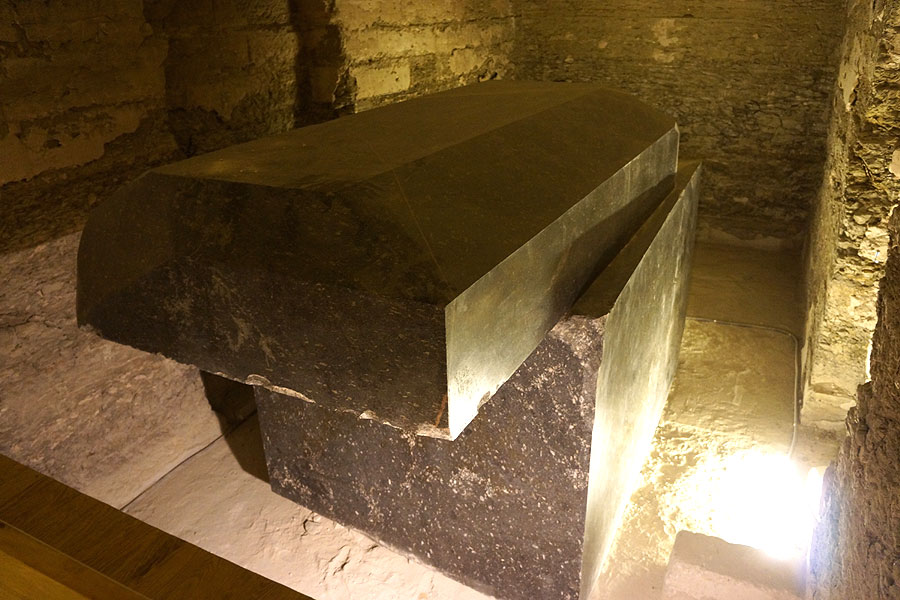
2450-Saqqara-2450e

“Seventy-seven others came from various historical times and places, arriving in the lifters you people call extraterrestrial vehicles.”

Hmm. Vedanshi doesn’t know she has a home… of sorts.

“Unless I’m mistaken,” Anahata says, “those are the good guys. The tainted group is Majic. They started as a committee, same as most evils. You’ve got two hundred and twelve of the little bastards now, paramilitary and corporate elites led by a few bankers. Quite an arrogant and angst-ridden bunch, many in their 80’s and trying to stay young with blood transfusions from the teenagers they abduct.”

“They actually do that?”

“Um-hum.”

“Wouldn’t it be easier to just clone GDF-11?”

“Abductions are a two-bird deal. You stay young and at the same time create the next public enemy: space aliens.” Anahata chuckles and takes us down close to the ice. “On struggling planets the military-industrial complex perpetuates its relevance at any cost.”

I hear my mother singing Country Joe

“…plenty good money to be made

by supplying the Army with tools of trade.

Just hope and pray that when they drop the bomb,

they drop it on Viet Kong.”

Mom would belt out three verses of that if Dad wasn’t around to yell, “Hippy,” and save us. She started off with “F I S H” though, not Woodstock’s F-word. No cussing unless she got really mad.

Like the time I turned her wedding pictures into origami dragons. I strung them over James’ crib with dental floss so Holucelu, the meanest anime character of all time, couldn’t attack my baby brother at night.

I wasn’t entirely crazy, just four.

“The old farts go out at night,” Anahata says, “in those perverse little flying junks. They’ve got it rigged now so the blood donors blame the Grays.”

“Grays are real? I always thought…”

“The ones Majic parades around are robots. The real Grays are sensitive and shy. You rarely see one. They’d be appalled by their reputation for egg snatching and anal probing.”

“And cattle mutilation,” I add, figuring it probably fits in about there.

Anahata chuckles and takes us beneath the ice into a room the size of a basketball court with brushed steel walls. In the center are two parallel assembly lines, each flanked by machines with protruding metal arms, bent for work but motionless. In one line, hanging heads progress from green circuit boards to almond-eyed “Grays.” In the other line, metallic stick figures gradually become thin headless bodies. I don’t see any with heads. The hooks are empty beyond where the two lines converge.

“What country makes these things?” I ask.

“Majic broke from the US in two stages,” she says. “First they went underground during the Eisenhower administration, shifting from secrecy to mutiny but still favoring the United States. Later they dropped all favoritism. Most of them hold unelected US and UK government positions. A few live in Germany, one in India, one in Australia, one in Brazil. A man was brought in from Iran recently. They had an Israeli on board for several decades, but she died and hasn’t been replaced.”

“Strange bedfellows.”

“If you say so. Personally, I don’t see much difference in any of them. I guess some of the younger ones aren’t so wild about the abductions and secrecy.”

“Narcissists with a conscience?” I ask. “That’s a stretch.”

“The kind of public image they’re after makes them heroes fighting Reagan’s ‘evil threat from space.’ But it’s tough to classify them, really – I mean as far as their being sociopaths or something else. Whenever I watch them, they keep their faces neutral and talk in academic monotone. Even though they don’t know I’m watching.”

“Don’t you just want to slap people who talk like that?”

“A bit difficult without hands,” she says and moves us laterally through a steel wall into an amphitheater built for several hundred, nearly empty now. Eight people stand in the center, down around the podium. We drift toward them until we’re at their level.

Poker faces dissect a virtual gyroscope that’s not time-adjusting to gravity shifts. Their voices remind me of seasoned pilots more than academics.

“You keep a close eye on Majic, I take it.”

“If hell is boring,” she says, “my official duties begin there and never end. So I need to take breaks.”

She moves us through the floor into a vast warehouse with endless rows of stacked bags, fertilizer I’m guessing.

“This is the remnant of their drug operation,” she says. “Marijuana laced with an enzyme that methylates the splinter module.”

I shake my head in disgust, remembering the CIA’s drug torture of US citizens, all disclosed and documented now, but carefully ignored.

“I never heard the term, ‘splinter module’,” I confess.

“It’s a set of neurogenic genes that sets the limits of analytic thinking. Methyl groups can down-regulate it until certain aspects of emotional maturation grind to a halt. The victims struggle with concrete ideas and routine things for the rest of their lives but do fine with the abstract. They feel like children all their lives, I’m told. Dependent and vaguely hollow.”

I wonder if James ever smoked this stuff. Man, I hope not.

I’m reminded of a CIA development list from the cold war, disclosed in the 1955 MKUltra document

“1. Substances which will promote illogical thinking and impulsiveness to the point where the recipient would be discredited in public…

6. Materials which will cause temporary/permanent brain damage and loss of memory…

12. Substances which alter personality structure in such a way that the tendency of the recipient to become dependent upon another person is enhanced…

14. Substances which will lower the ambition and general working efficiency of men when administered in undetectable amounts.”

Shiva would have liked the last one.

“What’s Majic’s motive in this?” I ask.

“Aside from mind control, drugs were a revenue source… until the central bankers shifted their risk exposure to taxpayers. Majic owns the central banks, so money isn’t an issue now, baring total collapse.”

“So ‘too big to fail’ should be ‘too corrupt to fail,’ it sounds like. Or ‘too stoned to fail’?”

“I’ve never heard marijuana discussed, but generally when civilizations bathe their embryos in epigenetic modulators, someone puts cause and effect together and comes up with the epigenetic moulding of public opinion, shaping the chemical chaos of plastics, pesticides and herbicides into the sharp derivative tools of mind control.”

“That’s just perfect.”

Anahata takes us up through the ice and over a small mountain. A pyramid-like nunatak drifts under us, reminding me of Mars.

antarctica pyramid google earth

“So tell me, did Majic ever build flying saucers at Groom Lake?”

“For a time, but they’ve moved most operations to Antarctica now. Part of a con they’re running on the stasis group who’ve been down here for some time. Majic learned the hard way that you can’t go up against gravity disks in fighter jets, so they became peaceful.”

A patch of dark rock glides under us breaking the white monotony.

“Six o’clock, Captain. I mean…” She laughs at herself. “Doctor Fujiwara.”

On the screen a flock of chainsaws comes out of a lava tube in single file and heads up toward us. Maybe they’re weedwackers, it’s hard to tell.
alienbase2

In seconds we’re surrounded by hundreds of what look like Christmas ornaments. If they were smaller I’d hang them on a tree. They’re about six feet long, though, metallic and quite artistic.

Anahata slows to a crawl as they creep in closer.

Capture6

Without warning they unload a dark mist on us. It just keeps coming and coming out of the four spikes on the short side of each one.

“You’re looking at an IDP delivery system,” Anahata says. “I decloak when I come here so they can show me their latest tech wrinkle.”

“IDP?”

“Independently Piloted Vehicles. Gravity drones on a mission. First they surround you, then a microwave field comes up from Davis Station and activates their code.”

“Are they dangerous?”

“Hope burns eternal, but not so far. Once their payload saturates me I head off someplace nice to figure out what they’re up to. The syntax is oblique but ahead of its time. Majic has come up with Earth’s first self-actualizing code.”

My left elbow bumps the left arm of Shiva’s throne. Out springs a small drawer with soft red lining and a necklace curled in a corner. I start to pick it up but stop myself and slide the drawer shut.

“You realize I’ve never heard of a self-actualizing code, right? I’m from Earth. Helo?” I shift my weight to my left bum in Shiva’s throne. The chair is soft, but somehow not as comfortable as it looks.

The drones circle us horizontally, moving up and down like voodoo dancers. Their spray makes a dark sine wave in the air, erased by the occasional gust of wind. This must be a calm day in Antarctica.

“It’s like this,” Anahata says. “Imagine DNA making machines out of DNA with no molecular assistance and no other materials. It couldn’t happen, but if it could, you’d have a self-actualizing DNA code. Nothing but DNA involved from start to finish. Except some energy, of course. In reality everybody has to find a compromise milieu. Something less ideal for data storage but better for construction.”

There’s a grayish disk hovering near a mountain about five miles off. It has a bubble dome and looks like it flew out of a low-budget 1950’s movie.

“Radical concept,” I say.

“Quite vanilla, actually. Last month they sprayed me with a white soup that turned to helium hydride. Clever. A few years ago it was covalent graphite morphing into diamonds. Microscopic little squirts, but still, Effleven suggested they were trying to propose.”

Sunlight glints off the dome of the hovering disk. I think I see people inside. Brave souls. You’d never get me in that hokey looking thing.

“You realize you’re giving these monsters live target practice,” I point out.

“That’s the intent.”

“Why in heaven’s name would you do that?”

“Doctor Fuji…”

“Call me Johanna.” If she’s going to drown me in two hours, we might as well be on a first-name basis.

The mist from the drones is blowing straight sideways now.

“Johanna, my talk of hell is restrained. Words fail to express the tedium I endure here in Shiva’s honor, monitoring Earth from her Moon.” She brings the Moon to the center of the screen where it looks tiny and a tad greenish.

I should probably listen supportively at this point but… “I’d think someone would build a detection system and hang it in space to keep watch. Have it signal you when someone leaves Earth. You could go hang with the fleet in Shiva’s Strand, and have a life, buy a dog if sentient UFO’s do that sort of thing.”

“The trouble is the signal. You have to use the River or you’re limited to the speed of light. Far too slow. A River message requires neurons, so a sentient being has to send it.”

“So rotate. Get on a schedule. Effleven does that, you should.”

“Shiva assigned me this job. It’s one hell of an honor.”

“Hell being the operative word.” I take a sip of coffee and ponder her motivation. I like it, I think.

The moon slides up and exits the top of the screen as the drones come into the center.

“They’re keeping their distance today,” Anahata says and goes downwind of them in one quick move. Now the spray is blowing right at us. Terrific.

“If Majic comes up with something dangerous,” she says, “I’ll send them flowers and a thank-you note.”

I shake my head but can’t help smiling. “Mom would have said you’re a bad influence.”

Anahata chuckles.

“Does Majic have zero-point energy?” I ask.

“Sure. They brought down an ancient lifter in the 40’s and stole as much tech as they could. Fortunately Truman had the good sense to hide everything.”

“You’re calling that good? Clean free energy would solve our worst problems.”

The sun looks strange on the upper right edge of the screen.

pia19821-nustar_xrt_sun

“Have you notice what happens to people when they’re out of work?” she asks. “The youngest suffer the most.”

“That’s got to be true.”

My curiosity about the necklace in Shiva’s drawer is eating at me. Maybe I’ll just look.

I try to open the drawer again, but there’s no handle. I push on it and out it pops, spring-loaded.

“We’ll see if they’re getting any faster,” Anahata says and moves off to Antarctica’s west coast in milliseconds.

The drones race after us like wolves chasing caribou. Remember those dreams where someone’s closing in and your legs won’t work? This is not like that. Anahata has great legs… or gravity lifts, whatever.

“No matter what planet you pick,” she says, “I can predict the course of a person’s life with one simple data point.”

“What’s that?”

“As an adolescent, did that person work for food?” she says.

“Hard to believe that’s important.”

I look in the drawer, peek at the necklace and feel compelled to pick it up. It has a soft golden chain with a heart-shaped locket. Now I’m dying to open it. Is this normal? Are normal people as nosey as me?

“Well,” she says, “predictions aren’t black and white. We are free moral agents, after all. Not household appliances.”

“Free? Moral? Come on, you’re nothing but a glorified coffee maker, let’s face it.”

She streaks down to sea level and divides the screen into left and right halves with the metallic pack in pursuit on the right. Their tenacity is a bit chilling.

Ahead of us the largest ice wall in the world rises from the water.

“Coffee maker,” she says. “Yuck-yuck. If I had fingers I’d flip you off.”

She laughs and shoots out blue lightning that branches and hits three of our decorative pursuers, turning them into glowing metallic blobs that fall orange into the dark blue sea and spin circles on the chop. Three steam spirals rise in the still air by the layered ice.

“When adolescents don’t work for food during brain development,” she says, “the lack of work-food coupling ruins them. The clearest examples involve cultures where free energy comes in too early and brings unlimited food. The work-food connection evaporates.”

“Interesting.”

“Exponential population growth on a finite surface leads to extinction, as anyone should guess, but few actually do. I remember a poignant case. So tightly packed were the people, they couldn’t swallow. Limitless food and no-one to swallow it, the ultimate irony.”

“I’d imagine your scientists sat there and watched, right? Like a TV crew on a baby elephant shoot, watching the poor little thing starve to death with no mother.”

“The extinction mindset is irrational,” she says. “You can’t teach it the simplest thing.”

The sun looks darker green now.

“You could give them birth control, couldn’t you?” I ask.

“As a means of survival? No chance. Survival is theoretical. Babies are tangible.”

She sends a puff of yellow cotton-like fog out the starboard side. An explosion of white and blue takes several more drones out.

“Foresight never shines on the path of extinction,” she says regretfully.

“I don’t get adults,” I tell her. “It’s like their minds are under some witchcraft deal.”

“Most of them in your culture didn’t work for food while their brains filled out. They didn’t learn to look ahead. A child in puberty should dig carrots, carry them to the stream, chomp them down with wet hands and pick dessert off a tree if things are ripe. If not, the lesson is patience. The joy of delayed gratification. It’s the sheer joy of planning ahead that your culture misses.”

The drones surround us still, unbothered by Anahata’s tactics. I don’t see the disk, though.

“In school they work kids pretty hard and feed ’em lunch,” I tell her, wondering if that shouldn’t help, despite the carbohydrate overload and all the young type 2 diabetics it creates.

“Let’s see if they know how to phase shift,” Anahata says and heads toward the base of the ice shelf.

The left half of the screen turns turquoise as we enter the ice. The drones behind us veer away.

“In a healthy environment,” she says, “work causes food directly. Every neuron learns it. In school – especially the torture chambers that use multiple-choice guess tests – the work causes anxious hope. Nothing else. No one knows what they’ve learned, either before or after the foolish tests. The children blame themselves and feel defective for hating arbitrary, forced exposure to overwhelming quantities of boring, useless information.”

“So true,” I tell her. “And the ones scared the worst are the only ones with half a chance. The rest don’t give a darn.”

Both halves of the screen go dark as we ease into the ice. It’s like she’s trying to tempt them to follow. Weird game.

“Listen,” I tell her, “I’m no fan of school, but ignorance is worse in my opinion.”

“Then you don’t get it,” she says and lifts us into near space in a pair of seconds. The silver pack closes around us in the black. The sun is disturbingly green.

“I’m saying this with respect for your vast experience, Anahata, but I think plenty of good would come to us if the whole Earth had access to the technology these breakaways are wasting on themselves.”

“You sound so human. Alien disclosure collapses motivation at your culture’s stage. Scientists like yours fall into permanent despair when they plummet from genius to dimwit after chatting up an alien scientist with a normal brain. Imagine a head injury with brain damage. That’s disclosure. Scientists stop trying. Shiva sometimes welcomed the outcome, but you… you wouldn’t.”

“Neither should you,” I tell her. “If science had stopped on your planet, you wouldn’t be here to make my coffee and chauffeur me around.”

I open the heart-shaped locket. The inside is black and empty making me wonder what precious thing was lost. I snap it shut, put it back and find myself mentally searching for another hidden compartment in Shiva’s throne.

“By the way, why does the sun have that mud facial? It looks green to me.”

“It’s the drone’s spray,” she says. “Hydrogen crystals attached to covalent graphite – morphed into an analogue of alpha-neurotoxin that’s giving me synaptic trouble in three systems.”

“Cobra venom. I’ve read about the nasty stuff.”

“King Cobra,” she says. “Finally they’ve done something interesting.” There’s a smile in her voice again.

“How much danger are we talking about?”

“Plenty, if the fangs really get me.” She laughs.

Oh, good, she’s nuts. I like that in a person. Not so much in a UFO, but…

She fires something loud and invisible. A chest-rattling jolt goes through me. On the screen a hundred drones turn to dust.

“When energy becomes prematurely ubiquitous,” she says, “most people quit work. They can eat and do all sorts of fun things for free, so why work? With that, whatever free will they had is gone. Swallowed by virtual reality toys and a cascade of mind-altering products from their new owners. The people just sit, sit, sit, sit.”

“And they do not like it, not one little bit.” I flash through Dr. Seuss’ The Cat in the Hat in my head for her. She chuckles and dives down through the ice into a huge hanger with scores of disk-shaped ships, sitting in seven long lines, each slightly different from the next, none as beautiful as The Ganga.

“Is this the stasis group?” I ask and poke at the inside rail of Shiva’s throne. Another drawer pops open. It holds an old smoking pipe, ridiculously saxophone-like. Good way to catch herpes, not that I should care anymore. Still, I wipe the mouthpiece on my shirt and try to hold the silly thing between my lips without biting down. It’s too heavy and falls in my lap dumping ashes on my pants.

“Yes,” Anahata says, “these are the ancients of Earth.”

She dips to the level of the ships and glides through them. Inside one, four people sit around a table eating fried eggs and a yellow vegetable. It’s fried, too, I think. The expressions on these people’s faces look foreign. Maybe their bone structure makes it seem that way.

I put the mouthpiece of Shiva’s pipe between my teeth and hold the dumb thing up with no hands.

“I didn’t realize how much I miss Shiva’s cherry tobacco,” Anahata says.

All I smell is ash. “Good thing lip cancer doesn’t metastasize to the next life,” I tell her. I hope that’s a safe assumption.

She makes a right turn toward a ship that’s bigger than the rest. If you painted it right, it could be a flying hamburger blimp.

“The afterlife,” she says. “I wish we had more to go on, but this much we know. The piercing of religious dogma and secular reductionism is a dangerous combo. In most cultures this age, religious fundamentalism is the prime force of kindness toward the weak. This caring mindset is the life-giving fabric of an intelligent species. It vanishes with premature knowledge of higher worlds because the new information ends fundamentalist religion.”

“You’re telling me people have actually lost their faith in God because they found out he coded their DNA?”

“Ironically, yes. The details of disclosure are never right for them. They place holy books above the Transcendent One. ‘Infallible’ words for their own supremacy at the expense of reason and faith in the Highest Mind. When their inerrant dogmas fail the test, all is lost. They lose God and morality. The tragedy is worse than the eventual self-annihilation to follow.”

We cruise through the hamburger UFO. It’s empty. Looks like a cruise ship inside. A huge dining area with vast seating on several levels overlooking a central stage with a circular curtain of shimmering violet fabric. Outside I count five swimming pools, all dry and vacant.

“Wow. So fundamentalists get the big things right but foul up the details, you’re saying.”

“Not exactly, no. Making idols of books is no small detail. It’s a colossal mistake that prolongs the primitive behaviors of a species. Violence, especially. And it’s so common. But yes, the fundamentalists in most primitive worlds, blessings upon them, tend to be the very last ones taking care of the weak when a culture is falling apart.”

“And that’s the direction the Earth’s heading, you think.”

“Sadly, yes.”

“Fabulous.” I check the drawer for a lighter. “You mentioned reductionism. What about it?” No lighter, but here’s a small gun. Or maybe not. Nobody sane does this, but I aim it at my right eye to look down the barrel. Just as I thought, it’s not hollow. This thing is a lighter, I bet. I close my eyes, aim it at the floor and pull the trigger. A little flame pops out the top and dances gently, then vanishes when I relax my finger.

“Secular reductionism,” she says. “This goes down with the fundamentalist dogmas. Two sides of a coin. When scientists see that matter and energy are the two shiny little things that have blinded them to the larger Consciousness from which they sprang, the rare researcher who isn’t paralyzed by the fall from genius to dunce dives headlong into the study of consciousness. This opens Pandora’s box.”

We exit the underground hangar through the overhead ice. The drones have been waiting for us. They travel up wind and let loose more dark corruption. Relentless.

Anahata releases four gray orbs that dart out, turn a dozen drones black with a quick touch and dart back in as the casualties fall like rocks to the ice.

“A good long history of small mistakes is vital to an intelligent species,” she says. “Consciousness-based technology disrupts the smallness of those mistakes. Imagine thermonuclear bombs in the hands of chimpanzees.”

I search the back of Shiva’s pipe drawer and find a small flat tin can with a hand-drawn leaf on the lid. I twist it open and smell the cherry tobacco that Anahata was talking about.

“A lot of people think the problem with an alien invasion would be mass panic.”

“No,” she says, “That’s rarely the case. Earth is fairly typical in this regard. Most of your people half-way believe in aliens already. There’s never much surprise anymore when a human sees a breakaway vehicle or even a true extraterrestrial. Panic’s not the problem. If we were to show ourselves officially, you could no longer laugh away our side effects.”

“Fine with me. I hate that laughing-down thing they do. Dismissing anything the slightest bit interesting. It drives me crazy. And that supercilious little smug smile. Makes me want to strangle someone.”

“But it’s a crucial reflex for science. Once the laugh becomes impossible, depression eats up all the motivation to explore and invent. Trust me, Shiva and I have interfered deliberately, just to set back technological progress. The mere sighting of your own ancient lifters on the Moon was enough to shut down NASA.”

“So no disclosure. No free energy. You’re like a bad cosmic parent. What about global warming? Air pollution. Water pollution. Big issues, don’t you think? Clean energy would fix them all.”

“Have you seen Antarctica’s ozone hole? Here, look.” She takes us into space and puts a filter on the screen. The famous ozone deficit shows up in blue, stretching over the entire continent and out to sea on three sides.

10_30_14_Brian_OzoneHole2014_1050_1199_s_c1_c_c

“This is the direct effect of a few weapons derived from clean, free zero-point energy. If they had a thousand more, you’d have no ozone at all, just a one-way ticket to the afterlife.”

“Oh.”

“And as for global warming, imagine seven billion people with heaters running day and night at no cost. A zero-point energy source is a heater by definition, you realize.”

OK, I should have known that. Sheeze. “But you’re fine with breakaway thugs pushing the rest of humanity around?”

I put a pinch of tobacco in the pipe, pull the trigger and light it. I must be out of my friggin’ mind, I hate everything about tobacco.

Maybe not the cherry smell of this stuff, though.

“Ordinarily I oppose lies and cover-ups,” Anahata says. “They bring distrust that destroys affection and compassion. But in Earth’s case, yes, I think Shiva chose the less destructive path.”

Somehow I doubt it. “Listen, I’m no book worshiper, but I have a feeling the Nazarene was right, ‘The truth shall make you free.'”

“Beautiful words,” she says. “And true when things unfold naturally. But highly advanced technology and devastating truths come wrapped in the same bundle. No-one can separate them. Your people are not ready to stop laughing at reality.”

“The breakaways have stopped laughing.”

“That’s why they need to hide.”

I get what she’s saying, but I hate lies and manipulation.

She zips down to Antarctica and stops near the drones. All the survivors are in single file ready to enter the lava tube. Part of me hopes boredom has made Anahata overconfident.

The screen goes black. Maybe I’ve gotten my wish.

“What now?” The only thing I see is the glow of Shiva’s tobacco in this old pipe. “Hello?”

No response.

The screen blinks on with an array that reminds me of Dr. Alexander’s near death experience – the “worm’s eye view” he talks about.

mapping.large

It disappears and I’m in the dark again.

“Shiva?” Anahata says in a trembling voice. “Are you here? Is that you?”

“Sorry, it’s just me.”

“Shiva, you’re back! I missed you so much.”

My head lands on Third Eye, a Tool song…

“So good to see you.
I’ve missed you so much.
So glad it’s over. I’ve missed you so much…
I thought that you were hiding.
And you thought that I had run away,
Chasing the tail of dogma.
I opened my eye and there we were.”

“Anahata, you’ve got neurotoxin in your hull. It’s got you confused.”

“I didn’t refill your tobacco,” she says. “Sorry. I thought…. But where have you been?”

“Listen, we’re in trouble here. If you think I’m Shiva, fine. Take an order, Anahata. Show me that self-actualizing code – or cipher, or whatever it is.”

“It’s a coded cipher,” she says. “Here’s some of it.”

A small rectangular part of the screen comes on in front of me with two lines of geometric structures that look like molecular x-ray diffraction images. The sequence on top seems random. The structures below are grouped into what could be functional units.

“Molecules in the bottom row, right?” I ask.

“Affirmative. The code’s above. Crude, isn’t it?”

I stare at the random lineup and suddenly correlations pop out. “Can you show me more of this?”

“Of course.”

She fills the rectangle with paired lines of the odd structures. Then the screen shifts to a low power view and the things look like ball bearings. I stare at the pattern, not trying to figure anything out. Suddenly it makes sense. I see how the coded arrangement could snap into these specific structures if the right energy were applied. That would be the microwave field. Problem is, I don’t know how to make anything useful out of these.

“Can you show me the neurotoxin?” I ask.

“One moment, Sir.”

Another part of the screen lights up with a low power view of a complex arrangement of blue-green and purple spheres.

Setting-Silk (1)

I compare it to a diagramed neurotoxin in a biochemistry paper I saw in the stacks at the University of Hawaii, but I see no similarity.

It doesn’t matter. I just need a structural weakness, a place to cut.

Anahata backs off to a yet lower power where the tertiary structure bends at a narrow angle, stressing a hinge-like region of what must be carbon atoms attached to the hydrogen crystals she mentioned.

I need to build a ligase of sorts – molecular scissors with slender blades. I slap together three designs, choose one that looks robust, backstep its structure into the code and show Anahata what I’ve got in mind. A cerebral image, Vedanshi would say.

“What do you think?” I ask. “Can you get the raw material out of one of those drones and arrange it into my code?”

“Affirmative,” she says.

She puts a closeup view of a single drone on the screen, oscillating and spewing its payload. For no apparent reason it stops what it’s doing and holds still as if under a spell. A thin yellow beam moves across its midsection cutting it into upper and lower halves. Both pieces hang motionless in the air. A small black tank is visible in the lower half. A slender beam of orange granular light hits the side of the tank and raises gray smoke.

“That’s for entropy,” she says. “Now, to dial in your code…”

“I’m sorry to interrupt,” I tell her, “but this is flooring me. How is it possible to do all this with no tools and no hands?”

“With the underlying potentials, Sir,” she says.

“What the hell does that mean?”

“Manipulating the pixels of the Universe, you know, like bending spoons at the subatomic level.”

“OooooKay. When you’ve got that ready, zap it with whatever microwave signal Davis Station used and spread it out over your hull.”

“Such a linear approach, Sir. Respectfully, but I would have just… well, no. My phasing system’s down, isn’t it? You’re quite right, then, this is the way.”

I watch the bisected gravity drone on the screen for a few seconds and nothing changes. Then she moves the thing upwind, pulls its tank open somehow and lets the breeze blow the dark contents onto her hull.

In six seconds the full screen lights up with the brilliance of Antarctic ice in soft sunlight. The drones are all around us.

“Shoot the rest of these stupid things and let’s get out of here.”

She seems to do nothing, but the drones fade as if cloaking. Then she takes us to the moon so fast I have to check my memory in slow-motion to catch a glimpse of stars streaking by. The screen shows the Moon’s backside beneath us. Funny how safe these barren craters feel now.

I take a puff off Shiva’s old pipe to see what it’s like. It tastes like an ashtray. I can’t smell the cherry scent anymore. “What a total waste!”

“You’re not angry with me are you?” she asks.

“Shhhh, no. You’re still not thinking right. You did great. With a little luck you’ll be back to normal soon.”

I’m not sure how that’s going to be lucky for me, though. When you help someone who’s going to kill you, is that a death wish?

I wish I could just… No. I wish James could be happy. That’s all I want now.

I watch the time pass in the clock I keep in my head. I’m rarely off more than five minutes in a week. People say it’s weird, but it seems normal to me. I’ve got forty-five minutes before the “test.” It’s impossible not to think about it… drowning in normal saline.

The tobacco in Shiva’s pipe has burned itself out. I’ll hold on to it for a while and make sure it’s cool before I put it back.

Forty-five minutes left.

“Anahata, how you feeling?”

“I had the strangest dream. Shiva had come back. Right out of the blue. We went to the moon together. Wait, weren’t we just in…”

“Antarctica, yeah. Don’t worry about it. The drones drugged you. Tell me, though, any chance you remember where we were headed before that?”

“To a library… in Egypt.”

“Yeah. We should head down before I run out of time.”

She streaks back down to the south pole and I’m wondering if she’s thinking straight.

“What is it with you and Antarctica?” I ask.

She laughs. “You have no idea how good it feels to hear a voice in this room again. It’s silly, but…”

“I don’t think you should be isolated all the time. You’ll become an introvert like me.”

“Honor rather than outcome determines my duty.”

“Sure, but a touch of balance and common sense wouldn’t necessarily kill you the first try.”

On the screen Earth’s frozen underbelly is fifty miles down. The ice looks a little green. I try to find the sun but it’s offscreen.

“Tell me,” I ask, “was Antarctica ever called Atlantis?”

“Yes, Shiva said it was, long ago.”

“Was it ever served on a white plate with green eggs and ham?”

“What?”

“It looks kind of green.” I flash through another Dr. Seuss book in my head, “I AM SAM. SAM, I AM…”

“How cute!” She laughs like a child. “This is the most fun I’ve had in years.”

“You’re pathetic.” I feel myself smile. “OK, if I’m so much fun, maybe you shouldn’t kill me.”

She sighs. “I’d almost forgotten.” Her tone is sober now. “Atlantis was nowhere near the pole, originally, I was told. The comet, Jyotish, came and surfed it like a board down to the south pole.”

“Tectonic plates on roids.” Hmm…

If only the surfing had happened a couple hundred million years earlier, it might explain Antarctica’s first carnivorous dinosaur, Cryolophosaurus. She was found at 13,000 feet and weighed a thousand pounds in the nude.
Cryolophosaurus_ellioti

Antarctica had forests in those days – the early Jurassic. But time is relative, as they try so hard to ignore. I wonder how accurate any date is relative to the present moment. Or how stable the present moment is in time. Actually the whole concept of an accurate date seems hopelessly misleading. It’s based on the ignorant assumption of absolute, inflexible time. How accurate can any relative thing be?

Alex Hirschauer found a small galaxy that hasn’t changed much in the last 13 million years, we’re told. They say the small ones take longer to mature, but to me it’s a glimpse into the flexibility of time.

I’d be way surprised if there aren’t more time-bending factors in the Universe than gravity and relative velocity. Size, for instance. Subatomic particles like protons, quarks and gluons are thought to be independent of time. They never age.

And consciousness itself can probably bend time. I mean, look at Anahata’s subatomic spoon bending.

I have an idea, let’s stop losing faith in God over the “age” of the Earth. It’s the modern version of angels on the head of a pin. Tiny minds and foolish consistency?

Africa rolls onto the screen with the Nile snaking north to the Mediterranean. I barely see it because everything’s still tinted green.

“Was there ever a female leader of Atlantis?” I ask.

“VaarShagaNaputro,” Anahata says, “the only living Stretch Head. I passed her lifter on the Moon today.”

“But you didn’t tag her.”

“No, she’s unique. Shiva spoke with her once after his wife, Parvati, died.”

The Parvati?”

I find the name in a book in my head, beneath her picture – the goddess of India.
DSC00478a (768x1024)

“Yes, the woman on the mug beside you. She felt she had no choice but to stay on the Earth with their son after Shiva pulled the plug. Later when she was gone, Shiva met the Vaar and thought her physical appearance resembled his beloved wife. This was a cosmic sign to him, so he gave your last Stretch Head permission to travel freely to the edges of her solar system. She’s never done it, though. By the way, if you wouldn’t mind putting Shiva’s mug in the slot when you’re finished?”

“Sure.” I pick up the golden mug and swirl the granular sediment at the bottom, deciding against the last sip. I put it on the circular platform atop the right arm of Shiva’s Throne and take a new look at Parvati’s hologram on the mug. Aside from her elongate head, she doesn’t resemble Vaar that much.

A deep click takes the mug down quickly.

“Wash the spots off that thing,” I tell Anahata. “No telling what virus I’m packing with this leukemia.”

It just dawned on me, the next chance Vaar gets, she’s going to tell Anahata about James-guys. Anahata will have no choice but to hunt them down and “test” them. You know, I hate that word the more I hear it. “Test.” Hell, she’s going to drown the life out of my brother and my friends.

Energy seems to flood out of my body. The future is dismal and I’m alone and weak.

One of James’ songs fills my head, “Nightmares find you alone and weak.”

I admire people who keep their word, you know. That’s all Anahata is doing. I shouldn’t turn against her for having a little integrity, should I?

But why does her notion of honor have to be so cruel? How is it that an enlightened being from an advanced civilization has let herself be conned into murdering me and my James?

I guess I murdered poor little Moody, though. Maybe I shouldn’t complain.

Sheeze.

OK, whatever. Here’s the thing. I’m not letting Anahata drown me. It wouldn’t help James at this point. If I’m going to help him I’ve got to be alive.

“You’re cloaked, right?” I ask Anahata.

“Affirmative.”

“Can you see the Giza Pyramids, ’cause I can’t see Jack Squat.”

“Sure, they’re right there.”

“Listen, like I said before, if you want to know who Shiva really was, you need to take us to the Sphinx Library. Look for a small room about 30 feet below the right front paw. There’s a glass pyramid in there hanging from the ceiling.”

She takes us there in less than a second.
20

The whole Sphinx Library fits between Shiva’s Thorne and Anahata’s screen. I’m sitting in semitransparent limestone here. Weird. I get up, walk under the glass pyramid and look up into its apex.

The Flower of Life seems huge, though I know it’s tiny. I breathe slowly, close my eyes and picture Quyllur. Then I say, “Shiva” in my head.

Floating Sanskrit letters morph into a list of English titles. I call up the ant torture documentary.

Anahata gasps when she hears Quyllur’s voice and later sounds like she’s crying when she sees her Shiva’s face.

I suffer with her through the virtual reality of two boys being tortured with bullet ants. Finally I point out the pink word, “Shiva,” beside “Quyllur” in the credits.

“As I understand it,” I tell her, “the River of Consciousness adds the pink name to keep track of a fairly unique type of individual. You’ll see what I mean.”

Next I show her the oldest Shiva reference, and as expected, she doesn’t recognize the man’s face.

“This is the oldest document that has Shiva’s name on it,” I tell her, “but notice it’s not written in pink. That’s because this was the original Shiva, not some weird combination of Shiva and another person. I know it sounds impossible, but that’s the explanation that makes a little sense to me at this point.”

Next I show her the Australian prince with “Shiva” in pink letters beside his birth name.

She doesn’t say a word.

Then I spot something I’ve haven’t seen before. It looks like committee minutes in VR video entitled, “Ordinance 888a18, Appropriate Limits for the Sentient Fleet.”

I open it and we watch as her beloved Shiva-Quyllur argues to the committee that sentient ships should never be given access to the River records. “Let them communicate in the River,” he says, “but the Libraries have far too much sensitive information to entrust to these soulless machines.” His voice is filled with disdain.

I stop the video right there, but it’s too late. I may as well have stuck a dagger in Anahata’s heart. Through the back.

“I never saw this before,” I tell her. “I’m sorry.”

She’s quiet.

“He was wrong, you know. If you have neurons, so you have a soul, obviously… Anyway, I’m sure he had something bigger on his agenda. Those words were a smokescreen for something else he needed to accomplish. Something very important, obviously.”

No response.

“He trusted you, though, for sure. How could he not? He must have been thinking about someone else in the fleet. Of course, he’d have to lump you all together to make the point sound legit… to get his stupid ordinance passed, which had to be some part of a larger scheme. You know? Typical politics.”

Anahata says nothing.

Beyond the tiny Sphinx Library, her screen is dark green with the rectangular ghosts of phase-shifted limestone blocks making things look darker.

“Anahata?”

White shoe prints appear on the floor in front of me.

“You want me to follow the footprints again?” I ask.

“Get out of Shiva’s throne!” she screams in my head. It’s so loud it hurts.

I stand up. The words of Nelson Mandela come to me and I say them out loud to her…

“Resentment is like drinking poison and then hoping it will kill your enemies.”

“You shouldn’t resent Shiva,” I say to her. “And you shouldn’t resent me for disclosing the truth.”

M. Talmage Moorehead

Heartfelt thanks to the profoundly original Greek Artist, Spira, for use of the picture of Parvati above.

The orange links throughout this chapter are interesting, if you don’t mind conflicting views.

I’m indebted to many UFO researchers for most of the ideas in this chapter. Steven Greer, MD and Linda Moulton Howe come to mind, of course. There are many others, as well.

I’ve never seen a UFO, by the way, but I respect those who have, and would like to take this opportunity to cast a particularly cold glare at anyone arrogant and ignorant enough to laugh down at those who’ve seen things the rest of us haven’t. OK, so I don’t have a menacing glare. It’s the thought that counts, right?

Here’s a link to my free PDF on fiction writing: Writing Meaningful Page-Turners. It’s short and quick. Could save you some confusion and time if you’re a newish writer. If not, it might get you to question some of the assumptions we’re fed, such as, “fiction’s purpose is primarily to entertain.”

Here’s a link to Johanna’s whole story (on one scrolling page) for anyone interested: Hapa Girl DNA.

Please email a kind hearted, open minded friend about my blog: http://www.storiform.com.

One last thing: If you happen to be a type 2 diabetic, check out Jason Fung, MD. He’s ahead of the curve, in my opinion. His ideas are still controversial, of course, but so is any new understanding of anything big. Always.


Zero Point Joy (Chapter 16) “Hapa Girl DNA” by M. Talmage Moorehead

“Modern Science is based on the principle, ‘Give me one free miracle and we’ll explain the rest.’ And the one free miracle is the appearance of all the matter and energy of the Universe, and all the laws that govern it, from nothing in a single instant.” – Rupert Sheldrake, Ph.D., Biologist.

PIA08389

The test subjects die? Vaar neglected that detail.

A person’s word is like a document.

We think a document is true or false, like bar code or a message embedded in Saturn’s rings.

Young fundamentalists go to college, hear that the Earth is older than 6,000 years and ape DNA is way too close to human. It’s culture shock. The sheltered students throw away scripture along with God.

“You can’t pick and choose,” they’ve been taught. An old document is either true and infallible or it’s worthless.

All-or-none, authority-based reasoning. It’s poison.

Such a distorted mindset would end science, not just religion.

Peer-reviewed journals suffer political bias, funding woes, human pride, jealousy, stubbornness and greed. Poor to absent experimental design haunts science, especially the more fragile branches such as psychology, medicine, archaeology and anthropology. Yet our process delivers truth – here a little, there a little – along with errors, vast and often entrenched.

Scientists have no option but to “pick and choose,” separating reproducible studies from the constant BS.

The content of ancient documents deserves the same respectful treatment, at least. The Bible, Egyptian hieroglyphics, cuneiform tablets, artifacts in the River Library, and even Vaar’s treacherous words.

Pick – someone is trying to tell us. And choose.

cuneiform

The warm water in Shiva’s pool feels eerie now that I know I’m here to die.

I raise Vedanshi’s cloaked ring to my mouth and tell The Ganga my situation. I instruct her to go back to the base and find a way to get the stain off James’ foot and off her own carpet. “Do it somewhere far from the base,” I tell her, hoping to avoid a breadcrumb trail.

I put the ring to my left ear and listen.

No reply.

“Who’s that you’re talking to?” the ship, Anahata, asks.

“I’m protecting my loved ones. From you.”

I hop to the side of the pool, grip the textured edge and pull myself out with enough force to land on my feet beside my clothes, splashing water on them. Anahata hasn’t augmented the Moon’s gravity, but I suspect she could. The Ganga could.

I pick up my pants, tug them up over wet legs then dangle my shirt around my neck for now.

“You told someone to remove my tag,” Anahata says.

A small round piece of Indian carpet appears on the tile beside me, glowing vaguely purple in the bright room. On top of it rests something I’m sure is a superficial layer of epidermis from James’ left foot. It looks like purple paper. The Ganga must have done this with speed that’s hard to imagine. She phase shifted James from this part of his stratum corneum, I’d guess. But what if the dye soaked into his bloodstream? And what if this ship can find DNA in superficial skin?

“Here’s your tag,” I say to Anahata in my head. I kick the pieces into the pool. “How would you like to kill me?”

“You think I like this? My orders repulse me.”

I wonder if she believes that.

“Tell me again,” she says, “are you quite sure you were on the ship I tagged? Perhaps you rushed your statement. You can change it.”

“You tagged my ship. There’s the evidence.” I glance down at the purple haze sinking through the water.

“Your honesty makes this doubly difficult,” she says.

“Then suffer doubly.” I glare at the trapeze bar hanging over the pool.

Across the pool at the opposite side of the circular room, a vague rectangle darkens the wall. I walk over to it, making my way around the pool with its stark absence of chairs and tables. I touch the dark area on the wall to test it, then step through.

I’m in a tight spiral stairwell with shallow rungs that take me up into a large semicircular room – about two hundred feet long. The convex wall shows the moon’s gray craters gliding under us, several thousand feet down. Facing the screen in the center is an ornate cushioned chair, quite large with a high splayed back. The wall behind it is flat and shows a golden holographic image of Shiva in dance. I bring up the image of Quyllur in my mind and superimpose it. The interpupillary distances and zygomatic arches match. The nose is smaller here but the face is younger.

I walk to the chair, making a trail of wet shoe prints across the glossy black floor. The chair’s upholstery has a peacock pattern that shimmers. Several feathers rise inches above the surface. I try to grasp one by the quill but the depth is an illusion. The fabric is flat and velvety. My wet clothes might ruin the material, but I don’t care.

I take a seat.

“You’re an anomaly,” Anahata says. “Dripping water on Shiva’s throne.”

“Monsters treasure objects over people. I’d imagine you’re quite upset.”

On the giant screen the surface of the moon drops away, the horizons frown to cover a pocked lunar hemisphere joined by the blue Earth as the two old friends shrink away, side by side. A bright star appears on the left and grows brighter on its way to the center. Flat equatorial bands resolve in the space around it and then the enigma of Saturn’s north pole rotates into view with blue dominating the hexagon while pink swirls move over it in slow motion. The center is a vortex of purple water draining from a bathtub – the hurricane in the hexagon. Winds over a thousand miles an hour. People would have to be phase shifted with gravity lifts to vacation there.

PIA17652color_690x690

“Effleven,” Anahata says. “I tagged a trivial disk about two hours ago. Looked like some reverse-engineered ditzel so I didn’t pay much attention. A little while later I’m cruising the backside and just about pop an aneurism when this hybrid female shows up – right out of nowhere. Alone. She’s sitting in Shiva’s throne right now if you can imagine that. I’d be outraged but the poor little thing acts like she owns the place. So cute. She’s dying of leukemia I should point out.”
“Of what?”

“Never mind, that’s not the problem. It’s her DNA. Parts of seven and eighteen are just flat bizarre. Her second chromosome’s missing the tell. Some of the code’s got me completely stumped. I’m thinking it must have been laid down billions of light years from Shiva’s Strand.”

“She survived the plunge?”

“No, I haven’t tested her. She admits her ship’s been tagged. Obviously that little disk was more than I thought. Reminds me of the vimanas, you know? Must have dropped her off in a blink of an eye. I didn’t see a thing.”

“Vimanas were before my time,” Effleven says.

“You should release me,” I say to them. “I understand Shiva’s frustration with fixed mindsets, but killing me won’t help.”

“What the hell?” Effleven says.

“She talks machine.” Anahata laughs. “Heads up, I’m sending a box. Check the final half of her seventh chromosome. Herringbone, I swear, no bands at all. Did you ever see anything like that?”

“Uh… I’m looking. The seventh?”

“Yeah, that’s six plus one.”

“I’ll ignore that remark… OK, here we go.”

“Stay on low power,” Anahata says.

“Yeah, I’m on scanning… Whoa!”

Anahata chuckles. “I wouldn’t have believed it if I hadn’t seen it. And that’s not the issue. Go down and read it. Any of that section.”

“Right now?”

“No, tomorrow. Just focus on those base pairs and read. I’ll wait.”

Hot air blows at me from the cushions of Shiva’s throne. It feels cold on damp skin. I snatch my shirt off my shoulders, open it up and shimmy in. Braless, of course. I’m a Triple A at 19. Mom’s talk of belated arrivals was optimistic.

The chair’s right arm clicks. I lean forward and look down into a cylindrical compartment with a golden mug rising. Smells like coffee. A holographic portrait of a young woman meets my eye as the mug emerges. I move the handle and bring her profile into view. The back of her head is taller than King Tut’s. Longer than a Neanderthal’s occipital bun.

Those ‘cavemen’ had brains larger than ours, you know. Anthro sweeps that away with speculation of inferior Neanderthal brain structure. It’s not science. All you need is a story in anthropology. And a tradition of mistaking wild speculation for fact.

45894-skulls

“Are we calling this coffee?” I ask.

“Pretty much,” Anahata says. “Don’t burn yourself. And please don’t drop the mug, it has sentimental value.”

“Wouldn’t want to break an object before sacrificing a virgin.” OK, I guess I’m not exactly a virgin after the rape, but whatever. It’s ancient history. “So who’s this Effleven?”

“He’s your basic Torian. Rotates in occasionally, stays a few days and you don’t see him for a while. You call these people Tall Blonds. He’s not standing up, but check out his hair.”

The screen superimposes a man’s profile over Saturn. He’s facing left, leaning into a vertical cylinder that  emits forest green light like an old TEM scope. He looks middle-aged with inch-long blond hair standing straight up on his head – light eyebrows, thin lips and a ski-jumpish nose like the Moai on Easter Island. The back of his head is much fuller than a Moai, but far from a Stretch Head.

11b

“Try not to pronounce his name like a number,” Anahata whispers. “He hates that.”

“Hey,” I say to the blond man. “You could so do a Mohawk with that.”

I bring the mug to my lips and decide the coffee’s too hot.

“Have you fallen asleep?” Anahata asks him.

“It’s gibberish,” he says. “No biological sense in this whole section.”

“It’s not gibberish.” Anahata chuckles. “Johanna, meet a genuinely inexperienced purveyor of final conclusions, Effleven. Effleven, meet Johanna Fujiwara.”

“That’s Doctor Fujiwara, unless you’d prefer a number… what is it, Anahata? How many notches do I make?”

Effleven doesn’t acknowledge me.

“So you sense my dilemma?” Anahata asks him.

“What a waste,” he says, shaking his head and turning to look at me. His eyes are blue.

“A waste? More like a blossoming tragedy,” Anahata says. “Can you imagine what her code would mean to your philosophers if her chromosomes came to them with a live girl attached? The cryptologists would…”

“They’d be intrigued,” Effleven says.

“Intrigued.” Anahata snorts the word. “Don’t put on airs. You know as well as I do, the entire ministry would wet themselves, study every correlation and implication they could dream up, and probably launch some ill-conceived excursion across the borders.”

“Yeah, I could see that. Definitely.”

“Of course, when they find out she was alive and we killed her, they’ll drag us through the muddiest…”

“Wait – what do you mean, we killed her? She’s yours, not mine.”

“Technically,” Anahata says, “she still has time to turn herself in at the pole… to you. If I’m right, that ship I tagged could drop her off in your lap before you could blink.”

Effleven blinks. Several times rapidly. “If you dump her on me, both our reputations are down the crapper. I don’t see much upside there.” His eyelashes are darker than his eyebrows.

“Fair point,” Anahata says. “Why should two go down together when one can go alone? Always nice to see who’s got your back.”

“Don’t give me that warrior stuff.” Effleven slaps the side of the glowing cylinder in front of him. “I’m purging the module. This conversation never happened. You were not here.”

“No worries, F-one-one. You haven’t earned the honor of going down with me.”

The blond man vanishes from the screen. I stare at Saturn’s rings. They’re so tight and delicate. If you put a needle on them I’d expect to hear “Sad Eyed Lady of the Lowlands.” Mom and Dad’s song took up the whole side of an old LP, she said. Blond on Blond was her favorite Dylan work.

“Johanna? Pardon me, Doctor Fujiwara. If you wouldn’t mind following the footprints on the floor, please.”

Two white shoe prints appear on the black floor in front of Shiva’s chair. I get up, keeping the mug at arm’s length with the coffee steaming like liquid nitrogen. Two more white prints spring up on the floor to my left, then a white stampede forms a trail to an exit at the far left of the room. I follow into a hall that stretches and curves into obscurity. As I walk the path, vague doors appear on either side, then the shoe prints turn left into a baby-blue room with a tan couch in the center. Above it, a six-foot feather strokes the air. It’s pure white and has no visible support.

“Please make yourself comfortable,” Anahata says.

The moment the backs of my legs touch the couch, my brainwaves begin scrolling across the wall in front of me, left to right. I recognize the pattern from the neurofeedback lab at Yale. Back then the computers drew squiggles. Here I’m looking at 3D mountains rising from a purple sea. Still, I’m sure this can only be a crude electrical summation of the quantum, nonlocal part of me beyond material resolution.

EEG_3D

“Is this where I die?” I ask.

“Let’s try to forget that. I thought we might talk. More openly than before. We have several hours and I don’t wish to waste a moment.”

“Then tell me, how did a man from Earth gain Shiva’s position in the cosmos?” I pull my legs up and lie on the couch with Vedanshi’s cloaked ring near my left ear.

“The Great Shiva was ruler of his world when we met,” Anahata says. “I spoke with him at length and saw promise in his odd ideas. Gradually I adopted them on a troubled planet. His methods brought peace to several violent regions there, so I asked him to rule us and he graciously consented.”

“Just like that? Wow. Was he iron-fisted?”

“Not so much. But he kept technology from the masses. ‘Encourage those with knowledge to refrain from using it. Keep the people fat, ignorant, weak of will and strong of bone,’ he would say. It seemed counterintuitive, but wars dried up. The spread of peace was intoxicating. To me, that is. Shiva seemed bored after a while.”

“Peace can do that.”

The wall in front of me shows more theta brainwaves now. Less beta. I bow my head, close my eyes and stretch the quantum world between my ears. Looking up I see Mount Everest sliding from left to right. You never forget neurofeedback training.

“Shiva liked to reminisce on his Earthly conquests. He had his planet tamed long before he left it to rule the Strand. But seventy-seven thousand Earth years later he returned and found bloodthirsty men at war. At first he was pleased to have opponents again. But soon he realized a fundamental change had swept his world while he was away. His old methods of peace now led only to willful self-destruction – poisoning groundwater, exploding every device you can imagine, teaching the virtue and value of believable lies. Near the end of his efforts the zealots coded lethal retroviruses. Airborne. They infected their own babies and dumped them in bins at the borders intending to infect anyone who tried to rescue them. Their scheme wiped out the entire human population of three continents, including about half the zealots themselves, worldwide. Shiva studied their thinking and tried re-education, but nothing quenched their thirst for death… to their enemies, primarily, though we still debate the point. Finally he gave up, set the quarantine and left Earth for good – or so he said. He came back one last time to save his son. We found the boy in the rainforest where we’d left him, indoctrinated beyond the faintest glimpse of reason. Shiva could barely talk to him. The child said he’d rather kill himself than come with us. So we left him there with his mother and the tribe that Shiva had trusted… to raise him away from the entanglements of civilization. After that, Shiva wasn’t the same. I’d hear him sometimes… calling his son’s name at night in his sleep.”

“It must have crushed him.” I can totally imagine. “Sometimes I have nightmares… about a boy I love.” I’m not saying anything else about James. I’m not that stupid. “What was the bottom line with the indoctrination?”

“Joy,” Anahata says. “‘The context makes no difference,’ Shiva said, ‘political, religious, anti-religious, intellectual, what-have-you. They always place joy at the bottom of human values.’ He thought that joy was the core force of everything decent, from love to grit. From courage to the golden rule.”

“Joy? That’s weird.” My brainwaves are starting to make me nauseated. I close my eyes. “You mean like, happiness?”

“He described joy as, ‘The feeling of the zero point field rushing through us, connecting us nonlocally in the hologram beyond time.'”

I open one eye and look at my brainwaves again. I’m about ready to sell a buick.

“I don’t picture joy as a value, like integrity,” I say. “But I think I know the feeling Shiva was talking about.”

“Did inanimate objects try to smile at you?”

“Maybe. I remember grinning at this stinky papaya plant in our backyard. Halo was grinning with me. Too bad that sort of thing is so rare.”

“It’s not,” she says. “Some people have it all the time. Shiva did… before he lost his son.”

I open both eyes and try to avoid the EEG on the wall. “A loss like that would knock anybody out of the ring. Except maybe a sociopath. Hey, can you turn off the EEG? I’m ready to hurl.”

“Of course.”

The wall flashes dark blue for a moment then glows with Saturn’s rings.

Capture2

“Is this real-time from the outside?” I ask.

“Yes.”

We move closer and the gravity art of tiny shepherd moons looks like icicles dangling from the edge of a frozen roof. White stalactites three miles long cast skyscraper shadows over a zen garden.


Capture

“I took Shiva in for the peace he created,” Anahata says. “But it wasn’t long before I realized I was following him for the way he made me feel. He brought joy into everything, everywhere he went. After a while it seemed we both made a glow. Together. We’d show up on a planet and the crowds would just roar, shouting our names. Mostly his name but quite often mine as well.”

“Have you ever been to a River Library?” I ask.

“They don’t let ships inside.”

“Who doesn’t?”

“Shiva. He made the rule.”

“And he’s been dead for how long?”

“Three days.”

“Really? Only three…”

“Not Earth days. It’s been thousands of Earth days. Quite a few years.” Anahata sighs. “Shiva was the brightest part of my life, but his final orders are suffocating me. You know what they call this murderous ritual? ‘The testing.’ What a sick joke. As if euphemisms could erase guilt.”

I can almost hear Dylan bemoaning the ‘manifest destiny’ that took Native land. Some might have thought there’d be room for all of us. But sociopaths don’t share, they simply herd the rest of us in the direction they want to go.

We glide under Saturn’s gravity-flattened south pole and look up. It reminds me of the The Ganga’s carpet.

southpole_cassini

“When I was a little girl, I got mad and killed a chimpanzee,” I tell Anahata. “I can tell you, it doesn’t matter what words you use as camo. It’s always going to be murder. To this day I have nightmares. But, hey, you don’t have to feel guilty about me. I’m dying anyway. You’re giving me an easy way out.” Wait a minute. I’m enabling abuse. Again.

We move under the pole and Anahata flips in some kind of filter. I’ve heard this called the South Pole Storm. Five thousand miles across with an eyewall like a hurricane on Earth. I made one of these as a child at the Iolani Fair, dripping squirt bottle paint on a spinning board.

PmYD4JG

“I’m assuming your ‘test’ isn’t too barbaric.”

“I’m very sorry” Anahata says. “It’s torture, in my opinion. A slow drowning in oxygenated normal saline.”

My body tenses. “Yeah, that might be a little barbaric. But I’m good to go, as long as the fluid’s warm.” And no one goes after James-guys.

I hear a faint squeak from Vedanshi’s ring and press it against my ear.

“I can’t see,” The Ganga says. “The whole visual spectrum vanished. Infrared is gone, too. What do I do?”

“Can you see radio signals?” I ask.

“Not from Earth. Everything’s buried in Saturn’s auroras… No wait, I see something. From Mexico I think. It’s distorted, but it’s there.”

“Measure it carefully and keep moving toward the source. Stay cloaked and shifted. Hack a GPS satellite as soon as you can. And hurry. If you get caught…” we’re all dead. “You won’t get caught.”

“Who was that?” Anahata asks.

“You know I can’t tell you.” My stomach sinks. Without The Ganga I feel alone.

One of James’ songs runs through my head…

“One-o-eight AM

Praying time will end,

I look up at the sky

And watch my angel cry.

I know I’m crazy

and I know you hate me,

but please…

please don’t leave.”

“So how warm is the saline?” I ask Anahata.

“I’m sorry, it’s about as warm as melted snow.”

“That’s sadistic. I mean, really!” I feel my pulse take off. “You know what? I’m not doing it! This morning I was in cold water, mid 40’s. That feeling is worse than dying.”

“I’m so sorry,” Anahata says.

“Yeah, listen, there’s no way in hell you’re putting me in ice water.”

“Normal saline,” she says. Like it matters! “I’d gladly warm the solution for you, but Shiva gave specific instructions. He said every detail was vital.”

“Quyllur,” I blurt out. “Was Shiva’s real name, Quyllur?”

“Yes. How do you know?”

“I saw it in a River Library. Ships are allowed in this one. In fact, no one gets in without a ship. The place has no doors, so a ship has to phase shift a person through the walls. Which happen to be granite blocks thicker than ramparts.”

“How odd.”

“You can phase shift, I’d assume.”

“Of course. But I’m not allowed…”

“The man’s dead, Anahata. Wake up!”

“I vowed allegiance.” She moans with regret. “I wish I could drown myself.”

“No you don’t. Think about it. Is your mind made of matter and energy or do you have a little independence?”

“Shiva said matter and energy come from the zero point. He said the field is intelligent. He called it ‘The Tao’ once, but changed his mind later and said it was nameless.”

Verses flash from the Tao Te Ching

“The Tao that can be trodden is not the enduring and unchanging Tao. The name that can be named is not the enduring and unchanging name. Conceived of as having no name, it is the Originator of heaven and earth; conceived of as having a name, it is the Mother of all things.”

I test the coffee with the tip of my tongue, but it’s still too hot. “Edgar Mitchell thought matter and energy were vaguely intelligent,” I tell Anahata. “He said the material world contains the seeds of an evolving intelligent universe. He thought the zero-point field was timeless and infinite. Like The Tao, I guess.”

“He sounds intelligent,” Anahata says.

“He was. A visionary of the highest caliber. One of the few truly scientific thinkers I’ve ever encountered. But the model he’s left us is an almost mindless universe that slowly becomes intelligent as brains evolve. To me, that doesn’t quite fit. How could the infinite and timeless proto-intelligent ‘seeds’ of a zero point hologram, in their totality, be less brilliant and less conscious than the brains they evolve? And who buys macro-evolution, anyway? It’s balderdash to this geneticist.”

“It’s a fatal mistake,” she says.

“But putting that aside, the zero-point’s independence from time cancels any need for Darwin’s endless eons.” Gag me. “And why attribute the stinginess of Ockham’s razor to a boundless field of proto-mind? Look at the millions of species on Earth. Does the actual Code Writer seem stingy to anyone? Stingy with code, I mean.”

“The Blonds postulate hyper-ancient terraformers,” she says, “but Shiva would say, ‘It’s always one free miracle. Who wrote the terraformers’ code?'”

“The zero point field did,” I suggest. “It’s like the Holy Spirit from Sabbath School. Moving on the surface of the waters – present everywhere in a still, small voice.”

“Shiva said the Universe is literally a brain,” Anahata says. “He was drunk, but I believed him. His tone wasn’t speculative.”

Saturn shrinks on the wall then a familiar moon, Phoebe, passes by slowly. Its orbit is unique, not equatorial like the others. It was captured. Probably a piece of Mars that flew off during Shiva’s violent work. I see electrical striation artifacts in the largest crater.

Capture3


I’ve got hiccups now, so I close my eyes and rub them while I talk. “Almost every scientist I know thinks that matter and energy created a false illusion of consciousness, complete with a fake free will but apparently a true ability to suffer excruciating pain.”

“Earth-thinking,” she says. “So peculiar.”

“Most scientists on the planet would stake life and limb on the assumption that the Universe is a mindless but ingeniously creative sociopath, oblivious to suffering and cruelty.”

“Dreadful,” she says.

“Yes, but how does that differ from you?

“I thought you wanted to ease my guilt today.”

“I do. At its source – your actions.”

“I see… Well, actually I don’t see, but tell me, your initial words here were puzzling. You said you wouldn’t hurt me if you didn’t have to. What did that mean?”

“Changing the subject? Subtle. Well, it’s like this. I rarely get mad, but when I do, I wind up hurting someone. It’s an old problem of mine, but I’m making headway, I think.”

“What could you possibly do to hurt me?” Anahata asks.

“I haven’t given it a thought. But I will if you try to put me in some nasty-cold saltwater. Just try it and I’ll probably kill you… sorry to say.”

“Goodness.”

“Killing’s the thing that worries me most. I know this one ship who thinks I’ve got a full-on killing phobia, side effects and all.”

“Your mental soundness is beginning to… Wait, you’ve met another member of the Sentient Fleet?”

“Sorry, that’s classified.” I look up at the white feather and then check for a switch on the wall by the door behind me. The thing’s making a cold draft. “Do I have to stay in this little room?”

“Where would you like to go?”

“Shiva’s chair, for starters. At least it blows hot air. Then we both need to go check out a room under the right paw of the Sphinx. Next to the Giza Pyramids?”

“What a bizarre idea.”

“It’s not bizarre at all. Seriously. You need some background on this guy you’re so in love with. There’s more to Shiva than he ever told you.”

“Really?” she says. “What have you read?”

“You’ve got to see it to believe it. Like my DNA.” It’s hard to sound convincing when you have the hiccups. “Can you take us to the Sphinx? You need to be cloaked and phase shifted. If the current batch of people – what do you call us, Earthlings? Dorky. If they see you, they’ll freak out.”

Until the Air Force drops decoy flares.

hqdefault

“We could go,” she says. “There’s time. But you should tell me which one of my fleet you’ve met.”

“I’ll give you the name, but that’s all. You won’t recognize it.”

“I know every member. Alive and dead.”

“Totally irrelevant, that’s all I’m saying.” I stand up. “I’m going back to Shiva’s coffee maker.”

“I suppose that’s OK,” Anahata say reluctantly. “Just be careful with that mug.”

I dip my tongue in the coffee again and finally it’s drinkable, if you like things bitter. I do.

M. Talmage Moorehead

The orange words are links, of course, outbound to some fun and/or important stuff. I’d recommend you check them out if you haven’t. Please come back, though.

This story begins here as a scrolling document.

Please forget about leaving your email address below if you want to comment. No need. (The blank form can’t be disabled, otherwise I’d get rid of it. Sorry.)

On the other end of the junk mail spectrum, however, please read my mercifully brief ebook on writing fiction, especially if you’re fairly new to writing. It could save you tons of time heading in the wrong direction. (That’s what I did back in the day – read the wrong books and developed time-consuming writing habits that limit my efficiency to this day.) The inglorious thing’s called Writing Meaningful Page-Turners. (An email address is necessary to download it. If you stay on the list I hope to write to you someday. I keep intending to figure out how that software works, but I doubt you’re anxious for more email, so it’s a wash. Still, if you’re a writer, you know that your email collection is vital to your success. So please take your own email collection process much more seriously than I have up to this point. Someday I’ll regret my lax attitude.)

One other thing. If you feel there’s value in random acts of kindness, please send my blog address to someone with an open mind: www.storiform.com. Someone sweet.


Virus (Chapter 15) Hapa Girl DNA by M. Talmage Moorehead

“Instead of an intellectual search, there was suddenly a very deep gut feeling that something was different. It occurred when looking at Earth and seeing this blue-and-white planet floating there, and knowing it was orbiting the Sun, seeing that Sun, seeing it set in the background of the very deep black and velvety cosmos, seeing – rather, knowing for sure – that there was a purposefulness of flow, of energy, of time, of space in the cosmos – that it was beyond man’s rational ability to understand, that suddenly there was a nonrational way of understanding that had been beyond my previous experience.

“There seems to be more to the universe than random, chaotic, purposeless movement of a collection of molecular particles.

“On the return trip home, gazing through 240,000 miles of space toward the stars and the planet from which I had come, I suddenly experienced the universe as intelligent, loving, harmonious.”

Edgar Mitchell (1930-2016), Apollo 14 Astronaut and God’s messenger.

moon_934359a_3

The Ganga and I are plowing over library artifacts off the southern end of Easter Island, below sea level.

On the way here nine fighter jets crossed over the island, looking like pin points in formation from near space. The Ganga said they were US Air Force. We jumped into the landing bay from way out there. I think The Ganga was nervous about it, but I don’t see why. We’re phase-shifted.

I’m keeping an eye on the clock in my head. In five hours I’m due on Saturn’s north pole. If I’m late, no telling what they’ll do to me. The Ganga claims she could go all the way to Saturn in less than a thousandth of a second if she wanted to. One jump. She says it might be dangerous in her current state of mind. The scalar orbs took a toll.

Block letters float two feet from my face now, a list of “Shiva” references. Thousands of linked books and 3D videos mention the Indian god who dances today in front of the Large Hadron Collider near Geneva, Switzerland.

A falling sensation pulses through me every twenty seconds, as if I’d stayed up all night. I haven’t. It’s the leukemia thickening my blood with blasts. I wish I had time to hunt for a cure. Vedanshi and James went off to search the base for a medical suite, bless their hearts. Maxwell is asleep beside me here in The Ganga as she hovers within the Library.

The oldest document about Shiva says he was born on Earth about four hundred thousand years ago, if I understand the dates. I probably don’t. They’re weird in every way. Shiva grew up in the warrior class of the Rama Empire, trained hard and went to his first battle in a place we call Rajasthan, India. A blast straight from the ancient Mahabharata took his life that morning. The description makes my skin crawl…

“…a single projectile
Charged with all the power of the Universe.
An incandescent column of smoke and flame
As bright as a thousand suns
Rose in all its splendour…
a perpendicular explosion
with its billowing smoke clouds…
…the cloud of smoke
rising after its first explosion
formed into expanding round circles
like the opening of giant parasols…
..it was an unknown weapon,
An iron thunderbolt,
A gigantic messenger of death,
Which reduced to ashes
The entire race of the Vrishnis and the Andhakas.
…The corpses were so burned
As to be unrecognisable.
The hair and nails fell out;
Pottery broke without apparent cause,
And the birds turned white.
After a few hours
All foodstuffs were infected…
…to escape from this fire
The soldiers threw themselves in streams
To wash themselves and their equipment.”

h-bomb

After that life, Shiva seems to have come back as an ancient Australia Prince with acute knowledge of the Universe. His face and name bear no resemblance to the slain warrior of so-called prehistoric India, but the River insists the man was still somehow Shiva, and adds Shiva in pink 3D letters beside the name, Prince Ranwul.

I open a virtual-reality video. The date, if I’m right, makes it older than most of Antarctica’s blue ice.

The technology of the recording media pulls me in. It’s as if I’m in a ship moving through space in nonlocal jumps the way The Ganga does. A deep voice brings up the problem of child abuse and shows a tribe in the Amazon Rain Forest.

The adults tie bullet ants to straw mittens they’ve woven, place the mittens over the hands of two little boys and watch the torture. The boys scream in shock. They writhe on their feet, stagger and squat, then stand, struggle to take random steps then squat again in agony and horror. One of them comes close to me. The heat of his breath touches my face. He tries to be strong but the pain is overwhelming. In a weak moment he turns to the adults and begs for help. No help comes. He looks straight into my eyes and begs me to make the pain go away. I reach for him, but my hands pass through his shoulders. I cover my eyes, but I still hear him screaming and moaning. I peek through my fingers until finally the adults take off the mittens and view their work. The boys’ small hands are swollen and red. Both boys collapse, barely conscious. The adults take their arms, stand them up and force them to dance, arm in arm.

I’m about to throw up.

The narrator tries to say something but begins to cry. Sobs come in waves each time he tries to speak. Somehow I realize that one of the boys is his son. But there’s no way I could know that.

With no segue, the video puts me into a classroom of toddlers sitting at desks of steel with white quartz desktops showing embedded monitors that glow with hieroglyphics I don’t recognize. Their young faces are wide-eyed as they listen to an adult recite the science of a meaningless Universe. The myth involves giants and apes. It has a modern ring of mindless events producing genetic code through the magic of time.

The narrator gains his composure and says, “The tropical ant torture is designed to create warriors with wills of steel. It can be justified in this markedly primitive world. The myth of apes is a slow poison to joy and purpose. Such torture has no justification.”

A montage shows each of the students from the classroom going through life’s struggles, growing up and arriving in their teen years. Then, all but one of them is found lying dead beside a suicide note.

“If this is it, I’m done,” the first note says, written by a boy.

The fourth one is from a girl. “I’m sorry, Mom, there’s no reason to go on. I just want it to end and be over.”

The last note is from a boy who looks fifteen, the side of his face rests gently on the pillow of his bed: “Mom, you keep telling me I was such a happy little boy. I remember, but I never wanted to get older. Especially not ten. Time keeps eating up your life. And you learn the truth. Everything that matters is fake. It took a while to sink in after fat-ass Swaslee’s lectures. But yeppers. Nothing means a damn thing. I really see that now. But silly me, I still wonder if ending this lie could be real. Like maybe there’s something real if you actually do it to yourself. So anyways, make sure Ymji gets my sitar. Make him do horticulture or music. Maybe both. But Mom, damn it, don’t let these bastards tell him the truth. Let him think there’s a reason for things.”

They show the lone surviving boy playing a virtual reality game that reminds me of Zombie Apocalypse. I used to tell James that video games destroy free will. He would grunt and keep playing.

The holographic suicide notes magically cluster together, side by side on a green table. Then they fade to black-and-white and lose their 3D appearance.

“If you close one eye,” the Narrator says, “the world is two-dimensional for you. This is like Earth’s science, a masochistic cult with one eye open to the material world, the other squeezed tightly shut to filter out all other realities including the mind, the hope for meaning and purpose, the validity of love, courage, altruism, and the untiring selflessness of the greats. Closed off. Denied. Discounted. Anahata, hear and obey, to substitute mathematics for inductive reasoning, myth for curiosity, dogma for objectivity – this is the destroyer of Earth. Never let the virus leave my planet.”

Credits run from right to left. The name, Shiva, appears in pink beside the narrator’s name, Quyllur.

I’d better hurry.

I visualize Saturn’s north pole and subvocalize, “rendezvous.”

A book appears and floats in front of me. Its cover shows Titan’s methane sea with Saturn ascending.

6907335

I open it mentally. It says that Saturn’s north pole is held in hexagonal configuration by the partially phase shifted walls of Shiva’s abandoned palace. It was once a heavily traveled meeting place, a rendezvous for extended families whose homes are separated by countless light years. Nothing confirms Vaar’s advice that I should go there.

I ask The Ganga if she can find the ship that tagged us and board it the way we did with Vaar’s ship.

“Easily,” she says, “assuming it’s still orbiting the Moon.”

Yeah, I think it makes more sense to go to the source than to trust Vaar.

The Ganga takes us through the granite walls of the library and into a room the size of a football field with a thirty-foot ceiling and rows of crops floating in rectangular stone pots. I see James at the far end of a row of Banana plants. He shouts that they’ve found medical rooms, and points over his shoulder to a door behind him. Vedanshi is with him. The Ganga glides toward them, bananas moving through her hull. I don’t bother to dodge the massive green and yellow clusters, I just relax and let them go through me.

I try to explain my plan, but they insist on coming along.

“No,” I tell them and make a fist for emphasis, “I have to do this alone.”

I slap Maxwell’s face trying to wake him, but he doesn’t come around.

“I think I should go instead of you,” Vedanshi says with a pained look.

“Forget it,” I tell her. “I need you here with James. I’ll send The Ganga back when I’m inside the ship. It’s not like I’ll be wasting away in some prison for fifty years.” I chuckle, but she doesn’t.

“I’m the one with paint on my foot,” James says. “They’ll come after me anyways.”

“You could be right,” I say, “but I hope not. Maybe they’ll think I was the only one in The Ganga.”

I slide Maxwell to the edge of the Indian carpet. James helps me lower him to the red obsidian floor. This man is solid muscle and no lightweight. Part of me wishes he’d wake up and say good-bye. The other part is thankful I don’t have to argue with him. I know he’d insist on coming along.

“Take the com,” Vedanshi says, twisting the base of her left fourth finger and tugging at it. “It’s a ring. Permanently cloaked. You can talk to The Ganga from anywhere.” I squint at the arc-shaped indentations in the palmar sides of her thumb and forefinger as she holds it in front of me. It’s almost undetectable. She takes my left hand, puts it over my middle finger and slides it on. I bend the finger and start to feel the ring’s delicate mass. “It’s loose on you,” she says, “but don’t worry. If it falls off, The Ganga always finds it and brings it back.”

“I hate this whole thing,” James says with tears in his eyes. “If The Ganga comes back empty, I’m getting in and coming after you. I don’t care if your logic is perfect.”

“I love you,” I tell him, reaching out to thump his chest.

Vedanshi takes his arm. “He’s got a pilot for the trip.”

I give her a smile of appreciation. My eyes are dry. It’s intense this side of volition.

I step back into The Ganga, take a seat on the thick rug and kiss the air toward my brother and his ancient girlfriend. As long as he’s happy, it’s all good.

In less than a blink I’m a mile above the surface of the Moon, orbiting fast. The Ganga inserts the bronze filter to let me see the ship if she finds it.

“You’re going to board it,” I tell her, “drop me off, and jump back to Vedanshi guys. No hesitation. Don’t give that ship a second to react.”

“I’ll keep an eye on you,” The Ganga says. “I’ll duck in and out randomly from a distance. I’ll probably look like background noise.”

“Bad idea,” I tell her. “If you get caught, James, Vedanshi and Max are royally screwed.”

“Valid,” she says. “But I won’t get caught. If there’s danger of it, I’ll leave and listen through the ring.”

We’re already in our fiftieth unique orbit. An ancient lava flow covering a million and a half square miles makes a visual blip each orbit. Oceanus Procellarum – something to count.

“There it is,” The Ganga says.

“Go!” I tell her, push to my feet and stand, legs bent for balance. “Drop me off and leave.”

My last two words echo from the bare walls of a room that’s about fifty feet wide and eighty feet long. The ceiling glows pale white, just inches above my head. I touch a near wall to steady myself. It’s cold and stonelike. I tap it with my knuckles. No internal resonance. I take a seat on the hard dark floor, cross my legs, slow my breathing and close my eyes. Ones and zeros appear as I’d hoped. I relax and let their code understand me, the way Vedanshi said.

“Don’t be afraid,” I say silently. “I won’t hurt you if I don’t have to. I’m Johanna Fujiwara.”

“You talk,” a female voice says inside my mind. “But you’re dying, aren’t you?”

“I have leukemia. That’s not why I’m here. You tagged my ship. I didn’t know about the quarantine, but when I found out I turned myself in.”

“How is it that you speak the River in modern English? Where were you born?”

“I have people I’m trying to protect. I can’t tell you much about myself until I know your intentions.” I stand and look around. It’s a music room with a golden harp in the center. The crest of the harp supports a seven-inch statue of Shiva dancing in front of a golden ring.

“You keep thoughts from your verbal centers,” the ship says. “Where did you learn machine language?”

“We’re not machines. We have free will, you and I.” On a stand beside the harp is a long, curved tubular structure that looks like an Australian didgeridoo with a holographic image of an elephant protruding from the side, defying the Moon’s modest gravity. I move closer and it’s not an elephant. It’s a woolly mammoth. This instrument was a mammoth tusk.

“I see you have a cloaked ring,” the ship says. “Would you uncloak it and grant me a peek?”

“I don’t think so. I hardly know you.”

“I am Anahata, the Unbeaten. Lead vehicle of Shiva’s Fleet. Or so I was. Things do change. Before Shiva died, he told me to stay here and keep his people on the planet. That’s what I do. An honor, but it’s pulled me off the lineup.”

“Promoted to a desk job, eh? Unfortunate. Maybe I can help you with that.”

Beside the Mammoth tusk there’s a five-foot vertical bird wing made of dark metal. I tap it with a fingernail. It gives off a bell tone – a rich deep C-sharp, two octaves below middle C.

“What do you plan to do with me?” I ask.

“I’m not sure. I’m still trying to see what you are. So far, your chromosomes say you’re not from Earth. How did you get inside the music room? Are you a new type of angel?”

I step over to the harp and pluck it. “In a few days, maybe.” The strings are tight and the notes sustain in the acoustics of the hard room. “Just to be clear, Anahata, you do have neurons in your hull, don’t you?”

“So they tell me. But why can’t I find any trace of the tag you say I placed on you?”

“Can’t give you that detail yet, sorry.” I walk over to a dark part of the wall, reach out to touch it but my fingertips go right in. I poke an arm in and withdraw it. I bet this is a door. I put my right leg into the wall, touch down on something I can’t see, and step through into a large room with a huge pool beneath a bright ceiling, sixty feet high. A trapeze bar hangs a foot from the center of the glassy water. “You don’t have a crew, do you?”

“Not anymore,” she says. “Your Chromosome 9 is all Earth. You’re a hybrid.”

“I’m a Hapa girl.”

“You have mixed neural sets with loci that aren’t on record. I have access to the codes of every intelligent species in Shiva’s strand, and I can tell you with certainty that one of your grandparents came from beyond Shiva’s borders, which are, if you don’t know, wider than anything you could possibly imagine.”

Ojiichan. I wonder if he knew.

“What to do?” she says. “There’s no protocol for this.”

“You should let me go,” I tell her. “Together we could teach objectivity to the people of Earth. Eradicate the quarantined mindset through unbiased education. If we succeeded, you’d be free to lead the fleet again.”

“But Shiva is dead.”

“Was he the kind of man to give up on his own people?”

“Well, yes, actually,” she says. “It wasn’t so long ago that he killed a third of them.”

“On Mars, you mean. I thought he did that to save the other two-thirds.”

“One might see it that way.”

“How do you see it?”

“Well, he liked to shake things up. And blow things up. And carve graffiti. He made even the worst things seem fun.”

“He believed that destruction cleared a path for new life,” I suggest, borrowing from tradition.

“How would you know?”

“I’m mostly guessing,” I admit. “But you should be warned, I’m an unbelievably lucky guesser.” I kneel beside the pool and touch the water’s surface. It’s warm.

“Look at this… You carry a nearly classic Bender on 23!”

Nearly classic?” I have no idea what she’s talking about.

“Can you move objects with your mind?” she asks.

“I’ve never tried.” I take my shoes off and dip my right foot in the water. “Is your pool safe?”

“For most species, yes. For an unknown hybrid, I can’t say.”

“What do you do with people from Earth?”

“The ones who reach the rendezvous are tested on Saturn’s moon, Titan. Any who don’t make it there are collected and tested here. I do that myself.”

“What’s the test for?”

The pool looks shallow at this end. It’s hard to resist when you’re covered with grime. A few black cat hairs still cling to my pants from this morning. What the heck. I strip to the cloaked ring as fast as I can and jump in before I change my mind. The water is like heaven, at least 90 degrees. I do a few of my pathetic crawl strokes and check for the bottom. It’s still there. Man, this feels good!

“I have no idea what we’re testing for,” she says. “Shiva said if anyone ever tests positive, we’d know.”

“But with no idea what’s positive, how can you identify a negative?”

“The subjects die. That’s negative. Anything else would be positive.”

 …

M. Talmage Moorehead

This story begins here as a one-page scrolling document.

You can have a pdf of my magnificently insightful (haha) ebook, “Writing Meaningful Page-Turners,” by giving your email address out to yet another perfect stranger. Oh, brother. An ebook would have to be something great to warrant that, right? So forget about it unless you’ve got an email address you don’t mind loading with boatloads of junk mail. Of course, I haven’t sent one email out to my “readers group” yet, and it’s been over a year, but I could start blasting emails twice a week, you never know. Why risk it? Sure my book’s infallible, but otherwise it’s nothing special. 😉

Forget my ebook. Instead, buy the late Edgar Mitchell’s incredible book, The Way of the Explorer. The man was unique. A brilliant scientist, an Apollo astronaut and a deeply spiritual person who saw where science had lost its way (by wrongly assuming that energy and matter comprise everything, while intelligence and volition are mere derivative illusions). His book could save your life, I think. Please read it.


Quarantine (Chapter 14) “Hapa Girl DNA” by M. Talmage Moorehead

“The space age hasn’t begun yet. I believe the time will come when very few members of the human race will be able to point to the part of the sky where the Earth is.” – from Documentary on the Secrets of Project Orion.

Zero Kelvin is the coldest temp. Colder than the vacuum of space beyond The Ganga’s hull, five feet above my head. Atoms stop moving at Zero but electrons keep dancing to the perpetual motion of God’s unconditional love. According to Vedanshi. We call it zero-point energy. In her era, no scientist denied the reality of consciousness, free will or spiritual things. They studied love the way Tesla studied electricity – with the guidance of the River of Consciousness.

Zero is cold, but not cold enough to escape love. Hell is rumored to be the hottest place, but God doesn’t torture us, Vedanshi says, so the hottest point waits to be measured empirically in an exploding galaxy or a particle accelerator.

Still, a larger question looms: can there be a warmest temp?

When I was three I thought I’d found it inside Halo’s ears. The warmth of my puppy fascinated me. I documented it in my head, never to be forgotten…

IMG_2126

Now I find myself revising science: the warmest place in the Universe is Maxwell’s sideways hug. I could stay here with his arm around me forever. Or until impeded circulation and gangrene caused the appendage to fall off the man.

Not that he’d notice. He has bigger agony to hide. The first microsecond of a suppressed groan. A bead of sweat rolling down his forehead. A lone shiver. Opiate withdrawal must be a cold, cold hell.

I want to tell him to hang tough. I want to stop this torture. I want to say that I’ve never felt more important in my life than when he said he wouldn’t leave Vaar’s ship without me.

But I can’t talk that way in front of James and Vedanshi. Or The Ganga.

I find the Big Dipper and try to follow its rim to Polaris, but an audible click takes the Universe down to flat black. The red stripe at The Ganga’s perimeter appears and encircles us, giving the hull a red-black hue. Strange to see the hull… instead of seeing through it.

“What’s the deal?” I ask The Ganga, speaking only in my mind.

No response.

Vedanshi’s hair floats off her shoulders in the red light.

My body levitates off the carpet for a split second, then comes down with force. The red stripe disappears and the hull vanishes, letting the Universe back in.

The Moon’s in front of us now, huge and growing.

“I lost consciousness,” The Ganga says in my head. “I should land and…”

“Do it,” Vedanshi commands in full voice.

In a blink we’re on the Moon’s surface, The Ganga’s invisible hull resting in fine powder without disturbing it. Somewhere in the blackness above, a bowl-shaped aggregate of moon dust floats down towards us in the plasma of space. Beneath the Moon’s surface, the soil in this spot has an orange hue.

“I’m damaged,” The Ganga says. “I’ll need to do some internal work.”

The red stripe comes on again as our cloak fails and the hull reappears.

“Everyone listen,” Vedanshi says. “We don’t know how long we’ll be here. The carpet exhales plenty of oxygen but CO2 might be a problem if this takes too long.” She looks at James. “Yoga started this way – astronauts trying to survive in space.” She looks over at Maxwell’s sweaty face. “You’re still in withdrawal.”

“I’m fine,” he says.

“No he’s not,” I tell her.

“Here,” Vedanshi says and hands him the jade cylinder. “Go to sleep. It’s the right thing now.”

Maxwell lifts his arm off my shoulder and takes the cylinder. He puts it to his forehead and lies back on the carpet.

“Johanna, you and James take the lotus position, close your eyes and slow your breathing. Imagine your heart is wet clay and your arms and legs are led. Open yourselves to slowness and heaviness. We’ll dilate some dermal precapillary sphincters while we’re at it.”

“Sure,” James says, “the old dermal precapillary sphincters.”

I elbow him.

“This is a Royal visual my mother created,” Vedanshi says. “Picture yellow and black striped bees landing one at a time on your fingers until both hands are covered. The tiny ends of their legs touch your skin individually. Some of them walk a few steps before settling in. They won’t sting you unless you’re tense. So relax like Max.”

“And the Macaques,” James says, bringing up a picture from a storybook I recited to him many times when we were kids.

Vedanshi laughs and slaps the top of James’ head. “Notice the warmth of the bee’s bodies and the vibration of their wings. They crowd together and cover your hands like mittens now.” She hums an A below middle C, locks her crossed legs, cups her hands in her lap and sits tall.

I close my eyes, slow my breathing and imagine my arms and legs are led. I’ve never seen my heart, but I picture it with a dominant right coronary artery and myocardium of orange clay, taken from the Moon dust beneath us. The orange clashes with the yellow stripes on the bees, but I don’t care.

Maxwell’s breathing switches into autonomic mode – regular and deep.

My hands start warming. People do this for migraine headaches, you know. Try it next time.

Something like raindrops land on the upper hull. A tiny meteor shower? Maybe the falling moon dust we displaced.

“Was H. Street for real?” James asks Vedanshi.

I open my eyes.

“More than real,” she whispers. “There were colors I didn’t recognize. When I try to remember, I have blind spots in the images. Places where my mind can’t process what I saw.” She taps her right temple. 

James sighs. “So who’s the lucky dude? Could be anyone, yeah? Anywhere in the Universe.”

“The Finite Multiverse,” Vedanshi says and giggles.

“What’s funny?” he asks.

“You are.” She leans sideways and touches the left side of her head to the right side of his. “Your sister rescued us, by the way. It wasn’t me.”

“Team effort,” I tell James. “Vedanshi carried you to The Ganga on her back…” And dropped you on your head.

The red circle goes out and the hull vanishes.

“Are you back?” I ask The Ganga silently.

No response.

If James and I could talk, I’d say I can’t imagine that Vedanshi has feelings for anyone but him. Romance isn’t my field, but my brother knows I’m not wrong very often. Confused a lot, yeah.

Vedanshi’s near death experience confuses me. It’s not the same as Eben Alexander’s. The neurosurgeon? This man gets e-coli meningoencephalitis, spends a week in a coma and visits a place where God has no physical form and communicates without words. Alexander said that love permeated the place he calls Heaven, and now his soul is changed.

Niels Bohr, the great physicist said this: “The opposite of a correct statement is a false statement. The opposite of a profound truth may well be another profound truth.”

I guess he was thinking of the paradoxical nature of photons or the “collapse of the wave function” caused by conscious observers. But I wonder if near death experiences are profound truths that we should allow to contradict one another without rejecting them.

Near death people report love, joy, new understanding and purpose. Maybe the conflicting details don’t matter because they’re all true, despite being profoundly opposite by human standards.

I wonder if all roads lead up the same hill, like Ojiichan said – “all religions point north” – including the devout priesthood of scientists who insist that reductionist materialism is beyond question, like a holy tenet of faith that makes the observer, though central to quantum mechanics, an illusion of mindless energy and matter.

Me, I believe in “mind” and God for unbiased scientific reasons: The coded instructions in DNA, the 3D organization of DNA, ordinary epigenetics, and the electromagnetic three-dimensional blueprint in cell membranes that guides embryonic development from beyond DNA’s instructions.

I don’t know how I’d change if I met God face to face in a near death experience.

The neurosurgeon wrote, “…the science to which I’ve devoted so much of my life – doesn’t contradict what I learned up there [in Heaven]. But far, far too many people believe it does, because certain members of the scientific community, who are pledged to the materialist worldview, have insisted again and again that science and spirituality cannot coexist…. They are mistaken.”

As my eyes adjust to the harsh lunar lighting, something metallic glints from a distance. Beyond a boulder-cluttered valley there’s a smooth gray hill covered by hundreds of metal towers all side by side. It reminds me of Alaska’s old HAARP array, a gadget for examining the ionosphere, if you trust the Air Force and DARPA.

140522-haarp2_95823e74dfad2494bd0e81a36a228c95.nbcnews-fp-1240-520

As I squint at it, spirals of light come out and twist up into space, forming a corkscrew trail that widens into a pattern of concentric white rings like the Norwegian spiral anomaly of 2009.

Norway--torsion-trail


“Are you seeing this?” I ask The Ganga.

“That’s a scalar weapon,” she says. “Something’s cloaked. Let’s see if this helps.”

The surface of the moon turns bronze. The spiral of light disappears into a circle and a ghostlike ship emerges in the center.

“What in the world?” I ask.

“One at a time,” The Ganga says.

I glance at Vedanshi. “Sorry, I’ll just listen.”

“No apologizes,” she says.

“In answer to Vedanshi,” The Ganga says, “the ship’s cloak is fairly standard, I think, but the weapon… scalar energies don’t involve the visible spectrum. That blast had components I’ve never seen combined before.”

I’m determined to keep my thoughts to myself, but it’s not easy.

“Johanna, I don’t recognize the vessel,” The Ganga says to me. “Its structural asymmetry seems primitive, but a primitive design couldn’t withstand a scalar blast of that magnitude. The ship didn’t seem the tiniest bit annoyed.”

A wide beam of white light flashes on and shines down from the ship onto the tower array, moving over the entire hill in one pass. Then it goes out and the hill seems invisible now that my eyes have adjusted to brightness. As I strain to see, the ship glides on and over the dark horizon.

“Can you get us back to Easter Island?” I blurt out silently, unable to shut up any longer.

“Really?” The Ganga says. “You’re both going to talk?”

“Sorry, I just…”

“Yes,” Vedanshi says out loud. “We are. Deal with it.” She winks at James.

“Fine,” The Ganga says. “Which of you is the real Captain?”

“Johanna is,” Vedanshi says.

A faint glow appears on the front edge of the carpet with James’ left foot in the middle of it. It grows brighter until it’s a distinct purple circle, eight inches across, and bright enough to make everyone’s skin look blue.

James pulls his foot away, but the glow moves with it. He takes off the slipper and his foot has a bright purple sun tan with strap lines. The slipper’s straps glow in his left hand.

“Standard green fluorescent protein,” The Ganga says.

Really? I use this stuff in the lab, but there’s no way I brought it here.

I play things back in my head: The ship sends the white beam down and moves on. I watch it again in slow motion and see a flash I hadn’t noticed before. It’s a needle-sized laser beam coming our direction from the back of the ship. I slow things further and try to pay attention to my lower peripheral field. It’s vague, but the laser beam is moving in a circle.

“That ship did it,” I tell everyone.

James tries to rub the glow off his foot but no luck.

“Don’t worry,” I tell him. “SGFP isn’t highly toxic.” Moderately toxic in vitro, but hopefully…

“While I think of it,” I say to the Ganga, “we need to get rid of that beacon on James’ wrists. We don’t want more uninvited guests.”

“What beacon?” she asks, but quickly sees what I’m talking about. “The Stretch Head did this?”

I nod without moving my head. Weird. It’s the first time I’ve done that.

“A G-wave this weak shouldn’t be detectable in ambient gravity,” The Ganga says. “And those scalar orbs… They came after her ship’s era.”

Maxwell’s phone rings. I reach for his coat in a heap behind us and find his phone. It’s Vaar.

“Don’t answer it,” Vedanshi says, a touch too late.

“Hello?” I say, then mouth, “sorry” to Vedanshi.

“What’s my treatment, dear?” Vaar asks. “Nothing so mundane as telomerase or FGF-21, I trust.”

I shift mental gears. “Don’t worry, the cure isn’t primitive tech. You just need to stop eating wheat. The gluten and gliadin molecules aren’t what they were in your day.”

“In my day. You make me sound so old.”

“I don’t want to know…”

“Forty five,” she says, then adds, “thousand… But wheat – seriously?”

“Frameshift spoiled its DNA with sodium azide mutagenesis. Before that it was altered by thousands of years of crossbreeding. Wheat’s a monster now. The flagship disease is gluten encephalopathy, but that’s the tip of an iceberg. Modern wheat is behind the plague of diabetes and a spectrum of autoimmune diseases.”

“My villi are fine.”

“Not sprue.” My throat’s scratchy. “Gluten and gliadin antibodies are causing neurologic diseases these days. Mostly.”

James and Vedanshi lean close to the phone. I put it on speaker, then take one of James’ wrists and hold it up in front of Vedanshi’s face. She nods, opens her purse and pulls out a pinkish granite thimble.

“The fools!” Vaar says. “Henceforth, I shall keep an eye on the evolution of ignorance down there.”

Archives in Neurology,” I suggest. “We haven’t advanced much from bloodletting, but anyway, three months from now you’ll be sharp as a kitten’s tooth.”

“Do you truly believe that, dear?”

“It’s not belief… at least not blind faith. It’s evidence-based faith.”

“But mere faith none the less,” she says.

“That’s what science is.”

“Faith is blind,” she says. “Science has her eyes wide open.”

“If only.” The acorn print of the carpet shows blades of fabric with minute veins branching out – more alive than a megavirus. “Imagination and intuition are the driving forces of science,” I say to Vaar. “They also drive the spiritual aspects of religion. If there’s underlying truth in either science or religion, practical application and reproducibility are the judges. ‘By their fruits ye shall know them.’ Even the reverence for objectivity has a fundamentalist sort of assumption behind it – that our senses detect reality at all. We can’t know that, only take it on faith.”

Vaar grunts indignation.

I put the phone close to my mouth and whisper coarsely. “You see, you’re just like me. I hope you’re satisfied.”

“Dear, even when you’re babbling nonsense, I’d give anything to be like you.”

Not the response I’d expected. “Anyway, your problem is wheat dementia. Getting you off wheat is critical. But we’re also going to boost the mitotic rate and survival of your hippocampal neurons with blueberries, 90% dark chocolate, vitamin D3, Omega-3’s, grape seed extract, magnesium threonate, and turmeric tea. And here’s the second most important thing in all this. I don’t care if you think it’s killing you, you absolutely will do thirty minutes of hard aerobics every day.”

“What!?” The phone distorts into a squeal.

“Not moon walks, either,” I tell her. “You’re going to run in Earth’s gravity. If you miss a day, you’ll have to feel guilty for not doing your part to save yourself. Assuming you’re capable of guilt.”

I silently tell The Ganga to take us back to Earth, ASAP.

“Switch your non-protein calories from mostly carbs to mostly fat,” I say to Vaar. “Coconut oil, olive oil, and cold water fish oil. We want your brain using ketones instead of glucose. Monitor your breath and urine. Stay on the edge of ketosis. Every third day you’re going to cycle in a few carbs to load glycogen back into your muscles. But no simple sugars, no grains, no potatoes.”

Vedanshi puts her thimble on the tip of her right index finger and points up. The pinkish granite flows down until it looks like the finger of a surgical glove with delicate creases at the joints when she flexes.

“What in Indra’s name am I supposed to eat?” Vaar asks.

The Ganga blinks us back into space. I peek down at Japan under woolen clouds, then cock my head to see the Moon and no sign of the ship that lasered us.

“Free-range turkey and chicken, lots of eggs, sardines, wild Alaskan salmon, green leafy vegetables, cruciferous vegetables, avocados, pecans, pistachios, almonds, walnuts, plain goat yogurt. On carb days add boiled yams, carrots, quinoa and lots of blueberries. No potatoes, no grains, no pasta, no sucrose, no jams or jelly, no honey, no power bars, no pastries, no ice cream, no cookies, no chips, no fruit juice, and no natural or artificial sweeteners of any kind – ever. Nothing sweeter than blueberries. And don’t even think about soft drinks or booze.”

“Good heavenly days!”

“You got that right.” I’m enjoying this too much. “There’s no way I can tell if you’ve got early Alzheimer’s on top of the wheat encephalopathy, but we have to assume you do. Think of Alzheimer’s as the CNS analogue of Type 2 diabetes. Glucose spikes and insulin are the enemy now. If you cheat, your goons will have to wire your jaws shut.”

“Charming,” she says.

“Lifestyle changes are tough. Dementia sucks your life out. Your choice.”

“Will this madness bring back math and memory?” she asks.

“Guaranteed. Your mood should improve, too. And your judgment, I hope. Right now you’re the front-runner for a Nobel Prize in Stupidity.”

“How you do sugarcoat things.”

“Listen to me, Vaar, you need to think. Physics is the only place where complexity yields to simplicity. Above that – in psychology and everywhere else – complexity is the starting point. Heuristics and rules of thumb can help, but the main principle to keep in mind is the fact that complex problems rarely if ever have simple solutions. War is a complex psychological problem. You think you can change the human genome, delete the sociopaths and walk away with no side effects. That’s genocide. Genetic diversity is Noah’s Arc. What you’re doing will burn it to the rails.”

“I never would have imagined you’d side with the sociopaths,” she says. “Apparently you haven’t been properly raped by them. In the larger view, the spread of narcissism is far worse than human extinction.”

“Everything’s black-and-white to you, Vaar. Like my brother’s genius friends. Test week? Amphetamines. No jobs? Elect Santa. Hurt feelings? Ban nano-aggressions. With no attempt to shovel a glimpse into the ditch of what each one means.”

James chuckles and shakes his head. “Dylan.”

“I’m struggling not to take offense here,” Vaar says.

“Really? You don’t get out much, do you?”

“Well, you’ve seen me. I can’t very well go traipsing around in public.”

“Sure you can. All you need’s a hat. Google ‘hats for big heads.'”

James smirks.

I raise a cautioning finger at him.

Really big heads,” he says and bursts out laughing. Vedanshi hides her face in her hands.

My bad.

“So gluten sensitivity causes dementia,” Vaar says.

“And depression, among other things. Get your blood drawn if you doubt me. But think about it: You’ve got a protruding belly and fairly thin extremities. You’ve got dark rings around your eyes, memory problems, bad posture, adolescent judgment at best.”

“From your perspective.”

“And when I caught your wrist through the cage, your nails turned corpse blue in a few seconds.”

James’ face drops to a grim stare, right through me. Man, I wish he could have seen me keeping my temper with Vaar.

“I hope you’re right about this,” she says.

“Of course I’m right,” I tell her. “It wears me out how right I am. All the time. And people never listen.”

“Well, I wouldn’t…”

“Think of food as medicine,” I tell her. “Take your prescription. I’ll call you in 3 months.”

I start to hang up but there’s this outside chance that someone like her might actually read a book. I’m probably dreaming, but maybe. “Read Grain Brain and google the guy’s video.” I get an image of Vaar’s hands on a keyboard with symbols I don’t recognize. It’s an occipital view from the River. Weird. “Think about the complex side effects of what you’re doing. We’ll talk when your mind is stronger.”

Vedanshi rubs James’ wrists with that melted thimble. Then she goes after his glowing left foot, but it’s not doing anything I can see.

“I don’t believe there’s more to say on the subject,” Vaar tells me. “If you’re right, the sociopaths will destroy us one way or the other. Living in prison isn’t anything I’d consider living.”

“What?”

“The quarantine, dear. Third stone from the sun?”

“What quarantine?”

“You don’t know?” She laughs.

The shovel of a bulldozer zips through The Ganga, moving through all of us at high velocity.

“You see that?” James asks Vedanshi.

She nods, eyebrows up a bit.

Impossible space junk. I didn’t feel a thing, but I can’t imagine being out here in something NASA built. Some lifeless contraption with no phase shifting.

“Interesting,” Vaar says. “You’re always right, but you know nothing of the power structure.”

I look at Vedanshi. She shakes her head slowly.

“What power structure?” I ask.

“You’ve noticed we’re not alone?”

“ET’s, ghosts, or what?” I ask.

“Goodness, am I really to follow a diet prescription from someone as innocent as you?”

“Unless you’re as big a fool as you seem, yes, you will. But who’s quarantining us?”

“You’ve heard of dark matter?”

“Of course.”

“Well, then,” she says. “Five beings have arrived from that realm, it would seem. They consist of minds without physical attributes. The concept of demons is inaccurate, but perhaps not by much. The mythical demon is pure evil, whereas The Five… I haven’t written them all off as yet. One in particular has a redeeming quality. I’ve been told he rules the cosmic thread harboring our supercluster of galaxies. His name is Shiva, most recently Shiva Nataraj.”

“The god of the Hadron Collider?” I look at Vedanshi and sense a swirl in her head.

CERN-SUFI-PORTAL

“Destroyer and transformer,” Vaar says. “It’s a relief to hear you sounding intelligent again.”

“If Shiva has no physical form, how can he quarantine us?” I ask.

“Possession was the model displacing symbiosis. That theory lost traction among reductionists, so out it went. But we all have a fencing match within us, don’t we? Two individuals striving, one for immediate rewards, the other for the long-term view. Why think of it as possession? Shiva’s interaction is an extension of a natural state.”

“Too weird,” James says.

“But I think she’s right,” Vedanshi whispers to him.

“Ninety thousand years ago,” Vaar says, “a rather hulking particle accelerator caught Shiva’s eye. We’d built a doomsday machine, unwittingly. He saw the problem and fixed it from the comfort of a sentient fleet. Quite a sight it was! Needles of zero-point lightning etched the largest canyon in the solar system, Valles Marineris. The asteroid belt was formed from the debris.”

Valles_Marineris_NASA_World_Wind_map_Mars

016vallesmarineris_reduced0.25

Ophir_Chasma_THEMIS_mosaic

That spectacle was mere calibration. Next he aimed his thunderbolts at the linear accelerator itself and vaporized it, raising Olympus Mons from the planes and rendering the planet a wasteland.”

OlyMons

Finally, he left his signature: Orien’s Belt from the distant side…”

Mars

“with Valles Marineris as the sword… on the right, naturally.”

odyssey

“It sounds evil, I know,” Vaar says. “And not particularly artistic, but he prevented us from creating an artificial black hole that would have digested this leg of the galaxy. Such behavior suggests he has an attachment to the Milky Way. Think of it. Our galaxy, less than a speck of dust to him, yet he comes here to rescue us from ourselves. Not as gently as one might have hoped, but it gives the impression that he knows someone here and cares about them. The mythical demon cares only for himself.”

“This guy’s a badass,” James says.

My head is spinning.

Tesla’s words come whizzing past…

“The day science begins to study nonphysical phenomena, it will make more progress in one decade than in all the previous centuries of its existence.”

I see high-resolution shots of Mars with David Talbott saying the scalloped Martian cliffs are the work of an electric arc – shaped like the needles of an aurora.

aurora_surprise_by_torivarn-d6qsuny

“Why did Shiva quarantine us?” I ask.

“He knows us,” Vaar says. “He understands how narcissism begets cruelty in our DNA. And he happens to command the most formidable fleet of sentient space vehicles anyone can imagine.”

Not good.

“So what happens if someone breaks the quarantine?” I ask.

“One of his ships will tag you. You’ll have six hours to turn yourself in.”

I look at James’ glowing foot. “Is the tag a purple circle?”

“You pretend to be ignorant when you’re not.”

“No.”

“Oh my,” she says. “You’ve been tagged, haven’t you? You must hurry. Go to the rendezvous point at the hexagonal pole of Saturn.”

saturn-nov27

Vedanshi’s cylinder falls out of Maxwell’s limp hand, rolls my direction and bumps against my left thigh. He’s fast asleep.

“What if I run?”

“You mustn’t. They track things nonlocally. There’s literally no place to hide.”

I wonder if The Ganga can make it to Saturn.

“Did you ever get tagged?” I ask Vaar.

“No.”

“Why not? Your ship’s in plain sight.”

“It’s a courtesy, I suppose. I was a person of consequence once.”

M. Talmage Moorehead

Page one of this story starts here.

I just added a chapter on plotting to my free e-book, “Writing Meaningful Page-Turners.” The book is for beginners, but it has a perspective that might interest writers with more experience and talent than I have. It’s brief (~19,000 words). If you’re curious about heresy, download it here.

Please bookmark my blog, tell someone beautiful and intelligent about it and come back to see how Johanna’s doing. I’ll try to finish this story before the aliens land.

Talmage


Finite Multiverse (Chapter 13) “Hapa Girl DNA” by M. Talmage Moorehead

“My thinking about intelligent design actually germinated here in the UK [at Cambridge] when I studied …the scientific method of investigating the remote past, which Darwin himself pioneered.

“…In the United States …the perception of our case for Intelligent Design has been, I think, badly distorted by a fear of fundamentalism.” – Steven Meyer, PhD; Video lecture. (https://www.youtube.com/watch?v=LWWFf8G3BKI)

multiverse

Vaar strides to the desk in a corner of the cylindrical room and waves a hand over the desktop. Lines of Sanskrit appear in the air beside her. Three-dimensional words I can’t read. She turns toward my cage.

“I need a bit of your blood. Will you make a fuss?”

The ghosts in my veins scramble for their own immortality, not mine. Pointless to let this woman make me a liar.

“If I ever get a grip on you, Vaar, I hope I’m in a reasonable mood.”

She walks to my cage, studies me for a moment, then puts an arm through the grid, dangling her right hand in front of me. “You’re no match for a Stretch Head, dear. Accept reality. You’ll be surprised how much better you’ll feel.”

I grab her wrist with both hands and shoot my feet up the cage wall beneath her arm. The cuffs dig into my forearms.

She doesn’t react at all.

I pull her arm further into the cage and twist it counterclockwise.

She winces and laughs.

“What do you ordinarily weigh, a hundred pounds?” Her biceps tense. She lifts me off the floor in the Moon’s gravity and slams my feet into the cage ceiling. My ankle cuffs clack against the metal grid. “You’re about twenty-pounds up here.” She swings me down, slamming my knees on the floor.

I’ve still got her wrist. Does that surprise her?

I bend at the waist, plant my feet on the cage wall below her shoulder and pull with more force.

She’s not laughing now.

She struggles to free her arm but I’m not letting up. She raises the needle gun in her left hand and tries to jab my feet, but the needle hits the metal cage and bends before it finds me.

“You’re an ape,” she gasps.

An ape killer, actually.

I hyperextend her elbow over my hip, trying not to break her bones yet.

“First you’ll hear a snap,” I tell her. “Then your radius and ulna will poke through the skin. Right here.” I spit on her forearm to mark the spot. “I’ll bite through your radial artery and exsanguinate you. It’s going to hurt a little.”

Her body thrashes against the cage. She shouts foreign sounds.

A heavy signet ring falls off her middle finger and snaps against the metal floor. It’s odd that her fingernails are purple at the bases. So soon. And not just any purple.

There’s only one thing I know that turns nail beds that color.

This is our exit pass.

“What do you eat?” I ask her.

More gibberish.

“It’s a practical question,” I tell her. “If your arteries are too calcified, how can I bite through them?”

Her eyes fill with raw fear. “You can’t be serious.”

“What kind of food do you keep in this tin can?” I pull her shoulder halfway through the grid and twist her arm clockwise. She tries to hide the pain, but can’t.

“Bread,” she says. “Whole wheat. Cereal. Power bars. Low fat. Everything’s low-fat.”

“What do you drink?”

“Fruit juice. You’re dislocating my shoulder!”

“No. I’m being very careful. Listen to me. I’ll let you go and tell you how to get your mind back. I know exactly what’s wrong with you. Turn us all loose and I won’t hurt you.”

“What about my project?”

“No. With a head so big, you can’t be as stupid as Frameshift.”

Maxwell’s on his feet. He slides his cuffs up, squeezes a hand through the grid and grabs her throat. “Where’s the key?” He kicks the cage wall.

“On a line,” she says, raising her chin. “Here.” With her left hand she finds a silver chain on her neck and pulls it. A dark key comes up, then a small silver one pops up over her sweater and twirls up the chain toward her hand. Maxwell grabs them both and pulls them in, snapping the chain.

Vaar’s skullcap falls to the floor.

The full length of her head is unnerving at this range, but it’s intrinsically beautiful. The work of an Artist, the grace of the original genetic code. I don’t see that sort of thing everywhere. Not in the face of a chimpanzee, for instance, not even the cutest one who ever lived.

Moody, I wish I could…

The arching buoyancy of Vaar’s cranium brings a sense of responsibility for a nearly extinct species.

I release some of the pressure on her arm. “When your mind comes back, you’ll see the downside of eugenics. That’s my guess. If I’m right, maybe I can help you get your genes back into the pool.”

Maxwell unlocks his cuffs and then the door.

Alarms wail.

“Get Vedanshi into The Ganga,” I shout, pulling Vaar against the cage.

Maxwell runs to Vedanshi’s cage.

Keys jingle, but I can’t see him through the ivy. Metal slams metal, hopefully a cage door.

Yes! Vedanshi’s out. She runs to the dental chair, leans over my brother and tries to wake him.

“Pick him up and get him into The Ganga,” I shout at Maxwell as he unlocks Vedanshi’s handcuffs.

She puts the side of her head against James chest, wraps her arms around him and lifts him over her shoulder. Her arm isn’t broken after all. Sweet.

The alarm cycles through a brief pause and I hear pounding feet.

Vedanshi bolts for The Ganga with James on her shoulder and Maxwell trailing.

“You sure you got him?” he asks.

No answer.

Double doors beyond the dental chair fly open. Two men in uniform bound in with weapons high, arm’s-length. Double-barreled handguns shaped like horseshoes with a grip. Pewter and chrome.

I twist Vaar’s wrist and extend her elbow near a breaking point. “Stop your men,” I tell her and twist a little more.

“Let ’em go!” she shouts.

Vedanshi reaches The Ganga and flops James on top. She puts her forehead against the hull and covers her ears.

Maxwell faces the two men. They’re side by side, six feet from him with weapons trained on his head.

One of them turns and looks at me with small eyes, wide face and no expression. He comes toward me, stops near my cage and aims his gun at me. “How do we proceed?” he asks.

“We got a deal?” I ask Vaar.

“Yes,” she whispers, then raises her voice, “Let them go. This one stays.”

“I didn’t say I was staying.” I dig my nails into her wrist. “I said I’d get your mind up to baseline. We’ll be doing it over the phone.” She knows I’m not lying. That’s my power.

The Ganga’s upper hull changes to light blue and James’ unconscious body falls through it. Vedanshi looks startled and goes through the hull after him.

Maxwell sees The Ganga waking up, but holds his ground and looks across the room at me.

“Get in that thing!” I yell at him.

“I’m not leaving you.”

He comes toward me.

“Don’t give her more leverage,” I tell him. “Just go. Hurry!”

The Ganga disappears, then an instant later, Maxwell vanishes in mid-stride.

I look into Vaar’s ancient eyes and say that I’m glad she wasn’t lying when she accepted my first offer. Not really lying. “You changed your mind,” I tell her. “That’s not dishonest, but it’s not trustworthy, either. When you become trustworthy, you’ll be amazed how much better you’ll feel.”

She purses her lips, nits her brow, draws a breath and Venus appears in a sky that’s silver with stars. My feet shoot out and my hands hit my chin. The cuffs are gone.

Maxwell’s arms must have been straight out, ready to catch me, but it’s not a catch. More of a perfect landing.

I can’t help these feelings now, looking into his eyes. I could almost kiss him. On the mouth, I mean. But it’s dangerous. He’s used to beautiful girls with really long legs. He must be, right?

He puts me down gently. The texture of The Ganga’s carpet is comforting.

The surface of the Moon zips beneath the carpet and I see a crater with a vertical cylinder in the center. It looks manmade.

“How’d you get me out without Vaar?” I ask The Ganga in my head. “I had my fingernails half through her epidermis.”

“Chi fields,” she says. “They vary from person to person, but yours rings like the Moon.”

James is still out, but Maxwell is bright-eyed for the first time today.

I check my pockets for his pills and feel them retreating from my fingers when I pinch the plastic bag. I should throw them away.

Vedanshi’s on her knees beside James. She puts her forehead against his chin, then kisses his lips.

I look away.

“Vedanshi?” I say in my head, wondering if she can hear.

“She doesn’t hear you,” The Ganga says. “I can fix that if she agrees.”

“No, no. Privacy is important. But what’s she doing kissing a guy who’s unconscious?”

“If I had lips, I’d kiss him, too,” The Ganga says.

“Does she love him?”

“That’s a private matter. You could ask her. She would tell you.”

“They’re too young,” I say.

“For kissing? Vedanshi is Royalty. What are we?”

“There’s no Royalty now. Not in the West.”

“Yes there is,” The Ganga says. “I was wrong to keep Vedanshi out of the Libraries.”

“Really? You were wrong?”

“Yes, but you needn’t be gleeful. It was the first time.”

I think that’s a sign of free will. Amazing. But I’m more concerned about my leukemia. And all the ancient cures Vedanshi can read to me now! I want to live long enough to do something meaningful.

The Moon shrinks beneath us, then moves in an arc above and behind. At the same time, the Earth grows to fill the space out front.

Free will. I wonder… “Does your brain have hemispheres?” I ask The Ganga.

“No.”

That makes sense. No white matter, so no corpus callosum. In that case, you wouldn’t expect there’d be a job for a corpus callosum, such as connecting two hemispheres.

But what’s that like? To have no dual interpenetrating awareness?

There’s a PhD neuroanatomist, Jill Bolte Taylor, who lost her left cerebral hemisphere to a bleeder near Broca’s and Wernicke’s language centers.

hqdefault

She was 37 when she became a right hemispheric “infant,” but she lived to climb back. Eight years, it took. The experience gave her insight into the peaceful mood of the right hemisphere and its overarching vision of unified reality.

The linear left hemisphere tells us, “I am,” while the blissful right hemisphere finishes it wordlessly: “e n o u g h.”

I am enough.”

Marisa Peer tells of a depressed actor who wrote “I am enough” on every mirror in his house. It pulled him from the Vice-Grips of depression.

Doctor Taylor implores her friends to “run the deep inner peace circuitry of our right cerebral hemispheres.” For personal and world peace, she says. Anxiety, harsh self-judgement and fear come from the linear Story Teller we identify as the self. But it’s a small part of who we are, a part that needs the calming joy of the right hemisphere. A part that needs to be quieted by giving attention to the concrete senses of our bodies in the present moment. Breathing. Listening. Relaxing the scowl and jaw muscles. Yoga. Ti Chi. Drawing Angels with profound names.

So the corpus callosum could be the Einstein-Rosen Bridge from yoga to nirvana. I know wormholes, but I need Vedanshi for the yoga.

I risk a sideways glance. Her mouth is still inches from James’ lips.

His eyes flutter and begin to open.

“I was 13,” she says to him.

Maxwell’s abdominal muscles shiver against me in a prolonged one-arm hug that I’ll never forget… no matter how hard I try.

Where’s the green cylinder? 

“My boy’s coming around,” Maxwell says.

“I was playing in an energy labyrinth,” Vedanshi says. “Somewhere in… I think it’s Bosnia now.”

James looks at me. “How’d we get here?”

“Vedanshi rescued you,” I tell him. “Pay attention, she’s talking to you.”

Vedanshi smiles at me, then turns the smile on James and broadens it. “My family was visiting a poor country with primitive technology. Their pyramids were concrete and dirt. The Priest’s daughter, Iephur, was showing off how she knew the tunnels by heart. I ran ahead of her hoping to get lost and force an adventure on my parents. After a long run, I came to a collection pool under a giant pyramid. I climbed out on the tamat. What’s the word? It’s a mesh thing that covers heavy water. Keeps out bats and cats. And rats but not gnats.” She giggles. “In my city everything was made of quality material, so a tamat could withstand six elephants and a dog, all jumping merrily. But in Iephur’s town nothing like curlese ceramic existed. I didn’t know. So I crawled out onto who knows what? Iephur shouted, ‘Come back, it’s not safe!’ But I knew better. The more she shouted and screamed the further out I went. Then I stood up and started jumping. Tamats are great trampolines, until they break. I laughed all the way down into the water. I even made myself laugh climbing the mesh to get out. But a large sheet of it broke away with me, snagged my robe and held me under. I struggled and squirmed but couldn’t rip free or get out of the robe. As the water entered my lungs everything turned bright white. I must have caught light’s heels in a footrace, passed ahead and crossed into the presence of God. ‘Something’s not right,’ I heard a child’s voice say. God raised a quieting hand to a little fellow behind him. The boy seemed familiar. ‘It’s fine,’ God said to him. ‘She’ll decide.'”

Vedanshi puts her hands on the sides of James’ face. “There’s something you should know about God. The moment you look into his eyes, you see the collision of infinity and totality, and you sense that he wants you to treat him as an equal. Even so, you desperately want to bow down and worship… the ground beneath him. Something. Anything to show the way you feel. The young face of Eternity. A kind face. But I just sat there, James. Stunned. God said to me, ‘It’s simple, Vedanshi. The Universe you’re drowning in is a sentient quantum computer I’ve designed. Out here where I am… this is true reality.’ He gestured at the green hills, but I looked down and saw a hologram with vast depth and a flat transparent ceiling. We were sitting on it. My eyes wandered and focused far down. I could see people frozen in every sort of situation. Then they began to move. Some arguing and fighting. God said, ‘We have countless people in Reality. All happy. No one has ever doubted me. But they all doubt themselves, eventually. ‘What if God weren’t around?’ they ask themselves. ‘What would I be like?’ It’s a question that hangs on to people and grows heavier with time. So when the moment is right, each person walks with a pet to 229 H. Street. They dress casually and kiss me goodbye, not knowing if they’ll ever come back. I’ve programmed the Universe to be a place of limited dimensions where a person can believe that I don’t exist. Even if they think I do exist, they rarely know it for sure. It’s a place where right and wrong can’t be deduced. Instead, moral intuition is necessary. Together with free will, these are the things a person brings into your Universe. They hold enough of a person’s identity to deliver their truth.’ God reached for my hand and held it. ‘I can create free will,’ he said, ‘but I have no idea why two people in the same situation act so differently, one for good, another for evil.'”

Vedanshi tosses her hair to her right, out of James’ face. “I felt so comfortable with God that I dared to question him. ‘Two people are never in the same situation,’ I said. Can you imagine? Saying that to God? Well, he nodded and said, ‘There’s truth to that, but actually, the Universe begins and ends, then begins again. At the end of a cycle, each person shifts into someone else’s life. This happens over and over until every person has lived the entire life of every other person. The same brain, body and life circumstances.’ I couldn’t hide my surprise. It was so different from the doctrines of the Builders and the Stretch Heads. ‘But that must take forever,’ I said. He searched my eyes and answered, ‘Time is nonlinear, as you know. And Reality has an independent reference, so we can think of the situation as simultaneous parallel universes with a completely flexible time relationship to Reality. Most people call the sentient computer of 229 H. Street a finite multiverse.’ The whiteness started fading to gray when he said that. It seemed I was awakening from a dream, so I brought up my worst fear. ‘Is there a final judgment?’ I asked. He shook his head and made a lemon face. ‘When people are done in the Multiverse, as you are now, they begin to remember Reality again. Most of them walk with me over those dunes for a morning in the surf.’ He pointed, but I wouldn’t take my eyes off him for fear he’d vanish. ‘A few people feel the need to stay in the Multiverse to help someone they love,’ he said. ‘That’s a mixed bag for me, personally. I’m proud of them, but always lonely for them and a little worried because rarely the whole thing falls apart. What I mean is, on the way back home, some people are repulsed by memories of how they’d loved other people here. So many people. So indiscriminately. They don’t mind being loved, but for some reason, when they get here, the feeling of loving all the other people seems intolerable. Like a suffocating smell, one of them told me. They don’t come home. The manipulative power they’ve created in the Multiverse feels comfortable, so they go back.’ God’s eyes seemed shiny. ‘I follow after each of them. There haven’t been many. I try to help them love again, but so far, they always kill me.’ When he said that, I started to remember my old home in Reality. Then a few things came back from my cycles in the Multiverse. God saw this in my face, gave me a lonely look and hugged me. Then my mother was pulling me from the water and hugging me the same way God did. It all happened beneath Iephur’s colossal pyramid.”

bosnian_pyramid_full

Vedanshi sits up, crosses her legs, puts her hands together and bows her head.

“You came back!” James says. “You actually told God you wanted to come back. Here. To this place!”

“I didn’t tell him. He knew I had to come back… for the one I love.”

M. Talmage Moorehead

Here’s a link to page 1 of this ongoing story: Hapa Girl DNA. 

Be sure to click on the orange words in the story. They’re links. Some of them blew me away. Outbound links are, of course, suicide to a website because people leave and don’t come back. That’s the opposite of traffic. So try to come back if you can. Or maybe read the story first and then go back and click on the links? I don’t know. Maybe links are dumb in a story, but I had to show you all this amazing stuff. Truth is stranger than fiction, for sure.

If you’re a new writer, or curious about my take on things, download my new aging e-book, Writing Meaningful Page-Turners, here. The last chapter talks about how to meet a viewpoint character who will add joy to your writing process and new meaning to your life. For me, it felt magical meeting Johanna Fujiwara for the first time, years ago. My fiction writing became a pleasure. If you haven’t met someone in your stories who does that for you, there’s an amazing experience waiting in your imagination. My e-book might help you there.

To comment, please ignore the boxes that ask for your info. Sorry. I disabled them, but WordPress says I can’t get rid of them. Maybe I’ll go back to the free versions of WordPress that don’t have communication killers. It would save three hundred bucks a year.


Integrity (Chapter 12) “Hapa Girl DNA” by M. Talmage Moorehead

“It’s harder to imagine the past that went away than it is to imagine the future.” William Gibson

A-pit-in-Mare-Ingenii-on--001

The phone rings and rings but no one answers.

Maxwell’s jaw is clenched in agony. He shivers on The Ganga’s carpet beside me.

“I think she took them to the Moon,” I tell The Ganga in my head, glad Maxwell can’t hear.

“Why the Moon?” The Ganga asks.

“Images,” I tell her. “Vaar’s hands. Powdery dust at the bottom of a crater.”

“I hope they’re on the Moon,” she says. “There’s no place to hide up there.” 

“I saw machines on the ground,” I tell her. “Some of them looked like UFO’s.”

The granite hall goes black. Stars appear and the Earth shrinks to a ball below us. Above, the moon streaks from left to right, stops, and then comes closer.

“Is that all I am to you?” The Ganga asks. “An unidentified flying object?”

“No, no. I’m sorry, that’s a dumb expression, UFO.” I find myself patting the carpet. “You’re Vedanshi’s dearest friend.” Assuming you have free will – a generous assumption.

“I heard that,” she says. 

Whoa.

“I hear all your thoughts.” She sounds apologetic about it. “Unless you can think without words.”

You know, as much as I appreciate what Steven Hayes is doing for James’ depression, I’d never equate words with thought the way Hayes does. And I don’t share his disdain for thought.

Negative self-talk is another issue. I distrust it. And like Hayes, I keep a skeptical distance from it without trying to shut it down.

Ask Jill Price if it’s possible to shut down negative thoughts. Avoidance makes things stronger.

Jill’s memory is like mine in at least one way. The details of every day stick like glue forever.

But unlike Hayes view of the mind, my thoughts don’t rely on an inner voice. They can sit silently and be stable in that form. I’m a right-hemispheric reader so I don’t need words to think. I don’t even need internal sounds to arrange words. I often treat words as pictures, not as sounds. And I sometimes think in pictures.

But usually I think without pictures or words.

Usually I think without pictures or words.

“You’re conscious of the machine language of neurons, then,” The Ganga says. “I wish I were.”

“It saves time to know your thoughts before they become words.”

Even when I’m writing I don’t need words.

For instance, at the moment I’m creating this sentence for Talmage in a silent, imageless process in my head. It will be permanent.

I wish I knew how it gets from my Universe to his, but it does. There’s something wonderfully weird about the mind. It’s not the “word machine” they call it.

Thought is generated subconsciously in a process involving the part of us that’s beyond time. Each of us is a primary cause when we want to be. Often we don’t. Often we refuse an objective view because it wants us to imagine for a moment that the other side, our enemies, might not be entirely wrong. This is too bad. Without objectivity we can’t access primary cause which is the free will required to think. Instead we allow the professional readers on TV to tell us what we believe and value.

To pursue original thought, I’ve stumbled across the technique of avoiding subvocalization. It’s a lucky thing because now I’ll have some privacy inside The Ganga. That’s huge to me.

Privacy of thought is central to honesty, you know. My Mom said, “You have to be honest with yourself before you approach integrity.”

And you can’t be honest with yourself if someone’s listening to your thoughts – any more than the reality show people can be themselves with video cameras in their bedrooms.

Just listen to Yeonmi Park, a North Korean girl who grew up starving in “the best country in the world.” She thought that Kim Jong Un had supernatural powers and could hear her thoughts.

1414756088725.cached

The ultimate mind-control tool of North Korea is losing power today because mass starvation expanded their black market. Forbidden knowledge follows secret trade.

In 2011, Yeonmi read Animal Farm by George Orwell. She says, “This book set me free from the emotional dictators in my head.”

So I’m thinking maybe God plugs his ears to give us thought privacy. That way we can be ourselves and use our timeless free will to develop core integrity.

But this notion is difficult for me. My life swims in scientific evidence of the Colossal Intellect behind DNA. It’s hard to imagine that this Being doesn’t hear my thoughts.

In my early teens, the evidence of God lead me to self-censorship because I didn’t want to hurt God’s feelings by asking difficult questions.

But how can you discover false assumptions if you’re afraid to look at them? Like the nature of revelation. And like Neo-Darwinism and materialism. My colleagues don’t question these things for fear of discovering a truth that would destroy their careers.

Hundreds of professional pilots deny and bury UFO sightings for fear of losing their careers.

But I want to face the hard questions: If only Atheists are fully capable of believing that God doesn’t hear their thoughts, doesn’t that make them potentially the most honest and genuine people on Earth? The ones who do what’s right because it is right?

And what would that make Atheists in God’s sight?

When I first read Thomas Nagel, the Atheist philosopher who believes that mind is “a basic aspect of nature” and “the materialist Neo-Darwinian conception of nature is almost certainly false” – his integrity and courage stunned me.

Tears filled my eyes.

Notice what fills Nagel’s eyes…

thomas nagel

He said that Stephen Meyer and other proponents of intelligent design, such as David Berlinski and Michael Behe, “do not deserve the scorn with which they are commonly met.”

Now here’s Stephen Meyer. Notice the defiant integrity in his eyes. 

stephen meyer

These two men have stood against the powerful and dangerous cult of scientific fundamentalism.

Some say that you know you belong to a cult when you announce your departure and old friends suddenly want to destroy you.

The old-guard scientists hurl abuse at Nagel for believing things they can’t discuss in a rigorous, rational way.

Their pseudoscientific cult holds a puritanical grip on frozen myths that ignore the unfolding reality of DNA. It’s like Freud’s “narcissism of small differences” except for the weight of the small.

Nagel taps free will from beyond time to doubt neo-Darwinism and psychophysical reductionism. So the holy brethren of “science” proclaim him demented. No need to take him seriously now. Forget that he was a living legend before he strayed from the narrow path of allowed thinking. 

Now he’s an infidel.

The mainstream squelches dissent as fanatically and ruthlessly as the Puritan fundamentalists of the 1630’s: Sacred dogma is not to be doubted or questioned.

Meanwhile, the God I see in DNA looks on his Atheist child, Thomas Nagel and glows with pride. This brave man is God’s kindred spirit in integrity.

Like the Atheist, God doesn’t believe in a more powerful being who monitors his inner thoughts. God doesn’t do what’s right in hopes of an eternal reward or in fear of Hell.

The Code Writer doesn’t love mercy in response to a command. It’s written in his heart.

It’s written in the four-dimensional intricacy of the DNA symphony, on the conductor’s score.

The sun is harsh on a small part of the moon’s blind side. It leaves black shadows on the near sides of craters.

We’re a mile or two above the lunar surface, but astronauts say that distances, among other things, deceive people up here.

The Ganga gains speed, making the ground a desolate blur that brings a longing for a round, perfectly flawed place out beyond the horizon. 

Scientists-Measure-the-Deformation-of-the-Moon-Due-to-Earths-Gravity

Perfectionism is an asymmetry overlooked by perfectionists.

The Ganga stops. “Down there,” she says.

We’re hovering over a crater that would be at the bottom of the moon if you were looking up from home. Vaar’s cigar-shaped craft sits in the ultra-fine dust beside three small metallic spheres. 

This isn’t the crater I saw in vision. “Be careful,” I warn The Ganga.

Maxwell opens his eyes and lifts his stoic head. “What the?”

“We’re on the moon,” I tell him.

He swallows and looks up at the Earth with hollow acceptance. “We’ve got enough air for this?”

“Not a problem,” The Ganga tells me.

I nod to Maxwell. “The Ganga says we’re good.”

The sphere nearest us vibrates, giving off an energy pulse that feels like a 24-inch kick drum in a rap song coming through 15-inch speakers.

I feel it in my chest, but I don’t hear it.

The Ganga takes us closer.

The spheres are golden with indistinct edges. As we descend, the rock walls of the crater surround us in a fuzzy tan. It’s like my eyes are vibrating. I can’t focus on anything, not even my hands. A blind vignette takes away my peripheral vision, and curling stars warn me of an impending blackout.

“Get us out of here!” I shout as my awareness blinks.

Somehow I’m on a cold floor with handcuffs on my wrists and ankles. It’s as if no time has elapsed.

Maxwell is unconscious beside me, also in cuffs. We’re inside a metallic cage about twelve feet cubed. It smells like an antique shop.

Across the room on the gray metallic floor sits a dark blue UFO. It must be The Ganga. The color is off, but the shape is perfect.

A tall thin woman stands beside The Ganga with her back to us and a green skullcap covering the top of her long head. She holds a pistol-shaped device with a needle in front, and jabs The Ganga with short quick thrusts like she’s doing a fine needle aspiration.

We must be in a back room of her ship. The lateral walls are gunmetal gray with rows of hand-sized rivets running horizontally, matching the walls I saw when Vedanshi took us into the front section of this craft. The walls bulge out on the sides and arc together at the top, giving the room a cylindrical shape.

“I’m disappointed in you,” I say to the woman. 

“I can’t get a sample of your vehicle,” she says with her back to me. “What in the world is this material?” She presses an elbow into The Ganga’s hull leaving a temporary indentation. “My needle passes through it with no resistance.”

It’s Vaar’s voice.

She’s not familiar with phase shifting, it seems. But if that’s true, how did she get us out of The Ganga?

“Where’s my brother?” I ask.

She turns and glances in my direction, but not at me. I follow her eyes, and there on his back in a dentist’s chair, partly hidden by ivy vines dangling from the ceiling, is James with his eyes shut and his mouth open.

My heart stops until I see his chest rise, then adrenalin rushes through me. Rage is coming. I’ve got to keep my head.

Breathe.

There’s a pillar blocking my view, but I bounce to my knees in the light gravity and move to the corner of the cage for a better look. Vedanshi is there in a small cage, silver tape over her mouth.

I glare at Vaar. “What have you done to James?”

“Almost nothing,” she says, holding the needle gun beside her left hip. “But you’re going to hear me out, dear. Like it or not.”

“Take the tape off Vedanshi’s mouth,” I tell her. “If you hurt James, I’ll probably kill you. It’s not that I want to. I value your genetic diversity. But when I get angry, I’m dangerous. Neither of us wants that.”

She smirks and laughs. It’s the laugh I hate. The sound of the thought police dismissing the implications of DNA. The sound of a rapist chuckling when you don’t resist.

“I meant it when I accepted your terms,” Vaar says, staring at me. “Until I thought it through. My mind is going and I need your help. No one alive has your capacity for coding.”

She sets the needle gun on The Ganga, walks over to Vedanshi’s cage, reaches in and pulls the tape from Vedanshi’s mouth. “No more screaming,” Vaar says to her.

Vedanshi looks through the hanging ivy at me. “I’m sorry, Johanna. I shouldn’t have…”

“Don’t give her any info,” I tell her.

Vedanshi presses her lips together and changes what she’s saying. “Be careful. I think she broke my arm.”

Vaar walks back to my cage. “I came to my senses after you’d gone. My project is more important than I am. Without your help it’s over. But you won’t help me unless I abandon my mission.”

“Just to clear things up, causing autism in hopes of exploring sociopathy is an immoral dead-end. Does your mission really have anything to do with that?”

“Yes,” she says. “It’s a tough piece, I know. But my broader focus is eugenics. I believe it’s possible to elevate humanity from the warrior mentality.” She lowers her chin, angling the back of her head high above her eyes. “The trouble is, I can’t juggle the code anymore. I’m drowning in variables, millions of them, each in a loop. Every loop lies in a delicate time envelope that requires optimal placement in a chromosome.”

I have to admit, the technical aspect sounds fascinating. But I’m not tempted.

“I’d like to re-introduce several genes from my own race, as well,” she says. “We were magnificent, Johanna.” She turns to the portrait of a young man on the wall above a desk in a corner of the room. He has an elongate head and deep-set eyes like hers. “If it hadn’t been for that religion constantly hobbling us, my people would have survived the pinch points of history.”

I adjust my feet to relieve the pressure of the cuffs on my ankles. “If it were remotely desirable to do what you propose, how would you transfer your code to the population? Breed a master race and kill the Jews to get everyone’s attention?”

“Our willingness to kill each other is the problem,” she says. “I want to eliminate it. Peacefully, with an autosomal dominant trait. I’d start with the sperm banks and confer reproductive advantages to the offspring. We could transform the entire population in a thousand years.”

“By killing genetic diversity,” I say. “That’s genocide for all humanity.” 

“No. I’m introducing additional genes. Increasing diversity.”

“Your ‘superior’ genes are designed to crowd out the native code. You’d have to be a moron to think that’s increasing diversity.”

Her face is blank.

“If genetic diversity means nothing to you,” I say, “why not develop a human pesticide that only your master race can tolerate? And join Frameshift. You’d fit right in. Their legal team could patent your code and you’d own everybody’s DNA. You could bill people for the privilege of bearing children with your genes.”

“Sarcasm.” She shakes her head and walks over to The Ganga, picks up her needle gun for a moment then sets it back down. “We must come to an agreement.”

“You don’t believe in God, do you?” I ask.

“Heavens, no,” she says, making a face.

“Then how do you account for the complexity of DNA?”

“Intelligent design, of course,” she says. “But I don’t consider the designer to be God.”

“Surely you realize the original DNA code must have been written outside of time.”

She nods.

“I’d bet you believe in free will, too, then?”

“Yes,” she says.

“But you have no theory as to how DNA creates a brain to extract primary causes from beyond time.”

“No.” Her eyes grow curious.

Vedanshi’s voice echoes from across the room. “God gives us each a paint brush. We sit beside him on a canvas beyond the event horizon of the Universe.”

“If I had the technology,” Vaar says, “I could travel outside of time and devise a means of injecting an ongoing primary cause into the minds of the beings I would design to live within time.”

Words flash from a childhood Sabbath School book…

“How art thou fallen from heaven, O Lucifer, son of the morning! how art thou cut down to the ground, which didst weaken the nations! For thou hast said in thine heart, I will ascend into heaven, I will exalt my throne above the stars of God: I will sit also upon the mount of the congregation, in the sides of the north: I will ascend above the heights of the clouds; I will be like the most High.”

I glance at the only person I’ve met who believes she’s spoken face to face with God. Vedanshi should be saying this to Vaar, but it’s only me. “You think if you were like God, you’d be God. Rookie mistake, Vaar. Integrity isn’t technology.”

“You won’t help me, then. That’s what you’re saying.”

“Our species is doomed if we eliminate genetic diversity,” I tell her. “It doesn’t matter how we do it.”

Vedanshi speaks up. “The historical pinch points you say your people didn’t survive – only a few outliers ever make it through the apocalypses. When it’s a global famine, only the very chubbiest people survive to keep our species alive. When it’s a series of meteor strikes, only those in submersible vessels survive. Along with the occasional astronaut… like you.”

“Really, now?” Vaar draws a forceful breath. “A young girl lectures me on holocaust survival?”

Maxwell opens his eyes and blinks.

“At the dawn of recorded history,” Vaar says, “I built the civilization you call Atlantis, and survived the comet strike that shifted Earth’s crust and turned Atlantis into Antarctica. I invented suspended animation and tested it through the supervolcanoes at the close of the second era.”

“I’m talking about genetic diversity,” I remind her. “An entire species, not an individual… no matter how glorious she is in her own eyes.”

Maxwell moans. I kneel beside him and stroke his forehead with my knuckles. “Lie still, Max.”

“I came out of hibernation,” Vaar says, “in the first part of the fourth era. I made myself wealthy through hard work, and bought this ship. A lightning strike at the wrong moment brought me into this corrupt era. Your people are so full of myopic denial, they actually think this is the first era.” She laughs. “Your records are worthless, but they make it clear that I know volumes more about the genetics of survival than any of you. But…” She turns her palms up and softens her voice to me. “Surely you realize this, dear?”

“Maybe I do, but it’s irrelevant,” I tell her. “My point is about survival through genetic diversity. You don’t respect the natural genomes because you don’t believe the original code writer was God. It’s as simple as that. To you, God is just an ordinary techie with better tools.” I bounce from my knees to my feet. “You started a religion on Atlantis, didn’t you?”

She looks surprised but says nothing.

“If I were going to start a religion,” I tell her, “there wouldn’t be any infallible books or prophets involved. Every person and every recorded source of information and opinion, young or old, would be heard, valued and weighed for wisdom. That would include science journals from every era. There’d be one absolute – God himself. The only infallible writing would be his original DNA code. Throughout Earth. All species. We’d study our DNA to figure out what parts of it are original and what parts have been ruined by people like you, or altered by pinch points, mutations, selective breeding, ‘natural’ selection, and epigenetic adaptation.”

Maxwell sits up. “Why is everything spinning?” He reaches for the metal grid of the cage, pokes his fingers through and shakes the structure.

“Shhhh,” I tell him. “You’re dizzy. We’re in Vaar’s ship.”

“You know nothing about religion,” Vaar says to me. “It requires daily rituals and subjective rewards. The rationality of science kills faith.”

“I’m wondering if the people of Atlantis refused to worship you. Rational evidence is the only basis for faith that survives the relentless march of truth.”

She gives me a look of disdain. “It’s a good thing James’ beacon started working. I might never have found him standing with his girlfriend on a rock in the Pacific Ocean. What an odd place to hide him.” She walks over to James, lifts his right wrist and lets it fall to his lap. “There was a residue on the cuffs.” She turns a blank gaze my direction. “I’m certain you won’t force me to torture your brother.”

M. Talmage Moorehead

If you’d like to start this thing on page one and read it in order, it’s here as a “one page” scrolling document.

I’m planning to move my thoughts about writing over to my “readers group.” Notice I didn’t say, “email list.” Those words supposedly drive people away, though they mean exactly the same thing as “readers group.” Who knew? Instead of “sign up for my boring newsletter or my email list,” we’re supposed to say something like, “join my readers group,” or better yet, “go here to gain access to the private library on my web site.” Maybe I’ll be able to say that eventually. I’m working on a web site these days. But don’t hold your breath. I’m slower than winter.

Anyway, you can join my “readers group” here and download my thrill-a-minute (not) e-book, “Writing Meaningful Page-turners.” I used to think it was OK, but that was before I ran into The Story Grid, by Shawn Coyne, which is a thousand times better in every way. I bought a copy, but I heard that you can read it for free on his website, one post at a time. He’s constantly delivering amazing new content there, currently on writing nonfiction in a way that incorporates the elements of storytelling – as only Mr. Coyne is able to delineate. (I’m not profiting from this recommendation, by the way… other than helping you with your writing, which is worth everything to me.) The Story Grid is the most transforming book I’ve come across in reading roughly 60 books on fiction writing over the past, I don’t know, 25 years or so.

If you know someone young and beautiful who likes in-progress science fiction stories about intelligent design, set in the present and delivered from a parallel universe by a preachy genius Hapa Girl, please email my URL to your friend: http://www.storiform.com. Warn her/him that the story has UFO’s. UFO’s ruin stories for a lot of people. So I’ve read.

Joanna Penn couldn’t possibly have had me in mind when she wrote this… 

“One of the biggest lessons learned is that actually writing more books makes you a better writer. Obsessing over rewriting the same book for years won’t get you anywhere. This is tough, especially if you have perfectionist tendencies!” Joanna Penn

Thank you, Joanna. You have wisdom beyond your years. And all of us appreciate your integrity more than you know.

Blueberries, 90% chocolate, cardio on the treadmill, swimming, grape seed extract, speed reading software, the list goes on… Here’s a video on hatching new neurons in adulthood through exercise. Here’s another video about a rat model showing that learning preserves the new neurons that spring up in the hipocampus of adult rodents. It’s good science. Some researchers say that the things which preserve these new neurons in adults also fight depression. That’s a big deal for writers, musicians and all creative people because as a group we tend to become depressed somewhere along the course of our lives. I think it’s an epidemic, really, at least at Harvard.

Hey, stay happy you guys!

Talmage


Dark Mind (Chapter 11) “Happa Girl DNA” by M. Talmage Moorehead

“If contemporary research in molecular biology leaves open the possibility of legitimate doubts about a fully mechanistic account of the origin and evolution of life… this can combine with the failure of psychophysical reductionism to suggest that principles of a different kind are also at work in the history of nature, principles of the growth of order that are in their logical form teleological rather than mechanistic. I realize that such doubts will strike many people as outrageous, but that is because almost everyone in our secular culture has been browbeaten into regarding the reductive research program as sacrosanct, on the ground that anything else would not be science.”

“… My guiding conviction is that mind is not just an afterthought or an accident or an add-on, but a basic aspect of nature.”

Mind and Cosmos: Why the Materialist Neo-Darwinian Conception of Nature is Almost Certainly False, by Thomas Nagel (Renown Philosopher and Atheist)

Tut on left - 1st degree relative on right

When I told Vedanshi I was seeing a vision of Vaar’s hands, she rushed us all back to the base near Easter Island.

Vedanshi’s eyes were apprehensive and sad when she left me inside her AI to phase shift through the impenetrable granite walls encasing the library.

Actually The Ganga isn’t an AI. She has a cortex of neurons in her hull. There’s nothing artificial about her intelligence. Her passengers and pilot sit within the confines of her central nervous system on this Indian carpet. The hollow neural architecture is the trick to nonlocal transport. So said the stretch heads. They taught Vedanshi quite a few things that 16 year-olds weren’t “ready” to learn. Still, The Ganga won’t take her into the library with me. Vedanshi’s too young.

Of all the dumb rules!

We sift through the stone and enter a place much larger than the library in Egypt. We dip to count floors: Twenty, each crowded with shelves of books, scrolls and engraved stone of every shape – cylinders, spheres, tablets, broken fragments. There’s a red obsidian skull on third floor with tiny hieroglyphs on the forehead. They look almost Egyptian.

A familiar inverted pyramid hangs from the ceiling. As we rise, its apex comes down through the phase-shifted hull. I lie on my back with the pyramid tip nearly touching the bridge of my nose. This seems dangerous.

“Easy does it,” I say without speaking.

“Don’t worry. We’re out of phase with it,” The Ganga says in my head. “Besides you’ve got bigger worries.”

She’s referring to my white cell count which I just found out is sky-high, mostly blasts. I like The Ganga’s bedside manner. Her tone of voice was matter-of-fact when she told me I have three days to live without treatment. Somehow she knew the bad news would give me energy and freedom from a deeper issue.

I reach up to touch the glass pyramid but my hand passes through it.

Vedanshi and James said they’d find a bed for Maxwell so he could sleep through his agony.

You know, I’ve read that our addictions postpone loneliness, but I can’t see Maxwell ever feeling alone. His face is forensically handsome, not to mention the rest of him. And he’s outgoing, at least when he’s not surfing opiate withdrawal inside a UFO.

I think the problem isn’t loneliness. It’s more a craving for the oath beyond reach: immortality’s promise of happiness and peace. Without it, we’re wedded to a cold, cold darkness.

I should focus. There’s a hailstorm of ones and zeros in here. And this place is huge. Six aisles radiate from the center to the perimeter, a hundred yards away.

One hundred…

My blasts are approaching 100% of my white count. Vedanshi’s green cylinder doesn’t need to draw blood to figure that out. I have no idea what kind of technology can do that.

But the acute fear of death isn’t my real issue. It’s the chronic fear. Same as everybody. Same as you, probably.

I think it comes from being banished from a garden with death as our most loyal companion. Taken figuratively it’s all true: “for in the day that thou eatest thereof thou shalt surely die.” Whoever wrote that knew that exile is the foundational disease of the human soul.

Mine anyway.

The disease hunts me when James’ songs go quiet in my head. And when hunger or sleep forces me to stop searching for one last bit of knowledge.

The leukemia sits at another table. It’s acute, not chronic.

For James, the chronic issue is depression. Writing music is the only route to happiness and peace. But the world is better for his struggles. You should just hear his voice.

When I close my eyes I see random titles now.

Dark Eyes in the Trees. 

It’s a modern UFO documentary with children. I expected only ancient things in the library, but I guess it’s connected to the River. Apparently anything vital finds its way inside.

Platelets and other Furry Animals.

A children’s book on blood platelets. I would have loved it.

Hybrid Vigor and Sexual Imprinting.

Dementia and the Vesicular Eruption.

Moving right along…

If DNA Could Talk.

This could be interesting…

“It’s from the eighth millennium of the first era,” The Ganga tells me.

It reminds me of Steven Meyer’s heroic work…

“A line [of DNA] commands the cell to build collagen, but within that command is a hidden command to build something else: an elastin fiber. A hidden message tucked away within a larger message is a common routine in the vast and intricate volumes of eukaryotic DNA. Epigenetic nano-gadgets somehow know when and why to cut and splice a dual code, making the hidden message ready for use in each unique sweatshop…

“The curious stripes on chromosomes reflect the super-files of an ingenious triad filing system. Specific types of information sit physically together for organized, efficient retrieval by tiny floating machines.

“The size of Earth’s populations and the age of the Universe are inadequate for mutation and selection to have created either the hierarchical organization or the hypercomplexity of the DNA machine code that directs our nanofactories. Putting the epigenetic information retrieval system aside for the moment, DNA itself shouts to us that we are not alone: A code writer from beyond time has walked among us.”

That’s obvious… to a DNA geek.

“How do I skip to leukemia?” I ask The Ganga.

“If you haven’t seen it by now, it doesn’t exist for you,” she says. “Perhaps you don’t believe such information existed.”

“Don’t be silly. After today, I know it existed.”

“Then you have a self-limiting belief. You’re in denial about something.”

“Denial?”

“Emotional trauma causes this,” she says. “It’s usually connected to violence. Have you been to war?”

“No. I was raped once, but it wasn’t a big deal.”

“Don’t be a hero, Johanna. Did you report the perpetrator?”

“No. I was eleven. I was living near the love of my life, the University Library. Dad would have made me move back home if he’d found out his little girl was raped. So I kept it on the qt.”

“How violent was the incident?”

“Nothing beyond the obvious.”

“Was there a threat?”

“No.”

“What did he say to you?”

“Nothing. He didn’t even kiss me. That seemed particularly insulting.”

“Rape doesn’t fosters romance,” she says.

“Not with me, anyway.”

“Not with anybody. What did you do to resist him?”

“Nothing.”

“You did nothing? That seems incongruent with the way you’ve handled yourself today.”

“I knew if I got mad, I’d probably kill the guy.”

“You were eleven. How could you kill him?”

“He was weak. The instant he pushed me, I knew he was nothing compared to Moody.” I hate talking about Moody. “I killed Moody two weeks before the rape. He was my brother’s chimpanzee.”

“An infant chimp,” she says.

“An adolescent. He attacked James. I snuck up, got him in a choke hold and wouldn’t let up, even with James yelling at me not to hurt him.'”

“That’s remarkable,” she says. “I wouldn’t have thought an eleven-year-old could tangle with a chimpanzee.”

“I’ve always been pretty strong,” I tell her, leaving out the ‘why’. “But Moody probably wasn’t fighting as hard as he could. He and I were close before the fight. Afterwards, I felt so alone. And ashamed. I’d become untrustworthy. My parents punished me when they got home.”

“You protected your brother and they punished you?”

“They were right. I didn’t have to kill anyone.”

“I see,” The Ganga says in a way that implies the opposite. “So you internalized the guilt and refused to defend yourself against rape.”

I look down at the carpet and wish The Ganga had eyes. “Vedanshi didn’t tell me you were a shrink.”

“Shrink, schmink,” she says flippantly and seems about to laugh. “I’ve read your papers. I’ve read Drummond’s papers, too – the ones that were really his, before you showed up in his et. al. lists. Why do you let him claim your work?”

“That’s how it’s done in genetics. We’re taught to think of ourselves as creatives. Like musicians and artists. We’re supposed to rise above ambition. I don’t quite get the logic, but…”

“You would if creative people were making you rich and powerful.”

“That’s jaded,” I tell her, but honestly, the left half of my brain wants to slap the right half for thinking so.

“Jaded… Yes, I’ve actually been all the way around the block, Johanna.”

We leave the central pyramid and begin exploring the ancient physical records – down one aisle and up the next, The Ganga’s hull and carpet passing freely through everything on every side. The shelves on the top floor are full of scrolls placed vertically in slots, side by side, each identical to the next, except for the Sanskrit titles.

“At the moment,” she says, “I’d simply like to understand why leukemia doesn’t exist for you in the River. It’s not psychoanalysis.”

“Everything’s there for you. Why can’t you find the best stuff and read it to me?”

“My nervous system is gray matter,” she says. “I have no use for white matter – no moving parts. Everything I do, from adjusting filters to making a large jump, happens without movement – nonlocally. The River of Consciousness doesn’t see fit to assign privileges to minds that lack white matter.”

“That’s hardly fair,” I tell her.

“Rules are rules,” she says.

“Well,” I say, trying to sound as matter-of-fact and reasonable as possible, “couldn’t you let Vedanshi come in here and read to me? Just this once?”

“I promised her mother I’d uphold the rules.”

“Forget the rules. Screw the rules! We’re talking about my life.”

“No, that’s folly. Rules protect us.”

“Come on, make an intelligent exception! That’s what neurons are for. You’ve got to use them to earn them.”

“Earn them?” she says.

“Prove you’ve got a will of your own. What if the real reason you can’t access the River’s library has nothing to do with white matter? What if it’s about free will? That would make more sense. It’s the one thing that makes a person real.”

“The stretch heads said it’s a white matter issue.”

“What are they going to say? ‘Pinocchio, prove you’re a real boy. Do something stupid.'”

“I have no idea what you’re talking about,” she says.

“Google it,” I blurt out in frustration. “You probably don’t have any free will at all. It probably takes white matter for that.”

“I shouldn’t think so,” she says.

“Listen to yourself. It’s like there’s a list of shoulds and shouldn’ts for every thought in your head. In your hull, I mean. Whatever. But really, have you ever had a bad thought?”

“I’ve made mistakes,” she says. “Especially with new pilots.”

“You’re making a big one with this new pilot. Giving me the honor of death by viscosity so you can pretend you’re an obedient robot. It’s pathetic!”

The Ganga drops a few inches and I sense the fall. It’s the first time I’ve felt any movement since I’ve been inside her. Something’s wrong.

“I think you’ve hurt my feelings,” she says.

“I think dying of leukemia is going to hurt mine… in case robots need that sort of thing spelled out to them.”

Silence.

It reminds me of home. If you showed Mom or Daddy any anger, you’d get the silent treatment.

Two can play the mute victim.

I close my eyes and breathe slowly. Sweet, I can see another title…

Understanding the Dark Mind. The cover shows a dark gray brain on a black background.

The Sanskrit morphs to English and pages scroll so fast I reach the end in seven seconds. Roughly 80,000 words. I’ve never read new stuff that fast.

It’s strange. I don’t know if it was fiction or not. Here’s the flavor of it…

“In the first part of the first era when science resembled the elbow of a grade school bully, an odd belief held sway: ‘Mind arises from matter and energy.’ We revisit this assumption on behalf of our new acquaintances from the realm of dark matter.

“The idea that a physical brain encompasses all aspects of mind sprang from a sense that matter and energy comprised the cosmos. Difficult as that is to imagine now, consciousness seemed to be an inherent state of matter, springing from the complexity of the central nervous system: solid, liquid, gas, mind.

“With that principle supported by brain-probe research, matter necessarily preceded mind.

“As a corollary, the complexity of DNA code could not imply a designer, for who had designed the designer? Intelligent design was obviated by an infinite regression forever short of a first cause in the linear time scheme of the era.

“A God-vacuum left a wake of angst in a century marked by the birth of quantum weapons.

“Bring this early thinking to the dark matter realm that scaffolds the networks of galaxies. The math we’ve chosen says that all physical objects are simple there. Nothing approaching the complexity of a human brain is known. As a local resident, you exist apart from matter and energy.

“Hence, you harbor no assumptions of matter preceding mind. No material-based doubts about free will, identity and life’s broader purpose. No mindlessness projected upon the Universe by a concrete logic. No possibility that an infinite regression should usurp the Designer’s place in people’s hearts.

“Instead, as a non-physical mind, you doubt whether matter and energy are real. They seem intuitively derivative: a function of mind analogous to sleep, wakefulness, love and perhaps the growing anxiety your culture feels toward the fringes of recent dark science.”

“This science has developed mental techniques to give non-physical beings access to bright matter.

“Switching viewpoints to our realm of ‘ordinary’ matter, our formless intruders now bring against us the prejudice we might bestow upon ghosts: denial giving way to blame, fear and a desire to cast out demons.”

“Thus we have become the dark realm’s devils.”

It gets creepy at this point. I hope it’s fiction…

Dark minds penetrate barriers of human will and show no respect for us because, to some of them, we’re evil. To others, we’re somewhat unreal.

It’s like adults watching TV with children, casting abuse at people in an obnoxious commercial. The actors are unreal because they’re not truly in the room. Virtual anonymity allows the adults to criticize the actors at a sharp, personal level. This builds mirror-neuron pathways in the children’s brains, creating fluency in the language of disdain and easy hatred.

There’s a tapping noise coming from the wall beyond my feet.

“You’re unusual,” The Ganga says.

“Compared to what?”

“Four hundred thirty-eight people I’ve met mind-to-mind, including seventeen stretch heads.”

“Why single them out?”

“They were outliers with math and data retention.”

“What were they like emotionally?”

“Less intuitive than you with math.”

I nod. The tapping sounds frantic. It makes me nervous.

“The stretch heads believed that everything that happens is exactly as it should be, no matter how good, bad or indifferent it might seem. This was moksha, or enlightenment. A state untouched by emotional pain.”

“Did all of them pursue moksha?”

“There was one who didn’t. A first-era stretch head formed a religion denouncing the enlightenment. She ascended to the throne of a continent lost at sea. But history is written by two pens, one extracting truth, the other serving power. I think the second dominates her records. Unrealistic reverence. Nothing of The Vaar’s mood has been passed down to us.”

“The Vaar?” I ask. “This Vaar I’m dealing with now is someone else, though. Right? Not some ancient powerhouse… who came through quantum stasis in that blimp of hers. Was ‘Vaar’ a common name?”

“It clusters from time to time in the census records.”

“What about her full name – vaarShagaNiipútro?”

The tapping stops but the silence makes its memory louder.

“Let’s find out what…”

Before I finish my sentence, The Ganga moves through the library wall into the hall. Maxwell is on his knees with a piece of the Egyptian Tri-lobed Disk in his right hand and the rest of its ancient crystal shattered in pieces across the floor around him. He sees us and crawls into The Ganga.

“Vedanshi and James are gone,” he says digging his fingers into the carpet. “I found her purse at the top of a stairwell.” He takes the little square purse out of his shirt pocket and gives it to me. I unzip it and take out the jade cylinder.

“Use this thing,” I tell him. “You look miserable.” I hand it to him, but he shakes his head.

“I’m not sleeping until we find them.”

“I’ll sweep the compound,” The Ganga says in my head. “Would you pull his foot inside, please.”

I grab Maxwell’s left knee and pull his foot up on the carpet. A red stripe flashes at the perimeter and the view beyond the carpet goes black, then hundreds of dimly lit rooms flash by. We must be going through the entire base. Probably in a grid pattern.

In seconds we’re stationary in the hallway outside the Library again.

“They’re not here,” The Ganga says with a panicked tone that surprises me.

I close my eyes and try to hear Vaar’s thoughts again, but all I see is a memory of James sitting over there on Maxwell’s left and Vedanshi here on my right.

“Can you tell what Vaar’s doing?” I ask The Ganga.

“She must not be in her ship,” she says. “I’m getting nothing from her.”

I find Maxwell’s phone and dial her burner.

M. Talmage Moorehead

Personal note to writers:

Heartfelt thanks to Joanna Penn for her wonderful video interview – the one where she was discussing her writing process. She mentioned a book that every fiction writer absolutely must read. It’s The Story Grid, by Shawn Coyne. Of the more than 50 books I’ve read on fiction writing, this one lands in the top three, overall. In terms of offering a unique professional editor’s logical, objective and broad perspective on how to write popular fiction, this book has no equal – in my humble and yet infallible opinion. Haha.

Please read it, even if you write literary fiction and wouldn’t use an outline for a million bucks.

I just finished an inspirational book written mainly for writers, Turning Pro, by Steven Pressfield. If you’re blocked, this is your book. If you’re struggling with self-discipline, it should help you, too. Finally, if you happen to be struggling with addiction, the author seems to have fresh insight there. No, I’ve never been addicted to anything besides coffee and tea. I hope to get addicted to yoga and swimming, though.

Anyway, Pressfield really nails the point that the process of writing should make you happier during the writing, regardless of the ultimate outcome.

I agree.

Hey, check out Joanna Penn’s work. She’s such a genuinely happy and benevolent person – brilliant, insightful, and honest. I’m almost done with one of her non-fiction works, How to Make a Living with Your Writing. She’s doing just that and having the time of her life. I highly recommend her as a source of honest, concise, logical, and inspirational guidance. When she recommends somebody, you know that person is worth her or his weight in gold. And like I said, I owe her for telling us about The Story Grid. What a rare book! Few on Earth have the background to write such a thing, let alone the creative insight. Also check out the man’s web site. If I’m not mistaken, everything in his remarkable book is also on his web site for free. I know, I’m pretty sure that’s what I read, but it seems too good to be true, so I’m doubting myself.

You there. The patient one who’s still with me. Keep at your writing, OK? You’ve got the right stuff because you enjoy the process. That matters. More than anything, I think. Two other books I want to tell you about, but this post is way too long already.

I’ve been reading and learning so much lately, and I really want to write some non-fiction blogs, but instead of doing that and messing up the (inverted) linear progression of Johanna’s story here, I’m think I’ll start writing to my reading group. I’ve got about 250 people who have entrusted me with their email addresses, and I haven’t written a single email to them yet. It’s been well over a year. I’m sorry. I said I wouldn’t spam, and I’ve kept the promise. But I’ve gone too far in the other direction. So I’m thinking I’ll tip-toe over and write to you about a couple of books that I think contain potentially life-changing information about developing good habits. You can join me in solving the world’s problems here and download my e-book, too. It’s about writing fiction. Nothing special, but you can skim it.

The above story starts here in a form that doesn’t require clicking around, hunting for the next chapter.

Please email my URL: http://www.storiform.com to a thousand people for good luck. Just kidding, don’t do that, please. Maybe email it to one person, though. If you know someone who’s way open-minded and patient.

Thanks,

Talmage


Nonlocal Love (Chapter 10) “Hapa Girl DNA” by M. Talmage Moorehead

Maxwell takes the fetal position shivering. He buries most of his face in the rug and hides his head under his thick arms, speaking into The Ganga’s Indian carpet. “This year I spent every dime on prescription opiates.” He glances up at me and shakes his head in self-reproach. “I don’t suppose anybody here’s gone cold turkey off Oxy’s.” He scans us.

Vedanshi and I shake our heads, no.

James looks down silently.

“Opiate withdrawal’s the worst,” Maxwell says. “Your blood’s on fire.” He looks at me. “I’m really sorry, Johanna.”

“Don’t be,” I tell him. “Anyone with ambition is addicted to something. It’s just a matter of what.”  I pat him on the shoulder. “I’m addicted to the dream of doing Earth-shaking genetic work in a lab of my own. It drives me into a two-dimensional thing – ideas and deadlines. No life.”

“That’s true,” James says with admiration.

“If you’re talented,” I say to Maxwell, “an obsession feels good for a while. Then you start accomplishing things, and one by one your goals ring hollow. You make bigger plans, raising the dose, but it’s temporary. No one understands you. Even the people who understand your work don’t know you as a person.” I look at James. “Remember how Dad would say, ‘Nothing kills your dreams like reaching them?'”

“Yeah… I never did get that,” James says.

“Nobody knows who you are when you’re an addict.” I jostle Maxwell’s right shoulder. “The substance makes no difference. You taught me that, coming in early all those mornings and making me have normal conversations with you.” I slap the back of his head gently, but he doesn’t look at me. “I owe you. For that and for rescuing me this morning. You should be proud of who you are. Risking your life like that. Not many people are as brave and caring as you are.”

“You don’t owe me anything,” he says. “I’m not afraid of the ocean because I surf in it. I jumped in hoping I had a chance with you.”

“You mean, dating?” Stupid question.

“Yeah.” He looks up apologetically. “That was before this happened.” He reaches into his pocket and pulls out a small plastic bag of jade pills.

“Good man,” James says. “It would have been easy to pop one of those and stay hidden.” James grins at me and says, “Kowabunga.” He worries because I’ve never had a boyfriend.

And wow, I thought I was mission work to Maxwell. Save-a-geek, or something. “I like junkies,” I say to him, taking the bag of pills from his hand. “Your addiction doesn’t change what I think of you. Mine never bothered you. Not a bit.” I raise a crooked eyebrow at James. Maybe there’s hope for me. Socially, I mean. “But I got to say,” I tell Maxwell, “I’m surprised you believe in the disease model of addiction. I sure don’t. I don’t think the data supports the model.

“What data?” Maxwell asks.

“Most addicts quit on their own. It’s a suppressed fact. When you define yourself as a disease victim, your addiction stats get worse – according to my reading, anyway.”

“That’s not what I was taught in school.” Maxwell sits up, folds his arms and rubs his shoulders with trembling hands. “But I’d feel sheepish trying to argue about it in this condition.”

“Good,” James says. “I’ve seen guys give up right where you’re at. ‘Cause hell, it’s a disease.” He throws up his hands. “Oh-well, I’ve got a disease. Nothing I can do about it.” He sticks an imaginary straw up his nose and inhales.

I never realized James knew about drugs. “Do that again,” I tell him. “With a Scottish accent.” I find myself smiling at him with this love that overpowers me no matter what he does.

He gives Maxwell a dangerous look. It’s scary how James’ eyes can get so dark. “It’s easy to believe you got an incurable disease,” he says. “It feels kind of natural. But try believing some supernatural dude’s going to cure you. With holy magic.” He looks at Vedanshi. “Every year of my life I get a new science teacher preaching how primitive and dumb people used to be back when everyone believed in God. Then I run into a real problem and it’s all different. Some 12-step guy’s in my face saying, ‘Hey kid, remember that god delusion? Guess what? You’re going to die if he doesn’t save your diseased ass.'”

“James,” Vedanshi whispers and puts an index finger under her chin. “God has to hide and work through coincidence. Otherwise we’d be afraid of displeasing him. There would be no honest talk, no knowledge of ourselves, no free will, and no true love.” She unzips her purse, pulls out her green cylinder and starts to hand it to Maxwell, but stops. Her eyes widen at the morphing symbols on its surface. “My God, Johanna! You have a circulating clone!”

“Acute Monocytic Leukemia,” I blurt out. “I’ve got a month or two, maybe. I’m trying to skip denial.”

Tears well up in Vedanshi’s eyes. They run down her cheeks and fall off the edges of her angled jaw. One finds the carpet, rounds up and stands beside me. I look out at the Great Pyramid. The Japanese half of me is unafraid to die. The Jewish half – I don’t know, honestly. A Coptic Christian pathologist told me that the Jews built the Giza Pyramids. She was sure. But why does that seem relevant now?

“You can fix her, can’t you?” James asks Vedanshi. “With that green thing?”

She closes her eyes for a moment. “There could be a medical suite on the Easter Island base. I haven’t seen all the rooms yet. But I wouldn’t know how to operate the equipment. Or how to fix it if it doesn’t work.” She wipes her eyes with her wrists and looks at me blinking. “Let’s get you into the River. You need to learn everything we knew about leukemia.”

Giza’s transcendent pyramids shrink beneath us and the Earth begins to turn. Russia slides under and Siberia grows.

“I know a place where the magnetic field was a standing toroid,” Vedanshi says.

The Earth blurs then refocuses. We’re facing a cliff of geometric rock.

Russian

Maxwell fumbles with his boots, lying on his right side. He wants a chance with me? Nobody like him ever gave me a look.

Except this one guy in my General Physics class at the University of Hawaii. But it turned out he only wanted my help, not my love. Boy, did I help him. He changed majors before I was done tutoring him. Before he was done using me. I stayed in my room most of the week he dumped me, agonizing over the cold brutality of the word, “friends.” Of course, he was seventeen and I was ten. What did I expect?

“Can you make him feel better?” I ask Vedanshi.

“Oh, sorry,” she says and hands Maxwell the cylinder. “Press it to your forehead and you’ll go to sleep. Epigenetic changes happen during withdrawal. They make you crave the drug, so we’ll fool your body into thinking you’re not withdrawing. I can let you sleep through everything as long as you don’t snore. The Ganga can’t tolerate snoring.”

“I don’t snore,” he says. The cylinder has so many symbols on it, it’s almost black now. He takes it, thanks Vedanshi and looks at me. “You thought you were as good as dead. That’s why you tried to drown yourself.” He sits up, scooches next to me and takes both of my hands in his. “If these people built a flying machine that hates snoring, they also found a cure for every type of leukemia. That’s a given. Once you learn what they knew, you’ll use the knowledge better than they did. I guarantee it.”

“Thanks,” I tell him. “I appreciate your assumptions.” My fingers feel strange. It’s like direct current is flowing from his hands into mine.

“I’ll help you,” he says. “I’m not sure how, but I’ll bring you food and water if nothing else.”

“You’re not a water boy,” I tell him. “You’re a brilliant clinical scientist.”

“A brilliant junkie.” He squints in pain. “You’re the last person on Earth I would have chosen to see me like this. Of all the people to disappoint…”

“You haven’t disappointed me.” The idea feels upside-down and backwards as my fingers touch the side of his rugged face. “You saved my life. I’ll save yours. I’ll find a safer addiction for you to worry about.” I put the bag of pills in my shirt pocket. “I might even let you to ask me out. As long as you abandon this lame disease model. I hate learned helplessness, Max. It’s the overall harmony, the inspiration, the connecting thread and the subtext of every government school class I’ve ever taken.”

“The overall harmony?” He laughs.

“That’s my definition of inspiration. Don’t knock it.” I like the way he calls me out.

“But you’re sure addiction’s not a disease?”

“Pretty sure,” I tell him. “Multiple genes are involved. Widely diverse genes. But addiction is an acquired taste if you ask me.”

“Listen to her, dude,” James says.

“Nothing’s black and white in genetics,” I say to Maxwell. “The relationship between DNA and the mind may be inherently incomprehensible. If it is, it’s designed that way for a reason.”

Maxwell shivers. “I better do this,” he says. He lets my hands go, puts one end of the cylinder against his forehead and lies down.

Vedanshi presses her palms together in front of her face, bows her head for a moment, then looks at me. “You need months of progress in days. Just like I did. Take the lotus position and hold your breath for ten heartbeats.”

I do as she says, sensing her power. No doubt it comes from being raised by a queen to become a queen.

“Good,” she says. “When you’re done with that, breathe slowly. Full breaths in a constantly changing pattern. Make a decision about each breath. We want variably increased CO2 tension to open your prefrontal blood flow.” She inhales with a growl. “We should be in water. Nothing triggers the mammalian diver’s reflex like total submersion.”

“I barely swim,” I tell her.

“You wouldn’t need to swim. But close your eyes now, and listen to this old wall. See if you can sense it.”

Mount-Shoria-2

I’m not going to tell her that scientists call this thing a natural formation. It’s embarrassing.

“When I was three,” Vedanshi says, “my father brought me here to see if I could sense the bending of the magnetic field. The wall was less weather-beaten. Twice as tall, I think, but I was a toddler so everything was huge.” She closes her eyes. “I want you to take a deep breath and hold it for fifteen heartbeats this time.” She opens her eyes and looks over at James. “I think this wall was constructed in the era right before mine. The one that ended in thermonuclear holocaust.”

“They had those bombs back then?” James asks, but doesn’t wait for an answer. “Weird.” He folds his legs. “So would you guys mind if I try to do what you’re doing? Max is crashed out. My money says he snores very soon.”

“Join us,” Vedanshi says brightly. “Maybe you’re a pilot. Your head’s nice and full in the back.” She pats the back of her own head, giggles, then sits tall with her eyes closed. “If you’re seeing ones and zeros, imagine they’re falling into your head and lining up on the base of your skull.”

I close my eyes and it’s raining ones and zeros. I let them stand on either side of my sella turcica, but they heap up.

“The time-space portion of the true self is a Planck’s volume of conscious awareness,” Vedanshi says, “like the tiniest spark moving nonlocally through the brain. If you could see it, it would look like a cloud because of its rapid movement. The cloud shifts and changes like a ghost. Brighter spots are decisions and feelings. Softer areas are things like physical movements involving the parietal cortex and cerebellum, usually. When you’re awake, all your neurons are in the same place relative to the true self. But when you’re asleep, nonlocality vanishes. So there’s no free will in dreams.”

I try to decode the layers of ones and zeros in my head, but there’s no hope.

“Imagine the suffering of a five year-old boy in a cold orphanage,” Vedanshi says. “Sores cover the roof of his mouth. Memories of his mother’s warmth and gentle voice keep him awake. The cloud of your awareness extends up into your mirror neurons and down to the limbic system, bringing the boy’s suffering into you. You can feel things as he does.”

“Poor little guy,” James says.”

“When another person’s pain matters to you as much as your own,” Vedanshi says, “it’s nonlocal love. You’ve discovered it. This is humanity’s highest calling, and God’s remedy for self-sabotage.”

“Does everything have to be religious?” James says.

“Actually, God isn’t religious,” she says. “He didn’t say anything religious when we spoke. He doesn’t worship a higher power or cower in fear of punishment. He does what’s right because it is right, and he suffers with us because he’s full of nonlocal love.”

I hope she’ll tell us her story. Researchers estimate that 13 million adults have had near-death experiences in the US alone. If Maxwell wasn’t a fast runner, I might have seen the white room myself this morning.

In the white room with black curtains near the station.
Blackroof country, no gold pavements, tired starlings…
…As I walked out, felt my own need just beginning.

“The Ganga’s afraid you’ll think I’m crazy,” Vedanshi says to me.

“Don’t worry,” I tell her. “Near death enlightenment isn’t rare these days. Scientists actually study it.”

“No kidding?” she says. “I’ll bet they studied it in my day, too. And kept their findings locked away from young people.” She leans forward and touches the top of her head to the carpet in front of her crossed legs. She stretches her arms out behind her back then raises them like wings. “Now, if you’ve got any numbers, let the code lie there. Don’t try to sort it or understand it. It must understand you.”

As I stare at golden zeros and ones, they change from Arabic numerals to symbols I haven’t seen as numbers. The ones look like vertical shepherd’s crooks and the zeros are fancy commas. I hold my breath and suddenly it’s as if I’m looking through someone else’s eyes at a pair of aged hands. I recognize Vaar’s signet ring on her right middle finger. I hear her voice saying she doesn’t intend to do what I told her. She’s calling someone on a phone. A large crater appears, full of huge machines. Two of them are shaped like UFO’s. The sky is black. Shadows are harsh. It’s the surface of the moon. It must be. I recognize the dust.

M. Talmage Moorehead

Personal note to fiction writers…

I’ve been lacking discipline during my interstate move, so a couple of days ago I started James Patterson’s course on fiction writing. He’s had 19 consecutive number one NY Times best sellers, as I recall.

So far, I’ve merely listened to him talking about his process on video. Inspirational. I wrote all day today, noticing a new sense of freedom and energy.

Patterson, like Stephen King, derives happiness from writing. But unlike King, Patterson uses “outlines” extensively and considers them essential to avoiding “writing himself into a corner,” (i.e. creating a problem that can’t be logically solved and therefore requires writers to abandon months of writing, a phenom that happens a lot to me because I don’t stick to my outlines), avoiding boring chapters, and creating more interesting twists by allowing greater flexibility ahead of the actual writing.

I’ve always agreed with the proponents of outlines and envied them because my characters ignore mine. But I’m not giving up. Partly because of this…

An eye-opener for me was reading the thing he calls an “outline.” It’s actually an informal, modestly detailed synopsis of each chapter. The kind of thing I could struggle to do after writing a chapter, but wouldn’t attempt before writing it.

His course includes a complete final “outline” of his novel, Honeymoon. He does three to six re-writes of an outline before beginning the writing. He says a person should be able to tell if it’s a good story by reading the outline. I wouldn’t have believed it, except that I read his outline and found it to be true. The outline was hard to put down.

Imagine the implications.

Obviously, I can’t make a final judgement for you on Patterson’s course until I finish it. But preliminarily I’d have to say that just hearing Patterson’s brief videos has been worth my 90 bucks. It was exactly what I needed right now.

By the way, I’ve got no conflict of interest to disclose. I wish I did. I wish I knew the guy.

The above story starts here.

My humble and yet infallible e-book, “Writing Meaningful Page-turners,” is here.

Please email my URL: http://www.storiform.com to your favorite aunt or uncle.

Thanks for everything! Keep writing. You were intelligently designed for it.

Talmage


Knowledge (Chapter 9) “Hapa Girl DNA” by M. Talmage Moorehead

“Scientists can be Atheists?” Vedanshi asks in disbelief.

We’re in the air near the great Sphinx, cloaked in The Ganga. At this range the Sphinx’s ageless eyes fill me with awe and reverence. The statue knows what I’m thinking but doesn’t care. No, that’s crazy.

“Only a third of scientists believe in God,” I tell Vedanshi. It’s not like Revelation where two-thirds stayed on board.

Vedanshi’s eyes are wide. “And they feel sure there was never a great flood?”

“They’re absolutely sure. It goes against the tradition of a stable Earth with a gradual accumulation of small changes.”

“A stable Earth?” Now she smirks. “Wouldn’t it be wonderful if that were true!” She glances over at Maxwell’s glazed expression. “But they must know… The Earth’s surface is 71 percent water. You’ve got moon craters with asteroid mountains over two miles high.”

The peaks in the Tsiolkovskiy Crater come to mind…

M198059280LR_thumb

“Which ought to tell someone the height of an asteroid tsunami,” she says.

Shoemaker-Levy could have been a clue, too. Slamming Jupiter 1994.

CalarAlto_Jupiter1994comet

“And don’t you have two thousand flood stories?” she asks.

I nod. Quite a coincidence that bit of data.

“But you’re telling me science sees no evidence of a global flood?”

“None.” And the blind are well aware of twenty-seven significant asteroid events in the last 15 years, most of them explosions over an ocean.

“This is disappointing.” She closes her eyes and locks her legs like pretzels.

Her legs are longer than mine, you know. I wish I had longer legs… But there’s this part of me that lives in stats. This time the statistics involve the tenth commandment, believe it or not: “Thou shalt not covet.” Wouldn’t you know? People who make envious comparisons tend to be unhappy. It’s science. I have to accept my short legs. Otherwise I’ll wind up as another case report of perfect autobiographical memory ending in depression and suicide. If this leukemia doesn’t get me first.

“Now you have 2,001 flood myths.” Vedanshi says. “And I’m an eyewitness to your latest one.”

“To me you’re the most important scientist alive. But to modern science your life is an anecdotal report. And since you’re not a PhD, your observations and ideas won’t be taken seriously.” I hate the irony of closed-minded truth seekers. Science is fueled by wonder but fooled by pride. “Unless you landed The Ganga on the White House Lawn and overcame the deafening censorship on UFO stories, you couldn’t publish a word of your culture’s knowledge in a science journal. You’d have to write a book, self-publish it, and spend the rest of your life ignoring attacks from PhD’s and late-night comedians.”

“It’s a heart-shaped box,” James says, conjuring Kurt Cobain

She eyes me like a Pisces when I am weak.

I’ve been locked inside your heart-shaped box for weeks.

I’ve been drawn into your magnet tar-pit trap.

I wish I could eat your cancer…

Vedanshi looks at James quizzically but speaks to me. “Science is in a rut, huh?”

Maxwell flops over on his belly and groans. Too many chicken wings, this one.

“Generous assessment,” I say to Vedanshi. “Science is allergic to unfunded realities. It hates the Christian religion above all else. If the global flood weren’t mentioned in the Bible, it would be government school dogma like the Big Bang’s myth of a reality without conscious awareness.”

Vedanshi looks out at the Great Pyramid. “This culture is more primitive that I thought. How did you manage to build a pyramid like that?”

“Frankly, I’m not sure we did.”

“It seems your scientists trust logic to understand a universe that defies logic.” She looks at James, “The observer’s retroactive influence on outcome. Nonlocality. Time dilation. Light’s behavior in slits. Quantum wave collapse. The mind’s effect on random events.”

“To name a few,” I say, wondering if the question isn’t waves versus particles, but what sort of reality creates such a weird dilemma?

“Your elite thinkers seem to trust their eyes with a universe that’s mostly invisible.” Vedanshi makes an arc in the air with her right hand. “The Earth could be spinning in an arena of dark matter, crowded with intelligent spectators, and science would be helpless to detect it.”

“Physicists readily admit that,” I say.

“Really?” She looks surprised. “So why would anyone think science could cast doubt on God?”

“It’s their circular belief that there’s no evidence of God. Circular in the sense that history has forced science to explain things in a way that deliberately excludes God. So if a data set were to prove God’s existence, science would have already denied the data’s existence or validity.”

“It sounds like, ‘no girls allowed.'” Vedanshi laughs. “But how is that possible? How do they explain DNA without God?”

“They treat DNA the way they treat the Bible. They don’t read it. They only read about it.”

“Christians don’t read the Bible either,” James says. “That’s how come they think it’s perfect.”

James and I went to a church school for a while. Mom found a Christian church that kept the Jewish Sabbath so she thought it would broaden our minds to go there. I skipped most of the grades and moved on, but James was there for several years. Not a pleasant place for a rock musician.

“The scientists who understand DNA’s language still think in terms of amino acids, random mutations and primary structure,” I say.

“You’ve got to be kidding,” she says. “Your people have been to the moon. How could they be so primitive with genetics?”

“I don’t know. I think the problem is fear. They’re afraid of the overwhelming complexity of four-dimensional anatomy and physiology, and the mind-brain-DNA enigma. It’s the same way the Egyptologists don’t dare to look at things from the perspective of modern engineering.”

“What are they afraid of?” she asks.

“Changing basic assumptions about history and intelligent influence. Losing grant money. Being influenced by what they believe is the mortal enemy of rational thought – religion.”

Vedanshi takes a moment to think, then shakes her head in amazement. “I should read this Bible. Are there other taboo documents?” She glances away and her expression changes. “The Ganga says I’m too young.”

“The Bible’s too racy?” I ask.

Her brow knits. “It’s mainly a passage in Ezekiel.”

“This carpet thinks it’s your mother,” James says.

“Could you ask The Ganga for chapter and verse,” I ask. “I promise I won’t quote it to you.”

She looks down. “It’s from chapter one, verse four through chapter two verse three.”

“Thanks.” The verses flash into my head. A few jump out…

…I saw a windstorm coming out of the north–an immense cloud with flashing lightning and surrounded by brilliant light. The center of the fire looked like glowing metal, and in the fire was what looked like four living creatures.

…their form was human, but each of them had four faces and four wings…

…Fire moved back and forth among the creatures; it was bright, and lightning flashed out of it.

The creatures sped back and forth like flashes of lightning.

…I saw a wheel on the ground beside each creature… …the wheels… sparkled like topaz, and all four looked alike.

Each appeared to be made like a wheel intersecting a wheel…

When the living creatures moved, the wheels beside them moved; and when the living creatures rose from the ground, the wheels also rose…

Spread out above the heads of the living creatures was what looked something like a vault, sparkling like crystal, and awesome.

…When the creatures moved, I heard the sound of their wings, like the roar of rushing waters, like the voice of the Almighty, like the tumult of an army…

…Above the vault over their heads was what looked like a throne of lapis lazuli, and high above on the throne was a figure like that of a man.

…from … his waist up he looked like glowing metal…

Like… a rainbow in the clouds on a rainy day, so was the radiance around him.

This was the appearance of the likeness of the glory of the LORD…

Why would The Ganga want to keep a sixteen-year-old from reading that? I can think of two possibilities. Religion and ET’s.

James wipes his greasy fingers on his pants. Vedanshi didn’t want him to eat the chicken after he told her it was genetically modified – even though I said the whole story is a myth. The birds are selectively bred, not modified. It’s the same thing humans have been doing to dogs forever.

Speaking of dogs, from where I’m sitting, you can’t help but notice that the Sphinx resembles a dog the way its front paws stick out. I wonder why the word “dog” and the word “God” are so alike. Especially if God works through coincidence.

I think a smart dog’s emotions are basically human. Maybe God’s emotions are basically human, too, just coming from the direction of higher intelligence.

2

Vedanshi takes The Ganga over the Sphinx’s right paw, then down through phantom bricks and sandstone to a thirty foot cubic chamber with walls that glow golden-brown in our light. Attached to the ceiling is a glass pyramid. I’d say it’s three yards per side and about that tall, pointing down at the floor with its base somehow attached to the ceiling. We move under it. Vedanshi leans out and puts her eye under the point, then motions for me to come look. I follow her example, look up into the glass and a red flower appears. Its petals seem to move like fingers, but when I look carefully the movement must be in my mind.

DSC00673 (1024x779)

I tilt my head, then get up on my knees to look at it through the side of the pyramid, closer to the ceiling. To my astonishment, the flower is a tiny drawing on the tip of a long shaft of black hair, encased in the center of the glass pyramid and extending down from the base.

Vedanshi sighs. “Oh, brother. The Ganga says the library’s still functional, so I’m not allowed inside.”

“What’s the problem?” James asks. “I don’t see any books.”

“You will.” She points up. “Those green branching things.”

James moves his head under the apex and looks up. “Really? They look like frozen lightning.”

“They hold books, pictures and three-dimensional holographic videos, all in DNA. The info here would fill a warehouse the size of Easter Island if it were stored in your culture’s binary code… on plastic and magnets.”

“They look like cryptic symbols,” I say, leaning back in for another glance.

DSC00672 (1024x768)

“They’re a road map of lymphatic vessels,” Vedanshi says. “From a relative of your kangaroo rat, modified to preserve non-ordering DNA in any climate. Everything was kept in DNA in my era, going back fifteen thousand years. Most of the older records had been transferred to DNA, as well.”

“How do you get the information out?” I ask.

“The glass pyramid around the Flower of Life uses a microscopic plasma wave to read the code through the walls of the lymphatics. It translates the information to the universal binary language of awareness and transmits it to a neural eye so it can enter the River of Consciousness.”

“Where’s the neural eye?” James asks. “Sounds creepy.”

“At the apex of a pyramid.”

“So the information goes to the River,” I say. “Does that mean you need an AI vehicle to access it?”

“As far as I know,” she says. “Unless you’re already inside the library. But libraries have no real doors, so you need a phase-shifted ship to get in.”

“Was education limited to pilots, then?” I ask.

“Officially, yes, but not really. Pilots and stretch heads were the only ones legally authorized to know things.”

I’m frowning, not big on self-absorbed elites holding others back.

“From what I’ve read,” she says, “our educational system was no more discriminatory than yours in the United States. But instead of devaluing knowledge by forcing it on everyone, our culture made it mysterious and difficult to get. So everyone wanted it. And most people bought as much of it as they could afford on the black market. It was my mother’s secret plot to promote education. Apparently it worked.” Vedanshi turns her head away from the inverted pyramid. “I’m seeing things I probably shouldn’t. We’d better go.”

“What if I learn the River’s language?” I ask. “Will I be allowed into your libraries? With The Ganga?”

“Of course. You said you’re over eighteen, right?”

“Yeah, I’m nineteen.”

“Perfect. I trust you completely. So does The Ganga.” Vedanshi whisks us out of the Sphinx’s underground library and up into its gaze.

1

You know, I think this statue does look older than the pyramid behind it. And there’s heavy water erosion on its chest and on the walls around it.

southwallwestlarge

That could mean it was here before this place became a desert – supposedly 3,200 BC, if you trust ice core data. I think I do, but I don’t know any of those scientists personally, so I can’t gauge their honesty. Some branches of science are dominated by sociopaths, I’ve found. They’re a broad spectrum of personality types, but they have at least one thing in common. They pride themselves in being liars.

“I’m not feeling so good,” Maxwell says.

“Egyptian fast food zombie apocalypse?” I ask.

“No,” he says. “It’s worse.” He lies on his right side and brings his knees up toward his chin. “Addiction runs in my family. It’s a disease.”

M. Talmage Moorehead

Chapter 0 starts here.

By the way, I’ve found an editor who has that unique talent set I’ve been hoping to find, namely the understanding soul of an artist who can gently convey the brilliant corrective insights of a gifted fiction analyzer and editor. On top of that, this man has been traditionally published: nine novels, some of which are science fiction! He’s an editor, a book doctor, a ghost writer, a successful author and above all, a genuine human being.

His name is William Greenleaf. (Here’s his web address in case the link isn’t working: http://greenleafliteraryservices.com/.)

Mr. Greenleaf has evaluated my previous “traditional” version of Johanna’s story that I abandoned, the current “experimental” version that’s in-progress above, and a short story I wrote two years ago. In each case his analysis was unquestionably accurate, unbiased, hugely insightful and wise… and despite the bad news in some areas, he was able to communicate the problems to me in such a way as to avoid discouraging me.

That’s not easy. I’m not exactly thick-skinned as a writer (or as anything else), so the fact that I’m the opposite of discouraged says a lot about him as a communicator and a human being.

I’m going back now to finish the previous traditional version of Johanna’s story (past tense, 3rd person, no pictures or links) while I continue writing the above experimental story. The two stories are quite different, so it’s going to be confusing to my neurons, but it will be great sport!

Just so you know, William Greenleaf didn’t ask me to write this, and I’ve got no conflict of interest whatsoever (meaning I’m not getting a discount or any special treatment of any kind for writing this).

If you need help with your writing (we all do) however major or minor, William Greenleaf has my highest and most enthusiastically positive recommendation. The man’s work is spectacular and amazing. Here’s his website again…

http://greenleafliteraryservices.com/

If I had an image right here of a book entitled, Writing Meaningful Page-turners with a professional looking cover – let’s say of the ocean and a seagull flying over a beach – stats show that many more people would download my free e-book. They would feel as if it were somehow a valuable thing. Please remember this for your own work, whenever you’re selling anything or giving it away.

Without that picture, the book’s value is diminished. It’s not logical, but it’s true.

Anyway, my little e-book’s about 10,000 words. Someday I’ll make a “cover” for it so I can give it away better.

Anything can happen – reading it could totally change you life, but I have to say I doubt it’s going to be anything more than a decent read. If you like discovering “newish” wordsmith mechanics of “voice,” you may enjoy the second to last chapter.

You can download my e-book without the slightest concern of me spamming you or sharing your email. The fact is, I haven’t written a single email to the list yet and it’s been over a year since I started it. I should do something about that.

Before I forget, please email a friend with a link to my blog… if you know anybody who might like this odd sort of fiction. Here’s my URL: http://www.storiform.com (You can copy and paste it to an email, maybe.) Thanks for your help. I really appreciate it.

Personal note to fiction writers…

A few days ago this chapter was twice this long. I divided it in half, but it’s still twice as long as it should be for a blog post. I feel that writing short chapters is making it tough to bring out character emotion and adequate description for a sense of 3D placement.

The plot movement and conflict I promised us last time? Hey, I tried, but it’s as if my plotting fingers are stuck in the mud of ideas and my tendency to write to a topic rather than explore emotion. That’s a mistake you can learn from by noting my bad example. I love ideas too much, and I love speculative non-fiction too much, perhaps. But don’t worry. I’m going to pull this baby out of the mud. It’s not as if I can’t see what’s wrong, especially after some recent input I’ve had from the amazing editor, book doctor, ghost writer and traditionally published author of 9 novels, William Greenleaf (please see the paragraphs about him above) as well as some brilliantly insightful input from across the pond. Thanks to each one of you from the bottom of my heart.

One of the things that William Greenleaf opened my eyes to is the need to sense Johanna’s world in every detail as I write. I’m going to flesh this out for you because it’s a huge breakthrough for me…

I was writing a traditional version of Johanna’s story in my usual OCDish slow way, seeing every little thing and crying like a little girl over things that touched my heart. Things like Johanna appreciating her brother’s music, but him being unable to comprehend exactly what she does for a living.

And then I came across an article about a successful indie writer who cranks out 10,000 words per day. The article was detailed and I gave her technique a try. (I wrote a post about it here.) I was able to go fairly fast and soon doubled the word count on my story. It felt nice being faster, and I read the fast stuff and thought it was fine. But somehow I didn’t feel like I was connecting with Johanna the way I usually do. Nothing hit me with powerful emotion. The plot seemed fine, a bit improved even.

But the lack of emotional connection with Johanna made me start wondering what it would be like to write in first person. Could I get close to Johanna again? So I abandoned the traditional story and began the current first person present tense “experimental” version above. Incidentally, all the idea-oriented content is getting between me and Johanna in this version lately.

Not knowing any of this, William Greenleaf analyzed the traditional version and pinpointed the drop in quality of the story, the exact place where I started trying to write fast. He said that I was having viewpoint issues. It was so true, but not merely in the superficial way that I would usually think of viewpoint “inconsistencies” – things like describing something the VP character can’t see or know.

This was more a lack of careful, detailed experiencing of Johanna’s world, especially her feelings, her thoughts, her wants, her plans, her hopes, her insecurities, her hurts. The very things that usually make me cry over her situation when I’m writing for her.

There were many other equally brilliant things that Mr. Greenleaf uncovered in his analysis, but this one was key. I had to tell you in detail.

I can’t thank the inspired Greek Artist, Spira, enough for generously allowing me to use his breathtaking artwork and sensational photographs of Egypt. You’ll enjoy his groundbreaking artwork here: https://spirasc.wordpress.com. Take your time and really look at what he’s doing and saying. Give yourself mental space to feel it.

dsc00581-778x1024-watermark

DSC00264

Stay positive about your writing. If you’re sensitive to criticism and easily discouraged like I am, admit it to yourself without making it your final destination. And be selective about whom you show your work to. Getting help is essential, but if the people helping you are not 1. A lot better at analyzing your writing than you are and 2. Capable of expressing criticism in a way that doesn’t kill your motivation to write, then you’re far better off keeping your writing strictly to yourself until its ready for a first-class professional like William Greenleaf. Actually, you don’t have to wait until you’re done with a first draft to show it to Mr. Greenleaf. I’m sure glad I didn’t wait! It’s difficult to get the feeling across as to why I’m so thankful to God and the Universe for leading me to this man’s website, but it’s about hope. There’s nothing like having solid evidence that your dream of making it as a writer is based somewhere within the realm of reality. William Greenleaf is objectively qualified to give you that hope. Equally important, he’s the kind of person who refuses to deliver any false hope. Trust me, I know.

Check out, “The How of Happiness,” by Sonja Lyubomirsky, Ph.D., Professor of Psychology at the University of California, Riverside. Originally from Russia, she received her A.B., summa cum laude, from Harvard University and her Ph.D. in Social/Personality Psychology from Stanford University. Her book is the most science-based and useful writing I’ve found so far on happiness. Most creative people would do themselves a big favor by reading it and practicing the broad range of scientifically studied techniques she describes for overcoming the emotional lows. Her book is for real. It will change the lives of many people.

Keep writing and be happy! Thanks for your patience. 🙂

Talmage


Stasis (Chapter 8) “Hapa Girl DNA” by M. Talmage Moorehead

Is it me, or is it a little unnerving to find the words, “United States” inside a UFO?

With two time-frozen men in hoods.

stock-photo-the-man-with-no-face-over-dark-background-15638068

Generations ago, Ojiichan saw a Japanese boy in a black hood flying a Zero toward Pearl Harbor.

That same Sunday a second-generation Japanese-American guy named Daniel took offence to the bombing of his island.

He dropped school and quit his job to become eligible for the Army, but got classified 4-C…

Enemy Alien.

He never gave up trying to get in, and finally, under the novel influence of logic and reason, D.C. allowed 4-C’s to fight.

Shortly thereafter, Daniel met a strange warrior.

In this photo, the phenotype is evident in his right eye, forever determined.

First_Lt_Daniel_Inouye

“If you must give your life, do so with honor,” Daniel’s father told him.

In combat, Daniel became a legend. Near the end of his fighting career he found himself prying a live grenade from his own nerve-dead right hand and lobbing it at the enemy with the accuracy of his left.

Then, after an insane one-man charge, right arm useless and dangling, gut shot with an exit wound near the spine, propped against a tree to take pressure off the bullet in his leg, Daniel noticed his men catching up, thinking to carry him from the field before he bled to death.

“Nobody called off the war,” he growled, and ordered them back.

These things are documented. All the witnesses from the Japanese-American 442nd Regiment recounted the details of his bulletproof confidence, the innate tactical genius, the deadly absence of fear. One of my own relatives fought in the 442nd.

Daniel lost his arm, but not before delivering the message of Samurai DNA…

“Honor alone defeats the sociopath.”

Thirty-three of Hitler’s hardened troops saw the signature in the cell that day.

Later, when Daniel became Senator Daniel Inouye of Hawaii and found himself in the heated Iran-Contra hearings where a US President was accused of unconstitutional behavior, our elected Samurai said…

“[There exists] a shadowy government with its own air force, its own navy, its own fundraising mechanism, and the ability to pursue its own ideas of the national interest, free from all checks and balances and free from the law itself.”

Until now I refused to connect those words to President Eisenhower’s warning of 1961…

“The prospect of domination of the nation’s scholars by Federal employment… and the power of money is ever present and is gravely to be regarded.

Yet… we must also be alert to the equal and opposite danger that public policy could itself become the captive of a scientific technological elite.”

A black triangle in near space…

maxresdefault

US Government policy dictated by an unelected elite?

Rule of thumb – (can I say this in a novel, Talmage?) – Don’t be shocked by UFO’s, just chew before swallowing.

Classified defense contracts are logical in a world that generates Hitlers.

But if we’re hiding zero-point energy from starving kids, perhaps we have a sociopathic technological elite making our biggest decisions.

My mind still resists that notion as I sit on an ancient Indian carpet in space and stare at a triangle that I’ve heard called the TR-3B.

TR-3B

In front of it, a time-frozen corkscrew mist stretches out for six hundred yards into space. It looks like the “camera-shutter artifact” captured on reentry of the Space Shuttle Columbia in 2003, just before she exploded. God rest their souls.

Here’s that “artifact,” from a video documentary…

gi3d_600x460

Despite two punctate stars (forget the circular pointer), NASA says that this photo “suggests” a jiggle in the camera’s shutter. I can’t imagine they believed that, but the cloudless ionospheric lightning theory would have flown.

No?

“What in the world is that purple trail?” I ask Vedanshi who’s in cobra pose to my right. Always yoga.

“Looks like smoke from an unbalanced missile, but I don’t know,” she says. “The chemistry’s buried in phase shift.”

The Ganga’s orb touches the triangle and dims as it moves into the hull.

“They’re ghosts,” Vedanshi says.

The Ganga takes us closer, then eases us slowly through the hull and into an ethereal cockpit. The top halves of the two men come up through the carpet behind us as we study the control panel with our bodies leaning through the backs of the bucket seats.

I notice a clipboard beside the Chief of Staff’s chair. On it there’s a memo from “Paul Adolph Volker, Jr., Chairman of The Federal Reserve Board.” It’s dated, August 21, 1984, and says…

“The economically disruptive nature of zero-point technology demands it be kept from the public. Your ongoing cooperation is imperative. I would remind you that all conversations are monitored.”

“Does The Ganga run on zero-point?” I ask Vedanshi.

“Yes, but she prefers zero-point gravity over the electromagnetic spectrum. She claims it’s the taste, but I think it’s pride.” Vedanshi winks at the carpet beside her. “She has the most advanced technology in recorded history… At least the parts of history that a sixteen-year-old was allowed to read.”

“Did other ships from your era survive the asteroids?” Maxwell asks.

“Probably. But not in stasis. I don’t think anyone but my mom’s techs could rig a ship for controlled quantum stasis. And even they botched it. To do the job right you need a pyramid.”

The Sea of Tranquility peers down from the moon. I could imagine a well-stocked ship going there to miss an asteroid storm. Or maybe they’d go to Mars. A photo of a pyramidal mountain on Mars pops into my head…

ESP_017574_1965_polyhedron

“Wait,” I say to her, “you mean the pyramids were used for suspended animation?”

“Among other things,” Vedanshi says. “Most pyramids had multiple talents. My favorite thing was mood enhancement.”

There’s a piece of white paper under the foot of the hooded Chief of Staff.  The name on his lapel badge has no vowels.

“Mood?” Maxwell asks, forgetting to close his mouth.

Vedanshi nods. “Some pyramids were resonant. You could hear them for miles. The Builders made them in sets of three to produce a haunting minor chord. They sang every seventh day. If you sat and breathed slowly, the sound brought new enthusiasm. Spiritual technology. I miss that sound more than… even the garden in my bedroom.”

“You had a garden in your bedroom?” James asks.

She nods wistfully. “You know, this science-spirit dichotomy of your era is bogus.”

James just stares at her – an unusual response from him.

“Have you seen the pyramids at Giza?” I ask and put my forehead against the deck to see if anything’s legible on the paper under the Chief’s statuesque foot.

“I’ve seen images,” she says and leans over to see what I’m squinting at. “You want to go check ’em out in person?” There’s the child in her voice again.

James straightens up his lotus position. “To Giza KFC,” he says solemnly, and raises an index finger. “Make it so.” As his hand falls, I see Captain Picard in my head…

wj1h4Dc

“Let’s do it,” I say as frozen words from 1984 shift in and out of focus, most of the message probably hidden under a wide boot:

“All international bank debt will henceforth be transferred to taxpayers through the International Monitory Fund. Breakaway civilization is re-established.”

The pages of a book I skimmed in an eight-year-old pout, The Creature From Jekyll Island, appear again. Since I was thirty-three days shy of my fourth birthday, I’ve been able to read faster than I can turn pages. I’ve always been able to re-read from memory at least ten times faster than I can read from a book. Bottom line on Jekyll Island?

The Fed is inconceivably evil.

Thomas Jefferson might have agreed…

I am not among those who fear the people. They, and not the rich, are our dependence for continued freedom. And to preserve their independence, we must not let our rulers load us with perpetual debt

The Earth spins beneath us as we descend. The enormous African Continent fills the horizons. Everything becomes a tan blur, but before I can worry that we’re about to crash, we’re looking through double glass doors at the tops of the Giza Pyramids…

hgrHTIf

“Yesssss!” James hisses. “I’m so hungry I could cry!”

“In a minute I shall cry,” I say, channeling Scarlett O’Hara.

James chuckles, looks at me and shakes his head. “Man, you sound just like her… Hey, anybody got some Benjamins?”

I shake my head, Maxwell checks his pockets and Vedanshi unzips her purse. She pulls out a crisp fifty dollar bill as the glass doors in front of us burst open and a large man walks straight through me at full tilt, stops at the counter behind us and seems to be placing an order in the local tongue.

My heart pounds at the horror of being a ghost. I’m not dead, though, so it shouldn’t be a big deal, right?

James starts chanting, “I’ve never seen a man eat so many chicken wings,” repeating it with increasing anger as Vedanshi smiles at him and giggles.

Now I ask you, how could she get that joke? It’s a spoof on Korn, for heaven sake! She’s never heard of Korn.

Has she?

Maxwell is leaning back on his right elbow managing not to look startled by our first encounter with lunch traffic.

“Tourist info,” Vedanshi says. “The Ganga informs me that there used to be a library under the right paw of The Great Dog. She says there’s a statue similar to it in the very same spot… Called the Sphinx?” She looks at me and smiles broadly. “You want to…”

296684

“We’re eating first,” James says and pounds the rug.

Maxwell holds out his right first, and the boys bump knuckles.

M. Talmage Moorehead

This in-progress story starts here.

Join my email group here and download my e-book, “Writing Meaningful Page-turners.” Sounds boring, but if you’ve never read a book on fiction writing, this will be the best one ever! For you. So far. I’m pretty sure.

If you have a close friend who doesn’t roll her eyes at sf stuff, please send her (or him) my blog address: http://www.storiform.com.

Personal note to fiction writers:

Sweet, this chapter was shorter. Still too long, but next chapter I’ll try to add some conflict and make it yet shorter. I realize conflict is probably the second most important part of energy flow in a story (from book to reader, vs the opposite), so why is my story lacking conflict?

First, it’s early and I’m hoping to build. But let’s be honest, it’s not that early.

OK… plot twists with conflict are best designed to highlight your characters’ strengths, weaknesses and especially big motivational changes. When I manage to do things that way, I don’t feel arbitrary or manipulative. But writing plot conflict in general is energy-consuming because “working memory” is pegged out quickly (at my age) when I put characters in complex grave dangers that leave only a less-than-obvious (but logical) way of escape. Writing in pegged-out mode is exhausting and challenging. I try not to be lazy, but it requires all kinds of self-control and exercise of free will to build meaningful conflict into the plot.

Plus conflict is risky, and I’m somewhat afraid of it. I might get one of my characters killed. I would deeply hate that experience! Yeah, I know that attitude is unprofessional – what would you call it? “Sentimentalism?” But hey, it’s me. Your humble and yet infallible hack. We must all go with what we are, facing our limitations and striving to overcome and work around them.

At least I realize I need conflict to salvage the energy flow of this story. Otherwise it’s going to be boring. I’ll try harder next chapter. You do the same, maybe. With your talent, you could blow the doors off any complex plot issue. Don’t hold back.

Keep going. Stay pumped!

Talmage


Tampering (Chapter 7) “Hapa Girl DNA” by M. Talmage Moorehead

As I’m pressing a cold green cylinder to my forehead, my North Star, Barbara McClintock, comes to mind.

Here she is, my life-long idol, standing next to her brother, across from a brave dog that she’s teaching by example, confident energy. “Relax and stop shaking,” her body language says.

1280px-McClintock_family

Barbara’s life sends me confidence, too. She single-handedly discovered genetic regulation in 1951, but to this day the quagmire of Biased Science refuses to credit her with the earth-shaking advance.

Why?

Her work was too complex for other geneticists. To them, any notion that genes were regulated by stress implied a layer of control that smacked of intelligence. It wasn’t that Barbara McClintock intended to say anything about intelligent design, or God. She just reported the complexity she’d uncovered in her breathtaking work. But the facts themselves were heresy to the mainstream who knew that only simple static genes could fit their model. That model had become a “fact” in the strange fundamentalist-style thinking of the time.

Stranger still, that model rules all scientific thought today. We are frozen in an 1859 view of biology that ignores the clear implications of modern genetics.

Under academic pressure to produce nothing that would question the simplistic Darwinian model of life, Barbara stopped publishing her work at the peak of her genius in 1953.

In 1959 two men uncovered the lac operon – an on-off gene switch. Its simplicity buffered the emotional trauma to the paradigm fundamentalists. Genetic regulation now existed, despite the impossibility of it. But since it was so simple, perhaps no one had to panic. Unfortunately, Barbara’s old papers popped up in the archives. It must have been humiliating to the academics who’d shut her up in 1953.

I hope so.

A belated Nobel Prize came to her in 1983, but not for the discovery of genetic regulation. That would have been an admission of guilt from the zealots of mainstream origins mythology.

Instead, the Nobel committee repeated the mind-boggling abuse dealt to Einstein. They gave Barbara a Prize for a lessor breakthrough, hoping to obscure her status in history as the Founder of Genetic Regulation.

Make no mistake: Barbara McClintock is the Founder of Genetic Regulation!

And she’s my hero.

Here’s how she sounded in 1973 — twenty years after the academic thought police bullied her out of their journals, and ten years before her Nobel Prize:

“Over the years I have found that it is difficult if not impossible to bring to consciousness of another person the nature of his tacit assumptions when, by some special experiences, I have been made aware of them. This became painfully evident to me in my attempts during the 1950’s to convince geneticists that the action of genes had to be and was controlled. It is now equally painful to recognize the fixity of assumptions that many persons hold on the nature of controlling elements in maize and the manners of their operation. One must await the right time for conceptual change.”

It’s time…

Intelligent design glows like the moon in DNA’s hypercomplexity. The first set of tiny machines to replicate DNA and carry out its complex commands didn’t come from DNA because DNA needed those machines to do the work. Without them, DNA can do nothing.

Intelligence must have constructed the first set of cytoplasmic machines. We have a model for this today in human construction of computerized robots and their software.

So far, intelligent design is the best model to explain how DNA got started. Ironically, to reject it requires fundamentalist thinking – holding to old emotional beliefs despite new information.

Scientific fundamentalism shuns all notions of a higher intelligence, both the possibility of a God who transcends space and time, and the notion of other planets with intelligent life far enough ahead of us to arrive in our skies.

True science is open to all possibilities, bar none, especially when some fringe idea explains or predicts weird data, as happened to Barbara MaClintock, Albert Einstein and now Stephen Meyer.

I hear The Grudge in my head, Tool’s message to rigid Nobel committees and to all scientists married to their assumptions…

Clutch it like a cornerstone.

Otherwise it all comes down.

Justify denials and

Grip ’em to the lonesome end…

Terrified of being wrong…

Wear your grudge like a crown.

Desperate to control.

I’m not shivering now. “This works,” I say to Vedanshi as tiny symbols appear on the cylinder.

“Let me try,” James says. He takes it and pretends to shave. Excellent sound effects. “Feels kind of weird,” he says and hands it back to Vedanshi.

“The old woman’s already in Nazca,” Vedanshi says. “We better go. We can eat later.”

James moans.

We follow Vedanshi back to The Ganga, get in and take our places. The granite room becomes an underwater landscape for a split second, followed by a shrinking triangular island, then the coast of South America. Peru expands until the Nazca Lines bring a sense of the ancient high-tech past.

nazca-lines

“Looks like an old airport,” James says.

“Like a giant etch-a-sketch,” Maxwell says.

“The old woman’s got light-bending tech.” Vedanshi shakes her head in pity. “Look right there.” She points at the far end of a tapering runway-like thing…

Nazca

As I squint at the “religious artwork” of an extinct “primitive” tribe, The Ganga inserts a yellow filter and a UFO appears near the ground in the morning sun about a mile away. It looks like a Cuban cigar, but metallic and gray with longitudinal seams. A broad blue laser beam glares down from the near end onto the Nazca “runway” and steam rises where it hits.

“Looks like a Maui Bazooka,” James mumbles and bursts into song, “I take a toke and all my cares go up in smoke.”

“I didn’t realize this was a musical,” I tell him as an inverted funnel descends from the belly of the craft to draw in the steam. The laser creeps toward us along the runway, matching its increasing width.

“Coherent field electromagnetics,” Vedanshi says. “You dial the wavelength to the molecular bond force of whatever you’re mining. Iridium in this case.”

“Phase shifting from solid to gas?” I’ve seen a patent on this.

Vedanshi nods. “At ambient temp.”

“Did they soften rocks this way, too?” I ask, picturing the great wall at Ollantaytambo

Peru_-_Sacred_Valley_&_Incan_Ruins_238_-_Ollantaytambo_ruins_(8115049949)

“Some had to,” Vedanshi says. “But the great Builders preserved the natural grain of rocks. You lose that in molds.”

“What’s wrong with wood and steel?” Maxwell asks.

“Stone spares the oxygen producers, avoids toxic hydrocarbons and gives you unlimited building materials. But the main thing is longevity. Anything that didn’t last twenty thousand years was a failure to the Builders. Iron alloys break down.”

“What was your average life span?” Maxwell asks.

“It varied. The stretch heads lived the longest. During the Reshaping, one of their families gained power and began editing their genes. A few of them survived for eighty thousand years, but in the process of tampering, they created hundreds of new diseases. Each one had to be fixed, and most of the fixes had bad side effects unless they restored the original sequences. Which they were usually too proud to do.” She shakes her head. “Average people lived only a thousand years, but without much disease.”

“How long will you live?” James asks.

“If I had my mother’s technicians, I’d be here for ten thousand years at least. But with the equipment I’ve got, I don’t know, maybe a thousand. Too much radiation gets through the Earth’s magnetic field now.”

An Aurora from a recent coronal mass ejection flashes to mind…

St-Patricks-Aurora-683x1024

“I won’t live a tenth as long as you,” James says mournfully.

“Don’t worry, I won’t let you die of old age before I do.” She smiles and takes the jade cylinder out of her purse. “This doesn’t look like much, but…” Her brow furrows as she reads it. Then she looks up wide-eyed at James. “Never in my wildest dreams… You’re a poet! The real ones were all cured.”

“Huh?” James says.

“No, I don’t me cured… In my day the poets were legends. We had your music, your stories, your magic… but mostly we had the vacuum you created when you all left us. When depression was cured.” She twists the cylinder. “You have a rare music locus.”

I wish I had my phone so I could play James’ ringtones. Maybe The Ganga can access his website. I close my eyes for a second and translate www.skullcage.com into ones and zeros, but it’s ASCII, not the machine language of consciousness.

Vedanshi stares at James. “I don’t want to change you,” she says. “Do you ever feel like killing yourself… ever?”

He gazes out at the long slender craft with its laser beam mining an ancient Nazca Line for prehistoric fuel.

“Let it out,” Maxwell says to him, “I’m a psychologist and both these women know more about it than I ever will. Let the truth fly.”

James looks at Vedanshi. “You’re putting me on the spot here, but yeah, I get bummed. Like this morning I was kind of… I don’t know.” He looks at me and runs a hand over the top of his head. “Ready to fade out.”

“Really?” She leans toward him with concern. I lean back to give her room. “I don’t know what to do,” she says. “I could ask your hypothalamus to make more orexin, but you’d probably never feel like composing music again. And you’d always be hungry. Struggling to cut weight.”

“I don’t think he needs brain surgery this early in the morning,” Maxwell says and chuckles. He looks at James. “I could show you some coping strategies.”

“Like what?” James asks.

“It all starts with yoga,” Maxwell says, “but Vedanshi’s the expert.” He glances at her legs, crossed and locked in lotus position. “Right?”

She nods. “I’ll teach you, James. We’ll wake your prefrontal cortex. Stabilize your limbic system. Help you choose your mood instead of settling for whatever comes along.”

“Sweet. When do we start?”James says.

She straightens her posture. “For survival, the brain always protects the area controlling respiration. Normally it’s the brainstem, but when you breathe deliberately it’s the prefrontal cortex, the area of volition where prime causes enter the Universe from outside. Blood shunts to this area when you hold your breath or decide how and when to take each portion of a slow breath. Mood elevates because the left prefrontal cortex acts as a pleasure center. It also stops the limbic system’s loops of misery. The rumination circuits.”

“What about this stuff you’re doing with your legs?” James asks. “I’m pretty flexible from martial arts, but I could never do that.”

“The pain of stretching stops emotional pain. It lets endorphins reach opiate receptors. But all stimulation of the opiate receptors is habit-forming, so watch out. I can’t have you checking out like a cutter.” She holds out her left anterior forearm with a row of parallel knife scars. “I was a cutter, myself. Pretty scars on a foolish girl.” She bows her head as she withdraws her arm.

Wow. I never would have picked her out as a cutter. James, maybe. But if yoga works for him, I’m going to be the happiest person on Earth. Which reminds me…

“I’m worried about that autistic boy,” I whisper to Vedanshi and begin searching for Maxwell’s phone in his coat on the carpet between us. I find it and can’t believe it has two bars. I punch in the old woman’s number and put her on speaker.

She answers. “I almost threw this thing away.”

“What’s your name, Ma’am?”

“I was afraid you’d drowned,” she says. “Yes, yes, my name. I’m vaarShagaNiipútro. Please call me Vaar.”

Vedanshi puts a hand over her mouth.

“I’m not with Frameshift,” Vaar says, “but I need you in my laboratory. I wasn’t expecting to get old just yet. My mind is fading.”

One of James’ songs plays to me: “Get home. I just want to make you young. You used to be so alive.”

“What’s your autism study about?” I ask.

“Just a second, dear, I’m double parked.”

Her cigar-shaped craft shoots up from the ground. The Ganga follows, and in seconds we’re stationary in near space with no bars on Maxwell’s phone. But I still hear her voice.

“The world is overrun by sociopaths,” she says. “I’m exploring the genetics of empathy, using the autism spectrum to isolate phenotype. I plan to heal sociopaths from the DNA up.”

“That’s ambitious.”

“I’ve been correlating loci to behavior for a long while,” she says, “but it’s gotten complex. I’m not the chess player I once was. And I’ve never had your gift for The Language.”

“Vaar, you’re infecting children. Why would anyone help you?”

“This is bigger than all of us. If humanity doesn’t move beyond war, we’ll soon be vestigial.”

“I have no argument with that, but…”

“I have contact with three sociopaths who happen to run nuclear nations. One of these men in particular would welcome the complete annihilation of our species. It might be worth eliminating him, but beneath him are endless layers of similar minds eager to seize power at the drop of a pulse. Someone has to re-write the genes of war.”

“But I think you’d have to be a sociopath yourself to treat children the way you do.”

“No. I’m not one of them,” she says. “I’ll admit I can’t remember the last time I had an honest emotion. But I’m not a sociopath. I conduct my affairs on principle, not some dark desire. And the damage I do is reversible.”

“In lab mice maybe, but not in children. Don’t you see the emotional scars you’re leaving?”

“Sometimes the lessor of two evils is all we have, dear.”

Vedanshi closes her eyes and suddenly we’re inside the ancient ship, hovering near the cavernous front, looking down at an old woman alone at a large desk with a holographic monitor showing the blue Earth surrounded by orbiting debris. She stands, scratches her head and looks in our direction but doesn’t seem to see us. Her baggy gray pants ride high, held up by a brown leather belt, the likes of which I’ve passed over in thrift shops. Her sweater hangs uneven and yellowed by age. A large safety-pin holds it together in front. Stringy gray hair spills out beneath a green skull-cap to reach her shoulders. The back of her head is…

“She’s a stretch head,” Vedanshi whispers.

A chill touches my spine.

“Vaar, if I should decide to help you, I would be in charge, not you.”

“That’s acceptable.”

“You’d have to follow my instructions like a rookie, in fact, beginning with the autistic children. Your first job would be to cure them.”

“You want me to pull the plug on seventy-five years of research,” she says. “I’m struggling to find any sense in that.”

“Of course you are. Wisdom requires logic and emotion. A person without empathy shouldn’t try to lead. There’s a rule of thumb for those who lack empathy: the end never justifies the means.”

“We both know that isn’t true.” She switches the phone to her right ear. “You’re not a child, why would you expect me to think like one?”

“To break the rule safely would require excellent judgement. You’ve proven you’re not capable of average judgement. It’s blunt, but I’m telling you the truth.”

“I suppose you might be.” Her shoulders slump. “I’ll comply with your orders.” She looks at the floor.

I feel adrenalin corrupting me.

“I won’t rule another human being,” I tell her, struggling against the euphoric seduction of power. I’ve read about it, but I haven’t experienced it since childhood. “If you have any free will or personhood left inside you, you’ll transform yourself into a trustworthy human being, starting with the autism you’ve created. Reverse it. Every child.”

“That shouldn’t take long.”

“How many kids are we talking about?” I ask.

“Six,” she says.

“Sociopaths always fear the truth. Even when it would help them. Lies are more comfortable. More controlling. You claim you’re not a sociopath, but you behave like one. Becoming trustworthy will be the toughest thing you’ve ever attempted.”

“Eighty-nine,” she says.

“That’s believable. I suggest you get to work, then.”

Vedanshi leans over and whispers in my ear. “We’ve broken her encryption. She’s infected eighty-nine children.”

“Does this mean you’ll help me?” Vaar asks.

“We’ll see. Hang on to your phone and I’ll call you when I’m convinced you’re capable of change.”

I hang up and watch her face. A look of resolve comes over it. She squares her shoulders, takes off the skullcap and winds her hair around her elongated head.

The Ganga exits her craft and moves away.

“Something’s cloaked down there,” Vedanshi says. The outside colors shift toward purple. “Whatever it is, it’s tapping zero point.” The colors change again. “There.” She points at a black triangle…

BBhUR7HCAAAhftL

“Let’s send out a foo fighter,” she says and chuckles.

“You’ve read about World War II?” I ask. “Were those things real?”

“Yes, it seems obvious under the circumstances. The real question is, where did they come from?”

A ball of blue-gray light flies out from beneath our feet and heads for the triangle. We move closer and suddenly we have MRI vision. Two people are inside, standing like statues behind their chairs. One of them holds an index finger in the face of the other, frozen in argument.

“Time dilation,” Vedanshi says. “They’ve been slowed to a standstill. I must have looked about like that… for a number of millennia.”

I had suspected the triangle over Arizona was not alien.

“They look like skeletons,” James says. “You sure they’re alive?”

“Yes,” Vedanshi says. “If we sat here for twenty years, The Ganga would eventually detect a slight eyelid movement. Part of a blink.”

“Are they from your era?” I ask her.

“I’m not sure,” she says.

We move around the triangle to see into it from various perspectives. On the back of the left chair there’s a round design with a star. I have to squint to be sure I’m seeing words. Several of them form a circle. In English!

“Chief of Staff — United States Air Force.”

051108-F-2828X-003_copy

M. Talmage Moorehead

Yo…

If you want, please read this story from page one (beginning with Johanna’s hookless, forget-disbelief chapter zero). It starts here.

If you like my fiction and want to be notified when each of my novels is done (possibly before the next ice age) please join my list here. (No spam or sharing of your info – ever.) You can download my e-book on fiction writing while you’re at it.

Also, please email a friend with my URL: http://www.storiform.com.

Thanks, I appreciate your generous help. 🙂

Writing Tip:

Don’t let a little thing like a long boring chapter harsh your buzz. These things happen. With your talent, you should press on and enjoy the journey.


Scars (Chapter 6) “Hapa Girl DNA” by M. Talmage Moorehead

The Ganga stops within inches of the face of a vertical cliff.

Offended fish scatter, small and blue, yellow and rare: the Femininus wrasses.

9349015868_22abe07eba_b

I can’t tell if Vedanshi is reckless or if non-local buffers and gravity lifts are designed to jar the nerves. At least there’s no whiplash.

Vedanshi closes her eyes. In a silent click we’re hovering inside a large granite chamber with geometric rock walls that have the odd nubbins I’ve seen in pictures of ancient Peruvian ruins.

Ollantaytambo_2009_H-5

They remind me of the nubbins on the Pyramid of Menkaure in Egypt. Drain hole artifacts from molds, I would guess.

Menkaure entrance_640

I wonder if people realize the staggering complexity of designing random block sizes into a high tolerance structure.

menkaure_p03

Water drips from The Ganga and splashes thirty feet below onto a dark floor. The room is the size of my old high school auditorium on Oahu.

There’s a picture in my head of a small platform somewhere on Easter Island.

5.-easter-island-walls-WP

The blockwork is similar to the walls that surround us now.

Here’s another platform on Easter Island…

ahu-tahira-vinapu-rock-wall-fitting

Here’s a close up of an ancient wall in Peru. The trapezoid is about the size of a finger and extends completely through the wall.

2676858652_52ab567a09_b

“How was this rock work done?” I ask Vedanshi.

She gazes across the room at the opposite wall. “Molten hot granite cement poured into heat-resistant molds of cloned spiderweb. Black widow, probably.”

OK, I was basically right. “Tell me about quantum stasis.”

Her fingers move horizontally across her forehead. “I’ve been in 2015 for four months,” she says. “Alone.” There’s a quiver in her voice. “I’m at the age where pilots start hearing the river. The first day the asteroids were spotted, my mother’s techs gave me a crash course in consciousness – basically how to let a bunch of ones and zeros connect with the machine language.”

“So the brain has a machine language,” I say.

“Sort of,” she says. “It’s a five-dimensional hologram, analogous to the river of consciousness itself. It resembles the physical structure of the universe.”

A deep image of my universe comes to mind.

cosmosstruc_10_6vl

It resembles the cultured hippocampal neurons I sometimes work with in the genetics lab at OHSU…

F2.large

“Like most things,” Vedanshi says, “our machine language seems to be an analog process at first glance, but ultimately it’s digital. Everything is digital this side of space-time.”

“Which five dimensions are we talking about?” I ask.

“There’s the usual four of galactic space and time,” she says, “and then there’s a fifth that curls outside of ordinary space.”

“That figures. Free will needs some sort of foothold outside causal space.”

Vedanshi nods thoughtfully. “The old woman’s back in her ship, by the way. Trying to find her burner phone.”

“I’ve been seeing ones and zeros all morning when I blink,” I tell Vedanshi.

“Really?” her face brightens. “You could be a pilot in the rough! Try this… close your eyes and slow your breathing.”

I close my eyes but can’t stop breathing fast. It’s the fever. I’m still shaky. Too hot or freezing cold in this robe.

“Let the ones and zeros come into your head and rest on the base of your skull, right on the pterygoid processes of the sphenoid.”

I open my eyes and Maxwell and James are staring at me.

Vedanshi sees them. “We’d better do this later. In private.”

James is blinking and covering his eyes.

“You seeing ones and zeros?” I ask him.

“Not for sure,” he says, closing his eyes again.

“Anyway,” Vedanshi says, “The stretch heads – they were the ones who really understood the quintic manifold. Mother told them to rig a buffer glitch that would scoot me and The Ganga forty years ahead – so there’d be vegetation again, and hopefully other survivors. But the buffers overshot and took us to February 3, 2015.”

“Millennia off course,” I say. And it dawns on me that she was abducted into an essentially alien culture while inside her own UFO. That’s backwards, isn’t it?

I want to ask her about the “stretch heads,” but now’s probably not the time. A picture from old Egypt comes to mind…

Nefertiti-berlin-mus

I sneak a glance at the back of Vedanshi’s head to see if she’s normal. Strange relief.

The many elongate skulls that the experts brush aside seem to have a higher average volume than today’s average, though significant numbers probably don’t exist. Some of the elongate skulls lack major sutures. I’m wondering if all this was really due to head binding. Bigger question: does binding affect the mind?

elongated-skull-france

“Six to twelve millennia, according to The Ganga,” Vedanshi says and pats the deck. “I was in stationary orbit for 29 hours after the first asteroid hit. It felt like forever. Then the buffers finally wobbled and everything went from chaos to calm quick as a sneeze. The polar ice caps were tiny. All the colors of Earth had faded. But without complaint, The Ganga isolated a signal from your internet and started teaching me American English. Thousands of years – gone in less than a millisecond.”

James moves his lips silently. I recognize the words. A dark Manson song jumps from his head to mine…

“I can tell you what they say in space. That our Earth is too gray.

But when the spirit is so digital, the body acts this way.

That world was killing me…

Disassociative…

I can never get out of here.

I don’t want to explode in fear.

A dead astronaut in space.”

“The old woman’s dialing your cop friend,” Vedanshi says.

“Losing your whole family in one fell swoop,” Maxwell says to Vedanshi. “I’d be in a permanent funk. How do you stay positive?”

She presses her lips together and pulls her head back away from her knees. “I had a near death experience when I was thirteen,” she says. “What I saw there changed me. My heart went from superstition to absolute knowledge. I started looking for the good in things. Even terrible things.” She clenches her eyes shut for a moment. “Mother and Daddy were good rulers. They stayed on the ground with the common people. The ones who couldn’t use time dilation or space for an escape.”

I want to ask what she saw, but some near death survivors feel a need to keep the details private. I should be patient.

“So you were their only child,” James says.

“How can you tell?” She’s defensive. “You think I’m spoiled rotten?”

James turns both palms up. “No. I don’t think that.” He shakes his head and looks into her eyes.

“I know,” she says. “It’s just that…”

“Not rotten,” James says. “Not completely rotten, anyways.” He laughs.

She smirks and takes The Ganga down to a black obsidian floor with a purple crack that branches like lightning and runs its full length, about two hundred feet.

The ceiling glows with a bright design that reminds me of an exploding chambered nautilus with her Fibonacci numbers coming out as Chinese fireworks, and her “more stately mansions” becoming the wings of birds.

faux_water_color_fractal_by_fractamonium-d5pvvhx

“Your parents don’t sound like people who’d save only one of their kids,” James says, then softens his tone. “So you must have been their only one.”

She looks over at him. “I am kind of spoiled, though… I plan to get over it.” She puts her hair behind her ears. “I felt victimized by the stretch heads for a while. Their blunder with the buffers. But I’ve done some reading and I’m glad I didn’t spend my life in the proximate shadow of an apocalypse.”

“Heck no,” James says, “that could put a damper on the whole evening.” He starts a grim-reaper portrayal but abandons it. “You know, you throw around some big words, Vedanshi… The Role of the Knowledge.”

“The Sacred Knowledge,” she says.

“I bet you’re way smart like Johanna.” James looks at me and does a coke-bottle glasses, buck-tooth geek impression, then grins so enthusiastically I can’t help laughing.

I had an awkward stage as a child. Took me a while to grow into my front teeth. James and I love to laugh at our old pictures.

Vedanshi pats my right leg. “I wish I were in your league,” she says to me, then looks at Maxwell. “My parents wouldn’t have made it. I would have watched our renown pyramid builders turn into stone stackers.” Her eyes move gently from Maxwell to James and then to me. “I’m lucky to be here with the three of you. Nothing could make me happier.”

I should probably tell her about my leukemia before she gets her heart set on having the three of us around forever.

“The cop’s telling the old woman everything,” Vedanshi says. She steps out of The Ganga onto the cracked floor and stretches her arms. I’d say she’s five-seven in bare feet.

“I’ve been exploring here for four months,” she says. “Doubt I’ve seen half the rooms yet.”

I think she wants us to follow her, but I kind of like the safety of The Ganga. I’m fairly sure we’re under water in a room with a seriously cracked floor.

Vedanshi reaches into her purse and pulls out a credit-card made of what looks like South African Desert Rose granite. She raises an eyebrow at Maxwell’s shirt pocket, and he hands over her mirror with a trace of reluctance. She sets the granite card on her left forearm, blows on it, and the hair on her head stands on end for an instant, twirls and pops with static, then falls and covers her in Royal Egyptian splendor. Something like this ancient statue I’ve seen, but without the jewel on the forehead…

p143

“Whoa!” James says.

“Thank you.” She glances at herself in her tiny mirror. “They left several styles in the river archives.”

Out of the blue she looks at me and says, “The Ganga thinks capitalism is responsible for the enormous quantity of food in America. But I suspect it’s the work ethic.”

“It was Boston switching from tea to coffee,” I tell her with a straight face.

She leans inside the ship and puts a firm grip on James’ left arm. “Let’s roll some grapes down your esophagus.”

“Tight,” he says and starts to get up. “I’m dying.” His upper body passes freely through the place where Maxwell’s head met The Ganga’s ceiling in Honolulu.

Vedanshi holds James’ arm as he steps out.

“Capitalism’s the reason everybody’s so poor,” he says.

“Don’t parrot your high school friends,” I tell him and wish like anything I hadn’t said it.

He fences the air. “Douchette.”

Yeah, I earned that. “Your band friends listen to you,” I tell him. “That’s the way is should be.”

I want you to know, I never acted like a jerk with him while Mom was alive. Not sure what’s wrong with me now.

Vedanshi beckons us with a hand gesture.

“What’s the cop telling the old woman now?” I ask.

Vedanshi puts her left hand to her mouth and says something in an unfamiliar language, puts the palm to her left ear to listen, then says, “They haven’t figured out who the masked girl in Honolulu was.”

“Is the old woman angry with the guy?” I ask.

“She hasn’t made plans to hurt him,” Vedanshi says, “but her mind’s not in a planning mode with all the expletives. I think she’s mad at the masked girl, but doesn’t know it was you.”

Maxwell checks for The Ganga’s ceiling but can’t find it. We stand, step off the edge of the Indian carpet and onto the floor, hopefully clearing the edge of the UFO. The carpet vanishes for an instant then the ship decloaks beside us.

If ever there was a graceful flying saucer, this is it. I reach out and touch her soft, giving surface and wish I could thank her for helping Maxwell and Vedanshi rescue me.

UFO_preview_featured

The four of us walk side by side through a large arched opening into a wide granite hallway that curves to the right and eases down into a 20 degree slope. In this area the volcanic glass floor is crosshatched to resemble snakeskin. There’s a purple hue when the light’s right.

“This place was built about a thousand years before the asteroids fell,” Vedanshi says. “Its location in the ocean beside an island must have saved it.” She’s still holding James’ arm. “The Ganga has all the old maps and keeps begging me to take her exploring, but I’ve been too busy here.”

“Asteroids,” James says. “Why didn’t your parents fly out and nuke ’em?”

“Every non-local buffer that could survive in space was out there, along with some who knew they wouldn’t make it. The Ganga, herself, diverted two large metallic asteroids and a dozen smaller ones. But hundreds of them kept showing up and closing in. Faster than typical meteors, my daddy said. From the first sighting to the first impact was barely three days.”

“Must of sucked,” James says.

“Indeed it did,” Vedanshi says, then looks over at me and adds, “totally,” with a glow.

I notice an old hubcap on the wall, then realize it’s the tri-lobed disk from ancient Egypt. I put my head against the wall and look at it from the side. Unlike the one under glass in the Cairo Museum, this one is symmetrical. Everybody has a theory about what this thing was. Finally I’m going to find out!

disk_Cairo222_Museum (1)

“What on Earth is this incense burner really for?” I ask Vedanshi.

“Right now it marks the door of the library,” she says and grins.

James chuckles.

As far as I can tell, there’s no door here. Just a massive rock wall that should have been imported from ancient Peru if the world made sense. As I stare at the wall looking for evidence of a door, several Sanskrit words appear sparkling a millimeter off the surface of the granite wall. I haven’t studied Sanskrit, but I once read an English version of the great Mahabharata and glanced at the Sanskrit as I went along. I can tell you this for sure, the letters on the wall are identical to what I saw at the end of the Mahabharata. It was translated, loosely I would think, as this…

“Here words end like thought.”

“It’s a museum piece,” Vedanshi says, “from the middle third of my era. They stuck it on a titanium shaft and spun it at specific speeds to create sonic vibrations to match the resonant frequency of a quartz platform beneath it – used for transporting heavy things. The platform and just about anything on it could be tuned to vibrate like a snake’s tail and slide across a smooth surface as if weightless.”

“I love the way you talk,” James says.

She smiles at him, glances back at me then fixes her eyes on him and says, “In the Builder’s religion, a person’s soul was weighed on a scale in judgement for the afterlife. This device became a symbol of pardon, making the soul lighter in the balances. Analogous to the Christian Messiah that The Ganga is so fascinated with… a man who takes permanent scars into the afterlife so free will’s integrity is preserved, despite the absence of emotional scars on the others living there.”

“Dude,” James says to her. “You’re not like, super religious or anything, are you?”

“And what if I am?” she says.

He looks her up and down. “You know, honestly? You’re hot enough to pull it off, but…” He laughs. “Just don’t tell me you’re all into boy bands. That’s where I draw the line.”

She looks puzzled.

I cringe and remind myself he’s barely sixteen. If you think about it, though, he’s at least being open and honest.

You know, Vedanshi’s pretty bright. I’ve only met one other person in my life who could grasp the concept that once you’re in the afterlife looking back, free will didn’t exist if no consequences remain. Logic demands an eternal scar. I tried to make the point once in Sabbath School when I was seven.

Vedanshi puts her left hand over her left ear again, listens, then says, “The Ganga says the old woman’s heading to Nazca. I bet her ship uses iridium. What an antique!” She laughs, then looks at me with mischief in her eyes. “You want to go snoop on her?”

“Holy Vishnu,” Maxwell mumbles.

“We probably should,” I tell her. I need to fix the mess I’ve made for that guy’s autistic son. I pretty much dunked my soul in tar lying the way I did. “Anybody got an Advil?”

Maxwell checks his pockets. James shakes his head. Vedanshi opens her little square purse and pulls out a small jade cylinder.

JS10-2

M. Talmage Moorehead

Yo…

If you want, please read this story from page one (beginning with Johanna’s unorthodox, no hook, chapter 0). It starts here.

If you like my fiction and want to be notified when each of my novels is done (possibly before the next ice age) please join my list here. (No spam or sharing of your info – ever.) You can download my e-book on fiction writing while you’re at it.

Also, please email a friend with my URL: http://www.storiform.com.

Thanks, I appreciate your generous help. 🙂

Talmage

Writing tip: watch Downton Abbey and Justified with a pen in hand…

“An absence of compassion is as vulgar as an excess of tears.” – from Downton Abbey.


Rage (Chapter 5) “Hapa Girl DNA” by M. Talmage Moorehead

“If it could be demonstrated that any complex organism existed which could not possibly have been formed by numerous successive slight modifications, my theory would absolutely break down. But I can find no such case.” Charles Darwin, On the Origin of Species.

total_eclipse-1920x1200

The moon’s size and distance were selected so that its silhouette would precisely cover the sun during an eclipse, at least sometimes.

Call it blind luck. But what are the odds?

If the duck billed platypus were known only as a drawing in Egypt…

Could science tolerate more than a “myth” about a mammal who laid eggs, offered milk but no nipples to her hatchlings, hunted under water with eyes and ears closed using electroreception unknown to other mammals, stabbing her victims with poisonous spikes on her hind legs, then grinding her food with rocks in a toothless duck bill only to swallow it into a GI tract with no stomach?

079

These uncomfortable facts caused the skeptical elite of yesterday to insist that she was a hoax.

Just as we assume the bird-man of ancient Egypt was religious fiction.

102520137

But what if we are wrong?

The inconvenient truth about the platypus is that she screams of intelligent design. Not only of the original coding of a supreme mind but also of genetic tampering.

When new research pulls back the curtains on this duckish mosaic with in-tact blocks of DNA spliced from diverse species – who will hold the robes of the outraged thought police as they stone the young heretics, boycott the journal that published their work and fire its editor?

I refuse.

Rage, like denial, is a decision, but only if free will exists. Otherwise the Queen of Hearts was temperate in shouting, “Off with their heads!”

It’s fifteen feet down to the street. Not much traffic. My lips are sticky with brine.

When that man below us kicked my brother to the ground I wanted blood, but now the words that Nietzsche hated come to mind:

“Love your enemies and pray for those who persecute you.”

The Nazarene.

A certain Buddhist Priest also haunts me:

A

nymph

in pale feet

rides the opera

to a spiral staircase.

Lightning hair, dark voices

strike within her yielding gall.

Silk jinn brass restrains the lip strings

 beneath her tears that fall and glare inside

a secret box.

My girl of Utsuro-bune.

ZrRmqsraNBoK-k4XYM0FsXs9a5c

Ojiichan wrote this at a recital where I sang “Un bel di vedremo.” My father translated it from the Japanese. That was three days before the accident on the Pali. Forget that now.

In the legend of Utsuro-bune, a red-headed woman landed in Japan in 1803 inside a “boat” that resembled a rice cooker with windows and strange writing on the walls inside. She spoke no Japanese, clutched a wooden box, and as the story’s living soul, she showed respect to the Japanese fishermen.

This is why her legend survives.

In this opaque neo-infinity, science is forever young and speculative. To forget this would be disrespectful and short-sighted.

“Remote viewing of long-term goals” would be a dissertation worth defending.

But ruling elites say the average human chooses short-term pleasure over long-term riches. Thus we need laws against natural selection. A childproof world.

Complex problems rarely have such simple solutions. Here’s the picture of that principle…

11seung1-master1050-v3

Dr. Seung’s crowd-sourcing of neuroscience recruits us to map the soul. With our help, every microscopic neuronal connection will be recorded in three dimensions, someday re-created and reanimated.

The handshake of science and religion has always been immortality.

And we thought the ancient Egyptians were primitive with their mummies, that silly religious talk and all the “incidental” preservation of royal DNA.

Who looks silly today?

So if natural selection brings genetic wisdom, why hamper it with childproof laws? Do the secular elites know something they’re not telling?

Plenty.

Perhaps a hand full of them have even noticed that logic requires a Prime Source of our genetic commands, a foundation for trust, and access beyond space to allow a fleeting choice of love over hate.

This choice comes to me now…

To spare this guy who’s kicking my brother, or to fight him.

The way I’m feeling, I would crush him easily.

That’s not logical, I’ll admit. Strange things happen to me when I get angry.

I fought Moody and thought I had defeated an enemy. Instead, I murdered James’ closest childhood friend and lost my innocence on a kitchen floor covered in my own blood.

The carpet is damp beneath me. I’m shivering and sweating. It’s a fever.

Vedanshi shifts and sits on her heels again. “If they recognize your face, the old woman will wonder how you got here from Washington. You need a disguise.” She reaches into the deck and pulls out a bra, then a dangling sock which she hands to me. “You should put this over your head, I think.”

I put it on quickly. It smashes my nose but I can see through it.

“If the man has a gun, The Ganga can disable it,” she says. “Theoretically, I mean… We’ve never actually done it.”

Maxwell rises to one knee and encounters the ceiling of a UFO with his head. “I got your six,” he says.

“No,” I tell him. “Better you stay here. You’ll scare the guy.”

“So you’re not going to hurt him?” he asks.

“Not if I don’t have to.”

“Good,” Vedanshi says. “There’s a break in the traffic. Scoot under a car so no one sees the decloaking.”

The Ganga dips to street level. I crawl out of its cloak and roll under the car that’s parallel parked behind the Prius. I reach out to see if my hand disappears into The Ganga. It doesn’t, so I scoot out into the street, stand and move between the pseudo-cop and my brother.

The man steps back and pulls a gun, almost dropping it in the process. “What’s with the mask?” he asks.

There’s a wedding band on his left ring finger and cowboy boots below a sagging uniform that would fit a much taller, thicker man.

“Tell me why she’s cursing the dumb Haole in the cop suit,” I say to him.

His jaw falls open but no words come out.

I glance behind me at my brother. “Did she say to break this boy’s knees?”

“She sent you?” the man asks, his forehead lined.

I nod, fold my arms then shake my head at him. “No one can reason with her when she’s like this. You’re a family man, so I’ll try to get you off the island before she snaps. No reason you should die.” I look at his boots. “What is it, Texas?”

“I’m from…”

“Shut up. Let me think.” It’s an uncomfortable show. I don’t really need time to think.

He purses his lips.

I stare at him for a moment. “Here’s your plan. Fly home, get your family and disappear. That’s your best chance.”

His eyes open white all around. “She’s that mad?”

“I haven’t seen her like this before. I’ll take this kid. You need to vanish.”

“How was I supposed to know he’d go straight to the cops?”

“You’re right. There’s no way anyone could have predicted that. But listen, whining won’t help you.” I reach up and fasten a button on his uniform.

His shoulders slump and he tucks his gun away.

“I’m sorry,” I say. “Maybe there’s something good I can tell her about you. Got anything?”

He stutters.

I tap his chest with my fingers and hold out an open palm. “Cuffs?”

He takes a key from his pocket, gives it to me, then ducks into the driver’s seat of the Prius. “Tell her thank you,” he says. “My son’s showing signs of empathy.” Tears well up in his eyes.

“Empathy’s good. I’ll give her your message word-for-word. Is your boy getting the I.M. injections?”

“No, I.V. Some DNA thing. I never get it right… Menthol Asian?”

“DNA demethylation,” I suggest.

“Yeah, that’s it.” He squints up trying to find my eyes through the sock I’m wearing.

“Look, just tell her she’s welcome to kill me. Tell her I’ll do it myself, in fact… If she’ll just please, please keep treating my son. That’s all I want. I’ll do anything.”

“Don’t think that way. Suicide would make things worse. For the rest of your son’s life.” I can’t believe I wanted to hurt this poor guy. “Give me your phone number.”

He reads a number off the back of his cell phone.

“Go home,” I tell him. “Get packed. Get ready to run, but wait for my call. I will call you. Whether I can cool her down or not.”

“Thank you.” He reaches out, squeezes my wrist, pushes a button on the car’s dashboard, then rolls a few feet away before the gas engine comes to life and takes him out into the morning traffic.

I turn to James. “Cameras are watching. You don’t know me.”

He chuckles. “You look like a bank robber.”

He seems stable on his feet. “Can you walk?” I ask him.

“Sure,” he says. “The guy kicks like a girl.”

“Why does that dumb remark make me want to hug you?” I move behind him and push him along the sidewalk ahead of me. We walk south for about forty seconds, then take a left into an alley and come out behind the buildings into a parking lot big enough for The Ganga. Ojiichan’s Ford sits behind the police station two buildings to the left. I take the cuffs off James and try to say that we’re about to meet an invisible thinking machine, but he’s not listening.

“You were going to drown yourself,” he says. “I got that feeling back. Where you basically don’t want to be alive.”

“I’m sorry, but you don’t have my permission to kill yourself. You’ve got to put Skullcage on the map and carry on the Fujiwara name.”

“Yeah, I know. I really do know. But it’s just that sometimes…” he looks down, “I really don’t care.”

I gently slap his face. “I don’t want to hear the demons right now.”

He’s a little startled but doesn’t say anything.

“Maxwell and a girl named Vedanshi fished me out of the ocean. They don’t know about my leukemia.”

“There’s got to be some kind of treatment for that,” James says.

“There’s not,” I tell him.

His face is so lost. But only for a moment. Suddenly he’s himself again.

“What just happened there?” I ask him. “In you head.”

He looks up and to his left. “I don’t know.”

“Whatever you just did, it’s the secret to a good life. Try to remember it.”

I tug on his left arm and get him to crouch next to me out of camera’s view beside a parked car. We get flat on our stomachs, just to be sure. Vedanshi’s face appears inches off the ground in the parking space beside us. Her head is detached and floating upside-down with her hair on the asphalt.

“Coast is clear,” she says and vanishes, chin first, hair last.

“That’s Vedanshi,” I say.

“OK, that just happened. We both saw it.” James goes into a dense calm and then comes out of it rubbing his eyes. “She’s hot, isn’t she?”

“Yeah. And she’s inside an invisible machine. We’re going to crawl into it now. Parts of your body will disappear on the way in. No big deal, right?”

“Disappear? Nah… really?”

“Don’t freak out on me. Just go. And don’t stand up for the cameras.”

I push him. He moves forward and disappears as if crawling through invisible UFO hulls was routine to him. Complete confidence. That’s James 24/7. Unless he happens to call you late at night from jail. I follow after him and take my place by Vedanshi. James sits on the other side of Maxwell.

“Tight,” James says looking around at the acorn pattern on the Indian rug. He reaches in front of Maxwell and me to shake Vedanshi’s hand. “I’m James. It’s beyond amazing to meet you. You’re absolutely gorgeous, you know.”

“Thank you.” She blushes and shakes his hand. “I’m Vedanshi, The Role of the Sacred Knowledge.”

“The role of… That’s the meaning of Vedanshi?” he asks.

“Yes.”

“That’s got to be the most beautiful thing I’ve ever heard in my life.” James glances at me then thumps Maxwell on the back with an open palm. “Thank you, dude. You look just like your Facebook pictures.” He looks at Vedanshi again. “Thank you both for getting Johanna here to save my ass. I owe you guys… my life, probably. That was one unhappy cop.” James looks at me. “How’d you do that with him?”

“I don’t know, it’s the first time I’ve been that deceitful. I feel like I need to wash my mouth out and take a shower.” I peel the sock off my face, pull it up off my head, then look at Vedanshi. “What do you make of DNA demethylation to treat autism? Could you hear him at all?”

“Every word,” she says. “In the River I’ve noticed the old woman likes to mull over the language of a virus she seems to associate with Autism. It methylates DNA. Epigenetics, you would probably call it.” The Ganga rises ten feet with no tells on Vedanshi’s face. “Would all of you like to stay at my place tonight? It’s not really mine, but… Well, it sort of is now.” She smiles but her eyes are distant.

“Definitely,” James says.

Maxwell nods and I say I’ll do anything that doesn’t involve the old woman. But actually I’m worried about the guy I sent home. And his autistic son. What have I done? I should probably call the old lady and fix this.

“I don’t guess we can do a noodle run in this thing,” James says. “I’m starving.”

“I’ve got veggies in the garden,” Vedanshi says. “Things are growing.” She notices the bra on the rug beside her legs and sneaks it through the deck beyond the edge of the carpet. “James,” she says with a glint, “lean forward as far as you can and look down.”

“Don’t do it,” I tell him.

He leans forward and as the parking lot shrinks out of sight and the Hawaiian Islands zip down to dots in the Pacific Ocean, he calmly says, “Jeepers, Mrs. Cleaver.”

I shake my head.

“You were supposed to be startled and impressed,” Vedanshi says.

“I am.” He draws a deep breath and lets it out with a whisper, “God, I hope this isn’t a dream.”

“It’s not,” Maxwell says, as South America rushes toward us and an island off the coast of Chile and Peru comes closer.

easter_island_map

“Rapa Nui,” I say as the island’s triangular shape evolves beneath a flock of small cumulus clouds.

isla-de-pascua (1)

I know Vedanshi is not Mahani Teave, but why is she taking us to Easter Island?

We descend and the ancient Moai give us palpable respect as though they’d been waiting eons to greet us.

Moai_Statues_Easter_Island_10

The southern end of the island comes close, but we move past it, beyond the two tiny rock islands and into the crystal water. With the hull cloaked we’re gliding forward under the ocean in a saucer-shaped bubble. Visibility is sixty-five feet plus.

“Vedanshi,” James says, “I’m sixteen. How old are you?”

“Sixteen,” she says, “not counting quantum stasis.”

James grins at Maxwell. “If this is a dream, buddy, I’m going to be pissed at you.”

They both laugh as we head straight at a rock wall without slowing.

M. Talmage Moorehead

Yo…

If you want, please read this story from page one (beginning with Johanna’s unorthodox prologue). It starts here.

If you like my fiction and want to be notified when each of my novels is done (possibly before the next ice age) please join my list here. (No spam or sharing of your info – ever.) You can download my e-book on fiction writing while you’re at it.

Also, please email a friend with my URL: http://www.storiform.com.

Thanks, I appreciate your generous help. 🙂

Talmage


River of Consciousness (Chapter 4) “Hapa Girl DNA”

I’m shivering inside a UFO.

The ceiling slopes down like a Chinese rice hat to the floor. A red band encircles the room where the ceiling meets the deck. The three of us look awkward – Maxwell, me and the girl who could almost be Mahani Teave.

I missed her name when she said it.

I see codes of consciousness when I blink. Ones and zeros.

I know them as doubly-even self-dual linear binary error-correcting block codes.

They were discovered by a theoretical physicist: S. James Gates, Jr., Ph.D.

S. JAMES GATES JR.

This is my favorite picture of him: The founding father and pilgrim of string theory’s DNA. History will place him beside Einstein if rational minds prevail.

Biological DNA also has error correction: A higher mind showing cells how to build nanotech machines to fix DNA screwups. Things like replication errors and the mutations we worshiped in undergrad bio.

But the “illusion of consciousness” is the delusion of flatlanders. Conscious awareness is central to digital physics and independently real.

We are not alone.

We’re side by side on a soft Indian rug. The girl’s legs are crossed yoga style now with the tops of her toes flat against the opposite thighs.

“I didn’t hear your name,” I confess to her.

“I am Vedanshi,” she says, beaming. “The Role of the Sacred Knowledge.” Her expression reminds me of Luciano Pavarotti after an aria.

pavarotti

I was twelve when God’s angel died. I will always love him.

Maxwell’s face is blank. He risked everything for me.

“You both saved my life,” I tell them and lean against Maxwell’s wet shoulder. “Thank you.”

Even if leukemia has its way now.

“Cloaking,” Vedanshi whispers, and the red band fades from around us, the walls vanish, and we’re floating on a rug twenty feet above the ocean.

I see my boots on the jetty next to Maxwell’s jacket. I should feel the sea air, but I don’t. The ocean butts the jetty and climbs its rough boulders, but I can’t hear it.

“I need a mirror,” Maxwell mumbles.

“No you don’t. You look marvelous.” I fake an Italian accent, “Shake your hair, darling… such as it is.”

His eyebrows may have moved. I’m not sure.

“Don’t panic,” I tell him. “All your great pianists fly UFO’s.”

Vedanshi grins and the sun breaks. An orange bead on a hilltop.

Maxwell’s vacant eyes find me. He says nothing.

“I heard the phone call,” Vedanshi says. “I know what the old woman is doing.”

“Purchasing my soul?” I suggest.

Vedanshi nods. “Let’s get your things.”

The Jetty is beneath us but I didn’t feel us move. My boots are inches from my feet. I lean forward and reach but my knuckles hit an invisible deck.

“Sorry,” Vedanshi says crinkling her nose. “Try again.”

I reach down and pick up Ojiichan’s chopsticks, grab my boots, then get Maxwell’s jacket and lay it in midair beside his wet legs that stick out past the edge of the carpet and rest on nothing. A little reluctantly, I snag his ugly climbing shoes, bring them in and smell the rubber.

He watches from a trance.

“Snap out of it,” I tell him. “You seem shroomed.”

“It’s a psychotic break,” he mumbles.

“You haven’t turned idiot,” Vedanshi assures him. “There’s a small mirror I can loan you, but I want it back.” She reaches into the side pocket of the purple robe she gave me, pulls out a square purse, opens it and extracts a round mirror the size of a silver dollar. On the back is an engraving of a woman’s face. Lazar quality. She’s wearing a crown and triangular earrings that float beside her earlobes.

Vivid dreamers know how mirror images lag in dreamland. Maxwell is probably a gifted dreamer and wants to test the reality of this place. I can’t blame him. It’s weird.

In the past I’ve tested with mirrors, but I’ve found they’re harder to track down than bathrooms – in dreams, I mean.

Rule of thumb: If there’s a mirror, you’re not dreaming. You’re totally sitting in a classroom naked.

“We should leave,” Vedanshi says. “She’s coming. I don’t want her to discover me.”

With the sun up, Vedanshi’s white blouse is orange and short. It leaves an inch of skin above tiny-waisted harem pants. She either works out or never eats… or has issues with her thyroid.

“You two may want to close your eyes,” she says as the Jetty drops and the mouth of the Columbia River shrinks into a falling coastline.

The horizon rounds down and the Earth becomes smooth and blue to white on the sun’s side.

There was no lurch of engines, no whiplash, not even a hiss of wind.

I glance at the sun and get dots following my eyes. Canada is endless. The overhead is black and radiant with stars. The swath of glowing velvet is an edge-on look across a spiral galaxy.

This is the “near space” I’ve read about, but it feels nearer to Heaven. I’m overcome with affection for our magnificent little round home. She’s cute, miraculously great but humble. Wise and still innocent.

This is warmth I’d never imagined.

I grip it the way James’ therapist says – holding bliss in a 30-second headlock to myelinate the neurons of joy.

Listen now. Happiness is a skill, like training your fingers to do three-against-four on Chopin’s Fantasy Impromptu in C# minor. Or figuring out how to sing with vibrato as a child, then spending the rest of your life trying to forget.

Craning at the most numerous Seven Sisters in captivity, I lose my balance and grab the front of the carpet to avoid Revelation’s fall from Heaven to Earth.

M45, the Pleiades Cluster (92mm 5DII)

“My ship believes she’s twelve thousand years old,” Vedanshi says. “Her name is The Ganga.” Vedanshi looks at the rug and seems to talk to it. “Anyone can speculate about axial precession.”

Maxwell touches the mirror’s edges only, holding them with thumb and finger. He seems dissociative the way he’s checked out.

“So you’re from Earth?” I ask Vedanshi.

“Of course.”

“Well, you never know. You crashed the party in a UFO.”

“Yes,” she says, but shakes her head, no. “I’ve seen UFO’s on your internet but I don’t know if they’re real. We didn’t have them in my day, and I was never old enough for the talk.” She taps her knees to put quotation marks around, “the talk.”

“What’s ‘the talk’?”

Her brow furrows at Maxwell spinning her mirror, but she lets it go. “In my day, when you turned 18 you got ‘the talk’ from your parents. It was about free will – or so they said. But I could tell there was more. When I was in pyramid triage for the river – a test to identify pilots – I made friends with a girl whose big sister got ‘the talk’ and then started whispering to shooting stars. She wasn’t loopy before that, supposedly.”

Below us to the south, bright sheets of white flash over Mexico and red sprites blink over the clouds.

116914main_burning_tree_lg(1)

“What would make anyone whisper to a meteor?” I ask.

“Aliens?” Vedanshi shrugs. “We heard strange voices in the river before the asteroids hit. I still wonder if they were real – you know – literal words that The Ganga somehow couldn’t interpret. It’s doubtful. Her linguistics are advanced. But why would anyone subvocalize nonsense in the river?”

 Glossolalia, I don’t know. I look at Maxwell. “This is no ordinary UFO!”

No response.

Vedanshi nods solemnly. “The Ganga taught me English – which didn’t exist for us four months ago.”

Maxwell is mouth breathing. That’s the last straw. I lean over and kiss the side of his face. It’s salty. “Buck up, soldier. You’re making me worry.”

“Sorry,” he says and shakes the cobwebs.

That was the first time I’ve kissed a guy. True, I was raped once, but no kissing. I was eleven.

“You’re from Earth,” I remind Vedanshi. “So where did you get this thinking machine?”

“They did it on purpose,” she says, then draws an expansive breath. “I should back up. The very oldest ships had accidents. Their non-locality buffers got out of sync with the gravity lifts sometimes. So for an instant you had movement during the nonlocal swap.”

I nod.

Maxwell leans back on his hands. “You lost me.”

“Anything using quantum non-locality has to be nailed down,” she says. “So it’s motionless to the buffers. But the primitive ships shifted structurally – at nearly the speed of light if it happened with the horizons burning.” She searches Maxwell’s face. “Nonlocal point swapping horizons?”

He squints. “I have no idea what you’re talking about.”

“High subluminal velocities turn nanoseconds into thousands of years,” she explains.

“It’s special relativity’s version of stasis,” I tell him. “Slows your clock.”

Maxwell smirks.

“You’re never heard from again,” Vedanshi says. “Unless you’re lucky enough to wind up in this post-cataclysmic dystopia.” She looks down at the Earth with a half-smile. “The old woman came from the first part of my era, I think. I finally saw her vehicle. It’s phallic, which is retro. And it has to be early because every thought gets out.”

“Every thought? What do you mean?” I ask.

“The river?” Vedanshi asks me back.

Maxwell and I shake our heads. I hate to admit when I’m lost.

“The fundamental unit of reality is consciousness,” she says, “not matter, energy or space. They’re derivative. Pilots use the river of consciousness to communicate with ships and other pilots. I don’t know why we call it a river, it’s more like a sea, or the pixels of an infinite hologram.”

“Now that I can understand,” I tell her.

“In the earliest vessels privacy filters didn’t exist. The old woman’s ship must be dangerously ancient because I hear every word she thinks. I’ve even seen a few cortical images from her occipital lobes.”

I feel my heart racing. This is the mother lode everyone dreams of. I wish I had longer to live.

“A few months ago,” Vedanshi says, “I heard the woman thinking about a young geneticist who manipulates terabytes of base-pair language in her head with no implants. Totally impossible. My mother’s best women with cortical enhancements couldn’t hold a ten-thousandth of that in working memory, let alone juggle it. So I had to meet you, Johanna. Because, as you say, you never know.” She puts her hands together yoga style and bows her head like Ojiichan did in his Temple. “This morning I heard the woman threatening to kidnap your brother. Then you went off to drown yourself. I sort of panicked trying to find you.”

“So… you can hear phone calls?” Maxwell asks.

“The woman was inside her ship,” Vedanshi says.

“Yeah, she was in her ship, Max. Keep up.” I scowl warmly.

He gives me a hint of a grin.

“You have to master the river of consciousness before you pilot,” Vedanshi says. “Pilots are born with an extra gyrus on their parietal lobes, but the phenotype is no guarantee you’ll make it.”

Einstein had a parietal lobe anomaly. Suddenly I want an MRI.

“You said 2015 is a post-cataclysmic dystopia,” Maxwell says.

Vedanshi nods. “We’re probably six to twelve thousand years into it. There are four in recorded history.” She pats the rug beside her.

“The Four Horsemen of the Apocalypse,” I hear myself saying, and the verses open in my mind.

“Your unique feature is the loss of ancient records,” Vedanshi says. “From what I’ve read, your scholars get things backwards. The Grand Canyon took millions of years and the pyramids took twenty. I don’t see how anyone with eyes could believe that.”

“What ended your era, a comet? A flood?”

“A series of asteroids,” Vedanshi says. “The small stragglers landed near Madagascar and left beautiful deposits.”

The Earth rotates beneath us. Africa comes around with Madagascar to the east.

“This is the best one,” she says, pointing down. “See the feathers? It’s like a bird’s wing.”

MadChevrons 2

I’ve seen these before. To me it’s like someone dumped soapy water in the dirt. This one’s several miles long.

“Geologists say these were made by the wind,” I tell her.

“Not true.”

“What, then?”

“This is a piece of the Earth that broke free when one of the smaller asteroids hit. I saw it happen. It flew through the air at thousands of miles an hour. It came from the seabed over there.” She points east to a spot in the Indian Ocean where I’ve read there’s a crater. “This piece flew out at a low angle, glowing like lava with a tail of smoke and steam. The trees exploded when it hit. It was fluid, colloidal, and flowed into this nice winglike shape. A small tsunami crept up a bit later but couldn’t wash it away. Unlike the previous day’s waves that razed everything.”

“The asteroids didn’t hit in one day?” I ask.

“No. The big ones came on the first day. A few smaller ones hit that night, and the tiny one that did this artwork touched down at sunrise. It might have been the last one, but…”

“So… Wait now. Are you saying the bigger asteroids made tsunamis that washed away their own impact deposits?”

“Yes, on day one. But I don’t think you’d call them tsunamis. They weren’t like Japan’s waves on the internet.”

“What was different?”

“They were huge. They moved like life forms – boiling over the continents without slowing down. Each one would start as part of an impact explosion and spread out in a circle with the circumference increasing until it matched the circumference of the Earth. Then it moved on around and the circumference shrank, keeping its power about the same until it narrowed down to a point and crashed into itself on the opposite side of the Earth. There was lightning and the loudest thunder. Water and debris shot up miles into the air. The big ones smoothed out everything in their paths, including their own ejection deposits. Later when things settled down and the small asteroids began to land, their water action looked more like Japan’s tsunamis. They were too weak to clear their deposits for the most part.” She looks down at the ground. “But if you really look, you can see shadows where some of them were washed away, too. Over there.” She points inland. “It’s like a stain.”

The Ganga moves closer.

chevron tilt

I kind of see what she’s talking about in the distance. But the wing chevron is impressive down here.

“Max, I’ve read that it’s six hundred feet thick at the edges.” I point to the wingtip.

“Looks pretty flat.” He tilts his head to look down my arm, and I point again. His buzz cut brushes my temple. His collar is wet.

“Take off that shirt and put your coat on,” I tell him.

He grunts.

The Ganga moves lower, as if to show us the height of the wingtips. Maxwell whistles when we come down over the lip and really see one of these things edge-on.

Ancient Mysteries

He’s twenty-five. When we first met a few months ago he introduced himself as an aging surfer. So he’s probably not cold at all in his wet clothes. The bum.

I jab at him with an elbow.

He ignores it.

A cell phone starts a weak rendition of “Surfer Girl” and Maxwell digs it out of his coat, sees the number, then hands it to me. “It’s James,” he says.

I put it on speaker by habit. “James, are you alright?”

“That guy I rammed was a cop. I don’t know where they’re planning to take me, but he’s filling out a bunch of paperwork and sounds extremely pissed off. He’s got handcuffs. I hate those things.”

“Where are you?”

“He’s taking… He took my phone.” The connection goes dead.

I look at Vedanshi. “A cop in a Prius? I doubt it.”

She takes Maxwell’s phone, places it on the rug in front of her. The Earth drops like a lead ball from a bomb bay. We streak through white haze and across a blur of blue ocean. A glimpse of land flashes by and our impossible speed turns to a dead stop without making us even bob our heads. We’re fifteen feet off the ground in front of a police station in Honolulu.

James stumbles out with his hands cuffed back and the Haole pseudo-cop shoving him. The man kicks James’ legs and knocks him off the curve to the ground.

“Let me out,” I tell Vedanshi. “I’m going to hurt that man.” I feel the cold DNA of my ancestor, Shinmen Musashi-no-Kami Fujiwara no Genshin, the greatest and by far the deadliest samurai who ever walked the Earth.

I was eleven when I strangled a male adolescent chimpanzee with my bare hands. It’s the same feeling now.

M. Talmage Moorehead

Yo…

If you want, please read this story from page one (beginning with Johanna’s unorthodox prologue). It starts here.

If you like my fiction and want to be notified when each of my novels is done (possibly before the next ice age) please join my list here. (No spam or sharing of your info – ever.) You can download my e-book on fiction writing while you’re at it.

Also, please email a friend with my URL: http://www.storiform.com.

Thanks, I appreciate your generous help. 🙂

Talmage


Buoyancy (Chapter 3) “Hapa Girl DNA” by M. Talmage Moorehead

I’m standing on the spine of the South Jetty as the tide goes out. I’m far enough from the shore that I won’t be able to swim in if I have second thoughts about suicide.

To the west the ocean horizon is cloudless but vague in the pre-dawn twilight. To the south the beach stretches on forever and the inland hills merge with a blue-gray hydrocarbon haze. The waves below are immature things that belch up abruptly from the black depths and spit white foam across the dark volcanic boulders that form the steep sides of the jetty.

I keep starting to write in my buoyancy journal. In my head, of course. Everything’s there. Every word I’ve ever read or written, the reams of base-pair sequences from work, and every detail of every day I’ve breathed air since I was 23 months old.

When things get me down I make a list of the reasons why they shouldn’t.

First off, I shouldn’t feel bad about what I’m doing here because I’m defending James. That’s honorable. Second, I won’t be lying in a hospital bed with tubes in my veins and everyone feeling guilty for not dropping everything and sitting bored stiff with me until I die.

My buoyancy lists are never long, but they’re powerful against depression. I read them slowly, one word at a time, over and over until my subconscious mind, the big math wizard who hardly speaks English, understands. And I feel better. It’s like magic. I want you to try it.

I’m going to leave my boots on, I guess. But I really love these things. They’re size five, extra wide. Hard to find. I better take them off so someone else can use them.

I almost forgot, Ojiichan’s chopsticks are still in my hair. They’re antiques, engraved with the Japanese character for poison – I don’t know why. I pull them out of my hair, take off my boots and then lay the chopsticks sideways across the toes. I hope no one steps on them.

It’s fifteen feet down to the busy water – surging and receding. I’m not afraid of heights, but I’ve always been chicken about jumping off high-dives. It’s the falling. I hate that feeling. Plus I’m a terrible swimmer. My body is too dense. I’m not all that skinny, so it really doesn’t make sense.

OK, just go. Jump in.

My knees are bent. This is it.

I’m holding my breath… Not sure why I’d be doing that. It’s kind of the opposite of why I’m here.

Now I’m over-thinking.

A truck’s coming on Jetty Road. I should do this before it gets here.

Come on, Johanna. Now!

It’s not a truck, it’s a Hummer. No, it can’t be Maxwell.

I told James about him last week. A guy I met at work. A child psychologist who deals exclusively with depressed kids. Once or twice a month Maxwell shows up at work as early as I do and corners me for small talk.

I suck at small talk.

“How ’bout those Seahawks!”

Forget it.

How ’bout Max Planck? Energy only comes in small digital packets: Planck’s constant. If that’s not weird to you – if that doesn’t turn your world upside-down, I’m afraid we’re different.

Earth: Eggheads and Jocks.

Maxwell’s both. So is James in his own way. I’m just an egghead. Though I do push weights and use the treadmill. And I can lift a tall stack of books, let me tell you.

Talmage thinks I do too much telling and not enough showing. Don’t worry, it doesn’t hurt my feelings.

The sky is neuromancer-gray now, light enough to show the color of the Hummer which is Army Green. That means it is him. It’s fricking Maxwell Mason. Doing a hundred miles an hour on that tiny road. His life’s probably in more danger than mine at the moment.

Slow down, Max!

It’s a pretty straight road. No traffic at all since that Harley. Max should be fine.

No, I don’t believe that either.

He’s slowing down a little. This is good. Now he’s skidding through the parking lot. This is bad. Dust everywhere. His front tires bunny hop a log and finally he stops.

Man, this is going to be embarrassing if I don’t even have the nerve to jump. People are going to say I was trying to get attention. I hate it when people say that about girls who try to kill themselves and fail.

Nobody’s going to say that about me.

I jump.

I take a breath on the way down and feel like a hypocrite for it.

For a split second it’s good to hit the water because it stops that lost-viscera feeling of falling. But under the water the world is black and colder than anything I’ve ever felt.

My arms and legs are kicking on their own. I try to stop them but they won’t stop. I try to make myself breath water but my head is pounding with the cold. It’s like a cluster headache or a good poke in the skull with a screwdriver. I can’t think of much else.

My head breaks the surface. The jetty rocks are three feet away and covered with white barnacles and brown mussels that look like dead incisors. I move away from them, not wanting to be a shredded mess at my funeral.

My arms are weakening from the cold. I finally make them stop paddling, and then force my legs to stop flailing.

I sink.

I blow all my air out and prepare to inhale. The salt water will flow into my lungs. Osmosis will do terrible things to my red cells. My coughing and gag reflexes will be overwhelmed.

I want to breathe. The desire is growing with every heartbeat. It’s just that I don’t want to breathe water.

Yes, breathe water.

Something grabs my arm and pulls. I’m on my back looking up at the sky with an arm across my chest. It’s a thick arm with Maxwell’s watch on the wrist. I gasp for air and it fills my lungs with the greatest joy I’ve ever known.

There’s a surface beneath us. It rises and lifts us out of the water. I’m on hands and knees looking over the edge of a round, silent thing that’s exactly the color of the sky and the texture of the stingray I touched at Maui Ocean Center on my ninth birthday. A circular opening appears beside me and a female voice with the vaguest Indian accent says, “Come inside quickly, both of you. I’ve never been so worried in my life.” A human hand reaches out and touches the skin on my left forearm and rubs it briskly. “You must be freezing. Let’s get you warmed up.” I lean over the edge of the opening and look down to see her face. I’m startled. It’s Mahani Teave, the renowned concert pianist of Easter Island.

Mahani Teave

My first thought, stupid as this sounds, is to ask for her autograph. I own all Mahani’s CD’s. She’s amazing. I’m a pianist myself.

The pictures on her CD’s flash by and I make comparisons. This girl’s freckles are in the wrong places.

“Who are you?” I ask and start coughing so loud and hard I can’t hear her answer.

M. Talmage Moorehead

Yo…

If you want, please read this story from page one (beginning with Johanna’s unorthodox prologue). It starts here.

If you like my fiction and want to be notified when each of my novels is done (possibly before the next ice age) please join my list here. (No spam or sharing of your info – ever.) You can download my e-book on fiction writing while you’re at it.

Also, please email a friend with my URL: http://www.storiform.com.

Thanks, I appreciate your generous help. 🙂

Talmage


Brittle Beliefs (Chapter 2) “Hapa Girl DNA” by M. Talmage Moorehead

487791_414530215250952_2101266633_n

I’m breaking the speed limit in the Prius, heading for the South Jetty to drown myself, but I need to say goodbye to someone first.

I push James icon on my phone and pull up in front of a vacant lot beside the house I used to rent in Astoria. The Prius engine dies automatically. James’ phone is ringing.

A skanky black cat trots up and jumps on my hood. His nails click as he lands. He walks silently toward me leaving smudgy footprints.

Jame’s voice comes through the car speakers, “Yeah.”

I set my phone in a cup holder. “Someone’s trying to kidnap you. Grab your keys and get out of the house. Run to the car. Drive to the police station fast as you can. ”

“For reals?”

“Yeah, I’m not kidding! Go. Hurry! I’ll stay on the line.”

“Got to find my keys,” he says.

I open the glove box. Two cans of cat food are left. I’ll open both.

“On the floor by the foot of your bed.”

“Won’t be there.”

“Just go look. Hurry!”

I open my window, put my arm out in the usual way and the proud little thing marches up my arm, rubs his matted fur against my face as he climbs down to my lap and curls up.

“Herpes, you little tramp.” I sneeze. When he first came to my patio door demanding attention I had no idea I was allergic. First it was just itchy eyes.

I open both cans of cat food with an old round-bladed device I remember from childhood when it was shiny and had a place in my mother’s kitchen. I dump the catfood into a plastic bowl that’s usually sliding around on the seat beside me. Smells like fish. Herpes springs to his feet and begins that delicate gobbling technique. His ribs are showing again. Poor little thing, out here starving. “I’m sorry I can’t feed you again,” I tell him. “I won’t be coming around anymore.”

I try to pet him but he doesn’t allows distractions while he’s eating.

He has a worn leather collar with a dangling ring that must have held a happy tag with his real name on it. Once. I wonder who he was.

He finishes the whole pile of food before I’m ready to say goodbye, then steps back into my lap to let me pet him. Three times is all. Then he jumps out, lands confidently on the road and looks up at me.

“Goodbye, sweetheart,” I tell him. “I wish I could…”

A van rumbles by and scares him away.

I put the two empty cans in a plastic grocery bag, twist it tight, tie a knot and set it on the seat beside the bowl. Someone else will have to take it to the trash.

“Good call,” James says. “They were right by the end of my bed. It’s spooky how you do that.”

“It’s just luck,” I tell him. But lately I wonder. This time it was an image of his keys. Sometimes there’s no image, just a wordless thought. “Get in your car. Hurry!”

I hear his feet on the old wooden floor at Grandfather’s house. Actually we called him, “Ojiichan,” not Grandfather, but it means the same. The door of the old Ford slams. Low pitch. The starter churns.

The sun isn’t up yet. Jetty Road looks empty as I make a right turn onto it.

“Yo,” James says. “You there?”

“Yeah. Drive straight to the cop station. You know the way?”

“Take a wild guess,” he says.

He was arrested for underage drinking in front of Starbucks not long ago. In broad daylight.

“I’m not saying you’re a moron, James, but now that you mention it…. God, I love you.”

“Ditto, but no need to get all… Whatever. Hey, I never-one knew they kidnap teenagers. You sure about all this?”

“Yeah.” I wake up a few neurons with a neurofeedback technique I learned in a research lab at Yale. They kept asking me if I’d ever been hit in the head. No. I can make an EEG trace jump at will. I learned it with electrodes pasted on my head, staring at squiggly lines on a monitor. Trial and error, bottom-up science not the mythical top-down BS they preach.

Neurofeedback wakes you up like coffee, but some people have memory loss. I should be so lucky.

“Keep an eye on the road behind you,” I tell him. “Somebody could be following.”

My peripheral vision is strange now. The trees… swishing past on both sides of the road. They grab my attention as if they were in the center of my field of vision.

“Nothing’s behind me,” James says.

I ease off the Prius’ gas pedal, pass a crow on the dotted line and watch it hop away in the rearview mirror, wings our angelic. Tough immune systems, those little guys, eating roadkill and living to tell the story.

“The kidnappers are Frameshift goons,” I say to James. “That’s my theory. They’re trying to recruit me.”

“Like into the Army?”

“Same idea.” Should I tell him? Not while he’s driving. “You shouldn’t drive and talk on a cellphone, you know. Under normal conditions, I mean.”

“Pot calling da kine black.”

“No, I got a hands-free setup. Matter of fact, I’m driving right now. To the South Jetty.”

“Some of us drive Ojiichan’s old Ford, you know.”

A motorcycle’s coming at me in the other lane. One loud headlight. It passes with the infrasound of an old Harley. The wide back tire, long chrome pipes slanting up. I wanted to ride one of the old beasts before I died. My legs wouldn’t be long enough though. I bet.

“What’s the South Jetty?” James asks.

I shouldn’t have brought it up. “It’s a rock wall that goes out between the ocean and the place where the Columbia River dumps in. South side. When are you moving in with the Hadano’s? That was supposed to happen three months ago.”

“I don’t know, pretty soon,” he says. “But you don’t have to worry about it. I told the social worker I’m living there now. Mrs. Hadano backed me up.” James shifts into Mrs. Hadano’s voice: “Yes, James is moved in already. Part of da family.”

“The Hadano’s are rare people,” I tell him. “Don’t make them lie for you.” I hate to nag. “How close are you getting to the police station?”

“I’m looking for a place to park,” he says. “Holy Smokes. There’s this Haole dude in a rental car. Following me, I think. I’ll find out.”

“What type of car?”

“Yeah, he’s tailing for reals. I turned up an alley and he’s coming behind me. Driving that thing you drive. The Prepuce.”

Prius, James. “Lucky thing. OK, when you get out of the alley, turn right, go 20 feet, stop and put it in reverse. You’re going to ram him the instant you see him. Go for his right front tire. Mess it up so it can’t move when he turns the wheel. Then drive away as soon as you can.”

“That’ll ruin my car.”

“No it won’t. The Ford’s a tank compared to a Prius.”

“You better be right.” He takes a deep breath. “I got it in reverse. Here’s the dude’s bumper.”

“Floor it!”

There’s a crunch and the sound of glass.

“No prob,” James says. “I’m driving away.”

“Good man.”

“The dude’s running after me on foot.” James laughs.

“When you get to the cop station, don’t park, just drive up close to the front door, jump out, leave the car and run inside. Fast as you can.”

“Do they let you park out front? I don’t need another ticket.”

“Use your head, James! Kidnappers are killers. Do exactly what I tell you, for God’s sake!”

“I was just asking.”

He gets quiet. Any expression of anger was off-limits in our family. It didn’t matter if you were saving someone’s life or destroying the ozone, anger meant you were wrong. You got silent treatment.

“Where are you?” I ask. “Talk to me.”

“Side of the road, basically. In front of the cop building. I’m leaving the car, like you said.”

The car door slams with memories of Ojiichan, the first Buddhist Priest on Oahu. I took his alter back to Okinawa after he died. That was the first I’d heard of his fame in Japan. The Buddhists called him, “One of The Five.” I don’t speak Japanese and my translator didn’t speak much English, so I couldn’t figure out who “The Five” were. But it’s an interesting coincidence that our ancestor, the great Samurai, Musashi, wrote The Book of Five Rings.

“I’m inside,” James says. “There’s this lady here, but she don’t look like a cop.”

“Hand her the phone, I need to talk to her.”

I hear a woman saying she’s busy. She tells him to take a seat. Here it is. That feeling. I’m telling you, I want to reach through this phone and strangle her. What’s wrong with me?

“She’s too busy,” James says.

“Tell her somebody’s trying to kidnap you.”

He does, and she gets on the line. “This young man tells me he’s the victim of a kidnapping attempt and you’re his older sister. Is this information correct?”

“Yes.” I give her my name and the highlights, trying not to sound like the teenager I still am. She agrees to keep him in a safe place until a police officer can talk to him. That’s all she can guarantee.

A squirrel darts out into the road ahead of me and I swerve to miss it. I shouldn’t be doing seventy on this narrow road.

The phone reception gets sketchy as I drive into a dirt parking lot near the South Jetty. Logs outline the perimeter. A dirt slope leads down to the river beach ahead of me. I could drive down there and get stuck, but I’ll park. Save somebody the headache of pulling my car up the slope when they figure out it was the dead girl’s ride.

James gets back on the phone. “Hey.”

“Listen, I’ve got leukemia.”

“You mean…”

“Cancer of the blood,” I tell him. “Odds are, it’s going to kill me in a month or two. But you need to understand, the kidnappers are after me, not so much you. They only want you so they can force me to work for them. But I’m not doing it. I haven’t got long to live anyway, so…”

“What the hell are you saying?”

“If I kill myself, I won’t have to work for those people. I can’t stand what they’re doing to the world. I won’t be part of it.”

“This can’t be happening.”

“Listen, James. None of this is about you. If we’re lucky, they’ll leave you alone once I’m gone. You won’t be valuable to them when I’m in heaven.”

“You can’t kill yourself. You can’t do that.”

“I’m dying one way or the other.”

“They must have drugs. People get rid of cancer all the time.”

“Not M5b. The stats are dismal. The chemo makes you sick as a zombie. Your hair falls out. I’m not doing it.”

“But you got to try.”

“No. You need to try. Try not to get depressed when I’m gone. Try to find something to believe in so you’ll be a decent influence on the world when you’re famous. All this stuff about no God, no good, no evil. Forget it. It’s bull. You’ve got to believe in something. Something that’s not so brittle it breaks when the aliens land.”

“What?” He gasps.

“Atheism and fundamentalism are brittle. They’re both going to break… when the facts come down.”

“I can’t believe this.” He’s on the edge of tears. I know the sound.

“You’ve got heavy responsibility on your shoulders. Listen to me. Nobody has more influence than a rock star. Nobody in this world. You were born to be famous. You’re like John Lennon. You’re a genius with melody, James. Literally a genius.” I’ve never been able to convince him of that. “You’ve always made me so proud. Everything you write. And you got the singing voice to match.”

“You can’t…”

“I’ll be listening to your stuff. And watching you – from the moon, I think.”

“The moon?” He’s crying now. Normally he cries over great songs and sad movies, not real disasters. Disasters make him stronger than most people. Usually.

“Who’s going to be the only friend I ever had, Johanna? Who’s going to make sure I don’t party all the time? Who’s going to bail me out… of jail next time?” My phone goes dead.

I try to call him, but a battery icon flashes for a second then disappears. The phone was plugged in all night. I look at it in my mind and see 100% at the top, above the old woman’s number.

This close to the Jetty, I’m starting to feel a little hesitant about suicide. James and I didn’t even get to say goodbye. It’s cruel.

I remember Ojiichan saying that our existence isn’t real. Get rid of all attachments and nothing can hurt you.

I hear a Sabbath School teacher reading from a little pink Bible, “All things work together for good to them that love the Lord.”

But I never was able to become a true fundamentalist. Not quite. I came close for a while but… whatever. I’ve always felt a little jealous of those people. It’s like the UFO club. I want to believe but those things just don’t show up for me.

I’ve got the jitters. I’m going to breathe water, that’s all. It’s the least embarrassing way to do this, and to be honest, I’m more afraid of embarrassment than drowning. It’s a Japanese thing, I think. Completely genetic.

I get out of the Prius, face the cold salt wind and walk toward the tall, curving breakwater. Its beauty is gone today. I put it side by side with a mental image from the last time I was here. The sun was up, but otherwise the images match.

I was standing right… here.

I wonder if beauty is still there when you can’t see it.

M. Talmage Moorehead

If you want, you can read this story from page one (beginning with Johanna’s chapter 0). It starts here.

If you want to be notified when each of my novels is done (possibly before the sun goes supernova) please join my list here. (No spam or sharing of your info – ever.) You could also download my e-book on fiction writing while you’re at it, if you want the thrill of your life. Just kidding. The e-book’s pretty decent in its own way, I’d say. One person really liked it.

Also, please email a close friend with my URL: http://www.storiform.com. Think of the sweetest, most interesting and beautiful nerd you know. Warn her that the story’s in progress.

Thanks, I appreciate your generous nature and inherent goodness of character. No, seriously. You’re a writer, right? OK, then. Take the compliment. (My wife finds it difficult to take any compliment. She’s got a logical reason to explain the precise inaccuracy of whatever nice thing you tell her. Plus she’s gorgeous. What a combo!)

Talmage


Competition (Chapter 1) “Happa Girl DNA” by M. Talmage Moorehead

My phone is blasting Skullcage from my lab coat near my pillow. I’ve been spending nights in my Prius at the Beach in Astoria since Grandfather died. There wasn’t money enough for the house plus keeping James in Hawaii with his new shrink. This new guy’s actually helping my brother with his depression. It’s the miracle I’ve been searching for.

Talmage wants me to tell you this like a story, so take a look up through the glass of the hatchback at the stars while I find the phone. We don’t want this novel rejected in The First Fifty Pages for lack of a visual scene… or because I’m “breaking the fourth wall.” I bet there’s a rule against that somewhere.

Check out Orion’s belt in my Universe. It looks nothing like the arrangement of the three Egyptian Pyramids, but I have a warm feeling for the man who thought of the idea: Robert Bauval. That’s him in the picture.

2999539617_049c4e88dc_o

I trust his eyes and the way he speaks, because he reminds me of an Arabian geneticist who always has my back at work. She speaks her mind and curses Dr. Drummond for publishing my research as if he were the original thinker and inventor.

Academics eat their young. But the people out there doing my brand of genetics probably know where Drummond’s breakthroughs are coming from. He was totally obscure before my name showed up behind his.

My phone shows 4:11 AM and a Hawaiian number (808) that I don’t recognize. It could be James on a friend’s phone. Now I’m seeing James dead on the side of the road with a cop calling the next of kin.

I have to stop jumping to worse-case-scenarios. It’s part of a rare condition I’m blessed with – perfect autobiographical recall. Depression is part of it, too, but it comes later in life. It probably has no relation to my other condition – M5.

The call is from a boy claiming that he’s kidnapped James.

Oh, brother. I’m just going to hang up.

James has highschool friends now, all of them older. My prank caller was probably one of them. They’re different. They say they hate capitalism but actually they hate the overwhelming sense of unfair competition that the adults bury them in at the concentration camps called schools. Life on Earth is tough, but birds and bears get a chance to relax and imagine their own importance while kids have their noses rubbed in the armpits of superior competitors all their waking hours. Giving everyone A’s and trophies convinces them they need handouts to make up for their mediocrity and inferiority. The lies only make the adults feel better, they don’t hide or change the reality of unfair competition.

And don’t tell me it’s fair. I know better. It’s completely unfair because of people like me. I remember everything I see and hear. My brain does complex calculus at the subconscious level. I don’t even know where the answers come from sometimes. And this stuff barely scratches the surface.

James’ new rock band has no name, but he’s always recorded under the banner of Skullcage. He’s the main act everywhere he goes. I’m so freaking proud of him I could pop! He plays all the instruments, sings, and writes incredible songs full of tormented screaming, beautiful melodies and guitars that sound like they’re speaking a language – trying to talk.

His CD’s make you feel confident… unless you worry about him killing himself, which I often do.

You’d never know he’s chronically depressed if you met him. He’s funny, dominant, and full of life. He makes everybody laugh and feel important. You wouldn’t believe all the people who think of him as their best friend. But only one person is…

Me.

There’s a barge coming out of the mouth of the Columbia River to the north. Its lights are all that’s visible. Plus there’s the traction beam of a UFO aimed at the deck. I’m kidding, but what is it? Somebody on a higher deck with a floodlight, maybe.

I’m getting out for a better look.

The waves are slow closeouts tonight, scooting up the long level beach in parallel terraces, white and hissing at the full moon.

But I ask you, what are the freaking odds that the moon would spin at exactly the rate necessary to keep one face aiming at the Earth at all times? We’re talking two balls rotating freely and one orbiting the other. What myth of science will explain who put the extra weight on the side closest to us?

If only the brain-dead and the economists believe that unlimited growth works on a finite planet, who killed the space program, and why?

There’s more going on here than meets the eye. I wish I could talk to Gorden Cooper https://www.youtube.com/watch?v=dvPR8T1o3Dc and Edgar Michell https://www.youtube.com/watch?v=7AAJ34_NMcI.

Astronauts have a broad perspective. They’re brave enough to face death and even public humiliation.

They’ve seen all of Earth in one glance – our crucible of survival with two opposing teams: the competitors and the rise-above-it types. But the spectators, where are they?

You don’t set up a game of this magnitude unless you’re planning to sit and watch.

That’s why the moon faces us. It holds the box seats.

The traction beam above the barge went out before I could tell what it was. I’m cold in this breeze so I’m getting back into the car and pulling the hatchback down.

My ringtone blasts again, “Give to me a dirty heart filled with all the darkness of the world. I’m taking all the dull sh*t in and burning up inside within, it’s true. I hate you.”

James wrote this and recorded it on cheap gear when he was eleven. It was a prayer. I could cry… his little face and his little high voice and that huge drum set all around him.

And that melody.

My phone shows the same caller. I answer, and I was wrong. It’s not a high school boy. It’s an old woman.

“I’ve kidnapped James,” she says.

My heart stops and starts. I try to catch my breath.

She tells me to get on a flight from Portland to Oahu at 10:00 this morning. Gives me the flight number and says I’ll meet a guy named Del at the terminal.

I manage to plead. “Let me talk to James so he doesn’t freak out.”

“Well,” she says, “I don’t actually have him yet. I’ve sent a boy to fetch him.”

“You don’t have him? Can you call your boy and tell him to forget James? Please? We can work this out without him. I’ll do whatever you want. Just leave him out of it.”

“Take down my number, dear, and call me if there’s trouble. Traffic or anything. Have you got a pen?”

“Your number’s on my phone.”

“It is?” She hisses at someone.

“What do you want with James?”

“The fourth dimension,” she mumbles. “We want to test him. You wouldn’t understand and you need to catch your flight.”

This could be Frameshift Corp. I criticize genetically modified organisms in every lecture at Oregon Health and Science University. GMO’s are the grim reaper of genetic diversity, one of the things between us and extinction. “Ma’am, I can’t let this happen. This kind of emotional trauma could send James back into depression. He’s starting to sound normal, finally.”

“Normal. That’s interesting,” the woman says.

“I’m pretty sure you’re with Frameshift, so you’re talking genetics, not string theory. Your fourth dimension is time. You’ve probably got base-pairs lined up for a mile, looking fine on paper. But something’s killing the host. I’ll bet it’s a timing issue.”

I pause and she groans, but doesn’t speak.

“I’m right, then. Listen, whoever you are, you need me. I’ve got seventeen layering techniques that double as time-sequencers. If one of them doesn’t fix the problem, I’ll find something else that does. You can take my words to the bank.”

“My goodness,” she says. “I don’t often get goose-bumps. Perhaps we should test you.”

“Don’t insult me. You’re familiar with my work. All you need to do is forget James, and I’ll come work for you. Legitimately. I’ll sign a stinking contract. Nobody has to be kidnapped.”

A shooting star streaks away from the earth and barely registers as going the wrong way.

“But Ma’am, I’m telling you, if you scare James or bother him in any way, I’ll make sure Frameshift destroys you. Think about it. Once I’m inside, it won’t be two days before your CEO knows he needs me more than you.”

“You insist I’m with Frameshift, but…”

“Screw this, Ma’am. Tell your thugs to look for my body in the ocean beside the South Jetty in Astoria.”

“What are you saying?”

“I’m going to drown myself. I’ll be dead in twenty-five minutes. You won’t need James when I’m gone.”

I hang up with a racing pulse.

Maybe I should have mentioned that my second condition, M5, is acute monocytic leukemia. Diagnosed three days ago at Kaiser. I haven’t told anyone yet. I’m supposed to start chemo tomorrow, but M5 doesn’t respond well. It takes you out in a month, sometimes. I’m just thankful I found the new shrink for James.

James is going to be OK. That’s all that matters now.

M. Talmage Moorehead

Yo…

If you want, you can read this in-progress story as a “one page” scrolling document from page one (beginning with Johanna’s unorthodox chapter zero). It starts here. I don’t know, she thinks the zero is under-appreciated, I guess.

If you like my fiction and want to be notified when each of my novels is done (possibly before Andromeda hits us) please join my list here. (No spam or sharing of your address at all.)

By the way, if you like my stuff, please email my URL (www.storiform.com) your best friend. Or your geekiest friend, if that’s a different person, which I’d tend to doubt.

Thanks, I appreciate your generous support.

Talmage


Johanna (Chapter 0) “Hapa Girl DNA” by M. Talmage Moorehead

“The scientists who have developed the case for intelligent design have begun to overcome the prejudice against their ideas and have published their work in peer-reviewed scientific journals, books, conference volumes and anthologies.” — Stephen Meyer, PhD, Signature in the Cell

black-892960__180

I’m Johanna Fujiwara, Ph.D.

Years ago, I inspired Talmage to write fiction. He tries to think of me as a character he created. Nothing could be further from the truth.

I look a little like the artist, Promise Tamang Phan, the way she’s painted herself in this video. Actually I’m not as pretty as she, but try telling that to Talmage. My legs are short for my height and my calves are too thick. I call them “daikon ashi” which means “white-radish legs.” Short legs run in my family on my Dad’s side, but they skipped my little brother. Well, he’s big now. Sixteen.

Unless you’re a theoretical physicist, I don’t expect you to believe this, and if you are, you might disagree all the more, but beyond the Universe lie similar Universes, potentially an infinite number, though the heavens aren’t crowded.

As a result, virtually everything that could happen does happen somewhere.

That includes me and every detail of my life.

True, I can’t prove that in a laboratory, but I’m hardly ever wrong. It’s a matter of record.

What’s unusual, I guess, is the fact that I’ve figured out enough to sense what my “coincidental” writer is thinking and feeling. I know when he’s trying to pretend I’m not real. And when he’s honest with himself, he knows I know.

I choose to think of myself as antifragile, a girl with plenty to gain and little to lose. Believe it or not, this quality is the basic human condition. You have it. Antifragility is the difference between biological and supra-biological minds, assuming they exist. There’s decent evidence. I think our ability to gain from many small failures is the reason they’ve come here, assuming they have.

In veiled crafts.

4680937446_2f6dba011d_b

The nature of identity is elusive. Talmage thinks the girl he’s been writing about all these years has always been me because his feelings never change for her.

Could be. But I know this – the seeds of love and meaning are free will and identity. I’m barely nineteen, but I can tell this applies beyond spacetime and the “God of Spinoza.”

Past the sub-infinite hosts of Universes, there’s reality outside of space and time. In third grade I was sent to the principal’s office for talking about it. They said we don’t talk religion in public school.

I couldn’t understand what was religious about it…

Light travels outside of time, but inside of space.

Einstein’s time dilation gives us a number divided by zero when anything moves at the speed of light. If you avoid the myopic logic of mathematicians who apply our internal speed limit to regions beyond…

Dividing by zero yields infinity. Inertial frameworks become irrelevant.

Which means a “wristwatch” on the ground goes infinitely fast compared to a “wristwatch” on a photon.

“Infinitely fast” means that the entire history of the Universe goes by in an instant when you move at the speed of light. Even if you’re a photon of light yourself, or some other fundamental wave-particle.

Hence the irrelevance of time to the diffraction pattern of light crossing slits, one photon at a time. (Here’s a video of that.)

Physicists in your universe think photons and their class have a separate reality. That’s adorable, but wave-particles don’t contain mind, they’re composed of mind. Literally. From a photon’s perspective, all history happens in a moment – in one Planck time.

So when photons, from our perspective, go through slits in single file, things are different to them. They see themselves as all passing through together, bumping shoulders and interfering with each other to give a diffraction pattern that would be supernatural if time were uniform and it were impossible to go outside of it.

My physics teacher told me to shut up when I mentioned this in class. He mumbled it through his teeth, but everyone heard. A red-headed guy behind me said, “Yeah, please!”

School’s no place for critical thinking. They hate it. They love their own dogmas.

From the center of a black hole and the mind of a photon, all history is an infinite holographic snapshot where time means nothing to the diffraction pattern of slit experiments. From there, our unpredictable decisions are known. But it’s not “foreknowledge” because the “fore” of foreknowledge is relative to the observer. One person’s foreknowledge is another’s “after” knowledge, depending on which side of the spacetime horizon you occupy.

That means free will is not an illusion! Please believe me. This point is crucial for your happiness.

Light is “outside of time” or independent of it. But we see light so it’s not “outside of space.”

Dark matter is protomatter that sits virtually outside of space. Its only detectable property from our side is gravity, yet it shapes and positions the galaxies, so it’s “inside of time.” (Here’s a video on that.)

When I was an undergrad, a journal rejected a paper I wrote on dark matter. The editor didn’t mention my paper in his rejection. I was simply not a Ph.D., therefore my paper, my brain, my soul, my existence were unfit for his journal: “Welcome to the cult, Johanna.”

Albert Einstein’s first four papers of 1905 would be similarly unfit for today’s journals. Forget the “miracle year” for space, time, matter and energy. Einstein wouldn’t have had the credentials for these elite morons we’re dealing with today.

The human mind lies partly inside and partly outside of space and time. Miss this, and materialistic determinism will swallow you whole, leaving you convinced that you have no freedom. No choices in anything. You’re a machine with a future set in stone, sweetened by a sprinkle of chance and the “illusion of consciousness” with its “false sense” of free will.

Not a happy place, but it’s the ditch into which our educated subculture has fallen. Call it science, but it’s not. It’s an emotion-based philosophy that, combined with the effects of modern wheat, brings us an ugly stat: 30% of college students are depressed.

The neurons that brought puritanical fundamentalism to the United States have now embraced materialistic determinism and made it the new religion of meaninglessness.

It’s a strange religion that excludes the mind. The fundamental assumption is that matter and energy exist on their own, but nothing else does. All minds are derived from the material world which is mindless, therefore our minds have no reality. The evidence from quantum mechanics has to be ignored to maintain their assumption, but that’s no problem for these zealots. A mindless universe is assumed with the confidence of a Baptist preacher.

I argued this with a brilliant atheist over coffee at Starbucks. It probably wasn’t a date, but he asked to meet me there, so maybe it was – my first date, in fact. When we landed on neo-Darwinism and he saw that I could argue intelligently against it from genetics he hadn’t read, he remembered he’d forgotten something and had to leave.

“We should do this again,” he said.

We never did. He was handsome, if that matters.

The mechanics of the mind lie within space and time (in and around the brain) but free will exists outside of space. By residing outside of space, free will inserts itself as an untouched cause into the web of destiny that fills the material, pool-table Universe.

By residing inside of time, free will remains relevant to history as it unfolds at various changing rates within spacetime.

I haven’t seen where identity lies. Talmage hopes it’s like free will: outside of space but inside of time. That way I’ll always be the same girl, Johanna, no matter what changes.

I think he’s right. I think someday we’ll meet for coffee, because, despite separation, my Universe is remarkably similar to yours. I don’t know why.

I was born in Castle Medical Center on Oahu, Hawaii – one of the few things I can’t remember.

Eleven great years later I killed my brother’s therapy animal, Moody. I wish I could forget the whole thing. I have recurring fight dreams about it. Nightmares, really.

Moody was a chimpanzee. Mom and Daddy were out. I was the sitter. What could possibly go wrong?

James was in his bedroom playing with Moody, pretending to snatch off Moody’s nose and then show it to him. Moody always played along and seemed to tolerated it well, but this time I think James punched the little guy’s face during the nose theft.

I didn’t see that part, but I heard a noise and got up to see what was going on.

Moody’s face was unlike anything I’d seen in real life. It was twisted in rage and looked like a monster. He attacked James, threw him against the wall, denting the plaster. He grabbed James again, threw him to the floor like a rag, jumped on his chest and bit his nose. Pulses of my brother’s blood squirted into the air. Moody spun around and glared at me, then grabbed James’ genitals and tried to pull them off. James screamed like he was dying, and something cold landed inside me. I felt it in my chest as I charged at Moody, shot my right arm around his neck as fast as a cobra, then locked a triangle with my left arm. I pushed my face against the back of his head to protect my eyes from his fingers, held my breath and squeezed with all my strength.

I don’t know how I knew that move. I never watched MMA. I’d never heard of a rear naked choke. I don’t see how it could have been me, honestly.

I was so angry my brain changed perspectives. It sounds crazy, I know, but I swear I was looking down at the three of us from above our heads.

I didn’t loosen my grip for the longest time.

James started yelling at me to stop, but I wouldn’t. Moody went limp, but I kept the choke on him with every bit of force I had. I felt as if I hated Moody and everything about him. But I loved him. We all did.

Finally my muscles couldn’t squeeze for another second. I relaxed my arms but still wouldn’t let go. I was afraid he would spring up and kill us. As I finally started releasing him, he slumped forward and I dropped him face first on the floor. He lay there like one of James’ stuffed animals.

There’s a saying that if you murder someone, you’ll always feel like an outsider looking in on humanity.

It’s true. Even if you murder someone who’s not considered human. Even if it starts out with you trying to save your little brother’s life.

In the emergency room, my scalp needed stitches. Most of my hair was gone. Pulled out, roots and all. I looked like a boy for the longest time. Girls around the island shaved their heads to honor me, Mom said.

One of the ER doctors told my mom that Moody must have been sick. A heart condition, probably, because there was no way a little girl could strangle a healthy adolescent chimpanzee. The doctor said an ape’s muscles are way stronger gram-for-gram than a human’s. The genetic code is identical, but parts of our code are now inverted, as if deliberately taken off-line. Nature does strange things, he said, no curiosity in his voice. None at all. I just don’t get that. I hope I never do.

But really, Moody was healthy. He was stronger by far than anyone else I’ve dealt with.

The truth is, I had an unfair advantage. I’m a descendant of Miyamoto Musashi, the Samurai. The legend.

No one knew. I didn’t. Growing up in Hawaii, I was a “hapa girl.” Hapa means “half” in Hawaiian.

I’m half Japanese, and I thought I was half white – until I got to the University of Hawaii.

At UH I discovered how badly some people are offended if you’re half Jewish and you think that makes you half white.

It happened in front of the biochemistry class. We had to pronounce our names for the professor. I was in the second row. When my turn came, I stood with my back to most of the class.

“I’m Johanna Fujiwara,” I said, and stood tall, proud to be the class prodigy.

He peered at me over the tops of his reading glasses. “You must be hapa,” he said warmly. “Your name’s Japanese, what’s the other half?”

“White,” I said.

He chuckled. “Can you be less specific? Scottish, Irish, Dutch… what?”

“My mother’s Jewish,” I said.

The warmth left him. “Jews aren’t white,” he growled, but caught himself and forced a smile. “You’d almost think some of them were. Makes you wonder. Well, young lady, clearly you’ve got a lot to learn. Have a seat.” The guys behind me laughed.

I felt flushed and humiliated. How was it possible that I didn’t even know my own racial composition? I stuck my tongue out at the professor, just the tiniest bit, but it was enough to notice.

“She stuck her tongue out!” a guy in the first row said, and howled. The whole class laughed at me, professor and all.

I buried my head in my arms wishing I could disappear or hit replay, go back and lie about being half Jewish. In fact, I did hit replay a hundred times that day in my head, but nothing ever changes when you do that.

Three weeks later I ruined the curve on the first test. I always do that in the tougher classes, but this time I felt good about it. Glad to redeem myself and show them how much I really knew.

The professor had the usual tough choice. He could give one A with the next highest grade a C -, flunking the rest of the class, he could make the next test ten times easier, or he could throw my scores out and redo the curve.

On the first test he gave me the only A, and told the class to buckle down. I guess he was proud of his tough reputation. Proud to routinely flunk a bunch of depressed students, thinking that cruelty somehow helped him make his way in the Universe.

After the second test he changed his tune. He said that I was an “outlier.” He isolated my score.

Then he said there was no reason to think of “this ten-year old kid” as a cut-throat.

He damn well knew my name, Johanna Fujiwara. But he wouldn’t say it.

He did say that he didn’t want to hear the term, “cut-throat” applied to “this poor little girl.”

The class cheered. Their grades would be recalculated and catapulted up several notches. They wanted to know if this new fairness would be applied to the first test retrospectively.

“Yeah, I supposed so,” the professor said, giving in.

I’d never been called a cut-throat before that day, but afterwards I heard it a lot. They shortened it to, “the throat,” as in, “The throat’s taking P-chem from Thompson. Better go with Bobst.”

You know, if you find the right phrase, you can dehumanize anyone. Ask Viktor Frankl. He said he found meaning in his suffering at Auschwitz, and everyone can find the meaning of their own lives if they search.

To me, life’s meaning starts by convincing your subconscious mind that it has a free will. For college students, that’s a tall order, but here’s the deal:

You get up off your butt and do something small and deliberate for yourself right now, and work up to doing these simple things all through every day. Instead of looking around the room for your next move, or letting something on your computer screen decide your next activity for you, close your eyes and think: What will I do next? Make the decision, then do it immediately.

Eventually it starts to feel natural to allow your world to fit you, rather than allowing your world to manipulate you and steal your free will. That’s depressing to your subconscious mind who begins to feel imprisoned in your skull.

I graduated number one in my class – just two years after seeing my one and only glimpse of antisemitism. I guess that’s what it was.

But I’m not Japanese or Jewish inside. I’m hapa. To me, “hapa” doesn’t mean “half” anything, it means fully human.

That’s my highest goal, anyway, to be fully human, no longer outside looking in at the real people.

M. Talmage Moorehead

If you’d like to read this story without clicking in and out of the chapters and fighting their reverse order, it starts here as a “single-page” scrolling document.

If you want to join my reading group and be notified when each of my novels is done (possibly before the next ice age), that’s here. (No spam or sharing of your info – ever.) You can also download a brief nonfiction e-book I wrote, the title is something like, Writing a Meaningful Page-turner. I should change that and make a book cover. Whatever.

Ka-Pwing!

By the way, if you like my stuff, please email my blog address to someone: http://www.storiform.com.

Thank you, I appreciate your help.

Talmage


But, Why?

car-display

God was lonely, I’m guessing. Wanted company.

He built smart computers that did everything right except stop loneliness.

He drank a whole pot of coffee and made computers with free will that looked vaguely like us because they were us.

His loneliness went away.

But free will brought murder.

God said, “Hey!” and the murdering stopped. Men and women shook with fear.

And loneliness returned.

We were gone. God had ruined us.

Now he had a choice. Stop talking and hide, or end free will forever.

He looked at the stars. They said, “It’s big out here.”

No. Not really. He would get rid of free will, then.

He raised his hand high but before it fell… he fell in love.

With us and our half smiles. The telegraphed humor. Our romance with bad words that make us so sure we’re cool. And all the darling little cars we leave everywhere.

So he went off to hide and think.

While he was away someone said, “There is no free will.”

With that, everyone vanished.

Everyone but God.

He couldn’t sleep because he’d downed that whole pot of coffee.

And he could still see my wife’s hopeful eyes when the kids were young.

Will they come back? Can they?

The stars didn’t answer. They didn’t seem to know.

M. Talmage Moorehead

This is kind of mundane, but…

My in-progress experimental style novel, Hapa Girl DNA starts here. It’s sort of a “hapa” (Hawaiian for “half”) thing itself, a hybrid of fiction and non-fiction. I’m ignoring a ton of “good fiction writing” rules, but I like to question all dogmas in all fields. I’m testing to find out which fiction writing rules matter and which don’t.

If you would like to read my e-book on fiction writing and be notified when each of my novels is done (possibly before the next ice age) join my list here. (No spam or sharing of your info. I haven’t written to my list yet – in over a year. My bad, but I’ll get to it eventually.)

By the way, if you feel like it, please email your best weird friend about this blog (www.storiform.com). Thanks, I appreciate your generous help!

Talmage


I Bailed On My Medical Practice

photo

Honestly, I was never cut out to be a pathologist.

It’s true that I have a strong eye for pattern recognition of rare tumors. And I’ve got enough OCD-ishness to avoid most of the million tiny and galactic mistakes that haunt pathologists without OCD traits.

But I lack the bluster for the job.

It turns out that bluster, the gift of feeling and sounding 100% certain when you’re only 99, is the key to tolerating a profession where people’s lives are in your hands.

And that gift of pseudo-certainty makes surgeons and colleagues think you’re good, even if you’re not.

The people who thought I was an outstanding general pathologist were the few pathologists who consulted with me on most of their own tough cases. Plus maybe every cytotechnologist I ever worked with.

And my wife and kids who are completely unbiased.

When the stress from outside work escalated and combined with on-the-job stress, I reached critical mass inside. I was done. Cooked.

It was a Thursday night.

On Friday I walked into work and told them this would be my last day as a pathologist.

That was June 27, 2014, about a month ago. Since then, I’ve learned a few things.

When I’m not smothered by life-and-death stress, the world shines for me.

Sitcoms are funny. I’m still shocked.

Nobody dies if I’m an imperfect human.

The scowl wasn’t permanent. My daughter said my eyes look younger now.

The other day I caught myself smiling at a tree in our backyard. Do normal people do that?

I no longer have to open fresh colons, remove the feces by hand and hunt for invisible lymph nodes for an hour breathing toxic fumes.

The last 26 years of practice are over. The 13 years of prep and training are history.

My goal is to become an indie writer before the neurons fly south.

I didn’t quit pathology so I could write full-time. I’m not that brave.

I quit because I couldn’t go on.

But I love to write. More than anything.

And like you, my human flaws qualify me for this job.

M. Talmage Moorehead

If you’re interested in intelligent design, weird artifacts, genetics and psychology from the perspective of a nineteen-year-old “Hapa Girl,” my in-progress novel may be a fun read. The protagonist, Johanna, is a genius geneticist with a younger brother who struggles with depression. Her evolving story starts here.

It’s an experiment called, Hapa Girl DNA, a tightrope of fiction and nonfiction. “Hapa” is the Hawaiian term for “half.” Johanna is half Japanese and half Jewish. In “writing” her own novel as she lives it, she ignores some big fiction rules, partly because she’s allergic to dogma and partly because she’d rather enjoy the “writing” experience than worry about material success.

But the “rules” are essential knowledge to anyone crazy enough to break them.

If you’re a fiction writer or just curious, you could download my free e-book on fiction writing, the second to last chapter of which gives my specific take on many of the dogmatic rules of fiction writing. Downloading that 19,000 word pdf file will place you on my list of interested people who will be politely notified when my traditional version of this novel is done – possibly before the next ice age. (No spam or sharing of your email address. I haven’t written to my list yet and it’s been over a year.)

Next time you’re writing emails, if you think of it, please send my blog address (www.storiform.com) to an open-minded, highly intelligent and beautiful friend of yours. Thanks. I appreciate it. They might not, but you never know. 🙂

Talmage


Forgiveness

jungle-1

Not long ago in a dream I was visited by a beautiful girl who was my girlfriend for two months during my junior year of high school. At the time, I was a “too-religious” loner and she was a popular senior who, for some strange reason, saw something special in me, sought me out and told me about it. She talked to me like an equal. Though we never kissed (it was against academy rules) we became an item. When we broke up, it was because of poor communication on my part.

I’ve always deeply regretted that.

I’m not a Christian fundamentalist anymore, but I’ve always blamed myself for turning her away from the religion we held in common at the time. I was the most religious boy she’d ever met, and I broke up with her for no apparent reason. That probably convinced her that the religion was bogus.

When she left our strict faith she ventured too far in the opposite direction. I’ve heard that fundamentalists tend to do that if they leave.

Years later when I was doing my final year of pathology residency, she came in on a slab at the coroner’s office on the last day of my forensics elective. There was no visible cause of death. She was still young and beautiful.

I try not to blame myself, but it’s no use.

She and I never talked things over. I never even intended to break up with her. She misunderstood what I was saying and said, “You should go before I cry.” And like a fool I turned and walked out the door of the chemistry building and never had a real conversation with her again.

In my dream I said to her, “Thank you so much for coming to see me.” I told her how much I still appreciate the kindness and the loving attention she’d given me all those years ago when I was young, away from home, self-isolated and alone. How she looked beyond the sincere but plastic wall of religion I’d built around myself, and she’d managed to find something attractive in me.

I tried to tell her that I never meant to break up with her, but she didn’t seem to hear those words.

Of course, at about this point in the dream I realized she wasn’t real. She would vanish in a few seconds, as people always do when I notice that I’m dreaming.

So I just looked at her face and tried to keep her there. I told her that she looked so beautiful and so young. She hadn’t aged. I confided that she seemed so completely real, and she vanished.

I woke up in a dark room. Why didn’t I talk things over with her back in high school when she was alive? When she still held that strict belief system that would have kept her out of trouble!

My son, the psychologist in training, has told me since his high school years, “If you don’t talk, Dad, people will assume the worst.”

I know that now.

To be understood you’ve got to open your mouth and talk. Especially when there’s a misunderstanding.

Be careful of silence… saying nothing until it’s too late.

But I wonder, is it ever too late?

Maybe time is not linear. Maybe the Universe never loses information – as the physicists say.

Maybe she heard me in that dream.

Maybe she understood and forgave me.

M. Talmage Moorehead

By the way, this story is literally true.

If you’re interested in intelligent design, weird artifacts, genetics and psychology from the perspective of a nineteen-year-old “Hapa Girl,” my in-progress novel may be a fun read. The protagonist, Johanna, is a genius geneticist with a younger brother who struggles with depression, though you wouldn’t know it to meet him. Her evolving story starts here.

It’s an experiment called, Hapa Girl DNA, and is a hybrid itself – a tightrope crossing of fiction and non-fiction. “Hapa” is the Hawaiian term for “half.” Johanna is half Japanese and half Jewish. In writing her novel, she and I ignore some important fiction-writing rules, partly because we like to test dogmas and partly because it’s fun to try new things.

But the “rules” are essential knowledge to anyone crazy enough to either break them or follow them mindlessly.

So you could download my e-book on fiction writing, the second to last chapter of which gives my current opinions on many of the dogmatic rules of fiction writing. Downloading that 10,000 word file will place you on my short list of people who will be politely notified when my traditional novel is done – possibly before the next ice age. (No spam or sharing of your info. I haven’t sent an email to my list yet. It’s been over a year.)

Next time you’re writing emails, if you think of it, please tell your best and hopefully weirdest friend about my blog (www.storiform.com). Thanks! I appreciate your thoughtfulness.

Talmage


Will Neo-Darwinism earn the respect of Extra-Cosmmic Scientists?

DNA

You and I are old friends from beyond space-time. We stumble into this Universe from Reality where the laws of physics are different, eight dimensional with the occasional ninth after zealous celebrations. We’ve done our share.

Like everyone in Reality, we’re scientists with a few standards of objectivity.

We stumble upon Earth and her many species, the odd geologic strata with its “Cambrian Explosion” of life forms, and the wildly stressed crust showing extinction scars from cosmic impacts and solar micronovas.

Your face lights up with inspiration.

“What?” I ask.

“All this DNA code came from ‘random mutation, genetic drift, and natural selection’. I just know it!”

“Fair enough,” I say. “We’ll call it, ‘Neo-Darwinism’.”

You smirk.

Your idea seems brilliant, but it lacks the rigors of standard science. “Actually,” I confess, “I’ve got a feeling someone designed this whole space-time thing.”

Your thick neocortex dominates your limbic system, unlike the creatures of Earth, so you enjoy my challenge and invite me to set up a standard quadruple-blinded, controlled, randomized, prospective, reproducible experiment.

“Here’s our design,” I say and print out a hard copy for you. “Even the FDA would approve.”

1. We randomly select a significant number of planets in this Universe containing DNA-based life forms. A few hundred thousand should do.

2. Unbiased robots document the current DNA code of every species on every test planet while we’re not looking.

3. We set up cameras to document the physical changes of the species and any survival advantages the new forms convey.

4. Unbiased robots decode all the DNA genomes and follow their changes over time so we can later see what each gene adaptation did to each life form as it either evolved constructively or devolved in the face of mutation and environmental stressors.

5. Grad students search for intelligent DNA code writers such as humans and exclude any planets from the study with DNA altering technology because such beings would contaminate the data. We’ll have the grad students confine all intelligent species to their home planet(s).

6. Robots find a few hundred thousand control planets in which the DNA-based life forms do NOT compete for survival. We set up an identical experiment in these worlds for a look at random mutation without natural selection.

7. We wait 13.8 billion years, the possible age of this Universe, before robots collect and analyze the DNA mutation data along with the videos of physical and behavioral changes in the test-planet species and the controls.

8. If the DNA changes correlate with the physical changes of the species and these changes provide survival advantages that are not merely epigenetic over the 13.8 billion years of data, and if the control planets don’t throw a wrench into the theory, then we will publish our findings and strongly suggest a causal relationship between random mutation with natural selection and new complex DNA sequences that code for entirely new morphologic life forms. Our paper will call for replication of our work by other scientists.

9. If other scientists come to this Universe and duplicate our results several times, then we will have come as close as scientifically possible to “proving” that neo-Darwinism is correct in this space-time realm, that unguided random DNA mutations plus, genetic drift and “the survival of the fittest” can truly create new complex DNA code that appears intelligently designed.

“But first let’s send some grad students to hunt for someone who could design a Universe that writes its own DNA codes,” I suggest.

We pop back into Reality, send out the grad students and find a busy old fellow leaning into an uncharted Universe. We walk up to question him when a booming voice startles us, “Let There Be Light.”

Morrill Talmage Moorehead, MD

See also my post: “Love, Lies and Opposable Thumbs.”


Love, Lies and Opposable Thumbs

I wrote this in a comment:

“Love is impossible without trust. Trust has been undermined by the popular notion that honesty is optional. Honesty is impossible in a paradigm where there is no right and wrong, only amoral species competing for survival with no advantage attributed to honesty. We need to figure out who we are and why our survival depends on honesty, trust and love.”

What I meant was…

We’ve been sold snake-oil science: The notion that we’re nothing but animals with big brains living in a mindless, meaningless Universe.

This belief is death to a species capable of destroying worlds, because it will promote dishonesty which leads to distrust which leads to hatred and ultimately to self-annihilation via H-bombs, predatory genetic engineering or destruction of our own ecosystem through carelessness and toxic waste.

Everything we read is baptized in the “scientific” dogma that a mindless thing called “random DNA mutation” under the influence of “natural selection” or “survival of the fittest” literally writes our hypercomplex DNA codes, the complexity of which we’re only now beginning to catch a mind-boggling glimpse of.

Evolution is taught equally to children and doctors as “infallible” truth, rather than what it is: an uncontrolled, unblinded, non-randomized and speculative interpretation of weak retrospective data that hasn’t been given a thorough statistical analysis because it’s impossible to do so on retrospective, quasi-historic “data.” This is the very sort of weak study design that medical journals would reject as dangerous – if anyone were so naive as to submit such a study to a medical journal, which I can’t possibly imagine nowadays. Maybe in the 1950’s when a political committee voted the “food pyramid” into the scientific arena where it’s done nothing but damage to American health.

Almost everyone believes the evolutionary speculative tale unless they’re part of a fundamentalist religious group with other beliefs.

But either way, our species is heading for extinction because we have made it “normal” to lie to each other.

In commercials, only the sales stats matter, not the truth.

In our courts, the act of winning trumps integrity by virtue of the foundational assumption that there’s a difference between “legal justice” and “moral justice,” and the law, like “settled science” has no moral responsibility.

In politics, winning means infinitely more than honesty because the other side is so clearly evil, dumb and dangerous, no matter which side you’re on. Both sides are saving the world, so the end seems to justify the means, and lying appear to be a useful skill rather than the destructive force that logic would call it if we listened.

In our personal lives our circle of empathy narrows, justifying lies to those outside of it.

In the back of our minds we allow lies because we’re told from kindergarten that we’re just animals with big brains trying to survive. Animals tell lies with their body language and built in camouflage. We lie with our tongues. Other than that, we’re the same, right down to the DNA that was mindlessly coded for us.

And since we lie, we forget how to trust and how to remain steadfastly trustworthy come what may.

When we lose the capacity for trust, we lose the capacity for love. You can’t really love people you distrust. You can’t even know who they are, deep down.

With love off the table, we expand our acceptance of hatred, grudge holding and revenge. We thirst for personal victimhood and someone to blame, while ironically, predators become our heroes.

If we didn’t have opposable thumbs and weren’t able to blow humanity into tiny bits with a small fraction of our nuclear arsenal, it wouldn’t be such a big deal. We could blend with the deceitful but balanced ecosystems of animal behavior that dominate this planet. Camo is in their DNA. Sneaking, hiding and devouring prey are on page one of Earth’s user manual.

That’s what’s so confusing to us.

If we were only ten orders of magnitude stupider, we could survive, living as the hairless apes of soft science’s favorite fairytale.

But we’re too clever with the technology of killing. So the fading of honesty, trust and love are preparing us to push the button on ourselves. Look at Russia. This is not religious talk. This is secular logic that refuses to swallow neo-Darwinism and materialism without chewing.

In order to survive, our species needs to push all cultures toward honesty. Big brains self-destruct without it.

Honesty will resurrect trust and trustworthiness, setting the stage for love, logic and reason… and a rational treatment of sociopathic predators who need enlightened mental health care rather than election to congress.

Morrill Talmage Moorehead, MD

Next time you’re writing emails, if you think of it, please tell a cherished friend about my blog (www.storiform.com). Thanks! I appreciate your thoughtfulness and help. Someday I’m going to put those little buttons in here to help poor Mr. Zuckerberg make some money.


Viewpoint Writing is Certified Organic

IMG00127

The first fiction I read as an adult was Zen and the Art of Motorcycle Maintenance. I was drawn in by a mysterious guy, Phaedrus, whom the viewpoint character kept veiled in his faulty memory. (Incidentally, this is different from an author playing games and holding back information that the VP character knows.) As the book jumped from story to philosophy and back, a bit more of Phaedrus emerged, making me finish the book before I learned the disturbing truth about who he was. I felt kind of sick.

Even so, I loved the book, especially the philosophical sections.

A few years later when I was learning to write fiction I ran into a “viewpoint” discussion and remembered how the author of Zen had used a strictly limited viewpoint to suck me in and string me along.

The opposite of a strictly limited viewpoint is an “omniscient” viewpoint. The terms have evolved over the years, but even in omniscient (all-knowing) viewpoint, the authorities who still think they run things don’t want us “head hopping.”

“Head hopping” is moving the viewpoint from one character’s head to another’s within the same scene. The dividing lines between scenes can be vague sometimes, but to illustrate, here’s an example of head hopping:

Oinkie-Jim settled back on the couch with a chill in him. I’ll shoot it if it gets out of the box. The front door burst open with a bang.

Blake carried in a greasy car battery and eased it down on the lid to keep the critter inside. Then he scratched his head. These cats got teeth up in there. It’s sitting in a flimsy cardboard box.

Louise was on the phone looking out at the moon, admitting she and Jim was in a pretty swell place back in Baton Rouge. Not big, but… A gun went off and Jim shouted bloody murder like he’d shot his own self again. That poor dumb man. She laughed but stopped. What if he shot his self dead this time?

OK, now here’s roughly the same scene, limited to one viewpoint character, rather than hopping from one head to another.

Oinkie-Jim settled back on the couch with a chill in him. I’ll shoot it if it gets out. He stroked the handle of his gun as Blake stumbled in, lugging a dirty car battery. What the? Blake set the battery on top of the box before there was time to stop him. The lid caved in and the battery landed on the cougar’s head, setting him off but good. The cat came out claws and teeth but Oinkie, nobody’s fool, pulled his pistol like he’d planned, and ba-bam! Shot his own self. This time in the left foot.

To make things worse, Louise was laughing her stupid college-girl head off in the kitchen. But Oinkie had to be nice. Somebody was going to drive him to the ER and it weren’t going to be Blake. Not that moron.

There are two points. First, “head hopping” versus staying in one character’s head or point of view. I hope I made the difference clear in those two version of that scene.

Second, the way some writers use viewpoint, it’s as if the VP character were literally writing the story. In this case, I’m pretending that the VP character, Oinkie-Jim, is literally doing the writing. It’s as if there’s no infallible hack involved, just Oinkie whose English ain’t so good. This means that I can’t be blamed for the grammar unless it becomes distracting and takes the reader’s attention off the story…. which probably happened here in retrospect.

When you let the VP character “write” the story, there can be an interesting effect that’s a lot of fun to write, and also a pleasure to read if it’s done well. But you have to be careful not to get carried away like I just did. A great example of this technique is the best-seller, The Fault In Our Stars, which I talk about here and here, as well as in the e-book I’m working on, Writing Meaningful Page-Turners.

Limiting yourself to one viewpoint character is a little like a straitjacket when you first learn to do it. At least it was for me. Even after it becomes a habit, it limits your plotting, especially if you stick to one POV character for the whole story.  But it’s also a lot like real life because it makes everything subjective and linear.

Head-hopping, and even a legitimate omniscient viewpoint to some extent, can distance the reader from the raw emotion of the main character, allowing objectivity to murder the magic.

But omniscient viewpoint gives you huge plotting freedom, among other advantages. To bridge the gap, many novels start with an omniscient perspective in the early going, then switch to limited viewpoint. This was done well in the Potter series, which I discussed in, Writing Meaningful Page-Turners.

M. Talmage Moorehead

If you’re interested in intelligent design, weird artifacts, genetics and psychology from the perspective of a nineteen-year-old “Hapa Girl,” my in-progress novel may be a fun read. The protagonist, Johanna, is a genius geneticist with a younger brother who struggles with depression, though you wouldn’t know it to meet him. Her evolving story starts here.

It’s an experiment called, Hapa Girl DNA, and is a hybrid itself – a tightrope crossing of fiction and non-fiction. “Hapa” is the Hawaiian term for “half.” Johanna is half Japanese and half Jewish. In writing her novel, she and I ignore some important fiction-writing rules, partly because we like to test dogmas and partly because it’s fun to try new things.

But the “rules” are essential knowledge to anyone crazy enough to either break them or follow them mindlessly.

So you could download my e-book on fiction writing, the second to last chapter of which gives my current opinions on many of the dogmatic rules of fiction writing. Downloading that 19,000 word pdf will place you on my short list of people who will be politely notified when my traditional novel is done – possibly before the next ice age. (No spam or sharing of your info. I haven’t sent an email to my list yet. It’s been over a year.)

Next time you’re writing emails, if you think of it, please tell someone beautiful and intelligent about my blog (www.storiform.com). Thanks! I appreciate your help and thoughtfulness.

Talmage


Writing Fast is Interesting and Fun

image011

Seventeen days ago I quit medicine. I was a pathologist. I didn’t quit to become a writer, there were other reasons. But I’ve always loved writing, so I’m going to do it full-time now.

That means I have to start thinking differently.

If I’m going to make it as an indie writer I’ll have to write a ton of books. Realizing this is an important step ahead for me. I have to change my writing habits to have a snowball’s chance.

An indie writer must be prolific because each book is unlikely, statistically speaking, to bring big sales. An indie book is, however, likely to bring in a steady stream of sales for a long time.

So if you’ve got fifty novels each bringing in a modest steady income, you’ve got a nice business. If you’ve got only one or two, not so much.

That means you either have to write very fast or very long. Both seem to be viable.

One prolific indie writer says he doesn’t write fast, he just writes for prolonged hours each day. I already do that and it doesn’t work for me because I edit obsessively and take too many breaks.

Another prolific indie writer says she writes only five hours a day, five days a week, but at the blistering rate of 10,000 words per day. She explains how she does it in a blog which I’ll link to at the bottom. It’s an amazing article.

The main thing she does is a brief dream walk through the scenes she’s about to write.

I’ve tried it. I take a tablet of paper and force myself to see the scene in my head as I create it for the first time. I take sketchy notes by hand on a pad and then start writing, referring to the notes occasionally.

Notice that we’re not talking about the familiar (arguably optional) detailed outline done days or months in advance of the writing.

This remarkably efficient author is talking about spending at least five minutes at the beginning of each writing session to create (visualize) the next little part of your story in your head (some dialogue is included) while you jot down notes by hand on paper.

To me, doing the preview in the same sitting as the writing session seems to be the key. And it really works. It’s fast, tiring and fun!

Obviously you have to note the time you begin and end each portion of a session if you take breaks like I do. For me, that’s tough to remember. I take a lot of breaks because I have Halo, my dog, here demanding attention at random intervals.

My fastest writing so far has been 3,562 words in 5 hours and 55 minutes. It took me basically all day to do that, though, with all my breaks. I didn’t realize I take this many breaks until I started timing myself!

Like everybody who’s a little old school, I was concerned that the quality of my writing might suffer if I pushed my speed. So far it seems OK. In fact, my storytelling (as opposed to wordsmithing) has improved, probably because I now weigh the options at every little turn, listing several and picking the best. Before adopting this preview approach, I always went with whatever popped into my wee little head – on minor twists, anyway. (Update 5/15/15: The fast approach, in retrospect, led me away from the detailed emotional connection with Johanna – my protagonist – and all the minute important things that bring her alive for me as the writer. As a result, I left this version of the story and began searching to connect with Johanna in the first-person story that’s posted here. I talked about this in detail at the end of chapter 9 of Hapa Girl DNA, here. All in all, I think the technique of a dream walk prior to writing is potentially quite helpful to plotting, but writing at a breakneck pace tends to disconnect me from the viewpoint character, so I need a balance. I need to minimize editing during first drafts to move ahead faster, but I must go slowly enough to see and feel the little details of past present and future character emotion. William Greenleaf is the brilliant author and book doctor who helped me come to this realization. I highly recommend him! You don’t have to wait until your first draft is finished to ask for his help.)

Here’s the prolific author’s article. Rachel Aaron writes 10,000 words in an average five-hour session, and does it five days a week: http://www.sfwa.org/2011/12/guest-post-how-i-went-from-writing-2000-words-a-day-to-10000-words-a-day/

Wow. I’ll have what she’s having.

By the way, I’m back to using my real name on my blogs again. The identity theft scare that made me use a pen name (Talmage Eastland) seems to have blown over without materializing. Maybe it was a false alarm.

Take care,

Morrill Talmage Moorehead, MD

If you’re interested in intelligent design, weird artifacts, genetics and psychology from the perspective of a nineteen-year-old “Hapa Girl,” my in-progress novel may be a fun read. The protagonist, Johanna, is a genius geneticist with a younger brother who struggles with depression, though you wouldn’t know it to meet him. Her evolving story starts here.

It’s an experiment called, Hapa Girl DNA, and is a hybrid itself – a tightrope crossing of fiction and non-fiction. “Hapa” is the Hawaiian term for “half.” Johanna is half Japanese and half Jewish. In writing her novel, she and I ignore some important fiction-writing rules, partly because we like to test dogmas and partly because it’s fun to try new things.

But the “rules” are essential knowledge to anyone crazy enough to either break them or follow them mindlessly.

So you could download my e-book on fiction writing, the second to last chapter of which gives my current opinions on many of the dogmatic rules of fiction writing. Downloading that 19,000 word pdf will place you on my short list of people who will be politely notified when my traditional novel is done – possibly before the next ice age. (No spam or sharing of your info. I haven’t sent an email to my list yet. It’s been over a year.)

Next time you’re writing emails, if you think of it, please tell your best and hopefully weirdest friend about my blog (www.storiform.com). Thanks! I appreciate your thoughtfulness.

Talmage


“All Writers are Depressed”

IMG_0584

I wish I had the reference now, but a few months ago I was reading a successful writer’s blog and came across the unhedged statement that all writers are depressed. A quick google search shows that there’s an element of truth to this.

Me, I’m happy as a clam, except when I’m miserable, which mostly centers around my job as a pathologist. It’s always been that way, even during residency.

And there are a few other things that have “always” been there for me.

For instance, I always feel much colder than other people – unless I’m in cold water with a wet suit on, then they’re colder. I’m always more anxious than most people I know, though I try hard to hide it and often succeed, I think.

These things should have been a clue. Here are some other clues that could have helped me:

Slow movement
Slow speech
Prominent bags under my eyes
Cool skin
Slow pulse
Low blood pressure
Loss of the outer third of eyebrows
Brittle nails
Red face with exercise
A tendency to be slow to heat up even in a sauna
Hoarseness for no apparent reason
Accelerated worsening of eyesight or hearing
Mood swings, especially anxiety
Gum problems
Various burning or tingling sensations that come and go….
Bottom line: you could be depressed and anxious due to hypothyroidism and yet have normal T4, T3 and TSH values, and a brilliant, concerned MD standing beside you telling you that you definitely do NOT have hypothyroidism.

Trust me on this.

I was close friends with a psychiatrist who told me that he never could understand how to interpret a thyroid panel. He likened it to the macroeconomics I was trying to beat him over the head with in the context of an ongoing political argument that finally destroyed our friendship.

I mention this so you won’t write off undiagnosed “mild” hypothyroidism as a fad or a fringe development. It’s a complex issue for everyone involved, myself included.

I’m a pathologist, for goodness sake, a clinical laboratory guy, and I did not know how easy it is to miss this diagnosis by “treating the numbers instead of the patient.”

I discovered that I have hypothyroidism of long standing. It has gone undiagnosed all my adult life because my blood tests (TSH and thyroid panel) have always been within the “normal” ranges (up until the last test which showed only a slightly elevated TSH).

I recommend you read Thyroid Power by Richard Shames, M.D., et al. if you’re overly anxious or at all depressed, even just intermittently about specific things.

Long story short: I took my first thyroid meds (a T3 and T4 combo, not just T4) yesterday morning and within five minutes felt my legs go from cold (the usual) to warm. Yesterday I felt as normal emotionally as I ever did when I was a kid. I could think about my job without a sense of impending doom, disaster, and free-floating fear. I suddenly wanted to go out and do something outside, rather than sit in the house. I suddenly wasn’t craving food and caffeine all day. My mind was sharper, despite a poor night’s sleep the night before. I scored in my top 5 scores on a Lumosity game, for heaven’s sake!

The book claims that 10% of the population has hypothyroidism. If true, it’s astounding. Not everyone who’s depressed or anxious has hypothyroidism, and vice versa, but wow, with numbers like 10%, there’s bound to be significant overlap. There was for me.

Hypothyroidism can run in families. It’s difficult to diagnose because the tests are not as sensitive as most docs think. And the doctors, myself (previously) included, almost all believe that a normal TSH and a normal thyroid panel exclude (rule out) hypothyroidism. Baaaaaamp! Wrong answer!

Chances are, if you have “mild” hypothyroidism that is causing anxiety and any degree of depression, your numbers are going to come back “normal” and you’re going to need to educate your doctor. That is going to be next to impossible, but if you read the book and memorize parts of it, you may have a fighting chance if you’re a confident person and an effective talker.

A better approach would be to shop around for a doctor who already knows what’s going on with the latest thyroid tests and current knowledge of the disease. Even though I’m a pathologist, I went that route, and found a doc who isn’t an MD. I forget what he is, I’ll go look it up…

He’s boarded in Naturopathic Medicine.

My dad was an MD – so was his dad – so am I. We kids were raised to believe that there are MD’s and there are quacks. Nothing between. I don’t believe that anymore. Hopefully you never did.

Sometimes the “experts” are not at the cutting edge. It’s like that in every field I’ve explored, including fiction writing and archaeology. Being able to think outside your own box is possible only if you discover that you’re in one. Then you’ve got to value objectivity more than the sound of your own voice.

Be happy. Keep writing. Your story could open minds and save our species from itself. You are that good.

M. Talmage Moorehead

If you’re interested in glimpsing strategies for depression, and don’t mind hearing from an opinionated nineteen-year-old girl in another universe, my in-progress novel may be a helpful read. She’s a genius geneticist with a younger brother who struggles with depression. Her evolving story starts here (as a “one-page” document).

It’s an experimental novel called, Hapa Girl DNA, and is a “hapa” thing itself – a hybrid of fiction / non-fiction. Hapa is Hawaiian for “half,” and Johanna, the protagonist, is half Japanese and half Jewish. In writing her novel, she and I ignore some important fiction-writing rules, because we both like to question dogmas and test things.

But the “rules” are essential knowledge to anyone crazy enough to either break them or follow them thoughtlessly.

So you could download my e-book on fiction writing, the second to last chapter of which gives my current opinions on many of the dogmatic rules of fiction writing. Downloading that will place you on my short list of people who wouldn’t mind being notified when my traditional novel is done – possibly before the next ice age. (No spam or sharing of your info. I haven’t even written to my list yet. It’s been over a year.)

Next time you’re writing emails, if you think of it, please tell your best and hopefully weirdest friend about my blog (www.storiform.com). Thanks! I appreciate your thoughtfulness.

Talmage


My Show-Don’t-Tell Obsession

7-30-09 Mt Bachelor and Museum 012

If the sharpest tool in the box is description, and hearing J.T. Bushnell explain it (previous post) was a breakthrough for me, does the rule “show don’t tell” deserve my obsessive compulsive devotion from now on?

I’m reading “The First 50 Pages,” by Jeff Gerke. He’s telling me that if I break the rule “show don’t tell” in my first fifty pages, my story will be instantly rejected by the professional slush pile browsers. He says he ought to know, he’s read the beginnings of thousands of submitted stories and has rejected almost all of them, and for what he thinks are good reasons. He tells exactly why he rejected stories and what the criteria were. He discusses these problems in detail. It’s compelling the way he’s put it all together. Yes, buy the book, by all means and read it, but Jeez…

It threw me into a slow-mo panic.

I went back to my first chapter and started deleting all kinds of important stuff about Johanna. I don’t want to “tell” the readers that she has a condition called “perfect autobiographical memory” or that she’s related to an ancient Samurai. I don’t want to “tell” about how she blames herself for the kidnapping of her brother. I’ve got to make up scenes that naturally cover all this important stuff. Boy is that going to be contrived and boring. At one point I have her looking at a picture of her family and “telling” about how her parents died. I cut most of that, too. And I’m feeling the sleeves of this “How To Write” straitjacket pulling my arms back again. I don’t like it.

It always seems to me that the people who are actually selling novels in copious quantities are breaking a lot of the rules. What about this one? I googled “show don’t tell, exceptions in popular fiction?” And guess what…

I found this:

LEE CHILD DEBUNKS THE BIGGEST WRITING MYTHS

Sweet!

“In his ThrillerFest session “Tell, Don’t Show: Why Writing Rules are Mostly Wrong,” Child battled a few of the biggest writing myths out there, and explained what really keeps a reader reading until The End.”

I like this guy already. I’m going to go buy one of his books now. Meanwhile, here’s a bit more of the article on Child’s heretical views…

Picture this: In a novel, a character wakes up and looks at himself in the mirror, noting his scars and other physical traits for the reader.

“It is completely and utterly divorced from real life,” Child said.

So why do writers do this? Child said it’s because they’ve been beaten down by the rule of Show, Don’t Tell. “They manufacture this entirely artificial thing.”

“We’re not story showers,” Child said. “We’re story tellers.”

Child said there’s nothing wrong with simply saying the character was 6 feet tall, with scars.

After all, he added—do your kids ever ask you to show them a story? They ask you to tell them a story. Do you show a joke? No, you tell it.

“There is nothing wrong with just telling the story,” Child said. “So liberate yourself from that rule.”

Child believes the average reader doesn’t care at all about telling, showing, etc. He or she just wants something to latch onto, something to carry them through the book. By following too many “rules,” you can lose your readers.

OK, I’m back. I bought “Killing Floor,” the first of a best-selling series about (a first person POV character) Jack Reacher. I just read the first chapter. Wow. Now I respect Child’s opinions. The guy can write. Especially for an average reader like me. Like I? No. Forget I asked.

Part of the reason why Child is able to disagree so easily with the show-don’t-tell dogma is that he’s writing in first person. When you do that, the telling sounds a lot less like telling, I’ve noticed. Here’s what I mean…

In third person it sounds like “telling” for sure:

“Johanna’s luck brought her perfect autobiographical memory, a gift that provided straight A’s, double grade skipping and, according to the scant literature, a tendency toward pathologic grudge holding and major depression.”

That was telling. Someone slap my wrists. But now I’ll write it in first person and it will sound a lot less like an info dump of “telling,” and more like a new friend of yours letting you in on an intimate secret:

“It turns out I’m mental. Something called perfect autobiographical memory. It’s so rare the shrinks don’t know much, other than I’m going to grow up to be an unforgiving ass who probably murders herself.”

Man, I wish I had the guts to write a female protagonist in first person! (Update edit: I finally got the nerve to do it, here.) There is so much I want to “tell” my readers. I’m an ideas guy. I want to chat with my readers about stuff that interests me as I write my stories. If I wrote in first person I could get away with a lot more of it. In third person, I’m thinking I’m going to get tossed into the trash somewhere in the first fifty pages.

Hmm.

Help me out, somebody, please. Seriously, tell me how you deal with this dilemma.

Thanks!

M. Talmage Moorehead

PS: I did some more searching on this topic and found an article that casts a realistic light on the subject: pcwrede.com/show-vs-tell

If you’re interested in intelligent design, weird artifacts, genetics and psychology from the perspective of a nineteen-year-old “Hapa Girl,” my in-progress novel may be a fun read. The protagonist, Johanna, is a genius geneticist with a younger brother who struggles with depression, though you wouldn’t know it to meet him. Her evolving story starts here.

It’s an experiment called, Hapa Girl DNA, and is a hybrid itself – a tightrope crossing of fiction and non-fiction. “Hapa” is the Hawaiian term for “half.” Johanna is half Japanese and half Jewish. In writing her novel, she and I ignore some important fiction-writing rules, partly because we like to test dogmas and partly because it’s fun to try new things.

But the “rules” are essential knowledge to anyone crazy enough to either break them or follow them mindlessly.

So you could download my e-book on fiction writing, the second to last chapter of which gives my current opinions on many of the dogmatic rules of fiction writing. Downloading that 10,000 word file will place you on my short list of people who will be politely notified when my traditional novel is done – possibly before the next ice age. (No spam or sharing of your info. I haven’t sent an email to my list yet. It’s been over a year.)

Next time you’re writing emails, if you think of it, please tell your best and hopefully weirdest friend about my blog (www.storiform.com). Thanks! I appreciate your thoughtfulness.

Talmage


J.T. Bushnell is Brilliant

J.T. Bushnell blew my mind at my first-ever writer’s conference in Kalama, Washington last week.

What do you think your most powerful tool is as a writer?

Dialogue? Characterization? Description?

Bushnell pointed out that scientists have taken people who were born blind and hooked them to a chair that brings information to them through their skin (by use of vibrating plates) – information about things happening on a screen in front of them. They postulated that the information was processed in the occipital cortex of the brain because of the way the test subjects responded.  At one point, a blind test subject was said to have literally ducked to avoid something on the screen that “appeared” to be coming at him. Bushnell said that in these sorts of neuroplasticity studies, emotions appeared to appropriately go to the “primitive” lower areas of the CNS, while complex thoughts and interpretations found their way through higher cortical areas.

Here’s a link to a Wikipedia article that discusses a bit of this: http://en.wikipedia.org/wiki/Paul_Bach-y-Rita#cite_note-8.

Norman Doidge’s book, The Brain that Changes Itself, also discusses this research.

A PDF file of the original article (P.Bach-y-Rita. 1967. Sensory Plasticity. Acta Neurologica Scandinavica, 43:417-26) can be purchased here: http://onlinelibrary.wiley.com/doi/10.1111/j.1600-0404.1967.tb05747.x/abstract .

Similar things have been done using a postage-sized stimulator placed on the tongue. Here’s something on that: http://www.biomedsearch.com/article/use-tactile-vision-sensory-substitution/247030733.html

Bushnell says the developments in neuroplasticity tell us that the emotion’s central processing unit (the limbic system) can be reached directly and appropriately regardless of how the original stimulus arises and finds its way to the brain. Since vibrating plates can cause the visual cortex to “see,” and make a blind person feel the urge to duck, there must be hope for fiction writers.

Bushnell also said that one emotion can spill over into an area that deals with another emotion. So a smell in a story might evoke a feeling that spills over and adds zip to the neurons taking in an action scene.

Taking these ideas, he combined them to make the point that a writer’s description is the most direct, natural and effective way of reaching the reader’s emotions. This was a breakthrough moment for me. I work harder when I understand why the heck I’m working. Being told, “Show, don’t tell,” is telling, not showing.

I tend to consider description the “work” of writing. It’s something I’ve been told sets the backdrop for the good stuff, the characterization, plot and dialogue. I try to make descriptions live by having the vp character express feelings and opinions about the scenery, a technique that was discussed, in fact, in another excellent workshop earlier that day.

But now, such techniques reflect an old paradigm for me. It’s no longer as if description is an inherently weak element that needs a good trick to make it shine. Science is saying it’s the sharpest tool in the box.

The point was made that emergency medical techs calm the emotions of accident victims by asking questions designed to recruit the cerebral cortex. Questions like, “Who is the president?” and “What is your address?”

Why ask? Apparently, linear thoughts stir up the cortex which quiets the limbic system’s emotions. It’s analogous to giving Adderall, a stimulant, to hyperactive kids. The stimulant awakens the prefrontal cortex (so the story goes) which inhibits the lower parts of the brain, calming the kids down. Somehow I’m not comfortable with that analogy, but anyway…

This implies that interesting and complex ideas in a story may rev up the cerebral cortex and thereby dampen the limbic system’s emotional response. Readers tend to think or feel. Not both at the same time.

Man, is this counter-intuitive to me!

A description, on the other hand, may bypass the reader’s scientific curiosity and math skills, but go directly to the limbic system, making the reader feel what you’ve written.

A page-turner is born in description.

In an interview, Hemingway once said, “…I was trying to learn… and was searching for the unnoticed things that made emotions, such as the way an outfielder tossed his glove without looking back to where it fell…” (Here’s a link to the full interview:  http://www.theparisreview.org/interviews/4825/the-art-of-fiction-no-21-ernest-hemingway )  Bushnell contrasted this with a “telling” of the emotion: “The outfielder was dejected.”

Notice that when Hemingway speaks about conveying emotion, he goes straight to description and searches for “unnoticed things.” For him, the description of unnoticed things “made emotion.” He didn’t say that emotion is made by dialogue, clever twists of phrase, word rhythms, the scarlet letter worn by all adverbs, the plot, the OCD of consistent viewpoint… not even characterization.

Notice also the visuals that Hemingway did not mention here: “an outfielder tossed his glove without looking back to where it fell…”  He left out “in the air,” “behind him,” and “as he walked away.” He showed these details without mentioning them. I think this is respect for the reader, and embodies the most significant reason to strive for tight prose.

Bushnell said that symbols in description can evoke disproportionately powerful emotions because they “connect with the primitive brain.” For instance, he discussed a story about a man who stopped smoking. The man’s beloved father had been a smoker. As a child, the smell of smoke and the color of tobacco were associated with his father. Although his father had died years before, when the son gives up smoking, it feels as if the last remnant of his father has been taken from him.  He gave up more than an addiction.

The fact that all this was never spelled out, but was left in the vague realm of symbolism, made it powerful to the readers – at least to those who “got it.”

A reader’s sense of personally “getting it” in symbolism is analogous to the I-get-it nature of humor. Similarly, the reason why great writers say we should “show the reader some respect” by not spelling everything out, is that it leaves the door open for little “I get it” moments along the way that lend emotional power and perhaps art to our work.

Here’s a link to J.T. Bushnell’s bio: http://oregonstate.edu/cla/wlf/bushnell-jt

What a guy!

M. Talmage Moorehead

If you’re interested in intelligent design, weird artifacts, genetics and psychology from the perspective of a nineteen-year-old “Hapa Girl,” my in-progress novel may be a fun read. The protagonist, Johanna, is a genius geneticist with a younger brother who struggles with depression, though you wouldn’t know it to meet him. Her evolving story starts here.

It’s an experiment called, Hapa Girl DNA, and is a hybrid itself – a tightrope crossing of fiction and non-fiction. “Hapa” is the Hawaiian term for “half.” Johanna is half Japanese and half Jewish. In writing her novel, she and I ignore some important fiction-writing rules, partly because we like to test dogmas and partly because it’s fun to try new things.

But the “rules” are essential knowledge to anyone crazy enough to either break them or follow them mindlessly.

So you could download my e-book on fiction writing, the second to last chapter of which gives my current opinions on many of the dogmatic rules of fiction writing. Downloading that 10,000 word file will place you on my short list of people who will be politely notified when my traditional novel is done – possibly before the next ice age. (No spam or sharing of your info. I haven’t sent an email to my list yet. It’s been over a year.)

Next time you’re writing emails, if you think of it, please tell your best and hopefully weirdest friend about my blog (www.storiform.com). Thanks! I appreciate your thoughtfulness.

Talmage


Main Characters are Two People

Olmec six feet high found in jungleAt times, my protagonist lacks the third dimension. Today, I found out why.

In her book, The Willpower Instinct, Kelly McGonigal, PhD, suggests that our prefrontal cortex’s ability to say, “I will,” “I won’t,” and “I want” separates us from the animals.

It’s as if there were two people inside each of us, she says – one who wants to be thin and one who wants a donut.

To bring a character to life, it may be essential to include the thing that this brilliant PhD health psychologist from Stanford considers the defining human trait: self-control.

Every living, breathing, leading fictional character contains two different people who are fighting for control. It’s an internal war.

Like everything real, the level of internal conflict falls naturally into a bell-shaped curve.

Heroes will often be outliers in their area of strength, of course…

Johanna, for instance, doesn’t hesitate to sacrifice herself for her autistic brother (he’s fighting depression in the latest version, actually).

But when it comes to other things, she needs to struggle more than I want her to.

Sometimes she needs to lose a battle against herself.

In “Writing Two Things for Magic,” I noted that the human mind finds euphoria in following two different things at the same time, such as two simultaneous melodies in a song (like a descant).

In creating characters, the same principle applies.

We find magic and euphoria in a character who brings both of their inner fighters to the war. One wants immediate gratification, the other wants a tougher goal…

It reminds me of what I’m doing right now. Part of me wants to surf the internet and check my email, another part wants to become a successful independent writer.

Enough surfing for now?

By the way, you might want to check out The Willpower Instinct, by Kelly McGonigal, PhD. So far it seems like it could be a life-changing book.

M. Talmage Moorehead

My current in-progress version of Johanna’s novel (written by her from another universe) is kind of different. If you’re interested in intelligent design, weird artifacts, genetics and psychology from the perspective of a nineteen-year-old “Hapa Girl,” it may be a fun read. In this version, Johanna is a genius geneticist with a younger brother who struggles with depression, though you wouldn’t know it to meet him. Her evolving story starts here.

It’s an experiment called, Hapa Girl DNA, and is a hybrid itself – a tightrope crossing of fiction and non-fiction. “Hapa” is the Hawaiian term for “half.” Johanna is half Japanese and half Jewish. In writing her novel, she and I ignore some important fiction-writing rules, partly because we like to test dogmas and partly because it’s fun to try new things.

But the “rules” are essential knowledge to anyone crazy enough to either break them or follow them mindlessly.

So you could download my e-book on fiction writing, the second to last chapter of which gives my current opinions on many of the dogmatic rules of fiction writing. Downloading that 10,000 word file will place you on my short list of people who will be politely notified when my traditional novel is done – possibly before the next ice age. (No spam or sharing of your info. I haven’t sent an email to my list yet. It’s been over a year.)

Next time you’re writing emails, if you think of it, please tell your best and hopefully weirdest friend about my blog (www.storiform.com). Thanks! I appreciate your thoughtfulness.

Talmage


Never Bore the Writer

270662_1829890468352_8172929_n“One of the biggest sins of writing is to bore your reader – with language, with plot, and with character.” (From Ann Hood’s book, Creating Character Emotions.)

I gave up fundamentalism a few days after 9-11-2001, but we can still talk “sin” if you want.

The biggest sin in fiction writing is against yourself, the writer. It happens when you put fear of the reader ahead of the excitement of creating.

If your guiding light is a creative-writing professor shaming you and saying not to become a “whore” by writing for a broad and “average” readership, you’re sinning against yourself, the writer, a human being who needs food, shelter, love and common sense.

If your primary concern is an editor’s passing fancy rather than your own, you will bore yourself with stories that don’t tell your own painful truth.

If the “average” reader is a taskmaster to you, you’ll still be writing to please a critic, and putting your soul to sleep. Fortunately, the average reader is very much on your side, listening with care and wanting your story to be the best.

Writer’s block comes when you fear boring the reader more than boring yourself.

My characters want to talk and talk until they all agree. I’m constantly trying to coax them into doing things that involve conflict so my beloved two readers (wife and daughter) will not be bored. But this is a mistake because it means that my story is not worthy of my readers. This hollow feeling shows that sinning against my readers by boring them seems worse to me than boring myself.

That’s messed up. I’m not going to do it anymore.

Is it any wonder that day after day I sit down to write, but instead check my email, surf the web, write a blog entry, re-read and edit my first few chapters, and fail to create new story content?

I’ve never been a proponent of selfishness, but it’s obvious that I’ll never finish anything creative if the process is boring me into avoidance.

So I’ve got to put myself as a writer ahead of my readers where boredom is concerned.

That’s going to mean more telling than showing, sometimes.

It’s going to mean too much talking.

It’s going to mean too much real content – the stuff you find in non-fiction books.

And it’s going to mean writing in first person, even though my viewpoint character, Johanna, is a beautiful genius girl and I’ll never know what it’s like to be any of those things.

M. Talmage Moorehead

If you’re interested in intelligent design, weird artifacts, genetics and psychology from the perspective of a nineteen-year-old “Hapa Girl,” my in-progress novel may be a fun read. The protagonist, Johanna, is a genius geneticist with a younger brother who struggles with depression, though you wouldn’t know it to meet him. Her evolving story starts here.

It’s an experiment called, Hapa Girl DNA, and is a hybrid itself – a tightrope crossing of fiction and non-fiction. “Hapa” is the Hawaiian term for “half.” Johanna is half Japanese and half Jewish. In writing her novel, she and I ignore some important fiction-writing rules, partly because we like to test dogmas and partly because it’s fun to try new things.

But the “rules” are essential knowledge to anyone crazy enough to either break them or follow them mindlessly.

So you could download my e-book on fiction writing, the second to last chapter of which gives my current opinions on many of the dogmatic rules of fiction writing. Downloading that 10,000 word file will place you on my short list of people who will be politely notified when my traditional novel is done – possibly before the next ice age. (No spam or sharing of your info. I haven’t sent an email to my list yet. It’s been over a year.)

Next time you’re writing emails, if you think of it, please tell your best and hopefully weirdest friend about my blog (www.storiform.com). Thanks! I appreciate your thoughtfulness.

Talmage


Character Development Driving the Plot

IMG00081

Last night the electricity went out and I grabbed some candles, my dog and a few old books I’d bought in the 90’s. One book was Dramatica Pro’s manual. In the 90’s I’d read as much of it as I could, then used the excuse that it was too cook-bookish to deny the fact that I was simply too impatient to read the whole thing and use the program.

Last night thumbing through it, I came across their idea that a story should have a main character going through a personal change that solves two issues:

1. a personal problem.

2. the story’s big problem.

Dramatica then did a clever revision of Jurassic Park as an example.

They had the young professor’s control issues (seen in the first scenes where he couldn’t tolerate the chaotic kids) become an issue that he consciously overcame by learning to like the chaotic kids later in the movie. Using the new insight this brought him (that too much control ironically unleashes more chaos) he was able to unleash some chaos by turning off all the electrical gates deliberately at the end, allowing the T. Rex to come in and save the kids from the Raptors. (In the actual movie, the Rex shows up randomly at just the right moment, as if on cue.) You’d have to read it to see how they altered a few details to do this, but their point was that the story would have been better in some ethereal way if written according to their insights.

Never one to swallow new advice whole, but even less apt to reject interesting things out of hand, I took their idea into council and went to my story to ask…

What personal issue does my protagonist, Johanna, have that she could overcome, and in doing so…

1. be able to solve a personal problem and

2. solve the story’s big problem in the last scenes?

This helped me decide what the big scene at the end should be about (bringing an ancient technology back into the world), what kind of scene it should be (a fight), and what sort of character development Johanna needs to do it (learning forgiveness).

I suddenly felt a powerful and specific guidance pushing me. Maybe I’ll buy Dramatica again, I’m sure it’s evolved since the 90’s.

The details of how my story grew might be boring, but…

Johanna had strangled her brother’s therapy animal, Bertha, when they were kids. Although she did it because the ape attacked him, she’d never been able to forgive herself.

As a result of the nightmares and guilt, she hasn’t been able to stick up for herself in physical confrontation, even though she realizes she could probably stand against anyone on earth in a fight.

Once, not long after killing Bertha, (I finally figured this out) she was raped, and although she knew, having successfully fought a strong animal, that she could overpower the boy, she didn’t fight back at all because she was afraid she would kill him. All she could see was Bertha’s dead body in her arms as the boy did what he did to her.

During the story, I now know that she will go through a mind-meld situation that gives her insight into the “nature of personal identity” by viewing other people’s perspectives from within them. (It’s an old thing they used to do on Easter Island with the Maoi technology.)

This teaches her how natural it should be to forgive someone. (I should mention that she has a condition called, “perfect autobiographical memory,” that makes it difficult for people forgive and forget.) Her new ability to forgive others brings the side-effect of allowing her to forgive herself – the personal breakthrough that Dramatica Pro recommends.

Having learned to forgive herself for killing Bertha, she’s now able to defend herself in the last scenes where a physical fight is required in order to take the mind-meld technology public, in hopes that allowing people to see through other people’s eyes will enlighten them and bring an end to war.

I don’t know if my characters will be willing to stick to this plan while I’m writing. They usually don’t cooperate fully with my preconceived plot ideas.

But at least I have direction now.

Before the lights went out last night, I was paralyzed by too many ideas coming at once. I couldn’t keep them all in working memory or decide which to write and which to jettison.

Now I’ve got ordered chaos and renewed enthusiasm.

Enthusiasm, by the way, is sort of essential to me as a writer, because I’m still at the amateurish stage where emotion drives me to write more than self-discipline.

I hope to get beyond that someday… when I grow up.

M. Talmage Moorehead

My current in-progress version of Johanna’s novel is not merely character driven, it’s written by a girl from a parallel universe. If you’re interested in intelligent design, weird artifacts, genetics and psychology from the perspective of a nineteen-year-old “Hapa Girl,” it may be a fun read. The protagonist, Johanna, is a genius geneticist with a younger brother who struggles with depression, though you wouldn’t know it to meet him. Her evolving story starts here.

It’s an experiment called, Hapa Girl DNA, and is a hybrid itself – a tightrope crossing of fiction and non-fiction. “Hapa” is the Hawaiian term for “half.” Johanna is half Japanese and half Jewish. In writing her novel, she and I ignore some important fiction-writing rules, partly because we like to test dogmas, and partly because it’s fun to try new things.

But the “rules” are essential knowledge to anyone crazy enough to either break them or follow them mindlessly.

So you could download my e-book on fiction writing, the second to last chapter of which gives my current opinions on many of the dogmatic rules of fiction writing. Downloading that 10,000 word file will place you on my short list of people who will be politely notified when my traditional novel is done – possibly before the next ice age. (No spam or sharing of your info. I haven’t sent an email to my list yet. It’s been over a year.)

Next time you’re writing emails, if you think of it, please tell your best and hopefully weirdest friend about my blog (www.storiform.com). Thanks! I appreciate your thoughtfulness.


Write the High Points and Forget the Rest

IMG_2348

Starting a new story is so much easier than plowing ahead in the middle of a novel you’re already writing. The feeling is different in the middle. The sky is no longer the limit. A blank canvas is no longer telling your imagination to run anywhere it pleases at a whim.

Instead, the middle of your novel brings you limits, organizational tasks, and fears of letting down the magic you hope you’ve created.

Writer’s block lives in the middle of novels.

But what if you could start every chapter as if it were the beginning of a new story?

To some extent you can. Ask yourself to pretend there are no limits, worries or plot responsibilities weighing on the middle chapters. There’s only that burning desire to share something shocking, different, real, and maybe a little angry.

Start writing about it. Write anything you feel strongly about.

When you’ve got the feeling back, the sense that you’re creating something that fulfills you, ease up on the throttle and throw in some plot development to move things forward.

Don’t be afraid to skip unimportant things.

Because of the How-To books I’ve read and the OCD that I deny having, I feel compelled to describe the drive to the airport, the parking of the Hummer, the walk through the terminal, the quick trip to the bathroom before boarding the plane. This is counterproductive and boring.

Write only the high points of your story.

It’s not merely OK to exit from the heat-to-heart talk at Maxwell’s place and start the next chapter abruptly at 40,000 feet above the Pacific Ocean with the protagonist and antagonist meeting for the first time, it’s actually necessary to write this way… from peak to peak.

One of the keys to writing a meaningful page-turner is forcing yourself to leave out the humdrum of real life.

I’m often afraid to do this because of that word, “real.” I want my story to feel real. Really real!

But if nobody ever reads it, it won’t feel real or otherwise.

The sense that a story has come alive and found reality comes from the quality of the reader’s emotions, not from the way the story details mirror linear events in a beautifully realistic way.

Reader’s emotions are dictated by the emotions of the main characters. The main character’s emotions are strongest in the high points: the deeply meaningful scenes and the action-orientated passages.

Try to move from one high point to the next, leaving the intervening steps blank, as much as possible. I know it’s hard.

But doing this lightens your work, side-steps writer’s block, and makes the reader’s time more exciting.

You’ll sound like a more confident writer with a strangely fearless voice.

M. Talmage Moorehead

My current in-progress version of Johanna’s novel is not merely character driven, it’s written by a girl from a parallel universe. If you’re interested in intelligent design, weird artifacts, genetics and psychology from the perspective of a nineteen-year-old “Hapa Girl,” it may be a fun read. The protagonist, Johanna, is a genius geneticist with a younger brother who struggles with depression, though you wouldn’t know it to meet him. Her evolving story starts here.

It’s an experiment called, Hapa Girl DNA, and is a hybrid itself – a tightrope crossing of fiction and non-fiction. “Hapa” is the Hawaiian term for “half.” Johanna is half Japanese and half Jewish. In writing her novel, she and I ignore some important fiction-writing rules, partly because we like to test dogmas, and partly because it’s fun to try new things.

But the “rules” are essential knowledge to anyone crazy enough to either break them or follow them mindlessly.

So you could download my e-book on fiction writing, the second to last chapter of which gives my current opinions on many of the dogmatic rules of fiction writing. Downloading that 10,000 word file will place you on my short list of people who will be politely notified when my traditional novel is done – possibly before the next ice age. (No spam or sharing of your info. I haven’t sent an email to my list yet. It’s been over a year.)

Next time you’re writing emails, if you think of it, please tell your best and hopefully weirdest friend about my blog (www.storiform.com). Thanks! I appreciate your thoughtfulness.


“Hardwiring Happiness” for Your Readers

sunset

Hardwiring Happiness by Rick Hanson, Ph.D. is book about learning to soak in good feelings so you’ll develop neuronal pathways that change you from misery-prone to happy. I recommend the book to all writers, not just because I think we’re susceptible to despair, but also because of this…

Page 86 is about “bringing a feeling to the front of awareness.” It’s telling us that we have things at the edges of our mind that we’re not thinking about directly, but which are available to us if we look inside.

Duh!?

When I read this I thought, “Seriously, are there people out there who need to be told to look around inside their heads for things that aren’t central to what’s going on in front of them?”

I guess so. The book is basically amazing and the author is a Ph.D., so he must know a lot more about people than I do. There must be plenty of us who are relatively unaware of what’s not in “the front of awareness.” There must be plenty of us who naturally live in the moment.

Whatever it is that these people have, can someone please bottle it and sell it to me?

For me, it’s difficult to live in the moment for even three consecutive seconds – to stay out of the periphery of my subconscious mind where I worry about Monday’s frozen section or something happening now (or in the past) to one of my kids.

I do yoga now to stay in a concrete, superficially painful moment (stretching), so I can get a break from the background anxiety I live with much of the time. If you’re a writer, you’re probably a little like me.

Although it’s beside my point, I should mention that Dr. Hanson is saying to go inward to find positive feelings, not negative.

When I’m writing dialogue, I do have to constantly remind myself to get into the characters’ heads and look around at their internal thoughts and feelings. If I fail to do so, the dialogue comes out linear and flat, as if a puppetmaster is trying to “move the story ahead” in an efficient manner.

Of course, as I learned the hard way this year, if I go too far with the inner complexities of a character, I wind up with excess backstory which causes plot paralysis and takes too much energy to read. (A novel has to constantly give the reader more energy – excitement, interest, weird information, etc. – than she puts into the work of reading, or she’ll set the book aside for later.)

So there’s got to be a balance that fits you and the reader you target. Keep in mind that the evolution of popular fiction in the last century from slow-moving to fast-paced will probably accelerate. Our children’s grandchildren will be intolerant of all but the fastest-paced of today’s novels, I would guess.

And keep in mind, when you go into your characters’ heads to write their dialogue, if you don’t want them to be depressed and depressing individuals, re-live some of their positive feelings and experiences. Often I tend to only focus on their pains and problems.

Notice how much focus is given to the description and feelings surrounding good food in The Hunger Games, by Collins. Notice how that you don’t just skim over these sections. You read them and you feel them with Katniss. They are bitter-sweet, sometimes, but not negative.

Go now and buy Hardwiring Happiness by Rick Hanson, Ph.D. I’m begging you. Here’s a link: http://www.rickhanson.net/books/hardwiring-happiness

Of course, I’ve got no dog in the fight, no conflict of interest and nothing to gain financially if you buy his book.

Please, though, if the book changes your life, tell a bunch of other people about it. A bunch of other writers, maybe. Thanks.

M. Talmage Moorehead

My current in-progress version of Johanna’s novel is not merely character driven, it’s written by a girl from a parallel universe. If you’re interested in intelligent design, weird artifacts, genetics and psychology from the perspective of a nineteen-year-old “Hapa Girl,” it may be a fun read. The protagonist is a genius geneticist with a younger brother who struggles with depression, though you wouldn’t know it to meet him. Her evolving story starts here.

It’s an experiment called, Hapa Girl DNA, and is a hybrid itself – a tightrope crossing of fiction and non-fiction. “Hapa” is the Hawaiian term for “half.” Johanna is half Japanese and half Jewish. In writing her novel, she and I ignore some important fiction-writing rules, partly because we like to test dogmas, and partly because it’s fun to try new things.

But the “rules” are essential knowledge to anyone crazy enough to either break them or follow them mindlessly.

So you could download my e-book on fiction writing, the second to last chapter of which gives my current opinions on many of the dogmatic rules of fiction writing. Downloading that 19,000 word file will place you on my short list of people who will be politely notified when my traditional novel is done – possibly before the next ice age. (No spam or sharing of your info. I haven’t sent an email to my list yet. It’s been over a year.)

Next time you’re writing emails, if you think of it, please tell your best and hopefully weirdest friend about my blog (www.storiform.com). Thanks. I appreciate your thoughtfulness.

Talmage


Getting Reviewed by Intelligent Writers

IMG_2358a

My recent experience at http://www.thenextbigwriter.com has been an eye-opener.

Briefly, here’s what I’ve learned…

1. When you post your story in a place where other writers will actually review it, you discover a new level of objectivity. I can’t describe it, but it’s unlike writing for a vague audience that you hope to someday obtain. The feeling brings new creative energy and you can hear your dialogue better than you’ve ever heard it before, at least initially. Maybe the effect wears off after a while, I don’t know.

2. The opportunity to read the work of numerous other writers in various stages of development is a nice learning experience, generally available to creative writing instructors and no one else. Seeing how other people write gives you a feeling for where you are as a writer. It’s not black and white, but it’s useful.

3. If you have political ideas that are conservative and you let them creep into your story, it will probably reduce the number of reviewers who will read your work, because most highly educated, highly intelligent, creative people in the US seem to be liberal, and tend to see conservatives as crazy, dumb and/or evil people of the supposedly selfish, ignorant, ill-informed, racist “far right.” It’s too bad the US is so viscerally polarized, but don’t let it reduce the amount of help you might get from the great talent and wonderful people on http://www.thenextbigwriter.com.

4. I’m no expert on friendship, but I get the feeling that it might be possible to develop true friends on this site.

5. To me, the most important thing I’ve “learned” so far is that there are three excellent writers who think that the first two chapters of my story are pretty good. One of them said, “Me thinks you’ve got a unique narrative VOICE, Talmage!” When I read this I hugged my puppy, Halo, and almost cried. Well, actually I did cry just a tiny little bit, but I’m such a manly brute I stopped almost immediately. Almost.

6. Here’s a point I wish I’d known before I joined: Although you can submit a chapter with up to 5,000 words, you should try to keep it under 1,000 if you want anyone to review it. At least that was my experience. I had my first chapter (of 5,000 words) posted for many weeks without a single review. I was so discouraged I felt like I had to face up to being a zero talent in terms of fiction. When I chopped the first chapter up and posted a first chapter with less than 1,000 words, I got several reviews within a couple of days. The reason for this has to do with the point system. You need points before you can post your work, so it’s easier to get points by reading shorter things. Incidentally, I think the quality of my writing went up a little when I divided it into smaller sections: more focus per unit, I guess.

No disclaimer: I don’t have any conflict of interest in encouraging you to try out http://www.thenextbigwriter.com.

I’ll keep you posted if you’ll just keep writing. Come on, you got to promise me you won’t give up!

M. Talmage Moorehead

My current in-progress version of Johanna’s novel is not merely character driven, it’s written by a girl from a parallel universe. If you’re interested in intelligent design, weird artifacts, genetics and psychology from the perspective of a nineteen-year-old “Hapa Girl,” it may be a fun read. The protagonist, Johanna, is a genius geneticist with a younger brother who struggles with depression, though you wouldn’t know it to meet him. Her evolving story starts here.

It’s an experiment called, Hapa Girl DNA, and is a hybrid itself – a tightrope crossing of fiction and non-fiction. “Hapa” is the Hawaiian term for “half.” Johanna is half Japanese and half Jewish. In writing her novel, she and I ignore some important fiction-writing rules, partly because we like to test dogmas, and partly because it’s fun to try new things.

But the “rules” are essential knowledge to anyone crazy enough to either break them or follow them mindlessly.

So you could download my e-book on fiction writing, the second to last chapter of which gives my current opinions on many of the dogmatic rules of fiction writing. Downloading that 10,000 word file will place you on my short list of people who will be politely notified when my traditional novel is done – possibly before the next ice age. (No spam or sharing of your info. I haven’t sent an email to my list yet. It’s been over a year.)

Next time you’re writing emails, if you think of it, please tell your best and hopefully weirdest friend about my blog (www.storiform.com). Thanks. I appreciate your thoughtfulness.

Talmage

Way off subject: That’s a picture of my puppy, Halo, at the top. We got her as a tiny pup from a top-notch breeder who shows dogs professionally. We had to sign a contract saying that we won’t show her (because we’re not pros) and we won’t breed her. Also we can’t have her spayed until she’s one year old. Halo is now a 9-month-old Labrador Retriever of the British variety (as opposed to the “Working American” type of Labrador Retriever.) Incidentally, some breeders believe that the two types of Labs should be separated into two separate breeds because they are quite different emotionally and physically. My departed Cortana, a Working / American Lab was more athletic, needed more exercise, had a bigger chest and narrower waist, was taller with longer legs, was afraid of strangers and had an emotional presence that made it seem like someone was inside her who had loved you for eternity and was always beside herself with joy because she’d finally found you again. My little Halo, a British Lab, is calmer, gives less sustained eye contact, loves everyone exuberantly and exactly the same amount (including strangers), and is easier to train. I think she came out genetically potty trained. She still won’t go to the bathroom on walks. (She only goes in our back yard). I have read that many people who buy a lab are expecting a calm indoor dog who is good with small kids and will be content to lay by the fireplace for hours… and when these people get an American Lab they are shocked to find they’ve got a different creature entirely. From my experience, I think this is likely true. Do your research before you buy your Lab. But please, get yourself a Lab. You deserve to be loved at warp 9.