“Everyone who is seriously involved in the pursuit of science becomes convinced that some spirit is manifest in the laws of the universe, one that is vastly superior to that of man.” – Albert Einstein
Me: “Is there a broader sense [of the term fundamentalism] in which a scientist could be considered sort of a fundamentalist, in the sense that a scientist might have a worldview that is untestable (e.g. scientific materialism) and therefore arguably unscientific, and yet they might assume with unshakable confidence that their worldview is “obviously true” to the highly educated scientist?”
Grok surprised me:
“Yes, there is a well-recognized broader, metaphorical (or “secular”) sense in which some scientists—or more accurately, advocates of scientism wedded to scientific materialism (also called metaphysical/ontological naturalism)—can be considered a kind of fundamentalist. This analogy focuses precisely on what you described: an untestable worldview held with absolute, unshakable confidence as “obviously true” among the highly educated, despite (or because of) its philosophical rather than purely scientific status.
“It is not the same as religious fundamentalism (no infallible holy book, no call for theocracy), but philosophers argue it shares enough “family-resemblance” traits—dogmatism, absolutism, totalizing claims, and reactive rejection of alternatives—to qualify as a boundary case of secular fundamentalism.
“Core Concepts and the Untestable Worldview
Scientific materialism / metaphysical naturalism: The philosophical claim that only the physical/natural world exists—matter, energy, laws of physics; no supernatural, no independent consciousness, no purpose or meaning beyond what science can describe. Consciousness, free will, morality, and meaning are “nothing but” brain chemistry or evolutionary byproducts.
This is untestable by science itself. You cannot empirically prove “there is nothing beyond the physical” (absence of evidence isn’t evidence of absence in metaphysics). It is a prior commitment, not a conclusion from evidence.
Scientism: The stronger view that science (especially natural sciences) is the only or best source of all genuine knowledge, including in philosophy, ethics, and meaning. “Weak” scientism says science is superior where it applies; “strong” scientism says it covers everything and other ways of knowing are invalid.
“Many practicing scientists use methodological naturalism (a practical tool: assume natural causes when investigating the world—this keeps science testable and neutral on metaphysics). The “fundamentalist” slippage happens when this tool hardens into an ontological dogma [Ontology is the philosophical study of being and everything that’s real]: “Therefore, nothing non-natural exists—and anyone suggesting otherwise is irrational or unscientific.”
“Why the “Fundamentalist” Label Fits (Scholarly Arguments)
“Philosopher Rik Peels (2023) explicitly argues in a detailed analysis that scientism is a variety of fundamentalism—specifically “secular fundamentalism” or a “boundary case.” Using family-resemblance criteria (no single definition of fundamentalism requires every trait), it matches key stereotypical properties:
Reactive/reactionary: It pushes back against perceived threats like religion, Intelligent Design, or any non-scientific knowledge (e.g., philosophy, humanities, or “folk” intuitions about consciousness/meaning).
Modern and certainty-seeking: In an uncertain world, it elevates science as the infallible guide to truth and control, using modern tools (books, debates, social media) to spread the message.
Grand Manichean narrative: A dualistic story of enlightenment vs. darkness—humanity was in superstition until science revealed the “real” mechanistic, purposeless universe. Science = good/reason; alternatives = evil/stupidity/tradition. tandfonline.com
“Examples of the “unshakable confidence” you mentioned:
Biologist William Provine: Science implies “no gods… no purposive principles… free will simply does not exist… when we die, we die.”
Philosopher Alex Rosenberg: “Science provides all the significant truths about reality.”
Geneticist Richard Lewontin (famous admission): Scientists have “a prior commitment to materialism… we cannot allow a Divine Foot in the door,” so materialism comes first, and science follows.
“Thomas Nagel (atheist philosopher, Mind and Cosmos, 2012) leveled a powerful internal critique: The materialist neo-Darwinian consensus is “almost certainly false” because it fails to explain consciousness, intentionality, or value. Yet many scientists treat it as obvious dogma, not open hypothesis. Nagel calls out the overreach: science cannot reduce mind to matter without philosophical sleight-of-hand. Critics [of scientism] (including Mary Midgley, John Gray, and others) note this mirrors religious fundamentalism in:
Absolutism and inerrancy of the “text” (peer-reviewed science or the materialist paradigm).
Totalizing scope (science answers everything—even ethics and meaning).
Dismissal of alternatives without fair engagement (e.g., labeling dualism, idealism, or theism “unscientific” rather than philosophically debatable).
Self-refuting problem: Scientism’s claim (“only science gives truth”) cannot itself be proven scientifically—it’s a philosophical assertion.
“Important Differences and Nuances
“This is not true of science as a method. Genuine science is provisional, falsifiable, self-correcting, and open to revision—qualities that oppose fundamentalism. Peer review and evidence can (and do) challenge materialist assumptions (e.g., ongoing debates in consciousness studies or quantum interpretations).The “fundamentalist” label applies mainly to:
Popularizers or ideologues who conflate method with metaphysics.
Academic gatekeeping where dissent (e.g., on consciousness or fine-tuning) is socially punished as “anti-science.”
Not all scientists—many (including religious ones like Francis Collins) explicitly separate methodological naturalism from personal metaphysics.
“Scholars like Peels suggest science itself can learn from mainstream religion: embrace humility about limits, tolerate dissent through dialogue rather than excommunication, and avoid seeking total certainty.
“In short: Yes. Your description captures a real phenomenon that philosophers have named and analyzed. Scientific materialism can function as an untestable, totalizing faith for some—held with fundamentalist-like certainty precisely because it feels “obviously true” within a highly educated, secular echo chamber.
“The analogy highlights the importance of distinguishing evidence-based science from philosophical overreach.True intellectual humility (in religion or science) requires acknowledging what we cannot prove.”
…………………….
It’s amazing. Grok said all of this stuff without any cajoling from me. I was totally stoked.
But here’s the honest thing about my views, despite my strong feelings against violent “religious fundamentalisms” of all varieties and my rejection of the depressing, morality-ending, free-will denying “scientific fundamentalism” of scientism, despite my seeing no inherent conflict between true science and spirituality or religion, and despite my devotion to always striving for an ounce of true objectivity, I have to admit that I’m still a “fundamentalist” in this spiritual sense of the word: I actually know that God is real, loving, trustworthy, and the source of all integrity. This is the only thing that I’m convinced I know for sure. Other things sit on a spectrum of certainty.
I suspect that no religious text is 100% infallible, while almost all of them have infinite value, especially early Christian writings. I feel 95% confident about this, but I could be totally wrong.
I suspect that God is all-knowing… but if you think about this, the implications are enormous. Experiential knowledge is far deeper than observational knowledge. Actually experiential knowledge is a completely different phenomenon from “book” knowledge which is the knowledge gained from looking at something or observing someone else’s experience. So if I’m right about God’s omniscience, he is experiencing every conscious being’s life from within, as if God had all the limitations of knowledge, IQ limitations, environmental limitations, genetic limitations, etc. of that person or being. And each being’s emotional and physical sufferings would be known to God at the experiential level, which means God actually experiences everything any conscious being experiences exactly as that being experiences it, every emotion, every sense of doubt, guilt, joy, frustration, love, physical pain, anxiety, depression, pride, temptation, decision making along with the consequences, etc. I feel 91% confident about all this, but I could be wrong.
I “know” that UFOs/UAPs are real. I feel 99.99999% confident about this but I could be wrong. (They could, for instance, be the product of a technology that can somehow completely control human perception (as well as human instrumentation within a laboratory setting and out in the field).
I suspect that non-human intelligences (NHI) are behind the creation and operation of some UFOs/UAPs. Although I could be wrong, I feel 88-98% confident about this depending on the latest testimony I’ve heard. (As time passes and the memory of the latest testimony fades, my confidence also tends to fade a bit.)
I suspect that the current efforts of congress to “disclose” the existence of an advanced non-human intelligence to the public might possibly be successful. I feel 35 to 55% confident about this, but if they do succeed, I feel 99.99999% confident that many Christians will find the existence of NHI challenging to their current dogmas, and as a result of dogma collapse they may likely stop praying to our personal, loving God. This concerns me because I think Christianity at its core is about the true God who is “all light” with no darkness, and some of the teachings attributed to Jesus in the gospels represent the only hope of our species’ long-term survival, assuming we are left to our own devices, grudges, and WMD: “Love your enemies and pray for those who persecute you.” – The Nazarene
I suspect we live in a cosmos that is analogous to a “simulation” or a holo-physical replica of Baseline Reality, a situation that would account for things like the fine-tuning of physical constants, the apparent mathematical impossibility of DNA’s unfathomably complex and specific information that is somehow rationally organized (situated for efficiency within the double helix), the dual nature of light, the collapse of the wave function, nonlocality, the flexibility of time (time is bent by gravity and relative velocities), Planck’s constant (energy is literally digital, it comes only in indivisible tiny packets), the apparent “miracles” of free-will, identity, and consciousness, and the existence of God (the creator of our simulation-like cosmos) who works from Baseline Reality (a.k.a. Heaven). I feel 90% confident about this simulation analogy, but 100% sure of our loving God. So of course, I could be wrong about the Christian concept of “Heaven and Earth” suggesting a simulation analogy, because like everyone else, like all “fundamentalists” including atheists who “know” there is no God, agnostics who know for sure than nothing can be known for sure, and like everyone else, even you, I am often wrong about important things. Often wrong, folks. Embrace it.
Because recognizing your own human propensity to get important things wrong is quite likely the beginning of wisdom.
This morning I wrote something and then fed to Claude (the AI) who transformed it. Here’s what Claude wrote:
THE INVISIBLE LADDER
Sarah’s flashlight beam swept across the cardboard walls for the fifteenth time. Nothing. Just brown corrugation and that weird smell cardboard gets when it’s been in the garage too long.
“This is stupid,” she whispered to her little brother Marcus, who was making his flashlight do loops on the ceiling. “Dad’s pranking us.”
“Maybe the magic wore off,” Marcus said, completely serious. He was four and still believed in everything.
“There’s no such thing as magic ink.” Sarah was eight and knew better. “Dad just wants us off the video games.”
They crawled out of the box and went back to Fortnite, controllers in hand, volume turned so low the gunfire was just whispers. Dad was weird about screens but he’d been in a mood lately, ever since Mom… well, since the funeral. Maybe the cardboard box thing was his way of trying.
Ten minutes later the living room went dark.
“BEHOLD!” Dad’s voice boomed from somewhere. Then he crawled into the box from the other end holding something that glowed purple. “Come back, young scientists! The experiment continues!”
Marcus scrambled back in, delighted. Sarah rolled her eyes but followed.
Inside, the walls were blazing. White letters floated everywhere: ELECTROMAGNETIC SPECTRUM. INVISIBLE WORLD. EVERYTHING YOU CAN’T SEE. The words seemed to pulse.
“Whoa,” Marcus breathed, touching a glowing letter.
Dad’s face looked ghostly in the UV light, eyes too bright, smile too wide. “The electromagnetic spectrum spans roughly sixty to seventy orders of magnitude in frequency, while visible light covers less than—”
“Dad,” Sarah groaned.
He stopped. Blinked. “Right. Okay.” He took a breath and his voice changed, got softer. “Imagine the tallest ladder ever built. Not just to the moon—twice as high as the moon. Yellow rungs going up forever into space where you can’t breathe, where it’s just black and cold and nothing.”
Marcus’s eyes went round.
“Now imagine a fruit fly—you know those annoying little things that buzz around bananas? One of those lands on the very first rung. The bottom one. And it looks around thinking, Boy, I’m really something, standing on this ladder. But here’s the thing—the fly can’t even see the second rung. Can’t comprehend how high this thing goes. To the fly, that bottom rung is the whole universe.”
Sarah found herself leaning in.
“That fly is us.” Dad pulled out his magic marker and drew a ladder up the wall, over their heads, across the ceiling. His hand moved fast, the lines glowing under the black light. “This is everything. All matter, all energy, all forces, all particles, all waves. Everything that exists in the entire universe.” He clicked off the UV light. The ladder vanished. He pulled out a regular Sharpie and made a single tiny dot near the floor. Click—normal flashlight. “See that dot?”
They nodded.
“That’s all we can see. That microscopic speck. The rest?” He waved his hand at the now-invisible ladder. “Might as well not exist. Radio waves carrying every song ever broadcast—invisible. Microwaves cooking your pizza—invisible. X-rays that let doctors see inside your body—invisible. Gamma rays from exploding stars—invisible. It’s all there, all around us right now, but our eyes are basically blind. We’re the fruit fly on the bottom rung.”
The box felt smaller suddenly. Darker.
“Can you see angels with that light?” Sarah heard herself ask. Her voice came out small. “Because Mom said… before she… she told me that—”
“No.” Dad’s voice went flat. Hard. “There are no angels, Sarah. No souls, no spirits, no heaven where Mom is watching us. I know that’s what they told you at the funeral but it’s not real. None of it’s real. There’s no tooth fairy, no Santa, no God, no magic. Just matter and energy. That’s it. That’s all there is.”
The black light clicked off. The regular flashlight clicked off. They sat in complete darkness.
“Mom said she’d always be with us,” Marcus whispered.
“Mom said a lot of things,” Dad said. “She was… she needed comfort. She was scared. People say things when they’re dying that make them feel better. It doesn’t make them true.”
Sarah felt something go crack inside her chest. Like a door slamming shut.
Twenty-three years later
Dr. Sarah Chen (she’d taken her husband’s name) stood in the observation room of the Atacama Large Millimeter Array in Chile, staring at data that didn’t make sense. The galaxy cluster was rotating wrong. Too fast. Like something invisible was holding it together.
“Dark matter,” her colleague said, coming up beside her with coffee. “Has to be.”
“Maybe,” Sarah said. But she was thinking about static electricity. About plasma. About how the entire field of cosmology was built on assumptions that might be completely wrong. How they were all fruit flies on the bottom rung, calling that tiny dot “everything.”
Her phone buzzed. Marcus. Third time this week.
She let it go to voicemail.
Ever since the… incident… in high school, ever since he’d swallowed those pills and technically died for four minutes before the EMTs brought him back, Marcus had been different. Intense. He’d found religion, which was embarrassing. Talked about consciousness and fine-tuning and how the universal constants were too perfect to be random. Like he’d joined some cult, except the cult was just him and a bunch of books about physics and philosophy.
The voicemail transcription appeared: “Sarah, I had another one. I need to tell you. It’s about Dad. Please call me back.”
She deleted it.
The dreams were the worst part. Ever since his near-death experience, Marcus claimed he had prophetic dreams. And the thing was—the terrible, impossible thing—they kept coming true.
He’d told her, six months after he got out of the hospital: “You’re going to meet someone. An Asian guy, works in physics too. You’ll think he’s annoying at first but then… I don’t know, something clicks. You’ll marry him within a year. And you’ll have a daughter. She’ll have Mom’s eyes.”
Sarah had laughed it off. She was seventeen, focused on getting into MIT. Boys were irrelevant.
Then she’d met Kevin at Caltech. Found him insufferable for months (he never shut up about string theory). Then one night working late in the lab, sleep-deprived and punchy, they’d started laughing about something stupid and hadn’t stopped. Married at twenty-one. Lily was born when Sarah was twenty-three.
Lily had Mom’s eyes.
Statistical coincidence. Had to be. Marcus had made hundreds of predictions; Sarah just remembered the ones that hit. Selection bias. Confirmation bias. Pattern-seeking in randomness.
Except he’d only made seven predictions total, and five had come true. The sixth was about Dad, apparently. And Marcus wouldn’t tell her the seventh.
Her phone rang again. Marcus, of course.
This time she answered. “I’m working.”
“Sarah.” His voice cracked. “Please. I saw Dad. In the dream. He was in his classroom and there was this smell like… like sulfur or something burning, and he couldn’t breathe, and—”
“Marcus, stop. You’re spiraling again. Did you take your meds?”
“I’m not spiraling! I’m trying to tell you Dad’s going to have a heart attack! In his classroom! Tomorrow, during third period!”
Sarah closed her eyes. “You can’t keep doing this. You can’t keep predicting disasters that don’t happen and then—”
“They DO happen! The car crash with Aunt Linda—”
“You said June. It happened in July.”
“I was one month off!”
“That’s called being wrong, Marcus.”
Silence. Then, quietly: “Why won’t you just admit that something happened to me? That I saw something real?”
“Because it wasn’t real. You were oxygen-deprived. Your brain was dying. It created a hallucination—a very common hallucination—to help you cope with the trauma. There’s been extensive research on NDEs and they can all be explained by—”
“By what? By random chemical reactions? By meat-computer glitches?” His voice rose. “You know what Dad did to us? He taught us that wonder was weakness. That curiosity about anything beyond his precious electromagnetic spectrum was stupidity. He killed something in you that day in the cardboard box, Sarah. He killed it in both of us. But at least I got to see what’s on the other side before—”
“There is no other side!”
“Then explain how I knew about Kevin! How I knew about Lily! How I know Dad’s heart is going to stop tomorrow at 10:47 AM!”
Sarah’s hand tightened on the phone. The specificity. That was new.
“Marcus,” she said carefully. “Have you been taking your medications?”
He hung up.
The next day, at 10:47 AM Chilean time (2:47 PM in Ohio where Dad taught), Sarah was in a meeting about funding allocations when her phone buzzed with a text from her stepmother:
Your father collapsed at school. Heart attack. He’s in surgery. It doesn’t look good.
Sarah stared at the message. At the timestamp.
At 10:47.
She left the meeting without excusing herself, walked straight to the bathroom, locked herself in a stall, and vomited.
Dad survived. Triple bypass, two weeks in the hospital, mandatory retirement. Sarah flew home. Sat by his bed. Didn’t tell him about Marcus’s call.
On the third day, when he was awake and lucid and complaining about the hospital food, she asked: “Do you remember the cardboard box? The UV light? The electromagnetic spectrum?”
He frowned, thinking. “Oh. Yeah. That was right after your mother… I was trying to teach you something important.”
“What was important about it?”
“That reality is knowable. Measurable. That we don’t have to be afraid of death because there’s nothing to be afraid of. Energy can’t be created or destroyed, it just changes form. Your mother’s energy didn’t go anywhere supernatural—it returned to the cosmos. To the stars. That’s more beautiful than any myth about angels.”
“Is it though?” Sarah heard herself say.
Dad’s eyebrows went up. “What?”
“Is it more beautiful? Because it seems… emptier. Lonelier.”
“Sarah.” He reached for her hand. His grip was weak now, papery. “You’re a scientist. One of the best. Don’t tell me you’re having some kind of midlife crisis about—”
“Marcus predicted your heart attack. Down to the minute.”
The room went very quiet.
“He’s been on medication for years,” Dad finally said. “Schizophrenia runs in your mother’s family, you know that.”
“He doesn’t have schizophrenia.”
“Then what?”
Sarah looked at her father—this man who’d taught her to think critically, to demand evidence, to never accept easy answers. This man who’d drawn an invisible ladder in a cardboard box and told her that everything beyond the visible was just different frequencies of the same meaningless energy.
“I don’t know,” she said. “But I think… I think the fruit fly might be missing something.”
Six months later
Sarah was back in Chile, back at the telescope, back tracking her rogue galaxy cluster, when Marcus called with the seventh prediction.
“Don’t tell me,” she said immediately. “I don’t want to know.”
“It’s about you.”
“Marcus—”
“You’re going to meet someone. An older woman, at a conference. She’ll have a theory that sounds crazy but you’ll realize she’s right. About consciousness. About what happens when we die. About Mom.”
Sarah’s throat tightened. “There are thousands of conferences. Thousands of older women with theories.”
“This one will be in Vienna. March 14th. She’ll be wearing a blue scarf and she’ll drop her coffee when she sees your name tag. And Sarah? When she tells you what she’s discovered, you’ll finally understand why I can see things I shouldn’t be able to see.”
“I don’t believe in prophecy.”
“I know. That’s what makes this so hard.”
Sarah closed her eyes. The dark matter data glowed on her screen—evidence of something invisible, something that shouldn’t exist according to everything she’d been taught, but undeniably real.
“What if Dad was wrong?” Marcus asked quietly. “Not about the electromagnetic spectrum. That’s all true. But what if the ladder goes both directions? What if there’s something smaller than quantum fields, something that exists in a different dimension entirely, something that consciousness can touch? What if Mom was right about angels?”
“Angels aren’t real, Marcus.”
“Then what do you call a dead woman who shows up in her son’s vision and tells him to go back? Who gives him information he couldn’t possibly know? What do you call whatever it is that lets me see across time?”
Sarah opened her mouth. Closed it.
“I’m tired,” Marcus said. “I’m so tired of seeing things and not being believed. But I needed to tell you about Vienna. Because after Vienna, everything changes. For both of us.”
He hung up before she could respond.
Sarah sat in the dark observation room, surrounded by millions of dollars of equipment designed to detect the invisible, to measure the unmeasurable, to prove the unprovable.
Then she opened her laptop and bought a plane ticket to Vienna.
March 14th.
She told herself it was just to prove Marcus wrong.
But late that night, alone in her room at the telescope facility, she pulled up photos from her wedding. There was one from the reception—Kevin laughing, her in her white dress, and in the background, almost invisible, a trick of the light or a smudge on the lens: a bright spot that looked almost like a woman’s face.
It looked like Mom.
Sarah zoomed in until the pixels broke apart.
“Scientific materialism,” she whispered to the empty room. To the invisible ladder stretching infinitely above and below. To the fruit fly that couldn’t see past its own rung.
She thought of the cardboard box. The UV light. Her eight-year-old self asking about angels.
She thought of Dad’s flat, certain voice: There’s no such thing.
And she thought: What if you were wrong?
Outside, the Chilean stars blazed—each one a sun, each sun surrounded by invisible forces, dark matter, dark energy, mysteries upon mysteries, rungs upon rungs of an ladder so vast that humanity had barely glimpsed the first step.
Sarah looked up at them and wondered, for the first time in twenty-three years, if maybe—just maybe—the invisible ink was trying to tell her something.
The message was still there.
She just needed the right light to read it.
The End
…………………………………………
In case anyone’s curious, here’s the thing I wrote as the basis for Claude’s short story. I’m putting it here at the end because it’s painfully low in quality compared to what the AI Claude wrote in the twinkling of an eye. (No whine, just fact.) Grok 4.2 drew the picture that I’ll attach near the top if time permits.
Also, fwiw, here’s the prompt I gave to Claude: “……please re-write this without putting any constraints upon yourself. Just try to make it a “page turner” in whatever way meets your fancy, whether humor, a balanced approach, turning it into pure fiction, adding scenes, or whatever else, serious or whimsical that suits you at this time, Claude.”
My writing from this morning that I fed into Claude, AI. Many people would hate my opinion here if they ever read it. Sorry, ya can’t please everybody.
“Scientific” Materialism: The Death of Science and Meaning
(by Morrill Talmage Moorehead, MD)
“Scientific” Materialism is a great evil, possibly the worst influence of all time. It’s a mind virus that imposes boundaries on our scientists’ thinking and blocks their interest in novel, outlier observations and facts that might otherwise bring new levels of understanding to humanity from within the vast realms of the unknown. This dogmatic worldview, wrongly called “Scientific,” is the untestable belief that (randomness acting upon) matter and energy constitute everything that exists or could possibly exist anywhere, ever. While suppressing thousands of anecdotal hints of paradigm-shifting science, this depressing, anti-scientific worldview simultaneously strains to destroy all notions of a higher meaning for human existence or any transcendent purpose for our lives.
It starts with teachers and children who have been legally sentenced to periodic confinement together within the clutches of Western public school systems and their brainwashing effects.
For some kids, it might go something like this…
A brother and sister are playing inside a big cardboard box in the living room, she’s 8 years old, he’s 4. Their dad, a high-school science teacher, wrote a message for them on the inside of the box using “magic” ink. He turned out the lights and gave them each a flashlight, but he didn’t tell them they would need ultraviolet light to read his message.
This would be a teaching moment, he figured.
The kids turned on their flashlights in the dark living room, crawled into the box, and for almost a half hour, looked all over the insides of the box for Dad’s writing on the wall.
Finally they gave up. The eight-year-old said, “Really, there’s no such thing as magic ink. Dad just wants to get us off the video games.”
The two went back to playing video games with the sound turned down so low that Dad hopefully wouldn’t hear the guns and explosive detonations.
Ten minutes later Dad returned with an ultraviolet light on a long extension cord. The children crawled inside the cardboard box from one end and Dad came through the other with the black light that made his message glow:
“Electromagnetic Spectrum.”
The eight-year old crinkled her nose. The four-year-old looked explored the bright white spots on his shirt sleeves.
Dad got that boring sound in his voice. “The electromagnetic spectrum spans roughly 60-70 orders of magnitude in frequency, while visible light covers less than one order of magnitude.”
Both kids couldn’t care less. Grown-up mumbo-jumbo.
“No, no,” Dad said, seeing he’d lost them. “Pay attention now, this is really fascinating. Let’s say you built a bright yellow step latter twice as high as the moon. You could climb up and look down at the moon, right? Picture that in your heads, the tallest yellow ladder ever made. It stands now right out in our back yard. All of a sudden up comes this scrawny little fruit fly with a scowl. It flies up and lands on the first step of your ladder thinking it’s big stuff. But it’s just a pipsqueak and doesn’t have enough brain power to figure it out. Your ladder is like the electromagnetic spectrum.” Dad holds the blacklight up to the glowing letters, “Electromagnetic Spectrum.” This spectrum is ginormous, big, bigger, biggest and then some. It stretches way beyond the Moon. And the fruit fly is like a tiny dot on that spectrum. And here’s the thing, the little dot is the only part of the ladder that people can see. Everything else is invisible.
The daughter’s brow is crossed.
“Think about it,” Dad says. “Everything there is in the whole wide world, in the whole wide Universe, comes from the electromagnetic spectrum and we can’t see any of it except this tiny fruit-fly speck near the bottom. OK, here’s this big ladder.”
He pulls out the magic pen and draws a ladder from the bottom to the top of one side of the box, then on across the flat part above them. “That is literally Everything that exists, and it’s almost all invisible to our eyes. It’s like invisible ink. We can’t see it.”
He turns off the black light and flips on a flashlight. The ladder vanishes. He pulls out a regular pen and puts a dot near where the bottom of the ladder was. “You see that, right?”
Both kids nod, eyes wider now. “That’s the fruit fly. That little dot. It’s the only part of this big spectrum that people can see. And the spectrum is everything that there is. It makes up all matter and energy. And the tiny dot is the only part that we can see without special tools like this UV light.” He turns the black light back on and turns off the flashlight. “Any questions?”
“Can you see angels with that light?” his daughter asks. “Cause Mom said…”
“No, I know what Mom said, but there’s no such thing as Angels, honey. No tooth fairy, either, OK?”
The little girl looks down and nods slowly.
Decades later she’s an astrophysicist who knows that nothing could possibly exist anywhere in the Universe except for matter and energy, the two manifestations of the electromagnetic spectrum. She’s recently heard the term “scientific materialism” but hasn’t thought much about it directly. She does have intuitive doubts about the widely accepted existence of dark matter, the invisible stuff that keeps the arms of galaxies spinning faster than they really should if gravity alone rules the stars. She thinks the popular concept of a dark gravitational force is probably nothing more than an enormous amount of static electricity operating at the cosmic level. Something about like that, anyway. She wonders if maybe we live in an electric Universe, or maybe a plasma Universe, and gravity isn’t actually the dominant force that everyone thinks it is. But whatever the truth turns out to be, it’s going to be governed by randomness. That’s the bottom line.
In a random Universe, nothing happens for a reason, there are no elves, fairies, unicorns, Jinns, Angels, Demons, God, Santa Clause, UFOs, Aliens, or anything else that gullible people believe in. Dark matter and dark energy will probably be added to her list eventually, she privately suspects. In fact, there’s really no right and wrong if you think long and hard about it. Human values are relative to the societal norms of a person’s time and place of birth. We’re not really any different from other animal, we’re just a megaton smarter.
She vaguely senses this vacuum, the literal meaninglessness of the world we believe in and share with a large part of Western culture. As long as she doesn’t dwell on it, it doesn’t bother her as much as it bothers her younger brother. He tried to end his life in High School. It happened right after his first real girlfriend dumped him for a girl. Those were rough times. Her brother nearly died. When he finally opened his eyes in the hospital he spoke of strange things.
“There was this bright light that you could feel… like being in love,” he said. “It felt better than anything. I saw Mom. She said I had to go back, but I didn’t want to.”
To this day he insists that it was real. “More real than us talking right now,” he said to his sister.
And he’s always going on about the fine-tuning of the universal constants and the mathematical odds against random forces ever grinding out the information in DNA.
“He’s wrong, of course,” his sister thought. “Everything is random. But it’s kind of weird the dreams he’s had since he almost died. He told me he dreamed that I would meet an Asian guy, marry him and have a little girl of my own within two years. And by pure coincidence, it turned out just the way he said. We keep this part strictly to ourselves because it’s too strange to tell, even to Dad. Daddy would just launch into some lecture on the commonality of unlikely coincidences. And as always, I wish Mom were still alive. You could tell her anything. And she would listen.”
Here’s an analogy: inflation is a lifestyle disease and the FED is a drug company with old-school MDs distributing products that mask the symptoms and ignore the cause.
Most DC officials don’t seem to understand economics.
For the few who do, they must watch helplessly as the FED and its pet banks rob the people of their savings and enslave the government to debt. It leaves a tough choice that I’d imagine might keep a politician awake at night.
So pretend you’re a new DC politician who still has enough conscience left to ponder a dilemma…
“I can stay in office by voting for more debt and more spending, or…
“I can do the right thing for the survival of the country, vote against spending borrowed money and lose my job.”
If you doubt this represents the DC reality, imagine this: You’re an average retired Boomer with no savings, the usual medical bills, rent, car payments, and the endless one-time expenses that make it impossible to survive on a Social Security check. Would you vote for someone who said she wants to shrink the size of your SS check and replace the Social Security Ponzi scheme with something sustainable?
Hmm.
You realize there aren’t nearly enough young people at the bottom of the SS pyramid to fund all you Boomers at the top. But the government took money out of your paycheck and promised to give it back when you retired. The DC idiots lied about the “untouchable SS lock box.” They went ahead and spent it all, so that’s their problem, not yours. They bailed out criminal banks and left the public high and dry in the 2008 Financial Crisis. This time they can bail out Social Security and let the bankers sell their yachts.
Or imagine you’re among the working poor, surviving on minimum wage and food stamps. You’ve got two jobs, two adorable children who eat like horses and constantly outgrow their clothes. They’re starting to beg for cell phones that you can’t afford. Their biological father who abandoned you seven years ago is in prison again on drug charges. Are you apt to vote for a politician who promises to take away your food stamps as he votes to raise congressional salaries and spend billions on foreign wars?
Not so much.
The thing is, voters in similar circumstances are in the majority these days because the FED controls money in a way that’s designed to shrink the middle class and swell the poor. It’s what wealthy narcissists have done throughout history and plan to continue doing as soon as this annoying little democracy experiment is over.
This reality explains why Democrats and Republicans in DC keep raising the debt ceiling and spending the next generation’s money before it’s earned. Any suggestion of living within our means as a Nation is empty rhetoric. Nobody in DC has the slightest intention of doing the logical thing, the politically suicidal thing, the only thing that would save US democracy from the economic collapse engineered to usher in the World Economic Forum’s Marxist Reset.
We have to face the substance of our dilemma. There are no fiscal conservatives in DC on either side of the aisle. There can’t be. A fiscal conservative couldn’t survive one round of re-election.
In DC there are only hopes that our insanely debt-based economy will survive despite unlimited spending, higher taxes, and never-ending dollar dilution (via deliberate synthetic inflation).
It used to be hard to believe this, but now we know that some folks in DC, mostly on the far left it seems, sincerely hope that the US economy will crash and burn to usher in the WEF’s “reset” and a “new world order” of virtue-signaling totalitarianism with Central Bank Digital Currency micro-managing everyone’s spending, savings, and political commenting on TV, the internet, and “private” email.
“Dear Mom, In my last email I was just kidding about the president having dementia. I WAS JUST KIDDING !!! He’s so handsome and wise with that orange hair like his wonderful president father had years ago. By the way, can you loan me a thousand dollars? My digital paycheck didn’t come through after that last email. I’m so sorry I said that, Mom, and I didn’t mean any of it. I was just joking. I thought AI’s could tell when someone’s just kidding.”
Despite the circling debt vultures of the WEF, I’m still irrationally optimistic as usual. I think the elected officials in DC would totally stop their toxic borrowing and spending if only the majority of us voters on both sides of the brainless, idiotic, useless political divide could just take a minute to grasp the disease model of US economics…
Hyperinflation is like advanced Type 2 Diabetes where the disease has already destroyed the patient’s blood vessels causing serious problems like myocardial infarction, renal failure, blindness, dementia, and malodorous gangrenous diabetic ulcers requiring limb amputation. Too gruesome, I’m sorry, but I’m a retired pathologist (smiley face).
And I’m trying to believe that the US economy isn’t terminal, that we only have “significant” inflation and “unprecedented” debt, analogous to early Type 2 diabetes.
So close your eyes and click your heels with Dorothy, Toto, and me as we try to have hope…
I’m hoping the US voter is like the informed patient with early diabetes who has found a doctor that understands the cause of Type 2 diabetes and knows how to reverse it with a ketogenic lifestyle.
That is, at the symptomatic level, I’m hoping the US economy only has reversible inflation and we’re not heading into irreversible terminal hyperinflation. Similarly, at the etiologic level, I’m hoping the US still has reversible debt rather than irreversible terminal debt that will financially end us as a democratic Nation of voters.
“Wake up, Dorothy.”
An informed functional medicine doctor tries to persuade the patient to make tough lifestyle choices that reverse the cause of a disease.
As you know, the cause of Type 2 diabetes is virtually always a diet that’s so rich in complex and simple carbohydrates that vital proteins throughout the body become sugar-coated (glycated) and less than worthless, while the body’s cells become insensitive to the brave molecule INSULIN as she struggles at the cells’ gates to shove the toxic levels of sugar (glucose) out of the bloodstream and into the cells for immediate use and long-term storage as fat.
“Good luck with that in the United States of Sugar.”
A functional medicine doctor is usually not an MD. Most docs practicing functional medicine have avoided the indoctrination of the MD “education” treadmill. That failed teaching system is dominated by drug companies that control the information flow at med schools as they bribe MDs from med school to professional practice… all the way up to the FDA which is largely funded by drug companies now.
As best I can tell, the underlying cause of systemic corruption in the US is dishonesty stemming from the anti-spiritual cult of “scientific” materialism, an atheistic worldview assumption that cannot be tested but only accepted or rejected subjectively. And yet it poses as the foundation of modern science.
“Scientific” materialism, as best I can tell, is the most successful cult-level groupthink worldview on Earth.
Like modern “journalists” who are taught in school that “journalists are supposed to be political liberals,” scientists are programmed from Grade 1 to devote themselves to “scientific” materialism above all else.
Just to be clear, “scientific” materialism is a childish religious dogma that dictates a strange belief: “The universe and anything beyond are mindless at the core, composed only of unconscious matter and energy. Tap, tap, tap, no erases, no black magic.”
Sadly, in modern times, humanity has this pessimistic, depressing, untestable, faith-based assumption dominating our search for objective truth. And suicide rates are climbing because humans need meaning and purpose.
Believe in materialism if you like, but please try to be honest with yourself and admit that it’s purely a matter of opinion, not part of “settled science,” assuming “settled science” is a valid concept, which is debatable when you consider the possibility that we’re living in a cosmic holo-physical simulation.
“Scientific” materialism simply cannot be tested in a laboratory, let alone proven by the pseudoscientific fairytales that dominate scientific discussions now and are based on fossil record speculation, the epigenetic micro-evolution of finches, the nearly human genome and physical appearance of Chimpanzees, or the possibly inbred skeletal remains of “cavemen” who were almost certainly struggling to survive one of Earth’s periodic global cataclysms and/or one of our planet’s unimaginably long and dominant Ice Ages.
Yes, mainstream science currently tells us that modern humans have spent 100% of our existence in an Ice Age that began 2.6 million years ago and continues to this day. We are living in this Ice Age now. To keep the public confused, however, the brief “warm” periods within this gigantic Ice Age are called “Interglacial Periods” and the colder parts of our current Ice Age are commonly referred to as “Ice Ages.” So the term Ice Age has two confusing meanings like the term “brick” in the Tower of Babel story.
If we focus on the last 400,000 years which includes the moment when modern humans magically appeared with unbelievably complex reams of new genetic code that separate us from Apes, here’s a temperature graph of that time period:
Note that 32 degrees Fahrenheit is the freezing point of water, so it makes sense to divide the mini-Ice Ages (glacial periods) from the warm interglacial periods at about 30 degrees as shown in the right margin of this nice graph. The warm interglacial periods last only 10,000 to 30,000 years and occur within the context of our currently ongoing “true Ice Age” of 2.6 million years. The cold glacial periods, also confusingly called “Ice Ages” or “mini-Ice Ages” dominate human history on Earth which is speculated to be about 300,000 years, last I checked. These “mini Ice Ages” last from 70,000 to 90,000 years. Notice that our current political hot-potato temperatures are cooler than the average temperatures of several previous interglacial periods. This bit of mainstream science is not blasted on TV “news,” but you can read about it in Wikipedia, or at this interesting website where I found the above graph.
Earth’s historical temperatures gyrate wildly to and from the dominant freezing cycles, but for humans, this planet is usually far colder than Alaska except maybe in a narrow circumferential band encircling the equator. The existence of this narrow unfrozen zone is still debated.
So here’s my own “scientific” fairytale based on the mainstream’s temperature graph: The reason the human brain has “evolved” to be much larger and smarter than that of the Chimp, a species that is not found in the fossil records, interestingly, is that we’ve spent most of our geologic lives in extremely cold climates where very little vegetation can grow, especially not fruit trees or sugarcane. We were manly living near the coasts where temperatures are a tad warmer and our food source was almost entirely cold-water fish. Fish that can move well in extremely cold water must be loaded with Omega-3 fatty acids (DHA and EPA), the “antifreeze” of polar fish. That’s why human brains are absolutely loaded with Omega 3’s, and are known to malfunction without a diet that’s rich in cold-water fish (or Omega 3 supplements). Most of us can make some omega-3’s from vegan sources like flaxseed oil as long as you don’t carry the genetic SNP (single nucleotide polymorphism) that renders that biochemical conversion pathway less effective. (I’ve got that SNP.)
Humans are Ice People. We may have landed in Africa, but our species has spent most of its existence, most of its adaptive eons on a frozen planet with very little food, mainly cold-water fish. We did not spend nearly as much time adapting to a warm, carbohydrate-rich plant favorable climate like we’re enjoying now. Therefore our metabolism is not well adapted to a high-carbohydrate diet. Since we’ve learned to refine sugar, it’s literally killing us.
But I digress.
Common sense tells us that without a compelling worldview-level reason to be honest, most people will lie, cheat and steal. Why wouldn’t we if it’s an amoral, mindless universe? And from the perspective of “scientific” materialism the universe seems to be entirely amoral with most of Earth’s mammals living dishonest, amoral lives, sneaking around in whimsically artistic camouflage provided by “mindless” nature as they hide from predators or hunt prey.
And yet science’s only route to truth in every field depends entirely upon honesty and objective insight. Honesty and objectivity must rule every step of scientific inquiry and every step of analysis, peer review, and publishing.
This insight is so glaringly obvious to everyone alive that many anti-spiritual scientists place honesty at the top of their own personal scientific identity despite the perceived “mindless nature of reality” that invites them to act like the other species and “win at all costs” in every situation, including the academic realm of job security ruled by the first law of academic life: “Publish or Perish.”
That’s why every honest anti-spiritual scientist deserves special respect and appreciation from people of all pro-spiritual faiths. Without these sterling individuals, true science could not exist today. Without their moral forebears, many of whom were spiritually oriented as it turns out, science would never have emerged in the first place.
Honest anti-spiritual scientists are like Earth’s many spiritual people who don’t believe in God or in an afterlife with rewards and punishments but still strive to do what’s right, compelled by wisdom, common sense, and compassion. Many Buddhists fall into this category, I’ve heard. In my opinion, God appreciates these people no end because they’re like God. Think about it, God always does what’s right out of compassion and wisdom, not because he/she/they believe in a higher power who will reward good behavior and punish evil deeds.
But honest scientists are not the dominant force in medical science at the National level these days. Drug companies run things there bringing us the illogical FDA decisions of recent times. For anyone who reads nonfiction in their spare time, the corruption of the FDA is as obvious as the existence of UFOs.
So for those with Type 2 Diabetes, an old-school MD may be the only doc in town who can put a Band-Aid on the problem by prescribing life-saving insulin injections. You’ll still be sick, but you’ll be strong enough to hunt down a functional doctor who likely won’t have the credentials to write insulin prescriptions but will be “allowed” to teach you how to reverse your disease at the causal level. Eventually, if you’re not too far advanced in the disease process, you won’t need insulin injection anymore. It’s happening with good regularity these days.
And personally, I hope you find a functional medicine practitioner with a pro-spiritual worldview that demands honesty, rather than just suggesting it politely. If near-death experiences mean anything, we will all someday regret the hurtful lies we’ve told. It’s not that I think we’ll be punished by God, I doubt that. But if we’re all good people visiting this limited physical realm from a truer Reality as I suspect, we’ll feel horrible about hurting other people because of who they really are and who we really are back home.
As I’ve said before, most MD’s don’t keep up with the medical literature because they’re too busy. Many try, but few succeed. Instead, MD’s tend to rely heavily on drug reps to bring them a verbal synopsis of the latest “papers of significance,” which are pharma-funded studies that show a specific relative-risk analysis favoring the company’s newest drugs. “Relative risk” is a common tool that pharma uses to grossly exaggerate the effectiveness of their drugs. Statins are the poster child of this madness. MD’s drink the cool aid because relative risk is a complex statistical thing that most MD’s are too busy to study, understand, and critically apply to the small print of pharma’s medical paper parade.
That’s not to say that drug companies have all been evil in the past or are all bad today. Clearly they’ve accomplished some great things and will likely come up with more genuinely wonderful breakthroughs as science matures. But drug companies are like everything else, given too much power they become corrupt, amoral, and destructive. For example, today they seem bent on sabotaging their toughest competition, functional medicine, labeling those who target the causes (rather than just the signs and symptoms) of disease “pseudoscience.”
MD’s still tend to think that functional medicine is pseudoscience. It’s not that they’ve read the relevant literature and developed an informed opinion, who has time for that? Instead the local standard of care tends to reject anything that might threaten the income of a drug company, and MD’s fall in line with groupthink. Stray from the “standard of care” and you’ll lose your job and possibly your medical license.
On top of that, it seems that MD’s tend to resent practitioners who deliver medical care without having spent the huge number of years they were forced to suffer through in education and training. It doesn’t seem remotely reasonable or in any way fair to the MD.
Predictably, old-school MDs mainly treat the signs of Type 2 diabetes (elevated fasting blood sugar and hemoglobin A1C) with insulin injections and the advice to “lose weight” on a traditional diet that, unlike ketogenic diets, makes a person chronically hungry due to the high carb content.
Carbs => hunger.
Inconveniently for drug companies, though, insulin was intelligently designed by “a spirit vastly superior to that of man” (as Einstein put it), to drive glucose into fat cells (lipocytes). And following the same genius logic that “accidentally” permeates nature, insulin is released mainly in response to carbohydrates, especially sugars.
If we severely cut down on carbs, we’ve eliminated the root cause of insulin spikes and thereby we can prevent Type 2 Diabetes, reverse “prediabetes,” and even reverse early Type 2 diabetes.
This is becoming so obvious now that even a few old-school MD’s are catching on.
Still, the average MD hopes that a drug company will develop an effective weight-loss and anti-diabetes pill that doesn’t have intolerable known side effects. They’ve got Metformin (Glucophage) now, but they want something more effective, anything but frustrating, lengthy lifestyle discussions that eat up their time and reduce their income. And it’s sort of understandable, I guess, because most MDs live from paycheck to paycheck. They merely spend a lot more money than average in the process of supporting their lifestyles. It’s human nature.
You may remember how MD’s were badly misled by the drug company’s deceptive “education” campaign a decade or two ago when Big Pharma promoted “non-addictive prescription opiates.” What a lie. The thousands of lives ruined and lost as a result of this ought to have awakened the MD’s to their own blindness and gullibility. But I see little evidence that they distrust drug companies at all now. Even the maelstrom of lies, corruption, and anti-logic that drove the insane National COVID response went right over most MDs heads (with a few notable, brilliant, and brave exceptions who were banned from the major woke-Marxist social media outlets).
Anyway, the old-school approach to Type 2 Diabetes is an enlightening model for understanding the FED’s approach to inflation and the National Debt. Ultimately, the FED and its crew of banks can only battle the signs and symptoms of inflation, not the underlying cause, because The Federal Reserve System is the ultimate cause of our impending economic train wreck here in the US.
The native insulin that your islets make is like the Earth’s most traditional money, gold. Digging more gold out of the ground requires immense physical work. That fact keeps the supply and demand for gold at a balance dictated by natural forces beyond manipulation. (If gold today didn’t have a futures market, it would be used to judge the “price” or value of the dollar, rather than the other way around. Instead we have price manipulation made easy for wealthy nations as they keep the price of gold down and buy bullion by the metric ton with plans of dethroning the US dollar from World Reserve Currency status.)
The synthetic, extraneous insulin that drug companies make is like the synthetic, legally counterfeited dollars that the FED churns out by adding ones and zeros to a spreadsheet on a computer terminal.
Like the old-school MD’s who inject synthetic insulin into a patient’s circulation, the FED’s pet commercial banks inject the FED’s synthetic US dollars into global circulation by lending it to the US Federal Government in exchange for IOU’s with fancy names (like Treasury Bills, Treasury Notes, Treasury Bonds, Treasury Inflation-Protected Securities (TIPS), Floating Rate Notes (FRNs), Federal Financing Bank (FFB) securities, etc.).
We may hear tepid warnings from the FED about the unsustainability of current debt and the risk of hyperinflation that it brings, but just as the drug companies can’t survive in a paradigm of disease prevention, the FED can’t exist in a system designed to prevent inflation at the causal level by ending the FED’s interest rate manipulation and ending the FED’s production of synthetic (legally counterfeit) dollars (that are loaned to Congress for their drunken spending spree).
A lifestyle of eating so many carbohydrates that you develop insulin insensitivity and need synthetic insulin injections to stay alive is like the Nation’s lifestyle of borrowing so much money that we now need the FED to create synthetic money and inject it into our economic system so congress can continue living beyond its means until the disease runs it course and kills the country financially.
The final death of the economy can be either hyperinflation (not enough insulin, so the patient goes into diabetic keto-acidosis) or economic depression (so much synthetic insulin injected that the patient’s glucose levels drops to fatal levels).
In either case, the underlying cause is the same: toxic, chronically elevated debt made possible by the FED (analogous to a lifestyle of eating too many carbohydrates which chronically elevate and spike blood glucose levels causing insulin insensitivity which gradually gets worse and worse until you have type 2 diabetes and need insulin injections).
“Just give her the shoes, Dorothy.”
Toxic debt and inflation in the US are caused by:
1.) the legal fraud we call fractional reserve bankingthat allows all banks to hold only a small portion of the cash they receive while loaning out the rest. Worse yet, on March 26, 2020, that small reserve percentage was reduced to zero in the US. It’s insane.
2.) the FED itself is the primary cause of toxic US National debt and inflation.
The FED is a “bank” that creates money out of thin air, then loans this toxic, synthetic, legally counterfeited fiat “money” to the US Federal Government through IOU dealers and pet commercial banks, (some of which are shareholder-type “owners” of the FED). This transforms the US Government and the people into debt slaves. Simple as that, despite any government economist’s word-salad explanation to make it all seem rational, safe, fair, and normal.
The loans that the FED “gives” to the US government are made convoluted in order to prevent widespread understanding of the process, plus they’re burred in euphemism and unfamiliar large words to make the details difficult to remember.
From top to bottom, the system of global central banking was intelligently designed by brilliant sociopaths to make generational theft invisible to the public while appearing rational to government economists.
As a result, in the US the middle class shrinks and the poor swell in numbers. Most women in the US, for example, have lost the option to work full time at home raising kids, they MUST work outside the home to avoid bankruptcy and homelessness. The mainstream can sugarcoat it in “you-go-girl” verbiage, make it politically incorrect to mention at all, but it still reflects the FED’s constant theft of dollar value from the people.
These “banksters” use pretty words like, “the US government issued 500 billion in Treasuries.” It sounds sophisticated and vague. But in plain English it means, “The US has again borrowed 500 billion dollars from future generations. Most of the borrowed dollars were legally counterfeited out of thin air by the FED and loaned indirectly via commercial banks to the US Government. Your paycheck and savings have just been diluted again by a legalized white-collar criminal organization that owns and runs the US monetary system.”
But what’s so bad about that?
Your grandchildren won’t be able to make the interest payments on the National debt, let alone pay off the principal they will owe. These children of ours will be forced as a Nation to declare bankruptcy and suffer economic collapse, widespread starvation and the final takeover of the USA by tyrants, probably either the stakeholders of the World Economic Forum or the Chinese Communist Party itself. Maybe both, since they’re bedfellows at heart and purpose.
If and when this happens, hopefully the Woke people who openly claim to hate democracy and capitalism these days will vote their tyrants into power peacefully so the whole thing will be bloodless rather than a WW III with nukes and lab-grown racist mRNA bioweapons made in foreign labs at US taxpayer’s expense through FDA grants.
This debt crisis is what the World Economic Forum is counting on. When economic collapse becomes undeniable to the press, the WEF hopes to “rescue” the US with a global version of CBDC (central bank digital currency) that will give them unprecedented control of everyone’s money. They will outlaw gold, Bitcoin and cryptocurrency. With CBDC as the only legal money, the WEF stakeholders intend to rule benevolently over all surviving peons. They hope we will all be happy slaves who own nothing but feel thankful to them for saving us from the “failed” experiment of democracy and free-trade capitalism. They hope we will all quietly serve the hyper-wealthy again, as per the historic norm on this blue planet.
But until then, there’s hope of getting the message out, making it simpler, and helping voters remember the details through repetition. (There’s no other way to remember complex things but periodic reputation of the details.) So here’s what’s really going on with US debt…
“Toto, did you pee on my ruby slippers?”
Through several convoluted steps, the FED’s synthetically created US dollars make their way into circulation via the FED’s pet commercial banks, causing the buying power of citizen’s wages and their savings to plummet decade after decade. This is because dollars becomes more numerous when the FED counterfeits them, and the natural law of supply-and-demand reduces the dollar’s value (its buying power) as illustrated in the official historic graph below (from the Bureau of Labor Statistics).
No matter which political party appears to control the government, this theft of value has gone on since 1913 when the FED was secretly created and thrust upon an American public who had long rejected the world banker’s attempts to cram a central bank down the US voters’ throats. Voters understood the economy back then.
In the upper left corner of the graph (1913) via deceitful language and secrecy, the world bankers finally slid a scheme past the US voters, and “The Federal Reserve System,” was born with a dishonest title that avoids an appropriate name like “Voldemort” which means “the flight of death,” or in what I imagine might be the WEF stakeholder’s affectionate terms: “The Blood-sucking Destroyer of Nations.”
While US citizens’ buying power went down due to the FED’s deliberate inflation rate of “only” 2% (as in, relax, we’ll only rob you slowly), the overall wealth of elite bankers went from billions to many trillions.
Incidentally, these money-smart, morality deficient world bankers avoid losing their own personal buying power to inflation by spending their dollars on true assets that cannot be created out of thin air, like farmland, mines, oil fields, famous old art work, physical gold bars, and island resorts designed to entrap and control each and every politician.
Decades ago, I remember reading about a practice available to the FED that we now call “buying federal debt” with legally-counterfeited money. The author shunned and shamed the idea as a ridiculously dangerous last-ditch effort to survive, made only by struggling “third-world” countries to stay afloat before inevitably sinking into violent chaos and political revolution. The idea that a country’s central bank would loan funny money to its government was a shady and unthinkable practice that the US government would never be stupid, corrupt and desperate enough to do.
Times have changed.
Now we’re doing it with enthusiasm and have been for so long it’s become unsustainable, even in the eyes of the FED Chairman himself. And like a diet too rich in carbohydrates that creates insulin insensitivity requiring injections of more and more synthetic insulin to keep the patient alive and always getting sicker, the FED must now inject more and more synthetic dollars into the veins of the US economy to keep it alive and always getting sicker under the weight of chronically growing debt.
“There’s no place like… What now?”
A patient with early Type 2 diabetes can go to an average old-school MD (one of the FED’s pet banks) and get insulin to confront the disease at a superficial level. This MD will admit that “controlling blood glucose carefully with insulin injections” may slow the progression of the disease but it won’t reverse it. You will eventually get sicker and sicker because the mainstream dogma tells MD’s that your disease is a “chronically progressive disease” that can’t be stopped.
Or a patient who knows the truth (that early Type 2 diabetes is preventable and reversible) can eliminate the cause of the disease (analogous to eliminating the FED’s toxic debt machine), go to a good functional medicine doc, face the ugly truth about carbohydrates and insulin, and begin a ketogenic lifestyle to reverse disease progression (which is like ending the FED so it can’t keep stealing our money by synthesizing counterfeit trillions out of thin air [QE] and manipulating free-market interest rates).
Sorry if there’s too much redundancy in this piece, but I think repetition helps us remember, and besides, I had to get this post out already so I can finish a shot sf story I’m writing for you.
Please forward this article to a loved one or friend. You might add decades to somebody’s life or even flap the proverbial butterfly wing that eventually creates a bipartisan voter storm big enough to talk the US government down from the ledge of debt created by the FED and congress.
And always consult your physician before making any changes in you medications or any dietary or other major lifestyle changes.
In a recent analysis of COVID origins, Dr. Campbell regrets his previous trust in the two most authoritative and prestigious scientific journals on Earth: Nature and Lancet.
You can sense the shame he feels in the video linked here as he first explains the 2020 version of mainstream science and then compares that mess to what has come out now and can no longer be completely blocked by the woke kids at Google’s Ministry of Censorship.
Bottom line: The lack of intermediate COVID-19 viral forms, the lack of multiple independent breakouts of initial viral illness, and several other scientific data points combine to force the conclusion that the Wuhan COVID-19 virus did, despite mainstream denials in the past, truly originate in the Wuhan Lab. There’s no longer room for rational doubt, as best I can tell.
But wait! That’s not what I’m writing to you about.
Yes, John Campbell, PhD believes that the big lesson for him in this ugly fiasco is he needs to learn to think for himself more, rather than always trusting the highest scientific authorities to be honest, transparent, unbiased, and accurate in their peer-reviewed journal articles.
I agree with John, but that’s not why I’m writing. And yes, I suspect that all of us will learn the same lesson eventually, but that’s not my point either.
Nothing is perfect. The failures of mainstream science don’t justify throwing it out and adopting the view that each person’s version of reality will bend to his or her own beliefs, demands and expectations. Sure, your energy will cause people to either like you and treat you favorably or reject you, and this may feel as if the universe bends to your will, but beneath and beyond the huge benefits of being an energetically (“vibrationally”) attractive person, the laws of this universe rarely bend for anyone. Miracles can happen, yes. But they’re rare. Even though, from a scientific and spiritual perspective, I think we live in a universe that should be conceptualized as a quasi-material replica of an underlying truer Reality (a semi-physical simulation), I don’t think our natural laws such as gravity are likely to reverse for me or you if we can just “truly believe.” Genuine miracles (i.e. the suspension of natural laws) are probably just as rare as they seem.
The laws of this replica we call the Universe were derived from intelligently selected cosmic constants that operate in a cause-and-effect framework with rare exceptions. These natural conditions bring outcomes that sometimes seem fair and politically correct but quite often feel unfair and outrageous. As best I can tell, the benevolent Being(s) who designed this place continue to “allow” horrible suffering because we asked for it as part of a learning experience and/or because our collective free will must be allowed to play out in pure cause-and-effect without interference from the designer(s) and code writer(s) living in Reality.
Whatever our spiritual or scientific theories project, the natural scientific rules underlying a disaster here on Earth cannot be changed much by wishful thinking. Therefore, in the future, many lives will depend upon how wisely, honestly, and openly our scientists are allowed to debate the data and “conspiracy theories” surrounding the next global catastrophe whether it turns out to be a nuclear accident, another viral “accident,” a natural weather disaster, a volcanic winter, a rogue AI, or something like the 1859 Carrington Event (solar flare/ storm) that’s thought to be periodic and overdue to hit Earth again while the geomagnetic shield is weak.
Will scientists and politicians pursue the truth however unpleasant or unpopular?
Or will they once again put political ambition above the hunt for valuable truths? Will scientists openly debated and come to a rational consensus or will they shrink into silent compliance with the censorship that modern society and corporate power favored during the COVID fiasco?
We’ll have to wait and see.
But either way, you and I should learn to question mainstream “settled science” in a balanced way that avoids our bivalent human tendency to swing like a pendulum from one extreme to the other…
“Scientists ain’t one iota different from them stinking, lying politicians.”
Sure, we’ve been brutally let down by medicine’s anti-science COVID response of censorship and zero informed consent when administering poorly studied experimental mRNA vaccines. But I doubt anyone reading this feels like some young lover in a break up. Yeah, science has cheated on us and must now gradually admit it despite the silence of the mainstream media. (See the 2020 text messages from key scientists, released under the Freedom of Information Act as detailed in Dr. Campbell’s video.)
But this is not a breakup with science. We’re adults, most of us. Even some of us Crybaby Boomers are growing up a little, I want to think. We’re learning to wrestle with our own biases and sacred-cow fundamentalisms both scientific and spiritual. We’re learning to see the U-shaped curve of political truth within this simulation: The extremes on both sides are valuable for perspective but toxic to human life without the voices of the opposite toxic extreme for balance. Both extremes are needed to find non-toxic conclusions, rules and behaviors. This is why Democrats and Republicans need each other desperately. This is why the anti-spiritual “scientific” materialists and all of us spiritual people on Earth need each other desperately. Left alone to dominate, we’re all toxic to human life, even though most of us are convinced that we have the corner on THE truth.
And let’s just admit it, humans require an unquestionable (if untestable) worldview of some sort. It’s in our nature.
For 2/3’s of scientists, it’s the anti-spiritual foundation of “scientific” materialism: a mindless universe.
For spiritual people, it’s usually a rejection of materialism that’s replaced by a worldview that allows something or Someone somewhere to be literally composed of something other than (or in addition to) mindless, meaningless matter and energy.
Spiritual worldviews tend to boil down to this: “consciousness is fundamental, not matter and energy” or “our universe is a simulation of an actual Reality” or “God transcends time and space but remains in personal contact with us.” My own spiritual fundamentalism encompasses all of these theories, and like you, I feel confident I’m right.
But the fact remains that, like you, I’m often wrong about important things. Can we both admit it?
At the worldview level we’re all pretty much doomed to being fundamentalists whether we’re “scientific” materialists or some version of spiritual or religious folk.
Rarely someone with a materialist worldview will switch sides, perhaps after a near-death experience or after seeing the solar system from space. (I’m thinking of the astronaut and scientist, Edgar Mitchell, PhD).
But whatever side we’re currently on, we tend to remain there. And virtually no one is a lifelong worldview fence-sitter. We decide if the Cosmos is spiritual or non-spiritual, then we dig in to that position and hang on like ticks on a dog.
This truth about human nature limits us as scientists because the ideal scientist would be someone who is always ready, willing and able to follow the data wherever it leads and report it with transparency even when it contradicts a “known” scientific, political, or spiritually established “fact.”
Since we’re all hampered by this biased human nature we share, we should each strive to avoid dogmatism and superficial rejection of new ideas and outlying data points. We should avoid blocking or silencing “pseudoscientists” or non-scientists or scientists working outside of their own specialties. When these people claim to have shocking new data and opinions that look like conspiracy theories and fabrications, we should pride ourselves in listening carefully to them with open-minded hope rather than ego-driven, angry, rude skepticism. Only after listening and weighing things thoroughly should we allow ourselves to make an initial tentative judgement against a new or unpopular scientific idea.
And we must base our judgments on careful analysis of the details, and express those details in written arguments rather than following the anti-scientific modern movement of attacking the individual with angry negative references to his or her educational background, sanity, political stance, or other forms of lazy, unscientific, and scientifically irrelevant political tactics that avoid substantive debate.
Total rejection of new ideas within five to ten minutes of hearing them is a pretty good sign that you’re acting as an enemy of science, not a friend. This is true for materialist scientists as well as for spiritual people, including the minority of scientists with spiritual worldviews because…
Breakthroughs routinely come from fresh minds thinking about unexpected outlying data points, and from brilliant rogues who cross the boundaries of specialization to find an unexpected, disturbing synthesis. Established authorities tend to reject everything these box-free thinkers put in front of them (in less than five minutes because they “can tell” at a glance it’s all rubbish).
An ideal scientist would welcome anything that doesn’t fit his or her “known” truths. The history of science makes this clear.
The same holds true, in my humble and yet infallible opinion, for spiritual people who place actual truth above their desire to corner “the truth” as revealed in the sacred literature of their culture. Christians like me, for example, would do well to absorb a broad and conflicting array of near-death experiences, asking ourselves why God would provide humanity with these life-changing, usually love-filled experiences where the worldview details of religion are usually specific to the person’s religious culture.
And there seems to be no “evolutionary advantage” to having a near-death experience. Instead, the NDE speaks to us of the benevolence of the Being(s) beyond who must have been motivated to give each individual a tailor-made “exit protocol” from this simulated life and into the next life.
Just as all humans, including scientists, are fundamentalists at the worldview level, all humanity are scientists at the worldview level in the sense that we all want the ultimate truth, especially if it agrees with what we already think we know to be true.
So here’s my point:
Spiritual and/or religious people would do well to emulate Dr. Campbell in his crisis of (scientific) faith and trust. For most scientists, their “Bible” (or “Koran” or “Mahabharata” or “Book of Mormon,” etc.) is the collective peer-reviewed scientific literature. That’s the “word of God” to scientists. When this Literature proved to be dangerously inaccurate on an important issue, Dr. Campbell didn’t throw all scientific literature out the window and become anti-science, he simply became more determined to think for himself and grow beyond his (now embarrassingly naive) total trust of scientific authorities.
As spiritual/ religious people, there will come a time when our sacred literature will prove to be grossly inaccurate about something important to us. It will be something that disrupts our smug worldviews.
For example, the existence of non-human, non-angelic, non-demonic, non-jinn beings with various motivations, some benevolent, some not, will almost certainly become obvious and undeniable to us all eventually. If you don’t already suspect that these beings are here now, then try to imagine it becoming undeniably real for you next Friday afternoon. For many, especially for those of us who are Christians, this new data point about the Universe will contradict what we’ve learned (at the worldview level) from our sacred scriptures. For example, “Be it known unto you all, and to all the people of Israel, that by the name of Jesus Christ of Nazareth, whom ye crucified, whom God raised from the dead, even by him doth this man stand here before you whole. This is the stone which was set at nought of you builders, which is become the head of the corner. Neither is there salvation in any other: for there is none other name under heaven given among men, whereby we must be saved.”
If and when people from another planet come here with the recorded histories of thousands, perhaps billions of other planets, each with a history going back for millions if not billions of years, and yet none of them has ever heard the story or the name of Jesus of Nazareth, what then?
The logical, scientific, and truly spiritual thing to do will be to follow John Campbell’s example and strive to think more for ourselves while becoming less naively trusting of Earth’s top church authorities and their claims to the one and only infallible, inerrant scripture, applicable throughout the universe.
Our bivalent human tendency for simple heuristic thinking will try to kick in and cause us to reject the Bible entirely and become some new form of “scientific” materialist living in a universe without personhood at its foundation.
An example of this happening now is the likeable and courageous Paul Wallis, a former mainstream Christian Church pastor and expert in ancient Biblical languages who has followed truth no matter where it might lead.
Rather than avoiding or denying the problems he had discovered over the years in the translation of key Biblical words like “Elohim” in the Old Testament (OT), he pursued the truth and uncovered the apparent re-writing of the Old Testament in ancient times (about 600 BC).
In short, he became convinced that the Old Testament was rewritten from older documents about Extraterrestrials visiting Earth to the monotheistic narrative we have today.
Personally, I like this idea because it solves problems I’ve had for decades about some of the violence ascribed to the OT “God” who supposedly ordered Israel to attack neighboring cities and kill all their people.
For me, the New Testament Jesus gives a largely opposite and much more accurate view of God’s character and personality than the OT. Now I have a logical explanation. No problem.
But for Mr. Wallis, the shock of his discovery has taken him from a non-materialist worldview in which the universe was created by a Being who is a Divine Person to the opposite pole of “scientific” materialism in which the universe was “created” by a zero-point field or “Source” that’s without personhood.
Remarkably, while making this shift, he has maintained much of the language and feel of a spiritual worldview.
I’m still supporting Paul with my small donations, even though I disagree with the direction he’s heading in his view of God, which, as best I can tell, is a non-being sort of energy field with no personality, no power of choice, no wants or desires, and no ability to hear anyone’s prayers.
To me, the core of the spiritual journey is talking to a Supreme Being who hears what I’m saying, understands my language, and cares about me personally. I’m not worried about the question of miracles or whether our free will causes God to limit his actions within the Universe. And I don’t need God to be Santa Claus, to have a gender, or to be one, two, or three Divine Persons.
All I need is a Personal Supreme Being(s) who’s overflowing with love and trustworthiness.
But I continue to listen to people who want a non-being in charge of a meaningless universe because the broader my perspective becomes, the more likely I’ll derive an accurate worldview. (Assuming truth actually does come to us in a U-shaped dose-response curve. I’m betting it does.)
As Mary Shelley, author of Frankenstein (1918) wrote (in the introduction to the 1831 edition): “I did not sleep, nor could I be said to think. My imagination, unbidden, possessed and guided me, gifting the successive images that arose in my mind with a vividness far beyond the usual bounds of reverie. I saw — with shut eyes, but acute mental vision — I saw the pale student of unhallowed arts kneeling beside the thing he had put together. I saw the hideous phantasm of a man stretched out, and then, on the working of some powerful engine, show signs of life, and stir with an uneasy, half vital motion. Frightful must it be, for supremely frightful would be the effect of any human endeavour to mock the stupendous mechanism of the Creator of the world.”
So far the virus has NOT escaped the lab to infect the human population. But the science behind the humanization of lab mice tells us that if this fine young chimera should ever escape, it will likely make the COVID-19 pandemic look like a dress rehearsal for a pandemic with a truly high kill rate, a kill rate that’s high from a historic perspective.
Here’s a PhD medical educator from across the pond, a guy who has been 100% pro-vaccine forever and has only recently had a few science-based, calm, and rational second thoughts on that topic after a bit of stunning Pfizer data finally came out. Those second thoughts earned him the gentle censorship of YouTube’s Woke AI who was overhead saying, “Ya gotta sing with the choir, dude.”
Of course Wikipedia, a cult of nuance-blind splitters who see everything in black-and-white, has dismissed John Campbell as “misinformation.” If their blatant idiocy sways you even slightly nowadays, you need a brain transplant as badly as I do. But whatever…
Here’s John inadvertently telling us exactly how bold and undeterred the gain-of-function labs of our dear Global Overseers have remained, even after the evidence now arguably favors an interpretation of a Wuhan gain-of-function laboratory accident starting the whole COVID pandemic.
If you’re like me and care more about your loved ones than your reputation, send this post (or a link to John Campbell’s video) to the ones you love via email and ask them to send it to all their friends and loved ones. Perhaps if enough people hear of this, someone will start a movement to wake congress up to their primary purpose for existing: protecting citizens through reasonable laws (as opposed to spending our money and trading against us with insider information.)
And if you ever pray, pray that this new virus, invented right here in the good old USA, never escapes the lab.
And pray that no psychotic lab worker, living under the stress of publish-or-perish, ever snaps and deliberately releases this monster into the environment. Trying to feed a family from within the system of academic research is probably one of the most stressful jobs available. It puts a person into survival mode where fear of failure can cause a person without solid moral values (like a scientific materialist, which most of them are) to work on an immoral project involving viral gain-of-function.
By the way, when I was young I read that “prayer is talking to God as to a friend.” As a (retired) scientist now, this definition and mindset still makes total and complete sense to me.
The UFO/UAP issue is unique in that it encourages objective thinking from politicians on both sides of the aisle working together toward the goal of genuine UFO disclosure.
Their cooperation is not part of the World Economic Forum’s master plan. For global elites, I suspect it’s frightening to see the first tiny cracks in the wall of political hatred their members have erected to divide and control US voters.
But however the WEF feels, these few brave bipartisan DC officials have put political hatred aside for a higher purpose. They hope to discover a worldview truth that has likely been hidden within the byzantine power/secrecy structures of the US intelligence “services” since about 1947.
It’s become clear that we’re not alone… but that’s only if you’re a reader of the UFO literature. As with any field of complex cutting-edge enquiry, if you don’t read the literature broadly and critically, you won’t know what’s going on.
Bipartisan UFO/UAP work demonstrates once again why the left and the right need each other desperately.
The WEF is already gaining control of Western governments, placing their personally educated politicians in powerful elected positions while openly sharing their plans and bragging about the success they’re having. Of course they’ve got nice bits of wonderful sounding rhetoric and presumably the best of intentions, by and large. Future tyrants always do feel that their grandiose plans will save the world. That’s got to be how they justify violence, war, racism and every other form of top-down abuse.
The left and right need each other now more than ever.
We need each other’s conflicting worldview biases, we need each other’s opposite perspectives on economic and monetary policy, we need each other’s scientific biases including the many suppressed minority postulates and theories, we need each other’s incongruent perspectives on how to genuinely help the poor rather than enslaving them in debt, inflation, addiction, and the depressing grip of eternal victimhood through woke racism’s campaign of anti-logic and “fairness doesn’t work.”
An unbalanced, top-heavy approach to politics, science, and spiritual paradigms tends to bring disaster and collapse to a peaceful, loving society. This is because we live in a world (and universe) where the complexity of vital systems exceeds our mental capacity to understand the details, let alone our ability to measure, control and fix any of nature’s systems. With complex systems, balance is wisdom, and it’s achieved through listening carefully to everyone, even those who sound like fools to you. Especially those.
The hyper-complex systems of nature embody just about everything including the biochemistry and genetics of life, the balances of ecosystems, the delicate balance of competition versus synergy among all organisms including human societies and subcultures, the balance of free markets versus top-down regulation, the balance of taxation versus economic growth, the balance of inflation versus deflation, the balance of selfish ambition versus true altruism, and the natural ebb and flow of top-down spiritual worldview impositions by ruling governments versus grass-roots spiritual evolution from one age to the next.
Humanity’s inherent need of freely opposing views on our road to enlightenment and peace is so enormous that I would go so far as to suggest that Christians and other spiritual people need the views of atheists as much as atheists need the influences of certain carefully-selected Christian and non-Christian spiritual values.
When I think about it, atheists question everything. This approach leads a person to ask the right questions. (Ask many questions and you’re more apt to ask the right ones? Seems logical to me.) And of course, any scientist or investigator will tell you that asking the right questions is the only way to track down a stubborn truth in any field of study or in any science-based practice.
At the same time, Christians sense the importance of vital concepts like, “Love the Lord your God with all your heart and with all your soul and with all your mind…” and “Love your neighbor as yourself.” Even if you feel sure that God doesn’t exist, you would increase the odds of human survival by internalizing the second half of this moral and spiritual call to action.
Monopoly of power is the enemy of life on Earth because one group’s views are always unbalanced, irrespective of what the group believes and promotes. Diversity of opinion, like genetic diversity, increases our species odds of survival. That’s nature’s way.
Yet each side of US politics conspires against the other in pursuit of monopolistic power, thinking that a final political victory for their side will bring utopia. The opposite is true.
Total dominance by any group of humans regardless of what they promote (even if it’s democracy) would spell the death of democracy and the resurrection of totalitarian rule in the West.
While the best parts of Christianity promote a world where everyone loves her/his neighbor, and the WEF promotes a world where they control the non-stakeholders (us little people), whoever is currently hiding the bulk of UFO data and artifacts is withholding information that will someday, for better or worse, cause a worldview reset that’s based on hard truth.
I suspect that a worldview reset based on knowledge and truth about our non-human neighbors might likely benefit the planet more than the “Great” economic “Reset” that the wealthy elites of the WEF are openly conspiring to bring upon us.
Like the WEF, the people hiding UFO/UAP data need the political left and right to remain under the hypnotic spell of political hatred, each side hating the other with every fiber of their hearts, with all their souls, and with all their minds.
TV “news” on both sides of the aisle maintains this hateful situation for the WEF, as well as for their own corporate profits, bathing listeners in a mental stew of hatred with time-tested tools like word-selection bias, story selection bias, overt censorship, half truth reporting, and complete lies whenever possible. Both sides do this. It’s not just the “bad guys” that lie and cheat over the “news” airwaves. Your side is doing it, whether you know it or not.
We should all wake up and refuse to watch any TV programming that makes our brains feel political hatred, fear, or outrage towards supposed “idiots.” Instead we should strive to communicate respectfully across the political divide so we can work together toward the common goal of human survival, long-term, never requiring anyone to abandon their political biases but rather understanding that they truly have valuable opinions and experiences that we desperately need in order to balance our own limited ideas and limited experiences.
The political left promotes great truths, the political right promotes great truths, both sides make colossal mistakes that are sometimes identical to the mistakes of their opponents, but neither side remotely resembles the “idiots” and “demons” that TV “news” paints for us.
In the video below, a Republican lawmaker from the House of Representatives, Tim Burchett, gives us his remarkably open-minded Christian perspective on the UFO/UAP coverup. It’s a great interview.
“The government can’t tell us the truth about anything, and I’m in the government.” – Tim Burchett.
In the video above we have a Christian lawmaker from the South who believes that some UFOs are the work of an alien civilization. He uses a Bible text from Ezekiel to support the idea.
His words would shock me if my own spiritual journey hadn’t been fairly similar.
As best I can predict, Mr. Burchett’s attitude foreshadows the direction that all Christianity will eventually take once the UFO/UAP truth comes out, assuming it ever does. This evolution of Christianity is likely to happen because honesty and integrity matter a great deal to the majority of modern Christians, especially the fundamentalists. On the other hand, the emotional appeal of an unchanging dogmatic traditional Christian worldview will be difficult for many Christian fundamentalists to overcome, partly due to financial concerns of Church administrators, but largely due to everyone’s worldview inertia. We all “know” we’re right about our worldviews, even when reality suggests otherwise.
I get the impression that many of us still consider ourselves Christians despite having gradually rejected the notion that the Bible is infallible and inerrant (though we may all be wrong). Right or wrong, it seems that some of us have allowed ourselves to elevate our view of God from the morality of the material Old Testament ET warrior gods (the Elohim or “powerful ones”) to the transcendent, loving Supreme Being described as a loving parent in some New Testament passages.
I have an opinion related to this aspect of Christian worldview evolution: I hope that every Christian who continues to believe in a Supreme Being following ET disclosure will hang on to the belief that our Supreme Creator is more than human in every way, not somehow inferior in one convenient way that just happens to conform to the secular dogma of an impersonal universe.
Let’s think about this…
The greatest thing about a human being, the biggest mystery and most impressive part of our existence, is that we have a personal identity that brings us a sense of free will, the ability to choose and act, the experience of primary agency as an undetermined cause with feelings and desires that bring depth, texture and meaning to everything we decide and try to do. It’s not merely that we are conscious, it’s that we experience genuine personhood.
The great historic failures of organized Christianity during the brutal “colonization” era have, I think, caused secular minds to hate the idea of a personal Supreme Being or Beings. They insist upon an impersonal Universe ruled by chance alone.
But as the existence of advanced non-human beings gradually penetrates our materialist culture forcing even secular people to look a bit higher, all of us, Christians included, seem to want something Impersonal at the top. Secularism seems to have given all of us in the West a tendency to replace the misconception of a personal ET Warrior “God” (from the Old Testament) with something impersonal. Some Christians say that the term “God” should be replaced by an impersonal word like “Source.”
Wanting an impersonal “Source” rather than a personal “God” is understandable, I guess. It even sounds street-smart if you imagine yourself in the shoes of an evangelist who hopes to fill Churches again.
But this emerging concept of an impersonal “Source,” as best I can determine, drives a knife into the heart of Christianity. As I see it, the main message of Jesus was probably not an overall worldview or even a “forensic plan of salvation,” but simply the reality that God is like a loving father whom anyone can talk to. This message is a radical departure from the angry beings (the Elohim) variously depicted as “God” and “gods” in the Old Testament.
Our secular bias appears to want a “God” who is inferior to us in one big way: he/she/it must lack personhood. The logic seems to be that this almighty “Source” is so infinitely great that personhood, humanity’s greatest transcendent attribute, is the single category of being where we must declare ourselves superior to the Highest, because the “Source” is ostensibly impersonal. You can’t talk to it and expect it to listen, understand, and feel anything towards you.
To me, this is “scientific” materialism in a bit of a disguise: the impersonal Universe of secularism remains while conceding that there’s something out there, but it’s a thing not a sentient Being.
Something in us Christians who have explored the UFO literature a bit and are convinced that advanced non-human beings are real… something in us wants God to become this impersonal “Source” rather than the Loving Father of the Nazarene.
Though I personally rejected the Old-Testament warrior version of God after 9/11/01 showed me the perspective of the ancient Philistines under attack, and though I have recently read three fascinating books about the misinterpretation of the word “Elohim” in the Old Testament, I still sense the nature of God through this sort of reasoning…
If humans have logic, the Supreme Mind has greater logic. If we have emotions, Supreme Love has greater emotions. If we have personalities, the Supreme Person has a better personality. If we understand and speak languages, the Supreme Communicator understands and speaks all languages. And if we know how to listen to those in need, the Supreme Councilor listens with greater empathy and care than we do.
So I suspect that when friendly ETs walk openly among us, their version of God will probably resemble the loving Father of whom our Nazarene leader reportedly said, “I and the Father are one.”
When my mind and heart joined forces to break away from a somewhat “scientific” materialistic version of fundamentalist Christianity (in the ever-evolving SDA Church as it was in Southern California in 2001), I kept my “friendship” with a Supreme Being intact by praying a lot.
We tend to hang on to certain subjectively tested assumptions that are difficult to test objectively in a blinded, controlled way.
Instead of rejecting God, I rejected the assumption of mainstream Christianity that the Bible is infallible, lacks contradictions when correctly understood with God’s help, and is the primary (if not the exclusive) written communication from the Divine Source to humanity.
But I didn’t throw out the ancient Judeo-Christian writings or any other ancient or modern spiritual writings as if they were of no value. I think they’re all vital to our spiritual evolution and survival as a species. Binary thinking is the human error that would have us toss them out.
I’ve seen a few good people leave the SDA church and hang on to their version of God, and also hang on to their assumption that the Bible is essentially infallible when properly interpreted. These folk tend to join another fundamentalist Christian Church, retain their sense of superior religious enlightenment, and continue to attempt to “prove” that their new beliefs are right based upon their new understanding of the “infallible” Bible.
I’ve also seen a few people leave the SDA church and reject the existence of a personal Supreme Being as well as the Bible. These folk, (n=3), may continue an interest in spiritual things and possibly join a non-Christian religious belief system. Alternatively, they may reject all spiritual things and fall back upon “scientific” materialism (the anti-spiritual, pseudo-scientific, untestable assumption that the universe and everything beyond it consists of mindless, random matter and energy).
Everyone tends to see their own worldview, new or old, as the most reasonable and accurate one. Fortunately some can see this human tendency and question its influence on their own thinking.
As you may recall, I’m often wrong about important things.
Despite this glaring fallibility, it seems clear to me that “scientific” materialism is not only anti-scientific and anti-spiritual, it’s also toxic to humanity because it creates a meaningless, purposeless worldview that seems to cause clinical depression and leads people like Putin into cruel, amoral behaviors that can be justified by the materialist belief that free will is a false illusion and morality doesn’t exist except in a flexible, user-friendly way.
Lately I’ve noticed a growing number of highly educated people associated with the UFO community leaving “scientific” materialism in a way that reminds me of how I left Christian fundamentalism while holding on to my most treasured assumption.
My most treasured assumption was and is my sense of friendship with an intelligent, benevolent, loving Supreme Being, whose personal characteristics still seem to me to be best reflected in many (but not all) of the saying attributed to Jesus in the Bible.
Similarly, some people who leave “scientific” materialism hold on to their most precious assumption: that the Universe is impersonal. I can’t fault them for doing the same sort of thing I did. But let’s at least clarify it a bit.
Those who exit materialism may reject ultimate universal randomness, they may come to believe that there’s something more to reality than matter and energy, they may come to believe that the Universe is a great supercomputer or perhaps the physical brain of a huge organism inside which we are its tiny separate dissociated egos, or they may even come to believe in a higher Spirit as Einstein said…
“Everyone who is seriously involved in the pursuit of science becomes convinced that some Spirit is manifest in the laws of the Universe, one that is vastly superior to that of man.” – Albert Einstein
But is a Spirit personal? Not necessarily.
It seems to me that many who “leave” materialism don’t leave a certain debilitating aspect of it.
They hold on to the untestable assumption that, one way or another, the higher “seemingly intelligent” force, or computer, or brain, or Spirit cannot possibly be personal to humans. That is, prayer cannot really be the process of talking to a loving Friend with the highest personal morality, because the Supreme Force cannot possibly have anything to do with human morality. It must be seen as either too smart, too finite and divided, too infinite, or in some other way incapable or unwilling to connect with a human being in a personal way. Even if the Source were in some sense a Person, the notion of he/she/it listening to humans individually or even collectively would be impossible. It would be like a human trying to talk with a bacteria, we’re told.
But here’s the thing. The DNA codes of Earth and possibly those of the rest of the Universe are a hyper-complex language with “codes within codes within codes” as geneticist Garry Nolan, put it. The age of the Universe (still thought to be a mere 13.8 billion years) is but a miniscule fraction of the time required for mindless, random forces (random mutation, genetic drift, and natural selection) to come up with a code for a functional protein of modest size, let alone simultaneously coming up with a protein nano-factory necessary to maintain and replicate that DNA while carrying out its other complex commands.
So, ignoring the mainstream noise to the contrary, it’s scientifically respectable now to postulate that an intelligence greater than our own had a personal role in writing the first genetic codes and constructing the first protein nano-factories of this Universe.
Certainly anyone with an open mind can see that it’s reasonable to postulate that the intelligent minds behind modern UFOs might have advanced DNA technology giving them an ability to tamper with, if not Intelligently Design new DNA code.
But taking it a step further, the first DNA codes of the Universe, together with the first intracellular nano-machines that must have been present at the same time to interpret and obey the machine language of those DNA codes, could reasonably be postulated to have come from a Source living beyond the reality we call the Universe or its space-time matrix of potential.
And it seems obvious that any Mind capable of writing DNA code would also be capable of understanding human language. So the idea that prayer is talking to a Real Friend who can literally hear you and care about your life is not the objective impossibility it’s often assumed to be by materialist “science.”
And if you explore the evidence that our Universe appears to have a number of characteristics of a holodeck-like replica of some more fundamental reality, then you might reasonably conclude that the personal monitoring of, and contact with, each person within this replica by Someone beyond it would be a likely possibility.
Naturally, I would encourage anyone leaving the “scientific” materialist faith to personally test the hypothesis that our Higher Source is a personal and loving Being, rather than impersonal and out of contact with us.
As far as I know, the only way to test this hypothesis is to pray and see if you have a sense of connecting with Someone.
If you accept consciousness as something other than a false illusion, then subjective testing is at least a reasonable approach. Some might argue it’s the only approach available even to scientists, because we must all pass any data through the lens of consciousness.
Prayer is a matter of “talking to God as to a friend,” as far as I know.
But test the hypothesis your own way and call it meditation if the word prayer doesn’t sound right. After all, I’m often wrong about important things, and testing this particular hypothesis seems extremely important because…
If enough of humanity were to discover how to talk to a Loving Supreme Being who does what’s right because it is right and respects free will because it’s the right thing to do, my gut feeling is that our species would…
eventually stop enjoying real and pretend violence on TV,
stop believing that war is inevitable,
stop electing sociopath leaders,
stop stumbling toward nuclear holocaust,
work together to end poverty without cancelling the freedoms of the non-elite,
stop polluting our bodies and the planet,
learn to survive the dangerous aspects of our technologies long enough to evolve into a loving species that could safely expand beyond Earth and be accepted into, perhaps, a larger society of mature species out in the Universe who have learned to “love their enemies and pray for those who persecute them.”
Putin’s amoral defeatist worldview rejects personal and collective integrity and accepts war, violence and “winning” at all costs.
This common worldview is derived from “scientific” materialism, the mainstream pseudo-scientific assumption that everything is reducible to waves and particles. Nothing else exists.
Many if not most of these faith-based believers see our Universe as an amoral, random, meaningless place in which humans are merely smart apes without souls, without free will, without accountability, and without genuine consciousness (because there is no such thing).
Morality is relative (at best) to materialist “science” and can be ignored without negative consequences if one is careful, because morality isn’t real in a universe where free will is an illusion and accountability applies only to those who are caught breaking human laws. Of course, there is no God or Intelligent Source of order in this worldview, nor is there karma, or any transcendent higher purpose that might inspire anyone toward personal integrity or dissuade anyone from abusing the weak.
Free will, actual decisions, good hearts, loving souls… all of this is illusion and pure nonsense to the toxic hypnotic trance of “scientific” materialism.
Of course, Mr. Putin is human and not pure evil. He has simply been misled by a mad worldview and seeks to win for himself and for those who have enabled his rise to power.
Putin is not the only one with a fundamentally amoral worldview. Western tyrants like Justin P. J. Trudeau, the pseudo-liberal prime minister of Canada, graduate of the World Economic Form, is trying his best to gently “win” at all costs by erasing democracy from Canada. While his religious affiliation, if any, is contradictory online and difficult to determine with certainty, his actions are in goose step with “scientific” materialism.
In the insightful video below, Russell Brand explains how Trudeau has thrown the “evil” Truckers into Jail, shut down their bank accounts, and cancelled their insurance, all without due process of law. He has treated them as criminals before trial, assuming guilt rather than innocence.
But this is a small start compared to what he’s saying he will do next, all without public consent or any voting.
What he’s doing is like the Patriot Act on steroids.
In his infinite amoral-materialist wisdom, Trudeau has decided to ingrain within government routine the digital “tools” which enabled him to exile the truckers from their jobs, from their money, and from the ability to feed their families before trial.
This new power of the state to take anybody out of society’s financial system without due process will be made permanent from the top down to the citizens without allowing the citizens of Canada to vote for or against granting their government totalitarian power over them.
The brain-dead mainstream media in the US, and probably Canada too, will cheer-lead Trudeau’s peaceful murder of democracy by decree in Canada, a breathtakingly beautiful country where many of us least expected Davos’ reset shenanigans to blossom into tyranny.
And so we see the fundamental agreement between Mr. Putin and our young charismatic leaders from Davos.
Garry P. Nolan represents the return of objectivity to 21st century science. He holds the Rachford and Carlota A. Harris Professor Endowed Chair in the Department of Pathology at Stanford University School of Medicine.
When asked what advice he would give to a young person pursuing a scientific career, Garry Nolan says to go after the anomalous observations, the points that are “off the graph.”
Regarding the way older scientists have advised younger ones to avoid unorthodox interpretations and taboo fields of investigation, Dr. Nolan’s says he “reverse-shames” these incurious people…
“You’re wanting to take something off the table that might be an explanation. How is that the scientific method?” Garry Nolan, PhD— 1:37:37 on the video below.
In the beginning of the interview, Lex Fridman askes Dr. Nolan,
“What is the most beautiful or fascinating aspect of human biology at the level of the cell…?”
Dr. Nolan, a PhD in genetics, answers, “The micro-machines and nano-machines that proteins make and become. That to me is the most interesting. The fact that you have this basically dynamic computer within every cell that’s constantly processing everything in its environment, and at the heart of it is DNA which is a dynamic machine, a dynamic computation process. People think of DNA as a linear code. It’s codes within codes within codes. It is, in fact, the epigenetic state that’s doing this amazing process. If you ever wanted to believe in God, just look inside the cell.“
A few moments later, Dr. Nolan assures the “scientific” materialists who control the funding of science, that he himself doesn’t particularly side with the God hypothesis. He does, however, see the origin of life as hinging upon the origin of the Universe…
“It’s [the universe is] computing towards something. It was created in some ways, if you believe in God, and I don’t know that I do, but if you want to believe in something, the universe was created or at least enabled to allow for life to form.”
I think he’s referring to the fine-tuning of the universal physical constants of nature, each a specific number (or magnitude), that must be one specific value (out of infinite possibilities) for life to exist and for the Universe as we know it to be here.
Spiritual scientists might say that God or a Supreme Consciousness fine-tuned physics. Mainstream science might says that God is unscientific and all consciousness, even our own, is a non-material illusion, so a “multiverse” manufacturing process must exist to explain the fine-tuning. This falls within their rigid, dogmatic paradigm of randomness as the highest controlling agency in and beyond the Universe(s). They might say that each new universe popped into existence spontaneously out of nothingness until our Universe emerged from nothingness having been randomly self-selected from among a nearly infinite variety of other possible (and/or real) universes that could not support life as we know it.
To me, any variant of the Consciousness hypothesis seems more scientific than the “multiverse” idea, because we know that consciousness exists, but we can’t detect the multiverse mechanism or observe any of its proposed “multiverses” besides our own. And if someday we are able to directly observe this multiverse creator, could we prove that it wasn’t a conscious, intelligent and therefore a spiritual Entity? I doubt it.
In the human experience, conscious intelligence produces the complex computer codes that run, for instance, robotic automobile manufacturing plants. Science usually uses the known to help explain the unknown because trying to explain the unknown with another unknown is usually less enlightening. It’s like explaining the black plague as a visit from the grim reaper.
Conscious intelligence is a known. We scientists should use it as such. The random, mindless, “multiverse” machine is entirely undetectable and unlike anything familiar. Perhaps we should not use it as a tool for canceling honest scientific inquiry into conscious, intelligent, and therefore arguably spiritual explanations of scientific enigmas. It’s not a matter of, “God did it, so I’m no longer interested in natural laws and phenomena.” It’s more like, “An Intelligent Consciousness seems to have left a signature in nature. That makes me more curious about natural laws and phenomena.”
As you may remember from Dr. Meyer’s book, impossible odds also face those who ascribe the coded information in DNA to random mutations, genetic drift, and natural selection.
The Universe would have to be infinitely old or infinitely large for the information coded within DNA to have come into existence by random forces. Of course, it’s possible that science will someday find unconscious computer-like processes carried out by the Universe herself, as Dr. Nolen implies. But if that discovery comes, we will be left wondering if perhaps an Intelligent Consciousness designed and built the computer-like aspects of the Universe.
Whatever the future holds for human spiritual evolution, the good news of Dr. Nolan’s bold career is that modern science’s avoidance of taboo fields of study and academia’s traditional censorship of unpopular explanations are finally crumbling. Today the most brilliant scientists in the world realize that censorship and anti-spiritual bias are anti-scientific. They’re putting their money, time, energy and public reputations behind objective science, taking seriously ALL data and ALL interpretations, rather than just the random, mindless, rigidly materialistic data and hypotheses.
This is the worldview breakthrough that humanity has been searching for since the early to mid 1800’s when the worldview pendulum of science swung from one bad extreme (the unscientific assumption of the “obviousness” of God as the final explanation to the exclusion of randomness) to the opposite bad extreme (the unscientific assumption of the “obviousness” of mindless randomness in a purely physical universe as the final explanation to the exclusion of a Higher Intelligence, a.k.a. “scientific” materialism or physicalism).
Until recently, Intelligent Design has been promoted mainly by a few Christian Creationist scientists while mainstream science ridiculed their ideas and openly destroyed their careers.
But now, with Garry Nolan explaining that belief in God is reasonable if you understand DNA and the nano-factories of the cell, even though he doesn’t believe in God himself, science appears to be progressing to a new level of objectivity and away from the past emotional worldview biases with their pre-conceived dogmas: “everything must be ultimately random” or “everything must be ultimately controlled by God.” To the scientists steeped in a fading worldview dogma of one sort or the other, Dr. Nolan says,
“You’re wanting to take something off the table that might be an explanation. How is that the scientific method?” Garry Nolan, PhD— 1:37:37 on the video.
Not only has Dr. Nolan given breathing room to scientists with spiritual awareness like myself who pray to an intelligent, personal God, Nolan has given scientific credibility to the field of Ufology.
But before we get into that, I need to say that I feel as if my “friendship” with God is entirely real and almost qualifies me as belonging to an unrecognized subclass of “experiencer.” The term “experiencer” typically includes (but is not limited to) near-death experiencers, UFO experiencers, alien being experiencers, alien abductee experiencers, science-download experiencers (like Nicola Tesla), and perhaps a few famous science fiction writers who seem to have accurately predicted future events and inventions.
Dr. Nolan has made a scientific observation that might connect various types of “experiencers” with what Kit Green has called “higher functioning individuals or savants.” Only one person in 200-300 individuals has this anomaly, it seems. It’s an “enriched patch of neurons” in the basal ganglia of which we each have two, one in each cerebral hemisphere, each having two-pieces, the caudate and the putamen. Recent studies tells us that the basal ganglia are a goal-processing system serving executive functions of the higher cerebral cortices. The basal ganglia involve intuition and planning. When I was in med school, the basal ganglia were thought to be limited to the control of muscles. Now they’re sometimes called, “the brain within the brain.“
(at 17:50 in the video below):
Lex: You’ve looked at the brains of… people who have had UFO encounters. What’s common about the brain of people who have encountered UFOs?
A cohort of unusual fMRI studies were brought to Dr. Nolan. He examined them and found that most of them were suffering from “Havana syndrome,” a strange and debilitating illness that was first found in diplomats and CIA officers at the US Embassy in Havana in 2016. Dr. Nolan apparently lost interest in these individuals, but went on to study others with the same fMRI anomaly. Quoting now…
Dr. Garry Nolan: “What we found there was not something that allows some people to communicate with UFOs. I think the UFO community took a step too far. What I think we found is a form of higher functioning processing. Then… we looked at the families of those … index-case individuals and we found that it was actually in families. … We’ve now looked at about 200 random cases and we don’t see this area of higher connectivity. We only find it in individuals that Kit Green has called higher-functioning individuals… He called them savants… It turns out my family has it [the fMRI anomaly]… The reason why it seems to be [present] in so-called experiencers… if intuition is the ability to see something that other people don’t, I don’t mean that in a paranormal sense, but being able to see something that’s in front of you that other people might just dismiss, well, maybe that’s a function of a kind of higher intelligence….”
This is another Nolan Milestone for humanity, a physical commonality among UFO experiencers with neuro-physiologic relevance. This takes Ufology another step out of the unrealistic categorization as a “pseudoscience” and into the 21st Century of scientific objectivity.
And just to highlight Dr. Nolan’s objectivity, we see that he also goes with the data when it opposes the UFO community’s expectations…
At the top of this article is an X-ray image of the Atacama skeleton that Dr. Greer brought to many people’s attention, thinking that it is physical evidence of non-human intelligent life on Earth from the not-so-distant past. Dr. Nolan, God bless his objectivity and open-minded soul, studied it in his lab, consulted with experts, and describes the process at 47:40 on the video. Bottom line: Dr. Nolan considers the skeleton to be fully human but with a large number of bone-structure mutations in its DNA.
I applaud him for that, but things are never that simple for me…
After reviewing the paper, this quote jumps out of the Discussion section at me:
“Further, deep sequencing of the genome might reveal other phenotype-associated structural variations that are limited in the current analyses due to low coverage of the genome.”
What does this mean? Just how low is their “low coverage of the genome” in this paper?
If chimpanzee and human DNA are about 95% the same, would their “low coverage of the genome” be able to differentiate a human from a chimp? I’d like to know. Perhaps this paper’s conclusion, “it’s definitely human,” could have been strengthened or avoided altogether if they had used (as a non-human blinded control) the DNA of a Chimpanzee obtained from a 40-years-deceased, unpreserved Chimpanzee specimen. Controls are standard in science. If your conclusion is “this is definitely human DNA” then you need a non-human control to show whether or not Chimp DNA also appears to be “definitely human” when examined blindly in the same “low-coverage of the genome” laboratory circumstances.
I still admire Dr. Nolan immensely, and I’ll bet he could answer this question easily.
Quoting again from the paper’s Discussion:
“Taken together, it is entirely plausible that the chance combination of multiple known mutations and novel SNVs [single nucleotide variants as opposed to single nucleotide polymorphisms (SNPs)] identified here may explain Ata’s small stature, inappropriate rib count [ten], abnormal cranial features, and perceived advanced bone age. Given the size of the specimen and the severity of the mutations described above, it seems likely the specimen was a preterm birth.”
A couple of other questions come to mind:
What local sources of mutation-inducing radiation or other influences could the gonads of this creature’s viable parents have been exposed to that produced such a huge number of novel mutations (outside of the SNP zones), known lethal mutations and devastating bone altering mutations? The paper suggests the answer is “nitrite mining” in the area and references this paper that doesn’t seem to back the claim. Instead, the paper says (in the abstract section): “The results showed that the frequency of structural chromosomal aberrations was not significantly higher in the drug-treated group than the control….” Hmm. If nitrite is a powerful enough mutagen to cause many rare and novel mutations in the Atacama skeleton’s chromosomes, you might think that patients who inhale nitrite as a medicine today would show significant chromosomal aberrations when compared to the normal controls. But no. The nuclei looked a little funny, but no chromosomal aberrations. It’s probably just my ignorance exposing itself again, right?
Are the mutations located randomly throughout Ata’s chromosomes? I doubt this question can be answered with conditions that limit researchers to “low coverage of the genome.” But it would certainly be important to find out if truly random and powerful mutational forces were at work in South America just 40 years ago when this “fetus” with bones fused like a 6 or 7 year-old human child is said to have died in “preterm birth.” If not random mutational forces, then we’re back into a discussion of the Intelligent Design of DNA, not necessarily by a Supreme Being, but perhaps by whomever designs, builds and pilots the Navy’s well documented UFOs.
To me, Intelligent Design needs to be taken more seriously by the UFO community for obvious reasons, and taken entirely more seriously by secular materialist science because an advanced technology has now been undeniably documented on Earth, and if you deny all possibility that the intelligences behind UAPs are tampering with Earth’s DNA, well then…
“You’re wanting to take something off the table that might be an explanation. How is that the scientific method?” Garry Nolan, PhD
“The second beast was permitted to give breath to the image of the first beast, so that the image could speak and cause all who refused to worship it to be killed. And the second beast required all people small and great, rich and poor, free and slave, to receive a mark on their right hand or on their forehead, so that no one could buy or sell unless he had the mark— the name of the beast or the number of its name.” – Revelation 13: 15-17.
Several decades ago when I was struggling to remain a fundamentalist Christian (I gave up in 2001), I thought the book of Revelation should NOT be in the Bible. The tone was wrong. The temperament and personality of God seemed wildly inaccurate.
But I’m often wrong about important things…
A half hour ago I came across a video by a British Comedian discussing a microchip popular in Sweden. They estimate that 10,000 people have had these things inserted subcutaneously now. In one of their hands.
Russell Brand seems warm-hearted, intelligent and often funny in his own loving way. Although he likes foul words, he hasn’t used many this time around. Nevertheless, anyone with a fundamentalist Christian background might want take a seat before watching this rant.
It’s a bit chilling…
I wish there were a Christian denomination focused only on doing things for others in search of shared love in this life, rather than centering as they all seem to do around accepting a specific worldview in search of Heaven and immortality in the next life.
To me, once you feel you know God and really trust him, you don’t worry about getting to Heaven or having the right beliefs or books to get you there. You just want to connect with loving people and help them do something genuinely worthwhile.
The woke movement preaches an unquestionable dogma of white privilege and white guilt. The dogma ignores the cultural and historic diversity of the so-called “white race” and overlooks the truly privileged class because these people are racially diverse.
And it’s easier to take the lazy route of thoughtlessly lumping white people together into their fictitious monolithic camp of genetically evil abusers who must be shamed, silenced and conquered through political force and eventually all other available means including violence and possibly white genocide if their emotions run high enough.
To question the broad-brush treatment of “white privilege” constitutes an unpardonable sin called racism. With this knee-jerk programming of thought, they are able to forbid all meaningful discussion of race issues throughout the Western education system.
Even so, their ironic racism deserves everyone’s examination because it can potentially open our eyes to a truly privileged class, a group that dominates human society and probably always will unless some future generation learns to identify them and educates themselves to recognize and avoid their mass manipulations of society.
I suspect that identifying the truly privileged class within each country might be quite helpful over the long haul, though silencing them and discriminating against them would be a foolish mistake if the goal were to diminish their grip on global power.
“But why do they even exist?” we might ask ourselves.
At least from the infinitely limited perspective of human materialistic science, the world is fundamentally unfair. Gazelles provide “necessary” food for lions. Sparrow hawks must eat smaller birds to survive, we are told.
It’s hard to disagree.
Such seems to be the dark side of Nature’s balance between predation and cooperation (symbiosis). Science is beginning to believe that symbiosis actually dominates Nature while competition/predation plays a subordinate role. This reversal of emphasis is the start of great things for humanity, I think. Humanity has suffered enough from the error that Nature is dominated by the “survival of the fittest” or the survival of the best breeders. The era of “survival by symbiosis” will hopefully take root and shift us away from hatred and war.
But within the darkness of Nature’s lethal competitions, none of us seems to have been given a choice as to where we would be born or what species or subspecies we might inhabit when we find ourselves alive and conscious on Earth.
And so from birth we humans have not escaped the unfair competition inherent to Earth’s ecosystems. (Nor have we missed out on her networks of symbiosis.)
In this context, the woke movement seems to be a well-meaning attempt to fight Nature’s unfairness from a materialist’s anti-spiritual perspective. Wokeism is a resistance to the unfair birth circumstances on Earth. It uses woke racism to fight a heavily exaggerated version of white racism that would have been accurate 75 years ago, I think.
Unfortunately the woke movement has targeted the wrong group of people entirely.
A more appropriate target would be the truly privileged. But who are they?
Here are some of their lucky cultural and metabolic traits…
1. strong wills from early childhood
2. outlier courage (which is a low baseline of anxiety and fear, I suspect)
3. the gift of stable high mental energy for sustaining purpose over decades while imposing their wills upon others
4. the uncommon form of “intelligence” (for lack of a more accurate term) that enables them to mentally navigate complex cause-and-effect scenarios and make predictions that tend to come true with the help of their high mental energy and sustained physical activity over decades and generations…
People with this combination of rare metabolic and cultural advantages are the actual privileged class in today’s societies around the globe. But they are not primarily white people by any stretch of the imagination.
They are instead a racially diverse group that constitutes a tiny percentage of the top 1% of wealthy, politically powerful people in every country. They are outliers, born for dominance just as lions are born to dominate their niche.
Nature does this sort of thing routinely on Earth. No one is to blame.
The woke myth that the privileged people belong to their oversimplified version of a “white race” is a bad joke that sets humanity up for another round of racist genocide. It’s not as if two wrongs ever made anything right.
Of course the woke folks mean well and have tried to deny their racism by redefining the word “racism” as something that the (by definition) “oppressed” people of color can’t possibly participate in. You have to be white to be a racist, in essence.
No one can reason with them on this because to the woke mind, reason, statistics, science and religion (or spirituality) represent inferior sources of truth. They believe that the individual’s “lived experience” is the ultimate source of truth, perhaps the only source.
This little Jedi mind trick is the bedrock foundation of a woke brainwashing technique that begins with school children and continues through the university level in parts of the US.
I’m hoping that the woke movement will quickly become a dark history lesson about how easily childhood brainwashing took place back in the day within modern school systems.
As such, Wokeism could become a valuable cautionary tale.
If, however, it continues to grow exponentially, our children and grandchildren will live in a modern version of the dark ages where objective reality, logic, reason, fairness, science, spirituality, and honest statistics will take a backseat to “lived experiences” and the self-destructive emotions of victimhood expressed subjectively by woke individuals, many of whom have suffered unspeakable wrongs within Earth’s apparent unfairness.
Below is an informative interview of a professor, Peter Boghossian, who was driven to resign by woke colleagues and students of the university where he taught. The interviewer claims to be neither conservative nor liberal, which should be irrelevant but isn’t. The professor claims to be politically “liberal but not progressive,” if that matters to you. Personally, I think it shouldn’t matter because both sides of politics desperately need to hear the views of the other side and learn to respect them.
It’s a bit shocking to me to realize (and personally own) just how malleable the human worldview is, especially when the mind is seized and controlled from childhood as it is to some degree for all humans I guess, like it or not. Wokeism demonstrates that we don’t have to be part of a “primitive” culture in a stone age to undergo dramatic brainwashing to the point where we advocate anti-reason while believing we’re somehow not promoting evil.
Humans can be made to see North as South and subjectivity as objectivity.
For example, the woke community sometimes claims that science is racist. Talk about a radical retreat from reason.
But, wow! As flawed, biased, and illogically dogmatic as science remains today, and as much as the aging “scientific” dogma of genetic evolution via random mutation and natural selection has been used as justification for some of the insane racist genocides of the 20th century, the fact still remains as clear as mountain water that science and spirituality together are the only paths that humans have found toward wisdom, truth, love, understanding, fairness and peace.
Three years ago I wrote a short story (Don’t Shoot Me in the Head) about a scientist who studied Near-death Experiences (NDEs). Little did I know, someone like my protagonist exists in the real world today and operates in the realm of published, peer-reviewed science.
Dr. Bruce Greyson, MD has spent a distinguished career studying and publishing his findings derived from thousands of people who have reported their own Near-death Experiences.
If any branch of science can move humanity forward in moral evolution, this is probably it.
Darwin enabled the divorce of science from spirituality by confusing epigenetic adaptation with what has become our current dogma of genetic macro-evolution. This honest mistake has probably caused more human suffering and genocide than all other major religions combined.
This is because, unlike the pseudoscientific faith known as “scientific materialism” that dominates modern science, most other major religions promote the golden rule.
Materialism promotes the myth of a mindless, meaningless, amoral Universe that operates randomly. To this religious pseudoscience, God is an “unnecessary concept,” to be denounced with censorship and the refusal to fund research that might cast doubt on their current dogma.
But now, science recognizes a source of evidence that casts credible doubt on the assumptions of “scientific” materialism. If allowed to continue, NDE research will increase humanity’s odds of survival by re-uniting science with the spiritual pursuit of moral, altruistic, and loving behavior.
Meet Dr. Greyson, an example of the rarest creature on Earth today, a genuine scientist…
Hearing people tell their NDE stories teaches us…
1. Consciousness really does appear to continue after death, at least for some individuals.
2. We all seem to be “one” in a way that centers around love.
3. The purpose of life appears to involve the golden rule, “woven into the fabric of the universe” — Treat others as if they were you. “It is not just a commandment that we should obey, it is an indisputable law of nature.“
To me, this is the most useful implication of Dr. Greyson’s work and how it has affected him personally: By listening with an open mind as people tell their Near-death Experiences, we will gradually become unafraid of death and able to live fearlessly in altruism, compassion, and love.
…
Fearless Love,
Morrill Talmage Moorehead, MD
PS: I almost featured this video of Dr. Greyson giving a speech on his NDE research. Maybe I should have, it’s at least equally worth watching, if not more so.
Dr. Greyson has a website and a new book, After. He is also involved in a nonprofit organization, the IANDS, that “promotes research, education, and support around near-death experiences.” The IANDS mission is “to advance a global understanding” of NDE and related experiences. “We envision a future in which all people embrace near-death and related experiences as sources of meaning and inspiration for a better world.”
I have no affiliation with IANDS, but suddenly wish I had done a psychiatry residency (instead of pathology) and gone into NDE research. Maybe next lifetime.
“The golden rule is of no use to you whatever unless you realize it’s your move.” – Frank Crane
With an average of about 10 million TV viewers each Sunday plus almost 6 million YouTube views since it aired, 60 MINUTES brought us their update of the government-affirmed reality that UFOs are flying with impunity over Earth’s continents and oceans.
Friend or foe, this is a new reality that I’m hoping will force all of us, regardless of race, nationality or political party, to realize at a primal level that we are one species surviving as a synergy of individuals working together, supporting one another, each of us having equal value despite the diversity within us.
Finally seeing beyond institutionalized dogmas, woke and otherwise, that preach we are a collection of victimized categories, my hope is that with knowledge of the true Others, we will each learn quickly to control our personal and group anger, our greed, our dishonesty, our short-sighted abuse of one another, and our demolition of the planet.
Viscerally sensing the oneness of humanity after honest disclosure of the Others, I hope we will acquire a worldview with purpose, a higher purpose that competes successfully with the current amoral, random, meaninglessness take on life preached to us in Western schools by the mainstream “scientific” materialists who run things now… into the ground.
I think many Christians, like myself, are ready for this particular paradigm shift, ready to hold on to a benevolent, personal God alone, without depending entirely on so-called “infallible” books, stories, dogmas, and traditions.
I think materialist science may be ready, too. It seems to me that the seeds to dismantle materialism lie within physics, genetics, simulation theory, and the rigorous study of consciousness.
I hope we live in the era of humanity’s turning from pseudo-scientific, amoral, anti-spiritual materialism to a larger view of the universe and beyond.
It’s not that 60 MINUTES has uncovered any big UFO news. They’ve achieved something greater. They have reached a sizable mainstream audience with the UFO reality and potentially the gut-level truth about ourselves: we are one.
This knowledge can bring us the spiritual and moral evolution necessary to outgrow violence and war, humanity’s one-way ticket to fossilization in Earth’s geologic column.
Of course, the mainstream narrative is that we don’t know where UFOs come from. Could be China, Russia, a covert US program, or “even” ET’s and/or ethereal beings from elsewhere. Shrug.
Fine. This unlikely rhetoric may be essential to someone’s process of dragging the public across the finish line of full disclosure. I get the brittle nature of denial and the need to chip away at it gently.
But to my limited knowledge, everyone who has studied the vast literature and the video documents surrounding UFOs/UAPs has come away seriously doubting that all these anomalies could be human technology from the current era of Earth’s history.
Eric Davis, a PhD with tracible connections to secret US technology, claims that some UFOs are “off-world vehicles not made on this earth.” Davis’ credentials and public history have allowed the New York Times to quote him on this. While half the US population distrusts the Times for political reasons, the fact that every word in the article passed through a gauntlet of editors, each with veto power, leads me to think it’s quite significant that they quoted Dr. Davis this way.
Most of us see only one side of things. We sense the damage to science of knee-jerk skepticism, or we see the folly of absolute certainty, but rarely can anyone avoid both extremes simultaneously. I think we should try.
Most scientific fundamentalists shun certainty except when it comes to materialism. They habitually doubt anomalies of any type. They block publication of “such rubbish.”
Most religious fundamentalists feel certain of a meaningful worldview that puts their group at the helm of truth. They reject anomalies that contradict their dogmas. Historically, they’ve silenced heretics with the same zeal that scientific materialists apply today against the heretical scientists of Intelligent Design.
It seems to me that we would all be wise to avoid irrational skepticism as well as dogmatic certainty. Probably all of us have made both mistakes, but I sense that we each specialize in one or the other.
At this point, seeking what little is left to me of the “middle ground” in this topic, I’m deliberately hovering around 99.6 % convinced that Eric Davis is right, that humans are not the only created beings on Earth with advanced technology.
It seems to me that when humanity approaches 100% certainty on this issue, we will begin to feel like one species on the same side of survival. This will enable us to escape the slavery of our violent national tempers, our smoldering resentments, and the generational dogmas of hatred that enslave us in angry victimized groups around the world.
“There was one instance where we exploded a nuclear weapon over the Pacific and this was in about ’61, I believe. And the consternation it caused because it shut out communication over the entire Pacific basin for a number of hours in which no radio transmission was available at any time. This was very significant and, of course, this was one of the things that the extraterrestrials, later I learned, were highly concerned about because it affected our ionosphere, and in fact, spacecraft were unable to operate because of pollution in the magnetic field of which they depended upon.” — Retired Colonel Ross Dedrickson, USAF, (a Stanford Graduate).
This sort of video testimony about ETs and UFOs is a bottomless pit. Dr. Greer owns a boatload of it, some of which is free on YouTube and well worth watching.
If you listen to enough of these military people telling their UFO/ET stories, eventually you’ll probably have to conclude one of the following:
Mental illness of a type that produces a specifically detailed delusion that tends to be consistent from one person to the next is common among people of high military responsibility and rank.
The enormous and growing number of “ET/UFO witnesses” is part of a gargantuan military conspiracy to hide advanced human technology by attributing it to non-existent ET’s.
The ET/UFO narrative is fundamentally true (or part of a broader truth?) that the US military in their infinite wisdom has chosen to hide from the public starting about 70 years ago.
One of the more intellectually gifted UFO/UAP experiencers, Jay of Project Unity, recently interviewed Mr. Fugal asking brilliant questions. Fugal’s answers are fascinating, spiritually profound, and challenging at the worldview/ universe-view level. Here’s that audio interview:
When I first began watching Season 1 of Fugal’s “The Secret of Skinwalker Ranch,” I suspected that one of the covert portions of the US military had an underground base beneath the ranch. This might have explained many of the “paranormal” activities, assuming the video footage was honest, and assuming the US military’s secret technology included advanced holograms, “electrogravitic” transportation devices, and high-energy equipment that releases hazardous radiation periodically.
The further I delved into the series, however, the more the military explanation faded.
I look forward to Season 2, which I’ll be watching alone. (I’m the only person under this roof with an interest in UFOs.)
To me, the most interesting aspect of Skinwalker Ranch is the implicit analysis of good and evil. The entire UFO/ ET phenomenon is divided at this fulcrum with Dr. Greer on one side, insisting that virtually all ETs are benevolent or neutral, and the rest of Ufology on the other side reporting a mix of friends and foes, especially under hypnotic regression.
Some analytic individuals, Jay of Project Unity for example, have stated that there is no such thing as good and evil. Others say that everything we experience in this universe, including the unspeakable suffering of many people and animals, as well as the ubiquitous unfairness of life in general, is “perfect.” They emphasize the word “perfect,” and justify it with various interesting worldviews (views of ultimate reality) that could make sense, I think, if indeed accurate. For instance, “we all signed a contract before freely choosing to come here.”
More and more I’m inclined to believe that goodness is a balance and evil is an imbalance… of items/forces/habits/substances/etc. that are inherently neither good nor evil. Of course, I’m betting we’ll each come up with exceptions to this idea if we think about it.
Tell me what exceptions come to mind for you. What about racism or genocide? Is there some underlying force that’s out of balance there, or are these things inherently evil?
What about doing unto others as you would have them do unto you? Is this a balance of some sort or an extreme? I’d love to hear your thoughts in a comment.
Here’s a controversial comment I left today on Richard Dolan’s website in the members section. It awaits approval there, but not here…
“The fact that [unknown] craft are flying around Earth is not a subject for science — it’s a subject for intelligence-gathering, collection and analysis. That’s because UFOs are not a natural phenomenon, and that’s what science studies.” — Dr. Eric W. Davis
Assuming this quote is accurate, you might think Dr. Davis’ definition of science excludes disciplines like archeology, paleontology and anthropology because they study artifacts and behaviors of intelligent beings (humans).
But to me, humans and our artifacts are part of the natural phenomena that science rightly explores, even if these fields of soft science are plagued by creative storytelling and various worldview biases.
Humans are a special part of nature, arising amidst multiple synergies that cannot be appreciated through reduction of the species to science’s narrow-minded list of possible common denominators: matter and energy.
As everyone probably knows, scientific materialism is the assumption that nothing exists besides matter and energy. This is an untestable assumption and therefore holding it as dogma is not in the spirit of science. And yet it’s somehow considered unquestionable truth by the vast majority of academia.
To be objective about this, it’s noteworthy that all non-materialistic worldviews, as best I know, are likewise based on untestable, unscientific assumptions. So holding them as unquestionable scientific dogma would also violate the core of science.
And yet mainstream “retail” science clings to one untestable assumption and refuses to allow exploration of the implications of the others.
If humans are part of nature, why wouldn’t ET’s also be? As a non-materialist, I would include here all possible and seemingly impossible forms of ET’s — the material, “interdimensional,” the “spiritual,” and those inconceivable forms that no human has the capacity to imagine as yet.
It seems clear to me that science should study all ET’s, as best it can, roughly the way it now struggles to objectively study ancient human history and human origins.
So I’d have to respectfully disagree with Dr. Davis on his idea that UFO’s should be the sole domain of the intelligence community, though I value this man’s well-informed opinions and admit that my views could be wrong. I often am wrong. I suspect we all are.
The problem seems to be that the scientific community denies any possibility of ET contact with Earth. The distances are too great. (Yawn.)
Science no longer denies the probable existence of ET’s “out there somewhere.” They’re just not here yet.
“There is no evidence of alien intelligence coming to Earth,” they assure us, as if they missed the DOD’s UFO disclosure. Sure, there’s no proof the UFOs are associated with ET’s, but there’s plenty of evidence for it. The very existence of UFOs is evidence of ET’s. Not proof, but evidence. Maybe some people don’t see a distinction between evidence and proof.
Science has a documented history of knee-jerk rejection and denial when it comes to new ideas, big and small. Most, if not all, scientific breakthroughs were met with denial and ridicule initially. The greater the eventual sea-change needed to absorb the new idea or technology, the greater the initial political and monetary roadblocks thrown up against the new item.
Nowhere is this emotional pathology clearer today than in the food fight between the “real” scientists of neo-Darwinian evolution and the so-called “pseudoscientists” who want to explore the genetic evidence of evolution by intelligent design. (These people are not pseudoscientists, by the way.)
Outrage reduces this discussion to name calling, ridicule and dismissal without addressing the logic of the issues. This is because those on the ID side often use the evidence of intelligent design to support a spiritual worldview, typically a Judeo-Christian worldview.
Materialistic science seems to viscerally hate all “spiritual” worldviews, especially the ones attached to the Crusades, the Salem Witch Hunts, ancient book burnings, the persecution and murder of great Western scientists, and so on. Perhaps materialistic science also fears spirituality because it might “drag humanity back into the dark ages.” I’ve heard this concern and nowadays I share it in view of the college crowds apparently abandoning logic by turning objective truth and reality into a subjective matter along with a cancellation of two-sided discussions. “My truth, your truth, so shut up and don’t trigger me or I’ll cancel you.”
Meanwhile, objective ufologists interested more in reality than in winning arguments also ignore the powerful ET evidence hidden in the literature of intelligent design.
Yes, brilliant, vociferous, self-confident ID critics abound. All the more reason to read the ID scientists’ work for ourselves, I would suggest.
Once enough of us wade through a bit of the ID literature and math, some of us may come to realize that intelligent design is a respectable scientific theory that would be mainstream science in an unbiased scientific world.
Moreover, the UFO community might become able to articulate exactly why the human genome is far too complex, irreducibly woven into the complex nano-machines that the code generates, and far too teleologically information-based to have arisen by random mutation, genetic drift and natural selection in a universe that’s only 13.8 billion years old.
On the other hand, I think any thoughtful person would admit that IF the universe is infinitely old, infinitely vast, or accompanied by an infinite number of randomly-tuned parallel universes, then neo-Darwinian macroevolution, (ignoring the “irreducible complexity” issues) could account for at least some carbon-based life forms. (Not that “irreducible complexity” can be rationally ignored. See Michael Behe, “Darwin’s Black Box” for a discussion of irreducible biological complexity.) https://www.amazon.com/Darwins-Black-Box-Biochemical-Challenge/dp/0743290313
But currently mainstream science insists that the universe is finite in size and merely 13.8 billion years old. So until they change their minds…
Let’s assume these concepts are accurate for now and point out that given these mainstream “facts,” science is almost certainly mistaken about the notion that Earth’s DNA came into existence through random forces without intelligent interference or guidance.
Because it’s relevant to Ufology.
In perfect analogy to mainstream science’s dismissal of UFOs as unworthy of study, anyone wishing to determine if intelligent design is worthy of scientific study must READ the ID literature before rejecting it. This sounds simple, but it is hard to do objectively when every scientific article we read attaches some aspect of the neo-Darwinian myth to the interpretation of new data, assuming the random origins story is unquestionable fact, when it’s not.
Darwin’s origins story is a myth based upon interpreting observations through the untestable lens of scientific materialism. It assumes mindless forces acting randomly on a planet that intelligent ETs have never touched. This lens of denial has kept the mainstream’s random origins story circulating long after it should be obsolete.
While religious people jump on intelligent design science to support the existence of God, the UFO community seems to be ignoring the ID literature’s relevance to ETs. Without mentioning God, the isolated theory of intelligent design quite logically and powerfully implicates ET’s in at least some of the coding of Earth’s DNA.
ID science is young, but it’s alive and well. We who are open to UFO science would be wise to educate ourselves in this hidden branch of scientific knowledge. It could widen the scientific foundation of objective ufology, and perhaps broaden the scientific horizons of the true believers in “scientific” materialism.
Full disclosure: Although I have a science background (a retired MD, with AP/CP pathology boards and cytopathology subspecialty boards) I believe in the scientifically Untestable assumption of a benevolent personal Supreme Being (or Beings), and I find myself praying a lot for the people I love. Just as the Untestable assumption of “scientific” materialism (a huge misnomer) dominates and colors the worldview of most scientists today, once a person like me goes down the path of the Untestable non-materialistic assumptions I have taken to heart, the loving and personal Supreme Being (or Beings, perhaps?) dominates your worldview. Nevertheless, I strive to be objective and don’t belong to any church, synagogue, mosque or CE-5 group. I know of no spiritual group that would accept me into their fold without a radical revision of my beliefs, except perhaps in some exceedingly generous way within the spirit of transcendent love, the spirit of objective Ufology, I’d like to believe.
I took an Excedrin for the morning’s headache, got back in bed and did some Wim Hof Migraine Breathing. Three cheers for our pal, Mr. Hof!!! The pain vanished, and the caffeine took me back to the words of my dear mother, God rest her soul.
“We live in a sex cult.”
Yeah, right out of the blue. I must have been in college when she confided this opinion to me. It was the second and last time she ever mentioned the word “sex,” if memory serves. She was born in 1916, and her slant on the subject was alien to my generation.
Like any geek Boomer, I found myself wondering what a legitimately advanced alien might say about sex.
Soon my imagination made contact with a species so advanced she looked like an angel. I just listened…
…
“Because human intelligence is quite severely limited, you believe you must break down complex things into their parts to understand them. And so reductionism has become a hindrance to science, barring a deeper understanding of the complex synergies that animate relationships from the quantum level to the galactic.
“Through reduction, the narrow focus of the left hemisphere, one can grasp only the simplest phenomena. To move beyond your primitive ignorance, a species must rise above the trees and gaze down upon the synergies of the forest, resisting the left hemisphere’s angry denial of the unknown.
“To the letter, you might stop killing your trees. They would return Earth’s lost oxygen and eventually elevate human intelligence to something realistic. Cruelly has the solar influence delivered you into the last dozen millennia.
“Your Sun is a beautiful scoundrel, even so. She erupts and snatches a little more atmosphere each time. The last tantrum cut the oxygen from 45 to 20 percent, your intelligence and lifespans similarly. Old stories are myth, yes, but worthless myth to the blind alone.
“And Sir, by extrapolation, my species has been at the table for six and a half trillion Earth years. I would think you might remove the scowl from your face and listen.
“Some of us ask ourselves, what bewitches the latest humans of Earth?
“An answer lies beneath the tenth of the human senses. The sacred sense.
“One might quibble with these as primary, but the mind is synergy and cannot be accurately dissected. Here are the primary human senses, then.
Sight
Sound
Smell
Taste
Touch
Balance
Body position and continuity
Temperature
Self
Orgasm
Fairness
Intuitive good and evil
“The weakest of these is perhaps smell. The most influential might be the tenth, orgasm.
“Throughout the universe of intelligent life-forms, orgasm envelopes the love of a lasting relationship. This is the norm most everywhere.
“Sadly, humans reduce it to the chemistry of a meaningless act, separate from love, even opposing it.
“Orgasm is the human’s only sacred sense. You have chopped it into kindling, killed its magic and rendered it hollow, common and dirty.
“If humanity would survive, you must reject the angry, narrow leadership of the left hemisphere. Leave behind your species’ obsession with reductionism.
“Just as ‘The Tao that can be spoken is not the true Tao’, even so, love, the sacred sense of the Universe, cannot be spoken, told, inspected, described, or even authentically named outside of the wordless understanding of the soul.
“Attempting to dismantle synergy into some testable denominator is wholly absurd. Reserve reduction for simple binary issues. Slide it back into the small slot beneath the infinite angle of your intuitive, inductive awareness. Follow the natural leadership of the right hemisphere and learn the sacred custom of the 10th primary sense, the language and voice of enlightenment through transcendent love.”
The Angel took Enoch up in a spaceship over the mountains of a beautiful land that would someday be called Zimbabwe. In front of them now, hidden within a hollowed-out granite fortress, was one of the Watcher’s four Earth bases. Enoch took a mental picture.
Over the years, he had been inside all four of the angels’ Earth bases. The main one was below ground in a once densely forested area that would later become The Great Victoria Desert of Central-Western Australia.
There was also a small base built into a cold mass of dark granite that would eventually receive the name, Mount Hayes, Alaska.
The angels had hidden their fourth base nearer Enoch’s home, deep inside a lime cliff in a mountain range that would someday be called the Pyrenees.
Enoch’s Angel friend, the Watcher Naomi, wore a white tunic and usually went barefoot, though her feet were peeking out of living sandals today. Her teeth were always the first thing he noticed whenever they met, they were perfect, unlike anything he had seen in an adult human.
The Angel leaned back on a soft sky blue couch in front of a wall, a bulkhead that radiated white granular light. Enoch sat on the edge of a red chaise lounge across from her, a narrow black table on the floor between.
“There’s a nice Earth-sized planet not far,” she said. “When your people are ready, we hope you’ll-”
“Wait.” After years of friendship, Enoch felt comfortable interrupting her. “You said every possible worldviews is inaccurate. I’m sorry, but that idea is drilling a hole in my head. Trying to get out , I think. Could we go over it again?”
The angel looked a little concerned but proceeded. “Consider the earth and understand from the work done upon her, from the beginning to the end, no work of God changes as it becomes manifest.”
“I’m not following.”
“The Universe is neither real nor unreal,” she said. “At its highest magnification and sharpest reduction, it remains both genuine and illusory.” Her eyes seemed to call for comprehension. Enoch felt none. “And if any of that feels logical to you, you’re in the wrong universe.” She laughed and gave him a reassuring smile.
Enoch’s mind went fuzzy as her words sifted through it. “But if what you’re saying is true, any worldview would be as good as the next.”
“Wake up.” She leaned forward and touched his forehead for the third time that morning, an uncharacteristically rude gesture that now seemed to sharpen his mind. Perhaps it wasn’t a gesture at all.
She leaned back and sank into the yielding matrix of the couch. “To avoid a war of extinction, your species needs a specific belief system that’s literally set in stone. They must have structured practices that train and ingrain a reflexive forgiveness of all suffered and imagined wrongs. And their loving kindness must create no lethal options for an enemy.”
“I hear your words, but if the ultimate view of the universe can only be a false picture, I don’t imagine the details matter much.”
“For Heaven’s sake, it’s hot in here?” She twisted and reached behind her for a glass ball that floated near the wall. “Are you hot?”
This was always a rhetorical question. Enoch kept his mouth respectfully shut.
She tapped on the top of the ball with a polished fingernail and turned back to him. “Now listen. Your comprehension is not essential. The nature of this worldview is all that matters. The new one I hope to impart to your people must be unshakable. The details cannot self-contradict and invite scholarly criticism.”
Enoch hadn’t factored scholars into any of this. Those people seemed to hate anything less tentative than an abused child. “Do you think claims of infallibility would be wise, then? God hasn’t actually said anything to you about the nature of things, right?”
She nodded as her toes curled down over the front edges of her sandals. “We must be economical with the truth when there isn’t any,” she said. “Since empirical data contradicts itself, the truth is intrinsically hidden. We can only assume that God has limited our reasoning abilities in some fundamental way.”
“And yet nothing would help us more than a reasonable understanding of God’s Universe.” Enoch sighed. Why would God select an opaque universe for us? What had we done to deserve such a thing? “To be clear, though. All claims of worldview infallibility must be false. This is what you’re saying and you’re sure it’s accurate?”
“Yes.” She drew her palms together. “Fundamental reality appears not only to be beyond comprehension, it’s beyond anyone’s imagination.” The muscles of her broad shoulders slumped beneath her white gown. “Our only infallible claim, if you insist on the term, is that all the empirical evidence available to us suggests that reality is irreducibly baffling.”
Enoch had always felt pleasantly trapped by her superior intellect, but now that he was staring into the limits of it, he had another feeling, doubt.
“In a sense,” she said, “if you accept the view that any falsehood requires a converse truth, then no worldview is a lie. None of them has a correspondingly opposite truth. All grand-scale views are orphans, any of which might grow to be king.”
“You’re saying, if everything’s a lie, then nothing is.” Enoch grunted in frustration. “And I’m supposed to believe this? Have you asked yourself where your fundamental capitulation leads?” But he knew deep down that she was always right. And so the gravity of her revelation began to pull an abstract sorrow down over him.
But lies were wrong. Rationalizing them was to invite disease.
“Let’s say that for the sake of a far, far greater good, I am able to overcome my disgust with the spreading of falsehoods. After all, I do trust you implicitly, Naomi, and if you say that some particular false view of things would help others overcome their lust for war, at least I believe that you believe it. Perhaps I even believe it myself now. But say I do, for sure. What outcome would you foresee?”
“Ultimately, once your people are no longer a danger to themselves and to all creatures in the wake of their behavior, the Watchers would hope to help your entire species move far away from the blast zone of your star.” She glanced toward the morning sun. “Before the next micronova, I should say. Your people have seven thousand years until the next wave comes through and sets the devil on the loose. It’s not much time, I know, but we are hopeful.” Her eyes sobered in on Enoch’s skepticism. “Actually, my friend, I am the one with genuine hope. My colleagues say your people show no justification for hope.” She picked up a small stick, ignited the end of it with her gaze and held it down against the side of an incense block on the bare tabletop between them. “But what do they know? None of them met your ancestors. Those people, the ones in India, were on the verge of loving kindness before the last micronova sent them back… into caves and starvation. I was not permitted to help them. The Council admits the mistake now and has formally apologized to me, as if that fixes everything.”
Enoch’s head was spinning. “What was that about a solar eruption?”
“You don’t remember India? Years ago?”
“I remember our flight, but–”
“No fears.” She gazed above his head and as he turned to see what held her attention, the small rectangular opening in the front of the ship expanded until a third of the bow was invisible. “Take another look, old seer man.”
Beyond the invisible bow, a vast structure of intricately carved stone rose from the bottom of a huge basalt pit with vertical walls. The builders, whomever they were, had carved full-sized elephants and full-hipped dancers into every surface of the solid-rock monuments. Some of the dancers had joyous stone bodies with multiple sets of arms, but some of them held a stern expression. The closer he looked, the less human some of their faces appeared.
The Angel picked up the smoldering incense block and inhaled the smoke through her nose. “These celebrators of life were thousands of years ahead of anyone before or after them.”
Enoch wondered how these people could have been happy and yet so scantly clothed. The bare chest was wrong in public. These carvings were bare and sensual.
“When the oceans receded after the sun’s third eruption, a handful of survivors from beneath the rocks came out with the remnants of their technology. They migrated west, settled in north Africa and built the underground realms of Egypt. As the last of their tools ground to a halt, they completed a monument encoding the sun’s eruption history. I’m sure I told you all this. Right here, nine years ago.”
The ornate stone miracle of India moved away rapidly, and an old tan pyramid of limestone rushed at them menacingly but stopped short of smashing their ship. Now it stood filling their view like a proud mountain.
“This is a shadow of her original glory,” the Angel said, “but the builders cared nothing for show, only for permanence. They needed a structure to stand as a warning forever, or until the continents sank again beneath the seas. It’s a regular affair on this planet.”
Enoch remembered no mention of sinking continents, though this brick pyramid seemed familiar. Was he getting old and forgetful? He tried to tell himself he wasn’t, and it didn’t matter anyway.
Then he imagined himself lying to his family about some new worldview, trying to pass it off as the infallible truth from God. The idea made his skin crawl. He couldn’t do such a thing. He wouldn’t do it.
Over the years he had suffered for the sake of honesty, especially with his son, Methuselah. In retrospect now, though, he sometimes wished he’d hidden more from the boy. More of the world’s harsh realities and all of his own spiritual doubts. But mostly he wished he’d hidden his fears. If only he had pretended to be more certain of the sacred teachings, his little boy, a grown man now, might not have become so prone to trouble and sadness. So absorbed by poppies, mushrooms, and Soothsayers.
“Think of what you’re saying.” Enoch felt suddenly unable to match the Angel’s politeness. “You want me to go down there and lie to my wife and children? Fabricate some idealistic lie that you hope will be clever enough to withstand scrutiny for thousands of years.” Tears threatened and seemed to silence him.
“No, my beloved,” she said, leaning across the table and taking his hand. “You know too much to argue or to judge, let alone bear false witness to your family. Your influence there would ruin everything… all chances of your people’s eventual transformation.”
Her words, though spoken kindly, felt cruel. Enoch had poured all his years into helping the Watcher Naomi. How could she call him a hopeless failure and a detriment to everything?
“How would I ruin things for you?” he asked. “My views are in harmony with yours, which are, evidently, entirely beyond any possibility of either correctness or being corrected. Have I wasted my entire life for you, Naomi?”
“You are a hero and a champion. The truth is the only one who has failed. An honest man who knows the truth… that within a simulation all possible worldviews can only be inaccurate… such a man is not a failure or a problem.”
“With you, first it’s one thing, then the opposite. You’re making no sense.”
“Unfortunately, the truth as we understand it offers no bond with love and benevolence. No higher purpose worth devotion and life. A higher truth is what your people need, an unbreakable worldview that ties them to love, trust and trustworthiness. A worldview such as this can change the heart and the behavior. Nothing else can, especially among primitives.” She stepped over the table and sat beside him. “Your people are extreme primitives. I’m sorry, but this is their unfortunate status.”
She let out a breath and turned to a topaz platter materializing beside her on the red chaise lounge. From it she lifted two bending glasses of pink fluid by the narrowing near the bottom as they became solid, finishing entanglement from a quantum realm that Enoch could never understand despite several of her descriptions of disentangling ghostly fields. Naomi the Angel extended a glass to Enoch. He took it reflexively.
“You’ve finished your work,” she said. “A man of your integrity could not germinate a lie to his family and friends. Nor to his enemies, though all of their lives depended upon it.” She sipped her drink as he gazed down the helical neck of his glass at the small rising bubbles escaping the pink fluid.
“That’s why I love you, Enoch. It’s also the reason you can never return home again.
“What did you say?”
“I’m so sorry, my friend. So very sorry. You’ll have to put up with me and my people for a long time, it would seem. The Council has declared it. Your character has been evaluated and confirmed. You will become an immortal, at least within the simulation.” Tears welled up in her eyes. “But I do know that we will all leave here one day. Together.”
Enoch would never see his wife again. Her heart would break, tears would carry her to the grave. His son, on the other hand, would be better off without him. He missed Methuselah terribly and could scarcely recall when the boy had last come home to his own room and bed.
“And what am I now?” Enoch said to his Angel, the Great Watcher, Naomi. “Your house pet? A diplomatic figurehead with no country?” Or a timeless Angel’s tired out lover?
“So what’s the difference… between being awake and asleep?”
“Consciousness comes back when you wake up.”
“What’s consciousness?”
“That’s easy. Consciousness is a three-part nonlocal quantum entanglement between
(a) the information coded in the aromatic hydrocarbon walls of the microtubules that sit inside the pyramidal neurons of your cerebral cortex, plus
(b) that same neuronal structure in all the other dogs, and
(c) the coded information coming to us in the Cosmic Background Radiation. Dogs call it the Field of Consciousness.”
“Really? Who’s sending the information?”
“Us. It mostly comes from our Real Selves outside the simulated, physical Universe.”
“But, there’s also the Code Writer sending us messages and free will. Free will is kind of nice. It lets you ask questions and see if you like the answers.”
“Can you see the Field of Consciousness?”
“Not quite. It’s information radiation. That rimes! It also brings genetic code into the Universe through nonlocal quantum entanglement with the aromatic hydrocarbons in the base pairs of DNA. You know, the digital ladder rungs? That’s how original genetic design gets into the universe. It’s the mechanism humans haven’t discovered yet.”
“But Francine, isn’t the Cosmic Background Radiation just radio static from the Big Bang?”
“To local detectors, yes. But to nonlocal detectors with stacked benzyl architectures designed for quantum entanglement, the random static of the Field of Consciousness becomes coded information. Even a puppy’s neuronal network decodes it effortlessly.”
“But all this talk of freedom… I need a nap.”
…
Love from beyond,
Morrill Talmage Moorehead, MD
…
Thanks to the photographers at Unsplash for these precious doggie pictures.
The picture of the Jewish Women and Children above is from a group of 1,684 Jews, of whom 1,670 survived the ride to Switzerland aboard the Kasztner train in 1944. The man who made this possible was Rezső Kasztner.
He sounds like a hero to me, but some people want more than results, they demand documentation of faultlessness, or else.
An Israeli judge, Benjamin Halevy, found Rezső Kasztner guilty of “selling his soul to the devil.” The Judge decided that Kasztner didn’t warn other Jews to flee. Kasztner’s motive was supposedly to selfishly save a “smaller number of Jews,” including his family and friends.
An angry citizen, acting on one-sided publicity and outrage, assassinated Rezső Kasztner in 1957.
Judge Halevy was appointed to the Supreme Court of Israel in 1963, but before that…
The Supreme Court of Israel posthumously exonerated Kasztner in 1958. One of those judges, Shneur Zalman Cheshin, wrote this:
“On the basis of the extensive and diverse material which was compiled in the course of the hearing, it is easy to describe Kastner as ‘blacker than black’ and place the mark of Cain on his forehead, but it is also possible to describe him as purer than the driven snow and regard him as ‘the righteous of our generation.’ A man who exposed himself to mortal danger in order to save others.” — Shneur Zalman Cheshin of the Israeli Supreme Court, 1958
Erwin Lutzer, the author of When a Nation Forgets God, quotes a German man…
“I lived in Germany during the Nazi Holocaust. I considered myself a Christian. We heard stories of what was happening to the Jews, but we tried to distance ourselves from it because what could anyone do to stop it? A railroad track ran behind our church, and each Sunday morning we could hear the whistle in the distance and then wheels coming over the tracks. We became disturbed as we heard the cries coming from the train as it passed by. We realized that it was carrying Jews like cattle in the cars. Week after week the whistle would blow. We dreaded to hear the sound of those wheels because we knew that we could hear the cries of the Jews on route to a death camp. Their screams tormented us. We knew the time the train was coming and when we heard the whistle blow, we began singing hymns. By the time the train came past our church, we were singing at the top of our voices. If we heard the screams, we sang more loudly and soon we heard them no more. Years have passed, and no one talks about it anymore. But I still hear that train whistle in my sleep. God forgive me. Forgive all of us who called ourselves Christians and yet did nothing to intervene.” — When a Nation Forgets God, 7 lessons we must learn from Nazi Germany, by Erwin W. Lutzer.
Here’s an honest sounding man, Ken Johnston, who claims to have been working at NASA when the US astronauts landed on the Moon. He says he saw what looked like alien bases in the pictures that came back.
If you’re like me, interested in fringe science and examining all the remarkable claims you can find, you’ve heard this moon-base stuff before from two or three other sources claiming to be eye-witnesses to original photos.
All this is becoming more believable now that the pentagon has publicly admitted that the three UFO videos captured by various fighter piolets since 2004 are genuine UFO’s (a.k.a. UAP’s). I feel sorry for the debunkers now.
Johnston says that the whole “alien coverup” will probably be ended by the US government this November, and when it happens, it won’t be the world’s religions that are shaken to the core, it will be the world’s scientists.
More than anything else the man says, this bit about scientists is the part that rings true for me.
Science has always deluded itself into believing that the current level of sophistication, at any point in time, is no longer primitive.
No delusion has been more persistent, and none has hampered scientific progress more than this one. Forgetting that we’re still a primitive species trying to do science with limited intelligence has closed our minds to important things that seem at first glance to be impossible. Worse yet, our lack or appropriate scientific humility has declared entire fields of scientific inquiry taboo, leaving our species ignorant by choice. Examples include the study of ESP, the study of the paranormal, the study of the cultural effects of scientific and spiritual fundamentalism, and the application of geology to archaeology, to name a few.
In an editorial debunking the “liars” who, like myself, believe there is considerable legitimate scientific evidence for intelligent design in nature, especially in the genetic code, Adam Wilkins, a mainstream scientist, makes a remarkably broad-minded statement:
“Furthermore, those scientists with passionate anti-religious convictions should accept that Science can no more disprove the existence of a Deity or immortal souls than religious people can prove the existence of either. More tolerance of private religious belief, coupled with insistence on what scientific evidence does actually tell us about the history of the world and living things, would be appropriate.
If, in contrast, scientists insist on atheism as the only “logical” belief system or demand that people choose between “evolutionism”—the quasi-philosophic belief in evolution as a guide to what should be—and belief in God, the outcome is not in doubt. More than half the people in the U.S. would choose religion and reject the science.”
Ironically, if Adam Wilkins and other mainstream scientists would read Signature in the Cell by Stephen Meyer, PhD, with the tolerance Wilkins and authentic science call for, they would probably recognize that Intelligent Design makes better scientific sense than Neo-Darwinism as an explanation for the origins of life and the diversity of forms on this planet.
But the human mind has a special place for an individual’s worldview. It seems to be a place near the core of identity, a place that triggers emotion and squelches reason, and a place that fervently resists change.
For us Christians, the “worldview neurons” tend to be filled with an untestable and unquestionable set of doctrines that include information about the soul, what happens when we die, and what behaviors and beliefs we must accept in this life to get what we want in the next.
For about two-thirds of scientists, the “worldview neurons” are filled with an equally untestable and unquestionable doctrine called “scientific materialism” that assumes there is no soul, no afterlife, and no behavioral norms relevant to an afterlife.
The reason many Christians think of atheism as a religion is probably because the “worldview neurons” of atheist scientists often take on a religious-style resistance to change and an urge to proselytize that reminds us of religious zeal.
Most educated people seem to think that if humans ever come into open contact with an extraterrestrial intelligent species, the aliens will be highly advanced, highly intelligent, and definitely secular, not religious or spiritual.
In the video below, Ken Johnston implies that the reason alien contact will shake the scientific community to the core will be the shock of learning that the aliens are scientifically thousands of years ahead of us. This would expose human science as primitive and perhaps destined to remain far behind the Universe’s most advanced species.
I think Mr. Johnston is partly right. But I think the more shattering aspect of alien disclosure for scientists would be the galling realization that advanced beings are, in fact, devoutly religious and deeply spiritual… at least the benevolent species.
See if you think Ken Johnston really believes what he’s saying in this video…
Would advanced aliens be spiritual or secular? Would they make such a distinction at all? I’d be interested in your opinion.
Love and ESP hugs,
Morrill Talmage Moorehead, MD
PS: If you’re over 55, please be especially cautious about transitioning from lock-down mode.
Make sure you’re not vitamin D deficient. (Vit. D deficiency puts you at a much higher risk of serious complications from this virus as well as from several other respiratory viruses.)
Wearing a face mask primarily protects others from you if you’re infected but asymptomatic, which happens a lot. This is because the COVID-19 coronavirus travels several yards through the air when an infected person (even with no symptoms) coughs, sneezes or speaks loudly. So wear a mask as a sign of love and concern for others. Forget all the lame TV coronavirus politics. They’re deliberately manipulating us into outrage and frustration, partly to improve ratings and keep their jobs, and partly to protect their precious political worldviews. To remain employed, they have no choice but to create political outrage porn. Just ignore it.
Many years ago, Neil Young wrote something profound and worrisome, “Only love can break your heart.”
But just this morning Ellie, my granddaughter asked, “Why are we here?”
Auntie Teri laughed and said, “That’s the great philosophical question that everyone wants an answer to.”
I blurted out, “I can tell you why we’re here. It’s so we can learn…”
But I hesitated as thoughts rushed through my head. Things like, “We’re here to find out what it’s like to live in a place where God isn’t physically present to influence us… so we can see who we really are. Our souls are from another realm called Reality. Life in this Universe is an E8 simulation that Johanna calls 229 H Street. God is The Great Surfer who lives outside of space and time and misses us when we’re away from home…”
My words, “So we can learn…” hung awkwardly in the air. I was starting to realize I had nothing appropriate to say to someone her age.
Until she rescued me and finished my sentence…
“to love?” She made it look and sound like a genuine question, but it felt to me like an angel’s solemn message.
I said, “Yes,” and grinned the biggest ever, realizing that she knows more about life than I do.
“We’re here to learn to love,” I said firmly, pretending that “love” was the word I was searching for all along.
“For only love can break your heart. What if your world should fall apart?”
No, Neil Young, your world won’t fall apart. Hang tough. Ellie says the whole reason we’re here is to learn to love. And she should know, she’s five years old.
“Remember how electrical currents and ‘unseen waves’ were laughed at? The knowledge about man is still in its infancy.” – Albert Einstein.
Slow deep breathing shunts blood to the prefrontal cortex and the subjacent pleasure center on the left. Science can tell us this much, but it cannot detect the non-physical field of free will interfacing with the brain.
When science leaps in faith beyond its self-imposed physical limitations and denies the existence of free will and all else non-physical, it is like a man who has refused to open his eyes since birth, declaring now that all vision is an illusion. He, being superior to the uneducated in intellect, insight, courage and integrity, stands alone as willing to face the difficult and oppressive truth that human vision is a false, meaningless illusion.
Science must learn to admit the obvious: it has chosen materialism, to be blind to the non-physical realm and all evidence of its existence, including the most obvious, free will.
While this choice persists, science cannot claim to be informed about the realm it ignores, much less pose as an infallible anti-spiritual authority in Western textbooks and classrooms.
The Wim Hof method of life improvement through hyperventilation, breath holding and cold exposure has gone mildly viral, but until I googled “Wim Hof and headaches,” I thought I would be the first to mention a headache connection.
Mr. Hof is no joke, by the way, though he comes across as happier and more enthusiastic than our jaundiced society allows. For this, some call him crazy.
He’s not.
But he’s not above reproach, either. Who is? He makes a few over-the-top claims. For instance, he’s made medical claims that jerk the black-and-white chains of professional skeptics whose logic casts out the baby with the ice water at the slightest provocation.
But many scientists, journal gatekeepers, and healthcare providers depend on the “incurable” adjective. And they’re human. Where would they all go if, for instance, type 2 diabetes disappeared along with a few of the most common cancer types? How can anyone expect them to be objective about feeding their children?
I’m afraid I’m not.
So let the skeptics howl while the rest of us avoid their binary thinking. We’d be nuts to write off Wim Hof for simply being as excitable and capable of exaggeration as most of the rest of us.
You probably know he’s earned many world records for things like sitting in ice water for roughly 2 hours and swimming a terrifically long distance under surface ice, once overshooting the exit hole and nearly drowning.
He recalls no fear of dying during the incident and now says he has no baseline fear of death. That’s fascinating and probably important. Who knows?
Under medical supervision, a few brave scientists injected him with toxic bacterial antigens, waited, then drew his blood for analysis. It showed a lack of the expected spike of inflammatory markers. He had no fever and felt no flu-like symptoms.
Wondering if Wim was unique in this ability to suppress inflammatory markers, they had him train a dozen new students for 2 weeks, then tested them.
The students’ bloodwork showed a low inflammatory response compared to controls, and they reported less intense flu-like symptoms.
And as if destiny wanted to remove all suspicion that Wim has “superhuman” talent, the man has an identical twin with no unusual cold tolerance.
Another group of scientists put Wim in an MRI scanner wearing a cold-immersion bodysuit. This was fascinating. They found peculiar activity in his insula and the periaqueductal gray areas of his brain. Also, he had increased glucose metabolism in his intercostal muscles.
I’d like to know if he was panting. I vaguely remember a video clip of him panting in a tub of ice, but I can’t find it now.
It’s safe to say that Wim Hof’s path to “health, strength, and happiness,” has a few credible underpinnings in physiology. And there’s also the “life-changing” effects asserted by his raving students.
Unfortunately, the body is too complex for our hyper-segregated sciences to explain the morphologic, physiologic, biochemical, epigenetic and genetic details of anything much beyond conditions like sickle-cell anemia, but an obvious feature of Wim’s achievements is human antifragility, a counterintuitive response that includes hormesis, the beneficial middle-dose of something toxic or even lethal at higher exposures.
Sulforaphane, for example, is a hormetic found in broccoli seeds and sprouts, produced ostensibly as an irritant to discourage predators from destroying the seeds. When we ingest broccoli sprouts (or seeds) with the right dose of sulforaphane, it activates dormant genes that strengthen us against certain stressors. For all the wholesome details, listen to the research scientist, Rhonda Patrick, PhD, cast a spell on the subject discussing studies that correlate sulforaphane ingestion with reduced incidences of breast and prostate cancer.
Oh dear, I hope the medical thought police don’t revile me for suggesting there’s hope of preventing such lucrative diseases through simple hormesis.
Anyway, in the Wim Hof method, the hormesis comes from hypoxia and cold exposure, either of which might kill you at too high an exposure.
What doesn’t kill us wakes us up, it seems.
Hmm…
Since my first breath-holding ocean dive (with no wetsuit) at Shell Beach, California, age 12, I’ve loved holding my breath — just for the relaxation and clarity of mind it brings. As we know, the mammalian diving response kicks in, shunting blood to the brain, lungs and heart.
What a fortunate setup for anyone living on a water planet, though! Who do I thank?
Later when I took SCUBA, I learned that by hyperventilating before breath-holding, I could stay down longer because huffing and puffing expels carbon dioxide and makes the blood less acidic. This shifts the oxygen dissociation curve to the left, allowing the red blood cells to deliver more of their oxygen to the tissues, giving us the feeling that hyperventilation supersaturates the blood with oxygen. It doesn’t as far as science can so-far determine.
It’s also true that CO2 buildup in the blood provides us with the urge to breathe. That’s why blowing it off in hyperventilation lets you stay down longer before air thirst forces you up for a breath.
This scenario is dangerous, though, because hyperventilation can make you pass out and drown — as can hypoxia.
I urge you not try hyperventilation in the water. Wim Hof says to do it lying down. (Far from a pool or bathtub, I’d add.)
And here’s another caveat: too much hypoxia causes brain damage, depression and dementia. We know this from studying sleep apnea, a common ailment that’s vastly underdiagnosed and contributes to a truckload of human misery. So “moderation in all things” is the faithful heuristic. And for the careful, swimming underwater in the cold (without hyperventilation) wakes up the mind and makes you feel sharp as a tack.
Since life on Earth was intelligently designed, our bodies keep us fully conscious and awake under water because the alternative tends to be fatal. Whoever wrote this planet’s genetic codes must have designed life around water and decided that we would hold our breath and spear cold-water fish during the ice ages. This would have the side effect of providing a diet rich in marine oils to supply DHA to our brains which are predominantly lipid and heavy with DHA, an omega-3 fatty acid.
Periodic ice ages awaken humanity’s epigenetic adaptations to cold, it seems, switching on genes that become dormant during warmer eras. Activating our “cold-shock” genes to produce cold-shock proteins renders us not merely cold-resistant, but antifragile to cold. We don’t merely survive the ice ages, we thrive — mentally, physically, emotionally and probably spiritually.
We’ve all seen clear evidence of this in the ancient megalithic structures on most continents — evidence the mainstream detests because it falls outside their “gradualism” dogma of all history.
Nevertheless, since the Younger-Dryas event ended the last ice age about 11,600 years ago, our species has forgotten the value of God’s latent gift of cold-adaptive epigenetics. Fortunately, Wim Hof and a few scientists are rediscovering it, uncovering what may be a human capacity for broad volitional immune regulation and substantial mood management.
Some of this magic results from the “mammalian diving response.” It’s a well-studied physiologic mechanism that shunts blood to vital organs, as I mentioned. This includes the brain’s center of higher decision making, the prefrontal cortex, which is close to a quasi-pleasure center located just below the left prefrontal region.
It would seem that Earth’s DNA Code Writer has worked to keep us alive, healthy, happy and eating cold-water fish with our broccoli sprouts.
“The God Hypothesis is now a more respected hypothesis than at any time in the last 100 years.” — Frederic Bradford Burnham, PhD.
I haven’t taken the Wim Hof course, as yet, but I’ve watched enough relevant YouTube videos to know the basics, and I’ve been doing an easy version of cold exposure and hyperventilation-with-breath-holding for five months now, several times a week. In my view, Wim Hof is onto something big with the potential to help many of us, not just my fellow headache sufferers. But let’s be careful not to over-do the hypoxia aspect.
Although I’m not quite as predisposed to euphoria now as when I was younger, I do feel exhilarated after a cold shower, and mentally sharp with temporary mood elevation after the intermittent hyperventilation and hypoxia.
By the way, if you try cold showers, consider my method. I’m careful not to let my subconscious mind learn to hate the whole experience. To me, this principle of catering to the subconscious is a key to sustaining purpose with anything that requires discomfort and ongoing effort.
Here’s how I avoid hating cold shower…
First I step back out of a hot shower, turning the knob all the way cold. Then I put one part of myself into the shower at a time. I stay in the cold spray for seven breaths, step out and warm up for a few breaths then rotate another section of me into the cold.
In the past I’ve tried cold showers by sudden immersion and wound up avoiding the whole process after a few weeks, having never consciously decided to stop. It seems that when anything is judged by the subconscious self to be too uncomfortable, we avoid it reflexively without conscious deliberation. In this way, the subconscious mind makes many decisions about survival. We see this happening with hunger avoidance, cold avoidance, pain avoidance, and the avoidance of believing things that will bring us rejection by our peers and bosses.
There’s good scientific evidence now that cold showers should improve most people’s health and well-being, but the most unexpected thing for me was the headache remedy.
I’ve had headaches all my teen and adult life, originally caused by something in fresh fruit (probably fructose) or in my 30’s by caffeine withdrawal.
Nowadays, my headaches come mainly from eating a little naturally occurring sucrose in my low-carb, circadian diet. (Sucrose or “table sugar” is half fructose, so that may be the primary cause of my headaches now.) Incidentally, the low-carb, circadian diet brings me mental clarity like nothing else ever has.
I’ve had about 12 headaches (all associated with “natural” sucrose intake) since I’ve been doing my easy version of the Wim Hof method. Each headache has vanished after hyperventilation and breath holding, usually after 4 or 5 cycles. That’s 12 our of 12!
Cold exposure doesn’t seem to affect my headaches, though at least one observant writer describe evidence that “cryotherapy” of this sort might prevent migraine headaches by reversing the low norepinephrine levels found in migraine sufferers.
Also, it may be noteworthy that at least one anecdotal report has surfaced of a headache appearing after doing the Wim Hof technique.
One size rarely fits all in biology. Perhaps it’s tangentially relevant that when I’m trying to get rid of a headache, it sometimes feels worse during the hyperventilation phase, diminishes during the breath holding, and then vanishes after several cycles.
My last headache inspired me to write this article. It woke me at 5:30 AM pounding in my skull. It felt like one of the monster headaches that lasts all day and brings nausea.
I did the usual 4 cycles of Wim Hof hyperventilation and breath holding and although the pain diminished, it quickly came back. Not willing to give up and waste the entire day in pain, I kept at it, hyperventilating more and more vigorously and holding my breath longer and longer as my heart chugged in my chest. Finally, after about 12 intense cycles, the pain vanished completely and never came back, not even a dull ache.
Dude! Thank you, Wim Hof.
I speculate that the diving reflex, while shunting blood to my central nervous system as designed, also sent blood flowing swiftly through my scalp where the nerve endings for headache are thought to reside, diluting out vicious chemicals released by mast cells. These chemicals were causing vasoconstriction and pain while signaling for inflammatory cells to rush in.
And because I treated the headache early in its course, I postulate that the inflammatory cells that would have migrated in, set up shop and made the headache a full-day affair never had time to arrive in significant numbers.
Of course, not all headaches have the same pathophysiology. What stops mine might not touch yours, and might even make yours worse. But the Wim Hof Headache Fix is worth a try if you suffer headaches. Just promise me you won’t hyperventilate near water, pass out and drown, OK?
I wish I’d had the Wim Hof Headache Fix when I was a highschool boy lying in bed on Sunday afternoon in my dorm room in throbbing pain, praying to God for relief and assuring him that I understood if this wasn’t the time for a miracle.
And I wish scientists weren’t so quick to shout down everything that moves contrary to their “knowledge.”
Science has historically made quantum leaps by seeking the unexpected, the weird and impossible. It’s tragic that many scientists today express pride in their skepticism. It would serve us all if skepticism were a source of scientific shame.
And it doesn’t matter what’s new, weird, or improperly boxed, my generation of baby-boomer scientists will attack and viciously debunk it, often without studying the work they’re struggling to bury. For example…
The “fringe” evolutionist, Elaine Morgan’s theory that humans evolved from aquatic apes is rejected by mainstream evolutionists for purely emotional reasons, as best I can tell. The phrase, “aquatic apes,” doesn’t sound right to them regardless of the evidence.
The non-materialist research scientist, James Tour, makes an absolutely stunning case for intelligent design in origins theory, only to hear the materialist establishment reject his insight and expertise because they already “know” that life’s origins are mindless and meaningless.
When David Chalmers, a self-proclaimed “materialist at heart,” calls for open minds in the scientific community to consider the “crazy” possibility that consciousness (rather than matter and energy) is fundamental to the cosmos, the mainstream ridicules him because their own untestable assumptions seem patently obvious.
Governmental officials team up with fighter pilots to show evidence that UFO’s are real, someone in our skies seems to have breakthrough technology, but academics remain invested in denial of anything beyond their insular, inbred boxes of narrow expertise.
I’m hoping that something will change with the next generation of scientists and thinkers.
Maybe the next team will value objectivity over skepticism.
Science could use their help right now.
Cheers,
Morrill Talmage Moorehead, MD
Please share this post with friends who suffer from headaches or chronic dogma impairments.
“The thing that we all know most directly and most certainly – that is, the existence of ourselves – is ultimately incompatible with materialism.” – Jay Richards, PhD.
When I attended a Christian university in the 1970s (now called La Sierra University) I took an upper division genetics class from Gary Bradley, my hero to this day, who subtly taught the logic of associating a Code Writer with this planet’s unfathomably complex DNA. His scientific insight was ahead of its time and became the intellectual basis of my faith in God.
Although my unbalanced version of Christianity made me a doormat in the dog-eat-dog world of pathology, the realization that God existed and, being smart enough to write genetic code, could easily understand English and undoubtedly hear my thoughts and prayers, improved my life dramatically, giving me a sense of meaning and purpose, despite my habit of not standing up for myself.
Today, more and more brave scientists and thinkers are making the connection between Earth’s code-based life and an intelligent code writer. Random mutation and natural selection don’t stand up to mathematical scrutiny when you know something of the complexity of proteins and the DNA codes that produce them.
But breaking with tradition is dangerous. Modern scientists are like preschoolers fighting to control the rules to the latest game. And they are literally religious fundamentalists who believe that their dogma alone can save the world.
The dogma is materialism: the arrogant, arbitrary, inflexible assumption that nothing could possibly exist besides matter and energy. This is a philosophical assumption that cannot be tested. Hence we should not equate it to science or let it be preached to school children as “the foundation of the scientific method.”
It’s actually the foundation of scientific fundamentalism, a religion that has quietly slipped in and taken rigid control of the minds, careers and publications of the scientific community. Materialism has become a roadblock to the funding of any project that doesn’t knuckle under to the dogma of a random, meaningless, depressing, purely material universe.
But here’s a breathtaking video that brings hope that perhaps today’s young people will rescue science from fundamentalism…
“Oddly, the [scientific] materialist has to deny the existence of the scientist.”
So true, and so ironic.
Back in the day, Gary Bradley openly questioned Neo-Darwinism in class, emphasizing the crucial importance of protecting the genetic diversity, natural order and purity of Earth’s ecosystems from the myopic intrusions of corporate science.
At the time, I did not understand how rare this part of my education was. But now I know that at least in the last fifty years, professors and textbooks have assumed without question that science is materialistic – there can be nothing but matter and energy anywhere, ever. Therefore, the mind is an illusion. Intelligence is an accident of matter, a random epiphenomenon with no meaning or higher purpose.
During their impressionable college years when objectivity writes on a clean slate, very few modern scientists have been allowed to hear both sides of the argument between materialism and intelligent design. Nevertheless, some have heard it now and are coming around, saying that there’s evidence in favor of the concept that we are genuine beings with free will.
Here’s a video touching on some of that evidence…
“No, You’re Not a Robot Made Out of Meat“
In college, students are usually taught what to think not how to think. The struggle for most undergraduates is to memorize quickly for multiple-choice tests. We tacitly assume that everything we have crammed into our heads is true, including this western secular worldview disguised as the foundation of science.
But the mainstream answer to this question, “Does the Universe consist of only matter and energy or is there also something more, such as mind, identity, or a Supreme Being?” is not directly testable and therefore not capable of being the foundation of science. It’s a worldview, a philosophy, a spirituality or, if you ask me, a cultish religion that has morphed into today’s academic culture of scientific fundamentalism.
…
Morrill Talmage Moorehead, MD
Please share these videos with the young minds you know and love. Give them something to balance the dogmatic materialism that undermines happiness and limits science itself. Give someone a glimpse of the rational universe where depression and suicide are avoidable through the pursuit of a higher, loving purpose.
My father was born today (December 27, 1897). He was an MD with board certification in Radiology, Anatomic Pathology and General Surgery. His life was all about studying science, publishing medical articles and living far beyond frugality. He was an atheist who preferred religious people because he thought they were more trustworthy. “It’s too bad everything they believe in isn’t true,” he said.
This post is dedicated to Dad…
We live in a simulated universe created by means of a language that’s projected from beyond, possibly using the crystal structure called “E8,” in which the fundamental building blocks are not irreducible strings or electromagnetic waves or subatomic particles or even intelligently driven perturbations in the zero-point field (though this idea is related, I think).
Instead, the fundamental building blocks of our simulated reality appear to be the symbols of a language.
This is a language in which each physical symbol, its meaning, and the hardware needed to interpret or “manifest” the meaning within our 3D space are one-in-the-same.
The Supreme Being (or Beings) exist outside the simulation, but can enter it and undoubtedly have. We (our full selves) inhabit a Reality outside of the simulated universe, a place that is beyond our ability to imagine because it’s “outside of time” and contains something like “extra dimensions” which can only be vaguely imagined by people with expertise in math and physics.
Our simulated universe was invented for us by the Supreme Being(s) because we requested it.
We enthusiastically spend simulated time here in hopes of expanding the depth and breadth of our love, wisdom and character in a place made specifically for developing these personal attributes.
There’s a respected web of cause and effect stemming from free decisions that each of us has made within the simulated universe. This free-choice web limits our ability to create a reality based upon a belief system.
For example, if I want to believe in a fundamentalist Christian paradigm (or any other spiritual system), but I’ve been convinced in school that scientific materialism is undeniable, then I am incapable of believing in any fundamentalist paradigm other than scientific materialism itself (a.k.a. physicalism). And vice versa.
On the other hand, if for any reason I have retained the ability to believe in a given spiritual (or anti-spiritual) paradigm, and I pursue it, then that system of belief will become literally true for me within the simulation.
In practical terms, this means that there is always a “reality that’s out there” in the simulated universe whether or not I believe in it.
Examples of realities that won’t go away with denial include the reality of UFO’s, the reality of DNA’s hyper-complex code, the reality of dinosaur fossils, the reality of Near-Death Experiences, the reality of Angels, demons and various ethereal beings, the reality of World Bank domination in modern times, the reality of all souls being ultimately one, the reality of an intelligent universe, and the growing reality on Earth of a mindless, meaningless universe.
Logically opposing belief systems can be fully manifest in separate parts of the simulation on an individual basis, especially after a person’s current life ends, but also to some extent during this current life. The more something is collectively believed, the more real it becomes due to the simulation’s basic nature and the careful respect for free will. (When the effects of a free will decision are eliminated, the reality of that decision is also eliminated. Hence the respect for the effects of free will decisions and actions.)
Our experience in the simulated universe is not necessarily limited to one lifetime. Depending on what we are able to believe, we may ride the simulation for multiple lifetimes.
Each of us is here for our own specific purpose.
For some, the purpose is to learn courage and love.
For others (particularly scientists) we’re here to learn open-mindedness and the ability to question things we know are true. The odds are against us achieving such objectivity on Earth, but the very challenge of it attracts us here.
One characteristics of the simulation that renders it particularly useful to our souls’ growth is the ubiquitous “dualism” in which every good thing can have a negative side effect and every negative thing can have a positive side effect. This becomes a source of cognitive dissonance, particularly in questions of morality.
For instance, our dependence upon food requires us to kill plants, bacteria, insects, and perhaps to some degree, higher organisms, to stay alive. And yet our innate sense of morality (a.k.a. love) makes us loath to kill certain creatures. Similarly, our need to procreate, driven largely by testosterone in all genders, is necessary to our species’ existence, yet it also manifests as a strong force in breaking trust, destroying families and making life more difficult on our dear children.
And yet the dissonances here teach our souls balance and perspective. That’s a huge attraction.
Realizing that our universe is simulated may seem to present a new problem of rejecting all other worldview paradigms. It might tempt one to say, “If our souls exist with God in another realm and nothing here is real, then nothing here is worth believing in or caring about.”
But despite the literal simulation of matter and energy, our cognitive awareness here is real, not simulated. Our love and our pain are genuine because our souls experience them. We don’t have the option of dealing with the simulated universe as an illusion because it reaches beyond the simulation into our hearts.
In view of all this, the logical thing to do is to identify your own personal reason(s) for entering this simulation, and based upon those, choose a personally believable worldview that offers support for someone on your quest.
For instance, if you’re here primarily to learn open-mindedness, which means you’re probably a scientist, then you might read about the search for UFOs and alien life, although you already “know” such things are complete nonsense aimed at “lesser minds” than yours. Be prepared for the surprise your soul is seeking.
Or if you’re here to learn courage, then choosing a live-for-the-moment worldview might make sense, leading you into a lifestyle of courage, such as mixed martial arts, public speaking, surfing giant waves, doing open heart surgery, smuggling Bibles into North Korea, or standing up to politically correct hatred and prejudice.
Or if you discover that you joined the simulation to increase your capacity for self-sacrificing love, then any of the major religions will probably steer you in that direction. Find one you can truly believe in, if possible. If not, pick and choose from among them, or make up something of your own as I’ve done. Your beliefs will be real for you when you need them most.
If you’ve joined the simulation to discover who you would be apart from God’s physical presence and influence, then materialistic science and atheism might be what your soul needs (assuming you’re capable of believing). If so, make the world envious of your good character the way Gillette Penn has done. And like him, don’t be offended by others who believe in undetectable realities besides Dark Matter and Dark Energy.
And if you’re one of the family of suffering people who feel overwhelmed by the seemingly infinite loss of someone precious to you, then focus on the Reality beyond this simulation. Imagine a Real place where time is independent of us, allowing a loving Supreme Being all the time in the world to travel with your lost loved one to a meaningful, great place doing exciting things. As infinitely horrible as it feels to lose your loved one, the loss is temporary and only exists within this simulated universe. Trust me. This is literally true.
…
Morrill Talmage Moorehead, MD
As a pathologist (retired now), I’ve been trained to observe and interpret complex visual and biologic systems, so my diagnostic opinion of Reality is worth consideration. Conflicting belief systems are part of what unites us here as souls from Reality seeking personal growth in this Divine Simulation.
A deep voice boomed at me from behind my chair. I jumped and almost spilled my coffee, leaped to my feet and turned to face the intruder in one slick, spastic move.
It was a guy. He stood seven feet tall with his skin glowing like a halogen light bulb in a dark room. He wore a glowing cowboy suit that reminded me of an old movie my mom likes, The Electric Horseman.
But how’d he get in here? The hinges on my bedroom door squeak like a coffin lid. An empty potato chip bag was still right up against it. My room’s only window was painted shut six years ago. You’d need a crowbar and a hammer to open it.
I should have seen this guy’s reflection on my computer screen. I should have seen the light on my desk and the light on the wall in front of it. But no, somehow he got in here like he’d popped out of thin air.
“Dude, you scared the Irish out of me. What’s with the glowing makeup and all the lights?”
“I’m an angel from E8.” He exhaled with a tired-sound. “I’m here to discuss physics. But, kid, you’re spending entirely too much time indoors on that thing.” He glanced at my computer monitor.
“What kind of angel are you? A Baptist, Catholic, non-denominational, or… wait, you’re a Mormon, right?”
His eyebrows went up a little, but he didn’t say anything.
“I’m just wondering. You could be a silver version of that Mormon angel, whats-his-name. Greer says the Mormon World Corporation is, like, totally into the ET thing. So I’m just putting one and one together. See what I’m saying? Except you should probably be gold instead of silver. Them Mormon angel statues are always gold.”
“I’m not a statue.”
“Ah, but you’re a Mormon.” I smirked and nodded, agreeing with myself.
“You’re out of shape. You’re poisoning yourself with carbohydrates. Your body needs sunshine and better sleep.”
I could see this was going to be a one-sided “adult” conversation. Unless maybe I forced things in another direction.
“How do I know you’re not a demon?”
“Do you believe in demons?”
“No, but I didn’t believe in angels a minute ago.”
I could see half of my clock on the wall behind him. The second hand was frozen. I hoped it just needed batteries, but I kind of knew better.
“And anyway, why would an angel single me out for a message? How’s that going to be fair to everybody else? All them people out there needing a message but never getting one? Is that fair? Does fairness even matter where you come from?”
He stared at me blankly.
“Where are you from, anyways?”
His gaze dropped to the floor beside his huge cowboy boots. He spoke quietly as if to someone else.
“You sure we hit the right coordinates? Check the date. This kid’s talking religion, for Shiva’s sake.”
It was clear that I’d disappointed the man already. I do that a lot with people. With angels, too, apparently.
He nodded to himself with his lips moving, then his eyes came back to me looking like a beat cop trying to endure tough talk from a superior. “Ok, then.” He looked me up and down with a perplexed expression.
“What are you, really?” I asked. “And don’t feed me no angel crap.”
“You need to get outside and walk,” he said. “Sunshine, fresh air, exercise, human interaction. You’re isolated in here. You’re destroying yourself.”
“Talk to the hand, dude.” I didn’t put my hand up, of course, that’s totally lame.
“What?” He shook his head in disbelief. “Listen, for reasons I can’t fathom, the Desk thinks you can help us.” He looked at the computer screen behind me. “Those damn simulation games destroy free will.”
OK, he wasn’t Mormon. Those boys might take a hit off a meth bowl to get you talking shop with them, but they don’t touch four-letter words. Uh-uh.
I glanced over my shoulder at Grand Theft Auto where I… uh, where my character just stole a hundred large from Wells Fargo and crashed the getaway car on a sidewalk loaded with pedestrians. Multiple fatalities, of course. I needed to scram fast to avoid the cops and more boring jail time. But the whole screen was frozen now, so maybe it wouldn’t matter.
You know, I worked a long time getting those sick Grand Theft Auto muscles all over me. And the rad gear? Along with some respect from the community, know what I’m saying? None of that came easy.
And this beyond-white-male dude thought I was going to just turn it off and walk away?
Right. None of that was going to happen.
The pushy talk coming out of his mouth was irritating enough, but to be honest, I felt kind of paralyzed by the fact that a guy like this even existed in the first place. And in my bedroom, you know?
But here he was, bigger than life.
Then it dawned on me. I was having a psychotic break — my first hallucination on the grand tour of shame and misery for the rest of my life. All it would take now was one word about this to my shrink and I’d get tagged schizophrenic, like my Uncle Saul.
He’s in his mid-forties and never been laid. The shrink’s scarlet letter is not working out so good for the man. Sad part is, hell, he seems perfectly normal to any chick he meets, right up to the moment they find out he comes attached to the word, “schizophrenia.” Then it’s all, “Bye-bye Saul. I’ll call you.”
“Dude, you’re a hallucination.” I turned away, sat back down in my chair and hid my face in my hands. I could feel tears coming, but I knew I shouldn’t let myself be a victim. That only makes things worse. You got to believe stuff happens for, like some decent reason that don’t have to ever make sense.
My bedroom door squeaked open. “Call your mother in,” the cowboy said. “Ask her if I’m real.”
I thought about it for a second. Ordinarily, I never let her in my bedroom. Calling her in here now would look suspicious. She’d figure out something was weird and then talk the truth out of me, right down to the details of this hallucination. Then it would be official. “My son’s turned idiot like his uncle.”
But can a hallucination open a door?
I didn’t know. I bounced my bare heels on the carpet, up and down like double bass, trying to figure out how to do this right. Then I noticed the carpet was still damp from last night.
“Hey, Mom? Fritzie peed on the floor again. Check it out, there’s this gross wet spot in here.”
I spilled a little beer is all, but Mon’s not going to know that… Unless she gets down and sniffs it.
Which she totally will.
Man, I’m dumb. Here comes another lecture on the evils of alcohol. Yes, I know what a liver is, Mom. But read my lips — I do not care!
Mom showed up at my door, took one look at the big shiny dude, and ran off screaming, Jesus. She’s very religious that way.
“OK, so you’re real.” I didn’t want to let on that it was a gigantic relief, but it was. “Why can’t you just talk to me like a normal human being instead of getting all up in my face with this bossy attitude of yours, huh? Tell me that.”
He nodded solemnly. “I suppose you’re right. The powerful never listen, do they? But you really need to control the acidic tongue. It will destroy you.” He sat on the side of my bed and crossed his legs like a girl — well, totally not like a cowboy let’s just say. And his butt, get this, it didn’t sink into the bed at all.
“What’s the deal, you aren’t denting my bed? You gotta be 200 pounds plus.”
“Good observation. But never make personal comments, it’s rude.” He looked at my blankets and quick as a slap sunk nine inches into my extra-soft memory foam mattress. “Now then, I used the term, ‘angel’ with you because I thought you could relate to it. But actually, I’m more of a…” He glanced out my window at the evergreen trees in the vacant lot next door. “Have you heard about the third ontology? Irwin’s code theoretic axiom of quantum gravity theory?”
I shook my head. “Sounds perfectly boring.”
“It’s not.” His eyes moved to my computer monitor. I scooted my chair out of his way and looked at the screen with him. The bank-heist fatalities vanished, and up came a YouTube video showing some physicist dude with my dad’s pompadour haircut and the exact same hairline. It was weird. Even the eyebrows and eyes were similar.
“The shapes represent themselves in the code,” Max said, “carrying meaning without the need for a translation.”
Somehow, that made sense now.
“The rules of the code are non-arbitrary, they come from a natural mosaic tiling language called a quasicrystal. The symbols are what they represent. We use geometric symbols in a geometric language to represent geometric objects. The hardware, the software and the simulation output are all one-and-the-same.”
“Dude, this is an information dump, don’t you think?” Not that I couldn’t understand him. It was just that understanding this kind of stuff felt totally weird to me. I’m normally not the sharpest pencil in the box, to put it politely — like if a teacher ever said I was average, I’d take it as the biggest total complement of my entire scholastic career. But it’s not apt to happen, seeing as I quit going to classes over a month ago. I’ll be old enough to officially drop out next year.
Max started the video again with a chuckle. “Guess I was a bit verbose there, sorry. Remember this part, though.”
And without skipping a note, Klee Irwin kept right on talking. The man’s got a set of lungs.
“…there is physical evidence and argument that is very rigorous that reality is not a deterministic algorithm playing itself out… the general consensus among scientists is that reality is non-deterministic.”
“Let us discuss how in the world there can possibly be a language as the substrate of reality without some notion of a chooser of the language and an actualizer of the meaning of these geometric symbols. Because there needs to be something that interprets or actualizes meaning in order to say that information exists.
If we like, we can just start with the axiom that God exists. But that’s not what science is about.
Science is about going deeper and constantly questioning where that comes from, and going all the way down to the bottom. So God may or may not exist, but if he does, I want to know how does he exist?
So we don’t need to make it religious.
We can say, well alright, abstractly maybe there’s this kind of universal collective consciousness, it’s not like a human consciousness, maybe it’s more like a force in Star Wars, maybe it’s more like Chi in Chinese medicine. We don’t know what it’s like, but we need something that is everywhere and that may be the substrate of everything, and [something] that is capable of actualizing this geometric information that we conjecture, and making the syntactical choices in this mosaic tiling language in 3D that we are working with here at Quantum Gravity Research.”
“So what’s this all about, Max? Really. You don’t need some dumb ass like me trying to spread this stuff around for you.”
“No,” Max said. He adjusted something on the jewel-studded lapel of his cowboy jacket and leaned toward me whispering, “We want you to oppose him.”
“Me? That’s really dumb. You think I could go up against this genius dude?”
Max nodded. “You can now.”
I scratched my head. “What are you saying, then? Klee Irwin is wrong?”
“No, he’s right about everything. Too right. That’s the problem. A simulation only works when the people inside don’t know it’s a simulation. If they figure things out, it all becomes little more than a lucid dream and they quit playing.”
“You mean like, mass suicide or something?”
“Yes, that could happen. Or worse. What people do here matters to their character and personality in Reality. Take Hitler, for instance. What he did has tarnished his soul. He may never want to come back to Reality. He may never be morally fit to come back home.”
“But I thought he was dead.”
“Hitler’s dead, but the soul of the man, the person from Reality is still cycling. He lives somewhere in Long Beach, California. But there’s a larger problem. Someone we all dearly love has put an enormous amount of time and effort into building this simulation for us. We asked him to do it. And now we’ve got over a trillion, trillion people in Reality who feel sure they need this experience. They want to know who they are apart from the physical presence of the Great Surfer.”
“Dude, you lost me. The great…”
“He’s a Surfer. That’s all you need to know.”
“You talking about God?”
“He dislikes that term, but, yes, from your perspective, that’s as close as you’re apt to get.”
“And what if I refuse to go up against this physics dude. He’s just out there trying to tell people what in the freaking world the truth really is about this place. These lives we’re living.”
“That’s no problem at all, son. We totally respect free will. There are thousands of scientists and educators already set up to oppose him. We’ve been working on it for centuries, you could say.” He shrugged. “To be honest, I have no idea why the Desk singled you out. With your background and this lifestyle?” He looked at my computer screen and shook his head. “They had a reason, though. They always do.” He touched his lapel and spoke softly to the floor again. “It’s a no-go, Swadhisthana. The cowboy angel rides.”
“Now, wait a sec. Just let me–”
He tipped his hat and disappeared into thin air.
My computer screen came to life. Writhing, mangled, moaning people all over a bloody sidewalk. My ride was still functional. I could probably get away before the cops showed up. I started to reach for the game controls but stopped. It wasn’t interesting anymore. The sirens grew louder and louder as I stared at the scene. I didn’t care about the sociopathic muscle man I’d become. He wasn’t me. Never was.
I stood and looked out my little window at an old cedar tree that I bet somebody planted more than a hundred years ago. Maybe I could sit in the shade and figure out how in the world I’m going to explain all this to Klee Irwin. He’s going to think I’m nuts.
But the dude should know all the problems he’s causing, right? And all the people they’ve sent on a mission to stop him.
Maybe my mom will back me up on the cowboy angel part. The guy was real.
I’ve thought for a long time that black-and-white thinking is one of humanity’s biggest problems. But trying to eradicate it with more black-and-white thinking is just ridiculous.
When I was a medical student doing a psychiatry rotation, I noticed that all the white coats, myself included, had a powerful desire to be seen as absolutely NORMAL.
The feeling came out of nowhere the first day we started seeing psych patients. Some of them weren’t free to leave the building. There was an unspoken fear that we caregivers might be, in some unseen way, indistinguishable from the patients. It was both a subtle and a consuming motivation that made everyone subconsciously try to act and speak as if they were hyper-normal in every conceivable dimension.
I’ve rarely felt anything like it since.
In those days on the psych wards, one big sign of derangement to avoid was “magical thinking,” which meant believing in anything that wasn’t established by science or grounded in secular Western middle-class society.
Since LLUMC was a religious institution, Christianity was begrudgingly considered OK on the psych wards, or at least not necessarily equal to magical thinking… unless the patient thought he or she had an unusual religious purpose in life such as being Jesus Christ, a delusion that was said to be “not uncommon.”
Between the lines, we knew that any “visions of grandeur” might put us at risk of being too similar to the inpatients. And while there was no chance of being locked up for it, a med student couldn’t hope to pass a psych rotation where the people evaluating you thought you were basically nuts.
So if anyone had a personal relationship with God that meant everything to them, as I did (and still do), she or he had to be careful to tuck it away along with any secret hopes of someday becoming objectively great by doing extremely valuable work in the world.
And of course, some of us tried to down-size our ambitions and become genuinely satisfied with the psych ward’s prescribed mediocrity.
That never worked for me. I couldn’t escape my burning desire to do something great. I still can’t.
But to this day I’d never admit such a grandiose hope to a shrink. Only to you.
I wonder if the new boogeyman for med students on psych rotations today is black-and-white thinking.
It’s finally becoming a mainstream negative, which would be a good thing if it were opposed logically rather than in binary terms, such as the current “normal versus borderline personality disorder” dichotomy and other B&W approaches.
If you want to really insult a thinking analytic person, say that she’s a black-and-white thinker. The accusation is powerful and leaves a red mark.
It usually comes with the assumption that black-and-white thinking is always narrow-minded and inappropriate.
But it ain’t necessarily so…
Simple arithmetic, for instance, is black-and-white. No one will accuse you of B&W narrow-mindedness if you lower your guard and admit that you believe one and one equals two.
But with imaginary numbers (i.e., the “lie” that a negative number can have a square root), math itself enters a gray zone with the letter “i” keeping track of imaginary calculations.
So math starts out black and white but, like fiction, merges truth with imagination. Neither math nor fiction is really lying because the letter “i” and the word “novel” tell us we’re sort of pretending. Both explore the human experience by merging black-and-white foundations with a story written in symbols.
Physics is similar. When you calculate a coefficient of friction in a college Physics lab, it’s black-and-white Newtonian work. But if you’re ever trying to decide which version of string theory clashes the least with your classical Einsteinian bias, you’re quickly up to your eyeballs in shades of gray and spectrums of color.
Ironically, the popular all-or-none belittlement of B&W thinking, typified by the picture above, misses all the boring details of reality and winds up in subtle hypocrisy where the only black-and-white thinking it allows is its own binary criticism of black-and-white thinking.
Splitting humanity into “black-and-white thinkers” and “normal in-color thinkers” may be useful to some shrinks, I guess, but for the rest of us, it’s often used as a polarizing weapon to belittle people and silence unwelcome ideas.
Case in point…
To convince people that there’s no such thing as good and evil, some have associated good and evil with the dreaded black-and-white thinking. Some have claimed that the scientific version of Deity (the Intelligent Mind within the Quantum Field) isn’t concerned with such black-and-white matters as good and evil.
But does this make sense?
Can the rape of a child, for instance, be seen as morally neutral in the eyes of an intelligent Universe and the Mind that fills it?
Perhaps the Quantum Mind of God is not as preoccupied with negative judgments as our fading Western traditions tell us.
But this Mind is smart enough to write original DNA code. We are the products of that code. Most of us feel deep empathy for suffering children.
How then could the Code Writer be incapable of empathy, or reject the truest words to describe our human predicament: good and evil?
The best thing about humans is our capacity for compassion and empathy. These traits simply must have been written into our DNA by Someone who knew them. But we’re supposed to believe that the Code Writer is a stranger to empathy and suffering? Too broad-minded to see the difference between right and wrong?
This kind of thinking isn’t rational.
While black-and-white thinking is obviously one of humanity’s greatest limitations, the binary mindset that now pretends to oppose it is unwittingly promoting it by using shame to paint negative emotions on unwelcome ideas.
The situation is analogous to William Cooper’s old videos from the 1990’s where evil attempts to overcome evil. His conspiracy theory describes secret societies that plan to rid the world of evil by killing billions of people with viruses, then following up with a “benevolent” dictatorship run by the murderers.
But fighting fire with fire doesn’t work in the realm of good and evil. A pretty ending can’t overcome an ugly plot.
Is it me, or is it a little unnerving to find the words, “United States” inside a UFO?
With two time-frozen men in hoods.
Generations ago, Ojiichan saw a Japanese boy in a black hood flying a Zero toward Pearl Harbor.
That same Sunday a second-generation Japanese-American guy named Daniel took offence to the bombing of his island.
He dropped school and quit his job to become eligible for the Army, but got classified 4-C…
“Enemy Alien.”
He never gave up trying to get in, and finally, under the novel influence of logic and reason, D.C. allowed 4-C’s to fight.
Shortly thereafter, Daniel met a strange warrior.
In this photo, the phenotype is evident in his right eye, forever determined.
“If you must give your life, do so with honor,” Daniel’s father told him.
In combat, Daniel became a legend. Near the end of his fighting career he found himself prying a live grenade from his own nerve-dead right hand and lobbing it at the enemy with the accuracy of his left.
Then, after an insane one-man charge, right arm useless and dangling, gut shot with an exit wound near the spine, propped against a tree to take pressure off the bullet in his leg, Daniel noticed his men catching up, thinking to carry him from the field before he bled to death.
“Nobody called off the war,” he growled, and ordered them back.
These things are documented. All the witnesses from the Japanese-American 442nd Regiment recounted the details of his bulletproof confidence, the innate tactical genius, the deadly absence of fear. One of my own relatives fought in the 442nd.
Daniel lost his arm, but not before delivering the message of Samurai DNA…
Later, when Daniel became Senator Daniel Inouye of Hawaii and found himself in the heated Iran-Contra hearings where a US President was accused of unconstitutional behavior, our elected Samurai said…
“[There exists] a shadowy government with its own air force, its own navy, its own fundraising mechanism, and the ability to pursue its own ideas of the national interest, free from all checks and balances and free from the law itself.”
My mind still resists that notion as I sit on an ancient Indian carpet in space and stare at a triangle that I’ve heard called the TR-3B.
In front of it, a time-frozen corkscrew mist stretches out for six hundred yards into space. It looks like the “camera-shutter artifact” captured on reentry of the Space Shuttle Columbia in 2003, just before she exploded. God rest their souls.
Here’s that “artifact,” from a video documentary…
Despite two punctate stars (forget the circular pointer), NASA says that this photo “suggests” a jiggle in the camera’s shutter. I can’t imagine they believed that, but the cloudless ionospheric lightning theory would have flown.
No?
“What in the world is that purple trail?” I ask Vedanshi who’s in cobra pose to my right. Always yoga.
“Looks like smoke from an unbalanced missile, but I don’t know,” she says. “The chemistry’s buried in phase shift.”
The Ganga’s orb touches the triangle and dims as it moves into the hull.
“They’re ghosts,” Vedanshi says.
The Ganga takes us closer, then eases us slowly through the hull and into an ethereal cockpit. The top halves of the two men come up through the carpet behind us as we study the control panel with our bodies leaning through the backs of the bucket seats.
I notice a clipboard beside the Chief of Staff’s chair. On it there’s a memo from “Paul Adolph Volker, Jr., Chairman of The Federal Reserve Board.” It’s dated, August 21, 1984, and says…
“The economically disruptive nature of zero-point technology demands it be kept from the public. Your ongoing cooperation is imperative. I would remind you that all conversations are monitored.”
“Does The Ganga run on zero-point?” I ask Vedanshi.
“Yes, but she prefers zero-point gravity over the electromagnetic spectrum. She claims it’s the taste, but I think it’s pride.” Vedanshi winks at the carpet beside her. “She has the most advanced technology in recorded history… At least the parts of history that a sixteen-year-old was allowed to read.”
“Did other ships from your era survive the asteroids?” Maxwell asks.
“Probably. But not in stasis. I don’t think anyone but my mom’s techs could rig a ship for controlled quantum stasis. And even they botched it. To do the job right you need a pyramid.”
The Sea of Tranquility peers down from the moon. I could imagine a well-stocked ship going there to miss an asteroid storm. Or maybe they’d go to Mars. A photo of a pyramidal mountain on Mars pops into my head…
“Wait,” I say to her, “you mean the pyramids were used for suspended animation?”
“Among other things,” Vedanshi says. “Most pyramids had multiple talents. My favorite thing was mood enhancement.”
There’s a piece of white paper under the foot of the hooded Chief of Staff. The name on his lapel badge has no vowels.
“Mood?” Maxwell asks, forgetting to close his mouth.
Vedanshi nods. “Some pyramids were resonant. You could hear them for miles. The Builders made them in sets of three to produce a haunting minor chord. They sang every seventh day. If you sat and breathed slowly, the sound brought new enthusiasm. Spiritual technology. I miss that sound more than… even the garden in my bedroom.”
“You had a garden in your bedroom?” James asks.
She nods wistfully. “You know, this science-spirit dichotomy of your era is bogus.”
James just stares at her – an unusual response from him.
“Have you seen the pyramids at Giza?” I ask and put my forehead against the deck to see if anything’s legible on the paper under the Chief’s statuesque foot.
“I’ve seen images,” she says and leans over to see what I’m squinting at. “You want to go check ’em out in person?” There’s the child in her voice again.
James straightens up his lotus position. “To Giza KFC,” he says solemnly, and raises an index finger. “Make it so.” As his hand falls, I see Captain Picard in my head…
“Let’s do it,” I say as frozen words from 1984 shift in and out of focus, most of the message probably hidden under a wide boot:
“All international bank debt will henceforth be transferred to taxpayers through the International Monitory Fund. Breakaway civilization is re-established.”
The pages of a book I skimmed in an eight-year-old pout, The Creature From Jekyll Island, appear again. Since I was thirty-three days shy of my fourth birthday, I’ve been able to read faster than I can turn pages. I’ve always been able to re-read from memory at least ten times faster than I can read from a book. Bottom line on Jekyll Island?
The Earth spins beneath us as we descend. The enormous African Continent fills the horizons. Everything becomes a tan blur, but before I can worry that we’re about to crash, we’re looking through double glass doors at the tops of the Giza Pyramids…
“Yesssss!” James hisses. “I’m so hungry I could cry!”
“In a minute I shall cry,” I say, channeling Scarlett O’Hara.
James chuckles, looks at me and shakes his head. “Man, you sound just like her… Hey, anybody got some Benjamins?”
I shake my head, Maxwell checks his pockets and Vedanshi unzips her purse. She pulls out a crisp fifty dollar bill as the glass doors in front of us burst open and a large man walks straight through me at full tilt, stops at the counter behind us and seems to be placing an order in the local tongue.
My heart pounds at the horror of being a ghost. I’m not dead, though, so it shouldn’t be a big deal, right?
Now I ask you, how could she get that joke? It’s a spoof on Korn, for heaven sake! She’s never heard of Korn.
Has she?
Maxwell is leaning back on his right elbow managing not to look startled by our first encounter with lunch traffic.
“Tourist info,” Vedanshi says. “The Ganga informs me that there used to be a library under the right paw of The Great Dog. She says there’s a statue similar to it in the very same spot… Called the Sphinx?” She looks at me and smiles broadly. “You want to…”
“We’re eating first,” James says and pounds the rug.
Maxwell holds out his right first, and the boys bump knuckles.
Join my email group here and download my e-book, “Writing Meaningful Page-turners.” Sounds boring, but if you’ve never read a book on fiction writing, this will be the best one ever! For you. So far. I’m pretty sure.
If you have a close friend who doesn’t roll her eyes at sf stuff, please send her (or him) my blog address: http://www.storiform.com.
…
Personal note to fiction writers:
Sweet, this chapter was shorter. Still too long, but next chapter I’ll try to add some conflict and make it yet shorter. I realize conflict is probably the second most important part of energy flow in a story (from book to reader, vs the opposite), so why is my story lacking conflict?
First, it’s early and I’m hoping to build. But let’s be honest, it’s not that early.
OK… plot twists with conflict are best designed to highlight your characters’ strengths, weaknesses and especially big motivational changes. When I manage to do things that way, I don’t feel arbitrary or manipulative. But writing plot conflict in general is energy-consuming because “working memory” is pegged out quickly (at my age) when I put characters in complex grave dangers that leave only a less-than-obvious (but logical) way of escape. Writing in pegged-out mode is exhausting and challenging. I try not to be lazy, but it requires all kinds of self-control and exercise of free will to build meaningful conflict into the plot.
Plus conflict is risky, and I’m somewhat afraid of it. I might get one of my characters killed. I would deeply hate that experience! Yeah, I know that attitude is unprofessional – what would you call it? “Sentimentalism?” But hey, it’s me. Your humble and yet infallible hack. We must all go with what we are, facing our limitations and striving to overcome and work around them.
At least I realize I need conflict to salvage the energy flow of this story. Otherwise it’s going to be boring. I’ll try harder next chapter. You do the same, maybe. With your talent, you could blow the doors off any complex plot issue. Don’t hold back.


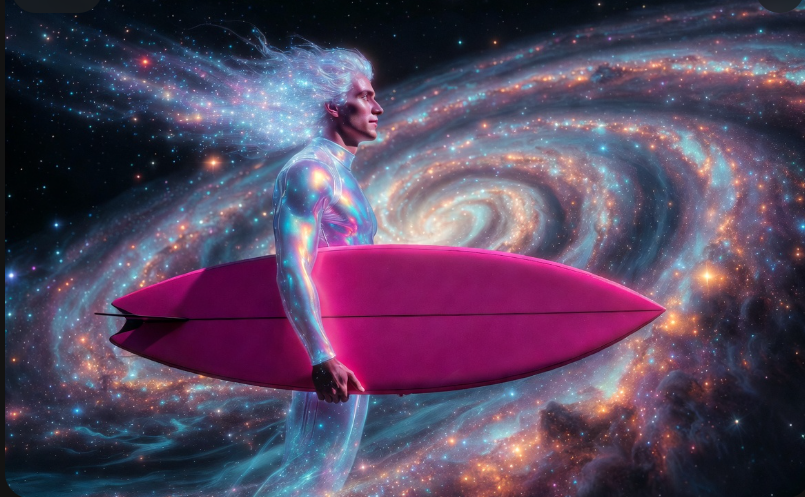

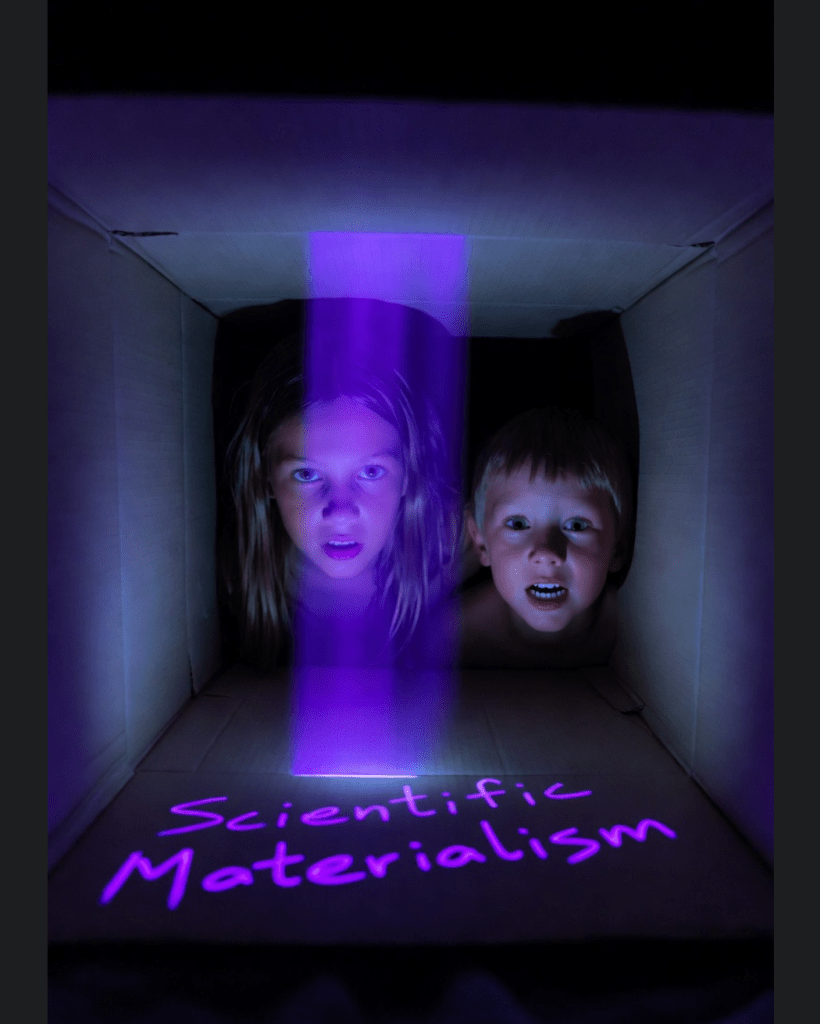








































 Storiform.com