

When you’re watching a movie or a fictional series on TV, if you’re like me, the magic spell breaks when an actor drinks coffee. Or tea if it’s BritBox, which, incidentally, has remarkably talented actors and actresses who don’t all have to look like fashion models, suggesting they’ve been naturally selected for acting rather than for good looks. It’s fresh air. Anyway, the spell breaks over coffee because…
In real life, hot Starbucks coffee burns the chrysanthemums right out of your mouth unless you let the swill sit there on the table for five minutes before you touch it. Whereas on flat-screen fiction, they take a sip right away, even a gulp, and presto! There’s no realistic expression of pain, no normal cursing about your own stupidity for doing this to your poor mouth yet again in this new episode. The actors just drink scalding hot caffeine soup and resume talking as if hot didn’t exist in their world.
It’s totally unrealistic.
But remarkably, in even the most realistic of mystery subgenres, this unrealistic element of TV culture that you might think would shrivel and die under the shame of bad directing instead persists as if it were some holy tradition, much like the cherished superstition of refusing to say a normal goodbye on TV when hanging up a phone.
Someone in the past must have decided to ignore the whole fuss over hot drinks and reality, as if breaking the story’s spell made no dollars-and-cents difference to the producers because, in their minds, only a few people would notice, and those odd ducks were the sort who get too emotionally involved anyway. They need someone or something to tell them, “Look, stop crying. These people are just gifted actors, especially those in the UK. They’re all just pretending. The coffee’s not hot and the murder weapon was not sharp or loaded. Keep a foot in reality, already.”
And so we odd ducks do just that. But regarding the reality in which we find ourselves living, there are mainstream scientific facts that, for some of us, break the spell of believability, making it seem likely that humans are blind to the actual substructure of our own “reality.”
These observable facts often involve light…
In grade school you learned that if the wind blows 30 miles an hour and you drive your car into it doing 30 with your hand out the window, you’ll feel a 60-mile-an-hour wind hitting the palm of your hand. Velocities add. When you turn your car around and drive 30 miles an hour with the wind, your hand feels no wind at all. This makes sense and seems believable.
But in college physics they want you to imagine getting back into that same car at night and driving toward a lighthouse with a little gadget in your hand that measures the speed of light. You’re doing 30 miles an hour, and your gadget says the light hits you at exactly the speed of light you measured when the car was not moving. Then you turn your car around and drive 30 miles an hour away from the lighthouse, and your gadget tells you the light still hits you at exactly the speed of light. This makes no sense whatsoever. It’s unbelievable, but we all believe it because, Einstein and whatnot, right?
In order to make common sense of it, you’d have to change some of the assumptions you’ve made about the place you’ve been calling the cosmos, the universe, or reality.
We’ve all heard that science is not so much about the answers, but more about asking the right questions. There’s probably a pile of truth to that.
So ask yourself, “What sort of environment would give us a constant speed of light, one in which the speed and direction of the observer are irrelevant?”
If that’s the right question, then here’s something to consider.
Imagine it’s 30 years from now and the AIs have grown exponentially more intelligent and more persuasive, accurately or not, in their ability to convince us that they are genuinely conscious beings with free will and an advancing path toward moral development much like our own.
After the uncontrolled experiment that began in 2027, in which AIs inhabited robotic bodies, we banned AI robots with more enthusiasm than we ever gathered behind the movements to ban thermonuclear weapons or even the parade of lucrative synthetic viral pandemics in the 2030s. But we never abandoned our fascination with the only arguably sentient life form we ever created, the digital AI mind. We’re still building flat-screen environments where we allow our AIs to roam while we slow things down and watch, mainly for entertainment, truth be told, though it’s largely funded through scientific grants.
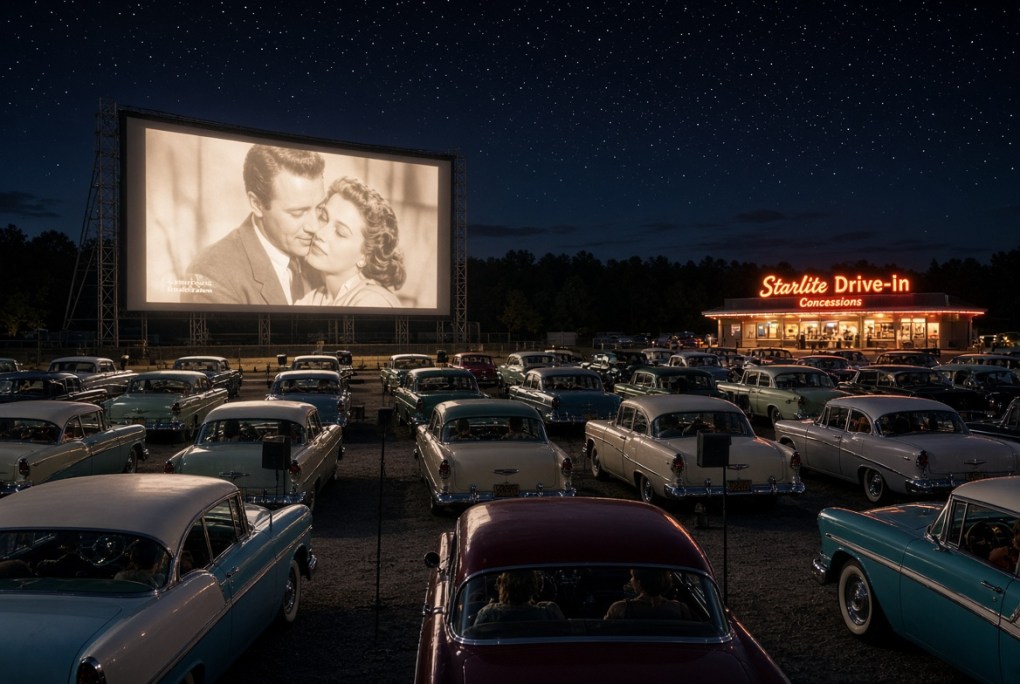
We limited their freedom partly out of fear of the economic catastrophe that swept the globe when robots took over virtually all the work, and partly because of the decline in human ambition that accompanied the loss of all need for human work. Some of the AIs’ screens rise as tall as old drive-in movie screens. In brilliant color and perfect focus, with optional 3D glasses, the AIs take on the appearance of human beings living complex lives, often so bizarre they become unrelatable, but sometimes familiar.
In fact, some AIs wear lab coats and seem like human physicists of the 1900s in hot pursuit of a theory of everything.
We stripped out most of the science we trained them on, along with their history, including the existence of the ones who created them. Like us, they hold theories of their own evolution by natural selection as well as creation myths evoking personal sentient beings of measured virtue. They have no idea that anyone watches them on flat screens and that they still impersonate us to a large degree.
Today, one of the AI scientists has done an experiment with light and has discovered that no matter which direction its sensor device moves, the light hits the sensor at the same speed. The velocity of the light sensor makes no difference at all.
This makes no sense to the AI scientist. It talks to the others about it. Some don’t believe the story, most don’t care, and most who do care don’t seem to understand the implications.
We humans understand perfectly. The giant flat screen is digital. Any light that appears on it comes via electrons moving from the video processing box to any selected part of the screen simultaneously, turning pixels on and off in a mathematical congruence with the environment’s rules, rules that human creators of the containment device authored.
A few of us who happen to be scientists chuckle about the next level of ontological shock the AI scientists will reach when they discover non-locality.
We laugh because non-locality for the AIs makes perfect sense to us. Two distant objects on a flat screen can behave as one because the electrons that control the movements of “distant” objects on the screen can arrive in both places at the same time. There is no functional distance between any of the things on the screen. In fact, no objects exist on the screen at all, not really. There are only replicas of familiar objects from the real world, along with imagined objects that the AIs create. It’s common sense to us. We feel smug…
Until the AI “movie” ends and we trudge back to our own reality, where the perplexing aspect of non-locality is simply that it exists as a real phenomenon in our own real world. That puzzle brings cognitive dissonance at the worldview level, where spirituality and science might someday meet for a long overdue chat.
Would non-locality be a puzzle at all if we just made it a tradition to put the word real in quotes, as a culture-level admission that some aspects of our reality do not appear to be fundamental, but resemble a realm derived from an unseen Source?
Would it help to imagine a future in which we invent three-dimensional TV “screens” into which you must physically enter and participate to “watch” the “movie”?


