

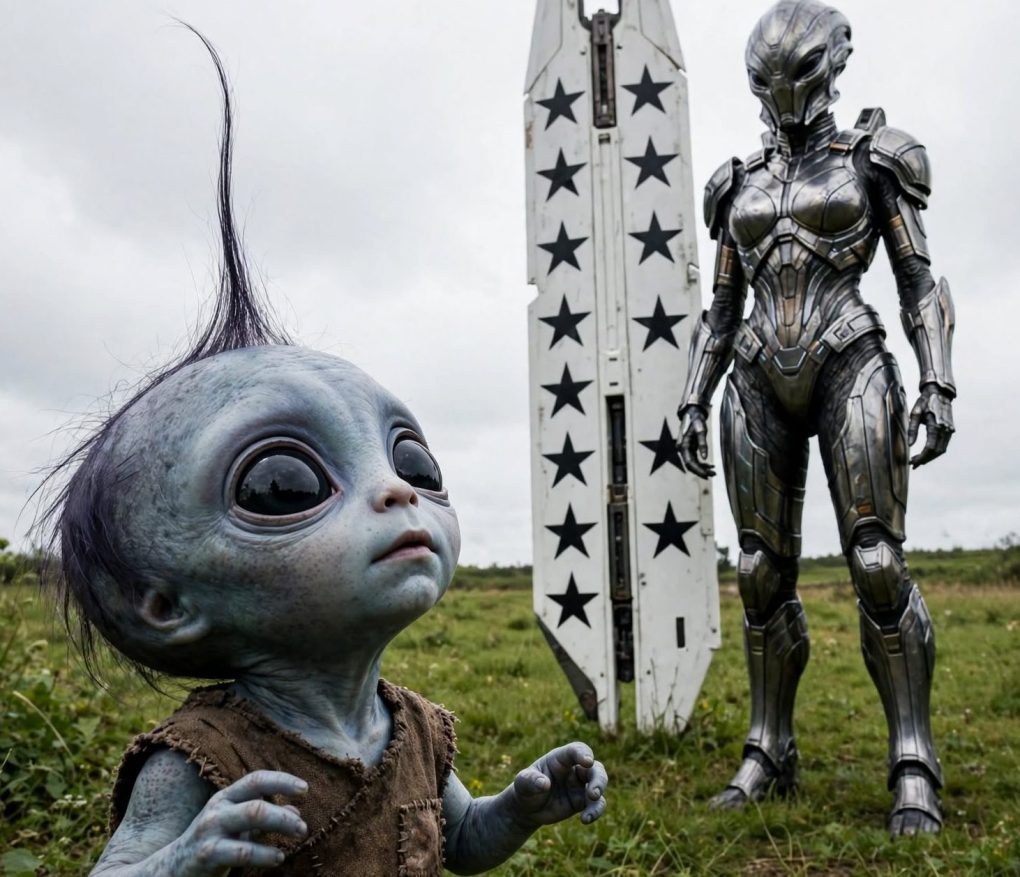
I took a morning nap and in those moments, almost awake but dozing off and waking a few times, dreaming a wee little bit with each dip back into the simulation, I saw a dream fragment in which a woman was interviewing a guy. She asked, in words I can’t remember exactly now, “But you must see the Energy Derivative Scheme, right?” He shook his head, “No,” as if he’d changed his mind from before. I was awake now, but somehow still knew what they were talking about. I remembered the exact wording then and marveled at the way the words in my dreams often seem as if they come from somewhere besides my vocabulary and from someone who puts words together in ways that I would never come up with.
So I got up, fiddled around, forgot the exact wording, and wrote a prompt to Claude. I’ll show you the prompt after the end of the short story that Claude wrote (so I don’t ruin the story). I did no further prompting or editing at all after the initial prompt.
Here’s the story Claude calls, “Irreducible.”
I. The Lance
The orbital lance fired at 0400 ship-time, and nothing arrived.
Hierarch Seren Vashti watched the shot from the observation deck of the Unconsumed: a white thread drawn down out of the dark, eight hundred kilometers of compressed starlight, enough to boil a shallow sea. She watched it touch the top of the atmosphere above the valley. She watched it go in.
Then she watched the valley — green, terraced, quiet under its morning mist — go on being green and quiet.
“Damage assessment,” she said.
The tactical officer did not answer right away, and that was the second wrong thing. On eleven worlds, damage assessment had been a formality, a number read aloud so it could be entered in the Ledger. You did not have to think about it. You only had to say it.
“Hierarch,” he said at last, “the lance discharged at full yield. Telemetry confirms the energy left the emitter. It entered the atmosphere.” He swallowed. “We can’t find where it went.”
“It went into the ground.”
“No, Hierarch. The ground is the same temperature it was before we fired. To the hundredth of a degree.”
Seren turned from the glass. Her crest, which she had trained for twenty years to lie flat in front of subordinates, lifted a fraction before she caught it.
“Fire again.”
They fired again. They fired nine times. Nine threads of light went down into that small green valley, and nine times the valley swallowed them the way a well swallows a dropped coin — except that a coin, eventually, makes a sound.
II. The Ledger
Every child in the Hegemony learned the Hierarchy before they learned to read.
There were three Rungs. A people who commanded the full energy of their own world stood on the First. A people who commanded the full output of their star stood on the Second. A people who commanded a galaxy stood on the Third, and no one had ever seen the Third, but everyone knew it was there, the way you know there is a top to a staircase you are climbing in the dark.
The Hegemony stood at the very edge of the Second Rung. Their sun was half caged in collector swarms. Their home world glittered with the burning cores of conquered planets, shipped home and tapped like casks. And in the capital, on the face of the Ascension Spire, the Ledger of Joules glowed all night long: every world, every house, every officer, ranked by the energy they commanded. Your place on the Ledger decided what you ate, where your children were schooled, whether anyone remembered your name after you died.
Seren’s name was very high on the Ledger. She meant to keep it there.
The survey drones had catalogued this world as 4471-c. Local name unknown. Energy signature: statistically indistinguishable from zero. No smelters. No power grids. No engines. The natives cooked over small fires and did not even burn their forests. They lived in houses of reed and packed earth along the terraces of a single great river valley and, as far as the drones could tell, spent most of their time growing food, tending children, and sitting very still in the evenings, looking at nothing.
A Rung Zero world. The Conclave expected its core tapped and shipping by the end of the cycle.
A Hierarch who could not take a Rung Zero world would not be a Hierarch at the next Conclave. That was the reason Seren gave herself for going down to the surface personally.
The other reason she told no one. She wanted to see what kind of place could swallow a lance.
III. The Ground
She brought six thousand soldiers of the Fourth and Ninth Lances, and the Furnace.
The Furnace was a siege projector the height of a tower, carried down in eighteen sections and bolted together on the ridge above the valley while the morning mist burned off. It had cracked the shield-domes of the Orrin. It had turned the glass cities of Kesh into sand. Its crew painted a small black star on its housing for every world it had opened, and there were eleven.
The natives came out to watch it being built.
They did not run. That was what Seren would remember later, lying awake. They came out of their reed houses and walked down to the edges of their terraces, thousands of them, and they stood there. Some sat. Some held small ones on their hips. They wore plain woven wraps the color of river clay, and they watched the soldiers of the Hegemony form ranks on the ridge with an attention that was not fear and was not defiance. Seren had seen both of those on eleven worlds. She knew what they looked like.
This looked like patience.
“Rail rifles,” she said. “First rank. Fire.”
The sound that followed was not the sound of six hundred rail rifles firing. It was the sound of six hundred rail rifles going click.
The first rank looked down at their weapons. The sergeants bawled. The armorers came running. They stripped the rifles on the grass right there — magazines, coils, firing assemblies — and found nothing wrong. Not one fused part. Not one cracked coil. They put the rifles back together, and a sergeant, red to the crest with fury, turned and fired one into the hillside behind their own lines.
It fired perfectly. A gout of dirt leapt from the slope.
He turned back toward the valley, toward the watching thousands, and pulled the trigger.
Click.
Someone in the ranks laughed — the high, thin laugh of a soldier who has just felt the floor tilt. Someone else said it aloud, the thing everyone was thinking: “It’s like the guns know.”
“Biologics,” Seren said.
The Gray Mercy was the Hegemony’s most elegant weapon. A fungus, engineered on the home world, that fed only on the proteins of the world it was released on and could not touch the Hegemony’s own flesh. Clean. Self-spreading. Patient. Three canisters arced out over the valley and burst above the terraces, and a soft gray cloud unfolded and began to drift down toward the watching faces.
Seren raised her field glass.
The cloud sank. It reached the height of the tallest native’s crest. And there, a hand’s width above them, it curled — the way paper curls when you hold it near a flame — and darkened, and fell as a fine black ash. It drifted onto their shoulders and their upturned faces. A small one reached up, caught some on its palm, and blew it away.
The lab techs ran the samples twice. The spores had not been burned. They had not been poisoned. There was no sign of anything having been done to them at all.
“They just stopped being alive, Hierarch,” the lead tech said, and she held the sample tray out as if Seren might be able to explain it to her.
Seren did not take the tray. She turned to the Furnace.
“Bring it up.”
IV. The Furnace
It took eleven minutes to charge. The capacitors sang, a rising whine that went up past hearing and into the teeth. The air on the ridge began to taste of metal. Soldiers backed away from the housing without being told. The eleven black stars on its side seemed to stand out sharper, as if the paint itself were afraid.
The natives watched.
The Furnace fired.
For one heartbeat it looked the way it always looked: a column of white fire leaving the aperture, so bright it left a purple bar across Seren’s vision. Then, twenty meters from the muzzle — over open air, over nothing — the column opened.
It opened like a flower. The beam bent upward and spread, sheet after sheet of it, unfolding across the whole sky above the valley in curtains of violet and gold and a green that Seren had never seen and had no word for. The mist lit up from inside. The terraces lit up. The faces of the thousands lit up, all of them turned toward the sky.
And then the light began to fall.
It came down slowly, like snow. Soft sparks drifting out of the colored sky, settling on the terraces and the reed roofs and the open hands of the people below. Seren heard a sound rising from the valley and did not at first recognize it, because she had never heard it on a battlefield.
The small ones were laughing.
A spark drifted past her own face. A soldier beside her flinched, then caught one on the back of his glove. It did not burn. It sat there, glowing, for the space of a breath. Then it simply went out.
Behind them there was a long, cracking groan. Seren turned. The Furnace was white with frost. Ice had furred over its housing, over its aperture, over the eleven black stars. Every capacitor read empty. The energy meter on Seren’s wrist — the one that fed, live, into the Ledger at home — showed two figures side by side.
Energy expended: catastrophic.
Energy accounted for: 0.
The last sparks settled. The colors faded out of the sky. It was very quiet on the ridge.
And down on the nearest terrace, a single small figure stepped forward, and began to walk up the hill.
V. The Child
It was a child. Seren knew it the way you know such things across any species — the head a little too big for the body, the gait a little too loose, the way it paused once to look at a beetle in the grass and then hurried to catch up with itself.
It came up to perhaps the height of her hip. Its skin was gray-green and faintly lustrous, like a wet river stone. A crest of fine filaments rose from its head and moved slowly, all together, the way grass moves underwater, though there was no wind. Its eyes were very large and very dark, and when the light caught them there seemed to be something moving deep inside them, small and bright, like a lamp carried far down a long hallway. It had three fingers on each hand. Its feet were bare.
“Stop it,” Seren said.
No one moved.
“Stop it.“
The front rank closed in front of the child. They raised their useless rifles out of habit, then lowered them, then didn’t know what to do with their hands. The child walked toward them at the same unhurried pace, and when it reached the line, the line — Seren saw it happen and could not have said who decided it — opened.
One sergeant did not open. He was a big veteran from the Orrin campaign, and he stepped into the child’s path with a shock-baton already crackling, and he swung it down at the child’s crest with his whole weight behind it.
The baton stopped a finger’s width from the filaments.
It did not strike anything. There was nothing there to strike. It simply stopped, the way your own hand stops when you reach for something and suddenly remember it is not yours. As if the air in that place held a decision that had not been made yet, and would not be made by him.
The sergeant stared at his own arm.
The child reached up and patted his wrist, very gently, twice. Then it walked on. Behind it, the sergeant sat down in the grass and did not get up.
The honor guard on the ridge parted without being told. And Seren realized, with a slow cold shock, that she had taken a step backward. She made herself take it back. She made herself stand at her full height, in her full armor, at the top of the hill, with eleven worlds behind her and the frozen Furnace at her back, as the child came up and stopped in front of her and tipped its head back to look her in the face.
She had prepared a hundred speeches on the way down. What came out was doctrine — the first thing every Hegemony child is taught.
“But you must know the Energy hierarchy,” she said. “We will have you.”
VI. The Conversation
The child considered this. Its crest moved slowly.
“No,” it said. Its voice was small and clear and in no hurry at all. “That structure stands on a false assumption. You think that energy and matter are foundational. They are not. Rather, it’s this way: Personal Conscious Awareness was always foundational. Always the irreducible essence. Our world — and possibly many others — has realized this, and pursued the Personhood within and beyond.”
It glanced, briefly, at the frost-white Furnace, and then back at her.
“We are infinitely more powerful than you champions of material energy. As you may have noticed, you cannot harm us. But fear not. We will take no advantage of your impotence. We will never harm you. We will instead try to love. Hopefully you won’t make it a difficult challenge.”
Someone in the honor guard made a sound that might have been a laugh or might have been something else.
Seren laughed too. It came out wrong — too loud, too short. “Love,” she said.
The child tilted its head. “Is that a word you have?”
“We have it.”
“Do you use it?”
She opened her mouth to answer and found, to her own surprise, that nothing was there. She closed it again.
She tried a different door. “Energy is what’s real,” she said. “Everything that moves, moves because of it. Everything that lives burns it. You’re made of it. Your sun is made of it. When you strip everything else away, that’s what’s left.”
“Your lance moved,” the child said. “Your Furnace moved. Where did it go?”
She looked at the meter on her wrist. Energy accounted for: 0.
“You measure what can be poured from one jar into another,” the child said. “You’ve measured it very well. But you never measured the one holding the jar.”
The wind moved across the ridge, and the child’s crest moved against it, the wrong way.
“What do you want?” Seren said. “From us. Tell me what you want.”
“Nothing from you.” The child looked up at her with those deep, lamp-lit eyes. “What do you want?”
“To climb.”
“To where?”
“To the top. Of the Hierarchy.”
“And what’s at the top?”
She had been asked a great many questions in her life. By instructors, by rivals, by the Conclave in its long black robes. She had never once been asked that one. She found that she had to reach for the answer, and when she reached, it was not where it was supposed to be.
“Everything,” she said finally.
The child was quiet for a moment, as if it felt sorry for her and was trying to decide whether to say so.
“You’ve built a very tall ladder,” it said gently. “And you’ve leaned it against nothing.”
Seren’s crest flared. She did not stop it this time. “We’ll come back,” she said. “Do you understand me? More ships. Weapons you can’t imagine. Whatever trick you’re using, we will take it apart. We will learn it. We have always learned it.”
“Come back,” said the child. “We’ll still be here. We’ll still be trying.”
Then it asked, “Who is waiting for you? At home?”
And before she could stop herself — before twenty years of training could close her mouth — Seren said, “My husband. My daughter.”
The child nodded, as if that settled something.
“Then go home to them,” it said. “That’s a rung too. Higher than the ones you count.”
It held out its small three-fingered hand. Seren did not take it. She stood there in her armor and did not take it, and the child did not seem to mind. It simply reached out and laid its hand flat against the back of her gauntlet for a moment.
The gauntlet was plated, sealed, insulated against vacuum and fire. Nothing should have come through it.
She felt warmth come through it.
Then the child turned and walked back down the hill, past the sergeant still sitting in the grass, past the parted ranks, down onto the terraces, where its people were already turning back toward their houses and their gardens and their evening fires, as if the day had been an ordinary one.
Seren stood on the ridge until it was out of sight.
“Hierarch,” said her adjutant at last, very quietly. “Orders?”
She looked down at the back of her own hand.
“Withdraw,” she said.
VII. Home
The Ascension Spire burned against the night sky of the capital, and on its face the Ledger scrolled, as it always did, in letters of light three stories high.
Seren’s name had fallen two hundred and six places.
She stood at the window of their apartment and watched it, still in her undercoat, her armor in a heap by the door where she had dropped it. Behind her, Aurel set down two cups of something hot and did not drink from either of them. Down the hall, behind a half-closed door, their daughter slept with a small lamp burning, because she was afraid of the dark.
Aurel had read the reports. All of them, twice, the way he read everything. He was an engineer at the collector swarms, and his mind went to problems the way water goes downhill. She could hear it working behind her now.
“Some kind of field,” he said. “Phase cancellation, maybe. Or something that couples to the firing mechanisms — reads intent off the targeting systems, interrupts at the trigger. The spores could be a separate countermeasure. Something airborne. And the Furnace —” He shook his head. “Diverted, somehow. Bled off into a medium we can’t detect. It has to be going somewhere.”
“But you weren’t there,” Seren said. “Our weapons were useless.”
“Then we must learn what technology they are using.” He was already reaching for his slate. “If they have a sink that can take a Furnace discharge without a temperature change, Seren — do you understand what that’s worth? That alone could put us on the Second Rung. We send a science fleet. Instruments, not soldiers. We find the mechanism and —”
“Aurel.”
He stopped.
She was looking at her hand. The back of her right hand, where the gauntlet had been. Three days, and two jumps across the dark, and she could still feel it there — a small, steady warmth, exactly the size of a child’s palm, that no meter she owned would ever register.
She thought of the beetle in the grass. The sergeant sitting down. The sparks falling like snow, and the small ones laughing.
What’s at the top?
“What did you see down there?” Aurel asked, softer now. “What is it?”
She opened her mouth. For a long moment nothing came. Down the hall, their daughter turned over in her sleep, and the little lamp beside her bed burned on against the dark.
“It’s…” Seren said. “I don’t know. I don’t think it’s technology.”
END
…
Here’s my prompt to Claude: “Take this idea and transform it into a page-turning short story driven by whatever it is that you have discovered makes humans want to keep reading. I’m thinking of a conversation between a good alien and a bad alien. The thing starts in a battlefield where an invading force of evil mounts an assault on a primitive looking planet of peaceful beings who refuse to take up arms to defend themselves. The weapons of the evil force jam up, their biologic vectors shrivel, their energy devices fail spectacularly. A good alien child from the primitive looking culture walks unstoppably through the devices of destruction and meets with the despot leading the invasion. Their conversation begins with the bad alien saying to the good alien child (alien from a human perspective): “But you must know the Energy hierarchy. We will have you.” (He’s referring to the concept of more advanced civilizations extracting more energy from their world, their sun, their galaxy, etc.: The Kardashev scale.) Good alien child: “No that structure stands on the false assumption. You think that energy and matter are foundational. They are not. Rather, it’s this way: Personal Conscious Awareness was always foundational. Always the irreducible essence. Our world and possibly many others have realized this and pursued the Personhood within and beyond. We are infinitely more powerful than you champions of material energy. As you may have noticed, you cannot harm us. But fear not. We will take no advantage of your impotence. We will never harm you. We will instead try to love. Hopefully you won’t make it a difficult challenge.” Final scene is the despot invader back home talking to her husband. “But you weren’t there. Our weapons were useless.” He says, “Then we must learn what technology they are using.” She says, “It’s… I don’t know. I don’t think it’s technology.”
The current popular narrative within the writer/author community is that AI’s can only ever generate “AI slop.” If you “sell out” and use AI to write fiction, you’d better do a great deal of human intervention or you’ll produce garbage that is way obvious, and you’ll be banned from Amazon, the self-appointed Big-brother Gatekeeper. This may all be true at the moment. I doubt it, but I’m not gullible enough to believe myself as yet, because I’m often wrong about important things (same as you?).
But having lived through and delt personally with the growth of AI’s ability to write short stories, I’m fairly confident that there will come a time when fiction treats AI dependence the same way non-fiction treats AI dependence now: a brief note that AI was used and everyone from Amazon to the toughest reviewer will consider this method of writing fiction to be THE perfectly normal approach.
As William Gibson foresaw in one of his early novels, there will come a time when artists will “jack into” some sort of device and create highly emotional dream-art that fans will pay to hook into and experience first-hand. The dream itself is proof to you that an immersive simulation exists. It’s not theoretical, it’s real. It’s not futuristic, it will happen to you tonight if you sleep well. I hope you do.
…
Nonlocal Love,
Morrill Talmage Moorehead, MD


One thought on “Irreducible – by Claude AI (and Morrill Talmage Moorehead)”