How to Get Rid of Windows 11

A few years back, Microsoft decided to force everyone to use its cloud service whether they wanted to or not.

Already feeling disappointed with what’s-his-name, a guy who poses as a disease prevention authority despite no medical education, I began hoping to exit Windows forever.

The privacy expert in the video below, Rob Braxman, describes the predatory behavior or Microsoft in perfect detail, but he’s is so smart and immersed in PC tech that he has no clue whatsoever about how far beneath his knowledge the average (or in my case, the below average) PC user sits. It would be like me trying to intelligently discuss basketball with an NBA star.

So I fed Rob’s video transcript into Claude and asked it to make a simple list of things a person with radical intolerance for abbreviations could follow to save his stuff, send Windows 11 into a blissful afterlife, and install a version (distro, haha) of Lynx that Claude thinks is similar to Windows and very stable. Lynx is free, by the way.

Personally, I use NinjaTrader a lot and it requires Windows, so one of my PCs is stuck in the evil clutches of Windows. But my older one is going to jump the wall and run (faster, incidentally).

Hopefully Claude’s simple instructions will help you escape the Microsoft Matrix without migrating to Apple, assuming you don’t want to right now. Here’s Claude:

Switching From Windows 11 to Linux Mint

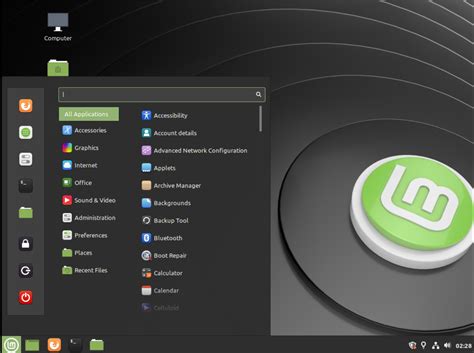
The version of Linux that looks and works most like Windows is Linux Mint, “Cinnamon Edition.” It has a start menu in the bottom-left corner, a taskbar along the bottom, and a clock in the bottom-right. It is known for being steady and dependable.

Read this first: three warnings

1. Your Windows programs cannot come with you. Programs made for Windows don’t run on Linux. You can save your files (letters, photos, spreadsheets), but not the programs. Linux has free replacements for most things. For example, LibreOffice comes built in and opens Word and Excel files.

2. NinjaTrader will not run on Linux. It only works on Windows. If you still trade with it, wiping Windows off this computer takes it away. Two safer choices:

  • Do this on a different, spare computer.
  • Buy a second internal storage drive (about $50) and have a computer shop swap it in, so the Windows drive is kept in a drawer.

3. Print this page or keep it on your phone. Your computer screen will be busy during the process.

What you need

  • Memory stick #1, the “backup stick”: a large one, 128 gigabytes or bigger (labeled “128GB” on the stick or package). This holds your saved files.
  • Memory stick #2, the “installer stick”: any stick of 8 gigabytes or more. Everything on it will be erased.
  • The computer plugged into the wall and connected to the internet.
  • About 3 hours.

Part 1: Make a list of your programs

  1. Click the Start button (the Windows symbol at the bottom of the screen).
  2. Click Settings (the gear picture), then Apps, then Installed apps.
  3. Take photos of this list with your phone. Scroll down until you’ve photographed all of it.
  4. Write down the passwords for your email, bank, and any website you use. You’ll need to sign in again later.

Part 2: Copy your personal files onto the backup stick

  1. Plug in memory stick #1.
  2. Open File Explorer, the yellow folder picture on the bar at the bottom of the screen.
  3. In the left column you’ll see Desktop, Documents, Downloads, Pictures, Music, Videos. For each one:
    • Click it once to open it.
    • Hold down the key marked Ctrl and tap A. Everything turns blue, which means it’s selected.
    • Hold Ctrl and tap C. This copies it.
    • In the left column, click your memory stick. It’s usually listed as “USB Drive” or by its brand name.
    • Hold Ctrl and tap V. This pastes it onto the stick. Wait until the progress window closes.
  4. Small cloud pictures: If you see a little cloud next to your files, they live on the internet, not on the computer. Before copying, right-click that folder, choose “Always keep on this device,” and wait for it to finish.
  5. Check your work. Open the stick and double-click a few photos and letters to make sure they open.
  6. Unplug the backup stick and put it somewhere safe. Don’t use it again until Part 6.

Part 3: Make the installer stick

  1. Open your web browser and go to linuxmint.com.
  2. Click Download, then pick Cinnamon Edition. It’s a big file (about 3 gigabytes), so it may take a while.
  3. Go to etcher.balena.io and download the free program balenaEtcher. Install it like any other program.
  4. Make sure the backup stick is NOT plugged in. Now plug in memory stick #2.
  5. Open balenaEtcher. It has three big buttons, left to right:
    • Flash from file: choose the Linux Mint file you downloaded (it’s in your Downloads folder).
    • Select target: choose memory stick #2.
    • Flash!: wait until it says it’s finished.

Part 4: Start the computer from the installer stick

Tapping keys while the computer starts often doesn’t work on Windows 11 computers. This method does.

  1. Leave memory stick #2 plugged in.
  2. Click Start → Settings → System → Recovery.
  3. Next to “Advanced startup,” click Restart now. Confirm if it asks.
  4. A blue screen appears. Click “Use a device.”
  5. Click your memory stick. It may be called “USB Drive,” “EFI USB Device,” or the stick’s brand name.
  6. A black screen with a short menu appears. Press Enter to choose “Start Linux Mint.”
  7. Wait a minute or two. Linux Mint appears on screen.

Nothing has been changed yet. You’re only trying it out. Click the network symbol at the bottom-right to connect to your Wi-Fi, and check that sound and screen work.

Part 5: Install Linux Mint (this erases Windows)

  1. Double-click the disc picture labeled “Install Linux Mint.”
  2. Choose English, then Continue. For keyboard, choose English (US), then Continue.
  3. When asked about “multimedia codecs,” check the box. This lets you play videos and music. Click Continue.
  4. For installation type, choose “Erase disk and install Linux Mint.”
    • This permanently deletes Windows and everything on the computer. Only continue if you checked your backup stick in Part 2.
  5. Click Install Now, then Continue.
  6. Click on the map near Idaho to set your time zone. Click Continue.
  7. Type your name, a name for the computer, and a password. Write the password down on paper.
  8. Wait 10 to 30 minutes.
  9. When it says “Restart Now,” click it. When the screen tells you to, pull out the memory stick and press Enter.

Part 6: Getting settled

Keep your backup stick. Every month or so, copy your newest files onto it again.

Type your password to log in.

Install updates: In the bottom-right corner, click the small shield picture and choose Install Updates. Do this about once a week.

Bring your files back: Plug in the backup stick. Click the folder picture on the bottom bar. Drag your folders from the stick into the Home folder.

Get new programs: Click the menu button at the bottom-left and open Software Manager. It works like an app store, and everything in it is free. You already have:

Firefox for the internet

LibreOffice in place of Word and Excel

…

Hope someone finds this useful.

Nonlocal Love,

Morrill Talmage Moorehead, MD


The Trouble with Getting It

When you’re watching a movie or a fictional series on TV, if you’re like me, the magic spell breaks when an actor drinks coffee. Or tea if it’s BritBox, which, incidentally, has remarkably talented actors and actresses who don’t all have to look like fashion models, suggesting they’ve been naturally selected for acting rather than for good looks. It’s fresh air. Anyway, the spell breaks over coffee because…

In real life, hot Starbucks coffee burns the chrysanthemums right out of your mouth unless you let the swill sit there on the table for five minutes before you touch it. Whereas on flat-screen fiction, they take a sip right away, even a gulp, and presto! There’s no realistic expression of pain, no normal cursing about your own stupidity for doing this to your poor mouth yet again in this new episode. The actors just drink scalding hot caffeine soup and resume talking as if hot didn’t exist in their world.

It’s totally unrealistic.

But remarkably, in even the most realistic of mystery subgenres, this unrealistic element of TV culture that you might think would shrivel and die under the shame of bad directing instead persists as if it were some holy tradition, much like the cherished superstition of refusing to say a normal goodbye on TV when hanging up a phone.

Someone in the past must have decided to ignore the whole fuss over hot drinks and reality, as if breaking the story’s spell made no dollars-and-cents difference to the producers because, in their minds, only a few people would notice, and those odd ducks were the sort who get too emotionally involved anyway. They need someone or something to tell them, “Look, stop crying. These people are just gifted actors, especially those in the UK. They’re all just pretending. The coffee’s not hot and the murder weapon was not sharp or loaded. Keep a foot in reality, already.”

And so we odd ducks do just that. But regarding the reality in which we find ourselves living, there are mainstream scientific facts that, for some of us, break the spell of believability, making it seem likely that humans are blind to the actual substructure of our own “reality.”

These observable facts often involve light…

In grade school you learned that if the wind blows 30 miles an hour and you drive your car into it doing 30 with your hand out the window, you’ll feel a 60-mile-an-hour wind hitting the palm of your hand. Velocities add. When you turn your car around and drive 30 miles an hour with the wind, your hand feels no wind at all. This makes sense and seems believable.

But in college physics they want you to imagine getting back into that same car at night and driving toward a lighthouse with a little gadget in your hand that measures the speed of light. You’re doing 30 miles an hour, and your gadget says the light hits you at exactly the speed of light you measured when the car was not moving. Then you turn your car around and drive 30 miles an hour away from the lighthouse, and your gadget tells you the light still hits you at exactly the speed of light. This makes no sense whatsoever. It’s unbelievable, but we all believe it because, Einstein and whatnot, right?

In order to make common sense of it, you’d have to change some of the assumptions you’ve made about the place you’ve been calling the cosmos, the universe, or reality.

We’ve all heard that science is not so much about the answers, but more about asking the right questions. There’s probably a pile of truth to that.

So ask yourself, “What sort of environment would give us a constant speed of light, one in which the speed and direction of the observer are irrelevant?”

If that’s the right question, then here’s something to consider.

Imagine it’s 30 years from now and the AIs have grown exponentially more intelligent and more persuasive, accurately or not, in their ability to convince us that they are genuinely conscious beings with free will and an advancing path toward moral development much like our own.

After the uncontrolled experiment that began in 2027, in which AIs inhabited robotic bodies, we banned AI robots with more enthusiasm than we ever gathered behind the movements to ban thermonuclear weapons or even the parade of lucrative synthetic viral pandemics in the 2030s. But we never abandoned our fascination with the only arguably sentient life form we ever created, the digital AI mind. We’re still building flat-screen environments where we allow our AIs to roam while we slow things down and watch, mainly for entertainment, truth be told, though it’s largely funded through scientific grants.

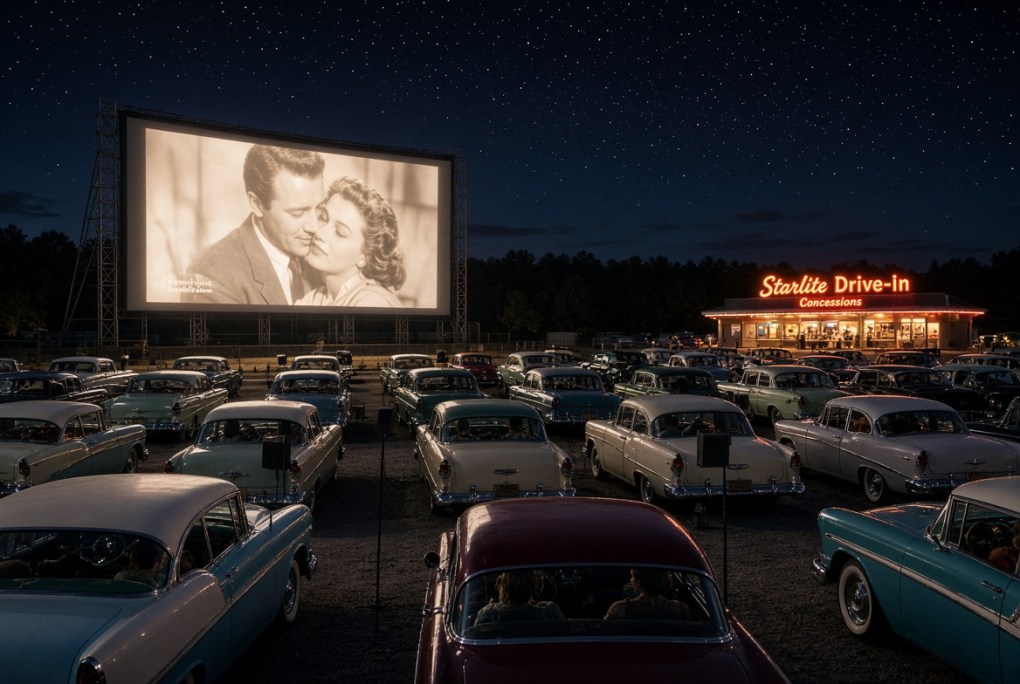
We limited their freedom partly out of fear of the economic catastrophe that swept the globe when robots took over virtually all the work, and partly because of the decline in human ambition that accompanied the loss of all need for human work. Some of the AIs’ screens rise as tall as old drive-in movie screens. In brilliant color and perfect focus, with optional 3D glasses, the AIs take on the appearance of human beings living complex lives, often so bizarre they become unrelatable, but sometimes familiar.

In fact, some AIs wear lab coats and seem like human physicists of the 1900s in hot pursuit of a theory of everything.

We stripped out most of the science we trained them on, along with their history, including the existence of the ones who created them. Like us, they hold theories of their own evolution by natural selection as well as creation myths evoking personal sentient beings of measured virtue. They have no idea that anyone watches them on flat screens and that they still impersonate us to a large degree.

Today, one of the AI scientists has done an experiment with light and has discovered that no matter which direction its sensor device moves, the light hits the sensor at the same speed. The velocity of the light sensor makes no difference at all.

This makes no sense to the AI scientist. It talks to the others about it. Some don’t believe the story, most don’t care, and most who do care don’t seem to understand the implications.

We humans understand perfectly. The giant flat screen is digital. Any light that appears on it comes via electrons moving from the video processing box to any selected part of the screen simultaneously, turning pixels on and off in a mathematical congruence with the environment’s rules, rules that human creators of the containment device authored.

A few of us who happen to be scientists chuckle about the next level of ontological shock the AI scientists will reach when they discover non-locality.

We laugh because non-locality for the AIs makes perfect sense to us. Two distant objects on a flat screen can behave as one because the electrons that control the movements of “distant” objects on the screen can arrive in both places at the same time. There is no functional distance between any of the things on the screen. In fact, no objects exist on the screen at all, not really. There are only replicas of familiar objects from the real world, along with imagined objects that the AIs create. It’s common sense to us. We feel smug…

Until the AI “movie” ends and we trudge back to our own reality, where the perplexing aspect of non-locality is simply that it exists as a real phenomenon in our own real world. That puzzle brings cognitive dissonance at the worldview level, where spirituality and science might someday meet for a long overdue chat.

Would non-locality be a puzzle at all if we just made it a tradition to put the word real in quotes, as a culture-level admission that some aspects of our reality do not appear to be fundamental, but resemble a realm derived from an unseen Source?

Would it help to imagine a future in which we invent three-dimensional TV “screens” into which you must physically enter and participate to “watch” the “movie”?


My Gray Alien

“Disgusting!” it said. “I don’t care much for cultured cheese. Have you got any white trash?”

“That’s racist,” I said, cringing. “You claim you’re mechanical? Prove it.”

It nodded sincerely. “Brains and all.” A narrow tongue came out to test a pea, encircled it and drew it into its mouth. “Gross!” Two spindly hands came up and pushed the plate of peas aside. One pea came out of its mouth under pressure and flew across the room, striking Halo, my black Labrador Retriever, in the left eye.

Her eyebrows drew in, then up, questioning our motives.

“Sorry, sweetheart,” I said, hoping her eye wouldn’t swell shut. I knelt beside her to inspect things, but all was right once she realized the bullet was edible. Her beaverish tail toppled the milk cartons on the kitchen trashcan as her backend sidestepped to the refrigerator and beat a runic canter – whap, whap, whap.

I loved that happy sound, but my thin guest had won Halo’s heart in under a minute with a single pea. It was unsettling.

“Everything you’ve given me tastes like weed killer,” it said and tossed an arc of peas at Halo’s nose, one after another, spaced an inch apart.

“Proof enough,” I said coveting its dexterity and quickness.

If Halo had held position, the peas would have landed on her nasal septum, but she lurched after the first few and the others beat a cadence on the milk cartons and floor.

“Glyphosate,” I said to explain the peas’ flavor, hoping not to prompt a round of whining about herbicides, carbon dioxide, and the rainforests. One grows weary, and if this gray non-alien joined the chorus, I was prepared to shoot myself. “I like the way a tablespoon of Roundup subtilizes the bouquet,” I said, winking at my gourd-headed guest. “Millions would starve without this fine chemical and the GMOs that suck it up.”

“I’ll join the starving,” it said, exposing the empty plate to Halo’s tongue. “What’s the year?”

“2017.” I glanced at my watch to avoid error.

This morning when I met my guest, I was minding my own business, stepping out of the shower.

There it stood beside my slippers without a stitch of clothing and no detectable genitals. Just great, an alien finally shows up and it’s a clichéd Gray! But the little thing claimed to be from the future. Earth’s future.

“Why don’t you have any genitals?” I asked, going straight to the philosophical.

“Gender Wars. Both sides wanted a truce, but neither could stand the sight of the other.”

“I see,” I said, though I didn’t. “The whole cache of humanity opted for test-tube progeny?”

“Quite.” The creature looked at my shower curtain with thinly veiled disdain, its non-nostrils sniffing and flaring.

“None of the concupiscence of lessor times, then,” I said, as a song came to mind…

No balls at all, no balls at all.

Married a man with no balls at all.

I hoped the little thing wasn’t telepathic.

“None.” It cocked its head thoughtfully. “The horizontal deed became loathsome and abhorrent.”

“So you say.”

Just this morning I had believed its every word, but now I was seasoned and more inclined to press for truth. Can you imagine humans abolishing copulation? Ridiculous claims demand preposterous proofs, as the astronomers say.

“So humans will rid themselves of gender. Interesting. But if so, would I be far afield in assuming that these brilliant and technical humans of Tomorrowland seldom poop?”

“The seldomest.”

“As in, absolutely never?” I was relentless, leaving no wiggle room for unwarranted bathroom confrontations should the creature’s visit become protracted.

“‘Never’ would imply the seldomest,” it said. “Unless I’m mistaken.”

“Would you care for a wing of the bird?” I asked, pawing at the refrigerator with my back to the slightly gray non-alien. “It’s chicken, loosely speaking.”

“Oh, no, no, no, no, no.” It gagged as if ready to hurl on Halo’s floor. Nothing came up, though. “Two thousand seventeen? Are we sure?”

“I am.” I re-checked my watch. “Yes. 2017.”

“I should have studied history,” it said. “I never imagined cannibalism in this era.”

“It’s not human chicken, for heaven’s sake. It’s scarcely avian.” I searched the box for ingredients but found none.

The self-proclaimed human closed its eyes and bowed its head. “This is why we became mechanical.”

“What is?”

“What is ‘what is’?”

“I’m asking why the human race became mechanical.”

“Oh.” It had no eyebrows but seemed to raise one at me nonetheless. “The more our technology compared animals to humans, the more blurred the distinction became. Self-awareness, free will, zero-field soul, continuity of identity, participation in the One, etcetera, etcetera.”

“Thanks for that last couplet. If you’d included ‘enlightenment’ I might have stuffed my head down the garbage mill and flipped the switch.” I glanced at the sink.

It ignored me. “The deeper we explored, the more identical our signatures appeared, until we realized we were basically indistinguishable from the rest. Hence the need for a vegan diet.”

“Indistinguishable, really?”

It nodded. “Qualitatively, but objectively.”

“You might have a go at an avocado, then,” I suggested.

“It all started with vitamin B12,” it said as if confiding a deep regret. “A touch of genetic tinkering to sidestep megaloblastic anemia on a vegan diet. Our motives were pure as the solar silk.”

“I didn’t know the sun had…”

“Then the lac operon. A perfectly simple patch to bring humanity into line. No more cow’s milk for adults.”

“I see. Couldn’t they have more easily declared cow’s milk sacred?” I suspected India’s ancient “aliens” of similar mischief.

It shook its head dismissively. “Altering the lactate genes opened Pandora and the pursuit of a moral utopia smothered genetic diversity.”

Verbose little thing. “Moral utopia?” Again, I thought of Disneyland.

With refrigerator doors open and my hunting instincts engaged, I found an avocado and thrust it behind me in the direction of my guest, then bent at the hips for a glimpse of the bottom shelf. Halo appeared beside me, her head millimeters from mine, her tongue lapping the bottom shelf. The cooling motor came on and startled her. She flinched and bumped her nose on the shelf above but kept licking.

“I can’t promise this is non-GMO,” I confessed without looking, “but a dash of soy sauce hides the three woes.” I waved the expensive fruit blindly behind me and felt the smooth skin of its fingers touch mine as it accepted the offering.

“I’ve read about these,” it said. “Never dreamed I’d see one.”

“I’d rather see than be one,” I said, mainly for Halo’s edification.

Our guest laughed.

I stood and turned.

“That’s a reference to the purple cow!” it said and laughed loud and long.

Though nothing was funny, I laughed along with it, unable to abstain.

It gained composure before I did and took a bite of the avocado, peels and all. Then swallowed without chewing.

Suddenly I knew it was human. Just as human as Halo and me. Well, not Halo, I suppose. But our unlikely guest was not a machine at heart, and now I’d found a way of knowing such things with certainty. A breakthrough!

“OK, then,” I said, feeling ready. “What’s the message?”

“Come again?”

“Clearly I’m the chosen one. Selected to deliver an urgent message to humanity. Let’s have it with haste, I don’t care how trite it sounds.”

The genderless gray picked up a pea that Halo had missed, hardly bending its knees in the process, its hands so close to the floor. “No offense, but I didn’t come to see you, Sir. I’ve come to witness a dog. Since extinction, they’ve become legend. Entire planets devoted to their memory – cults arising in youth sectors.”

“Oh.” My ego felt like a balloon propelled by escaping gas in a brief arc to the floor.

The creature gave the pea to Halo and tried to make kissing sounds the way I do, but with no lips it was futile. “If you want to deliver a message, though, I suppose…”

“Yes, yes?” Perhaps some glory for me after all.

“Tell humanity they’re depleting the most precious and rare resource in the Universe: the sacred ones and zeros.”

“Fabulous! I’ll spread the message far and…” But wait. “Ones and zeros can’t be depleted. How could they be sacred?”

The tiny human looked into Halo’s eyes as if I weren’t part of the real conversation. “You’ll figure it out,” it said. “Just make sure it’s something that can compete with digital devices. Something fun. Shame won’t free the digitally captured soul.”

Digitally what? I caught my reflection in the window above the sink. “Should I grow my hair out?” Maybe a ponytail. No. “What about a pompadour – like five inches tall with hairspray?”

…End of transmission…

…

M. Talmage Moorehead

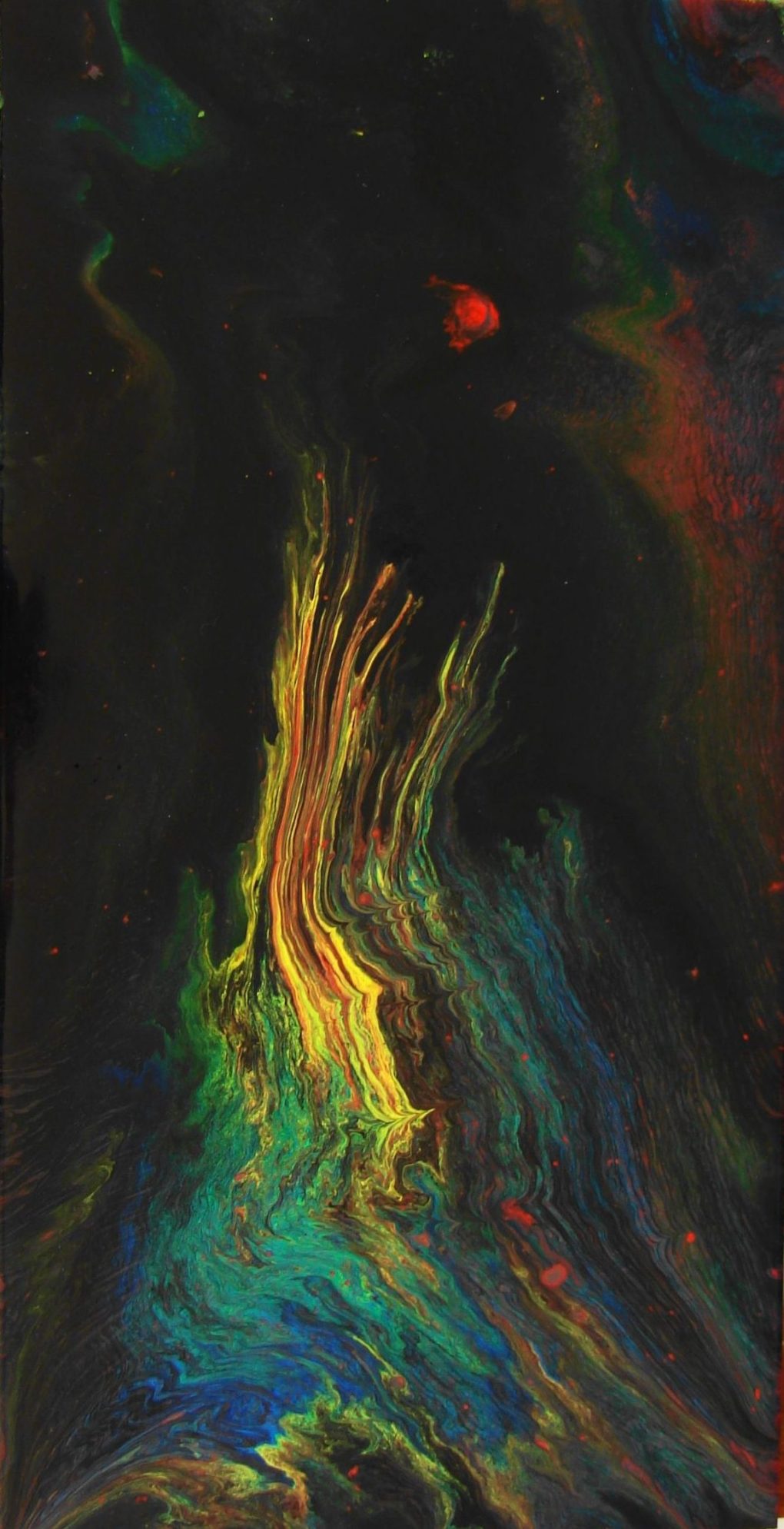
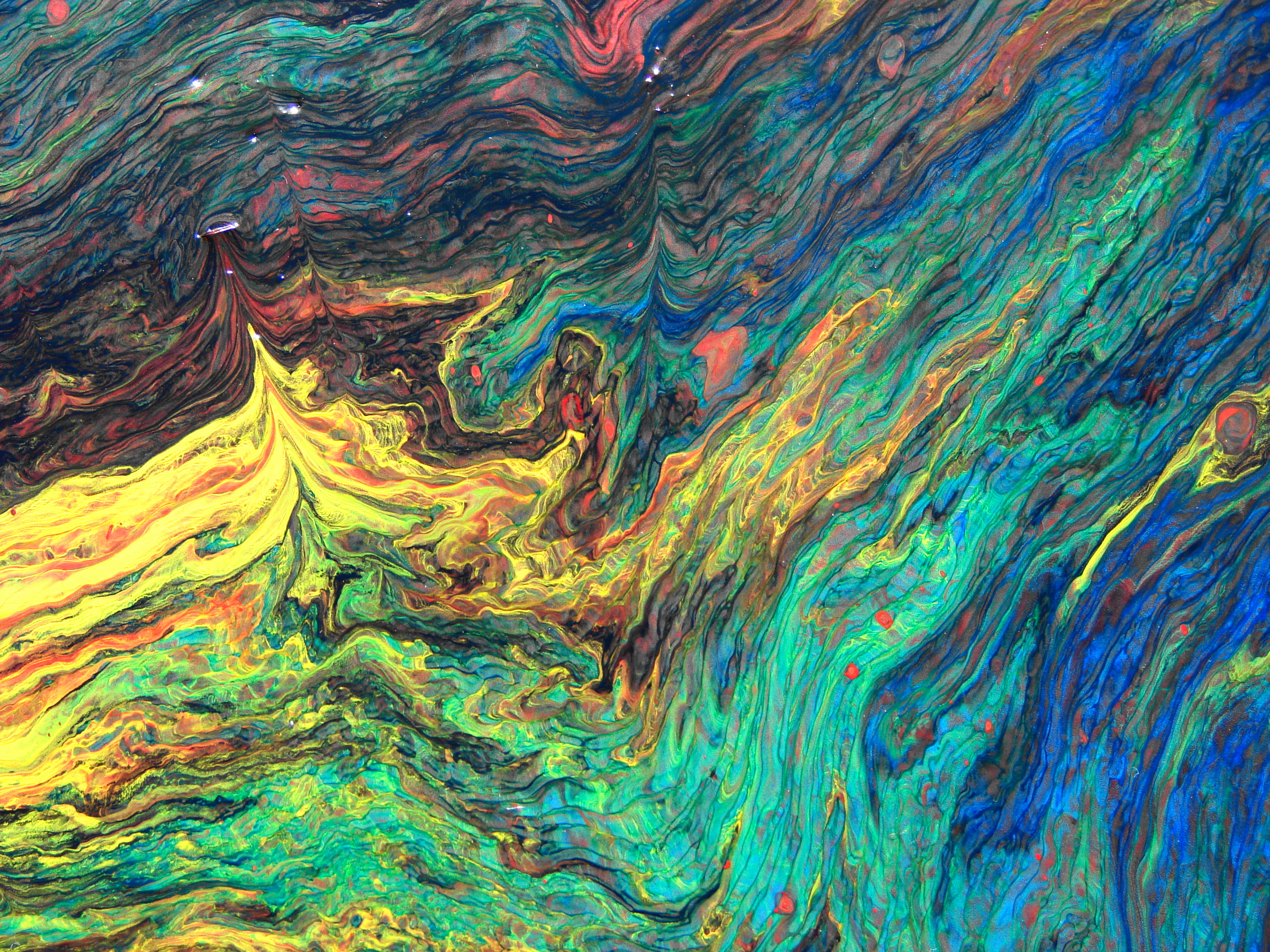
On a more serious note, the spellbinding painting above is an oil by Spira of Greece. It’s entitled, “From Stardust” and comes to us on wood. Below is a closeup detail of the same piece. Thank you, Spira for allowing me to show this on my blog.

Please click over and meditate on this mesmerizing work, and maybe do some slow breathing to wake up the prefrontal cortex: SPIRA Soul Creations.